Posts tagged communication
How a Fantastic Conference Taught Me More About Virtual Organizing

Recently, I returned from the Institute for Challenging Disorganization’s (ICD) conference, held in Canada this year. Colleagues from around the globe gathered to learn, connect, and explore the latest ideas and research related to neurodivergence and people affected by chronic disorganization.

The conference covered a fascinating range of topics, including ADHD, decision-making, navigating life transitions, clutter, emotional labor, hoarding disorder, motivational interviewing, and communication.

I was thrilled to be part of the panel, “Cultivating Connection: Best Practices for Communication with Neurodivergent Clients,” alongside my wonderful colleagues. Sara Skillen moderated, and Leslie Josel and Elizabeth Brink were the other panelists.

Whenever I’m learning, I have one goal: to learn at least one new thing, discover one new resource, or deepen my connection with something I already know. Honestly, with that simple goal, I consistently come away with far more than one thing.

The ICD conference was no exception.

I’m excited to share some of my takeaways and how they expanded my thinking, reinforced what I already know, and will influence the virtual organizing work I do with clients.


What Expanded My Thinking About Virtual Organizing

Emotional Labor

In “The Art of the Invisible: Helping Neurodiverse Families Navigate the Emotional Labor Lifecycle,” presenters Regina Lark, PhD, CPO®, CPO-CD® and Leslie Josel, PCC, discussed how emotional labor, which is mostly invisible and disproportionately handled by moms, is “the exhausting work” and the “cognitive management of household systems.”

Navigating emotional labor, work that never ends, requires executive function (EF) skills that rely heavily on the prefrontal cortex. These include:

  • Planning

  • Focusing

  • Remembering instructions

  • Juggling multiple tasks

  • Managing emotions

  • Working memory

  • Organizing

However, as many of my clients have experienced, EF skills can be especially challenging if you are highly stressed, have prefrontal cortex damage, or have conditions such as ADHD, autism, dyslexia, dyspraxia, or Tourette’s syndrome.

One of the biggest takeaways was distributing the emotional load through “radical delegation. Take perfection off the table. Delegate to someone else, even if they aren’t good at it.  Go for “good enough.”

This made me think differently about virtual organizing. When we work together, we’re not only organizing possessions or creating systems. We’re also considering the mental load behind those systems. What decisions are constantly being made? What is someone trying to remember? What are they managing for themselves or others? And what might be possible to let go of, share, or accept as “good enough”?

Life Transitions

We experience many life transitions. Professor and researcher Dr. Michelle Pannor Silver focused on four in her presentation, “Unpacking Identity: Navigating Later Life Transitions for Those with Organizational Challenges.” She discussed retirement, menopause, clutter, and prioritizing physical resilience.

Much of my work involves helping clients navigate transitions such as moving, starting a new job, divorce, birth, losing a loved one, and other life changes like those Dr. Silver discussed.

One takeaway came from the retirement section. Since our identities are often tied to our work, figuring out what comes next takes thought. Silver stressed the importance of creating “time and mental space to imagine retirement.” It’s not just about getting your finances in order. Take time to envision how you want your post-work life to feel and what you want it to be like. Include “sparking joy” activities.

Another idea that resonated was “recalibrating after loss.” In later years, loss can arrive in many forms, including changes in work status, moving from a familiar environment, changes in physical or cognitive abilities, and the loss of loved ones.

I am thinking differently about virtual organizing in the context of reimagining and recalibrating life. We go through periods when the organizational systems or patterns that used to work suddenly become ineffective. They no longer support who we are now. Virtual organizing sessions can be a wonderful way to work through these shifts and create systems and schedules that support who you are now.

“Decision-making is at the center of everything. It is a core part of being human.”
— Elizabeth Brink, PCC, PCNC®, SEP®

What Reinforced What I Already Know About Virtual Organizing

ADHD

Ari Tuckman, PsyD, MBA, presented “ADHD Can Make Organizing Psychologically Messy.” He emphasized that the ADHD challenge is “not the knowing, but the doing.” Challenges with activation, attention regulation, perfectionism, and time management can make it harder to start. You might know what to do, but these obstacles can make it challenging to get things done.

One question Tuckman suggested was, “What’s a realistic, sustainable goal that you’ll allow yourself to feel good about?” Emphasizing “realistic” and “sustainable” is central to my work with clients.

Tuckman shared many strategies that reinforced the tools and concepts I use with clients. They included:

  • Time – Use analog clocks, alarms, and schedules to build time awareness and make time more visible.

  • Fun – Make tasks less boring and more enjoyable through gamification or a playful spin.

  • Clarify – Ask, “How important is ‘this’ relative to everything else?”

  • Momentum – Do a “bit of something,” and always “hope for momentum.”

  • Experiment – “Be willing to flounder, and be confused.”

  • Decision-Making– If you are having difficulty choosing, flip a coin. It can clarify what you really want.

  • Perfectionism – Focus on “good enough.”

These strategies reflect what I see every day in virtual organizing: knowing what to do and being able to do it aren’t always the same. Virtual organizing sessions can help clients identify what gets in the way, experiment with different approaches, and find strategies that are realistic and sustainable for them.

Decision-Making

Elizabeth Brink, PCC, PCNC®, SEP®, a neurodivergent-centered coach, educator, and trainer, presented “Decision-Making: Neurodivergence, Trauma, and Chronic Disorganization.” Brink stated, “Decision-making is at the center of everything. It is a core part of being human.”

Brink went on to say that “Decision-making is a special kind of hard for neurodivergent humans.” She also said that for neurodivergent people, “Overwhelm is a reasonable response to decision-making.”

When Brink said, “It’s a big deal how to help people make decisions,” I recognized how central nurturing decision-making skills and building agency are to my virtual organizing work. People reach out to me when they feel overwhelmed, and much of that overwhelm comes from difficulty making decisions.

Decision-making skills can be learned. Brink featured several skill-building strategies that align with how I support my clients in making decisions. They include:

  • Empathy – Understand and appreciate what they may be feeling or experiencing, without judgment.

  • Demystify – Learn how they make decisions, what’s worked well for them in the past, the process they’ve used, and how we can tweak or apply that process to current choices.

  • Capacity – Be mindful of their capacity at that moment, normalize pauses, take breaks to avoid decision fatigue, and encourage a slower pace when needed.

Always Be Learning

Every conference leaves me with something to think about, but this one reminded me why I value learning so much. Sometimes a new idea changes how I approach my work. Other times, it gives me language for what I already know and see in my work with clients. Both are valuable.

I’m excited to bring these insights into my virtual organizing sessions and stay curious, experiment, and learn alongside my clients.

How Can I Help?

Do you feel overwhelmed, stuck, or disorganized? You don’t have to face it alone. I’m here to help! Get unstuck and make progress. Virtual organizing is an extraordinary path forward—with a local feel and a global reach.

Let’s talk! I’m easy to reach.

Getting organized, making progress, and reaching your goals are doable, especially with support.


Here Are Today's Most Interesting and Best Clutter Discoveries - v45

This is the newest release (v45) of the “What’s Interesting?” feature, with my latest finds that inform, educate, and relate to organizing and life balance. These unique, inspiring clutter discoveries reflect this month’s blog theme.

You are an intelligent, generous, and engaged group. I am deeply grateful for your ongoing presence, positive energy, and contributions to this community. I look forward to your participation and additions to the collection I’ve sourced.

What do you find interesting?


What’s Interesting? – 5 Best Clutter Discoveries

1. Interesting Workshop – Overwhelming Clutter

Do you feel stuck and overwhelmed by emotional and physical clutter? If you answered “yes,” you’re not alone. Help is here!

Join me, Linda Samuels, Professional Organizer, for an empowering workshop – How to Let That Sh*t Go on Thursday, June 6th, from 7:00-8:00 pm EDT.

Together, we’ll unleash your superpower and learn to let go of thoughts, time, and things that no longer serve you.

This one-hour Zoom workshop will teach you transformative strategies to spark immediate positive changes. Release the clutter holding you back and say hello to a happier, more organized you. Reserve your spot now!


2. Interesting Product – Card Clutter

One of the questions clients frequently ask me is,

“What should I do with all the cards I have received?”

Card recipients often feel guilty for letting them go, so they hold onto them for years or decades. However, they feel distressed by card clutter and the space they take.

Some cards aren’t as treasured. However, many are sentimental and meaningful, received by loved ones here and gone. So, how do you decide what to do?

Card Decluttering Process: 

  • Gather your cards

  • Keep your favorites, which include cherished hand-written messages or ones you especially enjoy

  • Recycle the rest

What can you do with the keepers? You can contain them in a box. Or, there’s another fun way to make them a usable keepsake. Transform them into an 8” x 8” custom hardcover book with Cards by Artkive.

Check out the video describing their process.


3. Interesting Read – Communication Clutter

Are you overwhelmed by email, text, and other communication clutter? This deluge creates mind clutter, too. There have never been this many ways to communicate, and it’s a lot to sift through.

Smart Brevity–The Power of Saying More with Less by the co-creators of Axios and Politico said, “Never in the history of humanity have we vomited more words in more places with more velocity.”

As a verbal processor, I am guilty of using lots of words. However, this book inspires me to think about the impact and stress this has on others. It includes specific techniques for creating shorter, more robust communication for email, meetings, speeches, presentations, social media, and more. “Smart Brevity is a new way to think about creating, sharing, and consuming information in our cluttered, clanging digital world.”

Authors Jim VandeHei, Mike Allen, and Roy Schwartz created a nifty AI-powered Smart Brevity® test. Enter your text, and the tool scores how “smart, clear, and effective it is.”

Declutter your communication. Stop overexplaining. “We make people deduce what we’re trying to say instead of just blurting it out. Don’t be fancy-be effective.”


“Remove clutter that’s distracting you.”
— Linda Samuels, CPO-CD®, CVOP@


4. Interesting Resource – Textile Clutter

Do you have textile clutter and want to keep it out of the landfill? If so, you’re in luck. Retold Recycling has a solution for you. To date, they’ve diverted 150 tons of textiles from landfills.

Easy Recycling (Decluttering) Process:

  • Gather your unwanted textiles, including fabric scraps, rags, stained, ripped, or unwanted clothing, linens, single socks, cotton face masks, and more.

  • Do not include pillows or cushions.

  • Order your Retold bag with a pre-paid label.

  • Fill your bag and bring it to the post office.

  • Retold will sort your goods and send them to thrift stores, donation centers, recyclers, resellers, and up-cyclers.


5. Interesting Thought – ‘Noise’ Clutter


When your spaces, calendars, and thoughts are filled with too much noise, it’s impossible to focus on what matters most. This is an excellent time of year to quiet things down. Remove clutter that’s distracting you. Let go of the unnecessary, and create space to invite in what you truly value.

Can you share one interesting, clutter-related discovery? Which of these resonates with you? I’d love to hear your thoughts and invite you to join the conversation.

Do you want help decluttering? If so, reach out anytime. Please email me, Linda, at linda@ohsoorganized.com, call 914-271-5673, or schedule a Discovery Call. Letting go of clutter is possible, especially with support.


Here Are Today's Most Interesting and Best Motivation Discoveries - v41

This is the newest release (v41) of the “What’s Interesting?” feature has my latest finds that inform, educate, and relate to organizing and life balance. These unique, inspiring, motivation-related discoveries reflect this month’s blog theme.

You are a passionate, generous, and engaged group. I am deeply grateful for your ongoing presence, positive energy, and contributions to this community. I look forward to your participation and additions to the collection I’ve sourced.

What do you find interesting?


What’s Interesting? – 5 Best MOTIVATION Discoveries

1. Interesting Read – Motivation and Words

The Words We Choose – Your Guide to How and Why Words Matter, author, speaker, and coach Terre Short encourages you to use words authentic to your values and intentions. Through stories, reflections, and activities, Short supports healthy communication, influence, and engagement with words that connect us to ourselves, loved ones, people at work, our written word, and more.

Short says, “You can transform your communication through the power of your words.” Explaining how we speak an average of 16,000 words every day, which “represents a lot of daily word choices...Our daily experiences are shaped by words spoken to and by us. What impact did your words have today?”

If you are motivated to strengthen your relationships, become more emotionally intelligent, improve how you talk to yourself, and align your words, values, and intentions, this book is for you.


2. Interesting Product – Motivation and Labeling

A common organizing principle is to label your stuff. Why? It helps you know at a glance what a box, drawer, or file contains without extensive searching. Having things labeled increases motivation to establish “homes” for your belongings. This makes them easier to retrieve and return.

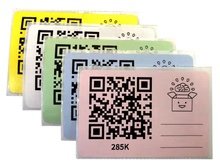
BoxBrain brings new meaning to labeling. They created “smart labels for smart living.” Their water-resistant labels help you organize your life, especially when packing, unpacking, and storing your things. The labels are color-coded with a QR code connected to their app.

I love BoxBrain’s simple 3-step process:

1. Grab Some Labels – There are 3 sizes and 5 colors.

2. Slap ‘Em On Your Stuff – Label your boxes with the color-coded labels. For example, use blue labels for kitchen items, yellow labels for toys, or green for the home office.

3. Know Where Your Stuff Is – Using your smartphone, scan the label, then enter keywords and photos. Use the keyword search to locate an item quickly.

“Motivation increases when you take action, even if it’s tiny. ”
— Linda Samuels, CPO-CD®, CVOP™

3. Interesting Article – Motivation and Organizing Mistakes

Have you ever worked on an organizing project and made a mistake that crushed your motivation? Maybe you underestimated the needed storage space, took on too many simultaneous projects, or purchased organizing containers before decluttering. Guess what? You’re not alone.

In the recent Redfin article, “Organizing Mistakes: 27 Slip-Ups to Avoid During Your Next Project,” Jamie Forbes features professional organizers, including me (#5). We share our best advice for making your next organizing project a success.

My suggestion is to keep like with like. By corralling similar items together, you can make more informed decisions, stop overbuying, know what you own, and quickly access your belongings.


4. Interesting Resource – Motivation and Downsizing

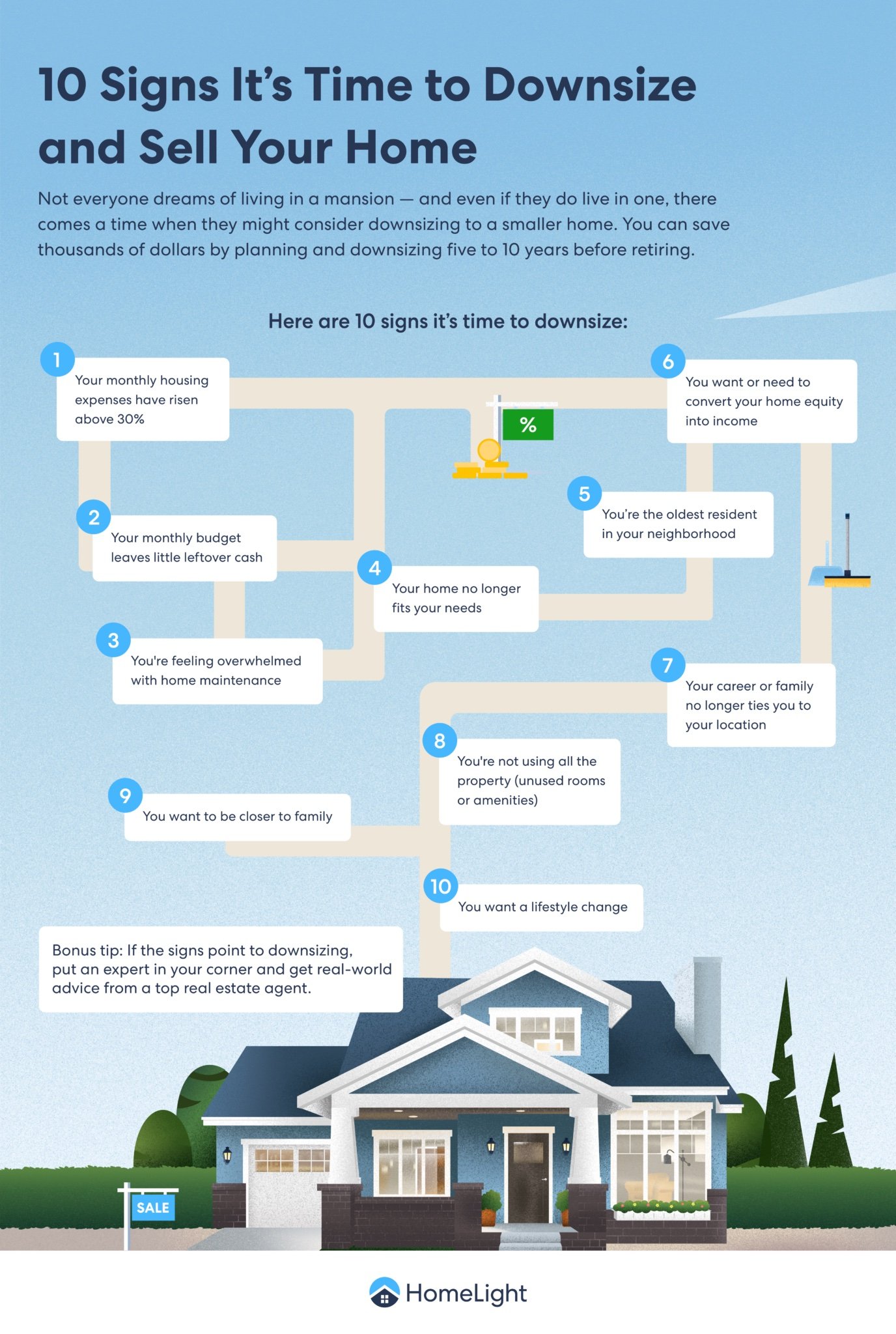
Are you or someone you know thinking about downsizing to a smaller home but aren’t 100% sure? If so, you’ll love the 10 Signs It’s Time to Downsize and Sell Your Home infographic from HomeLight. The real estate company explains how important timing can be in making that decision. Waiting can cost you more to run a larger home. Also, downsizing as you age can be more challenging due to health or mobility issues.

Motivations to downsize include feeling overwhelmed with home maintenance, your career or family no longer tying you to your location, you want a lifestyle change, or your home no longer fits your needs.

Downsizing is a compelling motivator to make a life change.


5. Interesting Thought – Motivation and Progress


A fascinating aspect of motivation is how it increases when you take action, even if it’s tiny. Progress, no matter how small, is still forward movement. So, when you are feeling discouraged or overwhelmed, instead of giving up, do one little thing. You’ll be amazed how an action will change your perspective from being stuck to feeling hopeful, energized, and motivated.


Do you have an interesting motivation-related discovery? Which of these resonates with you? I’d love to hear your thoughts. I invite you to join the conversation.


3 Hopeful Ideas Motivated Big Changes in My Life Which Can Really Help You Too

It’s fascinating how big changes are made. They start with small, almost unnoticeable habit shifts. On your journey to be free of clutter, you donate a bag of rarely worn clothes or edit and clear the pile of unsorted mail from your kitchen counter. These tiny, single actions can bring about significant changes when consistency and support are added to your effort. 

The other aspect of making meaningful changes is the need for time and mental energy to make them happen. When you’re preoccupied, running as fast as you can to keep up, or emotionally exhausted, change is the last thing on your mind. You can’t stop your life to make a change. Instead, to integrate new habits, it’s essential to create space in your life for prioritizing the change you desire. 

In the last several years, I’ve experienced many emotional energy pulls. These included taking care of my mom with dementia, saying my final good-byes to her last March, grieving, navigating the pandemic’s effects on my organizing business, and preparing for and having our youngest daughter’s wedding at our home during the pandemic. Despite these emotional highs and lows, I’ve found focused intervals to bring about changes in my life. Admittedly, many of these changes came into being when I had more mental energy to give them.

Coincidentally, the three anchors/words, which rhyme, kept me motivated and focused on my desired changes. They are Zoom, Noom, and Room.

While these specific ideas might not be on your change radar, I encourage you to consider which words are. Which anchors will help you pursue the changes you seek? How will you make the space and time for change to flourish?


3 Hopeful Ideas Motivated Big Changes in My Life Which Can Help You Too

1. Zoom

Communication, relationships, and community are some of my treasured values. When the pandemic arrived, many communication networks halted. Most in-person contact was suspended. I couldn’t visit with family, friends, colleagues, or clients. Sure I still had the phone, text, and email, but physical contact was limited and non-existent for extended periods.

Using Zoom became an incredible go-to tool that helped me slowly change and think about how I interacted, did business, and stayed socially active. I’m guessing that many of you are Zoomed-out, but for me, Zoom continues to be a viable way for navigating life and keeping connected with people. 

I embraced communication changes and used Zoom to-

Zoom provided a channel to nurture and develop relationships, shift my organizing business, learn, and teach. While most in-person activities are now possible as many pandemic restrictions lift, Zoom still remains a viable way for me to stay connected. The platform allowed me to be flexible during these last few years, quickly embrace change, and support what I value most.


2.  Noom

Being healthy is a top priority for me. While I had some healthy practices like meditating daily and eating lots of fruits and vegetables, I wanted to change other habits. For what seems like a bazillion years, one of my goals has been to ‘lose 10 pounds.’ I’ve never been a dieter and didn’t like the idea of going on a diet. Instead, about five years ago, I saw a tremendously helpful nutritionist. She gave me a better understanding of what foods and portions were best for me. Over eight months, I lost 15 pounds. But then, in time, I gained it back and more.  The ongoing support was vital, and the difference was noticeable when I stopped seeing her.

Do you remember how I spoke about having the time and mental energy to bring about change? It takes focused effort to make eating and other lifestyle changes. When my mom died, I was emotionally exhausted. It took me months to get my energy back. When it returned, I felt ready to refocus on my health and make some changes.

In September, I signed up for Noom. It’s a weight loss app with a psychology-based approach to “help you change not just how you eat, but how you think.” It’s well-designed and simple to use. The app with built-in accountability helps me keep daily food logs, understand my calorie budget, track water intake, daily exercise, and weight. You are assigned a personal Coach and receive short articles every day, which encourage, motivate, and explain the psychology of habits.

While I’m still working towards my target goal, in five months, I have lost 18.5 pounds, I’m drinking 9 glasses of water a day, and walking an average of 10,000 steps a day. There have been other changes such as losing many inches around my body, clothing fitting better, feeling more energetic, learning new skills, and knowing I have a doable life-changing plan that’s working.

A bonus surprise was my husband signed up for Noom with me. He’s made incredible changes, and I’m so proud of him. We support one another, which is invaluable.

With any significant life change, it’s essential to have ongoing support, whether an app, person, Coach or all of those. If you’re curious about Noom, click here to learn more.

What do you need to bring about the habit changes you desire?


“Big changes start with small actions.”
— Linda Samuels, CPO-CD®, CVPO™


3. Room

This last idea is about creating both physical and mental space in your life to feel calm, have room to think, and live with less stress. These changes were worth pursuing, and I have worked years to get there. For me, there is the physical manifestation, which comes in the form of an uncluttered home filled with colors, textures, and scents that soothe and delight. 

One of the goals I worked on last summer into fall, inspired by our vacation staying in a tiny house, was my ‘live with less’ project. While I had lots of stuff, I recognized I didn’t need or want it all. I started randomly going through drawers, closets, and files to let go of unnecessary things. It was cathartic and surprising how much stuff exited. I don’t miss anything.

The other part of ‘room’ is making space for your mental well-being. For me, that’s having quiet time, finding cozy spots to write, journal, or read, spending time in nature, exploring and photographing, meditating, or doing yoga. It’s making room for self-care and carving out time to feed my soul.

Especially with all that has happened in the world and the ongoing challenges, making time to replenish yourself is critical. It’s all too easy to get derailed by a crisis near or far. Our bodies are not designed to sustain continual stress.

What would it take to make room for you? What changes will help make room and space for your physical and emotional well-being?

Big changes start with small actions. What will be your anchors for change? What will provide motivation and support for the changes you desire? I’d love to hear your thoughts. I invite you to join the conversation.