Posts tagged letting go
How to Let Go of What's in Your Way to Joyfully Embrace the Good Stuff

What are you holding onto that’s getting in your way? Are there physical things, like clothing that no longer fits, stacks of magazines you’ll never read, or expired food and medicine? Are there habits that don’t serve you, such as not getting enough sleep, doomscrolling on your devices, or acquiring things without ever editing them? Are there behaviors that create more stress, such as constantly berating yourself, ruminating on interactions, or not taking time for play or joy?

Are these things holding you back from living the life you want? Do you want more calm, joy, or ease?

What happens, though, when you begin to let go of clutter and the things that create blockages and stress? What happens when you approach them in a new way? It’s not that challenges won’t appear or that stress triggers will disappear. However, when you begin to work with them differently and let go, you will have more bandwidth to embrace the good stuff.


A Tiny Shifts Learning Journey

21 Days

For the past few months, I’ve been learning from clinical psychologist and author Dr. Elisha Goldstein. Although he’s been on my radar for years, I signed up for a 21-Day Tiny Shifts Experience in January.

The program featured short, daily practices designed to help you better manage stress by supporting your nervous system. By the end of the course, I was better able to regulate my emotions through simple, intentional breathing practices.


6 Weeks

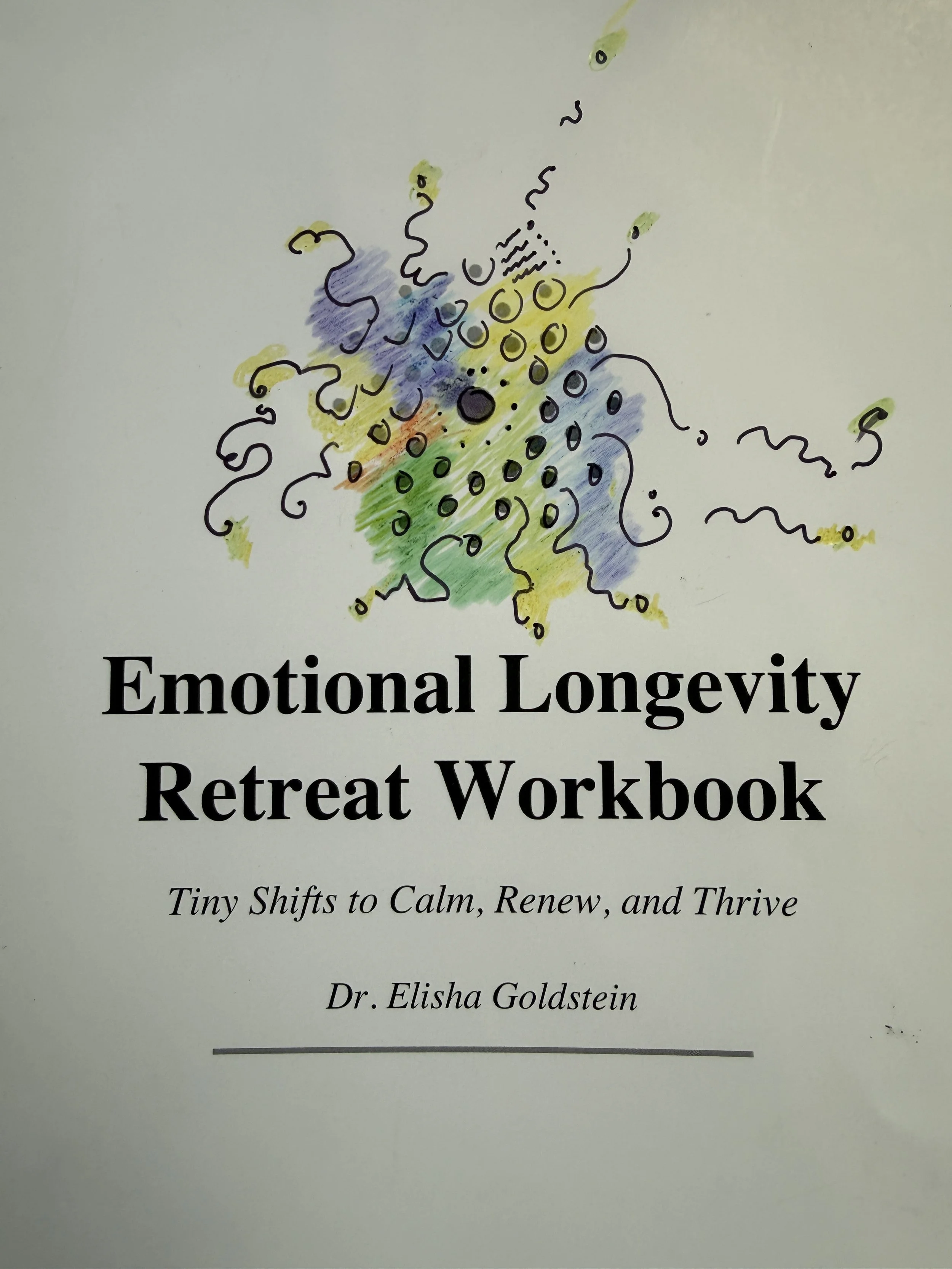
The experience was so wonderful that I wanted to learn more. Next, I registered for Elisha’s 6-Week Tiny Shifts Emotional Longevity course. It included two live sessions each week: one led by Elisha and the other an Integration Lab led by mindfulness teacher Susan Beckman Reagan.

There were simple, doable practices to work on between sessions, along with a virtual platform for communication. We learned more about emotional loops, supporting the nervous system, and the 4Rs: Recognize, Release, Refocus, and Reinforce.


The Book

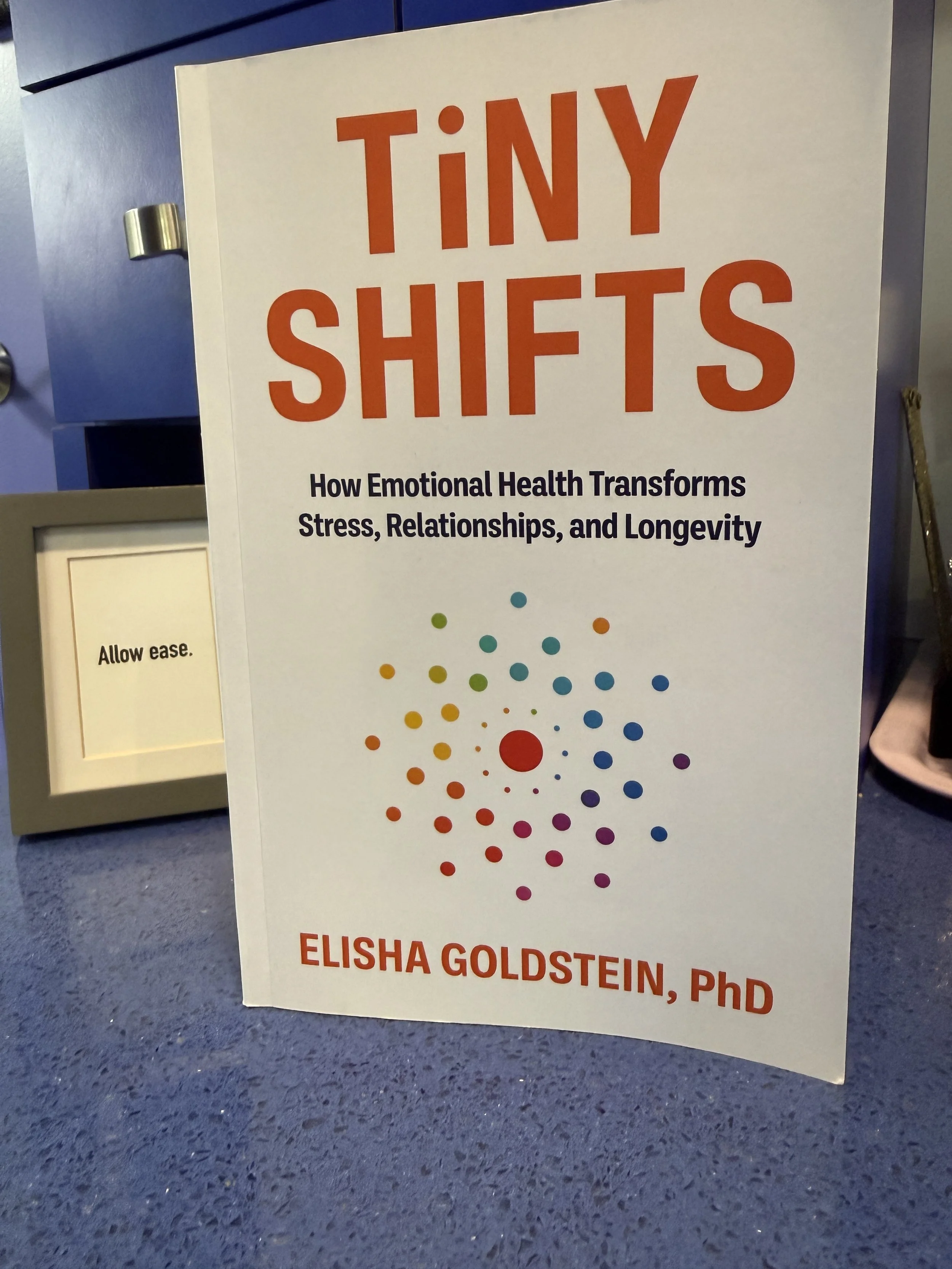
Simultaneously, Elisha released his new book, Tiny Shifts – How Emotional Health Transforms Stress, Relationships, and Longevity. While I was taking the courses, I read it, which helped me better assimilate what I was learning.

Elisha says, “Real change doesn’t come from doing more. Feel free to let go of that burden. It comes from shifting how we relate to what’s already here-one tiny emotional pivot at a time.”

If you haven’t read Tiny Shifts yet, I highly recommend it. Elisha presents his research-backed, doable strategies clearly and compassionately while sharing captivating stories.


The Retreat

The next part of my learning journey took place last weekend. Elisha offered a three-day Emotional Longevity Retreat at Kripalu in the Berkshires. It was especially meaningful to attend in person, since the previous courses were online. My husband, Steve, went, too.

What I had learned before was clarified or reinforced during the retreat. It was an emotional weekend—lots of crying, smiling, laughing, meditating, and pausing. While the strategies are simple, applying them in the moment takes practice. I’m still working on it and remain hopeful. I can see my progress.


What would it feel like to let go and embrace more joy and ease in your life?
— Linda Samuels, CPO-CD®, CVOP™


Embracing the Good Stuff

In these chaotic, uncertain times, there is no shortage of things beyond our control or that make us anxious. We can dwell there or let go. Elisha’s practices help tremendously with letting go. When you do, you will have more capacity to

  • Embrace joy, play, fun, and quiet.

  • Be present and available for the people and relationships in your life.

  • Have more ease.

  • Regroup more quickly from stressful situations.

  • Engage in better self-care and compassion.

  • Release the things, thoughts, habits, and behaviors that no longer serve you.

  • Be available for all the good stuff in your life.

What does the “good stuff” look like to you? A few years ago, I created my own list, which you can find here: Are You Making Time for ‘The Good Stuff?’ What’s one thing on your list?


Letting Go to Live with More Joy and Ease

What are you holding on to that causes you stress? What is keeping you from moving forward? What would it feel like to let go and embrace more joy and ease in your life?

I’d love to hear your thoughts. I invite you to join the conversation.


How Can I Help?

Do you feel overwhelmed or disorganized? Do you want to let go of what’s holding you back but feel stuck or unsure where to start? I’m here to help! You don’t have to do this alone. Virtual organizing is an extraordinary path forward – Local feel with a global reach.

Let’s connect! I’m easy to reach.

Letting go, getting organized, and living with more ease are possible, especially with support.


Goldilocks Inspires Useful Clues for How to Really Let Go

Do you remember the story of Goldilocks and the Three Bears? One of the main themes is Goldilocks’ search for what felt “just right.” One chair was too big, and another too small. She rejected both. However, when she found the one that fit, she knew it was the one for her and used it. The chair was right-sized and “just right” for her.

At the core of the Goldilocks philosophy is finding the sweet spot, the optimal place where things feel balanced, comfortable, and supportive. Who knew Goldilocks could help with letting go?

Are you struggling to let go of things, ideas, habits, or commitments? If so, a Goldilocks approach could help. Her decision tree went like this:

“This bed is too hard.”

“This bed is too soft.”

“This bed is just right.”

What will “just right” look and feel like for you?


Why is Letting Go Overwhelming?

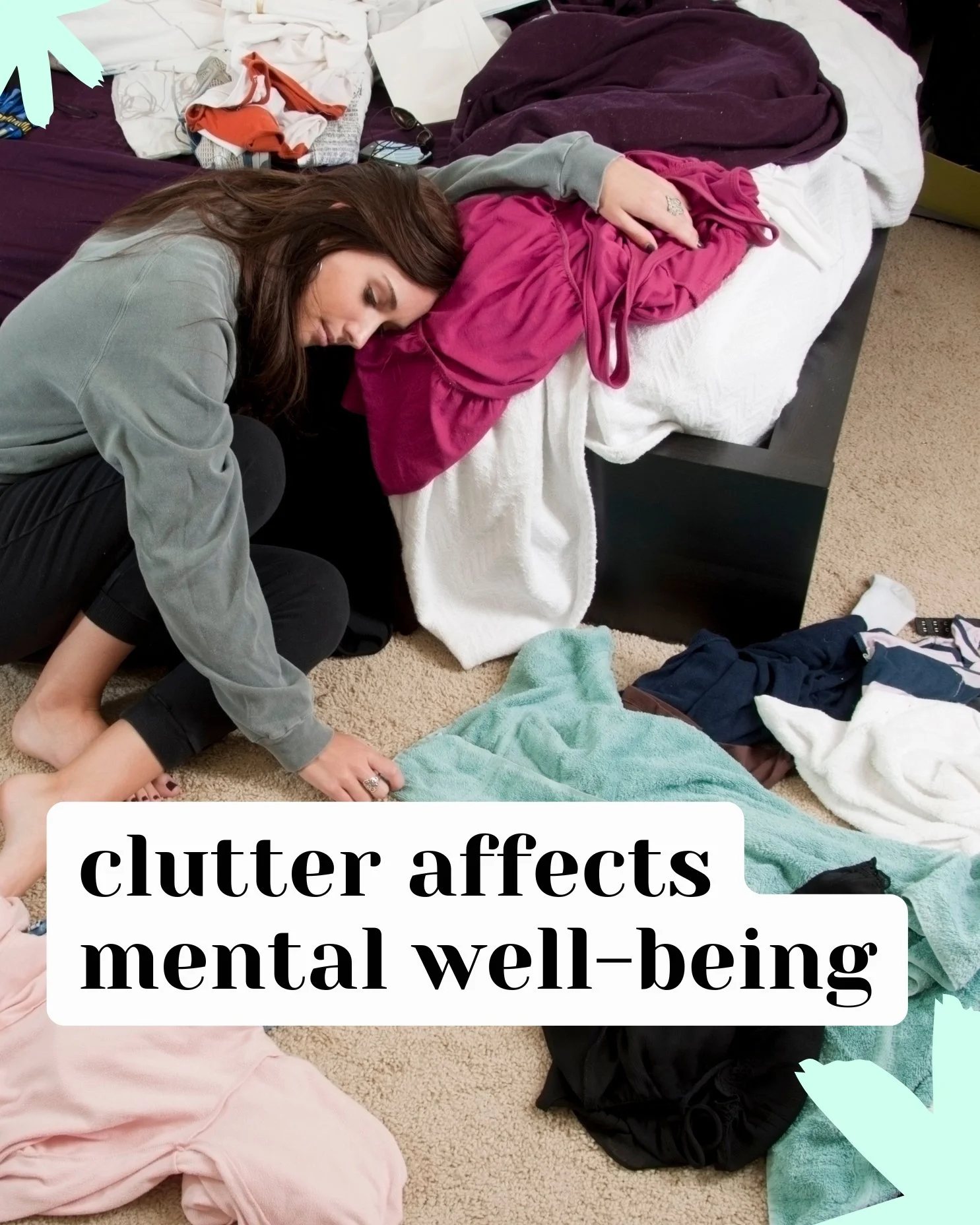
There can be a lot to sort through, which can make letting go feel overwhelming. Clutter can accumulate from:

  • years of acquiring

  • gifts and inherited items from others

  • postponed decisions

  • emotional attachments

  • unclear or nonexistent organizational systems

  • being overscheduled

  • unclear boundaries

  • not following through on closure loops

Time is part of the equation, too. You need time to make decisions and to align what you own with who you are and what you need now. This can be tricky if you feel stuck in the past or are holding onto things for an aspirational future or self.

However, when you start making decisions based on who you are now and your current needs, it brings greater clarity as you let go.


Are You Sacrificing the Present?

Many years ago, I attended an ICD class on consumerism, minimalism, and experimentalism, presented by my friend and colleague, Lynne Johnson. She shared a quote about letting go.

How much of your present are you willing to sacrifice in order to save remembrances of your past to ponder in your future?
— Anonymous

The question aligns with the Goldilocks philosophy of the three-point decision tree, but from a time-based perspective. Consider what you are holding onto in relation to the:

  • Past - Are you willing to hold on to things from your past that keep you stuck and no longer serve you? Can you release them and move on?

  • Present - Are you willing to let those things take up physical space and mental energy, distracting you from the present? Can you let go and be more aligned with the present?

  • Future - Are you holding onto things with a glimmer of hope that you will revisit, use, or need them someday? Can you say goodbye to them in service of an unencumbered future?


What DOES Letting GO Look Like?

When you release what you no longer need, you invite more ease, better life alignment, joy, and growth. Even releasing one thing makes room for what’s most important, essential, and valued by you.

Letting go can look like this:

  • Donate the never-used pots and pans to make the ones used regularly more accessible.

  • Release rarely-used purses to make room for the ones you do use.

  • Recycle the papers that ‘time took care of’ so you can focus on what’s current.

  • Skip the to-do list to enjoy a beautiful spring weekend day.

What does letting go look like for you?


The Goldilocks of Letting Go

What happens when you begin to align your life so it feels “just right?” Will you release what no longer belongs, brings you joy, or is useful? Will letting go bring you closer to living your best life now? When you release what's blocking your energy, space, and thoughts, you create room for calm, growth, and happiness.

Which ideas resonate with you most? I’d love to hear your thoughts. I invite you to join the conversation.


How Can I Help?

Do you feel overwhelmed or disorganized? Do you want to let go of the unnecessary but feel stuck or unsure where to start? I’m here to help! You don’t have to do this alone. Virtual organizing is an extraordinary path forward – Local feel with a global reach.

Let’s connect! I’m easy to reach.

Letting go and getting organized are possible, especially with support.
 
 
One Powerful Question: A Shortcut to Help You Release and Let Go

What’s not to love about shortcuts? They aren’t always equally effective. However, when you find one that helps you reach your desired goal more quickly and is less taxing on your brain, that’s a good thing.

Recently, I read an article in Real Simple about interior designer Young Huh and how to create spaces that feel calm. Huh just published a new book, A Mood, A Thought, A Feeling. When starting work on a room, Huh asks a simple question,

“What can I take out?”

Her philosophy encourages you to remove what doesn’t belong and surround yourself with what feels calming and peaceful.

Huh’s question caught my attention. I thought about how helpful it could be during the editing, letting go, and organizing process. There are many ways to approach getting organized. One method is to identify what doesn’t belong, or what you no longer need or want. Or, as Huh says, “What can I take out?”

Spring’s arrival prompts me to clear the landscape and make room for the blooms. What can you let go of to create space for calm and growth?


Letting Go Starts with Removing Things

Less Clutter, Less Noise

Often, I hear clients describe their environment as:

  • “My house is filled with too much clutter.”

  • “There is so much clutter, I can’t even think.”

  • “I can’t find anything because the things I want and don’t want are jumbled together.”

  • “The clutter paralyzes me.”

  • “I feel chaotic because of the clutter and disorganization in my home.”

Do any of these statements resonate with you? If so, consider asking yourself Huh’s powerful question: "What can I take out?”

This question is a good starting point.

What can I take out?
— Young Huh

More Great Letting Go Questions

Not all questions work for everyone. If Huh’s “take out” question doesn’t resonate with you, consider some alternatives, which you can find in my article: 21 Questions to Exercise Your Letting Go Muscles.

A few of my favorites are:

  • Has it overstayed its welcome?

  • Is it worth the real estate, energy, and maintenance?

  • Does it support your current needs?

  • What will become possible for you when you let go?

Releasing the Stuff

Are you ready to start letting go? If so, here’s a method to try.

  • Choose a room to work in.

  • Gather boxes and trash bags. These will help you easily sort what’s being removed from that space.

  • Label and set up those containers for > Belongs Elsewhere > Donate > Trash > Recycle.

  • With the question in mind, “What can I take out?" start in one corner or area of the room.

  • Focus on releasing items you no longer want or that belong elsewhere. Place items into their designated sorting containers.

  • After you finish one area or surface, move on to the next.

  • Repeat until the room has been decluttered.

  • Route the items you let go of to their ‘homes.’

  • Return to the room and notice how it feels. Does your space feel different? What are you noticing?


What Does Less Feel Like?

When you let go of things that no longer serve a purpose or belong elsewhere, the energy in the space begins to shift. This, in turn, influences how you feel when you're in that environment. Our possessions affect our space, time, and mental clarity. Releasing excess items helps you feel calmer, more focused, and less distracted.

Which ideas resonate with you the most? I’d love to hear your thoughts. I invite you to join the conversation.


How Can I Help?

Do you feel overwhelmed or disorganized? Do you want to let go of the unnecessary but feel stuck or unsure where to start? I’m here to help! You don’t have to do this alone. Virtual organizing is an extraordinary path forward – Local feel with a global reach.

Let’s connect! I’m easy to reach.

Letting go and getting organized are possible, especially with support.
 
 
5 Focused Ways a Virtual Professional Organizer Can Help During a Move


In the northeast, the leaves are changing, and it’s a season of transition. Is fall the unofficial moving season? It seems so, especially since many of my clients and kiddos are in the process of moving, downsizing, right-sizing, or transitioning.

Moving involves many decisions and plans, which can be overwhelming. The good news is you don’t have to do it alone. Reduce your stress and enjoy the benefits of getting help from a virtual professional organizer like me.

Depending on your stage in the moving process, motivation can vary significantly. For example, if you're moving within a month because your lease is ending or your house was just sold, the limited time creates pressure that boosts motivation. However, if you're planning to move years from now or moved several years ago but haven't fully unpacked or settled, your motivation might feel important but less urgent.

No matter what stage of moving you’re in—pre-move, during, or post-move—having the right support makes an enormous difference. Whether you hire a professional organizer or ask family and friends for help, creating your team will help things go more smoothly and reduce stress.

Because you know what they say—moving is one of the top ten most stressful things we do in life.

  • In a 2020 survey by OnePoll for North American Van Lines, 64% of respondents said that their recent move was one of the most stressful experiences they ever had.

  • In a 2022 Move.org survey, 38% of respondents said moving was more stressful than parting with a significant other.

  • In a 2025 survey by HireAHelper, 29% of participants said they’d rather get a divorce than move again. 55% of participants rated moving as highly stressful.


5 Ways a Virtual Professional Organizer Helps You Navigate a Move

1. Clarify Your Why

Your reasons for moving might seem obvious. However, an organizer can help you clarify these reasons and keep them relevant as you make decisions. There are many choices to consider, and decision fatigue can set in. Keeping your ‘why’ visible helps you stay focused, encourages the right actions, and boosts your motivation. 

Maybe your why is to:

  • Simplify life—own less, manage less, and reduce your financial obligations.

  • Consider the future—downsize and organize your belongings now so your family won’t have the burden of doing it after you’re gone.

  • Get more space—Your current living situation is too cramped, and you need extra room for your growing family.

  • Relocate temporarily—A family or work situation requires you to move, even if it’s not an ideal scenario.

  • Reimagine life—You’ve experienced a major life change, like losing a loved one, starting a new job, becoming an empty nester, or retiring. Now you want a fresh start in a new place.


2. Establish Timeline and Pace

As an organizer, I enter someone’s life at a particular moment in time. Sometimes, I’m contacted well in advance of a move, giving enough time to plan and edit. Other times, I engaged right before or after a move. Every scenario requires a different timeline to help someone go from where they are to where they want to be.

Working together, we can create a schedule, even a loose one, to put a reality check on what’s possible to accomplish within a certain timeframe. Many considerations will affect your timing, including:

  • Budget

  • Urgency

  • Time available to focus on the project

  • Life demands more than just moving

  • Support team you have or need to assemble

Pacing is just as essential as understanding the overall timeline. If you're years away from moving, you can proceed at a slower, steady pace. However, if you're moving this month, the pace needs to be much faster. You might need extra help to finish your move.


3. Edit and Organize Your Stuff

Even if you don’t see yourself as a ‘collector,’ you probably have plenty of things to edit before and even after your move. You know how it goes, right? As humans, we accumulate a lot of stuff. And if you’ve been in your home for a long time, you likely have even more stuff.

Enlisting help from a virtual professional organizer during the editing phase is invaluable. I can support that process in various ways, including:

  • Asking good questions

  • Weighing your options

  • Providing focus as you sort through your things

  • Establishing decision-making parameters

  • Sharing letting go strategies

  • Helping determine which category something belongs to: Keep, Toss, Donate, Sell, Route to storage, or Give to a specific person

While it’s best to edit your belongings before moving, that’s not always possible. Letting go often continues after the move, even if you edited beforehand. If you’ve already moved, I can help you with ongoing editing, decluttering, refining, space planning, organizing, and deciding about the last 10% of items that haven’t been unpacked.


Even if you don’t see yourself as a ‘collector,’ you probably have plenty of things to edit before and even after your move.
— Linda Samuels, CPO-CD®, CVOP™


4. Have Access to Trusted Resources

Throughout every stage of a move, you’ll need various resources for donating, selling, recycling, or disposing of items. You might also need referrals for vendors like movers, junk haulers, or suggestions for organizing products.

With over 30 years in the organizing industry, I’ve gathered hundreds of resources to share with my clients. I also have a network of industry colleagues who generously share their resources whenever I need a referral for something or someone I don’t already have.


5. Collaborate with a Thought Partner

Moving can feel like a huge jumble of puzzle pieces. Although the pieces will eventually fit together to create a new, beautiful picture, it currently feels chaotic and overwhelming. Moves and related tasks can be emotionally draining.

However, working with a thought partner helps you make sense of those pieces more quickly and feel supported throughout the process.

A thought partner can help you:

  • Get unstuck

  • Reduce overwhelm

  • Identify your next step

  • Brainstorm solutions to obstacles

  • Develop checklists

  • Encourage action

  • Discuss your choices and options

  • Provide accountability

  • Boost motivation


Can You Benefit from Virtual Organizing Help?

While physical tasks like packing and unpacking are not things I assist with as a virtual professional organizer, there are many other areas, as discussed, that I can help with.

Location isn’t a barrier. Virtual organizing lets me work globally. Even though I’m based in New York, I can help whether you’re in California, Canada, or somewhere else.

Virtual organizing sessions are focused and short, lasting 60 to 90 minutes each. We’ll work together on your goals, then you’ll have time afterward to work independently, with ongoing support to repeat that process.

Are you moving right now? If so, how can you benefit from enlisting help from a virtual professional organizer? 

I’d love to hear your thoughts. I invite you to join the conversation.


How Can I Help?

Do you feel overwhelmed, stuck, or disorganized? I’m here to help! Virtual organizing is an extraordinary path forward – Local feel with a global reach.

Let’s talk. I’m easy to reach.

Getting organized is possible, especially with support.