Posts tagged meditating
How to Let Go of What's in Your Way to Joyfully Embrace the Good Stuff

What are you holding onto that’s getting in your way? Are there physical things, like clothing that no longer fits, stacks of magazines you’ll never read, or expired food and medicine? Are there habits that don’t serve you, such as not getting enough sleep, doomscrolling on your devices, or acquiring things without ever editing them? Are there behaviors that create more stress, such as constantly berating yourself, ruminating on interactions, or not taking time for play or joy?

Are these things holding you back from living the life you want? Do you want more calm, joy, or ease?

What happens, though, when you begin to let go of clutter and the things that create blockages and stress? What happens when you approach them in a new way? It’s not that challenges won’t appear or that stress triggers will disappear. However, when you begin to work with them differently and let go, you will have more bandwidth to embrace the good stuff.


A Tiny Shifts Learning Journey

21 Days

For the past few months, I’ve been learning from clinical psychologist and author Dr. Elisha Goldstein. Although he’s been on my radar for years, I signed up for a 21-Day Tiny Shifts Experience in January.

The program featured short, daily practices designed to help you better manage stress by supporting your nervous system. By the end of the course, I was better able to regulate my emotions through simple, intentional breathing practices.


6 Weeks

The experience was so wonderful that I wanted to learn more. Next, I registered for Elisha’s 6-Week Tiny Shifts Emotional Longevity course. It included two live sessions each week: one led by Elisha and the other an Integration Lab led by mindfulness teacher Susan Beckman Reagan.

There were simple, doable practices to work on between sessions, along with a virtual platform for communication. We learned more about emotional loops, supporting the nervous system, and the 4Rs: Recognize, Release, Refocus, and Reinforce.


The Book
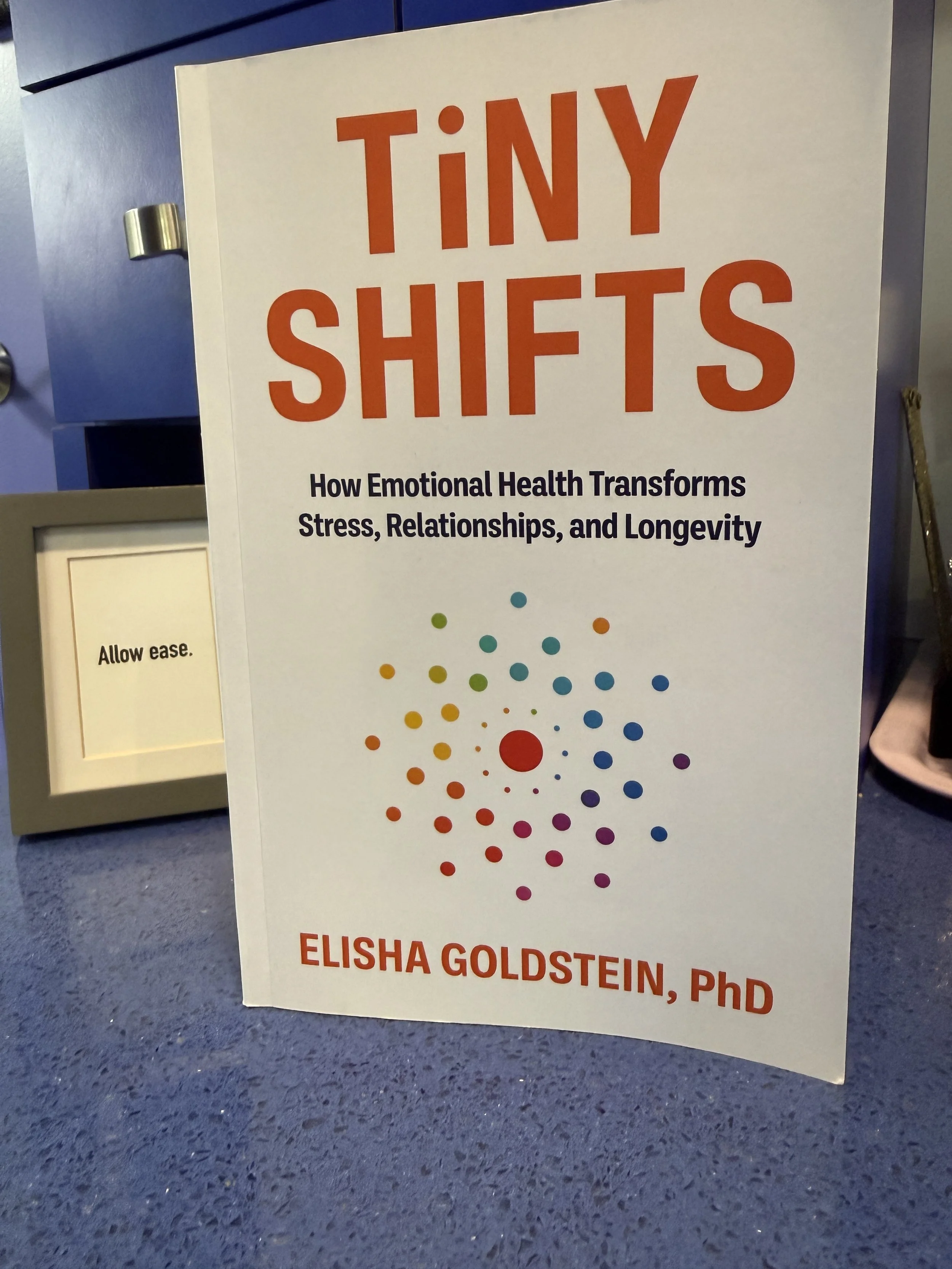
Simultaneously, Elisha released his new book, Tiny Shifts – How Emotional Health Transforms Stress, Relationships, and Longevity. While I was taking the courses, I read it, which helped me better assimilate what I was learning.

Elisha says, “Real change doesn’t come from doing more. Feel free to let go of that burden. It comes from shifting how we relate to what’s already here-one tiny emotional pivot at a time.”

If you haven’t read Tiny Shifts yet, I highly recommend it. Elisha presents his research-backed, doable strategies clearly and compassionately while sharing captivating stories.


The Retreat
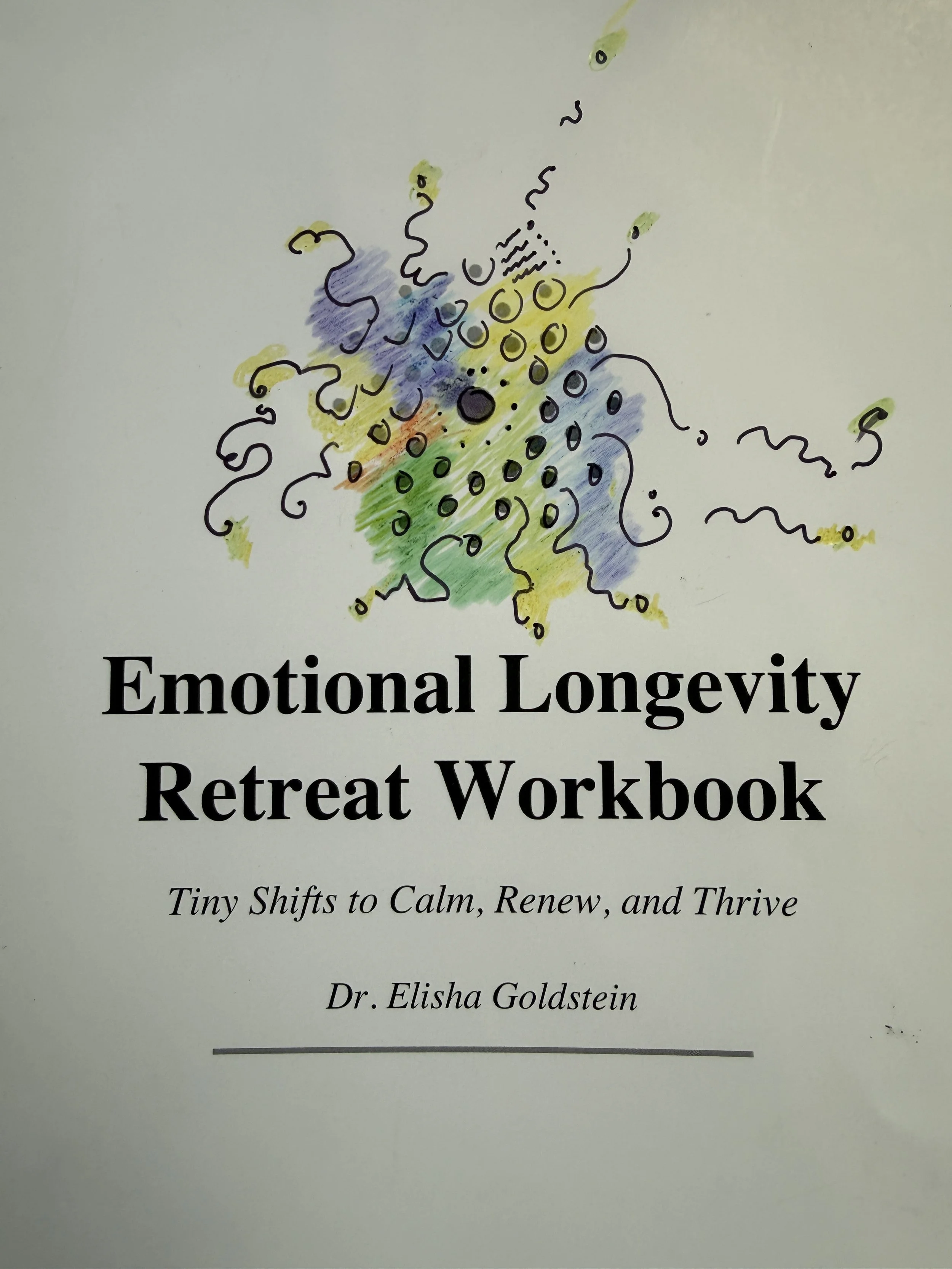
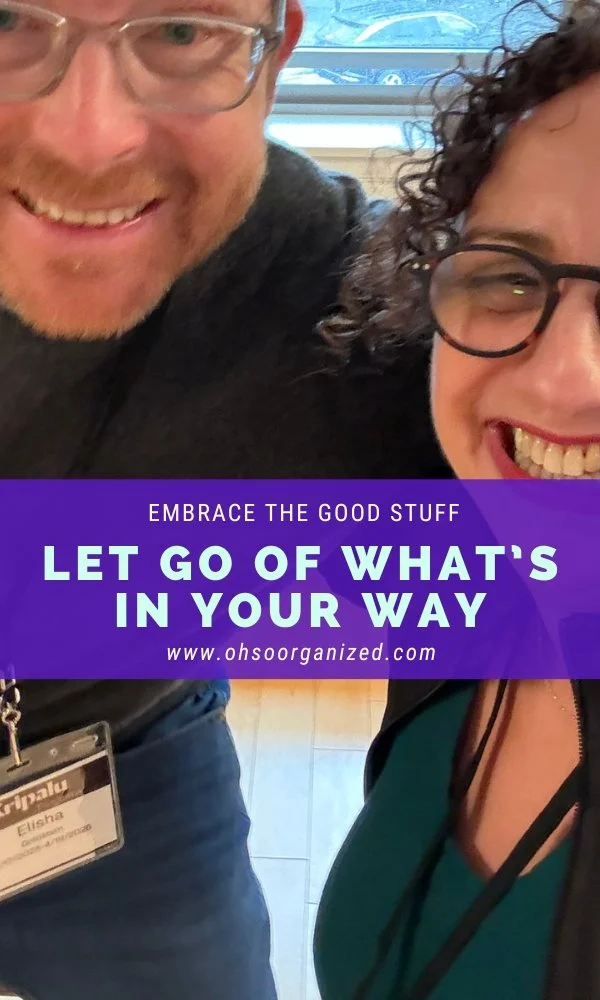
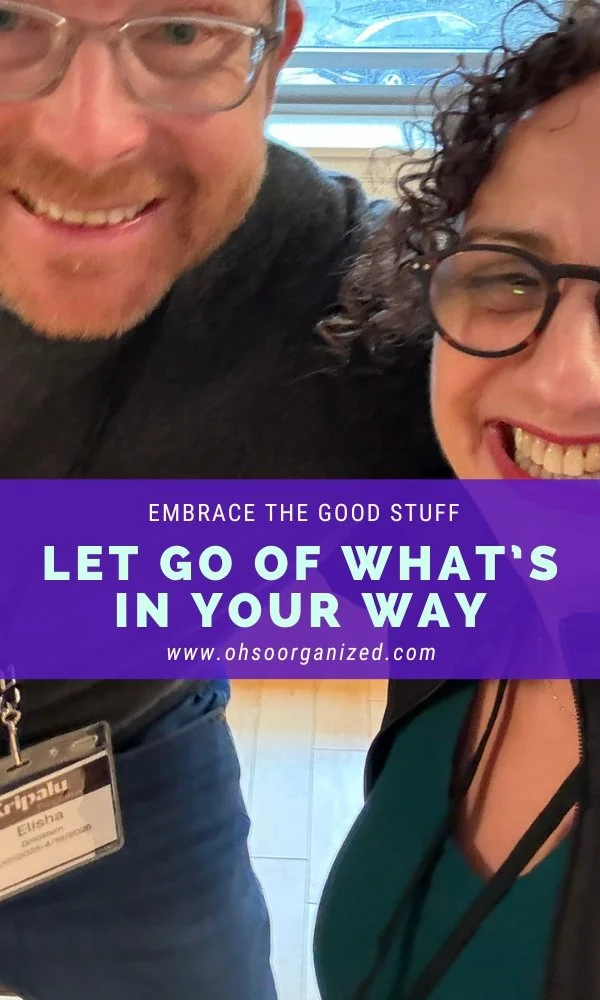
The next part of my learning journey took place last weekend. Elisha offered a three-day Emotional Longevity Retreat at Kripalu in the Berkshires. It was especially meaningful to attend in person, since the previous courses were online. My husband, Steve, went, too.

What I had learned before was clarified or reinforced during the retreat. It was an emotional weekend—lots of crying, smiling, laughing, meditating, and pausing. While the strategies are simple, applying them in the moment takes practice. I’m still working on it and remain hopeful. I can see my progress.


What would it feel like to let go and embrace more joy and ease in your life?
— Linda Samuels, CPO-CD®, CVOP™


Embracing the Good Stuff

In these chaotic, uncertain times, there is no shortage of things beyond our control or that make us anxious. We can dwell there or let go. Elisha’s practices help tremendously with letting go. When you do, you will have more capacity to

  • Embrace joy, play, fun, and quiet.

  • Be present and available for the people and relationships in your life.

  • Have more ease.

  • Regroup more quickly from stressful situations.

  • Engage in better self-care and compassion.

  • Release the things, thoughts, habits, and behaviors that no longer serve you.

  • Be available for all the good stuff in your life.

What does the “good stuff” look like to you? A few years ago, I created my own list, which you can find here: Are You Making Time for ‘The Good Stuff?’ What’s one thing on your list?


Letting Go to Live with More Joy and Ease

What are you holding on to that causes you stress? What is keeping you from moving forward? What would it feel like to let go and embrace more joy and ease in your life?

I’d love to hear your thoughts. I invite you to join the conversation.


How Can I Help?

Do you feel overwhelmed or disorganized? Do you want to let go of what’s holding you back but feel stuck or unsure where to start? I’m here to help! You don’t have to do this alone. Virtual organizing is an extraordinary path forward – Local feel with a global reach.

Let’s connect! I’m easy to reach.

Letting go, getting organized, and living with more ease are possible, especially with support.


5 Ways to Easily See What's Possible by Finding Solutions to Your Challenges

Are there many things you want to experience, explore, or accomplish in life? If so, that’s wonderful. However, when you encounter daily challenges, it becomes harder to think about the future and imagine possibilities.

You have the capacity to handle a lot. You can boost your capacity by identifying and addressing a specific challenge you’re facing. Often, just one small tweak is enough to create momentum and open the path for new ideas you couldn’t see before.

Why is that? It’s easy to get stuck in cycles of distress, overwhelm, and frustration. These patterns can cause paralysis and inaction. When you’re in that negative mode, your mind can spiral or shut down. Thinking and dreaming about new possibilities feels out of reach.

There are many ways to open up the ‘what’s possible’ path. Depending on your preferences and situation, choose the strategy that will be most effective for you.


5 Ways to Easily See What’s Possible by Finding Solutions to Your Challenges

1. Identify the Hiccups

One of my favorite methods to prepare for possibilities is by making a list of the hiccups you encounter during your day.

Pay close attention as you go through your day. As situations occur, write down anything that causes you stress, distress, or inconvenience. These might include things like:

  • Misplaced or lost keys, glasses, or your phone.

  • Had trouble getting dressed because of clutter in the closet.

  • Created an overly complicated organizational system that’s too difficult to maintain.

  • Had supplies tumble out of the bathroom cabinet every time it was opened.

  • Was late for an appointment again.

  • Ran out of milk, toilet paper, apples, or other household staples.

  • Was annoyed during kitchen meal prep because things weren’t organized in a useful way.

  • Woke up cranky because of sleep disruptions or lack of sleep.

  • Began the day feeling anxious and unsure what to focus on.

Notice the hiccup. Write it down. Choose one of the challenges and fix the problem.


2. Quiet Your Mind

When the noise upstairs gets too loud and clouds your thoughts, it can prevent you from seeing possibilities. How can you quiet the mind so you can move forward with clarity and purpose?

There are many ways to do this, including:

  • Journaling

  • Meditating

  • Sipping coffee or tea from your favorite mug

  • Resting

  • Reading

  • Breathing slowly with focus and intention


3. Declutter the Desk

Numerous studies show how clutter can negatively affect our mental health and well-being. Not everyone is affected by clutter to the same degree. However, if clutter bothers you, you may actually feel its effects viscerally. You might feel anxious, stressed, agitated, or have difficulty concentrating or relaxing.

One of the easiest ways to change how you’re feeling is by decluttering a small area. It doesn’t matter what you choose. Pick something with distinct boundaries like a desk surface, a comfy chair, or a coffee table.

Remove items that don’t belong. Route the outtakes to the trash, recycling bin, donation box, or rehome them elsewhere. For the remaining items, decide whether you want them to stay, let them go, or relocate to another spot.

Clearing space and surfaces is calming. With this simple reset, you’ll be more open to possibilities. 

The physical act of movement can encourage progress and possibilities in other areas of your life.
— Linda Samuels, CPO-CD®, CVOP™

4. Move Your Body

Sitting is passive. Not only does it make your body stiff and less active, but it can also affect your energy level and mood. Since transitioning from in-person to virtual work, I sit much more than I used to.

Movement has become even more important. I make sure to take breaks between virtual organizing sessions to walk around, stretch, take bio breaks, or get some fresh air. When I’m on the phone, I often walk around the house while talking. I incorporate other movements by doing yoga, exercising, walking by the river or in the woods, running errands, gardening, sweeping, or cleaning.

Some movement is spontaneous, while some is more intentional. It helps when I schedule time to meet a friend for a walk or go to yoga class. That adds accountability and keeps me committed to moving more.

Physical movement creates its own momentum. The physical act of movement can encourage progress and possibilities in other areas of your life.


5. Ask for Help

Have you ever faced a challenge that overwhelmed you? When that happens, do you try to solve it on your own or ask for help? I usually try to figure things out myself first. However, there are times when hiring someone or seeking advice is beneficial.

Recently, I experienced some frustrating tech problems with Mailchimp and Square while setting up the backend for my December workshop. While customer support offered a few insights, they didn’t resolve the issue, so I hired someone to help me. It was incredible how much less stressed I felt knowing someone would help me find a solution and fix the problem. I didn’t have to do this alone. It was wonderful having the personalized support to troubleshoot the issue, discuss options I hadn’t considered, and resolve the problem. Thank you, Lana Kitcher!

As a professional organizer, I help my clients get unstuck and move forward. I love helping and serving others. It’s inspiring to see what becomes possible when obstacles are removed.

Sometimes the answer to a problem is asking for help. When you receive the support you need, your stress and overwhelm decrease. You become more available to take the next steps and imagine what is possible.


Will Finding Solutions Make You More Receptive to New Possibilities?

Everyone gets stuck sometimes. What happens next is what matters most. There are many options, which include identifying the challenge, decluttering a small area, or reaching out for help. What hiccups during your day are keeping you frustrated and stuck? What helps you feel receptive to new possibilities?

Which ideas resonate most with you? I’d love to hear your thoughts. I invite you to join the conversation.


How Can I Help?

Do you feel overwhelmed, stuck, or disorganized? I’m here to help! Virtual organizing is an extraordinary path forward – Local feel with a global reach.

Let’s talk. I’m easy to reach.

Getting organized and making progress is possible, especially with support.


Here Are 5 Most Interesting and Best Time Management Discoveries - v50

Enjoy the latest release (v50) of the “What’s Interesting?” series, which features my most recent finds that inform, inspire, and relate to organizing and life balance. These unique time management discoveries reflect this month’s blog theme.

You are an engaged, vibrant, and generous group. I am deeply grateful for your ongoing presence, positive energy, and contributions to this community. I look forward to your participation and additional contributions to the collection I’ve sourced.

What do you find interesting?


What’s Interesting? – 5 Best Time Management Discoveries

1. Interesting Read – Productivity Time

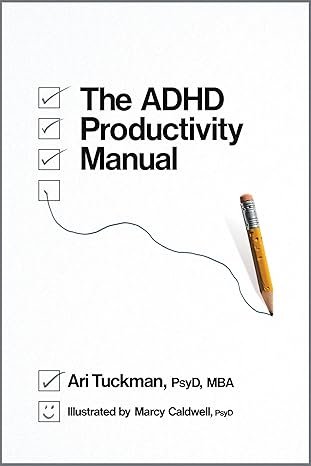
Do you or someone you know have ADHD and struggle with productivity, consistency, and punctuality? If so, you’ll love the latest book by psychologist, author, presenter, and thought-leader, Ari Tuckman, PsyD, MBA.

He draws on his 40,000 hours of client work to share strategies and insights on how people with ADHD can get things done.

In The ADHD Productivity Manual, Ari explores thirty-six areas that affect productivity for individuals with ADHD. Topics include:

  • How ADHD makes it harder to see time

  • Essentials for making the most of your brain

  • Clarifying your goals

  • Minimizing distractions

  • Letting go of perfection

  • Navigating feelings of overwhelm

Ari says, “The obvious goal of this book is to help you get more done. The less obvious, but more important goal is that I want you to feel good about yourself.” He goes on to say that “ADHD is a disorder of converting intentions into actions. This book is all about action.”


2. Interesting Article – Timeboxing

Have you ever tried timeboxing? In Rebecca Muller’s Thrive Global article, “Try This Now: ‘Timebox’ Your Tasks at Work,” she makes the case for using this visualization exercise to help you prioritize and focus on which tasks to tackle first and which can wait. This approach can be especially beneficial when you feel overwhelmed and stressed by a lengthy to-do list.

Here is one method to timebox:

  • Grab a sheet of paper

  • Draw a column of boxes

  • Put each task in a box based on its priority level

You will quickly visualize which items require immediate attention and which are non-urgent. Muller quotes Marc Zao-Sanders in a Harvard Business Review piece. Zao-Sanders says about timeboxing, “It’s visual, intuitive, and obvious.”

In what ways could timeboxing be an effective strategy for you?


3. Interesting Product – Grounding Time

Busy schedules, excessive stress, and uncertainty can leave you feeling emotionally depleted and anxious. Does your day involve pushing yourself to the point of exhaustion? If so, it’s vital to restore your well-being by taking time to ground and calm yourself.

There are various ways to accomplish this, such as meditating, taking nature walks, journaling, talking with a loved one, slowly sipping a beverage, or gazing out the window.

Another idea is to use a time reminder for grounding. I found this adorable stress reliever made by Mindsight. The six-inch-tall Breathing Buddha helps you practice mindful breathing in short sprints. It features a simple visual soft light for guidance, pre-set breathing cycles, is rechargeable, and is portable.

What helps you feel relaxed and grounded?


It’s vital to restore your well-being by taking time to ground and calm yourself.
— Linda Samuels, CPO-CD®, CVOP™


4. Interesting Resource – Laugh Break Time

While life isn’t all puppies and rainbows, there’s something life-affirming about taking time for silly, joy-inducing moments. One way to do that is through laughter.

When was the last time you had a good laugh? I’m talking about full-body, uncontrollable, contagious laughter. Maybe you saw a comedian, heard a great joke, or watched a funny movie. Something tickled your giggle motor, and the laughter began.

By the way, if you haven’t seen the movie “Bad Shabbos,” I highly recommend it. I laughed so hard that my face hurt.

On a recent trip with my wonderful husband, Steve, we stopped at the Whispering Oaks Vineyard in Sunbury, PA. I gazed at the lush green landscape and sipped a delicious frozen wine slushy, which has become my new favorite drink. Then we shared this playful moment.

Steve started laughing, and I couldn’t help but join in. It makes me laugh every time I watch the video, and it reminds me of how essential laughter breaks are in life. While I recognize how personal humor can be, I hope this short clip brings a little lightness to your day.

What makes you laugh?


5. Interesting Thought – Progress Time

It’s easy to get discouraged when you are making changes or striving for a larger goal. The secret to moving forward and boosting motivation hinges on redefining progress.

Break large projects into smaller, manageable, and accomplishable parts. Celebrate the progress you are making with each action, even if that means simply acknowledging it. Keep going until you achieve the results you want.

A puzzle consists of many pieces. Each piece serves a role in creating the complete picture. Completion occurs by finding and placing one puzzle piece at a time. Likewise, achieving your goals happens through small actions that support progress.

What will you make progress on today?


Making the Most of Your Time

Each person receives the gift of 24 hours a day. It’s up to you to decide how you want to use your days, what you will prioritize, and what you will put on hold or release.

How can you manage your time better? What is one thing you could change that would make a significant and positive difference? Which of these discoveries resonates most with you? I’d love to hear your thoughts and invite you to join the conversation.


How Can I Help?

Do you want support to get unstuck, become organized, and utilize your time more effectively? I’m here to help. Virtual organizing is an extraordinary path forward – local feel with global reach.

Please email me at linda@ohsorganized.com, call 914-271-5673, or schedule a Discovery Call. Change is possible, especially with support.
 
 
What If Your Next Step Developed a New Habit to Hopefully Transform Your Life?

Are there times when figuring out your next step is challenging? Maybe you need more information, fear making mistakes, or feel overwhelmed with decision-making.

If the next step is a one-and-done task, it can seem more manageable. However, the next step can feel elusive and unclear when working on a long-term project or making a significant life change.

There are many ways to approach finding next, which I’ve written a lot about. Some of these ideas to get unstuck and determine what’s next included:

Recently, I discovered an inspired question, which approaches next in a refreshing way.


Making Next Transformational

In James Clear’s “3-2-1 Thursday” newsletter, he posed this thought-provoking question:

“What single habit if implemented consistently for the rest of this year, would transform your life the most?”

I love this question for three reasons:

Reason 1. The query focuses your attention to developing just one new habit. Most of us tend to take on too much at once, making it difficult to make progress on anything.

Reason 2. The question encourages you to consider which habit change would have the most impact. You are investing your time in doing something different. Selecting the habit that will be most transformative will give you the most for your efforts.

Reason 3. The ask supports consistent, small efforts that will result in monumental, positive change over a specific, doable time frame, “rest of this year.”

What single habit if implemented consistently for the rest of this year, would transform your life the most?
— James Clear

What Will You Invite In?

Let’s remember and imagine.

Remember - Think about a time you successfully developed a new habit. What did you learn from that experience? Is it a habit you still engage in? What positive affect resulted?

Imagine - Future think to the end of this year. What positive change happened as a result of your consistent habit? Which area of your life did it affect? Was it related to your relationships, finances, health, work, home, personal development, or another category?

As you consider what new habit to adopt, remember that your future self will thank you.

One Significant Habit Change

I’ve changed many habits in my life, including my reading habits. I love reading and typically do so at night before bed. However, that’s also when I’m most tired. When I’m sleepy, I read more slowly, read fewer pages because I drift off, and don’t retain the material as well.

One morning, after meditating, I changed things up and read before getting out of bed. I was motivated to finish the book, which I had almost completed the night before. Reading while fully awake was such an uplifting experience that I integrated this new habit into my morning routine.

It’s been amazing! Not only am I enjoying and assimilating what I’m reading even more, but I’m also reading twice as many books. This habit supports my thirst for learning and understanding, which I highly value.

What area of your life would you like to change? What new habit can enhance your life? What will be next for you? I’d love to hear your thoughts. I invite you to join the conversation.


How Can I Help?

Do you want support organizing, developing new habits, or figuring out your next step? I’d love to help! Virtual organizing is an extraordinary path forward – local feel with a global reach.

Please schedule a Discovery Call, email me at linda@ohsorganized.com, or call 914-271-5673. Change is possible, especially with support.