

Posts in Embrace Change
Two Direct Ways to Think About Change and Choose Your Best Option

As another major snowstorm, “a historic blizzard,” arrives today in the Northeast, thoughts of change fill my mind. As I write, only a light, gentle snow is falling. It’s barely sticking. Yet news reports warn that heavy snow (16” to 20”) is on the way. Talk about change! Right now, all is calm, but things can shift quickly.

The idea of progressing quickly is what I want to highlight. Although now, I’m not referring to the landscape or weather. Instead, I’m thinking about the change you want to make in your life. What shifts do you want, need, or hope for?

It’s all well and good to desire change, yet as you might have experienced, change can be difficult. Often, the challenge is with identifying which direction you want to take. When that happens, it’s easy to get stuck before you even begin.

Recently, I came across a quote from James Clear’s 3-2-1 newsletter. While he wrote specifically about growth, I interpreted his idea through the lens of change. His concept is so direct, and it could work beautifully, especially if you are struggling to make a change.


Two Ways to Choose Your Best Option for Change

When planning for the New Year, I use various templates and questions to design my year. Many I’ve shared with you, including these:

James Clear’s concept is another way to cut through the noise and make a direct choice. He said,

“There are two ways to grow: by adding or by shedding. Do you need to add something or do you need to shed something?”

How powerful is that? As you think about Clear’s framing, what arises?


How to Use This Change Process

I can envision taking a piece of paper, drawing a vertical line down the middle, and labeling the two columns: “Add Something” and “Shed Something.” From there, capture your thoughts on the page.

Your “Add” column might include:

  • Get more sleep

  • Learn something new

  • Drink more water

  • Invite people over

  • Meditate

  • Exercise

  • Do something creative

Your “Shed” column might include:

  • Piles of magazines

  • Books I’ll never read again

  • Clothing that no longer fits

  • Dishware I never use

  • Thoughts that don’t serve me

  • Relationships that are draining

Next, select one item from each column that you’re most interested in changing. Circle it. You’ve taken many ideas and narrowed them down to two. It’s much easier to make a choice when there are fewer options.

Which one is calling your name? Is it something from the Add or Shed column? Begin with the change that feels most enticing. This is your starting point. Your choice is made. Now you can work on making that change.

After completing the change, return to your list. This is a working, flexible document. Add, remove, and choose the next change you want to make.


Do you need to add something or do you need to shed something?
— James Clear

Focusing on Change

There are many ways to approach the changes you desire. What are your thoughts on this method inspired by James Clear? In what ways could it work for you?

I’d love to hear your thoughts. I invite you to join the conversation.


How Can I Help?

Do you feel overwhelmed or disorganized? Do you want to make a change, but feel stuck? I’m here to help! Virtual organizing is an extraordinary path forward – Local feel with a global reach.

Let’s connect! I’m easy to reach.

Embracing change and getting organized are possible, especially with support.


How One Small Change Can Help Reduce Overwhelm and Boost Task Activation

There are two challenges related to change that many of my clients face. The most common reason is overwhelm, often because the changes they seek are significant. Overwhelm can happen when you:

  • Have difficulty deciding where to start

  • Want to make multiple changes

  • Are unsure whether what you want to accomplish is possible

  • Engage in negative self-talk or unhelpful loops and scripts

  • Are uncertain how you’ll have time to make the changes you seek

The second most common challenge is task activation. My clients often know what to do, yet struggle to take action. They may experience low mood, boredom with the task, self-doubt, exhaustion, or difficulty managing their time.

The good news is that even when you’re feeling overwhelmed and having difficulty activating, things can shift quickly in a positive direction. I’ve seen this happen consistently with my clients, and it’s inspiring to be part of.

Are you curious about how to shift from overwhelm to hope and from stuckness to action? If so, keep reading to learn a few helpful strategies.


Change Strategies That Work When You’re Feeling Overwhelmed and Stuck

Strategy 1: Go Small

You know the phrase, “Think big?” For the first strategy, do the exact opposite. Instead of focusing on all the changes you want to make, go small, really small. This shift creates a boundary.

Let’s say you want to edit and organize all the rooms in your home. The goal is doable, but the enormity of those tasks feels overwhelming. For now, set aside thinking about the big picture and focus on a single, small piece.

For example, you want to edit and organize your clothes, which are stored in many rooms, dressers, and closets. Select one small area to begin, such as a drawer, a shelf, a closet rod, or a bag stuffed in the basement. Anywhere is OK as long as the area is small.

You’ll notice almost immediately that your mood begins to regulate because you’ve contained the organizing task to something more manageable. Overwhelm and anxiety subside when you set boundaries around your area of focus.


Strategy 2: Engage in What’s Doable

Combine the first strategy, going small, with this next one. As you can imagine, it’s not enough to create a tinier boundary and shift your mindset. It must be paired with an action or task. By reducing stress and cortisol surges, activation becomes possible. You can calmly face your task.

Here’s the magic. Making progress on that one small thing has a wonderfully positive effect. Your thoughts transform from “I can’t do this” to “I’m getting it done!” Your mood shifts from blocked and negative to lighter, more energetic, and more excited about taking on more.


Overwhelm and anxiety subside when you set boundaries around your area of focus.
— Linda Samuels. CPO-CD®, CVOP™


Strategy 3: Enlist Help

The first two strategies are effective. However, if you’re ready for change and still feel unable to move forward, it’s time for the third option: Ask for help. This can come from a nonjudgmental friend, family member, or professional organizer like me. You don’t have to do this alone.

My clients recognize that having a partner on their organizing journey is the secret sauce. They appreciate ongoing support, discussions of solutions and challenges, help with decision-making, a thought partner, and encouragement.

Some recent client organizing tasks included:

  • Decluttering the dining room table

  • Refining a project management system

  • Editing several bags of shirts

  • Sorting and releasing old business files from a shelf

  • Editing and letting go of a box of electronic material

For all of these projects, my clients’ starting point was feeling overwhelmed and unable to act. However, by narrowing the scope, focusing on one small part at a time, and enlisting external support, they improved their mood, accomplished a specific task, boosted their confidence, and were motivated to do more.


Why Does a Tiny Change Matter?

Small shifts are doable and sustainable. When you think about change, it can feel overwhelming, especially when the changes are big. However, by adjusting your mindset, narrowing the scope, and enlisting help, you can make progress. What helps you when you feel overwhelmed? How do you work with task activation? What resonates with you?

I’d love to hear your thoughts. I invite you to join the conversation.


How Can I Help?

Do you feel overwhelmed, disorganized, or paralyzed? Do you seek change, yet feel stuck? I’m here to help! Virtual organizing is an extraordinary path forward – Local feel with a global reach.

Let’s connect! I’m easy to reach.

Embracing change and getting organized are possible, especially with support.
 
 
How to Meet Change with More Compassion and Ease

When you think of compassion and ease, what sensations do you feel in your body? What images come to mind? What stories or messages do your thoughts reveal?

Now, think about change. Are you experiencing sensations, images, and thoughts that feel quite different from those associated with compassion and ease?

No one has the same experience, and yours will likely differ from mine. For me, thoughts of compassion and ease bring calm, care, and gentleness. My breath feels steady and slow. My mind feels clear. I feel more grounded, present, and better able to navigate in the moment.

When I think about change, my initial reaction is to brace. I can feel my shoulders tense, my jaw clench, and a funny sensation in my stomach. Not all change feels that way. Sometimes, positive anticipation and excitement are present. But rarely with change is my first thought or feeling calm or ease-filled.

What becomes possible when you can meet change with compassion and ease?


Meet Change More Gently

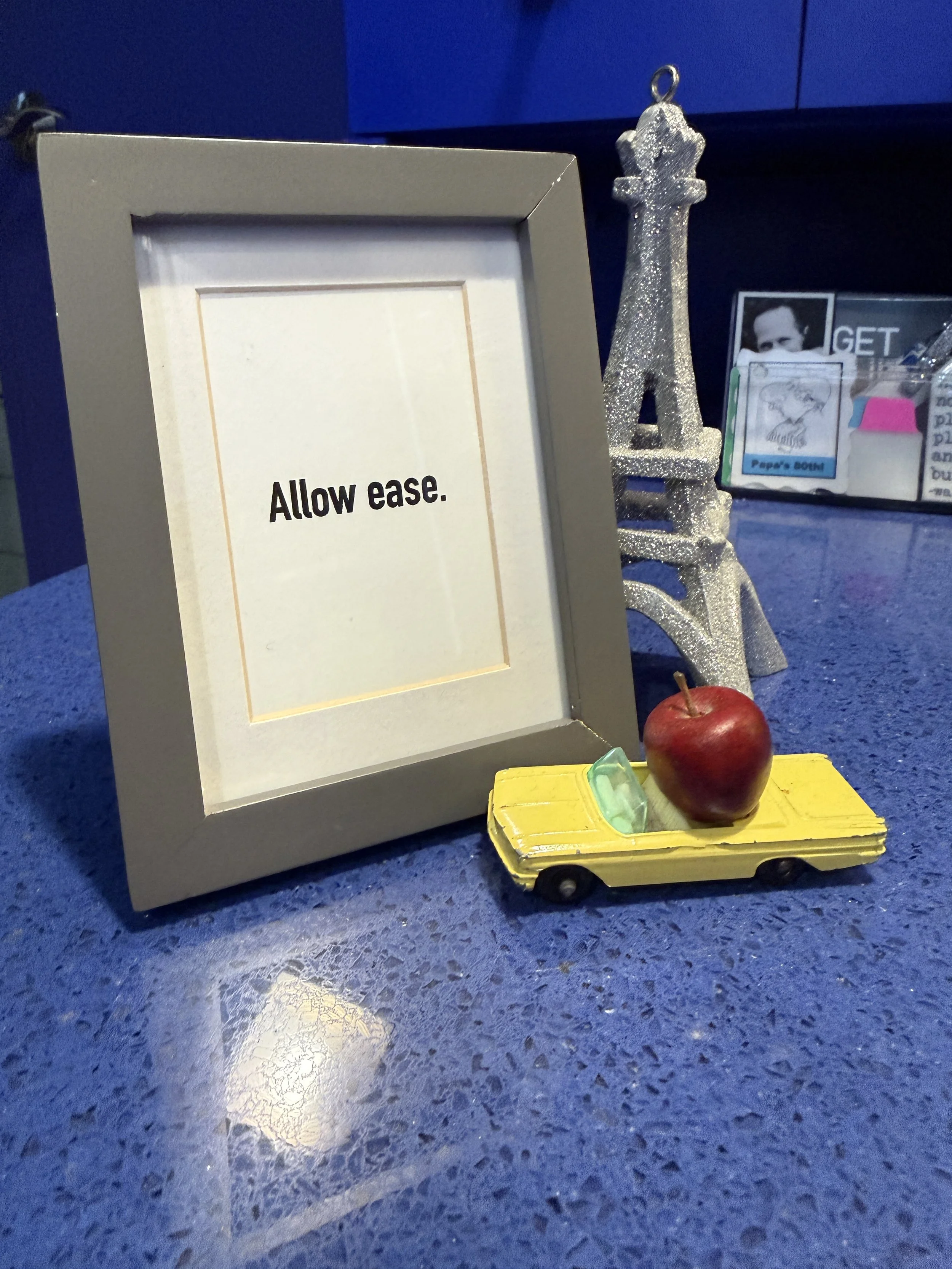
Last week, I wrote about the Tiny Shifts Experience I’ve been participating in, led by Dr. Elisha Goldstein. In one of his prompts, he guided us to “Allow a little more ease” throughout the day.

Before starting the Tiny Shifts program, I had been considering “ease” as my guiding principle, my North Star for 2026. When Elisha encouraged us to “Allow a little more ease,” it confirmed what I was already thinking.

This week, I tweaked the message. My focus for 2026 will be “Allow ease.” I will meet each day, including the challenges, joys, tasks, commitments, and changes I seek, and those thrust upon me, with more compassion and ease.


Engage in Strategies That Encourage Ease

When I notice I’m getting stressed, I will lean on these two strategies.

Strategy 1: Embody Ease with the Breath

This one is so simple. I’ve already used it half a dozen times recently, and it’s incredibly effective. It takes less than a minute.

To Embody Ease:

  • Pause what you’re doing.

  • Gently close your eyes or shift your gaze downwards.

  • Thinking silently, pair these two words while you breathe.

  • Inhale > Allow.

  • Exhale > Ease.

  • Repeat the sequence one or more times until your nervous system calms.

Strategy 2: Ask One Simple Question

You can ask this question on its own, before, or after using the breathing strategy. Listen to what arises and then focus on making a small shift.

Ask this:

Where can I allow more ease right now?

The query will help you identify where your tension or stress lies. How can you change your experience in the moment and lean into more ease? Is there a physical place in your body you can soften? Is there an unhelpful thought loop that needs to be released or noticed? Where is ease possible for you right now?

Where can I allow more ease right now?
— Linda Samuels, CPO-CD®, CVOP™


Can You Shift How You Approach Change?

Change can be exciting or stressful. By integrating strategies that foster compassion and ease, you can move forward with greater grounding and calm. What is your relationship to change? How could creating more ease alter your relationship with change? Which ideas resonate with you?

I’d love to hear your thoughts. I invite you to join the conversation.


How Can I Help?

Do you feel overwhelmed, disorganized, or stressed? Do you want to embrace change this year, yet feel stuck? I’m here to help! Virtual organizing is an extraordinary path forward – Local feel with a global reach.

Let’s connect! I’m easy to reach.

Embracing change and getting organized are possible, especially with support.
 
 
How to Make an Effective Morning Routine that Supports Focus, Energy, & Change

Making a change in your life can be challenging. Have you ever wondered why? Here are some common obstacles you might encounter:

  • Feeling unsure about how to create the change you desire

  • Feeling defeated as the change you desire appears unattainable

  • Feeling a lack of energy or resources to manifest the change

  • Feeling overwhelmed by other responsibilities in your life makes focusing on intentional change seem unrealistic right now

  • Feeling frustrated by the time needed to create change

  • Feeling unclear about the change you want to make

  • Feeling resentful that you want to make a change but would rather focus on less stressful activities

  • Feeling the absence of a support system

Yet, despite these potential difficulties, you still want to make a change. Change is possible when you’re in a negative, stress-filled state, but it’s more challenging. What if you could create a starting point that is more conducive and encouraging?

I recently discovered something that could be a game-changer (no pun intended).


The Value of a Morning Activation Ritual

In Joseph Nguyen’s book Don’t Believe Everything You Think – Why Your Thinking is the Beginning & End of Suffering, I read a passage about developing an “activation ritual.” While Nguyen applied this concept to reduce stressful thoughts, I can see how the idea of rituals could be useful for facilitating change.

Nguyen says, “Most of us are used to spending the majority of our day in a state of stress (thinking).” However, when you stop thinking and stressing, that energy can be redirected elsewhere. Without channeling it elsewhere, you will likely revert to a thinking and stressful state.

He suggests creating a morning activation ritual that helps you “get back into a state of non-thinking and flow. It can be an activity that helps you feel grounded and allows you to practice getting into a state of non-thinking.”

Consider centering activities such as meditating, exercising, journaling, or making tea. “An activation ritual enables you to build momentum in a positive direction immediately when you wake up so that it’s easier to stay in that state of non-thinking for the rest of the day.” Nguyen suggests that it’s possible to “channel the newfound energy into our goals of inspiration.”

An activation ritual enables you to build momentum in a positive direction . . .
— Joseph Nguyen

Create Your Activation Ritual

Do you start your day gently with a nourishing and grounding routine? Or are your mornings often rushed and chaotic?

You have the opportunity to create a centering morning ritual that will energize you, reduce stress, and enhance your ability to make the change you desire.

Here is one approach to creating an activation ritual:

  • Establish a consistent wake-up time.

  • Select one grounding activity before beginning your day, such as exercising, meditating, or journaling.

  • Do this for one week.

  • Observe what happened.

  • Depending on what you discovered, continue or alter your activation ritual.

Beginning the day feeling grounded and nourished will cultivate an internal state that promotes the change you want.

What change would you like to make? How can a morning activation ritual benefit you? I’d love to hear your thoughts. I invite you to join the conversation.


How Can I Help?

Do you want support creating routines, organizing, planning, or inviting positive change? I’d love to help! Virtual organizing is an extraordinary path forward – local feel with a global reach.

Please schedule a Discovery Call, email me at linda@ohsorganized.com, or call 914-271-5673. Change is possible, especially with support.