Posts tagged choice
When Does Your Next Step Need a Helpful Reality Check?

Have you experienced that feeling of overwhelm when trying to figure out your next step? If so, you’re not alone. Choosing what to do next can be a challenge. Why is that? There can be many reasons, including:

  • Finding decision-making difficult

  • Being unclear about the next step in a process

  • Having difficulty prioritizing

  • Feeling fearful of choosing the ‘wrong’ option

  • Making the next step too big

  • Finding it difficult to estimate how much time something will take

  • Having too many options

  • Thinking aspirationally rather than realistically

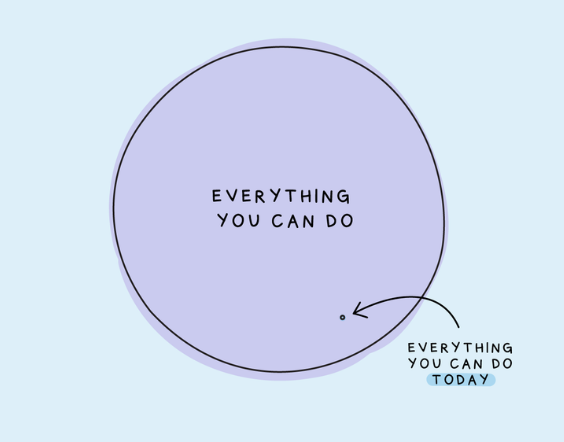
Since you might be feeling overwhelmed right now, I’m going to focus on a single idea. A while back, I saw a graphic by Liz Fosslien. She has a talent for making the complex immediately understandable. When I saw this image (see below), I thought about how it applied to next steps, especially regarding scope and what’s actually doable.

Often, when you’re thinking about what to do next, you consider everything you need to do instead of what you can realistically accomplish today. Aspirational thinking can derail your next step because your focus is too broad. You believe you can do it all right now. However, it’s only possible to accomplish a few things in a day.


How to Give Your Next Step a Reality Check

One of the best places to start when you’re trying to figure out what to do next is to acknowledge that only a small portion of what you want or need to do can happen today. That’s being realistic.

Next, select a few things you want to make progress on today. Review those options and choose one small, doable task to start with. Once that task is complete enough, move on to the next item on your list.

There’s nothing wrong with listing everything you want to do this week, month, year, or in life. However, when you want to get unstuck and take immediate action, it’s helpful to be more specific and realistic. Progress comes from narrowing your focus and managing your available time.


Only a small portion of what you want or need to do can happen today.
— Linda Samuels, CPO-CD®, CVOP™


What’s Next for You?

Figuring out your next step can feel elusive at times. However, by narrowing the scope and being realistic about your available time, you can move forward with more ease. What helps you figure out what’s next? Which ideas resonate with you?

I’d love to hear your thoughts. I invite you to join the conversation.


How Can I Help?

Do you feel overwhelmed or disorganized? Do you want to take your next step but feel stuck? I’m here to help! Virtual organizing is an extraordinary path forward – Local feel with a global reach.

Let’s connect! I’m easy to reach.

Moving forward and getting organized are possible, especially with support.


Two Direct Ways to Think About Change and Choose Your Best Option

As another major snowstorm, “a historic blizzard,” arrives today in the Northeast, thoughts of change fill my mind. As I write, only a light, gentle snow is falling. It’s barely sticking. Yet news reports warn that heavy snow (16” to 20”) is on the way. Talk about change! Right now, all is calm, but things can shift quickly.

The idea of progressing quickly is what I want to highlight. Although now, I’m not referring to the landscape or weather. Instead, I’m thinking about the change you want to make in your life. What shifts do you want, need, or hope for?

It’s all well and good to desire change, yet as you might have experienced, change can be difficult. Often, the challenge is with identifying which direction you want to take. When that happens, it’s easy to get stuck before you even begin.

Recently, I came across a quote from James Clear’s 3-2-1 newsletter. While he wrote specifically about growth, I interpreted his idea through the lens of change. His concept is so direct, and it could work beautifully, especially if you are struggling to make a change.


Two Ways to Choose Your Best Option for Change

When planning for the New Year, I use various templates and questions to design my year. Many I’ve shared with you, including these:

James Clear’s concept is another way to cut through the noise and make a direct choice. He said,

“There are two ways to grow: by adding or by shedding. Do you need to add something or do you need to shed something?”

How powerful is that? As you think about Clear’s framing, what arises?


How to Use This Change Process

I can envision taking a piece of paper, drawing a vertical line down the middle, and labeling the two columns: “Add Something” and “Shed Something.” From there, capture your thoughts on the page.

Your “Add” column might include:

  • Get more sleep

  • Learn something new

  • Drink more water

  • Invite people over

  • Meditate

  • Exercise

  • Do something creative

Your “Shed” column might include:

  • Piles of magazines

  • Books I’ll never read again

  • Clothing that no longer fits

  • Dishware I never use

  • Thoughts that don’t serve me

  • Relationships that are draining

Next, select one item from each column that you’re most interested in changing. Circle it. You’ve taken many ideas and narrowed them down to two. It’s much easier to make a choice when there are fewer options.

Which one is calling your name? Is it something from the Add or Shed column? Begin with the change that feels most enticing. This is your starting point. Your choice is made. Now you can work on making that change.

After completing the change, return to your list. This is a working, flexible document. Add, remove, and choose the next change you want to make.


Do you need to add something or do you need to shed something?
— James Clear

Focusing on Change

There are many ways to approach the changes you desire. What are your thoughts on this method inspired by James Clear? In what ways could it work for you?

I’d love to hear your thoughts. I invite you to join the conversation.


How Can I Help?

Do you feel overwhelmed or disorganized? Do you want to make a change, but feel stuck? I’m here to help! Virtual organizing is an extraordinary path forward – Local feel with a global reach.

Let’s connect! I’m easy to reach.

Embracing change and getting organized are possible, especially with support.
 
 
3 Helpful Things I Learned That Will Benefit My Virtual Organizing Clients

Attending organizing conferences is one of the highlights of my year. I learn interesting things, dedicate time to professional growth, connect with dear colleagues, and meet new people.

I just got back from the Institute for Challenging Disorganization’s (ICD) conference in Atlanta. Colleagues came from all over the United States and around the world, including Canada, Mexico, Spain, the Netherlands, and New Zealand. We learned together from experts on decision-making, time management, ADHD, autism, hoarding disorder, aging, dementia, and more.

Earlier this month, I participated in a meditation and writing retreat led by my dear friend and life coach, Yota Schneider. She shared a quote from John O’Donohue that feels relevant to the ideas I’m about to share. He said, “Nothing opens up the mind like the glimpse of new possibility.”

It’s the “glimpse” of what is possible that fosters hope and encourages change for my virtual organizing clients. I hope what I’m about to share will also be relevant and helpful for you.


3 Helpful Things I Learned at the Organizing Conference That Can Benefit You

1. Decision-Making Takes Energy

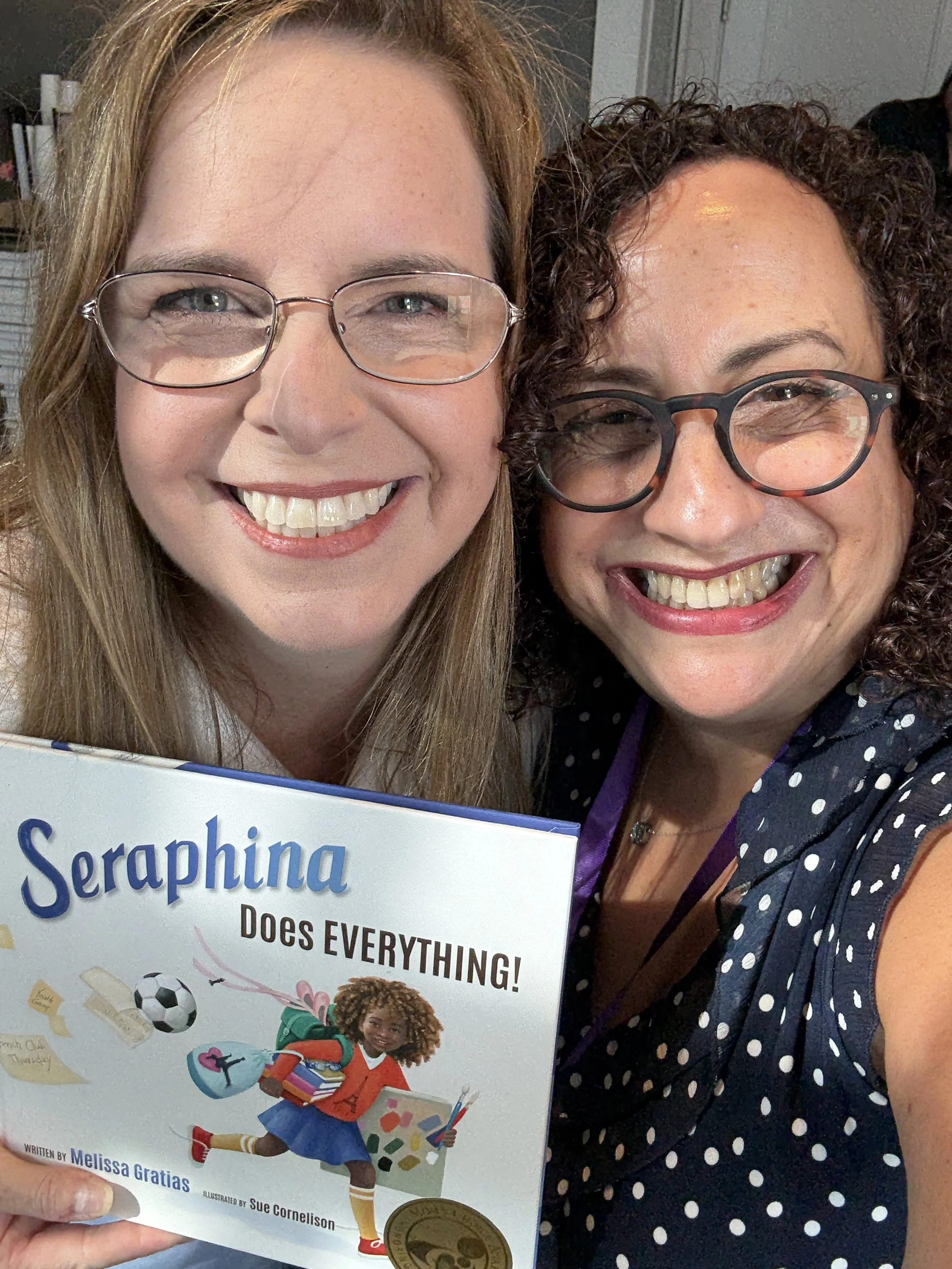
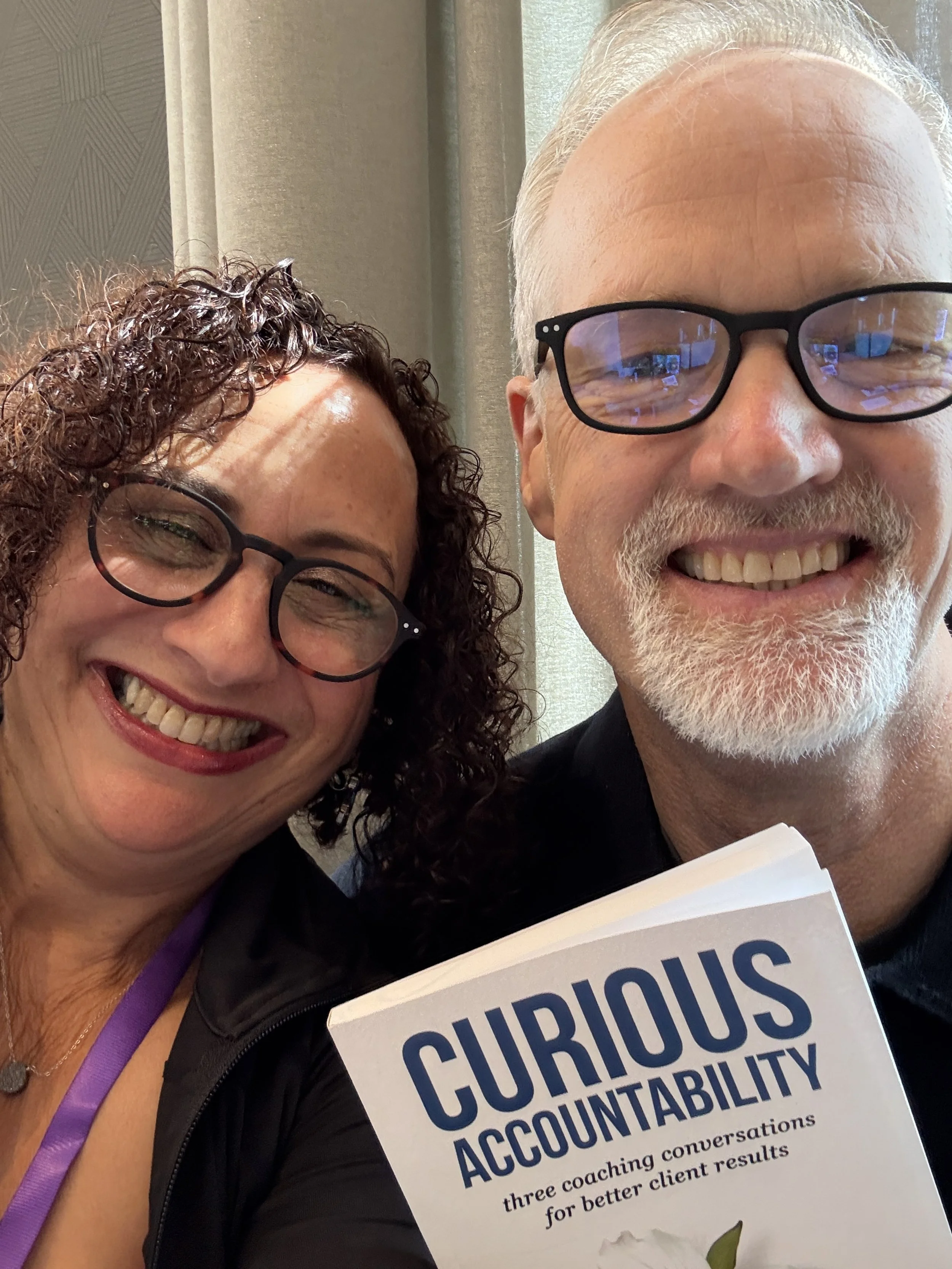
Melissa Gratias and Linda Samuels

Getting and staying organized requires making lots of decisions. One of the conference sessions about the brain and decision-making was presented by productivity expert, colleague, and fellow blogger, Melissa Gratias, PhD. She said, “The more choices, the more cognitively taxing.”  

In another session on chronic disorganization and aging, Beth Nolan, PhD, a gerontology expert, also discussed decision-making. She mentioned that one way we can help our clients with decision-making is by “being aware of the energy it takes.” Decision fatigue can become even more pronounced when compensating for physical changes or conditions.

Making decisions is an integral part of most virtual organizing sessions. I provide support to my clients and consider their energy level as they:

  • Weigh various options

  • Choose what to keep or release

  • Decide what step is next

  • Select what to include or exclude from their schedules


2. Change Barriers Can Be Overcome

Linda Samuels and Cameron Gott

Change was another topic that surfaced throughout the conference. In the session on tools to help your ADHD clients with their organizing goals, presented by Executive ADHD Coach, trainer, podcast host, author, and friend, Cameron Gott, PCC, he spoke about change.

Cam said there are many barriers to change, especially when ADHD is in the mix. The “ADHD hard place” exists in the space between being aware of the issues and actualizing the change you seek. Some of these ‘change’ barriers include:

  • Engaging in negative self-talk

  • Having lots of rules

  • Having difficulty prioritizing

  • Being challenged with activating

  • Experiencing a lack of focus

  • Getting easily distracted

One of the tools Cam suggested is using curiosity to bring about change. However, curiosity can also act as a barrier to change. As a barrier, it can appear as:

  • Doing endless research

  • Going down rabbit holes

  • Engaging in time sucks

However, Cam said you can reframe curiosity as a resource. He said, “Bring curiosity to a dilemma.” This will help you focus and take a more proactive approach.

While my virtual organizing clients desire change, they often face internal and external obstacles. However, with support and accountability, we work together to identify these challenges and try different ways to overcome them.


Bring curiosity to a dilemma.
— Cameron Gott, PCC


3. Connection is Essential

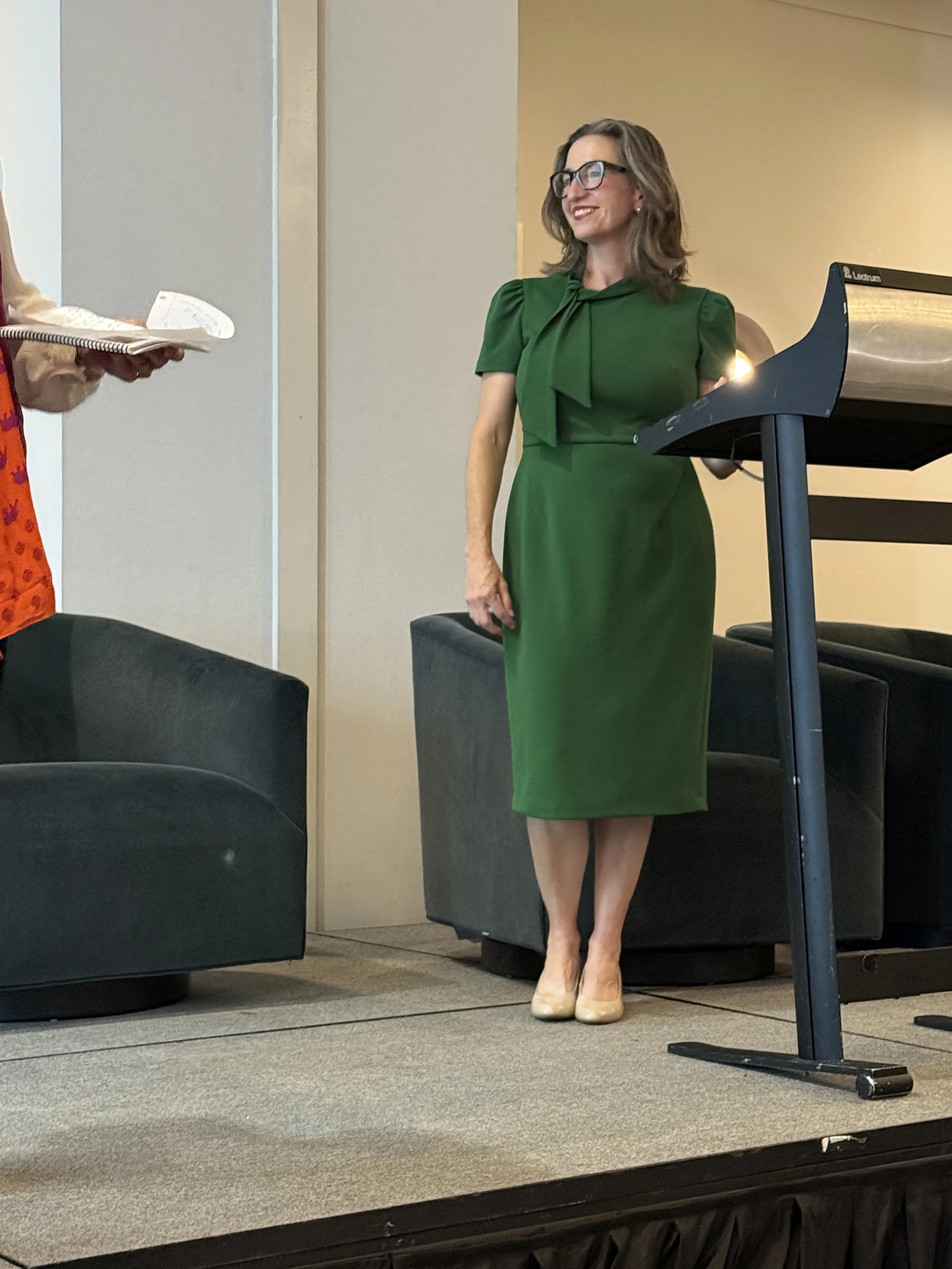
Carrie M. Lane

The last conference session, “Qualitative Research, Connective Labor & Professional Organizing,” was presented by Carrie Lane, PhD, an anthropologist and author of More Than Pretty Boxes – How the Rise of Professional Organizing Shows Us the Way We Work Isn’t Working.

“Connective labor,” which is “work that relies on empathy, human interaction, and mutual recognition,” was one of the ideas Carrie discussed. She referenced her friend’s book, The Last Human Job, written by Allison Pugh, a sociologist and author.

Carrie reminded us that “Our job as organizers requires the human connection – an intimate, nonjudgmental connection.”

While technology and AI keep advancing into our daily lives in many ways, nothing can replace human interaction and connection. I value the relationship I have with my clients. By building trust, showing compassion, and remaining nonjudgmental, I provide support as they work on growth and positive change.


Decision-Making, Change, Connection, and Virtual Organizing

There are many ways I support my virtual organizing clients. Are you struggling with making decisions, creating change, or feeling disconnected from others? What becomes possible when you get the help you need? Which ideas resonate most with you?

I’d love to hear your thoughts. I invite you to join the conversation.


How Can I Help?

Do you feel overwhelmed, stuck, or disorganized? I’m here to help! Virtual organizing is an extraordinary path forward – Local feel with a global reach.

Let’s talk. I’m easy to reach.

Getting organized is possible, especially with support.

 
 
One Insightful Question to Bring a Joyful Balance into Your Life

The holidays are quite the time of year. The twinkling lights decorating the landscape cue us to this season of giving, celebrating, and reflecting.

You might be finishing this year’s projects or beginning new ones to continue in the new year. While joy-inducing opportunities are abundant, balancing the holidays, work life, personal plans, and life maintenance responsibilities can be stressful.

There are many ways to bring calm and balance into your life, and I’ve written extensively about them.

Recently, I read something valuable and relevant from James Clear, which I’ll share with you. I hope you find it helpful as you navigate your balance this season.


First, The Back Story

Are you familiar with James Clear’s “3-2-1 Thursday” newsletter? Each issue includes three of his short ideas, two quotes from others, and one question to consider. One of my clients told me about it, and I signed up immediately. I enjoy receiving his weekly wisdom in its easily digestible format.


Two Simple Rules

In a recent newsletter, Clear shared this:

“Two simple rules:

  1. You get better at what you practice.

  2. Everything is practice.”

He encourages observing yourself and others to notice what we’re practicing. He reminds us that where you focus is a choice. For example, are you practicing…

  • “Getting mad on social media?”

  • “The fine art of noticing how they have been wronged?”

  • Stressing over being stressed?

  • Saying “yes” to the point of being overscheduled?

  • Not following through on commitments?

  • Engaging in negative self-talk?

  • Not sleeping enough?

  • Accumulating more stuff?


One Insightful Question

Bringing awareness to your practices is essential for changing where your time and energy go. Clear asks, “What are you practicing?”

Do you want to “get better” at nourishing practices? If so, focus on those while reducing harmful ones.

What are you practicing?
— James Clear

Here are several of my recent practices:


Which Practices Will Bring You More Balance?

You have an opportunity to create a better balance this season. What will you focus on during the last few weeks of the year? Which practices can you let go of that no longer serve you? Which ones do you want to invite in?

You have choices. I’m excited to see how this idea can shift your balance. I’d love to hear your thoughts. I invite you to join the conversation.


How Can I Help?

Do you want support decluttering, organizing, planning, or creating more balance? I’d love to help! Virtual organizing is an extraordinary path forward – A local feel with a global reach.

Please schedule a Discovery Call, email me at linda@ohsorganized.com, or call 914-271-5673. Organization, balance, and ease are possible, especially with support.