Posts tagged learn
How a Fantastic Conference Taught Me More About Virtual Organizing

Recently, I returned from the Institute for Challenging Disorganization’s (ICD) conference, held in Canada this year. Colleagues from around the globe gathered to learn, connect, and explore the latest ideas and research related to neurodivergence and people affected by chronic disorganization.

The conference covered a fascinating range of topics, including ADHD, decision-making, navigating life transitions, clutter, emotional labor, hoarding disorder, motivational interviewing, and communication.

I was thrilled to be part of the panel, “Cultivating Connection: Best Practices for Communication with Neurodivergent Clients,” alongside my wonderful colleagues. Sara Skillen moderated, and Leslie Josel and Elizabeth Brink were the other panelists.

Whenever I’m learning, I have one goal: to learn at least one new thing, discover one new resource, or deepen my connection with something I already know. Honestly, with that simple goal, I consistently come away with far more than one thing.

The ICD conference was no exception.

I’m excited to share some of my takeaways and how they expanded my thinking, reinforced what I already know, and will influence the virtual organizing work I do with clients.


What Expanded My Thinking About Virtual Organizing

Emotional Labor

In “The Art of the Invisible: Helping Neurodiverse Families Navigate the Emotional Labor Lifecycle,” presenters Regina Lark, PhD, CPO®, CPO-CD® and Leslie Josel, PCC, discussed how emotional labor, which is mostly invisible and disproportionately handled by moms, is “the exhausting work” and the “cognitive management of household systems.”

Navigating emotional labor, work that never ends, requires executive function (EF) skills that rely heavily on the prefrontal cortex. These include:

  • Planning

  • Focusing

  • Remembering instructions

  • Juggling multiple tasks

  • Managing emotions

  • Working memory

  • Organizing

However, as many of my clients have experienced, EF skills can be especially challenging if you are highly stressed, have prefrontal cortex damage, or have conditions such as ADHD, autism, dyslexia, dyspraxia, or Tourette’s syndrome.

One of the biggest takeaways was distributing the emotional load through “radical delegation. Take perfection off the table. Delegate to someone else, even if they aren’t good at it.  Go for “good enough.”

This made me think differently about virtual organizing. When we work together, we’re not only organizing possessions or creating systems. We’re also considering the mental load behind those systems. What decisions are constantly being made? What is someone trying to remember? What are they managing for themselves or others? And what might be possible to let go of, share, or accept as “good enough”?

Life Transitions

We experience many life transitions. Professor and researcher Dr. Michelle Pannor Silver focused on four in her presentation, “Unpacking Identity: Navigating Later Life Transitions for Those with Organizational Challenges.” She discussed retirement, menopause, clutter, and prioritizing physical resilience.

Much of my work involves helping clients navigate transitions such as moving, starting a new job, divorce, birth, losing a loved one, and other life changes like those Dr. Silver discussed.

One takeaway came from the retirement section. Since our identities are often tied to our work, figuring out what comes next takes thought. Silver stressed the importance of creating “time and mental space to imagine retirement.” It’s not just about getting your finances in order. Take time to envision how you want your post-work life to feel and what you want it to be like. Include “sparking joy” activities.

Another idea that resonated was “recalibrating after loss.” In later years, loss can arrive in many forms, including changes in work status, moving from a familiar environment, changes in physical or cognitive abilities, and the loss of loved ones.

I am thinking differently about virtual organizing in the context of reimagining and recalibrating life. We go through periods when the organizational systems or patterns that used to work suddenly become ineffective. They no longer support who we are now. Virtual organizing sessions can be a wonderful way to work through these shifts and create systems and schedules that support who you are now.

“Decision-making is at the center of everything. It is a core part of being human.”
— Elizabeth Brink, PCC, PCNC®, SEP®

What Reinforced What I Already Know About Virtual Organizing

ADHD

Ari Tuckman, PsyD, MBA, presented “ADHD Can Make Organizing Psychologically Messy.” He emphasized that the ADHD challenge is “not the knowing, but the doing.” Challenges with activation, attention regulation, perfectionism, and time management can make it harder to start. You might know what to do, but these obstacles can make it challenging to get things done.

One question Tuckman suggested was, “What’s a realistic, sustainable goal that you’ll allow yourself to feel good about?” Emphasizing “realistic” and “sustainable” is central to my work with clients.

Tuckman shared many strategies that reinforced the tools and concepts I use with clients. They included:

  • Time – Use analog clocks, alarms, and schedules to build time awareness and make time more visible.

  • Fun – Make tasks less boring and more enjoyable through gamification or a playful spin.

  • Clarify – Ask, “How important is ‘this’ relative to everything else?”

  • Momentum – Do a “bit of something,” and always “hope for momentum.”

  • Experiment – “Be willing to flounder, and be confused.”

  • Decision-Making– If you are having difficulty choosing, flip a coin. It can clarify what you really want.

  • Perfectionism – Focus on “good enough.”

These strategies reflect what I see every day in virtual organizing: knowing what to do and being able to do it aren’t always the same. Virtual organizing sessions can help clients identify what gets in the way, experiment with different approaches, and find strategies that are realistic and sustainable for them.

Decision-Making

Elizabeth Brink, PCC, PCNC®, SEP®, a neurodivergent-centered coach, educator, and trainer, presented “Decision-Making: Neurodivergence, Trauma, and Chronic Disorganization.” Brink stated, “Decision-making is at the center of everything. It is a core part of being human.”

Brink went on to say that “Decision-making is a special kind of hard for neurodivergent humans.” She also said that for neurodivergent people, “Overwhelm is a reasonable response to decision-making.”

When Brink said, “It’s a big deal how to help people make decisions,” I recognized how central nurturing decision-making skills and building agency are to my virtual organizing work. People reach out to me when they feel overwhelmed, and much of that overwhelm comes from difficulty making decisions.

Decision-making skills can be learned. Brink featured several skill-building strategies that align with how I support my clients in making decisions. They include:

  • Empathy – Understand and appreciate what they may be feeling or experiencing, without judgment.

  • Demystify – Learn how they make decisions, what’s worked well for them in the past, the process they’ve used, and how we can tweak or apply that process to current choices.

  • Capacity – Be mindful of their capacity at that moment, normalize pauses, take breaks to avoid decision fatigue, and encourage a slower pace when needed.

Always Be Learning

Every conference leaves me with something to think about, but this one reminded me why I value learning so much. Sometimes a new idea changes how I approach my work. Other times, it gives me language for what I already know and see in my work with clients. Both are valuable.

I’m excited to bring these insights into my virtual organizing sessions and stay curious, experiment, and learn alongside my clients.

How Can I Help?

Do you feel overwhelmed, stuck, or disorganized? You don’t have to face it alone. I’m here to help! Get unstuck and make progress. Virtual organizing is an extraordinary path forward—with a local feel and a global reach.

Let’s talk! I’m easy to reach.

Getting organized, making progress, and reaching your goals are doable, especially with support.


3 Helpful Things I Learned That Will Benefit My Virtual Organizing Clients

Attending organizing conferences is one of the highlights of my year. I learn interesting things, dedicate time to professional growth, connect with dear colleagues, and meet new people.

I just got back from the Institute for Challenging Disorganization’s (ICD) conference in Atlanta. Colleagues came from all over the United States and around the world, including Canada, Mexico, Spain, the Netherlands, and New Zealand. We learned together from experts on decision-making, time management, ADHD, autism, hoarding disorder, aging, dementia, and more.

Earlier this month, I participated in a meditation and writing retreat led by my dear friend and life coach, Yota Schneider. She shared a quote from John O’Donohue that feels relevant to the ideas I’m about to share. He said, “Nothing opens up the mind like the glimpse of new possibility.”

It’s the “glimpse” of what is possible that fosters hope and encourages change for my virtual organizing clients. I hope what I’m about to share will also be relevant and helpful for you.


3 Helpful Things I Learned at the Organizing Conference That Can Benefit You

1. Decision-Making Takes Energy

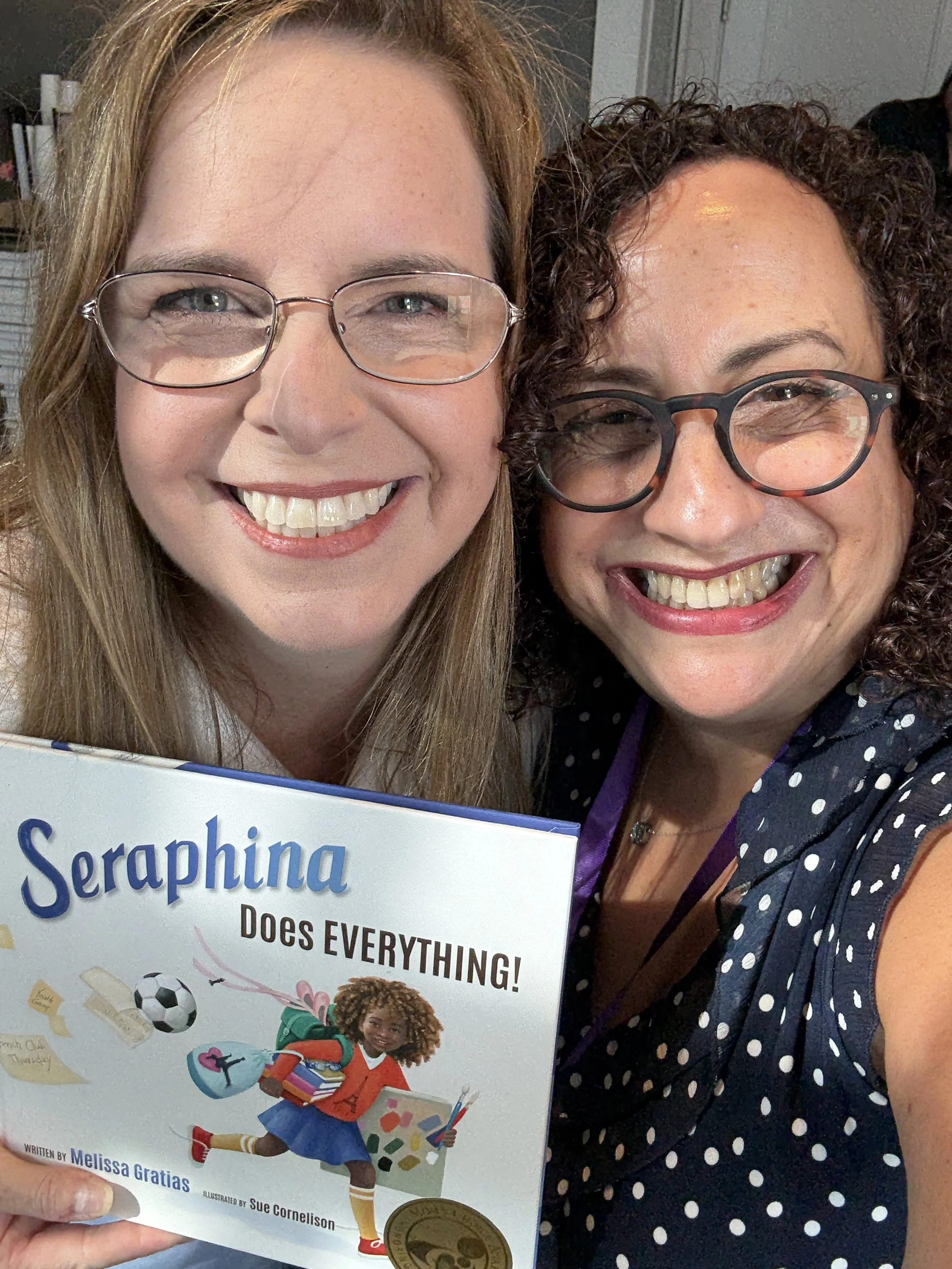
Melissa Gratias and Linda Samuels

Getting and staying organized requires making lots of decisions. One of the conference sessions about the brain and decision-making was presented by productivity expert, colleague, and fellow blogger, Melissa Gratias, PhD. She said, “The more choices, the more cognitively taxing.”  

In another session on chronic disorganization and aging, Beth Nolan, PhD, a gerontology expert, also discussed decision-making. She mentioned that one way we can help our clients with decision-making is by “being aware of the energy it takes.” Decision fatigue can become even more pronounced when compensating for physical changes or conditions.

Making decisions is an integral part of most virtual organizing sessions. I provide support to my clients and consider their energy level as they:

  • Weigh various options

  • Choose what to keep or release

  • Decide what step is next

  • Select what to include or exclude from their schedules


2. Change Barriers Can Be Overcome

Linda Samuels and Cameron Gott

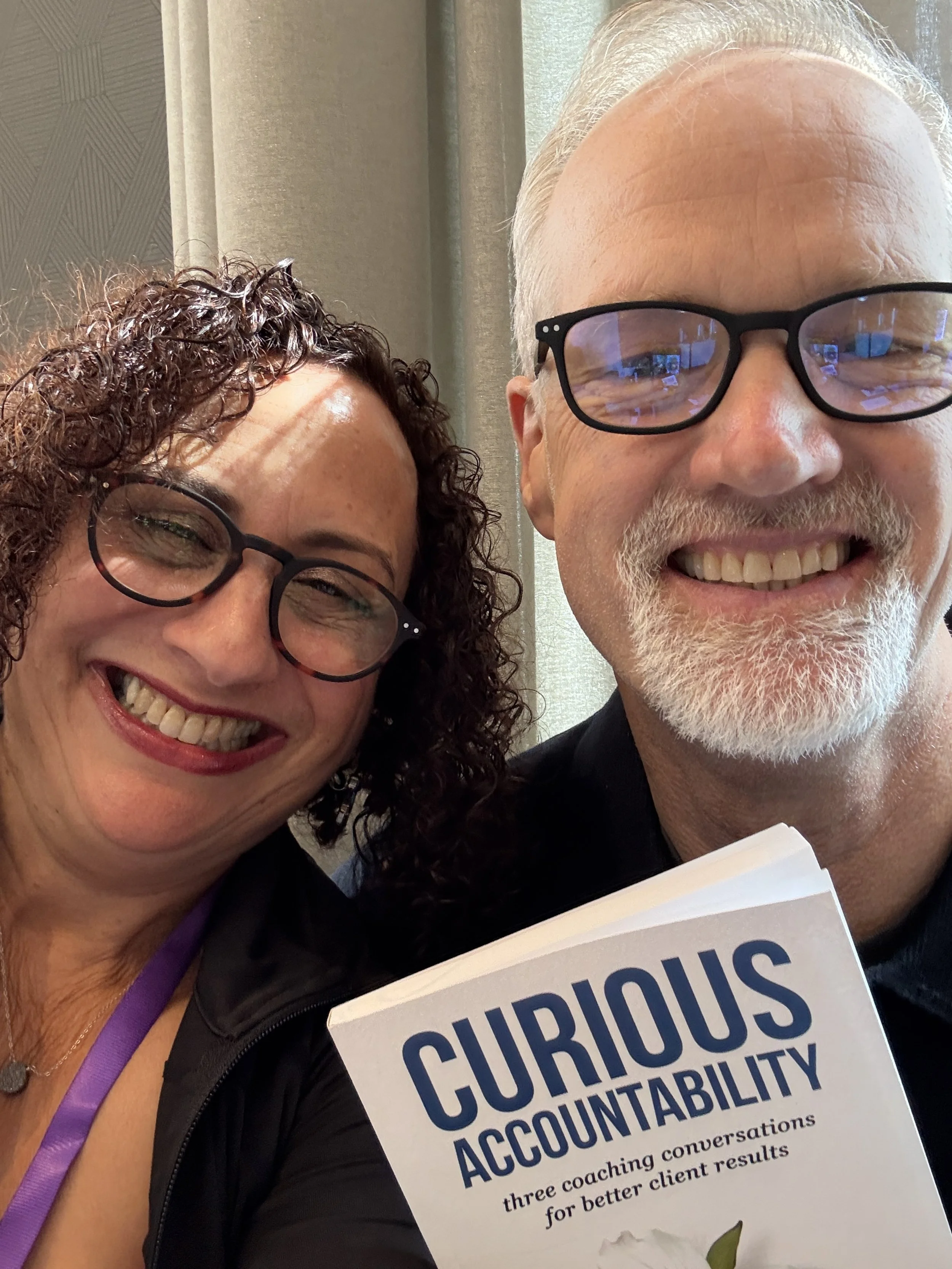
Change was another topic that surfaced throughout the conference. In the session on tools to help your ADHD clients with their organizing goals, presented by Executive ADHD Coach, trainer, podcast host, author, and friend, Cameron Gott, PCC, he spoke about change.

Cam said there are many barriers to change, especially when ADHD is in the mix. The “ADHD hard place” exists in the space between being aware of the issues and actualizing the change you seek. Some of these ‘change’ barriers include:

  • Engaging in negative self-talk

  • Having lots of rules

  • Having difficulty prioritizing

  • Being challenged with activating

  • Experiencing a lack of focus

  • Getting easily distracted

One of the tools Cam suggested is using curiosity to bring about change. However, curiosity can also act as a barrier to change. As a barrier, it can appear as:

  • Doing endless research

  • Going down rabbit holes

  • Engaging in time sucks

However, Cam said you can reframe curiosity as a resource. He said, “Bring curiosity to a dilemma.” This will help you focus and take a more proactive approach.

While my virtual organizing clients desire change, they often face internal and external obstacles. However, with support and accountability, we work together to identify these challenges and try different ways to overcome them.


“Bring curiosity to a dilemma.”
— Cameron Gott, PCC


3. Connection is Essential

Carrie M. Lane

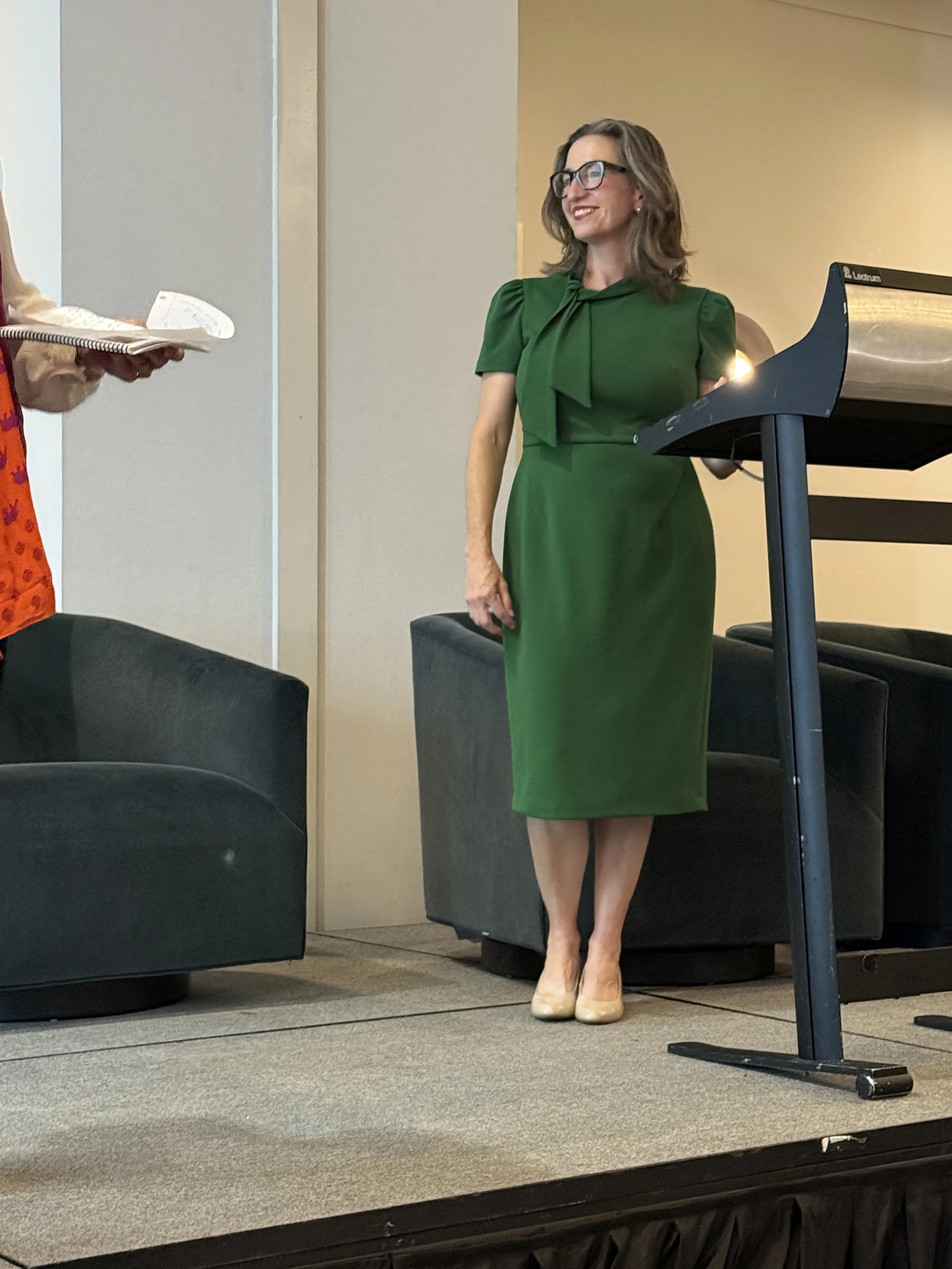
The last conference session, “Qualitative Research, Connective Labor & Professional Organizing,” was presented by Carrie Lane, PhD, an anthropologist and author of More Than Pretty Boxes – How the Rise of Professional Organizing Shows Us the Way We Work Isn’t Working.

“Connective labor,” which is “work that relies on empathy, human interaction, and mutual recognition,” was one of the ideas Carrie discussed. She referenced her friend’s book, The Last Human Job, written by Allison Pugh, a sociologist and author.

Carrie reminded us that “Our job as organizers requires the human connection – an intimate, nonjudgmental connection.”

While technology and AI keep advancing into our daily lives in many ways, nothing can replace human interaction and connection. I value the relationship I have with my clients. By building trust, showing compassion, and remaining nonjudgmental, I provide support as they work on growth and positive change.


Decision-Making, Change, Connection, and Virtual Organizing

There are many ways I support my virtual organizing clients. Are you struggling with making decisions, creating change, or feeling disconnected from others? What becomes possible when you get the help you need? Which ideas resonate most with you?

I’d love to hear your thoughts. I invite you to join the conversation.


How Can I Help?

Do you feel overwhelmed, stuck, or disorganized? I’m here to help! Virtual organizing is an extraordinary path forward – Local feel with a global reach.

Let’s talk. I’m easy to reach.

Getting organized is possible, especially with support.


3 Inspiring Messages of Hope That Encourage Possibilities
Tree with orange and red leaves against blue sky

In times of great sadness and struggle, it can be challenging to remain hopeful. Finding peace within yourself or between people fighting each other may feel impossible. However, if we lose hope, the possibilities path closes.

Even in the darkest times, hope exists. It’s up to you to nurture hope and the belief that things can improve. This is especially needed now for our world.

You can also channel messages of hope and encouragement to inspire what’s possible for you. If you feel stuck, sad, and are struggling to move forward, soak in these words of wisdom from three incredible people. What will be possible for you?


3 Inspiring Messages of Hope that Encourage Possibilities


1. “Choose a better thought. Choose a better action.”

Marcy Stoudt, founder of Revel Coach, encourages us to see the connection between our thoughts and actions. Are your thoughts leading you in a positive direction, or are they paralyzing you before you begin? What you think affects what you do or don’t do.

It’s time to reframe if negative thoughts don't support positive actions. Positive thoughts will pave the way for better actions and outcomes.

What thought can you rework? How will that influence what is possible?


2. “Find the fascinating in every day.”

Christine Gray Johnson, Nest by Revel Advisor and HR expert, motivates us to find joy and hope daily. She understands that what you focus on greatly influences your day. A curiosity-based lens can help you see opportunities and possibilities. Christine advocates paying attention to what is “fascinating.” What do you find captivating, interesting, attractive, alluring, or engaging?

Develop an awareness of things big and small to stimulate curiosity. Reading a new word or phrase, or seeing the beautiful, changing colors of the fall landscape, can be catalysts. The search for the fascinating can become a positive disruptor in your life. Discovery encourages openness, new ways of thinking, opportunities, and possibilities, and fosters hope.


“If we lose hope, the possibilities path closes.”
— Linda Samuels, CPO-CD®, CVOP™


3. “We miss out on opportunities when we only ask what could go wrong. It’s also worth asking what could go right. Change carries risk: we might fail. But sticking to the status quo also brings risk: we might fail to grow. It’s better to test and learn than to never test at all.”

Adam Grant, organizational psychologist and best-selling author, highlights the connection between opportunity, risk, change, and growth. When a possibility appears, do you focus on adverse outcomes? Does that make it difficult for you to lean in? Or do you also weigh the potential positive outcomes? Adam isn’t advocating that you ignore the risks. He is aware that any change has risks and can result in failure. But the more significant risk is never stepping out or growing.

What becomes possible when you consider the what-could-go-right-and-wrong factors through a growth-mindset lens? Does risk-taking feel different?

When negativity fills your mind, everything feels dark and impossible. The light will turn on when you change your thoughts, focus, and attitude toward risk. Opportunities, possibilities, and hope will flourish. What is possible for you? I’d love to hear your thoughts. I invite you to join the conversation.


7 Winning Ways the Reminders You Display Will Help You Each Day

We constantly receive internal and external messages. Do they help or hurt you? Have you heard of the 5:1 magic ratio? Research suggests that to counteract the sticky Velcro-like negativity bias, it takes approximately five positive encounters, thoughts, or experiences for every negative one.

Consider fortifying your Personal Positivity Bank by making regular deposits. Here are a few ways to build your reserves:

  • Create a “Feel Good” file with positive emails, notes, or letters you received from family, friends, clients, or colleagues:

  • Keep an ongoing gratitude list

  • Connect with nature

  • Prioritize self-care

  • Spend time with people who energize and uplift rather than drain you

  • Display positive reminders in your environment

Today, I am focusing on that last one, the visible messages you see every day. I’m sharing several of my favorites below. I’ve written before about the fidget bowl on my desk. This fun collection of miniature objects combines word reminders, trinkets from places visited, old toys, and visual and tactile delights. Playing with the tiny pieces while I’m in meetings helps me focus. Having uplifting messages front and center enhances my well-being. What encouraging messages will you surround yourself with?


7 Ways the Reminders You Display Will Help You Each Day

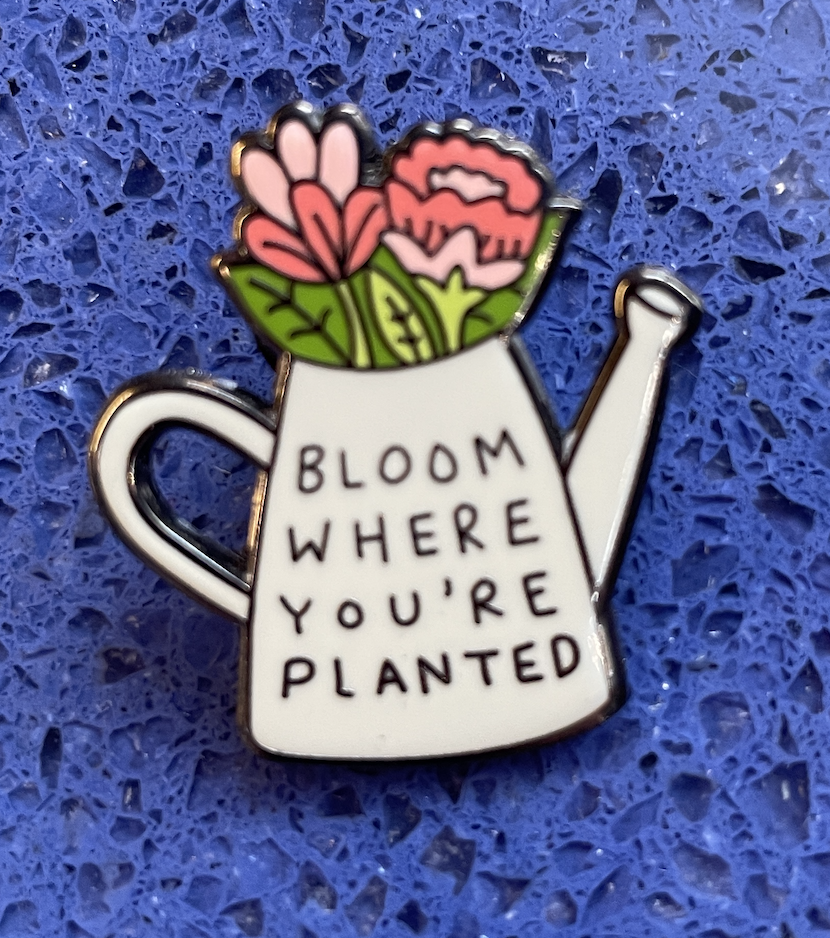
1. Bloom Where You’re Planted

Bloom where you’re planted encourages me to embrace the growth mindset anywhere, anytime. Every encounter, action, observation, experience, success, and failure are opportunities to learn, expand, and blossom.


2. Head & Heart

Navigating life’s hiccups and choices can be stressful. “Head & Heart” reminds me to use my cognitive and sensing gifts to support positive decisions and outcomes. While not included in this purple pin, my gut is another guiding element. When I listen, it leads me with a distinct “yes” or “no.”


3. Nourish

My Word of the Year is nourish. This essential encourages me to feed my heart, mind, and body so they feel nurtured, positive, and supported to thrive. My heart wants connection. My mind needs stimulation, and my body wants loving care.


4. You Are Here

While these words are often found to locate yourself on a map, to me, they embody presence. Especially when my mind is racing, and even when it’s not, this message prompts me to pause, notice, and ground myself with where I am, what I’m doing, what I’m feeling, and what I’m experiencing. When distracted, I use these words to gently bring me back, reset, and move on.


“Fortify your Personal Positivity Bank by making regular deposits.”
— Linda Samuels, CPO-CD®, CVOP™

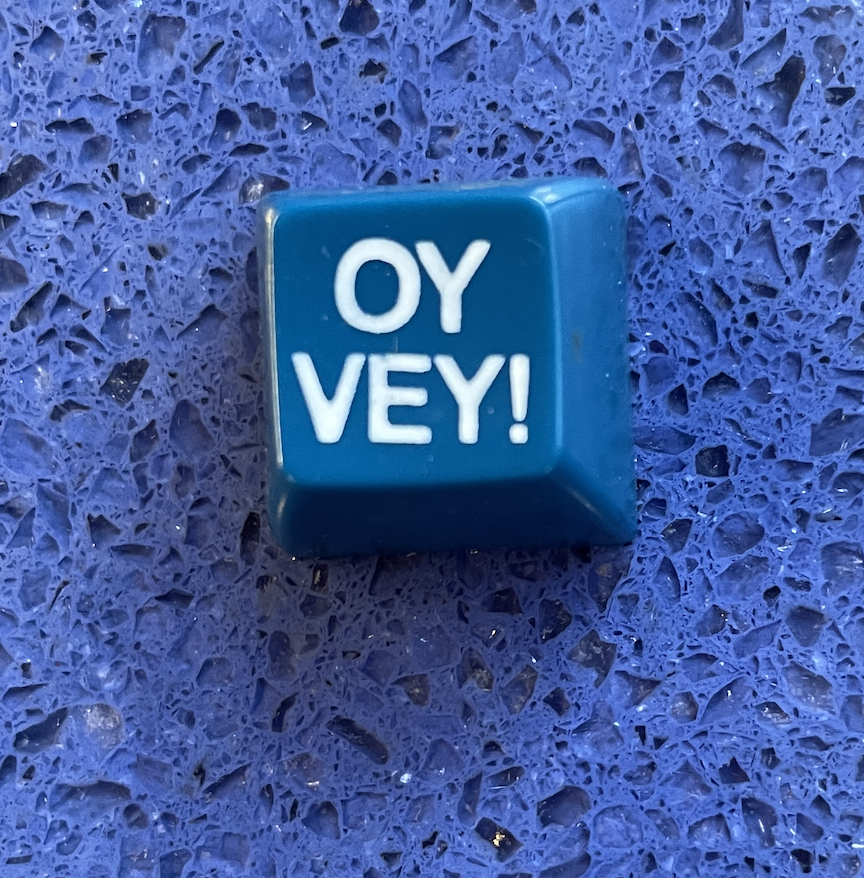
5. Oy Vey!

Years ago, I gave my dad this blue “Oy Vey!” computer key. It became a favorite inside joke between us, and one of the many things that connected us was our shared sense of humor. This message reminds me that things in life have the potential to go sideways. However, my sense of humor can bring a brighter perspective and allow me to laugh at myself during difficult situations.


6. Radiate Positivity

According to the CliftonStrengths assessment, one of my top strengths is Positivity. Seeing the “Radiate Positivity” button helps me with several things:

  • It reminds me to continuously develop and live from my strengths.

  • My natural inclination towards positivity helps me be resilient and growth-oriented.

  • Positivity is ‘catching,’ so my mood can have an encouraging effect on others.


7. Exhale the Bullshit

This new pin has quickly become a favorite. We all experience life ‘stuff’ (aka difficult situations, conflicts, threats, bullshit). During those challenging encounters, you can experience emotional hijacking. Stress triggers are sent to the amygdala, the part of the brain responsible for emotional processing. Your automatic warning system goes on high alert, and your body wants to protect you. Your heart races, your palms sweat, your face flushes, and your breathing turns rapid or shallow.

“Exhale the Bullshit” reminds me to take a deep breath through my nose and a longer exhale through my mouth. Repeating that several times, I soothe my system, access the rational part of my brain, and am better equipped to respond calmly to the circumstance.

How does having positive visual reminders help and influence your day? What helpful messages are in your view? I’d love to hear your thoughts. I invite you to join the conversation.