Posts tagged amygdala
Here Are 5 Most Interesting and Best Next Step Discoveries - v54

Enjoy the latest edition (v54) of the “What’s Interesting?” series, which features my most recent finds that inspire, spark curiosity, and relate to organizing and life balance. These unique next step discoveries reflect this month’s blog theme.

You are an engaged, vibrant, and generous group. I am deeply grateful for your ongoing presence, positive energy, and contributions to this community. I look forward to your participation and further contributions to this curated collection.

What do you find interesting?


What’s Interesting? – 5 Best Next Step Discoveries

1. Interesting Read – Compassionate Next Step
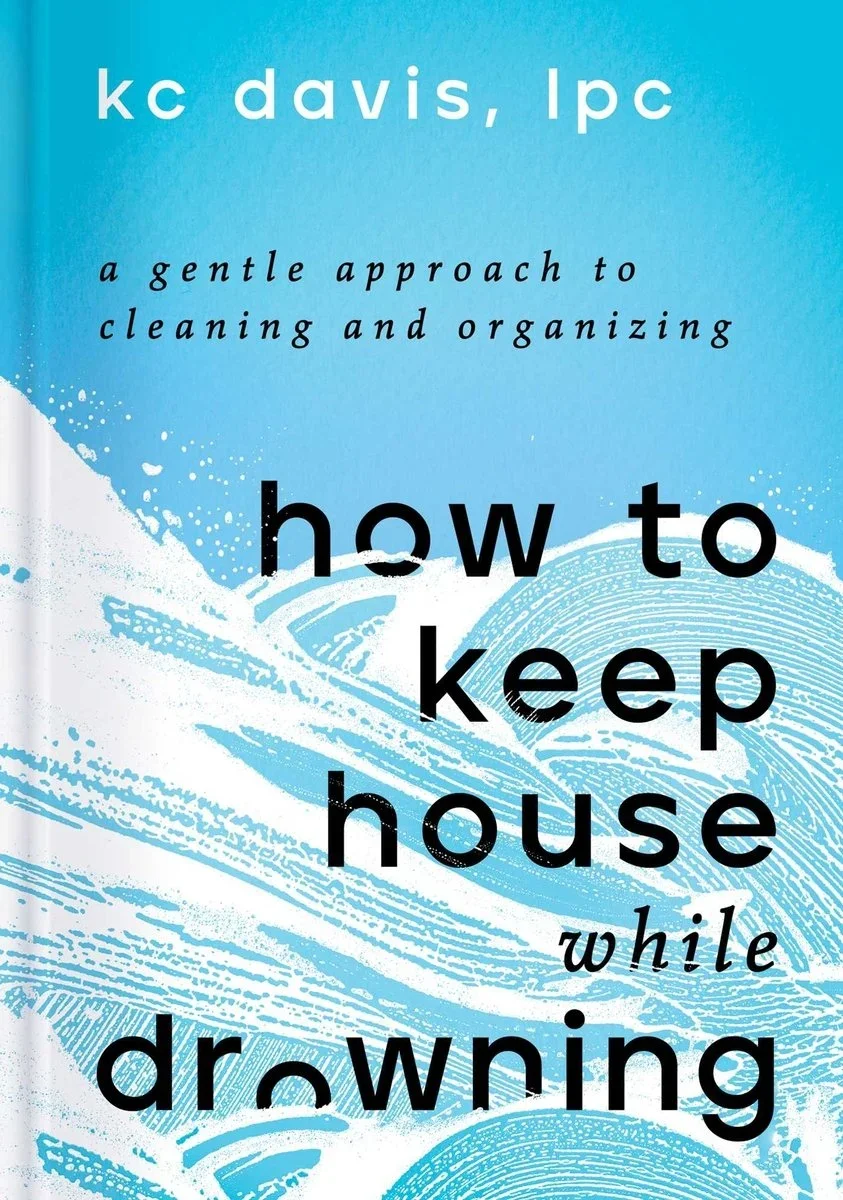
Recently, a client shared with me a book she was reading, How to Keep House While Drowning – A Gentle Approach to Cleaning and Organizing by therapist, author, podcaster, and speaker KC Davis, LPC. I was curious, so I read it, too.

The ideas resonated deeply with my client, who appreciated the realistic, kind approach to organizing and care tasks that encouraged gentle next steps. One of KC’s philosophies is “You don’t exist to serve your space; your space exists to serve you.”

How often do you feel like your stuff is running you? KC helps shift the perspective and offers advice for “how to care for ourselves when we feel like we are drowning.”

From practical organizing and cleaning tips to kinder self-talk, KC shares personal experiences of what has worked for her and others. She describes care tasks (laundry, cooking, cleaning, organizing, etc.) as neutral rather than a moral failing, even when they challenge you.

KC describes her own perspective shift and says, “Let me tell you what the mess in my home means. It means I’m alive. Dirty dishes mean I’ve fed myself. Scattered hobby supplies mean I am creative. Scattered toys and mess mean I am a fun mom…And occasionally, mess means I’m struggling with depression or stress. But those aren’t moral failings either, and neither is that moldy coffee cup I keep not taking to the kitchen.”

A few additional reframes KC offers include:

  • “Chores > care tasks”

  • “Chores are obligations. Care tasks are kindness to self.”

  • “Cleaning > resetting the space.”

  • “Cleaning is endless. Resetting the space has a goal.”

  • “It’s so messy in here! > this space has reached the end of its functional cycle.”

Filled with personal struggles and compassionate solutions, KC guides us on a journey toward reducing self-criticism and guilt, and finding more peace at home, one step at a time.


2. Interesting Perspective – Restful Next Step
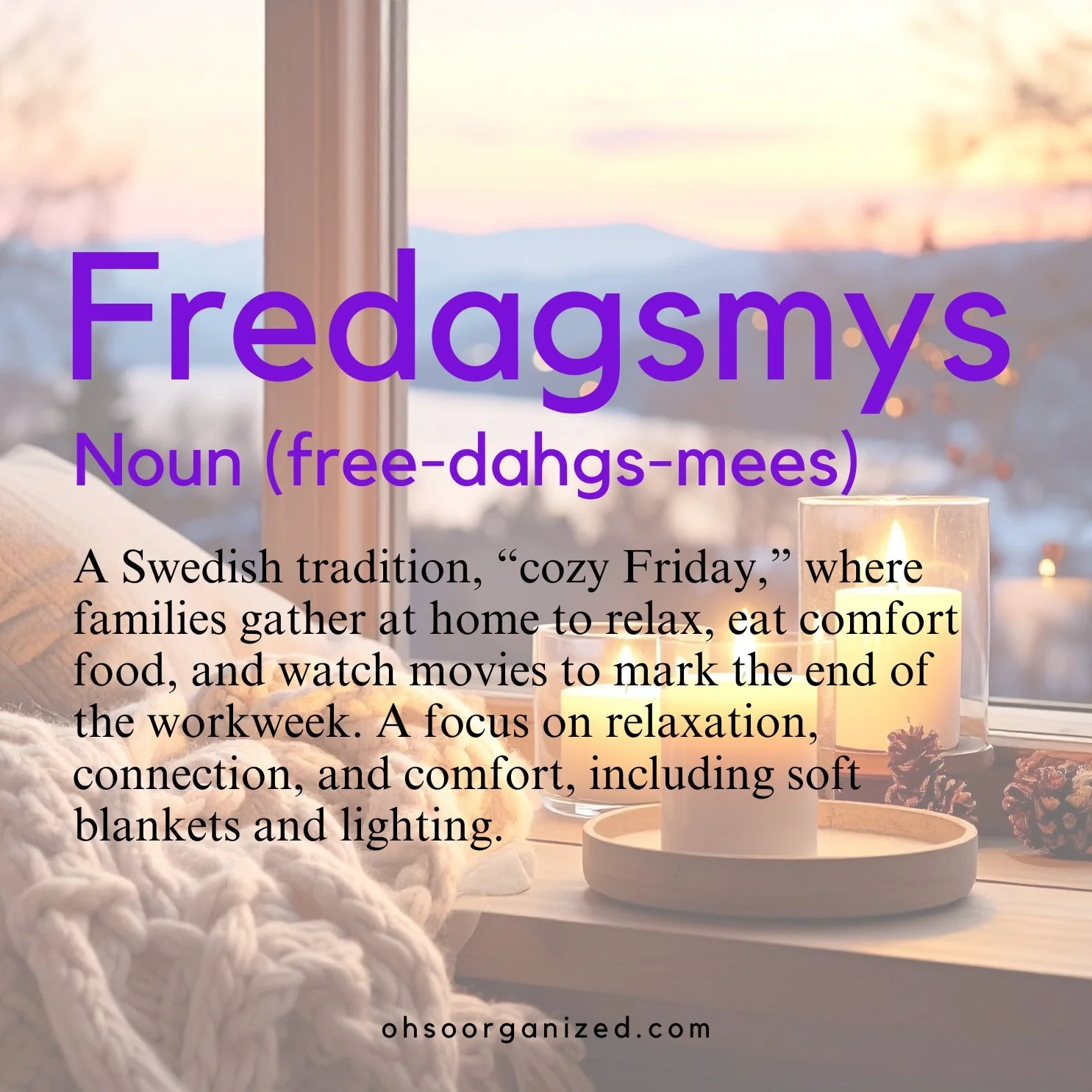
It’s easy to overlook your needs. Do you find yourself pushing, doing, scheduling, organizing, and constantly in motion? There is a reason we call ourselves human beings, not human doings. ‘Being’ involves both action and rest.

A recent Real Simple article featured a Swedish tradition called “fredagsmys” that beautifully encourages a balance between work and relaxation. The translation means “cozy Friday” or “Friday coziness.” This marks an intentional shift from the workweek to a relaxing weekend. Fredagsmys embodies connection, relaxation, and comfort. It is practiced by spending Friday night at home with your family or friends, watching movies, relaxing, eating, connecting, and being cozy with soft blankets and low lighting.

If you find yourself constantly pushing, adding some fredagsmys into your week could be the next step you need. But if that feels too big and challenging, find other smaller ways to build in rest and no-stress moments. Baby steps.

Before you know it, you’ll be ready for an entire night of relaxation, connection, and calm.


3. Interesting Product – Organized Next Step  
As the clocks just moved ahead an hour for the annual ‘spring forward,’ this signals that the season is about to change. Another sign is the greenery emerging from the ground. The plants are happy to see the light after being buried under piles of snow.

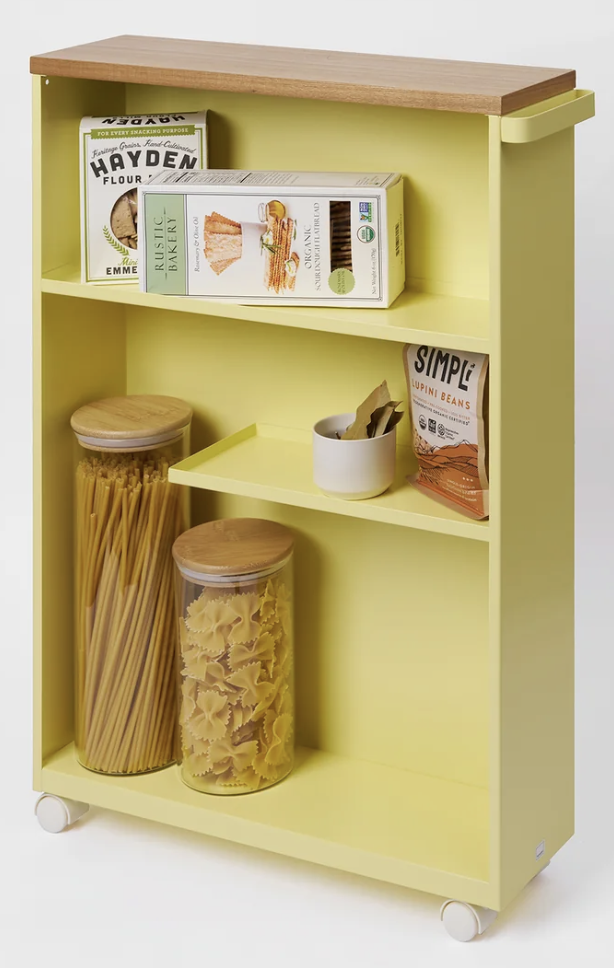
With that spring lens in mind, I came across this lovely butter-yellow or “yellow pear” steel rolling storage cart with a wood top. It’s a limited- edition collaborative design created by Yamazaki and Apartment Therapy.

If you need additional storage space with easy access for kitchen essentials like spices, oils, pasta, or snacks, this slim rolling cart (5” deep x 18” wide x 27” tall) will fit into the smallest spots.

This storage cart will make it easy and fun to organize your essentials.


You don’t exist to serve your space; your space exists to serve you.
— KC Davis, LPC

4. Interesting Resource – Capture Next Step

With over thirty years of helping clients declutter, let go, and get organized, I’ve seen firsthand how belongings hold meaning. This is one reason why letting go can be challenging.

Artifcts founder Heather Nickerson developed an app-based service that helps you record stories and memories about meaningful items and share them securely with loved ones. Documenting each item’s story can be key to letting go of the physical object.

The easy-to-use app helps you add photos, videos, audio recordings, and notes. You can document “what an item is, why it matters, and what should happen to it next.” This is an invaluable tool when you’re “organizing, downsizing, or planning your legacy.”

Heather’s inspiration for launching Artifcts came after her mother’s death. She inherited her mom’s possessions but really wanted to know the stories behind them. However, her mom was no longer there to share those stories. Artifcts helps you “preserve the meaning behind the objects that speak to who we are and where we’ve been.”

If you want your next step to include memorializing and letting go, this app is worth exploring.


5. Interesting Thought – Tiny Next Step
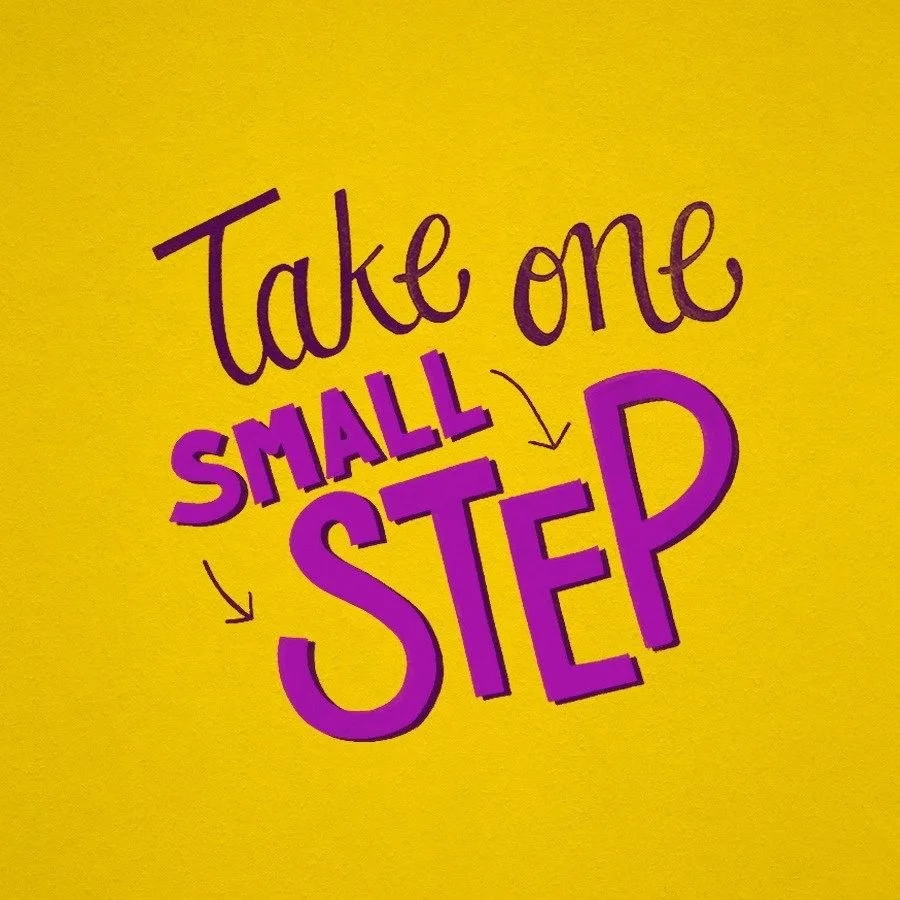
When your next step feels overwhelming, it might be too large. There are several ways to move forward. The first is to reduce the overwhelm. When you’re emotionally heightened, the amygdala takes over and blocks access to the thinking and action parts of the brain.

One strategy is to do some simple breathing.

  • Breathe in deeply through your nose.

  • Exhale through your mouth longer than the inhale.

  • Repeat that several times.

Your system will settle and calm, giving you the capacity to choose what happens next.

Once you’re in a less anxious state, take the next step by making it as small as possible. This helps prevent feeling overwhelmed. For example, instead of deciding that the next step is decluttering the entire kitchen, choose to declutter one corner of the kitchen counter. If that feels too overwhelming, focus on decluttering a small pile or simply removing items that are being routed elsewhere.

After completing that tiny step, you can choose to continue or stop. If you decide to do more, repeat the process and pick another tiny next step. Small and doable is better than big and paralyzing.


Next Step Options

When you want to move forward but feel stuck, what will help? There are many approaches and ways to consider next, as I shared with you.

Which of these discoveries resonates most? Do you have any next step ideas to add? I’d love to hear your thoughts and invite you to join the conversation.


How Can I Help?

Do you feel overwhelmed, stuck, or disorganized? Is figuring out your next step feeling elusive? I’m here to help. Virtual organizing is an extraordinary path forward – Local feel with a global reach.

Let’s talk. I’m easy to reach.

Moving forward and getting organized are possible, especially with support.


7 Winning Ways the Reminders You Display Will Help You Each Day

We constantly receive internal and external messages. Do they help or hurt you? Have you heard of the 5:1 magic ratio? Research suggests that to counteract the sticky Velcro-like negativity bias, it takes approximately five positive encounters, thoughts, or experiences for every negative one.

Consider fortifying your Personal Positivity Bank by making regular deposits. Here are a few ways to build your reserves:

  • Create a “Feel Good” file with positive emails, notes, or letters you received from family, friends, clients, or colleagues:

  • Keep an ongoing gratitude list

  • Connect with nature

  • Prioritize self-care

  • Spend time with people who energize and uplift rather than drain you

  • Display positive reminders in your environment

Today, I am focusing on that last one, the visible messages you see every day. I’m sharing several of my favorites below. I’ve written before about the fidget bowl on my desk. This fun collection of miniature objects combines word reminders, trinkets from places visited, old toys, and visual and tactile delights. Playing with the tiny pieces while I’m in meetings helps me focus. Having uplifting messages front and center enhances my well-being. What encouraging messages will you surround yourself with?


7 Ways the Reminders You Display Will Help You Each Day

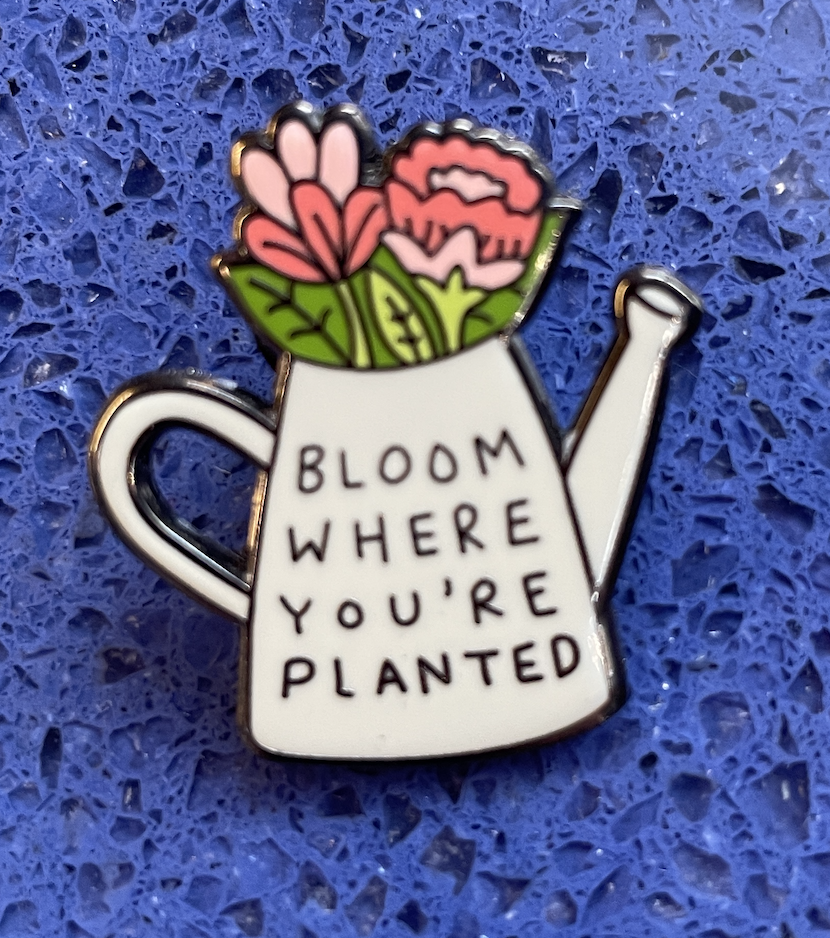
1. Bloom Where You’re Planted

Bloom where you’re planted encourages me to embrace the growth mindset anywhere, anytime. Every encounter, action, observation, experience, success, and failure are opportunities to learn, expand, and blossom.


2. Head & Heart

Navigating life’s hiccups and choices can be stressful. “Head & Heart” reminds me to use my cognitive and sensing gifts to support positive decisions and outcomes. While not included in this purple pin, my gut is another guiding element. When I listen, it leads me with a distinct “yes” or “no.”


3. Nourish

My Word of the Year is nourish. This essential encourages me to feed my heart, mind, and body so they feel nurtured, positive, and supported to thrive. My heart wants connection. My mind needs stimulation, and my body wants loving care.


4. You Are Here

While these words are often found to locate yourself on a map, to me, they embody presence. Especially when my mind is racing, and even when it’s not, this message prompts me to pause, notice, and ground myself with where I am, what I’m doing, what I’m feeling, and what I’m experiencing. When distracted, I use these words to gently bring me back, reset, and move on.


Fortify your Personal Positivity Bank by making regular deposits.
— Linda Samuels, CPO-CD®, CVOP™

5. Oy Vey!

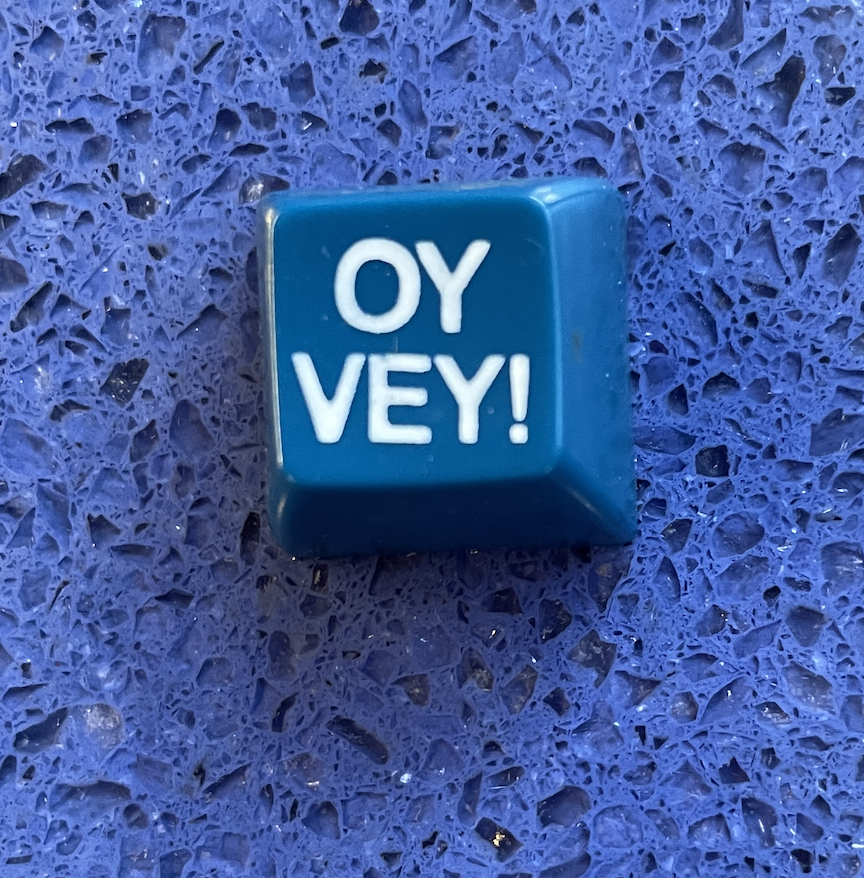
Years ago, I gave my dad this blue “Oy Vey!” computer key. It became a favorite inside joke between us, and one of the many things that connected us was our shared sense of humor. This message reminds me that things in life have the potential to go sideways. However, my sense of humor can bring a brighter perspective and allow me to laugh at myself during difficult situations.


6. Radiate Positivity

According to the CliftonStrengths assessment, one of my top strengths is Positivity. Seeing the “Radiate Positivity” button helps me with several things:

  • It reminds me to continuously develop and live from my strengths.

  • My natural inclination towards positivity helps me be resilient and growth-oriented.

  • Positivity is ‘catching,’ so my mood can have an encouraging effect on others.


7. Exhale the Bullshit

This new pin has quickly become a favorite. We all experience life ‘stuff’ (aka difficult situations, conflicts, threats, bullshit). During those challenging encounters, you can experience emotional hijacking. Stress triggers are sent to the amygdala, the part of the brain responsible for emotional processing. Your automatic warning system goes on high alert, and your body wants to protect you. Your heart races, your palms sweat, your face flushes, and your breathing turns rapid or shallow.

“Exhale the Bullshit” reminds me to take a deep breath through my nose and a longer exhale through my mouth. Repeating that several times, I soothe my system, access the rational part of my brain, and am better equipped to respond calmly to the circumstance.

How does having positive visual reminders help and influence your day? What helpful messages are in your view? I’d love to hear your thoughts. I invite you to join the conversation.


20 Powerful Self-Help Strategies to Know When Strong Emotions Make Your Motivation Vanish

Having an array of emotions is part of being human. There are no good or bad ones. However, at times, our strong emotions can make clear thoughts challenging. In fact, some emotions like anxiety, sadness, or fear can cause procrastination or completely zap our motivation.

When the amygdala, the primitive, emotional region of the brain, becomes the boss, it creates a cycle that activates the sympathetic nervous system (fight or flight.) The good news is many self-help strategies are available to help switch your internal gears from fight or flight to the rest and digest, parasympathetic nervous system mode.

When calmer, you can more readily access the pre-frontal cortex, a part of the brain that helps with decision-making, organization, attention, planning, emotional regulation, and impulse control. In this more relaxed state, you can reset and access the motivation to move forward.

Recently, I attended a meeting with fellow Nest Advisor, Monica Moore, a health and fertility coach. She led a workshop on Acceptance and Commitment Therapy (ACT.) The four-step process is helpful when making behavioral changes. ACT encourages working towards a value rather than avoiding something. In other words, focus your energy on something positive you want to be or do instead of on something negative you wish to avoid.

The ACT process:

  1. Identify a value. Who or what do I want to be?

  2. Identify feelings. What “yucky” feelings get in the way?

  3. Identify relief valves. When you feel these things, what behaviors occur?

  4. Create a nourishment menu. What behaviors will feel helpful, sustainable, and give perspective when experiencing the “yucky” feelings?


Your nourishment menu is where self-help strategies thrive. For example, when feeling anxious, you might engage in negative self-talk, binge-watching, or eating sugar-heavy snacks. What if you acknowledged and noticed those feelings when you felt anxious and instead, engaged in more helpful behaviors from the nourishment menu? Below are some suggestions. I’d love to know which of these or other ones work best for you.

20 Self-Help Strategies - Nourishment Menu

  • Journal

  • Meditate

  • Take a walk

  • Change your setting

  • Organize or clean

  • Create boundaries

  • Breathe slowly

  • Get a massage

  • Hug a loved one for at least 20 seconds

  • Run or exercise

  • Watch leaves flutter

  • Light a scented candle

  • Use humor

  • Rest

  • Read

  • Pet your dog or cat

  • Listen to or play music

  • Take a shower or bath

  • Help someone else

  • Talk with a friend, family member, or professional

I had a recent anxiety-inducing experience when I inadvertently deleted the most current 45 days of emails from my inbox. After long calls with tech support at Apple and Carbonite, it became clear that the emails might be retrieved, but not without many more hours spent with tech support and possibly worse complications.

A tech hiccup is never convenient. My plans to accomplish a lot that day were derailed because of the anxiety inability to focus. At a point, I decided to let it go and not retrieve the emails. However, I was still anxious and not functioning well. My emotions were in high gear, and my brain was foggy. So what did I do?

Your ‘nourishment menu’ is where self-help strategies thrive.
— Linda Samuels, CPO-CD®, CVPO™

I grabbed my journal and wrote. As the inky pen glided along the smooth paper, my heart beat rapidly, and my stomach was in knots. I wrote about the ‘gone’ emails, my anxious feelings, the power they had to deactivate my motivation, the shift in my emotional state of feeling calmer as I wrote, and the choice to let this go and move on. I noticed my environment (birds chirping, trees swaying), took several deep breaths, and shifted gears to write about positive memories from the mini vacation we just had.

After journaling, I met a dear friend for a walk along the river. We talked, laughed, and I shared the email saga with her. Not knowing about the nourishment menu at the time, I realized after how I had used several of these strategies to calm my anxiety, let go, and reset.

What self-help strategies work for you when your strong emotions take over? I’d love to hear your thoughts. I invite you to join the conversation.