

Posts tagged perspective shift
Here Are 5 Most Interesting and Best Possibility Discoveries - v57

Enjoy the latest edition (v57) of the “What’s Interesting?” series, featuring my recent finds that inspire, spark curiosity, and connect to organizing and life balance. These unique possibility discoveries reflect this month’s blog theme.

You are an engaged, vibrant, and generous group. I’m deeply grateful for your ongoing presence, positive energy, and contributions to this community. I look forward to hearing your thoughts and seeing what else you can add to this curated collection.

What do you find interesting?


What’s Interesting? – 5 Best Possibility Discoveries

1. Interesting Read – Possibility Mindset
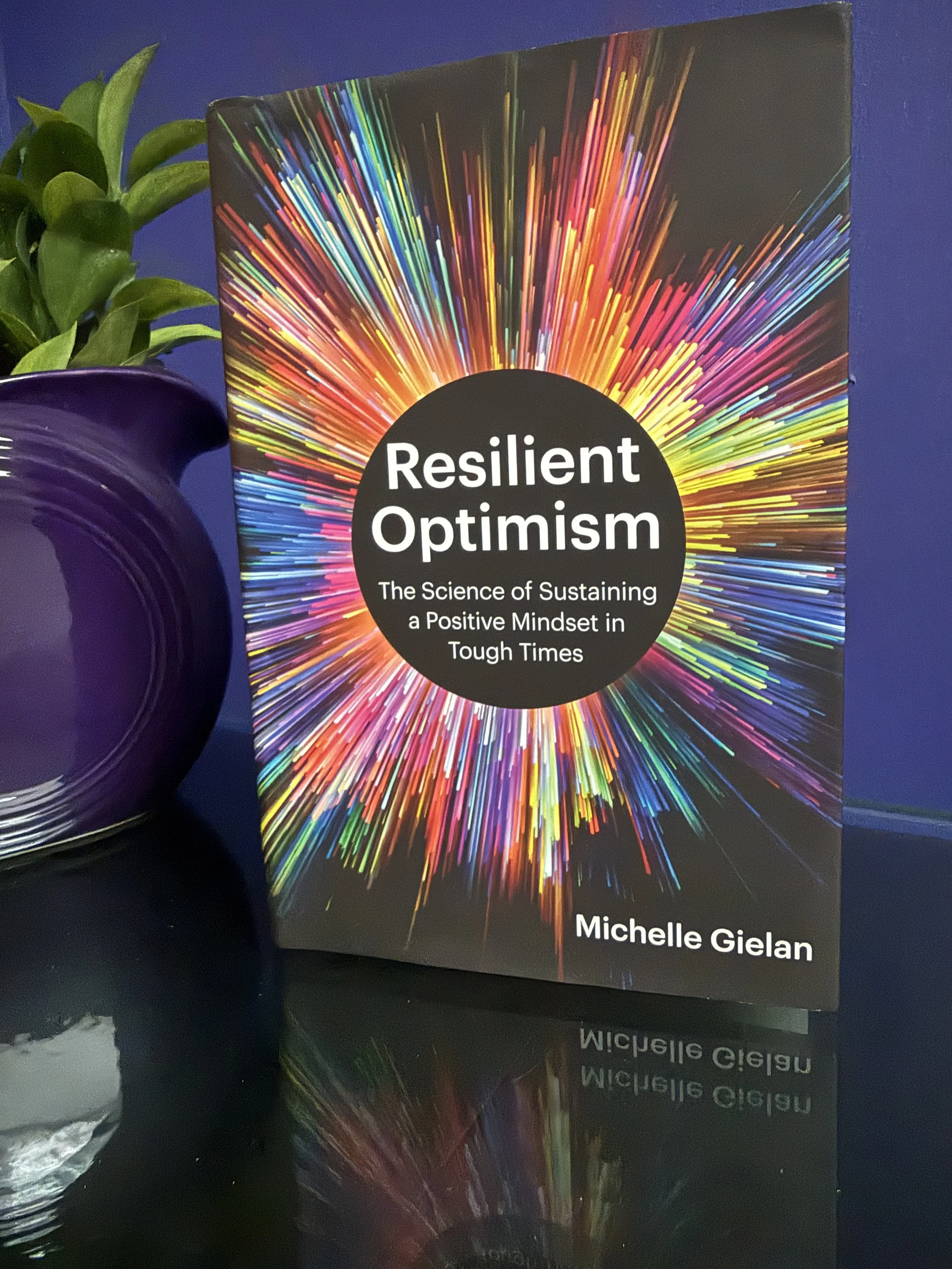
Do you struggle to stay positive and imagine what’s possible, especially during dark times? If so, I highly recommend Resilient Optimism – The Science of Sustaining a Positive Mindset in Tough Times by positive psychology researcher and bestselling author Michelle Gielan.

Drawing on neuroscience research and her work with thousands of leaders, Gielan says, “Resilient optimism is not a one-time mindset. It’s a practice. A daily redirection. A moment-by-moment invitation to pivot toward what’s constructive, energizing, and meaningful.”

When your brain focuses on what’s broken, it limits the brain’s potential. Gielan explains, “The brain runs best when fueled by optimism. The brain is naturally good at detecting threats – we call it negativity bias. When we solely focus on what’s broken, the brain’s threat center (the amygdala) lights up, pulling resources away from the problem-solving prefrontal cortex. But when we also engage with what’s working, the brain responds with creativity, energy, and greater resilience.”

The good news is that resilient optimism is a behavioral shift you can learn. Whether you consider yourself an optimist or a pessimist, Gielan shares doable ways to build your reserves through “deliberate, repeatable actions.”      

Her strategies include ways to:

  • Recalibrate your mindset

  • Change your stress response

  • Triage your commitments

  • Recharge smarter

  • Take small actions

  • Be a “positive deviant”

What will become possible as your mindset shifts?


2. Interesting Product – Possibility Openers
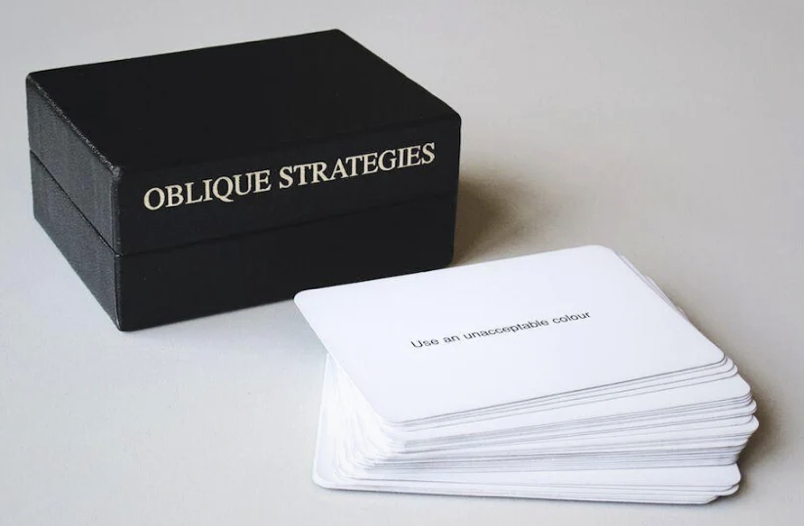
What happens when you feel stuck and are in a mental rut? Do you shut down, feel low on energy, get anxious, or find it difficult to imagine a way forward? If so, you’re not alone. There are many ways to get unstuck.

Decades ago, creatives Brian Eno and Peter Schmidt created Oblique Strategies, a deck of cards designed to help artists, musicians, writers, and other creatives “break through mental roadblocks” and “approach their work from fresh, unexpected angles.” The prompts can help anyone.

Each card offers a single, direct suggestion, such as “Use an old idea” or “Listen to the quiet voice.” Not every prompt will resonate with you, but some might offer the fresh perspective you need. “The goal is to challenge habitual thinking patterns and invite new possibilities into the creative process.”

Are you ready to explore new possibilities? If so, this deck could help.

“Resilient optimism is not a one-time mindset. It’s a practice.”
— Michelle Gielan

3. Interesting Article – Possibility Walk  

In the Time article “Why You Should Take a 10-Minute ‘Thinking-Walk,’” writer Angela Haupt highlights the many benefits of walking, including:

  • Processing thoughts

  • Sparking creativity

  • Solving problems

  • Taking an intentional break from technology

  • Resetting after intense focus

  • Improving mood

  • Reducing stress

  • Protecting long-term mobility

  • Easing anxiety and depression

Imagine what a “thinking walk” could do for you. When your mind is full, you’re stuck on a problem, or you’re struggling to imagine what’s possible, take a walk. Research highlights the value of walking without your electronic devices. Disconnect and let your mind wander. You can do this. It’s only ten minutes.

Although you can walk indoors, walking outdoors can further boost your well-being.


4. Interesting Resource – Possibility Shifts

Are you or someone you know overwhelmed by shopping too much? During a presentation on overshopping, I learned that 33.5 million people are addicted shoppers. We live in a society that constantly bombards us with marketing messages to buy more, newer, and better things. Sales entice us to buy things we don’t really need. Messages like “shop till you drop” make light of a serious addiction: overshopping.

Does breaking the shopping cycle feel impossible? If so, help is available. Carrie Rattle is a financial therapist, shopping-addiction expert, and founder of Behavioral Cents. Dr. April Lane Benson, Carrie’s colleague, friend, and a pioneer in the field of overshopping, mentored Carrie. In 2020, April sold her business to Carrie.

Carrie offers a variety of services, including individual coaching, group coaching, an online community, workshops, and her book, To Buy or Not To Buy – Tools to break the cycle and take control of your life.

What would be possible if you could, as Carrie says, shift from “compulsion to control”?


5. Interesting Thought – Possibility Scenario
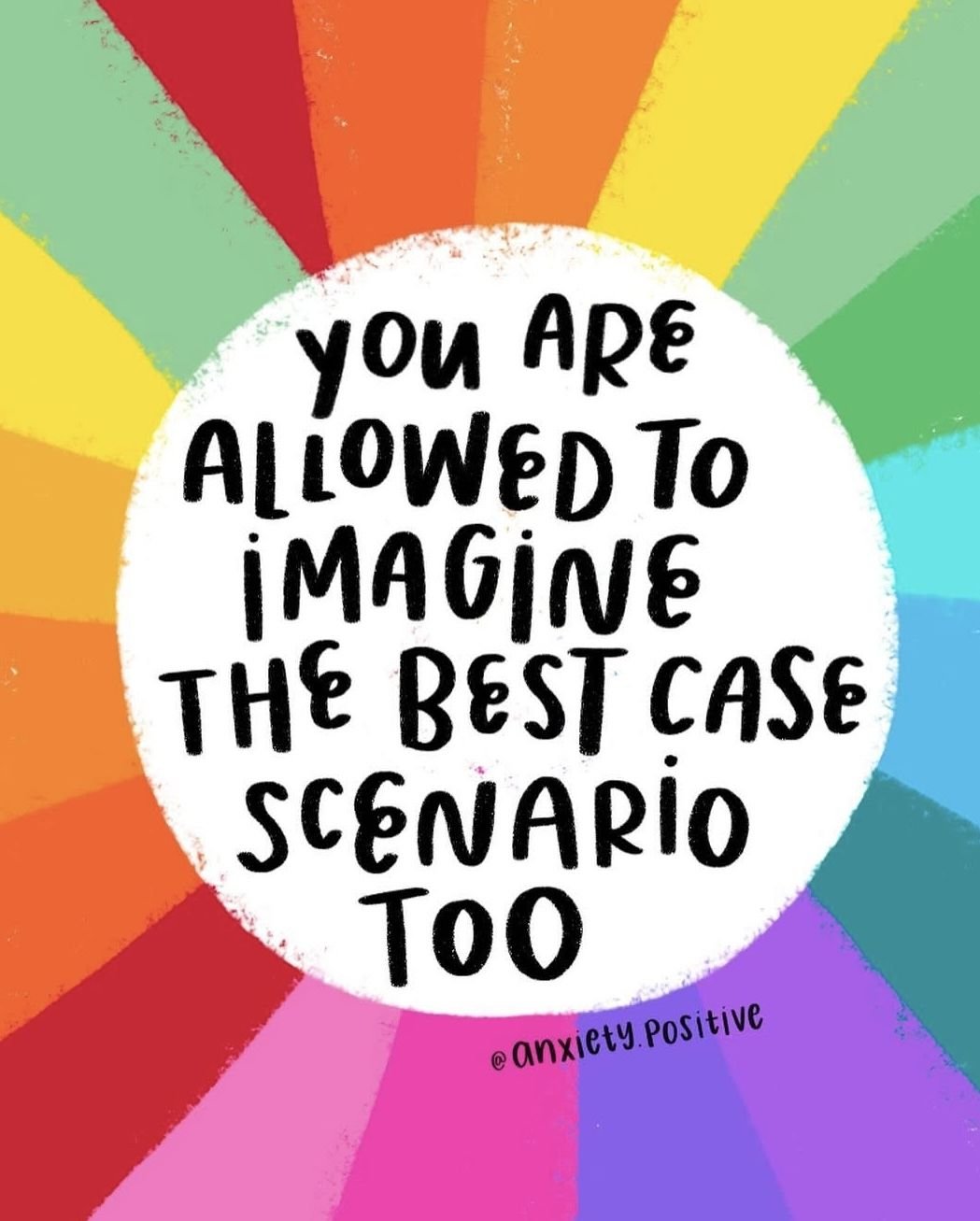
“You are allowed to imagine the best case scenario.” Mindset matters. Instead of dwelling on “I can’t,” “It will never happen,” or “It’s going to be awful,” consider what might be possible. Focus on learning, growing, and exploring new possibilities.

Shifting your thoughts can help you change your path. Think about a project or situation you’re finding challenging right now. What does the best-case scenario look like? What’s one small action you can take now to move in that direction?


What Is Possible Now?

When it’s hard to imagine what’s possible, what helps? As I’ve shared, there are many ways to shift your thoughts and actions and move forward with a more possibility-focused perspective.

Which of these discoveries resonates most with you? Do you have resources or ideas about possibility thinking to share? I’d love to hear your thoughts and invite you to join the conversation.


How Can I Help?

Do you feel overwhelmed, stuck, or disorganized? Are your thoughts keeping you from living the life you want? I’m here to help. Virtual organizing is an extraordinary path forward—Local feel with a global reach.

Let’s talk. I’m easy to reach.

Decluttering, getting organized, and seeing what’s possible can happen, especially with support.


Here Are 5 Most Interesting and Best Next Step Discoveries - v54

Enjoy the latest edition (v54) of the “What’s Interesting?” series, which features my most recent finds that inspire, spark curiosity, and relate to organizing and life balance. These unique next step discoveries reflect this month’s blog theme.

You are an engaged, vibrant, and generous group. I am deeply grateful for your ongoing presence, positive energy, and contributions to this community. I look forward to your participation and further contributions to this curated collection.

What do you find interesting?


What’s Interesting? – 5 Best Next Step Discoveries

1. Interesting Read – Compassionate Next Step

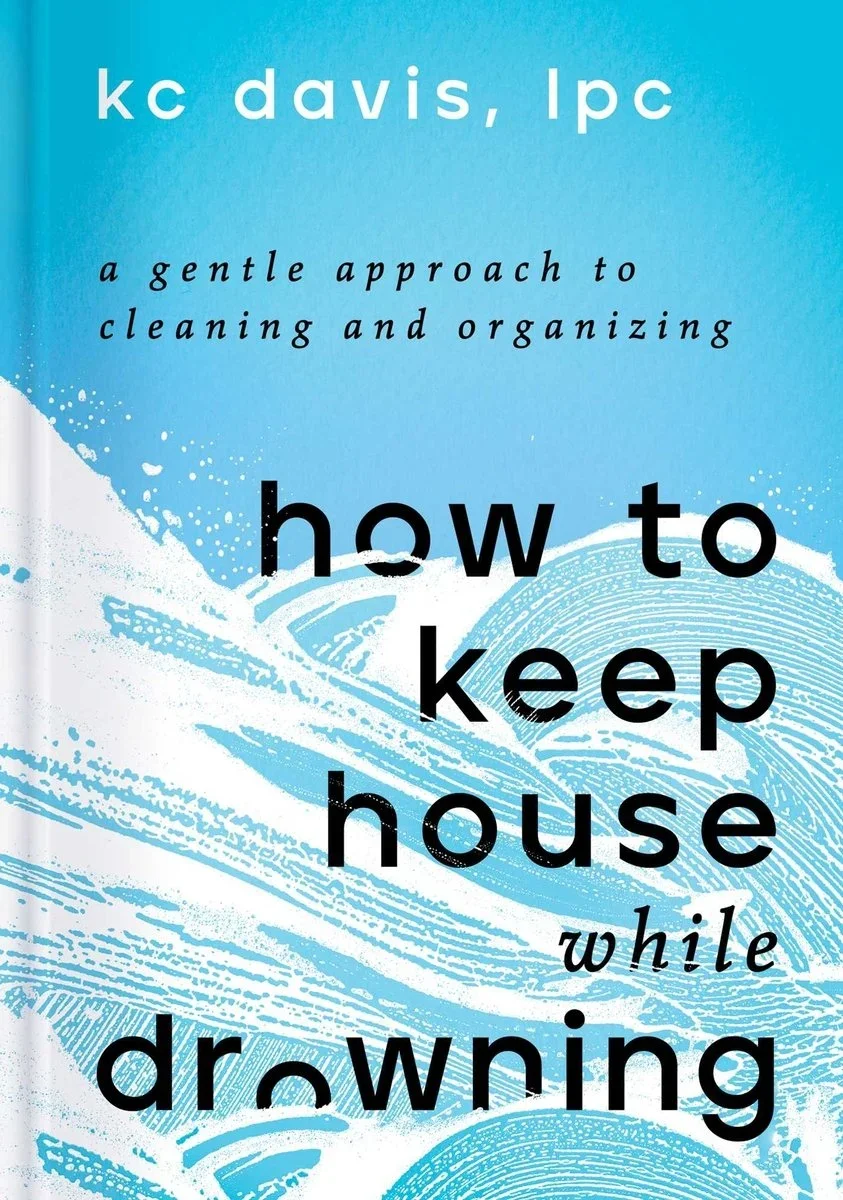
Recently, a client shared with me a book she was reading, How to Keep House While Drowning – A Gentle Approach to Cleaning and Organizing by therapist, author, podcaster, and speaker KC Davis, LPC. I was curious, so I read it, too.

The ideas resonated deeply with my client, who appreciated the realistic, kind approach to organizing and care tasks that encouraged gentle next steps. One of KC’s philosophies is “You don’t exist to serve your space; your space exists to serve you.”

How often do you feel like your stuff is running you? KC helps shift the perspective and offers advice for “how to care for ourselves when we feel like we are drowning.”

From practical organizing and cleaning tips to kinder self-talk, KC shares personal experiences of what has worked for her and others. She describes care tasks (laundry, cooking, cleaning, organizing, etc.) as neutral rather than a moral failing, even when they challenge you.

KC describes her own perspective shift and says, “Let me tell you what the mess in my home means. It means I’m alive. Dirty dishes mean I’ve fed myself. Scattered hobby supplies mean I am creative. Scattered toys and mess mean I am a fun mom…And occasionally, mess means I’m struggling with depression or stress. But those aren’t moral failings either, and neither is that moldy coffee cup I keep not taking to the kitchen.”

A few additional reframes KC offers include:

  • “Chores > care tasks”

  • “Chores are obligations. Care tasks are kindness to self.”

  • “Cleaning > resetting the space.”

  • “Cleaning is endless. Resetting the space has a goal.”

  • “It’s so messy in here! > this space has reached the end of its functional cycle.”

Filled with personal struggles and compassionate solutions, KC guides us on a journey toward reducing self-criticism and guilt, and finding more peace at home, one step at a time.


2. Interesting Perspective – Restful Next Step

It’s easy to overlook your needs. Do you find yourself pushing, doing, scheduling, organizing, and constantly in motion? There is a reason we call ourselves human beings, not human doings. ‘Being’ involves both action and rest.

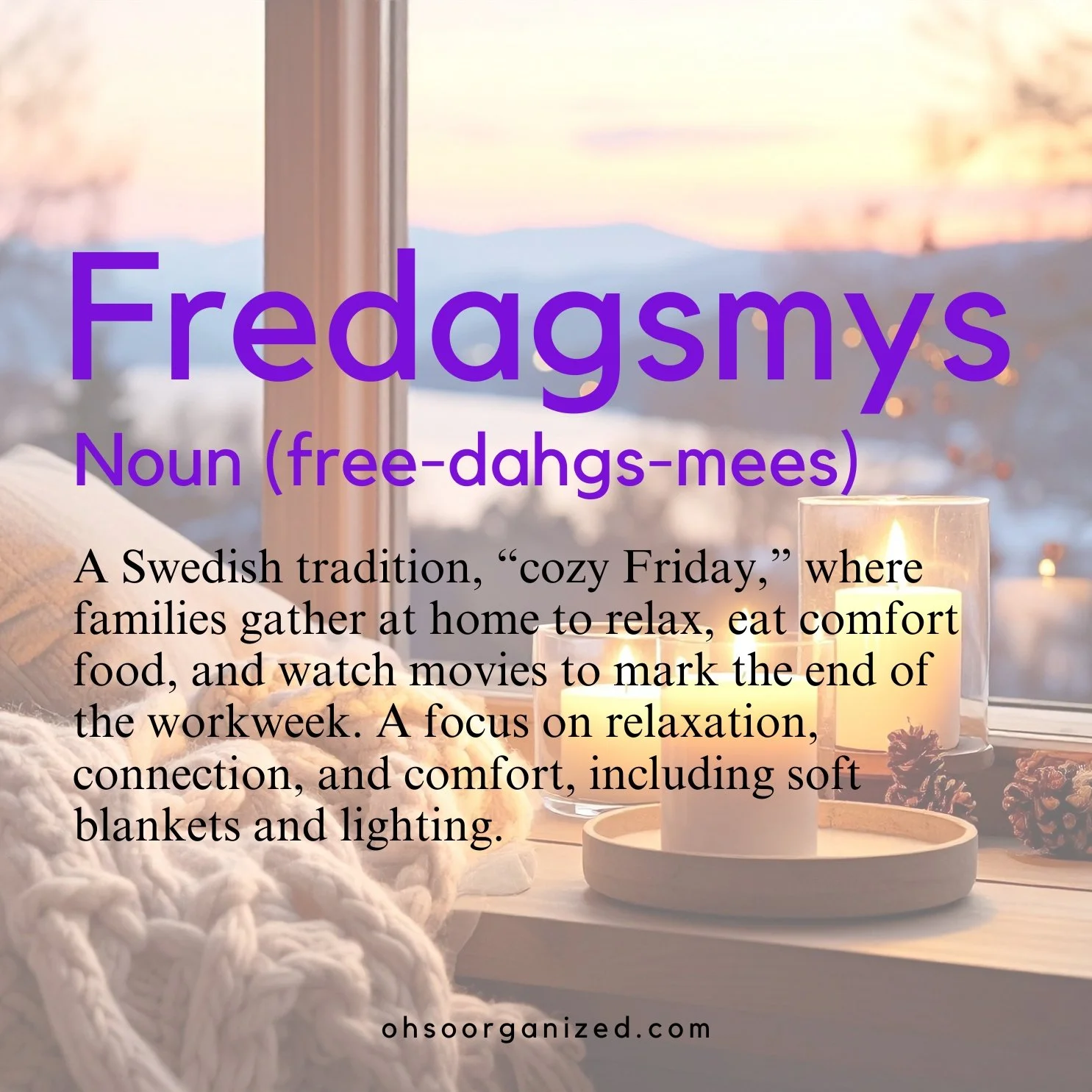
A recent Real Simple article featured a Swedish tradition called “fredagsmys” that beautifully encourages a balance between work and relaxation. The translation means “cozy Friday” or “Friday coziness.” This marks an intentional shift from the workweek to a relaxing weekend. Fredagsmys embodies connection, relaxation, and comfort. It is practiced by spending Friday night at home with your family or friends, watching movies, relaxing, eating, connecting, and being cozy with soft blankets and low lighting.

If you find yourself constantly pushing, adding some fredagsmys into your week could be the next step you need. But if that feels too big and challenging, find other smaller ways to build in rest and no-stress moments. Baby steps.

Before you know it, you’ll be ready for an entire night of relaxation, connection, and calm.


3. Interesting Product – Organized Next Step  

As the clocks just moved ahead an hour for the annual ‘spring forward,’ this signals that the season is about to change. Another sign is the greenery emerging from the ground. The plants are happy to see the light after being buried under piles of snow.

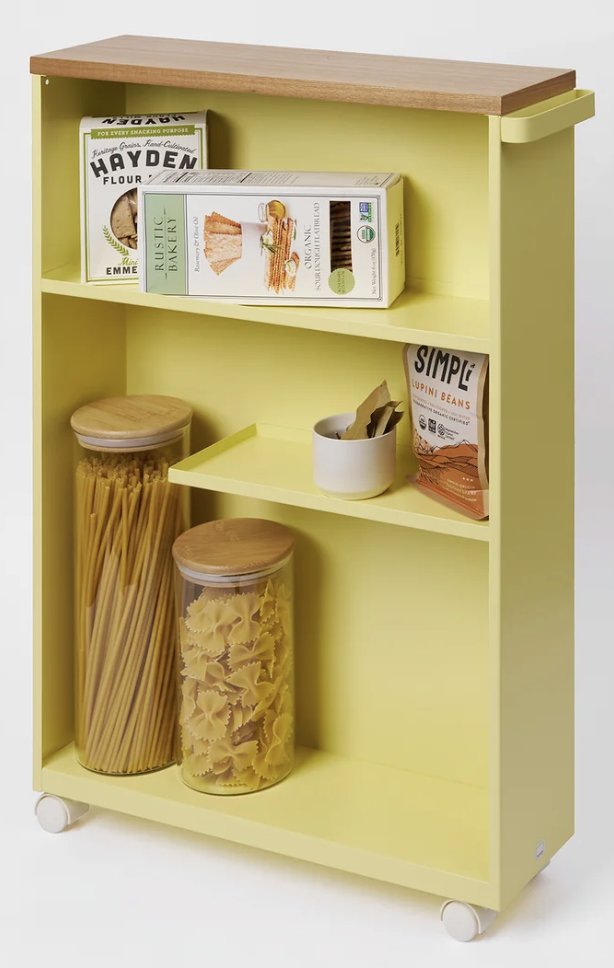
With that spring lens in mind, I came across this lovely butter-yellow or “yellow pear” steel rolling storage cart with a wood top. It’s a limited- edition collaborative design created by Yamazaki and Apartment Therapy.

If you need additional storage space with easy access for kitchen essentials like spices, oils, pasta, or snacks, this slim rolling cart (5” deep x 18” wide x 27” tall) will fit into the smallest spots.

This storage cart will make it easy and fun to organize your essentials.


“You don’t exist to serve your space; your space exists to serve you.”
— KC Davis, LPC

4. Interesting Resource – Capture Next Step

With over thirty years of helping clients declutter, let go, and get organized, I’ve seen firsthand how belongings hold meaning. This is one reason why letting go can be challenging.

Artifcts founder Heather Nickerson developed an app-based service that helps you record stories and memories about meaningful items and share them securely with loved ones. Documenting each item’s story can be key to letting go of the physical object.

The easy-to-use app helps you add photos, videos, audio recordings, and notes. You can document “what an item is, why it matters, and what should happen to it next.” This is an invaluable tool when you’re “organizing, downsizing, or planning your legacy.”

Heather’s inspiration for launching Artifcts came after her mother’s death. She inherited her mom’s possessions but really wanted to know the stories behind them. However, her mom was no longer there to share those stories. Artifcts helps you “preserve the meaning behind the objects that speak to who we are and where we’ve been.”

If you want your next step to include memorializing and letting go, this app is worth exploring.


5. Interesting Thought – Tiny Next Step

When your next step feels overwhelming, it might be too large. There are several ways to move forward. The first is to reduce the overwhelm. When you’re emotionally heightened, the amygdala takes over and blocks access to the thinking and action parts of the brain.

One strategy is to do some simple breathing.

  • Breathe in deeply through your nose.

  • Exhale through your mouth longer than the inhale.

  • Repeat that several times.

Your system will settle and calm, giving you the capacity to choose what happens next.

Once you’re in a less anxious state, take the next step by making it as small as possible. This helps prevent feeling overwhelmed. For example, instead of deciding that the next step is decluttering the entire kitchen, choose to declutter one corner of the kitchen counter. If that feels too overwhelming, focus on decluttering a small pile or simply removing items that are being routed elsewhere.

After completing that tiny step, you can choose to continue or stop. If you decide to do more, repeat the process and pick another tiny next step. Small and doable is better than big and paralyzing.


Next Step Options

When you want to move forward but feel stuck, what will help? There are many approaches and ways to consider next, as I shared with you.

Which of these discoveries resonates most? Do you have any next step ideas to add? I’d love to hear your thoughts and invite you to join the conversation.


How Can I Help?

Do you feel overwhelmed, stuck, or disorganized? Is figuring out your next step feeling elusive? I’m here to help. Virtual organizing is an extraordinary path forward – Local feel with a global reach.

Let’s talk. I’m easy to reach.

Moving forward and getting organized are possible, especially with support.


41 Amazing Results Clients Actually Experience from Virtual Organizing Sessions

I love helping my clients succeed as they make changes in their lives. Being part of their organizing journey as they experiment and grow is a privilege.

Prioritizing goals, changing habits, and learning new skills is no small feat. It takes patience, time, and curiosity. Sometimes, I’m asked, “How much can you accomplish in a one-hour virtual organizing session?”

Of course, that depends. However, it doesn’t matter if you’re planning, decluttering, assessing, or something else. My goal is to help my clients experience and notice their progress during every session.

Progress shows up in different ways. It might be . . .

  • Having a perspective shift

  • Decluttering a surface

  • Reducing overwhelm

  • Letting go of unhelpful ideas

  • Making decisions about emotionally charged possessions

  • Gaining clarity around the next tiny, doable step

  • Designing an organizational solution for a challenging area

  • Planning a big project

  • Figuring out where to start

  • Gaining confidence

  • Identifying potential obstacles

  • Noticing the changes they made

  • Learning new skills

  • Organizing mind clutter

  • Brainstorming about how to prioritize commitments and goals

  • Getting unstuck

  • Organizing a specific area

  • Improving their mood

  • Feeling empowered by their progress and agency


An Essential Question

My friend and colleague, Juliet Landau-Pope, begins each client session with this question. It’s a beautiful query because it encourages the client to review their progress and identify the benefits they’re experiencing. She asks,

“What value did you get from the last virtual organizing session?”

I listen carefully to what my clients say. They talk about their obstacles, positive changes, progress, and goals.

My clients experience many positive results from their one-hour virtual organizing sessions. I’m sharing their inspiring thoughts with you, which are categorized into five areas. They are:

  • Clutter

  • Progress

  • Mood

  • Enjoyment

  • Empowerment


41 Inspiring Results Clients Describe About Their Virtual Organizing Sessions 

Clutter

“I’m in the process of un-messing.”

“The bedroom is more habitable.”

“Clutter is more energy than it’s worth.”

“The couch looks better.”

“My pile of ‘going’ is getting bigger.”

“Stuff was much more overflowing before.”

“I now have a blueprint for how to declutter.”


Progress

“I made headway.”

“So much progress has been made.”

“Once on a roll, it’s easier.”

“I got so much done during our session.”

“It’s a big deal for me to be this focused.”

“I am making significant progress. I couldn’t do that a while ago.”

“Wow! This is starting to come together.”

“I feel more in control.”

“I see the light at the end of the tunnel.”

“I now have a blueprint for how to declutter.”
— Oh, So Organized! Client

Mood

“Things feel mentally more manageable.”

“I am way less overwhelmed.”

“I feel better.”

“I am so relieved to be dealing with this.”

“I feel good. I was down in the dumps when I couldn’t do anything.”

“It’s good to talk about emotional strategies to make it better.”

“This feels so good what we did today.”

“At the beginning of our session, I felt like crying. Now I feel giddy.”

“I’m in a better mood now.”


Enjoyment

“This was super helpful and fruitful.”

“Who knew organizing could be so fun?”

“This was very helpful. It was better than I thought it would be.”

“I really enjoyed our session.”

“This has been so much fun.”

“I see the light at the end of the tunnel.”
— Oh, So Organized! Client

Empowerment

“Things are improving. I’ve got this.”

“I have a plan that I can actually accomplish.”

“Not insurmountable anymore.”

“I’m in a whole other place than before.”

“It's not scary anymore.”

“I know I can do it. I can pair things down.”

“Not impossible or unconquerable.”

“I feel very motivated.”

“This is so liberating. I deserve this.”

“This is empowering.”

“I can do this!”


Virtual Organizing is a Powerful Path Forward

Which client experiences resonate with you? Have you worked with a Virtual Professional Organizer? If so, what positive results did you experience? I’d love to hear your thoughts. I invite you to join the conversation.

Do you need help getting unstuck, making a plan, decluttering, or organizing? If so, I’m ready to help. Please email me at linda@ohsoorganized.com, call 914-271-5673, or schedule a Discovery Call. Moving forward is possible, especially with support.


What's the Value of Enlisting Help As You Make a Positive Change?

Have you ever tried to build a new habit, make a change in your life, or learn something new? Think of one of those times. Did you go it alone? Or did you have help and support? For most of us, when we’re doing something outside our skill set or comfort zone, reaching out for help is the secret sauce for success.

You might remember that I set a big goal to create a healthier lifestyle almost a year ago. My main objectives were to change my eating habits, exercise more, and lose weight. Could I have done this without help? Definitely not! My husband, family, friends, and Noom coaches and lessons provide support. I’m still working on my goals, and I’ve made significant progress. I’m 25 pounds lighter, feel better physically, and am more flexible and energetic.

The ‘Noom lessons’ help me tremendously. The app sends me daily articles that deep dive into the psychology of weight loss, provide encouragement, include practical advice, and describe ways to maintain a healthy lifestyle. One piece of Noom’s wisdom that resonated with me was “Practice makes progress.”

Notice it doesn’t say ‘practice makes perfect,’ a familiar phrase. Because what or who is perfect?

I love how the practice-makes-progress concept encourages experimentation and ongoing action. Practice infers something you are working on and supports a growth mindset. It allows space for success, failure, and learning. Progress inspires incremental change.

“Practice makes progress.”
— Noom

I recognize how instrumental enlisting help is for achieving my goals. My organizing clients also experience these benefits. I love being on their support team.

Some ways I help my virtual organizing clients are to:

  • Define realistic goals

  • Experiment with new habits

  • Declutter and organize their things, thoughts, time, and space

  • Create maintainable organizing systems

  • Integrate accountability

  • Reflect on the changes they are making

  • Navigate overwhelm, backsliding, frustration, and discovery

  • Celebrate their progress and success

We focus on small, consistent, gradual change. My clients practice new habits, experiment with organizing systems, shift their perspective, and make progress. It’s genuinely inspiring to see their positive changes.

What changes are you actively working on? Do you have help? Do you need help? I’d love to hear your thoughts. I invite you to join the conversation.