

Posts tagged walking
Here Are 5 Most Interesting and Best Possibility Discoveries - v57

Enjoy the latest edition (v57) of the “What’s Interesting?” series, featuring my recent finds that inspire, spark curiosity, and connect to organizing and life balance. These unique possibility discoveries reflect this month’s blog theme.

You are an engaged, vibrant, and generous group. I’m deeply grateful for your ongoing presence, positive energy, and contributions to this community. I look forward to hearing your thoughts and seeing what else you can add to this curated collection.

What do you find interesting?


What’s Interesting? – 5 Best Possibility Discoveries

1. Interesting Read – Possibility Mindset
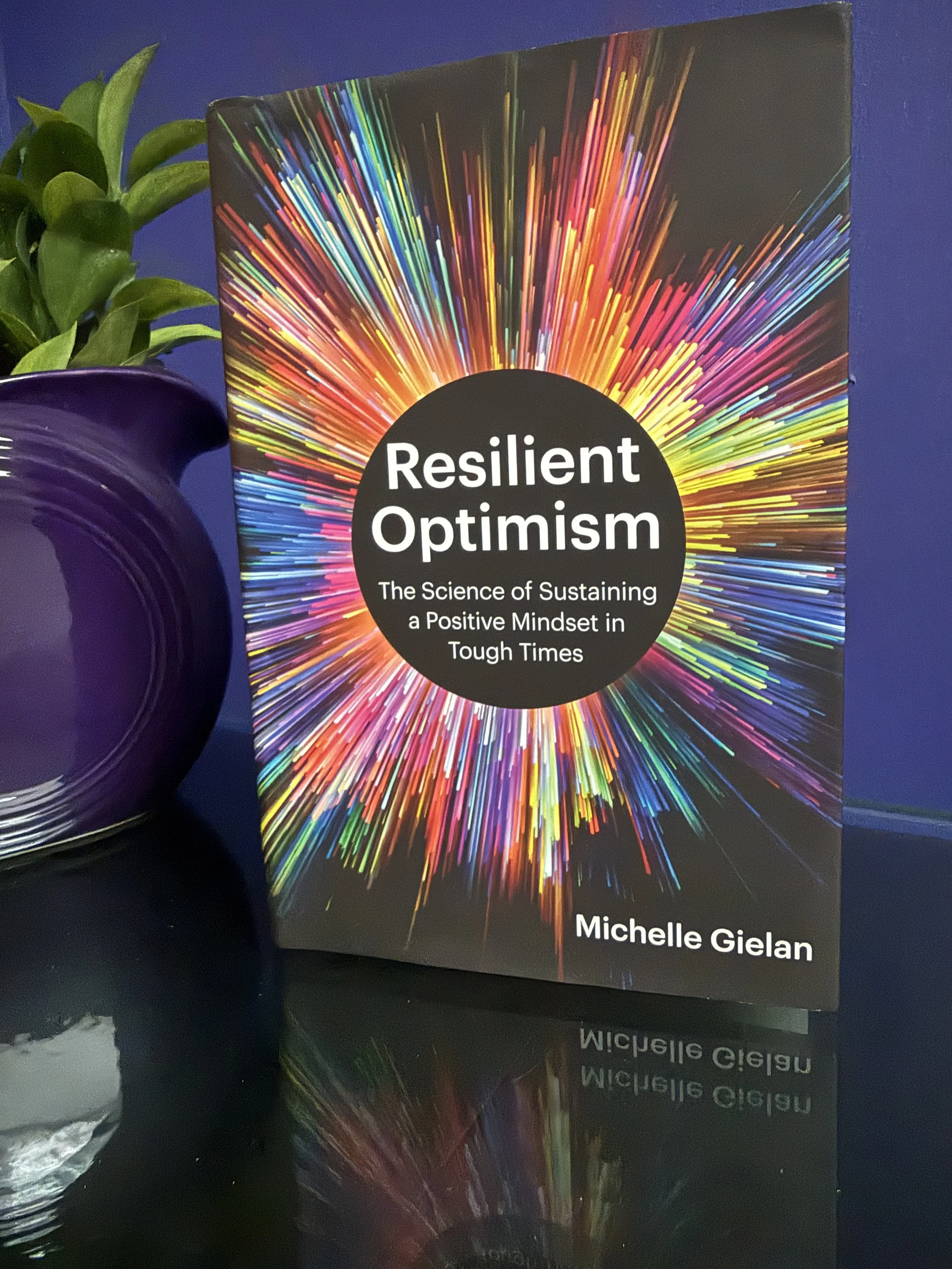
Do you struggle to stay positive and imagine what’s possible, especially during dark times? If so, I highly recommend Resilient Optimism – The Science of Sustaining a Positive Mindset in Tough Times by positive psychology researcher and bestselling author Michelle Gielan.

Drawing on neuroscience research and her work with thousands of leaders, Gielan says, “Resilient optimism is not a one-time mindset. It’s a practice. A daily redirection. A moment-by-moment invitation to pivot toward what’s constructive, energizing, and meaningful.”

When your brain focuses on what’s broken, it limits the brain’s potential. Gielan explains, “The brain runs best when fueled by optimism. The brain is naturally good at detecting threats – we call it negativity bias. When we solely focus on what’s broken, the brain’s threat center (the amygdala) lights up, pulling resources away from the problem-solving prefrontal cortex. But when we also engage with what’s working, the brain responds with creativity, energy, and greater resilience.”

The good news is that resilient optimism is a behavioral shift you can learn. Whether you consider yourself an optimist or a pessimist, Gielan shares doable ways to build your reserves through “deliberate, repeatable actions.”      

Her strategies include ways to:

  • Recalibrate your mindset

  • Change your stress response

  • Triage your commitments

  • Recharge smarter

  • Take small actions

  • Be a “positive deviant”

What will become possible as your mindset shifts?


2. Interesting Product – Possibility Openers
What happens when you feel stuck and are in a mental rut? Do you shut down, feel low on energy, get anxious, or find it difficult to imagine a way forward? If so, you’re not alone. There are many ways to get unstuck.

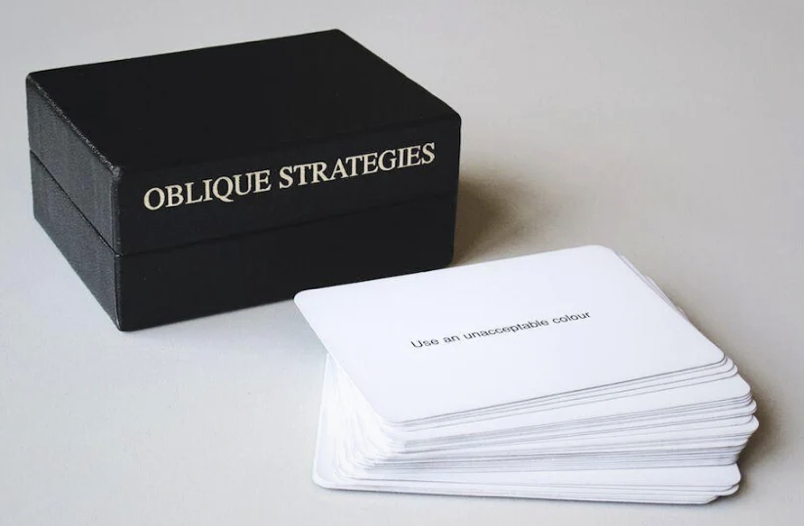
Decades ago, creatives Brian Eno and Peter Schmidt created Oblique Strategies, a deck of cards designed to help artists, musicians, writers, and other creatives “break through mental roadblocks” and “approach their work from fresh, unexpected angles.” The prompts can help anyone.

Each card offers a single, direct suggestion, such as “Use an old idea” or “Listen to the quiet voice.” Not every prompt will resonate with you, but some might offer the fresh perspective you need. “The goal is to challenge habitual thinking patterns and invite new possibilities into the creative process.”

Are you ready to explore new possibilities? If so, this deck could help.

“Resilient optimism is not a one-time mindset. It’s a practice.”
— Michelle Gielan

3. Interesting Article – Possibility Walk  

In the Time article “Why You Should Take a 10-Minute ‘Thinking-Walk,’” writer Angela Haupt highlights the many benefits of walking, including:

  • Processing thoughts

  • Sparking creativity

  • Solving problems

  • Taking an intentional break from technology

  • Resetting after intense focus

  • Improving mood

  • Reducing stress

  • Protecting long-term mobility

  • Easing anxiety and depression

Imagine what a “thinking walk” could do for you. When your mind is full, you’re stuck on a problem, or you’re struggling to imagine what’s possible, take a walk. Research highlights the value of walking without your electronic devices. Disconnect and let your mind wander. You can do this. It’s only ten minutes.

Although you can walk indoors, walking outdoors can further boost your well-being.


4. Interesting Resource – Possibility Shifts

Are you or someone you know overwhelmed by shopping too much? During a presentation on overshopping, I learned that 33.5 million people are addicted shoppers. We live in a society that constantly bombards us with marketing messages to buy more, newer, and better things. Sales entice us to buy things we don’t really need. Messages like “shop till you drop” make light of a serious addiction: overshopping.

Does breaking the shopping cycle feel impossible? If so, help is available. Carrie Rattle is a financial therapist, shopping-addiction expert, and founder of Behavioral Cents. Dr. April Lane Benson, Carrie’s colleague, friend, and a pioneer in the field of overshopping, mentored Carrie. In 2020, April sold her business to Carrie.

Carrie offers a variety of services, including individual coaching, group coaching, an online community, workshops, and her book, To Buy or Not To Buy – Tools to break the cycle and take control of your life.

What would be possible if you could, as Carrie says, shift from “compulsion to control”?


5. Interesting Thought – Possibility Scenario

“You are allowed to imagine the best case scenario.” Mindset matters. Instead of dwelling on “I can’t,” “It will never happen,” or “It’s going to be awful,” consider what might be possible. Focus on learning, growing, and exploring new possibilities.

Shifting your thoughts can help you change your path. Think about a project or situation you’re finding challenging right now. What does the best-case scenario look like? What’s one small action you can take now to move in that direction?


What Is Possible Now?

When it’s hard to imagine what’s possible, what helps? As I’ve shared, there are many ways to shift your thoughts and actions and move forward with a more possibility-focused perspective.

Which of these discoveries resonates most with you? Do you have resources or ideas about possibility thinking to share? I’d love to hear your thoughts and invite you to join the conversation.


How Can I Help?

Do you feel overwhelmed, stuck, or disorganized? Are your thoughts keeping you from living the life you want? I’m here to help. Virtual organizing is an extraordinary path forward—Local feel with a global reach.

Let’s talk. I’m easy to reach.

Decluttering, getting organized, and seeing what’s possible can happen, especially with support.


5 Ways to Easily See What's Possible by Finding Solutions to Your Challenges

Are there many things you want to experience, explore, or accomplish in life? If so, that’s wonderful. However, when you encounter daily challenges, it becomes harder to think about the future and imagine possibilities.

You have the capacity to handle a lot. You can boost your capacity by identifying and addressing a specific challenge you’re facing. Often, just one small tweak is enough to create momentum and open the path for new ideas you couldn’t see before.

Why is that? It’s easy to get stuck in cycles of distress, overwhelm, and frustration. These patterns can cause paralysis and inaction. When you’re in that negative mode, your mind can spiral or shut down. Thinking and dreaming about new possibilities feels out of reach.

There are many ways to open up the ‘what’s possible’ path. Depending on your preferences and situation, choose the strategy that will be most effective for you.


5 Ways to Easily See What’s Possible by Finding Solutions to Your Challenges

1. Identify the Hiccups

One of my favorite methods to prepare for possibilities is by making a list of the hiccups you encounter during your day.

Pay close attention as you go through your day. As situations occur, write down anything that causes you stress, distress, or inconvenience. These might include things like:

  • Misplaced or lost keys, glasses, or your phone.

  • Had trouble getting dressed because of clutter in the closet.

  • Created an overly complicated organizational system that’s too difficult to maintain.

  • Had supplies tumble out of the bathroom cabinet every time it was opened.

  • Was late for an appointment again.

  • Ran out of milk, toilet paper, apples, or other household staples.

  • Was annoyed during kitchen meal prep because things weren’t organized in a useful way.

  • Woke up cranky because of sleep disruptions or lack of sleep.

  • Began the day feeling anxious and unsure what to focus on.

Notice the hiccup. Write it down. Choose one of the challenges and fix the problem.


2. Quiet Your Mind

When the noise upstairs gets too loud and clouds your thoughts, it can prevent you from seeing possibilities. How can you quiet the mind so you can move forward with clarity and purpose?

There are many ways to do this, including:

  • Journaling

  • Meditating

  • Sipping coffee or tea from your favorite mug

  • Resting

  • Reading

  • Breathing slowly with focus and intention


3. Declutter the Desk

Numerous studies show how clutter can negatively affect our mental health and well-being. Not everyone is affected by clutter to the same degree. However, if clutter bothers you, you may actually feel its effects viscerally. You might feel anxious, stressed, agitated, or have difficulty concentrating or relaxing.

One of the easiest ways to change how you’re feeling is by decluttering a small area. It doesn’t matter what you choose. Pick something with distinct boundaries like a desk surface, a comfy chair, or a coffee table.

Remove items that don’t belong. Route the outtakes to the trash, recycling bin, donation box, or rehome them elsewhere. For the remaining items, decide whether you want them to stay, let them go, or relocate to another spot.

Clearing space and surfaces is calming. With this simple reset, you’ll be more open to possibilities. 

“The physical act of movement can encourage progress and possibilities in other areas of your life. ”
— Linda Samuels, CPO-CD®, CVOP™

4. Move Your Body

Sitting is passive. Not only does it make your body stiff and less active, but it can also affect your energy level and mood. Since transitioning from in-person to virtual work, I sit much more than I used to.

Movement has become even more important. I make sure to take breaks between virtual organizing sessions to walk around, stretch, take bio breaks, or get some fresh air. When I’m on the phone, I often walk around the house while talking. I incorporate other movements by doing yoga, exercising, walking by the river or in the woods, running errands, gardening, sweeping, or cleaning.

Some movement is spontaneous, while some is more intentional. It helps when I schedule time to meet a friend for a walk or go to yoga class. That adds accountability and keeps me committed to moving more.

Physical movement creates its own momentum. The physical act of movement can encourage progress and possibilities in other areas of your life.


5. Ask for Help

Have you ever faced a challenge that overwhelmed you? When that happens, do you try to solve it on your own or ask for help? I usually try to figure things out myself first. However, there are times when hiring someone or seeking advice is beneficial.

Recently, I experienced some frustrating tech problems with Mailchimp and Square while setting up the backend for my December workshop. While customer support offered a few insights, they didn’t resolve the issue, so I hired someone to help me. It was incredible how much less stressed I felt knowing someone would help me find a solution and fix the problem. I didn’t have to do this alone. It was wonderful having the personalized support to troubleshoot the issue, discuss options I hadn’t considered, and resolve the problem. Thank you, Lana Kitcher!

As a professional organizer, I help my clients get unstuck and move forward. I love helping and serving others. It’s inspiring to see what becomes possible when obstacles are removed.

Sometimes the answer to a problem is asking for help. When you receive the support you need, your stress and overwhelm decrease. You become more available to take the next steps and imagine what is possible.


Will Finding Solutions Make You More Receptive to New Possibilities?

Everyone gets stuck sometimes. What happens next is what matters most. There are many options, which include identifying the challenge, decluttering a small area, or reaching out for help. What hiccups during your day are keeping you frustrated and stuck? What helps you feel receptive to new possibilities?

Which ideas resonate most with you? I’d love to hear your thoughts. I invite you to join the conversation.


How Can I Help?

Do you feel overwhelmed, stuck, or disorganized? I’m here to help! Virtual organizing is an extraordinary path forward – Local feel with a global reach.

Let’s talk. I’m easy to reach.

Getting organized and making progress is possible, especially with support.


How to More Easily Approach the Next Thing by Not Imposing Toxic Preconditions

Do you create obstacles for yourself before embarking on the next step? These might include a list of self-imposed pre-requirements before you can take the next step or tackle a new project.

Perhaps your goal is spring cleaning and organizing. While that’s a great goal, instead of beginning the process, you set parameters that make it nearly impossible to take the next step.

For instance, you prefer tackling this project in big time blocks rather than shorter, focused sessions. However, your life commitments and energy levels aren’t conducive to organizing three, four, or five hours at a time.

As a result, what happens? Things stagnate because you don’t have large swaths of time to move your project forward. You frontloaded the project with an obstacle that closed your mind to alternative solutions and experimentation.

Does this sound familiar?


What Are Toxic Preconditions?

A few weeks ago, I discovered the term “toxic preconditions” in Oliver Burkeman’s newsletter, The Imperfectionist. He learned this concept from James Horton, a social scientist who questioned why people who want to write more don’t.

Horton observed that some aspiring writers had “misguided beliefs” that might have seemed helpful but undermined their confidence, causing them to write less or not at all.

Burkeman says that what’s behind toxic preconditions is “the strong desire we have for some kind of guarantee – before we embark on a new activity, or even allow ourselves to relax into life – that it’ll all unfold safely and securely, that we’ll retain the feeling of being in control.”

He advocates how freeing it is to let go of that need for a “guarantee.” Burkeman says, “Getting past toxic preconditions is less a matter of being willing to step into the unknown than of realizing that you’re already in the unknown.” He goes on to say, “You never had control; all you had was anxiety.”

“Do you set parameters that make it nearly impossible to take the next step?”
— Linda Samuels, CPO-CD®, CVOP™

Letting Go of Toxic Preconditions

There are three aspects for releasing toxic preconditions:

1. Observe – Notice when you are putting up obstacles to the extent that you can’t move toward your goal or next step.

2. Accept – Acknowledge there are no guarantees. Instead, move forward with curiosity, openness, and a willingness to experiment.

3. Release – Let go of any preconditions that are toxic. Be willing to take that next step without first doing a, b, c, d, or e. Go forth without all the i’s dotted and t’s crossed.

I want to re-establish my daily walking habit. In the past months, I put up obstacles based on the weather, which I can’t control. I won't walk every day if I’m only willing to walk when it’s warm and sunny. I’ve been telling myself, “It’s too cold.” Or, “It’s too dreary.” If, instead, I adjust the parameters, like the length of a walk, wearing more layers, or walking inside instead of out, I’ll be more likely to reach my daily walking goal.

“Getting past toxic preconditions is less a matter of being willing to step into the unknown than of realizing that you’re already in the unknown.”
— Oliver Burkeman

What’s On the Other Side of Toxicity?

Let’s face it. Life has challenges. However, how often do you create obstacles and make things more complicated than necessary? If you tend to hinder your progress, I encourage you to explore new options. Release those toxic preconditions that aren’t serving you. Experience more movement, flow, and success.

Have you encountered toxic preconditions in others or yourself? I’d love to hear your thoughts. I invite you to join the conversation.


How Can I Help?

Do you want support organizing, editing, planning, or working on that next step? I’d love to help! Virtual organizing is an extraordinary path forward – local feel with a global reach.

Please schedule a Discovery Call, email me at linda@ohsoorganized.com, or call 914-271-5673. Figuring out next is possible, especially with support.


3 Ways to Take a Slow Exhale & Refocus Energy for a New Fresh Start

Are you feeling exhausted after meeting a deadline or finishing a project? While hyper-drive may be necessary to reach completion, downshifting is essential afterward.

Over the past month, I worked hard on the chapter I wrote for the new ICD (Institute for Challenging Disorganization) book to meet their short, time-sensitive deadline. I am excited to have written the chapter on client support and look forward to sharing more once it is published later this year.

How does this relate to fresh starts? The writing deadline straddled the end of one year and the beginning of another. The time I typically take to wrap things up and reimagine what’s next was allocated to the book project. Instead of slowing down as the year closed, things sped up and kept going until earlier this week when I submitted my draft.

Completing the deadline helped reaffirm the necessity of taking a moment to breathe. This slow exhalation is the break I need to refocus my energy and plan what comes next. I identified several elements that I hope you’ll find helpful the next time you are about to switch gears.


3 Ways to Exhale & Refocus Your Energy

1. Reflect

Doing a post-deadline debrief, thinking about how I approached the book project and what I learned, was valuable and affirming.

These are some reflections:

  • Clarified the chapter’s content and description with the committee

  • Made time estimates for how long it would take to write the chapter

  • Scheduled writing blocks on my calendar

  • Said “no” to things that would distract from my objectives

  • Remained flexible with scheduling and idea development

  • Developed an outline of topics to cover

  • Made a plan for how to approach the various sections

  • Hired an accountability partner (thank you, Lana) to keep me on track

  • Set weekly goals

  • Logged hours and other metrics

  • Journaled

Another aspect I noticed was how my weekly blog writing routine prepared me for this project. My well-established writing tools and rituals made writing easier during the scheduled “ICD Book Project” writing blocks. When things didn’t go well during a particular block, I wasn’t discouraged, as I knew it was a normal part of the writing. I had built up resiliency through experiencing similar ups and downs with blogging.

Hiring an accountability partner was incredibly beneficial for the book project, especially because of the tight deadline. It was also fascinating to experience and fully appreciate the benefits from the “lived” perspective. While I have received a lot of positive feedback from my clients, I better understand why they say having me as their accountability partner is helpful. I get it.


2. Sense

I just finished reading a wonderful book How to Winter, by Kari Leibowitz, PhD. I highly recommend it, especially if you’re interested in the far-reaching benefits of developing a “positive wintertime mindset.”

One of the things that she wrote about was how to develop an awareness of those things you love about winter, like:

  • the “fresh” smell of the air that slow-moving molecules create

  • the cozy warmth of being around a firepit

  • the delight of sipping hot cocoa with marshmallows or

  • the happy sensation of curling up with a warm blanket and book

While I engage regularly with my senses, I noticed how they were heightened during this transition time because I was reading Leibowitz’s book. When I was outside, instead of thinking about how cold I was, I breathed in the crisp air and appreciated the cyclical nature of the dormant, bare trees. Instead of feeling guilty for wanting to go to bed earlier, I recognized the value of rest and delighted in the visceral calming effects of my bedtime rituals.

Appreciating and sensing is a gentle way to experience presence and gratitude for what is here now. Lingering in this presence through my senses removes concern about what will be next and helps replenish my energy.

Of all things, as if on cue, the snow just started falling. At first, the flakes were sparse and descended slowly. Then, the flow and pace increased as the sky and landscape turned white. We’re expecting five to seven inches of snow over the following hours. I’m so excited! Perhaps there will be some hot cocoa in my future. A white covering will soon transform everything. Talk about a clean slate! It’s the perfect visual to encourage a fresh start.


“While hyper-drive may be necessary to reach completion, downshifting is essential afterward.”
— Linda Samuels, CPO-CD®, CVOP™

3. Nourish

Engaging in nourishing activities that support your well-being is another way to slow down and refocus your energy. When you have exerted a lot of effort, balancing it with restorative practices is vital.

My supportive activities include meditation, yoga, walking, and journaling. There are others, too, like exploring new places, seeing friends and family, watching movies, eating healthfully, or getting enough sleep.

And then there’s soup—yes, soup! Making and eating soup is a thoroughly enriching activity for me. I love washing and chopping ingredients, adding them to the big pot, and creating a delicious meal with a few simple, fresh items.

After hours of simmering, my husband and I will share this hot meal as we look out the dining room window into the chilly night, watching the snow gently fall. Maybe we’ll even eat by candlelight. If that’s not cozy and nourishing, I don’t know what is.

What helps you slow down and restore energy? How can taking a restorative break energize your fresh start? I’d love to hear your thoughts. I invite you to join the conversation.


How Can I Help?

Do you want support organizing, planning, or restoring energy? I’d love to help! Virtual organizing is an extraordinary path forward – A local feel with a global reach.

Please schedule a Discovery Call, email me at linda@ohsoorganized.com, or call 914-271-5673. Change is possible, especially with support.