

Posts tagged capacity
Here Are 5 Most Interesting and Best Next Step Discoveries - v54

Enjoy the latest edition (v54) of the “What’s Interesting?” series, which features my most recent finds that inspire, spark curiosity, and relate to organizing and life balance. These unique next step discoveries reflect this month’s blog theme.

You are an engaged, vibrant, and generous group. I am deeply grateful for your ongoing presence, positive energy, and contributions to this community. I look forward to your participation and further contributions to this curated collection.

What do you find interesting?


What’s Interesting? – 5 Best Next Step Discoveries

1. Interesting Read – Compassionate Next Step

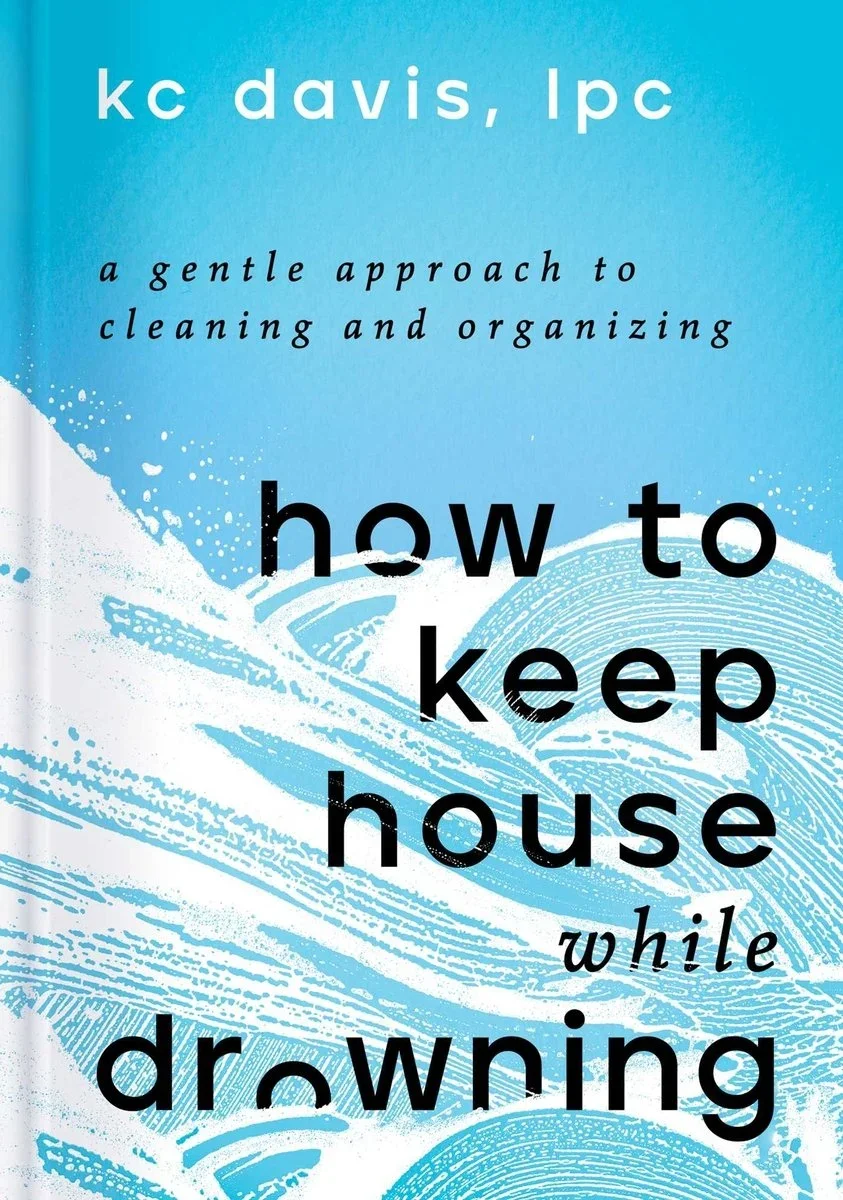
Recently, a client shared with me a book she was reading, How to Keep House While Drowning – A Gentle Approach to Cleaning and Organizing by therapist, author, podcaster, and speaker KC Davis, LPC. I was curious, so I read it, too.

The ideas resonated deeply with my client, who appreciated the realistic, kind approach to organizing and care tasks that encouraged gentle next steps. One of KC’s philosophies is “You don’t exist to serve your space; your space exists to serve you.”

How often do you feel like your stuff is running you? KC helps shift the perspective and offers advice for “how to care for ourselves when we feel like we are drowning.”

From practical organizing and cleaning tips to kinder self-talk, KC shares personal experiences of what has worked for her and others. She describes care tasks (laundry, cooking, cleaning, organizing, etc.) as neutral rather than a moral failing, even when they challenge you.

KC describes her own perspective shift and says, “Let me tell you what the mess in my home means. It means I’m alive. Dirty dishes mean I’ve fed myself. Scattered hobby supplies mean I am creative. Scattered toys and mess mean I am a fun mom…And occasionally, mess means I’m struggling with depression or stress. But those aren’t moral failings either, and neither is that moldy coffee cup I keep not taking to the kitchen.”

A few additional reframes KC offers include:

  • “Chores > care tasks”

  • “Chores are obligations. Care tasks are kindness to self.”

  • “Cleaning > resetting the space.”

  • “Cleaning is endless. Resetting the space has a goal.”

  • “It’s so messy in here! > this space has reached the end of its functional cycle.”

Filled with personal struggles and compassionate solutions, KC guides us on a journey toward reducing self-criticism and guilt, and finding more peace at home, one step at a time.


2. Interesting Perspective – Restful Next Step

It’s easy to overlook your needs. Do you find yourself pushing, doing, scheduling, organizing, and constantly in motion? There is a reason we call ourselves human beings, not human doings. ‘Being’ involves both action and rest.

A recent Real Simple article featured a Swedish tradition called “fredagsmys” that beautifully encourages a balance between work and relaxation. The translation means “cozy Friday” or “Friday coziness.” This marks an intentional shift from the workweek to a relaxing weekend. Fredagsmys embodies connection, relaxation, and comfort. It is practiced by spending Friday night at home with your family or friends, watching movies, relaxing, eating, connecting, and being cozy with soft blankets and low lighting.

If you find yourself constantly pushing, adding some fredagsmys into your week could be the next step you need. But if that feels too big and challenging, find other smaller ways to build in rest and no-stress moments. Baby steps.

Before you know it, you’ll be ready for an entire night of relaxation, connection, and calm.


3. Interesting Product – Organized Next Step  

As the clocks just moved ahead an hour for the annual ‘spring forward,’ this signals that the season is about to change. Another sign is the greenery emerging from the ground. The plants are happy to see the light after being buried under piles of snow.

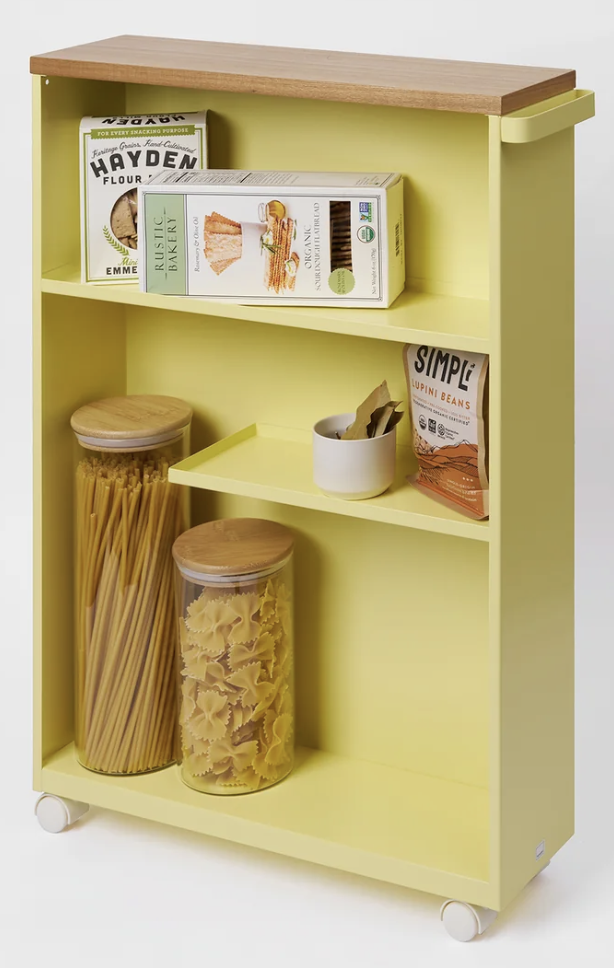
With that spring lens in mind, I came across this lovely butter-yellow or “yellow pear” steel rolling storage cart with a wood top. It’s a limited- edition collaborative design created by Yamazaki and Apartment Therapy.

If you need additional storage space with easy access for kitchen essentials like spices, oils, pasta, or snacks, this slim rolling cart (5” deep x 18” wide x 27” tall) will fit into the smallest spots.

This storage cart will make it easy and fun to organize your essentials.


You don’t exist to serve your space; your space exists to serve you.
— KC Davis, LPC

4. Interesting Resource – Capture Next Step

With over thirty years of helping clients declutter, let go, and get organized, I’ve seen firsthand how belongings hold meaning. This is one reason why letting go can be challenging.

Artifcts founder Heather Nickerson developed an app-based service that helps you record stories and memories about meaningful items and share them securely with loved ones. Documenting each item’s story can be key to letting go of the physical object.

The easy-to-use app helps you add photos, videos, audio recordings, and notes. You can document “what an item is, why it matters, and what should happen to it next.” This is an invaluable tool when you’re “organizing, downsizing, or planning your legacy.”

Heather’s inspiration for launching Artifcts came after her mother’s death. She inherited her mom’s possessions but really wanted to know the stories behind them. However, her mom was no longer there to share those stories. Artifcts helps you “preserve the meaning behind the objects that speak to who we are and where we’ve been.”

If you want your next step to include memorializing and letting go, this app is worth exploring.


5. Interesting Thought – Tiny Next Step

When your next step feels overwhelming, it might be too large. There are several ways to move forward. The first is to reduce the overwhelm. When you’re emotionally heightened, the amygdala takes over and blocks access to the thinking and action parts of the brain.

One strategy is to do some simple breathing.

  • Breathe in deeply through your nose.

  • Exhale through your mouth longer than the inhale.

  • Repeat that several times.

Your system will settle and calm, giving you the capacity to choose what happens next.

Once you’re in a less anxious state, take the next step by making it as small as possible. This helps prevent feeling overwhelmed. For example, instead of deciding that the next step is decluttering the entire kitchen, choose to declutter one corner of the kitchen counter. If that feels too overwhelming, focus on decluttering a small pile or simply removing items that are being routed elsewhere.

After completing that tiny step, you can choose to continue or stop. If you decide to do more, repeat the process and pick another tiny next step. Small and doable is better than big and paralyzing.


Next Step Options

When you want to move forward but feel stuck, what will help? There are many approaches and ways to consider next, as I shared with you.

Which of these discoveries resonates most? Do you have any next step ideas to add? I’d love to hear your thoughts and invite you to join the conversation.


How Can I Help?

Do you feel overwhelmed, stuck, or disorganized? Is figuring out your next step feeling elusive? I’m here to help. Virtual organizing is an extraordinary path forward – Local feel with a global reach.

Let’s talk. I’m easy to reach.

Moving forward and getting organized are possible, especially with support.


5 Ways to Easily See What's Possible by Finding Solutions to Your Challenges

Are there many things you want to experience, explore, or accomplish in life? If so, that’s wonderful. However, when you encounter daily challenges, it becomes harder to think about the future and imagine possibilities.

You have the capacity to handle a lot. You can boost your capacity by identifying and addressing a specific challenge you’re facing. Often, just one small tweak is enough to create momentum and open the path for new ideas you couldn’t see before.

Why is that? It’s easy to get stuck in cycles of distress, overwhelm, and frustration. These patterns can cause paralysis and inaction. When you’re in that negative mode, your mind can spiral or shut down. Thinking and dreaming about new possibilities feels out of reach.

There are many ways to open up the ‘what’s possible’ path. Depending on your preferences and situation, choose the strategy that will be most effective for you.


5 Ways to Easily See What’s Possible by Finding Solutions to Your Challenges

1. Identify the Hiccups

One of my favorite methods to prepare for possibilities is by making a list of the hiccups you encounter during your day.

Pay close attention as you go through your day. As situations occur, write down anything that causes you stress, distress, or inconvenience. These might include things like:

  • Misplaced or lost keys, glasses, or your phone.

  • Had trouble getting dressed because of clutter in the closet.

  • Created an overly complicated organizational system that’s too difficult to maintain.

  • Had supplies tumble out of the bathroom cabinet every time it was opened.

  • Was late for an appointment again.

  • Ran out of milk, toilet paper, apples, or other household staples.

  • Was annoyed during kitchen meal prep because things weren’t organized in a useful way.

  • Woke up cranky because of sleep disruptions or lack of sleep.

  • Began the day feeling anxious and unsure what to focus on.

Notice the hiccup. Write it down. Choose one of the challenges and fix the problem.


2. Quiet Your Mind

When the noise upstairs gets too loud and clouds your thoughts, it can prevent you from seeing possibilities. How can you quiet the mind so you can move forward with clarity and purpose?

There are many ways to do this, including:

  • Journaling

  • Meditating

  • Sipping coffee or tea from your favorite mug

  • Resting

  • Reading

  • Breathing slowly with focus and intention


3. Declutter the Desk

Numerous studies show how clutter can negatively affect our mental health and well-being. Not everyone is affected by clutter to the same degree. However, if clutter bothers you, you may actually feel its effects viscerally. You might feel anxious, stressed, agitated, or have difficulty concentrating or relaxing.

One of the easiest ways to change how you’re feeling is by decluttering a small area. It doesn’t matter what you choose. Pick something with distinct boundaries like a desk surface, a comfy chair, or a coffee table.

Remove items that don’t belong. Route the outtakes to the trash, recycling bin, donation box, or rehome them elsewhere. For the remaining items, decide whether you want them to stay, let them go, or relocate to another spot.

Clearing space and surfaces is calming. With this simple reset, you’ll be more open to possibilities. 

The physical act of movement can encourage progress and possibilities in other areas of your life.
— Linda Samuels, CPO-CD®, CVOP™

4. Move Your Body

Sitting is passive. Not only does it make your body stiff and less active, but it can also affect your energy level and mood. Since transitioning from in-person to virtual work, I sit much more than I used to.

Movement has become even more important. I make sure to take breaks between virtual organizing sessions to walk around, stretch, take bio breaks, or get some fresh air. When I’m on the phone, I often walk around the house while talking. I incorporate other movements by doing yoga, exercising, walking by the river or in the woods, running errands, gardening, sweeping, or cleaning.

Some movement is spontaneous, while some is more intentional. It helps when I schedule time to meet a friend for a walk or go to yoga class. That adds accountability and keeps me committed to moving more.

Physical movement creates its own momentum. The physical act of movement can encourage progress and possibilities in other areas of your life.


5. Ask for Help

Have you ever faced a challenge that overwhelmed you? When that happens, do you try to solve it on your own or ask for help? I usually try to figure things out myself first. However, there are times when hiring someone or seeking advice is beneficial.

Recently, I experienced some frustrating tech problems with Mailchimp and Square while setting up the backend for my December workshop. While customer support offered a few insights, they didn’t resolve the issue, so I hired someone to help me. It was incredible how much less stressed I felt knowing someone would help me find a solution and fix the problem. I didn’t have to do this alone. It was wonderful having the personalized support to troubleshoot the issue, discuss options I hadn’t considered, and resolve the problem. Thank you, Lana Kitcher!

As a professional organizer, I help my clients get unstuck and move forward. I love helping and serving others. It’s inspiring to see what becomes possible when obstacles are removed.

Sometimes the answer to a problem is asking for help. When you receive the support you need, your stress and overwhelm decrease. You become more available to take the next steps and imagine what is possible.


Will Finding Solutions Make You More Receptive to New Possibilities?

Everyone gets stuck sometimes. What happens next is what matters most. There are many options, which include identifying the challenge, decluttering a small area, or reaching out for help. What hiccups during your day are keeping you frustrated and stuck? What helps you feel receptive to new possibilities?

Which ideas resonate most with you? I’d love to hear your thoughts. I invite you to join the conversation.


How Can I Help?

Do you feel overwhelmed, stuck, or disorganized? I’m here to help! Virtual organizing is an extraordinary path forward – Local feel with a global reach.

Let’s talk. I’m easy to reach.

Getting organized and making progress is possible, especially with support.


How to Know If Your Courageous Next Step is to Absolutely Regroup Now

All cylinders fire at capacity when you experience an intense period of busyness, deadlines, or emergencies. You can sustain your energy and focus for a while, but something needs to shift. Otherwise, you’ll burn out. There are various ways to decide what comes next after a rigorous stretch.

I am at this juncture now. While not quite over, it’s been a full first quarter. A partial list of what I’ve been working on includes:

  • Presenting four workshops – Three virtual and one in-person

  • Having virtual organizing sessions – Ongoing, returning, and new clients

  • Blogging – Writing a new post each week

  • Leading meetings – For two professional organizer groups, one international and one local

  • Volunteering – For personal and professional groups


This week, I gave the last of the four workshops I scheduled for this quarter. Denise Wenacur, the talented interior designer and founder of DW Design & Décor, invited me to talk about clutter at her monthly Speaker Series. It was a wonderful evening with great people, drinks, and delicious food. Denise is such a warm host who fosters a sense of community through her monthly events.

Denise shared the evening, and my workshop live. Click here to watch How to Conquer Clutter.

So here I am. Winter has morphed into spring as the crocuses and daffodils emerge from the earth. Most of my first-quarter projects are complete. It’s time for my next step plan, which I’ll share with you.

Regrouping allows me to pause briefly, evaluate, and decide what to embrace next.
— Linda Samuels, CPO-CD®, CVOP™

My simple three-step plan for next:

1. Breathe in deeply.

2. Exhale slowly.

3. Regroup.

Steps one and two help me prepare for step three. Regrouping allows me to pause briefly, evaluate how the last quarter went, and decide what to embrace next. I already have some things in the works. During my regrouping process, I’ll assess the timing and energy needed for other projects.

For example, one of my goals for 2024 is to host three Oh, So Organized!-sponsored workshops. I presented My Simple Organizing Plan in February and would like to do a new workshop in late spring, but we’ll see. Figuring out the details will be part of my regrouping process.

I’m breathing, pausing, and thinking before committing to my plan. How was your first quarter? Are you thinking about what comes next? I’d love to hear your thoughts and invite you to join the conversation.

If you need help regrouping and figuring out your next step, I’m here to help. Please email me at linda@ohsorganized.com, call 914-271-5673, or schedule a Discovery Call. Your next step is doable, especially with support.


How to Energize Big Change with a Blissful Little Pause

When you’re making a significant change, it takes sustained energy and focus. This can be exhausting. When pursuing change, motivation is an essential ingredient. However, it’s not enough. Sometimes, you’ll need to act even when you don’t feel like it and your motivation is low or non-existent.

Taking action through small, consistent steps will facilitate the change you desire.

There is another aspect to proactive change that goes beyond desire, motivation, and action. It’s recognizing the powerful and energizing effect a brief pause has.

Last week, I wrote about capacity. The pause is connected to that idea. Consider how much stamina it takes to make a change in your life. Along that journey, which could take days, months, or years, the endurance needed won’t be sustainable without rest cycles.

Clients’ Organizing Goals

I admire my clients’ dedication to pursuing their organizational goals and making changes in their lives. There are weeks when things flow easily for them. At other times, it’s more challenging to activate and move forward. They don’t give up. I support them as they navigate the change process. They balance the intense periods of action with taking breaks. They’ll step away briefly and then return.

The power of their pause is noticeable. After their hiatus, clarity, energy, and determination return. The downtime creates space to breathe, rejuvenate, and refocus.


My Big Changes

You may recall how the pandemic influenced significant changes for my organizing business, Oh, So Organized! In 2020, after almost thirty years of working in-person with clients, I pivoted to offer virtual services only. My organizing company helps overwhelmed individuals challenged by disorganization get unstuck and organized with nonjudgmental, personalized one-on-one sessions, workshops, and publications.

I’ve led workshops for decades. Most of those were hosted by other companies or industry associations. However, in 2022, I started sponsoring my own workshops. I’ve hosted four since then and plan to offer two more this year. It’s been a positive change that I’m still exploring.

In the first quarter of 2024, I had four workshops scheduled, one of which I hosted. I’ve already given three and was invited to present next month for Denise Wenacur’s Design Lab. These changes have been exciting yet intense because of the deadlines.

To sustain the pursuit of the changes you seek, step away from doing to recharge.
— Linda Samuels, CPO-CD®, CVOP™

A Gentle Pause

Do you remember I mentioned how my clients balance their change pursuits with taking breaks? Well, I’m no different. I integrate breaks, too. And luckily, in the last few weeks, we’ve had some beautiful snowfall in the Hudson Valley. You may wonder how snow and pausing connect.

These particular snows were incredibly peaceful, covering the landscape in white and making the quiet feel even quieter. I loved pausing to watch the snow steadily fall to the ground. It was meditative and made me feel calm and relaxed. Watching the gently floating snowflakes encouraged me to appreciate the moment and temporarily disengage from my projects. Observing was enough of a break to help me reset, energize, and prepare for the next step.

Weird Facts shared this idea about the quiet a fresh snow brings:

“Fresh snow absorbs sound, lowering ambient noise over a landscape because the trapped air between snowflakes attenuates vibration. That’s why it gets so quiet when it snows.”

Don’t underestimate the power of a pause. To sustain the pursuit of the changes you seek, step away from doing to recharge. Pause and see the snow descend, take a coffee break, or go away for a few days. You’ll be happy you did.

What type of pause benefits you? How does it help you pursue the changes you want?


Help is Here

If you are in the midst of change and want assistance, I’m here to help. Please email me at linda@ohsoorganized.com, call 914-271-5673, or click here to schedule a Discovery Call. Change is doable, especially with support.