

Posts tagged uncertainty
How to Let Go of What's in Your Way to Joyfully Embrace the Good Stuff

What are you holding onto that’s getting in your way? Are there physical things, like clothing that no longer fits, stacks of magazines you’ll never read, or expired food and medicine? Are there habits that don’t serve you, such as not getting enough sleep, doomscrolling on your devices, or acquiring things without ever editing them? Are there behaviors that create more stress, such as constantly berating yourself, ruminating on interactions, or not taking time for play or joy?

Are these things holding you back from living the life you want? Do you want more calm, joy, or ease?

What happens, though, when you begin to let go of clutter and the things that create blockages and stress? What happens when you approach them in a new way? It’s not that challenges won’t appear or that stress triggers will disappear. However, when you begin to work with them differently and let go, you will have more bandwidth to embrace the good stuff.


A Tiny Shifts Learning Journey

21 Days

For the past few months, I’ve been learning from clinical psychologist and author Dr. Elisha Goldstein. Although he’s been on my radar for years, I signed up for a 21-Day Tiny Shifts Experience in January.

The program featured short, daily practices designed to help you better manage stress by supporting your nervous system. By the end of the course, I was better able to regulate my emotions through simple, intentional breathing practices.


6 Weeks

The experience was so wonderful that I wanted to learn more. Next, I registered for Elisha’s 6-Week Tiny Shifts Emotional Longevity course. It included two live sessions each week: one led by Elisha and the other an Integration Lab led by mindfulness teacher Susan Beckman Reagan.

There were simple, doable practices to work on between sessions, along with a virtual platform for communication. We learned more about emotional loops, supporting the nervous system, and the 4Rs: Recognize, Release, Refocus, and Reinforce.


The Book
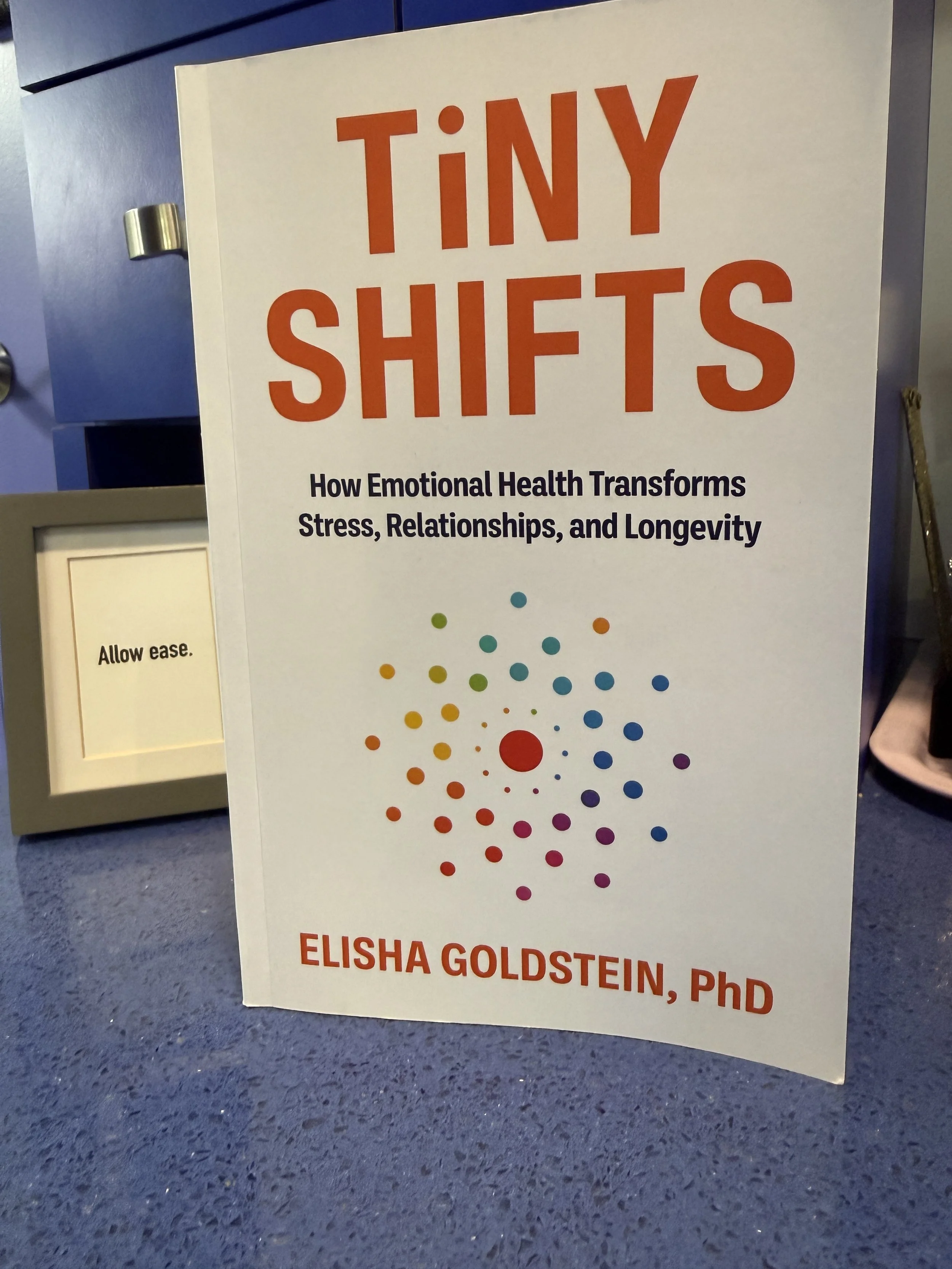
Simultaneously, Elisha released his new book, Tiny Shifts – How Emotional Health Transforms Stress, Relationships, and Longevity. While I was taking the courses, I read it, which helped me better assimilate what I was learning.

Elisha says, “Real change doesn’t come from doing more. Feel free to let go of that burden. It comes from shifting how we relate to what’s already here-one tiny emotional pivot at a time.”

If you haven’t read Tiny Shifts yet, I highly recommend it. Elisha presents his research-backed, doable strategies clearly and compassionately while sharing captivating stories.


The Retreat
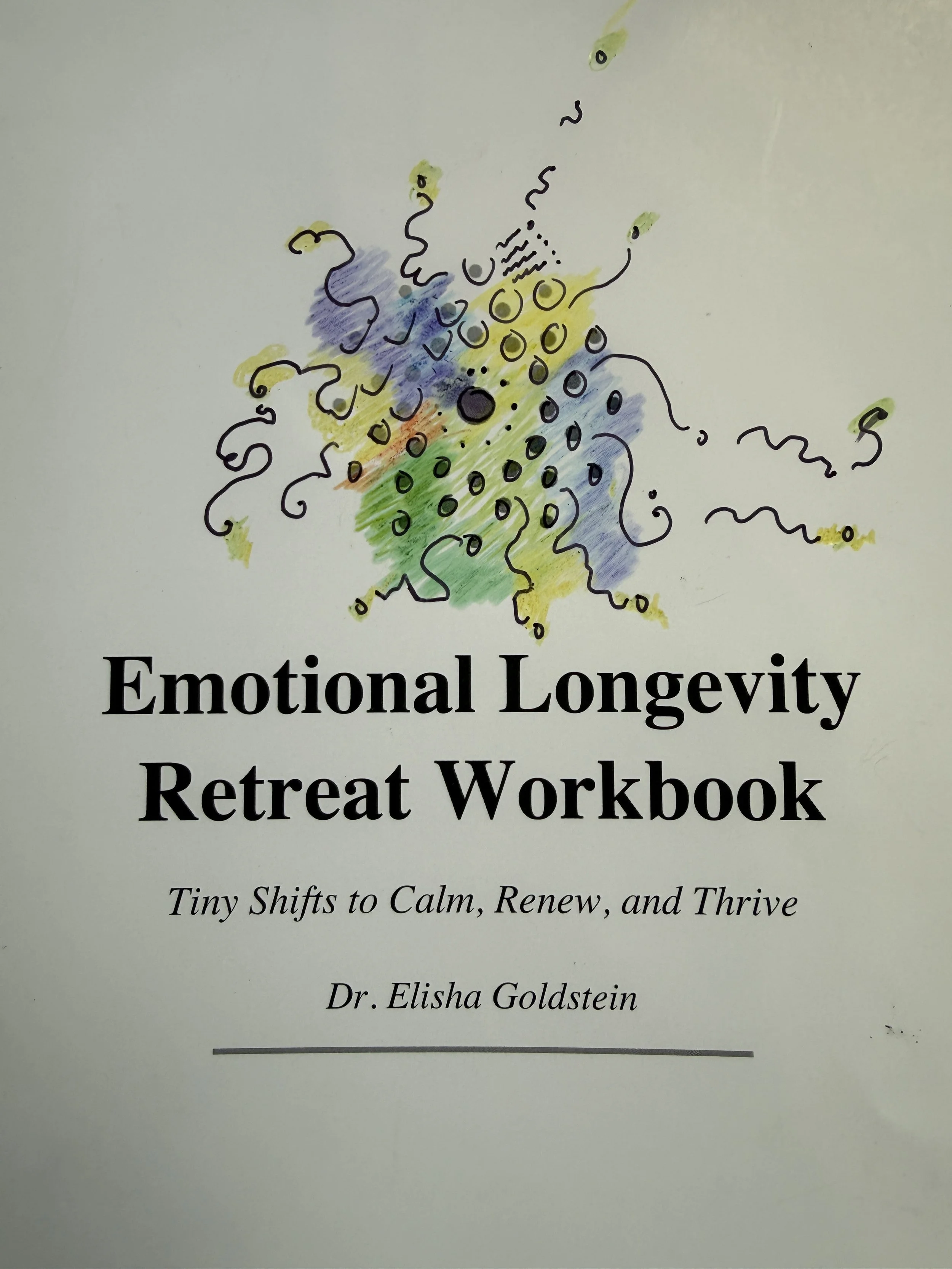
The next part of my learning journey took place last weekend. Elisha offered a three-day Emotional Longevity Retreat at Kripalu in the Berkshires. It was especially meaningful to attend in person, since the previous courses were online. My husband, Steve, went, too.

What I had learned before was clarified or reinforced during the retreat. It was an emotional weekend—lots of crying, smiling, laughing, meditating, and pausing. While the strategies are simple, applying them in the moment takes practice. I’m still working on it and remain hopeful. I can see my progress.


What would it feel like to let go and embrace more joy and ease in your life?
— Linda Samuels, CPO-CD®, CVOP™


Embracing the Good Stuff

In these chaotic, uncertain times, there is no shortage of things beyond our control or that make us anxious. We can dwell there or let go. Elisha’s practices help tremendously with letting go. When you do, you will have more capacity to

  • Embrace joy, play, fun, and quiet.

  • Be present and available for the people and relationships in your life.

  • Have more ease.

  • Regroup more quickly from stressful situations.

  • Engage in better self-care and compassion.

  • Release the things, thoughts, habits, and behaviors that no longer serve you.

  • Be available for all the good stuff in your life.

What does the “good stuff” look like to you? A few years ago, I created my own list, which you can find here: Are You Making Time for ‘The Good Stuff?’ What’s one thing on your list?


Letting Go to Live with More Joy and Ease

What are you holding on to that causes you stress? What is keeping you from moving forward? What would it feel like to let go and embrace more joy and ease in your life?

I’d love to hear your thoughts. I invite you to join the conversation.


How Can I Help?

Do you feel overwhelmed or disorganized? Do you want to let go of what’s holding you back but feel stuck or unsure where to start? I’m here to help! You don’t have to do this alone. Virtual organizing is an extraordinary path forward – Local feel with a global reach.

Let’s connect! I’m easy to reach.

Letting go, getting organized, and living with more ease are possible, especially with support.


3 Simple Ways to Improve Your Motivation and Get Unstuck

Motivation isn’t always there before you start what you want to do. It might be, but more often it shows up after you begin taking action. The mind can play tricks on itself and psych you out. It dwells on reasons why you can’t start or reach your goal

When that happens, motivation disappears, progress is elusive, and you feel stuck. You’re at an impasse. You can remain in this limbo, negative state, or you can turn things around.

If you’re ready to change the dynamics, I have some ideas to help. There are many ways to get unstuck, boost your motivation, and act on what matters most. I compiled three approaches related to focus, fear, and perspective.


3 Simple Ways to Improve Your Motivation and Get Unstuck

1. Motivation and Focus

Focus on the seeds, not the trees. What seeds are you planting today?
— James Clear

A common reason for a lack of motivation is feeling overwhelmed. It’s important to understand your overall goal or objective. However, focusing too far in the future on what it will take to reach that goal can be demotivating.

Instead, narrow your focus and stay present. This will help boost motivation. Invest in small actions that support your larger goal. Keep your attention on the now and your next step, while remembering your ‘why’.

Eventually, the seeds you plant will grow into the trees you desire.

REMEMBER: “Focus on the seeds, not the trees. What seeds are you planting today?”James Clear


2. Motivation and Fear

Any next action.
— Linda Samuels, CPO-CD®, CVOP™

A few months ago, Kara Cutruzzula, a writer, playwright, lyricist, and friend, wrote a piece on Substack called “Hop to the other side of fear.” She shared how being unprepared and scared can get in the way of progress, yet these are fixable challenges.

In response, I commented that fear, indecision, and uncertainty can be paralyzing and demotivating. However, taking any next action can help break that cycle.

  • What fears are holding you back?

  • What decision are you struggling to make?

  • How can you get ready to take the next small step?

  • How is uncertainty preventing you from moving ahead?

Taking action holds undeniable power. It encourages further progress, boosts motivation, quiets fears, and helps you move forward.

REMEMBER: “Any next action.” Linda Samuels, CPO-CD®, CVOP™


3. Motivation and Perspective

Make your what-if questions positive, not negative.
— Todd Henry

Someone once suggested to me that it’s unhelpful to ask ‘what-if’ questions. Honestly, that has never prevented me from pondering them. How you phrase the ‘what-ifs’ is essential.

Especially when you’re feeling stuck and lacking motivation, it’s more helpful to reframe your ‘what if’ questions from an optimistic perspective.

Instead of dwelling on:

  • What if I never get my home organized?

  • What if I don’t complete this decluttering project?

  • What if I can’t change my unhelpful habits?

Instead try:

  • What if I make my home organized enough so that our family feels calmer and less stressed?

  • What if I finish this decluttering project so I can downsize to my new home?

  • What if I change my bad habits to feel healthier and more energetic?

‘What if’ questions can motivate and encourage action when they are framed to highlight positive outcomes.

REMEMBER: “Make your what-if questions positive, not negative.”Todd Henry


What Motivation Strategies Are Most Effective?

If “action precedes motivation,” as Julie Bestry, my friend and colleague, says, what helps you take that next step? Do you have motivational challenges? Which of these strategies resonates most with you?

I’d love to hear your thoughts. I invite you to join the conversation.


How Can I Help?

Do you need support with motivation, activation, or organization? I’d love to help! Virtual organizing is an extraordinary path forward – Local feel with a global reach.

Let’s talk. You can:

Organizing and sustaining motivation is possible, especially with support.


One Clarifying Question to Help Embrace Change in Your Life

How is it already February? The past few months have been intense, and time has flown by. Based on recent conversations and my own experience, many people want to make changes but feel stuck.

Conflicting emotions include an urgency for change, confusion about what to change or how to move forward, and exhaustion even before starting. Additionally, the desire for change and the fear of the unknown can create further paralysis.

These feelings can show up in many ways, including:

  • You are dissatisfied with the status quo.

  • You want to make a shift but don’t know how to go about it.

  • You’re exhausted from the news, endless possibilities, and uncertainty.

  • You are unable to focus.

  • You feel overwhelmed.

  • You feel stuck and can’t figure out how to move forward.

  • You want things to change but have no energy to make it happen.

  • You want to press pause and postpone change.

  • You want to take action but are afraid of doing it wrong.

  • You don’t want to live this way anymore but lack clarity about changing things.


The Clarifying Question

Before making any change, selecting one area to focus on is essential. It can be tempting when pursuing change to get overly ambitious. There is nothing wrong with that. However, dividing your attention in too many directions can be overwhelming.

In The Power of Letting Go by John Purkiss, he poses this powerful and clarifying question:

“What do you want to change in your life?”

While you may have a long list of items, I encourage you to choose only one thing at a time. Don’t worry about what change to make or how or when you’ll make it. Release that noise. Begin with the question.


Which Change Will You Pursue?

You might want to pursue changes in several of the categories below. However, as mentioned, focusing on one area and one specific change at a time is most effective.

Change categories include:

  • Career and Work

  • Family and Relationships

  • Finances

  • Fun and Recreation

  • Health and Wellness

  • Personal Growth

  • Physical Environment

  • Spirituality

Here are some examples:

  • If Fun and Recreation is the first category you focus on, you might add one fun activity each month, such as going to a movie, ice skating, or having a pizza and game night.

  • If Health and Wellness is the first category you focus on, you might establish better sleep hygiene over several months. Establish consistent bedtime, reduce the ambient light, put away digital devices a few hours before bed, and take a warm bath.

  • If Physical Environment is the first category you focus on, you might declutter and organize one area each month, such as the kitchen, clothing closet, or bathroom.

Integrate one change before pursuing additional ones.

Integrate one change before pursuing additional ones.
— Linda Samuels, CPO-CD®, CVOP™

How to Work with the Clarifying Question

You know the clarifying question. Here’s one way to work with it:

  • Find a quiet place to reflect.

  • Close your eyes if that helps.

  • Sit with John’s question: What do you want to change in your life?

  • Notice what arises.

  • Capture your thoughts.

  • Scan your list.

  • Note which categories your changes are in.

  • Select one category and one specific change from that category to focus on first.

  • Allow the other ideas and chatter to recede into the background for now.

  • Once the change is well established, revisit your list to select the next change you want to pursue.

Do you feel more prepared to embrace change? Was the clarifying question helpful? What are you considering? I’d love to hear your thoughts. I invite you to join the conversation.


How Can I Help?

Do you want support organizing, planning, or clarifying changes to pursue? I’d love to help! Virtual organizing is an extraordinary path forward – A local feel with a global reach.

Please schedule a Discovery Call, email me at linda@ohsorganized.com, or call 914-271-5673. Change is possible, especially with support.


New Exciting Bedroom Fun Look Transformation: From Possibility to Reality

It’s a funny thing about possibilities. Dreaming and imagining are part of a possibility-thinking process. Simultaneously, angst, ambivalence, or uncertainty can also be present. Why is that?

You understand and live your current reality. It may not be how you want it, but it’s familiar. Thinking about alternatives can be thrilling, anxiety-producing, or scary. Change requires time, attention, and resources, which you might or might not have.

Something happened to me recently. Who knew a seemingly simple guest bedroom renovation and organizing project would be such an emotional, satisfying, liberating, and poignant experience?

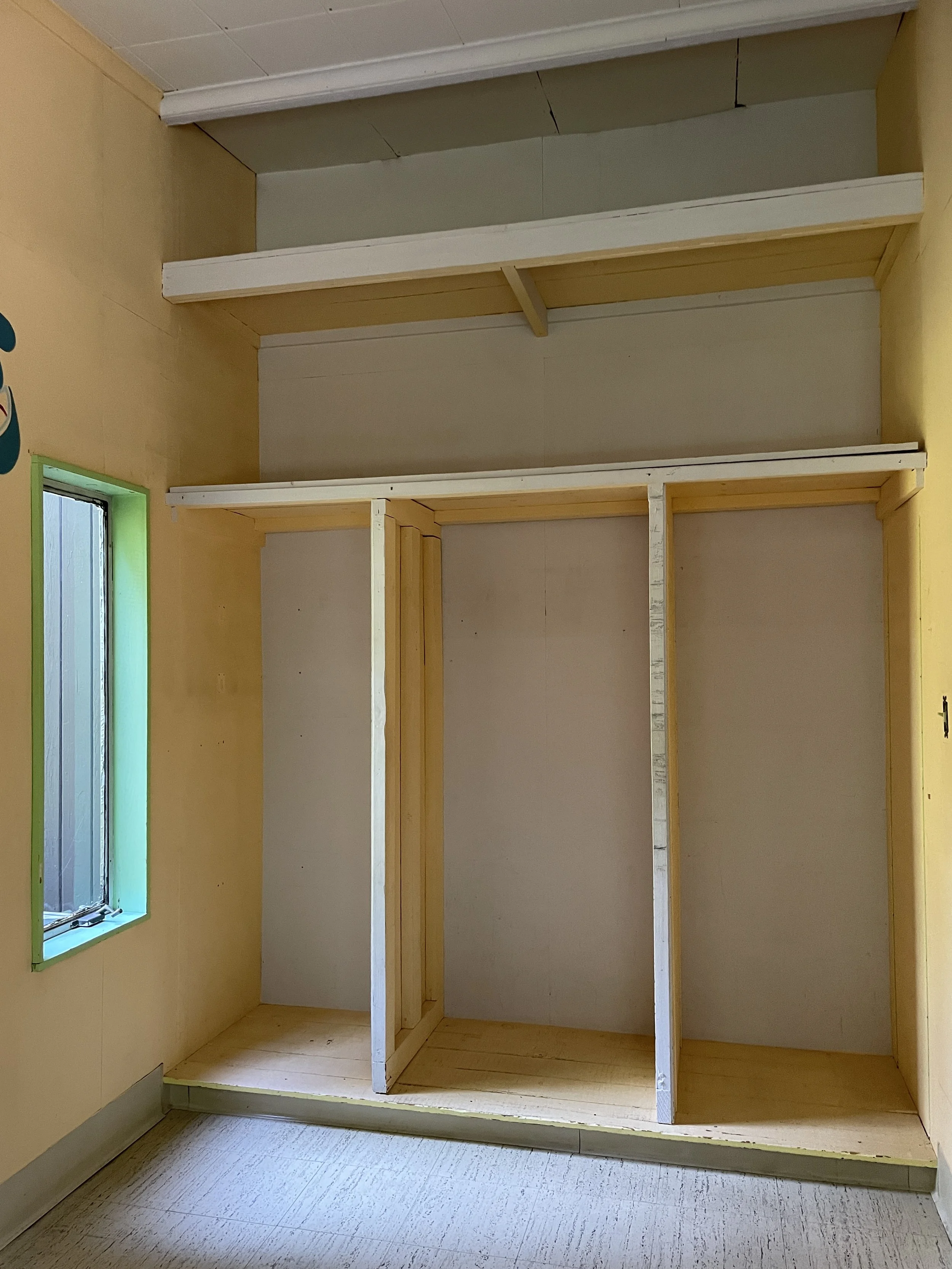
For years, I wanted to reimagine our guest bedroom. Initially, the room was my art studio and office. After our first daughter, Allison, was born, it became her bedroom. When her sister, Cassie, was born, it became their shared space, “the girls’ room.” Fast-forward to them leaving for college, and it turned into a guest room. However, while I made a few minor changes after they left, I never altered the wall colors, window treatments, or closet.

The girls said, “Mom, you can change the room any way you want. It’s OK.” They repeated this message to me for years. The kids had moved on and kept encouraging me to, too. However, part of me wasn’t ready to let go of certain remnants of their living-at-home years. How could I paint over Allison’s murals or cover up the pencil growth chart markings? Also, I didn’t have the mental bandwidth to figure out how I wanted the room to be until now.


Possibilities Meet the Moment

What shifted? We had other home improvement projects happening, and I knew that the guest room’s time had come. My motivation to make this change was heightened. I didn’t want another year to pass without completing this goal. I was finally ready to turn possibilities into reality.


9 Phases of the Guest Bedroom Project

  • Imagine – Envision the possibilities. What do I want the room to look and feel like? How can I make it comfortable for guests and also include functional storage? What will the color scheme be? Can I refer to old vision boards or other visual inspiration sources?

  • Plan – Think through the process. How much time do I need to complete this project? Where can we (my husband, Steve, and I) carve out time in our schedule to work on this? How much of this project can we do ourselves? How much outside help do we need? Should we rip out and install a new closet interior or only paint the existing one?

  • Gather Resources – Identify vendors and resources. Which vendors can I use for painting and construction, purchasing blinds, framing, buying furniture, and redoing the closet? Which vendors are best for buying organizing containers and other products?

  • Budget – Determine the costs. What estimates do I need to get? What will different parts of the project cost (painting, furniture, headboard, bedding, blinds, closet, bins)? What is our overall budget?

  • Empty – Prepare the space for transformation. What must be removed from the room to prepare for painting and construction, and when can we empty it? How can I prepare emotionally for the temporary chaos and disruption?

  • Renovate – Do the work. How many days will the painter need to prepare, demo the closet, patch, and paint? After the room is painted and before we return the contents, when can Steve install the new Elfa® closet? When can Steve install the new window blinds?

  • Edit – Make decisions about room contents. Which items can I let go of by selling, donating, tossing, or giving away? Which things will return to the room? Which items need to be replaced? Which items belong elsewhere?

  • Organize – Return ‘keepers’ in an organized way. How will the contents be organized back into the room? Which items will need new storage containers? Do they need labels?

  • Finish – Complete the final touches. When will all furniture, lights, books, memorabilia, and games be returned to the room? Which bedding will I use? When can we hang the pictures, mount the wall hooks, and add the door stop? When will I consider the room done?


Emotional Surprises

When we emptied the room to prepare for the painter, I was surprised by how emotional I felt. I was physically handling boxes of the kiddos’ memorabilia, photo albums, books, games, and art. Touching, moving, and looking at objects from the past stirred up many emotions. I felt a powerful combination of gratitude, sadness, joy, and love.

I saw photos and objects from the past. Some images were of loved ones who are no longer alive. I looked at the kids’ art, writings, and school projects. I marveled at our detailed records of the milestones and everyday experiences. It was a journey of emotions as I reflected and remembered the beautiful years we spent raising our daughters.

Even when the room was empty, I could feel the love reverberating within its walls. Cherished memories traveled through time and space, which filled my heart and mind.

Bringing possibilities to fruition is gratifying.
— Linda Samuels, CPO-CD®, CVOP™

Practicing Flexibility

During the project, I remained flexible about my options, which was helpful. When a room's contents are removed, many unanticipated things can happen. Gifting yourself the flexibility to make new or different choices is beneficial.

  • Closet – The closet required some thought. Do we paint the existing closet or rip it out to install a new one? It would cost more to have a new closet interior. However, time-wise, it seemed most practical to redo it now. Plus, we would gain more storage space.

  • Furniture – After emptying the room, we liked how spacious it felt with less. While we intended to return the desk, we realized it was unnecessary and took up too much space. I’m letting go of the desk.

  • Art – After emptying the room and painting the interior, Allison’s murals and other framed art were no longer visible. With blank walls, I reimagined the space. We decided to have more blank wall space and only hang a few pieces, including a new one. I printed and framed one of the landscape photos I had taken in the Finger Lakes.

  • Memorabilia – I texted the kiddos photos and asked what they wanted to keep. I respected their responses and either let go or kept things accordingly. I also shared several pictures of their projects, writings, and other memorabilia I thought they’d get a kick out of seeing.


9 Lessons Learned

  • Imagining possibilities is fun and creative.

  • Bringing possibilities to fruition is gratifying.

  • Change is refreshing.

  • Change encourages more change.

  • Emptying one room sparked a reimagining, tweaking, and reorganizing of other areas, such as the pantry and our bedroom.

  • Letting go of things that have overstayed their welcome is liberating.

  • Life has stages. Organizing your space for the phase you’re in is affirming.

  • Embrace gratitude for what was and what is.


The Bedroom Transformation Video


What’s Possible for You?

How does possibility thinking show up for you? What changes have you made or want to make? I’d love to hear your thoughts. I invite you to join the conversation.

Are you ready to get unstuck, plan a new project, or create new organizing systems? If so, I’m here to help. Please email me at linda@ohsorganized.com, call 914-271-5673, or schedule a Discovery Call. Moving forward is possible, especially with support.