

Posts in What's Interesting?
Here Are 5 Most Interesting and Best Possibility Discoveries - v57

Enjoy the latest edition (v57) of the “What’s Interesting?” series, featuring my recent finds that inspire, spark curiosity, and connect to organizing and life balance. These unique possibility discoveries reflect this month’s blog theme.

You are an engaged, vibrant, and generous group. I’m deeply grateful for your ongoing presence, positive energy, and contributions to this community. I look forward to hearing your thoughts and seeing what else you can add to this curated collection.

What do you find interesting?


What’s Interesting? – 5 Best Possibility Discoveries

1. Interesting Read – Possibility Mindset
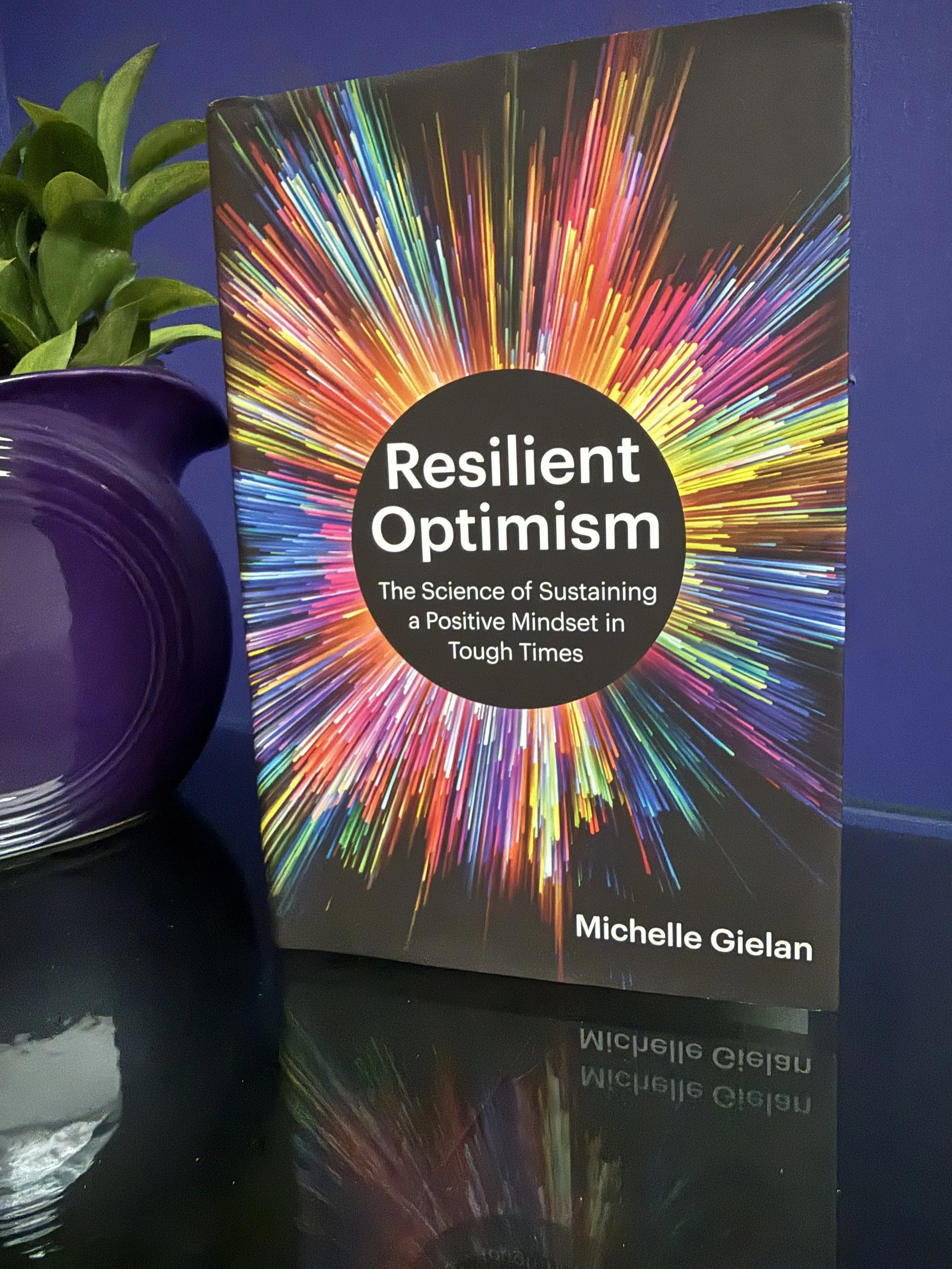
Do you struggle to stay positive and imagine what’s possible, especially during dark times? If so, I highly recommend Resilient Optimism – The Science of Sustaining a Positive Mindset in Tough Times by positive psychology researcher and bestselling author Michelle Gielan.

Drawing on neuroscience research and her work with thousands of leaders, Gielan says, “Resilient optimism is not a one-time mindset. It’s a practice. A daily redirection. A moment-by-moment invitation to pivot toward what’s constructive, energizing, and meaningful.”

When your brain focuses on what’s broken, it limits the brain’s potential. Gielan explains, “The brain runs best when fueled by optimism. The brain is naturally good at detecting threats – we call it negativity bias. When we solely focus on what’s broken, the brain’s threat center (the amygdala) lights up, pulling resources away from the problem-solving prefrontal cortex. But when we also engage with what’s working, the brain responds with creativity, energy, and greater resilience.”

The good news is that resilient optimism is a behavioral shift you can learn. Whether you consider yourself an optimist or a pessimist, Gielan shares doable ways to build your reserves through “deliberate, repeatable actions.”      

Her strategies include ways to:

  • Recalibrate your mindset

  • Change your stress response

  • Triage your commitments

  • Recharge smarter

  • Take small actions

  • Be a “positive deviant”

What will become possible as your mindset shifts?


2. Interesting Product – Possibility Openers
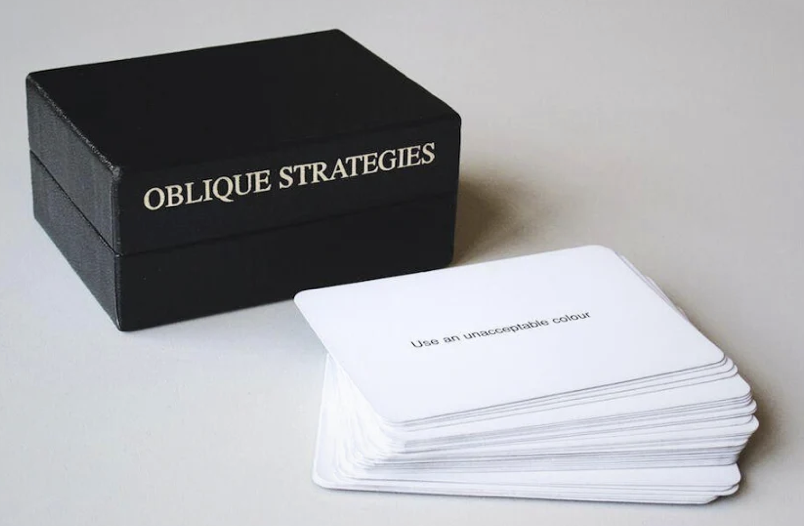
What happens when you feel stuck and are in a mental rut? Do you shut down, feel low on energy, get anxious, or find it difficult to imagine a way forward? If so, you’re not alone. There are many ways to get unstuck.

Decades ago, creatives Brian Eno and Peter Schmidt created Oblique Strategies, a deck of cards designed to help artists, musicians, writers, and other creatives “break through mental roadblocks” and “approach their work from fresh, unexpected angles.” The prompts can help anyone.

Each card offers a single, direct suggestion, such as “Use an old idea” or “Listen to the quiet voice.” Not every prompt will resonate with you, but some might offer the fresh perspective you need. “The goal is to challenge habitual thinking patterns and invite new possibilities into the creative process.”

Are you ready to explore new possibilities? If so, this deck could help.

“Resilient optimism is not a one-time mindset. It’s a practice.”
— Michelle Gielan

3. Interesting Article – Possibility Walk  

In the Time article “Why You Should Take a 10-Minute ‘Thinking-Walk,’” writer Angela Haupt highlights the many benefits of walking, including:

  • Processing thoughts

  • Sparking creativity

  • Solving problems

  • Taking an intentional break from technology

  • Resetting after intense focus

  • Improving mood

  • Reducing stress

  • Protecting long-term mobility

  • Easing anxiety and depression

Imagine what a “thinking walk” could do for you. When your mind is full, you’re stuck on a problem, or you’re struggling to imagine what’s possible, take a walk. Research highlights the value of walking without your electronic devices. Disconnect and let your mind wander. You can do this. It’s only ten minutes.

Although you can walk indoors, walking outdoors can further boost your well-being.


4. Interesting Resource – Possibility Shifts

Are you or someone you know overwhelmed by shopping too much? During a presentation on overshopping, I learned that 33.5 million people are addicted shoppers. We live in a society that constantly bombards us with marketing messages to buy more, newer, and better things. Sales entice us to buy things we don’t really need. Messages like “shop till you drop” make light of a serious addiction: overshopping.

Does breaking the shopping cycle feel impossible? If so, help is available. Carrie Rattle is a financial therapist, shopping-addiction expert, and founder of Behavioral Cents. Dr. April Lane Benson, Carrie’s colleague, friend, and a pioneer in the field of overshopping, mentored Carrie. In 2020, April sold her business to Carrie.

Carrie offers a variety of services, including individual coaching, group coaching, an online community, workshops, and her book, To Buy or Not To Buy – Tools to break the cycle and take control of your life.

What would be possible if you could, as Carrie says, shift from “compulsion to control”?


5. Interesting Thought – Possibility Scenario
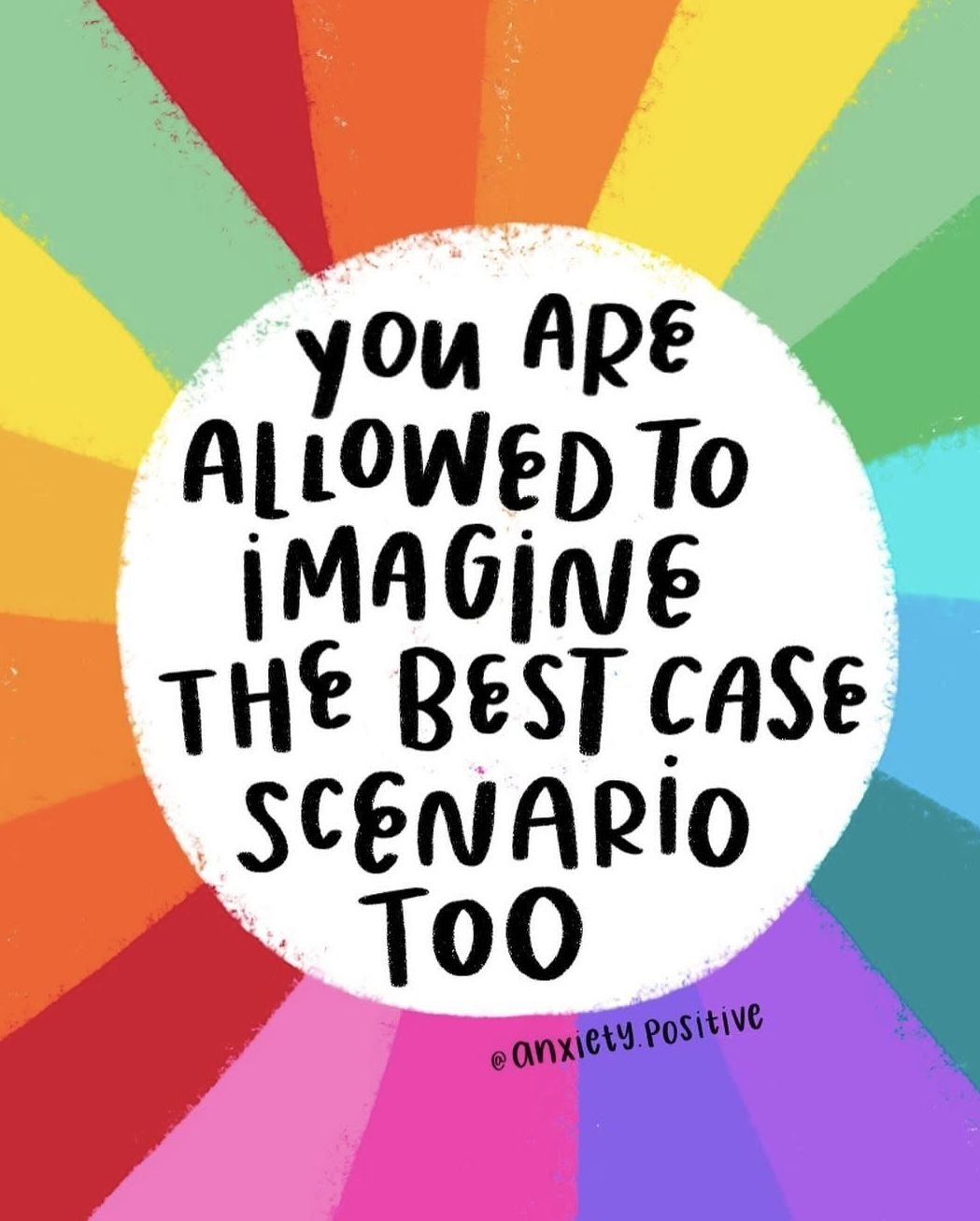
“You are allowed to imagine the best case scenario.” Mindset matters. Instead of dwelling on “I can’t,” “It will never happen,” or “It’s going to be awful,” consider what might be possible. Focus on learning, growing, and exploring new possibilities.

Shifting your thoughts can help you change your path. Think about a project or situation you’re finding challenging right now. What does the best-case scenario look like? What’s one small action you can take now to move in that direction?


What Is Possible Now?

When it’s hard to imagine what’s possible, what helps? As I’ve shared, there are many ways to shift your thoughts and actions and move forward with a more possibility-focused perspective.

Which of these discoveries resonates most with you? Do you have resources or ideas about possibility thinking to share? I’d love to hear your thoughts and invite you to join the conversation.


How Can I Help?

Do you feel overwhelmed, stuck, or disorganized? Are your thoughts keeping you from living the life you want? I’m here to help. Virtual organizing is an extraordinary path forward—Local feel with a global reach.

Let’s talk. I’m easy to reach.

Decluttering, getting organized, and seeing what’s possible can happen, especially with support.


Here Are 5 Most Interesting and Best Motivation Discoveries - v56

Enjoy the latest edition (v56) of the “What’s Interesting?” series, featuring my most recent finds that inspire, spark curiosity, and relate to organizing and life balance. These unique motivation discoveries reflect this month’s blog theme.

You are an engaged, vibrant, and generous group. I am deeply grateful for your ongoing presence, positive energy, and contributions to this community. I look forward to your participation and further contributions to this curated collection.

What do you find interesting?


What’s Interesting? – 5 Best Motivation Discoveries

1. Interesting Read – Motivation Truth

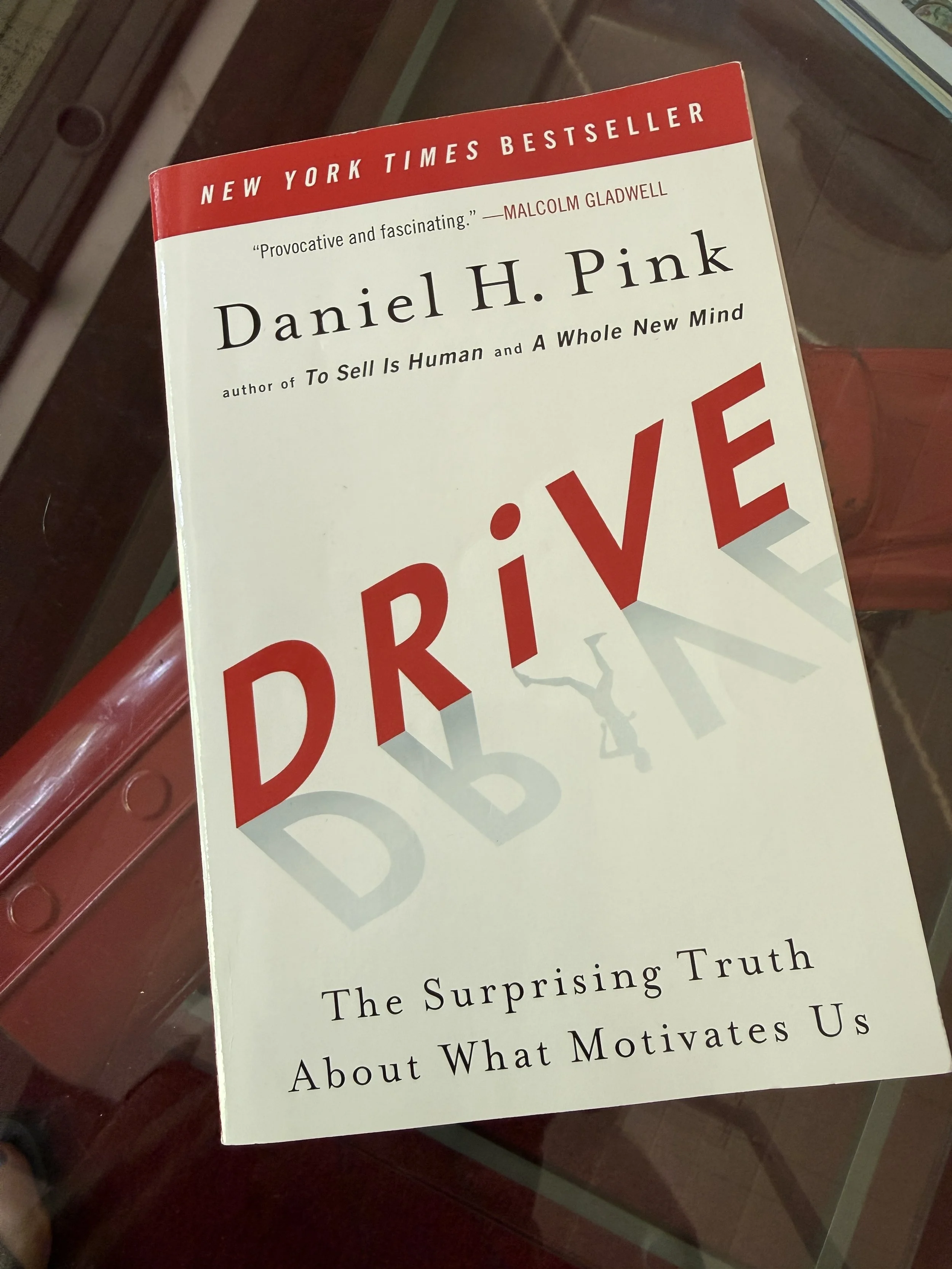
Are you curious how motivation works? If so, you’ll love Drive – The Surprising Truth About What Motivates Us by bestselling author Daniel Pink.

Drawing on 50 years of behavioral science research, Pink argues for rethinking conventional wisdom about motivation. He explains that the outdated “carrot and stick” approach rarely works.

The most effective motivation stems from three elements: autonomy, mastery, and purpose. He says, “Human beings have an innate inner drive to be autonomous, self-determined, and connected to one another. And when that drive is liberated, people achieve more and live richer lives.”

Drive covers topics, including:

  • Differences between intrinsic and extrinsic motivation

  • How extrinsic rewards can demotivate and lead to worse performance

  • Strategies to awaken motivation, including creating a “To Don’t List”

  • Contrasts between Type I (internal satisfaction) and Type X (external rewards) behavior

To learn more about your motivational behavior, take Pink’s short and enlightening survey.


2. Interesting Research – Motivation Incentive

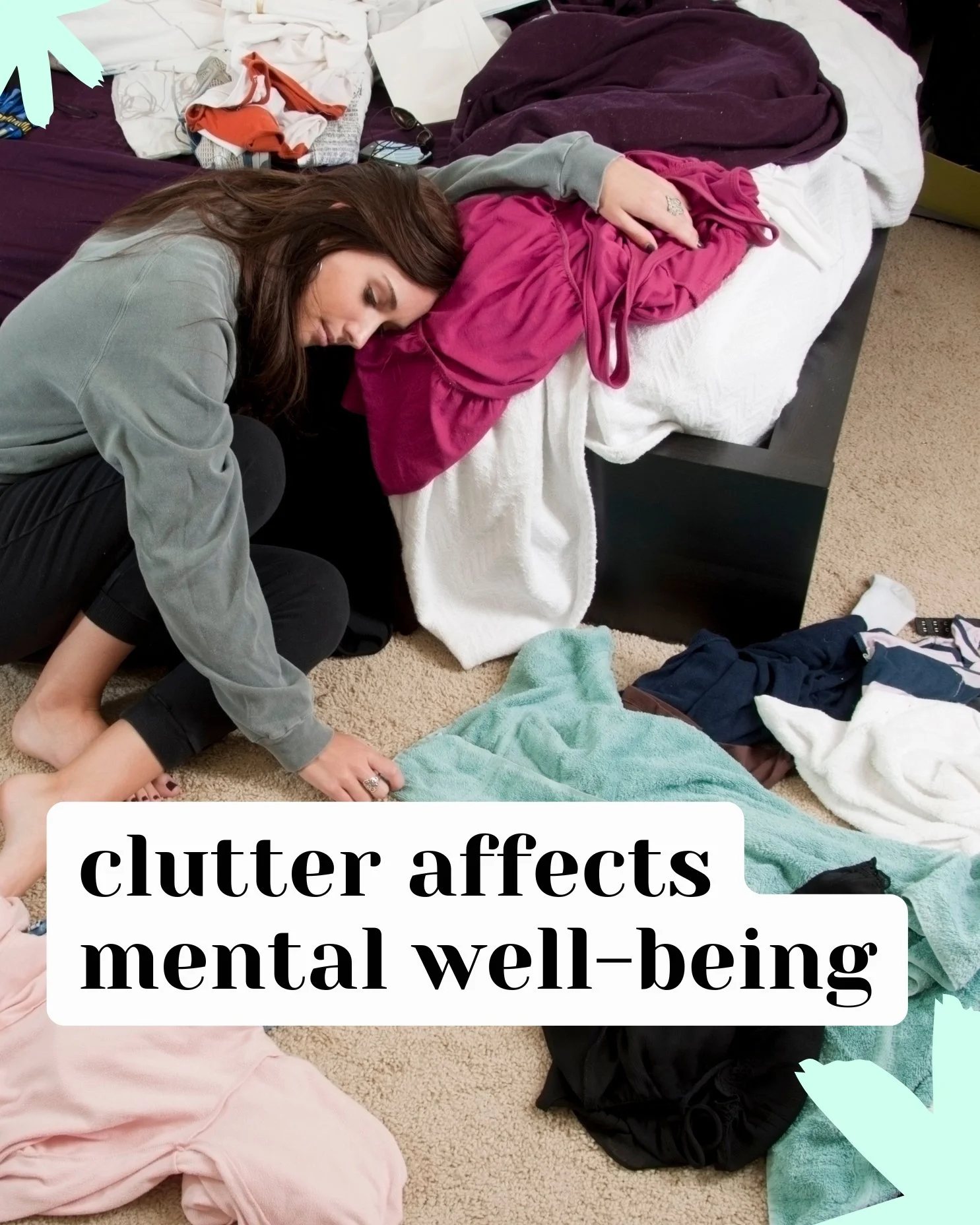
A recent @goodneuroscience Instagram post caught my attention. It asked, “What happens to your brain when you spend most of your time in a cluttered space, according to neuroscience?”

The post cited three studies, including:

Some of the research conclusions indicate:

  • Clutter keeps the visual cortex in a state of low-level processing.

  • Constant low-level processing of the visual cortex (due to clutter) raises cortisol levels over time and makes it harder to rest, even when you’re sitting still.

  • Greater home clutter was associated with lower mental well-being.

  • People with more clutter experienced more negative emotions and lower life satisfaction.

  • Clutter reduced people’s perception of their home’s beauty, which was linked to poorer well-being.

Defining why you want to declutter can boost motivation. Consider these ideas:

  • Decluttering isn’t just about getting organized. It’s not only about having fewer things. It’s about improving how you feel at home.

  • Removing items from your home to experience more peace and beauty is more motivating than “I should clean.”

  • Focusing on enhancing the beauty of your home is a more positive goal than simply saying, “I should get rid of stuff.”

  • Finding simple ways to transform your home into a source of restoration instead of a place of constant visual stress.

These studies offer compelling motivation, especially if you are affected by chronic disorganization or feel overwhelmed by clutter. Shift your focus from letting go of things or from “I should get organized” to creating a home that feels calmer, more peaceful, and enjoyable.

“Defining why you want to declutter can boost motivation.”
— Linda Samuels, CPO-CD®, CVOP™

 3. Interesting Resource – Motivation Recycling  

Recycling has become part of our everyday experience. There are many differences among towns and cities in what can be recycled curbside and how to do so. This often leaves households with many categories their municipalities don’t pick up. Then what happens?

The plastic bags, wrappers, unwearable textiles, bottle caps and lids, bread tags, pill bottles, electronics, batteries, light bulbs, styrofoam, and more either get thrown out with a side order of guilt or are saved, taking up precious space, until you find a viable recycling source.

Stress no more. Ridwell has you covered. They partner with innovators who help reuse or recycle trickier items.

Ridwell Stats:

  • 97% of what they collect is reused or recycled

  • 35 million pounds have been kept out of landfills so far

Ridwell Services:

  • Bi-weekly pickups starting at $20/month (available in select US cities)

  • Mail-in nationwide service starting at $9/bag

Learn more about the options here: ridwell.com

If your recycling woes are demotivating your efforts, yet you want to become more eco-friendly, consider using Ridwell to bridge that gap. Your motivation will increase as you simplify your recycling plan.


4. Interesting Product – Motivation Tracker

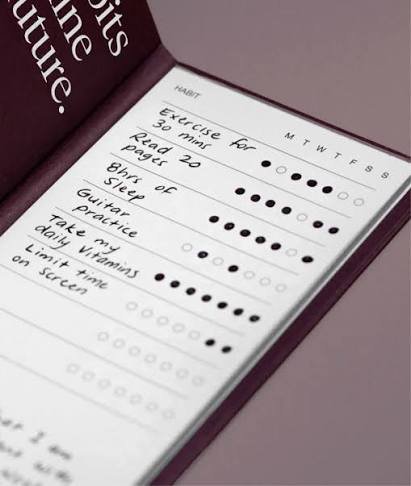
Do you find it hard to build new habits? If so, you’ll love K’arst’s sleek Habit Tracker Pro. The pad helps you:

  • Track up to 8 habits per week

  • Build momentum

  • Reflect on your progress

  • Notice patterns

  • Keep yourself accountable

The Habit Tracker Pro is compact and portable, and its paper is made from recycled stone, which is especially smooth. While many digital trackers are available, if you prefer analog or just want a break from your devices, K’arst’s tracker is an excellent option.

One reviewer said, “This is so easy and so motivating.” And who doesn’t like something that’s easy and motivating?


5. Interesting Thought – Motivation Capable

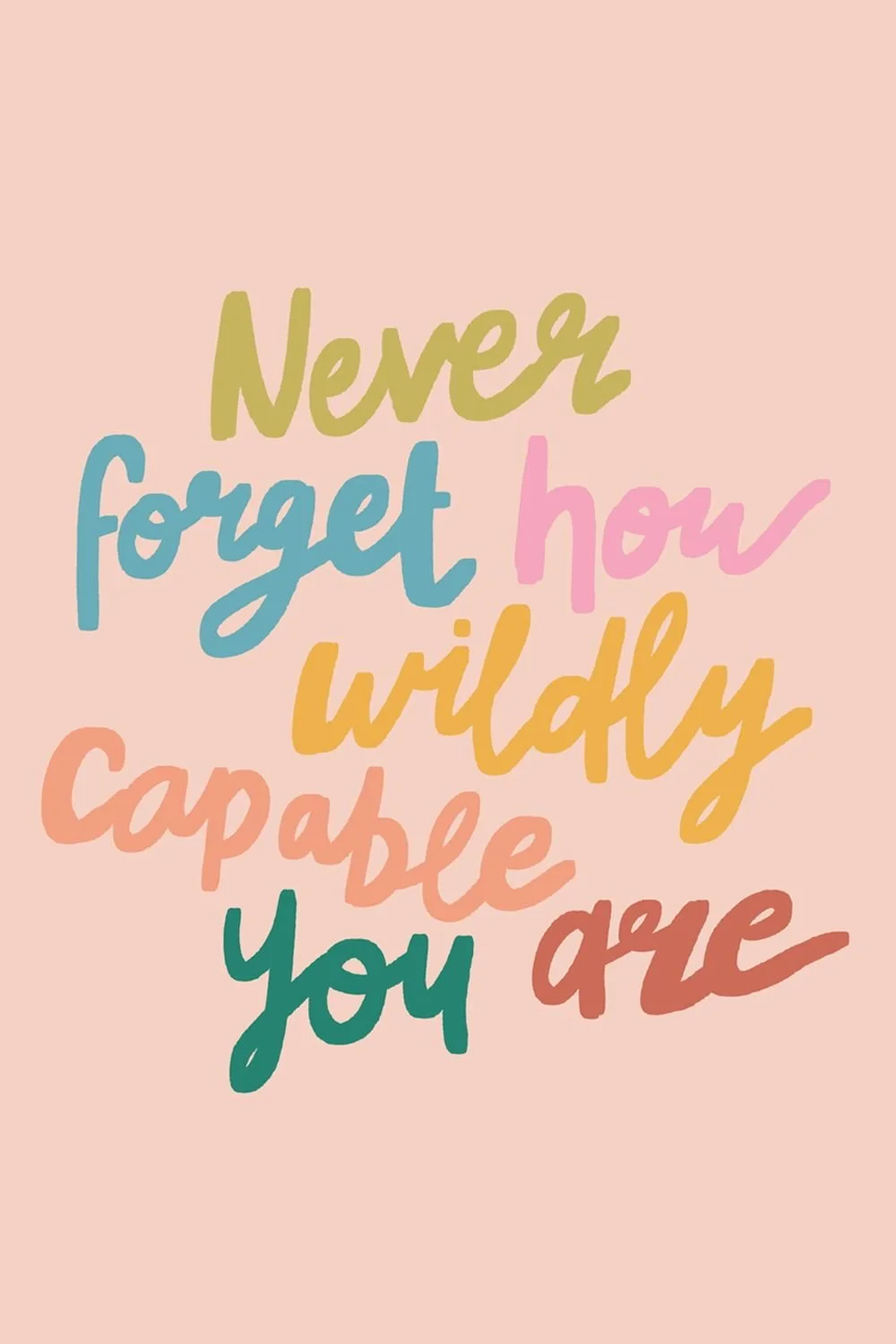
“Never forget how wildly capable you are.” You already have everything you need to make progress. Embodying that idea will help you take action. Action cultivates motivation, which keeps you moving forward.

Being “wildly capable” means you already have the tools to accomplish what you want. These include hard and soft skills, resources, and the ability to find additional support when needed.

Don’t hesitate. Take that first step. The next steps will become clear as you go.


Which Motivation Ideas Work Best?

When clutter feels overwhelming and paralyzing, what will help? As I shared, there are many types of clutter and strategies to help you move forward.

Which of these discoveries resonates most with you? Do you have any decluttering resources or ideas to share? I’d love to hear your thoughts and invite you to join the conversation.


How Can I Help?

Do you feel overwhelmed, stuck, or disorganized? Is clutter preventing you from living the life you want? I’m here to help. Virtual organizing is an extraordinary path forward – Local feel with a global reach.

Let’s talk. I’m easy to reach.

Decluttering, getting organized, and nurturing motivation are possible, especially with support.
 
 
Here Are 5 Most Interesting and Best Decluttering Discoveries - v55

Enjoy the latest edition (v55) of the “What’s Interesting?” series, featuring my most recent finds that inspire, spark curiosity, and relate to organizing and life balance. These unique decluttering discoveries reflect this month’s blog theme.

You are an engaged, vibrant, and generous group. I am deeply grateful for your ongoing presence, positive energy, and contributions to this community. I look forward to your participation and further contributions to this curated collection.

What do you find interesting?


What’s Interesting? – 5 Best Next Step Discoveries

1. Interesting Read – Less Clutter

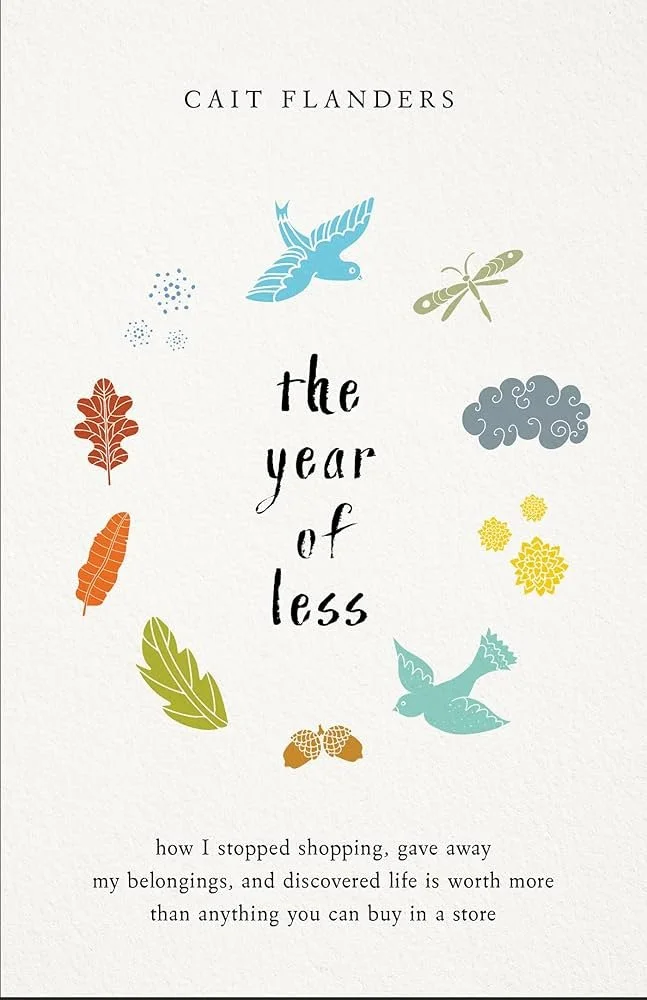
Do you feel overwhelmed by how much your things are taking over your life, space, money, and energy? If so, find inspiration and hope in The Year of Less by bestselling author Cait Flanders.

Cait takes us on her twelve-month journey to stop shopping and give away most of her belongings. During that year, she bought only items on her ‘sanctioned’ list of consumables, decluttered her apartment, let go of 70 percent of her belongings, learned to fix things, paid off debt, navigated family challenges, and worked through addictive behaviors and unhelpful habits.

Through personal stories and practical strategies, Cait guides you toward a more mindful life with less consumption and more time for what matters most to you. When working to reduce the things in her life, Cait said, “I had to let go of the stuff I wanted the ideal version of myself to use, and accept myself for who I really was.”

By the end of Cait’s year, after she took control of her life, released many of her belongings, saved money, and embarked on the next phase of her life, she said, “… all that remained was the real me. It wasn’t much, but it was enough. It was enough. I had enough. I was enough.”


2. Interesting Perspective – Time Clutter

Clutter isn’t only physical stuff that piles up. There’s also time or calendar clutter. Time clutter can show up as overcommitting, no downtime, double-booking appointments, consistently running late, being overstimulated, never having enough hours in the day, or feeling overwhelmed by your never-ending to-do list.

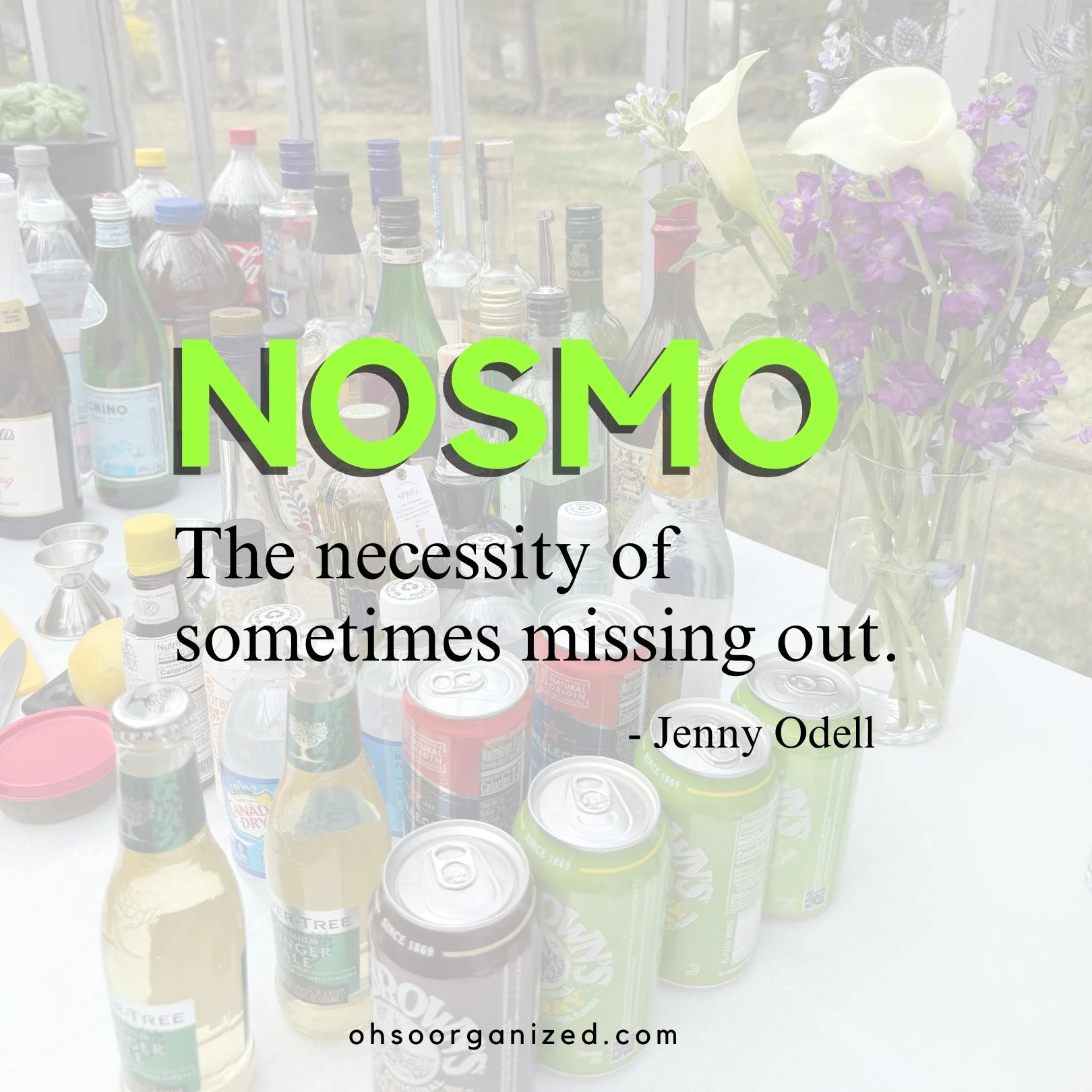
Artist and writer Jenny Odell coined the acronym NOSMO, “the necessity of sometimes missing out,” in her book How to Do Nothing: Resisting the Attention Economy. Saying “yes” to everything, ignoring your needs, and lacking boundaries can leave you feeling stressed, time-poor, and exhausted.

If you want to declutter your schedule, start editing. You don’t have to accept every invitation. Instead, focus on how you want your days to flow, how much time you need for transitions, and how much time you want for relaxation.

What can you let go of today?


3. Interesting Article – Aspirational Clutter  

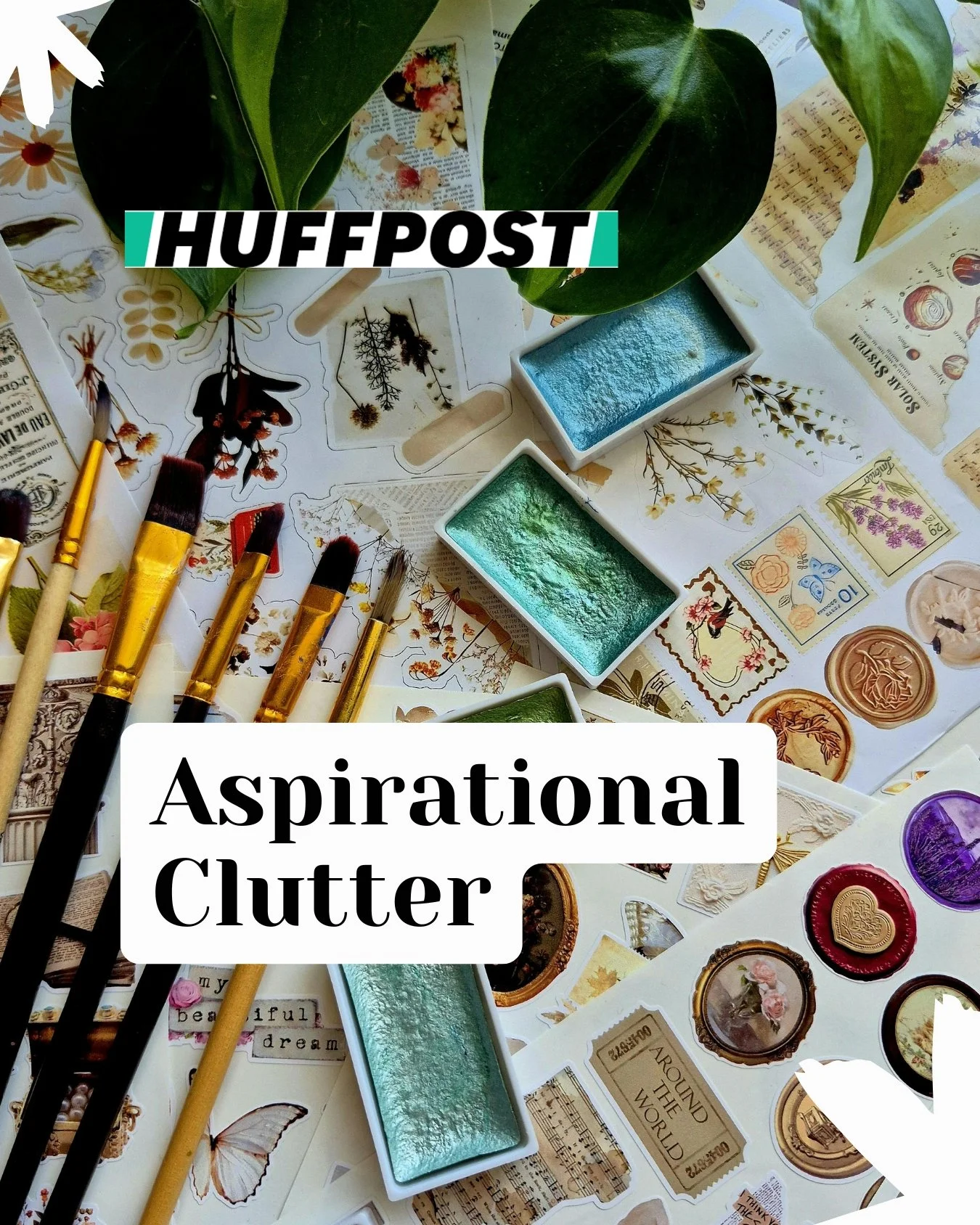
In the HuffPost article, “Do You Have ‘Aspirational Clutter’? Here’s What You Should Know,” professional organizers explain why this type of clutter can be especially challenging to let go of. Why is that? Aspirational clutter includes “objects tied to our hopes and dreams.”

Aspirational clutter can look like gym equipment that’s never used, clothing that might fit someday, an abundance of yarn you’ve stored for years for sweaters and blankets you want to make, or sets of dinnerware and serving pieces for parties you hope to host someday. There isn’t anything inherently problematic about any of these, except that they aren’t based on what your life is actually like. These things take up space and mental and emotional energy, often accompanied by guilt and ‘shoulds.’

Some other thoughts include:

  •  Seana Turner said, “Aspirational clutter refers to possessions we hold onto for our ‘future self,’ or an idealized future lifestyle.” 

  • Regina Lark said, “Letting it go can feel like giving up on a dream version of yourself, or that you’ve failed yourself in some way.”

All is not lost. The article offers excellent suggestions for managing aspirational clutter, such as

  • Give yourself permission to let go.

  • Recognize that priorities shift.

  • Determine how your space could be better used if you let go of aspirational clutter.

  • Focus on the benefits of letting go.

  • Acknowledge who you are now.


“It was enough. I had enough. I was enough.”
— Cait Flanders


4. Interesting Product – Organizing Clutter

The truth is, I don’t recommend organizing your clutter. Start by editing and decluttering. Why do that first? You’ll be left with only the things that remain, which are meaningful and useful. Second, the less you have, the easier it will be to organize and maintain.

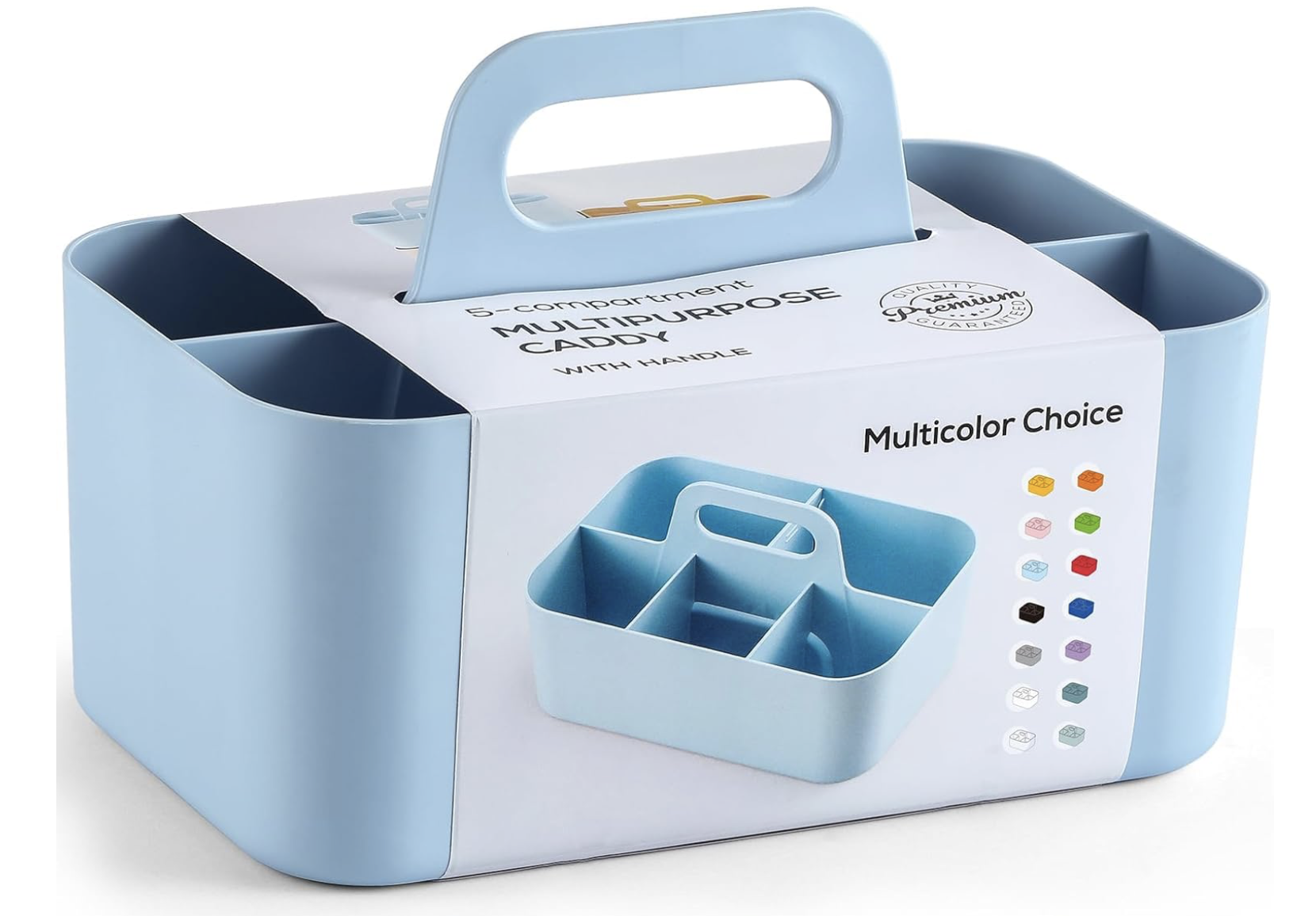
When it’s time to organize the ‘keepers,’ Aozita’s multi-use caddy organizer is a great choice. Use it to organize art materials, desk supplies, bathroom products, kitchen utensils, or school supplies. It’s portable, available in many colors, adjustable, and inexpensive.


5. Interesting Thought – Life Clutter

What comes to mind when you think of clutter? In the 30-plus years I’ve been helping people declutter and get organized, I’ve heard clutter described as overwhelming, heavy, chaotic, burdensome, bothersome, impossible, frustrating, constant, distracting, stressful, paralyzing, and noisy. Do any of those resonate with you?

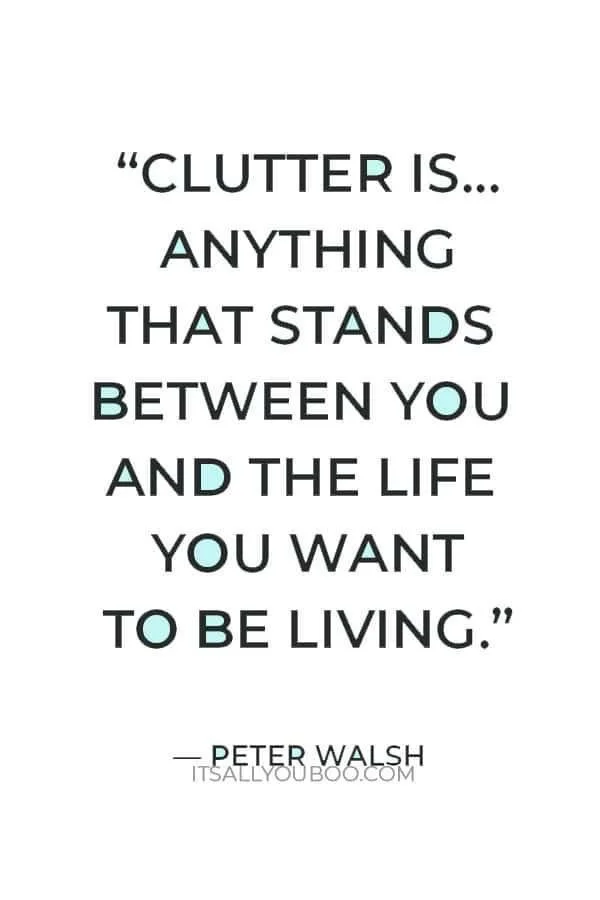
Many emotions are intertwined with your experience of clutter. As Peter Walsh says, “Clutter is…anything that stands between you and the life you want to be living.”

What would life be like if you unburdened yourself of the things weighing you down?


Which Clutter Ideas Work Best?

When clutter feels overwhelming and paralyzing, what will help? As I shared, there are many types of clutter and strategies to help you move forward.

Which of these discoveries resonates most with you? Do you have any decluttering resources or ideas to share? I’d love to hear your thoughts and invite you to join the conversation.


How Can I Help?

Do you feel overwhelmed, stuck, or disorganized? Is clutter preventing you from living the life you want? I’m here to help. Virtual organizing is an extraordinary path forward – Local feel with a global reach.

Let’s talk. I’m easy to reach.

Decluttering and getting organized are possible, especially with support.
 
 
Here Are 5 Most Interesting and Best Next Step Discoveries - v54

Enjoy the latest edition (v54) of the “What’s Interesting?” series, which features my most recent finds that inspire, spark curiosity, and relate to organizing and life balance. These unique next step discoveries reflect this month’s blog theme.

You are an engaged, vibrant, and generous group. I am deeply grateful for your ongoing presence, positive energy, and contributions to this community. I look forward to your participation and further contributions to this curated collection.

What do you find interesting?


What’s Interesting? – 5 Best Next Step Discoveries

1. Interesting Read – Compassionate Next Step

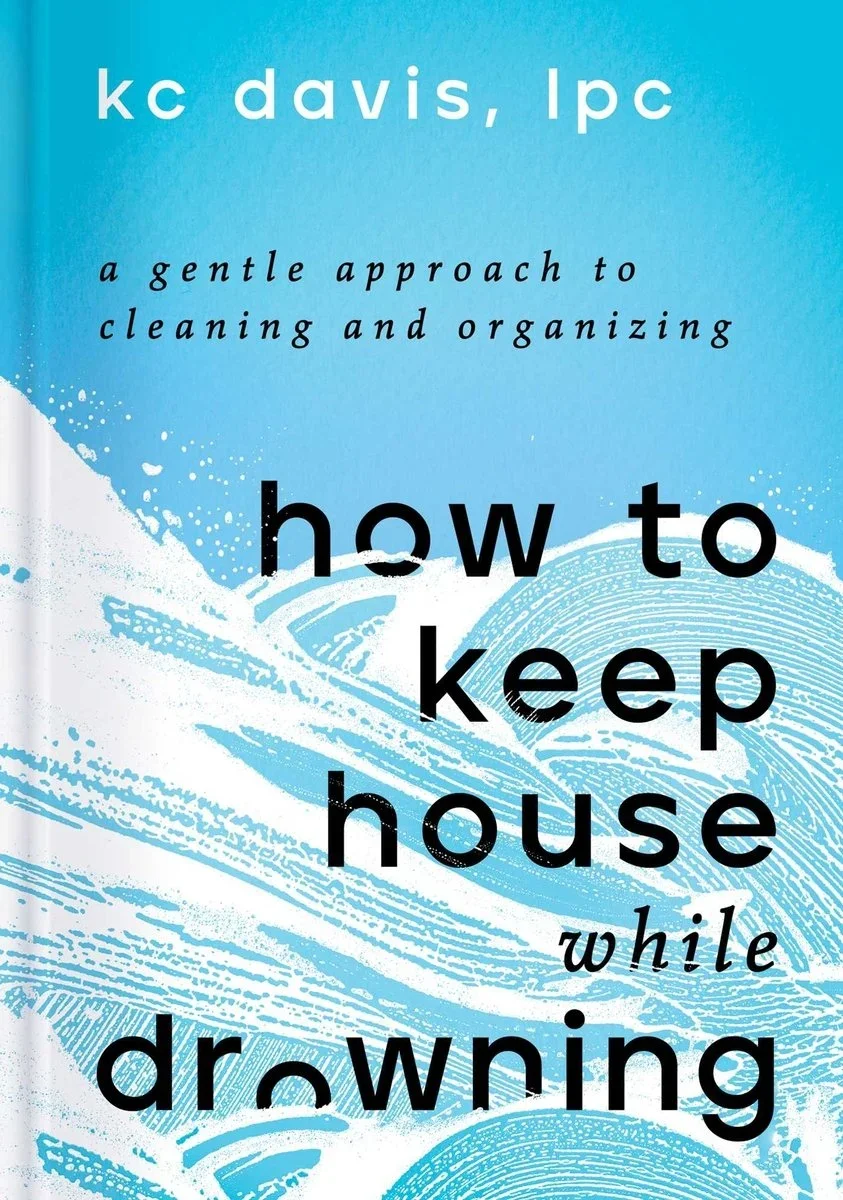
Recently, a client shared with me a book she was reading, How to Keep House While Drowning – A Gentle Approach to Cleaning and Organizing by therapist, author, podcaster, and speaker KC Davis, LPC. I was curious, so I read it, too.

The ideas resonated deeply with my client, who appreciated the realistic, kind approach to organizing and care tasks that encouraged gentle next steps. One of KC’s philosophies is “You don’t exist to serve your space; your space exists to serve you.”

How often do you feel like your stuff is running you? KC helps shift the perspective and offers advice for “how to care for ourselves when we feel like we are drowning.”

From practical organizing and cleaning tips to kinder self-talk, KC shares personal experiences of what has worked for her and others. She describes care tasks (laundry, cooking, cleaning, organizing, etc.) as neutral rather than a moral failing, even when they challenge you.

KC describes her own perspective shift and says, “Let me tell you what the mess in my home means. It means I’m alive. Dirty dishes mean I’ve fed myself. Scattered hobby supplies mean I am creative. Scattered toys and mess mean I am a fun mom…And occasionally, mess means I’m struggling with depression or stress. But those aren’t moral failings either, and neither is that moldy coffee cup I keep not taking to the kitchen.”

A few additional reframes KC offers include:

  • “Chores > care tasks”

  • “Chores are obligations. Care tasks are kindness to self.”

  • “Cleaning > resetting the space.”

  • “Cleaning is endless. Resetting the space has a goal.”

  • “It’s so messy in here! > this space has reached the end of its functional cycle.”

Filled with personal struggles and compassionate solutions, KC guides us on a journey toward reducing self-criticism and guilt, and finding more peace at home, one step at a time.


2. Interesting Perspective – Restful Next Step

It’s easy to overlook your needs. Do you find yourself pushing, doing, scheduling, organizing, and constantly in motion? There is a reason we call ourselves human beings, not human doings. ‘Being’ involves both action and rest.

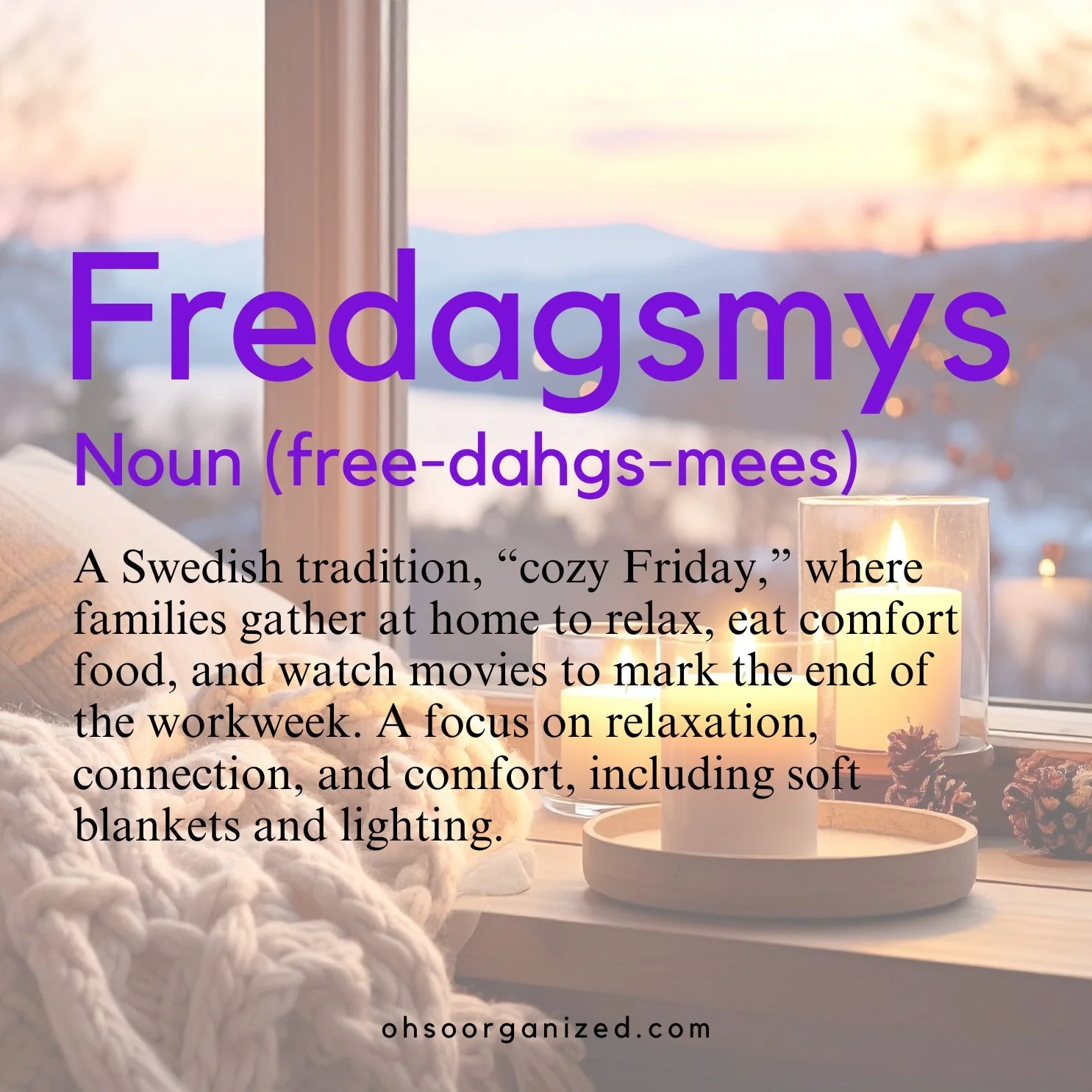
A recent Real Simple article featured a Swedish tradition called “fredagsmys” that beautifully encourages a balance between work and relaxation. The translation means “cozy Friday” or “Friday coziness.” This marks an intentional shift from the workweek to a relaxing weekend. Fredagsmys embodies connection, relaxation, and comfort. It is practiced by spending Friday night at home with your family or friends, watching movies, relaxing, eating, connecting, and being cozy with soft blankets and low lighting.

If you find yourself constantly pushing, adding some fredagsmys into your week could be the next step you need. But if that feels too big and challenging, find other smaller ways to build in rest and no-stress moments. Baby steps.

Before you know it, you’ll be ready for an entire night of relaxation, connection, and calm.


3. Interesting Product – Organized Next Step  

As the clocks just moved ahead an hour for the annual ‘spring forward,’ this signals that the season is about to change. Another sign is the greenery emerging from the ground. The plants are happy to see the light after being buried under piles of snow.

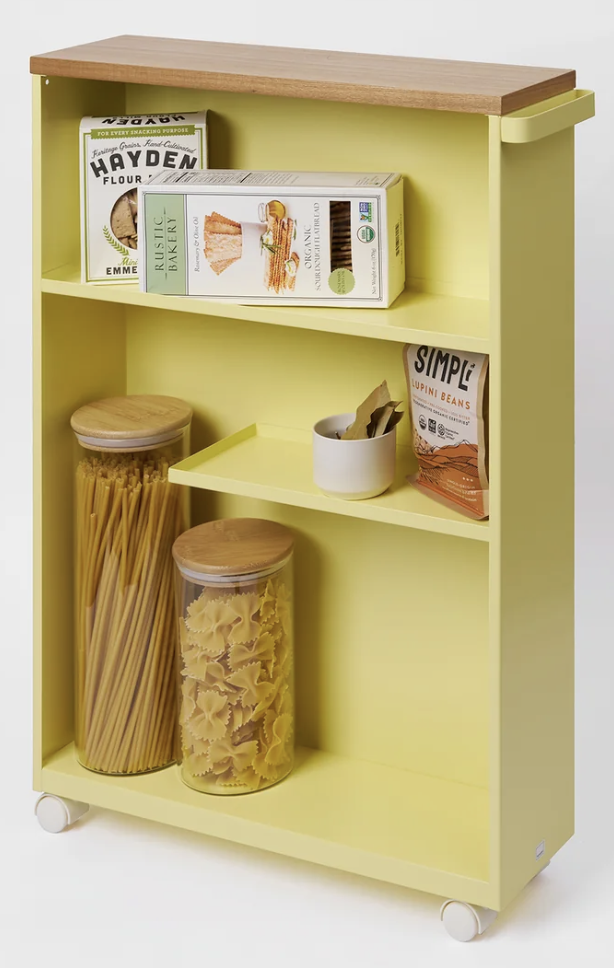
With that spring lens in mind, I came across this lovely butter-yellow or “yellow pear” steel rolling storage cart with a wood top. It’s a limited- edition collaborative design created by Yamazaki and Apartment Therapy.

If you need additional storage space with easy access for kitchen essentials like spices, oils, pasta, or snacks, this slim rolling cart (5” deep x 18” wide x 27” tall) will fit into the smallest spots.

This storage cart will make it easy and fun to organize your essentials.


“You don’t exist to serve your space; your space exists to serve you.”
— KC Davis, LPC

4. Interesting Resource – Capture Next Step

With over thirty years of helping clients declutter, let go, and get organized, I’ve seen firsthand how belongings hold meaning. This is one reason why letting go can be challenging.

Artifcts founder Heather Nickerson developed an app-based service that helps you record stories and memories about meaningful items and share them securely with loved ones. Documenting each item’s story can be key to letting go of the physical object.

The easy-to-use app helps you add photos, videos, audio recordings, and notes. You can document “what an item is, why it matters, and what should happen to it next.” This is an invaluable tool when you’re “organizing, downsizing, or planning your legacy.”

Heather’s inspiration for launching Artifcts came after her mother’s death. She inherited her mom’s possessions but really wanted to know the stories behind them. However, her mom was no longer there to share those stories. Artifcts helps you “preserve the meaning behind the objects that speak to who we are and where we’ve been.”

If you want your next step to include memorializing and letting go, this app is worth exploring.


5. Interesting Thought – Tiny Next Step

When your next step feels overwhelming, it might be too large. There are several ways to move forward. The first is to reduce the overwhelm. When you’re emotionally heightened, the amygdala takes over and blocks access to the thinking and action parts of the brain.

One strategy is to do some simple breathing.

  • Breathe in deeply through your nose.

  • Exhale through your mouth longer than the inhale.

  • Repeat that several times.

Your system will settle and calm, giving you the capacity to choose what happens next.

Once you’re in a less anxious state, take the next step by making it as small as possible. This helps prevent feeling overwhelmed. For example, instead of deciding that the next step is decluttering the entire kitchen, choose to declutter one corner of the kitchen counter. If that feels too overwhelming, focus on decluttering a small pile or simply removing items that are being routed elsewhere.

After completing that tiny step, you can choose to continue or stop. If you decide to do more, repeat the process and pick another tiny next step. Small and doable is better than big and paralyzing.


Next Step Options

When you want to move forward but feel stuck, what will help? There are many approaches and ways to consider next, as I shared with you.

Which of these discoveries resonates most? Do you have any next step ideas to add? I’d love to hear your thoughts and invite you to join the conversation.


How Can I Help?

Do you feel overwhelmed, stuck, or disorganized? Is figuring out your next step feeling elusive? I’m here to help. Virtual organizing is an extraordinary path forward – Local feel with a global reach.

Let’s talk. I’m easy to reach.

Moving forward and getting organized are possible, especially with support.