Posts tagged stressed
How to Actually Recognize the Simple Cues to Help Know Your Next Step

Life is full of signals and cues that often go unnoticed. Maybe you're distracted by thoughts, are overwhelmed, stressed, or feel too busy to slow down. The idea of being present or quieting yourself enough to notice a cue might seem out of reach.

Imagine you’re driving down a busy street. You approach an intersection with a red traffic light. That’s your visual cue to slow down and stop. What if you didn’t? If you ran through the intersection and ignored the signal, it could be disastrous.

What happens instead when you notice the cue (red light) and align your next action with it? You see the red light, take your foot off the gas, step on the brakes, and come to a complete stop.

By noticing the signal, you quickly identified your next steps. The direct benefit was that you chose an option that led to a positive outcome for you and those around you.


What Types of Cues Are Available to You?

Cues are sensory. They can come from what you see, hear, touch, taste, or smell.

The traffic light is an example of a visual cue that guides your next action. Many other types of signals appear in our daily lives.

Here are some common ones and possible next steps:

  • Green flashing light on the toothbrush > Recharge the battery

  • Red flashing light on the air purifier > Change the filter

  • Smell of coffee brewing > Review schedule for the day

  • Last piece of toilet paper > Install a new roll

  • Timer goes off > Wrap up what you’re doing

  • Magazines spilling out of the basket > Sort and recycle the oldest ones

  • Receiving W-2s, 1099s, and other tax forms > Prepare and file your income taxes

  • Jaw tightening and shoulders up > Take a few slow, deep breaths with slightly longer exhales

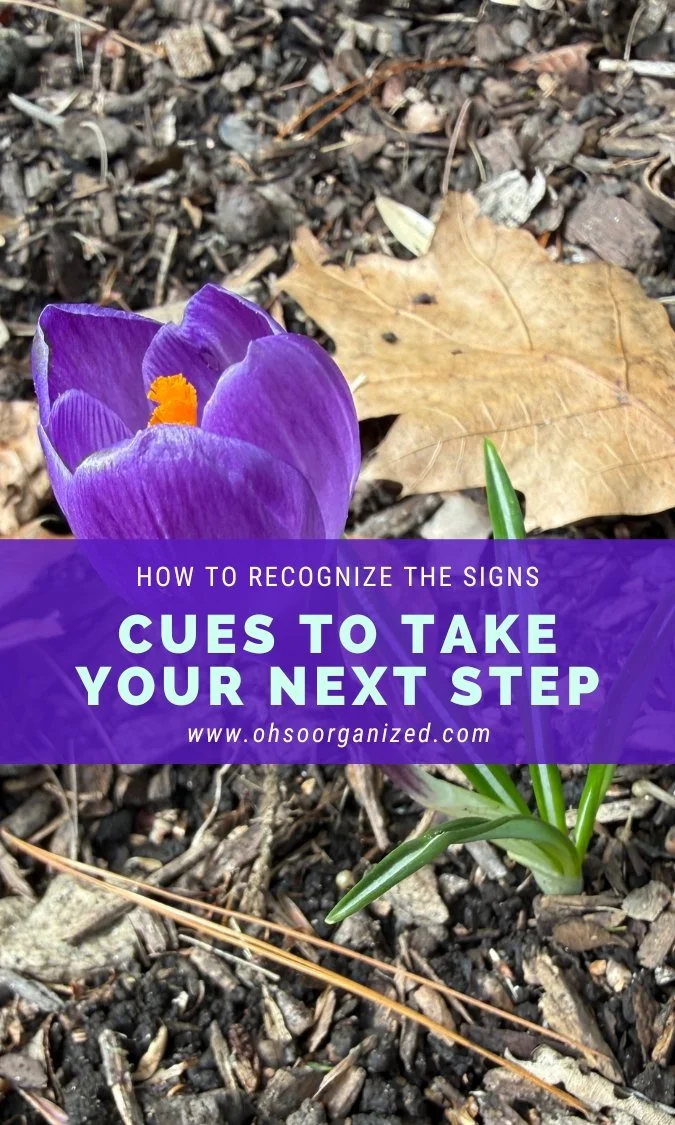
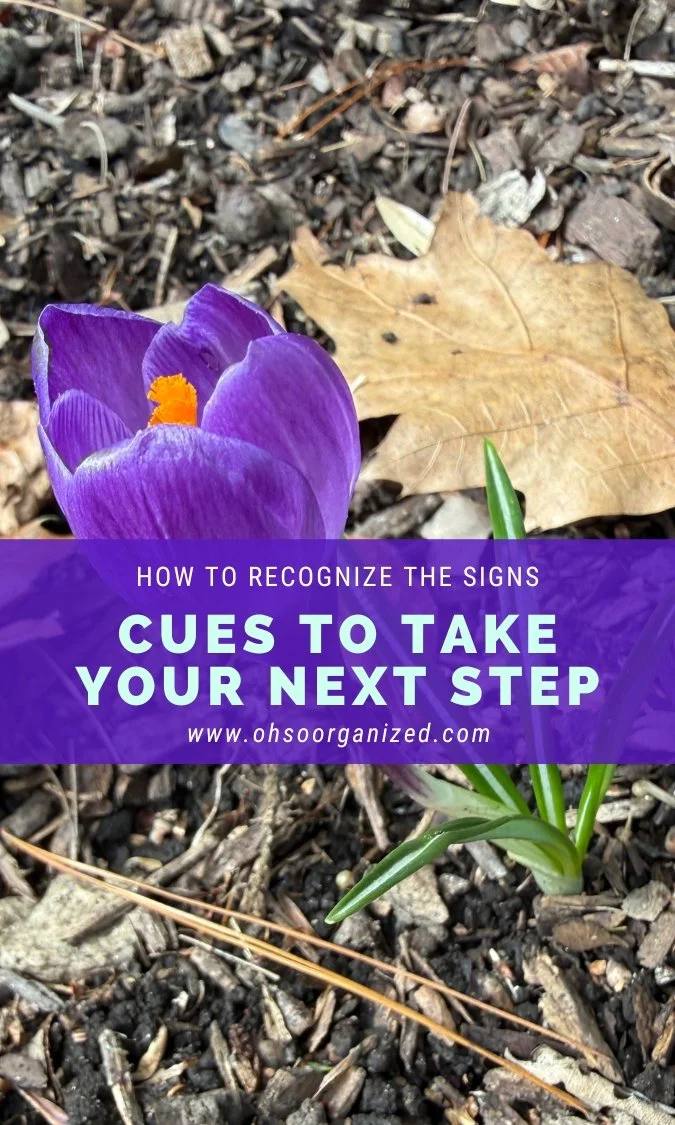
  • Purple crocus emerging > Smile because spring is almost here

What cue do you notice that guides you clearly to your next step?


Cues are sensory. They can come from what you see, hear, touch, taste, or smell.
— Linda Samuels, CPO-CD®, CVOP™


The Value of Awareness

There are cues all around you. Spotting them is very helpful because it can lower stress, overwhelm, and feelings of busyness. Taking a moment to recognize an indicator gives you space to be aware of what you’re feeling and gently choose your next step.

What would help you put this into practice? In which areas could this be most beneficial? I’d love to hear your thoughts. I invite you to join the conversation.


How Can I Help?

Do you feel overwhelmed or disorganized? Do you want to take your next step but feel stuck or unsure? I’m here to help! Virtual organizing is an extraordinary path forward – Local feel with a global reach.

Let’s connect! I’m easy to reach.

Moving forward and getting organized are possible, especially with support.


How to Simply Reset Now for a Fantastic Fresh Start

You have arrived. The page has turned, and a new year has just begun. Do you feel the weight of last year? Are your thoughts occupied by unfinished projects or goals never reached?

Hi, friend. You are not alone. As much as you wanted to wrap up one year with a neat little bow, it wasn’t possible. You have leftovers and incompletes that are still in progress. I’m here with you.

Some things take longer or have deadlines that extend from one year to the next. While you want to move on and truly engage with a fresh start, you aren’t ready yet. However, I’ve got good news.

There is one small thing you can do to help change your energy in a positive direction during this transition time. It will lift that weight and reframe what a fresh start can be.


Reframe Your Fresh Start

Consider the “reset button,” which Glennon Doyle referred to in Untamed. Push that imaginary button to clear your mind and prepare for what’s next. This is especially useful when you feel stressed, anxious, stuck, in between, or pressured.

When you identify your preferred buttons, you can access them anytime to reset and start fresh. This viable strategy is not time-specific. You can use this simple practice today, tomorrow, or months from now.


What is the Reset Button?

As Doyle says, “My reset buttons are just little things.” Her list includes:

“Drink a glass of water.

Take a walk.

Take a bath.

Practice yoga.

Meditate.

Go to the beach and watch the waves.

Play with my dog.

Hug my wife and kids.

Hide the phone.”

As you read those, did you imagine the resets working for you? Did they spark other ‘button’ ideas?

I have most of Doyle’s buttons on my list, although I no longer have a dog to play with and prefer a hot cup of tea to a glass of water.

My reset buttons are just little things.
— Glennon Doyle

These additional resets also help me:

  • Write in my journal.

  • Talk with a friend.

  • Run an errand.

  • Have a snack.

  • Make the bed.

  • Clean the kitchen counters.

  • Get a pedicure.

  • Watch water flow.

  • Wash and moisturize my face.

  • Do something new or outside of my routine.


Your Fantastic Fresh Start

Release your worry and angst. Invite in patience and perseverance. Get out your button-pushing finger and get ready to press the reset. You can:

  • Change your state of being

  • Switch gears

  • Create a space to move forward refreshed

What will help you facilitate a fresh start? Which ideas resonate with you? I’d love to hear your thoughts. I invite you to join the conversation.


How Can I Help?

Do you want support organizing, planning, or making the most of this new year? I’d love to help! Virtual Organizing is an extraordinary path forward – A local feel with a global reach.

Please schedule a Discovery call, email me at linda@ohsorganized.com, or call 914-271-5673. Change is possible, especially with support.
 
 
Here Are Today's Interesting and Best Enlisting Help Discoveries - v46

This is the newest release (v46) of the “What’s Interesting?” feature, with my latest finds that inform, educate, and relate to organizing and life balance. These unique, inspiring enlisting help discoveries reflect this month’s blog theme.

You are a vibrant, generous, and engaged group. I am deeply grateful for your ongoing presence, positive energy, and contributions to this community. I look forward to your participation and additions to the collection I’ve sourced.

What do you find interesting?


It is 100% okay to ask for help.
— Linda Samuels, CPO-CD®, CVOP™

What’s Interesting? – 5 Best Enlisting Help Discoveries

1. Interesting Read – Effortless Help

When you’re struggling to take action and make progress, doing so effortlessly may seem impossible. However, with this refreshing approach, help is here.

Greg McKeown, author of Effortless – Make It Easier to Do What Matters Most, said, “Not everything has to be so hard.” McKeown’s concept is “a whole new way to work and live. A way to achieve more with ease- to achieve more because you are at ease.”

There are three parts:

  • Effortless State – How can we make it easier to focus?

  • Effortless Action – How can we make essential work easier to do?

  • Effortless Results – How can we get the highest return on the least effort?

In describing the Effortless State, McKeown said, “When our brains are at full capacity, everything feels harder.” The first step he suggests to “making things more effortless is to clear the clutter in our heads and our hearts.”

Everything can’t be effortless. However, “you can make more of the right things less impossible- then easier, then easy, and ultimately effortless.”


2. Interesting Perspective – Life Help

Have you ever experienced a difficult time triggered by a specific event? It was so dramatic that it changed your perspective and the course of your life. The death of a loved one, loss of a job, a move, health crisis, or divorce can cause significant pain and also be catalysts for growth and reimagining.

The word lifequake beautifully describes this phenomenon- “A significant, sudden and unexpected shift in the trajectory of your life that initially feels devastating but has the beneficial outcome of catalyzing personal growth, transformation, and rebirth.”

During times of change and transition, it is especially beneficial to ask for help. What lifequake have you experienced? What type of support was most valuable?


3. Interesting Resource – Win-Win-Win Help

Do you own new or gently used furniture, appliances, housewares, and building materials you no longer want? However, it’s not easy to find a taker. You’re confident someone else can use them. You don’t want your discards to go into the landfill.

Habitat for Humanity is the resource you need. Habitat ReStores across the United States accept small and large donations of these items. The sales help Habitat’s work locally and globally. They offer free pickup of large items and tax donation receipts.

This is a win-win-win for the donors, the buyers, and the planet. You gain space, reduce clutter, let go of things you don’t want, keep items out of the landfill, support others, and receive a tax donation. People who need goods can purchase them at a reasonable price. The proceeds from Habitat Restores help families build decent, affordable homes to “achieve the strength, stability, and independence they need to build a better future.”

Click here to arrange a pickup from a Habitat ReStore near you.


4. Interesting Product – Organizing Help

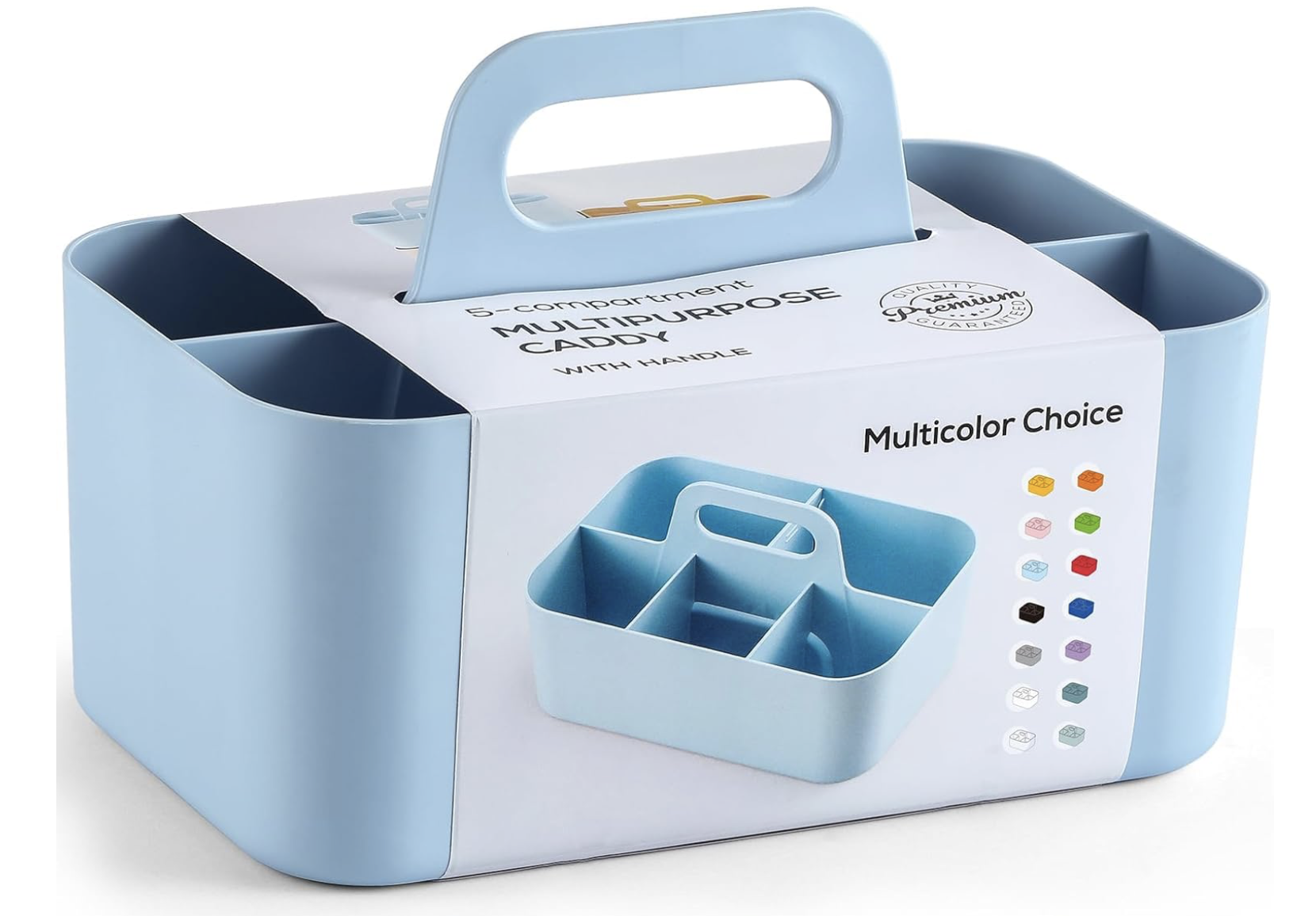
There are tons of great products to help organize like-with-like. Bins, boxes, and dividers are organizing staples. The classic zipper pouch is another example.

EOOUT’s translucent waterproof mesh zipper pouches are an excellent solution for organizing:

  • Cosmetics

  • Toiletries

  • Cords and chargers

  • Game pieces

  • Documents

  • Projects

  • Gadgets

  • Toys

  • Snacks

  • Writing tools

  • Office supplies

  • Travel accessories

  • Receipts

  • Bills

While EOOUT offers several options, the 42-piece set is an excellent value at $19.99. It includes eight different-sized bags and 17 zipper colors. What items will these pouches help you organize?


5. Interesting Thought – Normalizing Help


Are you hesitant to ask for help? Do you feel guilty or feel like you “should” be able to do everything yourself? Are you afraid of getting support for fear of being judged? These are normal responses.

Here’s the thing. Without asking for help, you will potentially struggle longer than is needed. Without help, you might be more frustrated, stressed, and paralyzed.

Struggle no more. You deserve to get unstuck and move forward. It is 100% okay to ask for help. Who will you ask to be on your support team?


Can you share one enlisting help-related discovery? Which of these resonates with you? I’d love to hear your thoughts and invite you to join the conversation.

Do you want help getting unstuck, reducing overwhelm, or getting organized? If so, I’m here for you. Contact me, Linda, at linda@ohsorganized.com, call 914-271-5673, or schedule a Discovery Call. Making progress is possible, especially with support.
 
 
Is Activating Courageous Subtraction One of the Best Clutter Strategies?

Clutter has many sources. It can be internal, such as in mind clutter, or external, like physical things or spaces. Clutter can also appear in your schedule. Believe it or not, it’s beneficial when you’re bothered and stressed by clutter. Why? You’re at a tipping point, which means you’re more likely to make a positive change.

In last week’s blog, I shared my latest clutter discoveries. In the comments, one of my wonderful friends and colleagues, Seana Turner, mentioned an idea from The Happiness of Subtraction episode on The Happiness Lab podcast hosted by Dr. Laurie Santos. I was intrigued, so I listened to the podcast, which inspired this post.

In the episode, Laurie talked with Tim Harford, author of Messy, about the value of subtraction and how it can enhance one's life. He noted that often, people tend to add more instead of taking things away. Does this sound familiar?

  • You take on one more commitment you don’t have time for.

  • You purchase more pants and shirts and stuff them into a closet overflowing with clothes.

  • You fill your vacation itinerary with so many places to visit that you’re too exhausted to enjoy the trip.

  • You go to another tag sale and bring home “bargains” you don’t have space for and will never use.

  • You enroll your kids in so many extracurricular activities that they feel overwhelmed and anxious without downtime.


The Big Clutter Question

During the podcast, Laurie asked a thought-provoking question:

“If forced to take one thing away, what would it be?”

I’ve been mulling this over for a few days. Except for the word “forced,” I love the question. It asks you to look directly at the extras in your life.

  • What is putting you over the edge?

  • What ‘one thing’ can be released?

  • What ‘one thing’ no longer belongs?

  • What can go?

You are the decision-maker. No one is forcing you. Instead, view this as an opportunity. This is your opening to make a change. Release the things holding you back.


“Opportunity Cost”

Tim talked about how something has an “opportunity cost.” For example, “…everything you say yes to is getting in the way of something else.” The idea is to subtract as much as possible to make space for the “good stuff.”

  • What are you “over-subscribed” to?

  • What can you remove from your schedule?

  • How does saying no make space for saying yes to what you value most?

  • What could you be doing if you subtracted something else?


Subtraction lets you create space for what you treasure most.
— Linda Samuels, CPO-CD®, CVOP™


“Yes-Damn” Effect

Laurie discussed the familiar “yes-damn” effect from Hal Hershfield’s book Your Future Self about our time biases. This has probably happened to you before. Laurie said you get asked:

  • “Hey, do you wanna do this presentation?

  • Or Hey, do you wanna go to this kind of not very interesting dinner party?

  • Or Hey, do you wanna sign up for something in your schedule and you feel kind of bad?

  • So you’re like, yes.

  • Then weeks later, that project or that dinner party comes up and that’s where you say, damn.”

You said yes to something, and time passed. When you see it on your schedule, you regret the yes and are annoyed at yourself.


“No-Yay” Effect

Laurie prefers and uses a different strategy. Through “periodic reminders,” the “no-yay” effect reinforces the reward of saying no.

She shares this example. Let’s say someone asks you if you want to do a specific project, and you know the due date. You know you don’t want to do it, so you say no.

You could leave it there, at your no. Instead, you take it one step further. On the project’s due date, you write on your calendar, “Hey Laura, you didn’t have to do the project this day.”

Time elapses. You arrive at that future due date, see your note, and recognize how much harder things would have been if you had committed to doing that project. “And then you have the experience of the yay.”


Clutter shows up in our minds, schedules, and homes. Feeling bothered is a positive because it’s your cue for change. Subtraction lets you create space for what you treasure most.

What are you ready to subtract? If you need help making a plan or decluttering, reach out anytime. Please email me, Linda, at linda@ohsorganized.com, call 914-271-5673, or schedule a Discovery Call. Decluttering is possible, especially with support.