Posts tagged strengths
3 Useful Ways for Better and More Compassionate Time Management

You and I share at least two things in common. We both have 24 hours in a day, and our days are finite. Yet how we experience and use our time varies widely.

Perhaps you are time-aware. You know how much time you have and spend it intentionally. Or maybe you have difficulty keeping track of time, feel time-poor, are easily distracted, and never have enough hours to get things done.

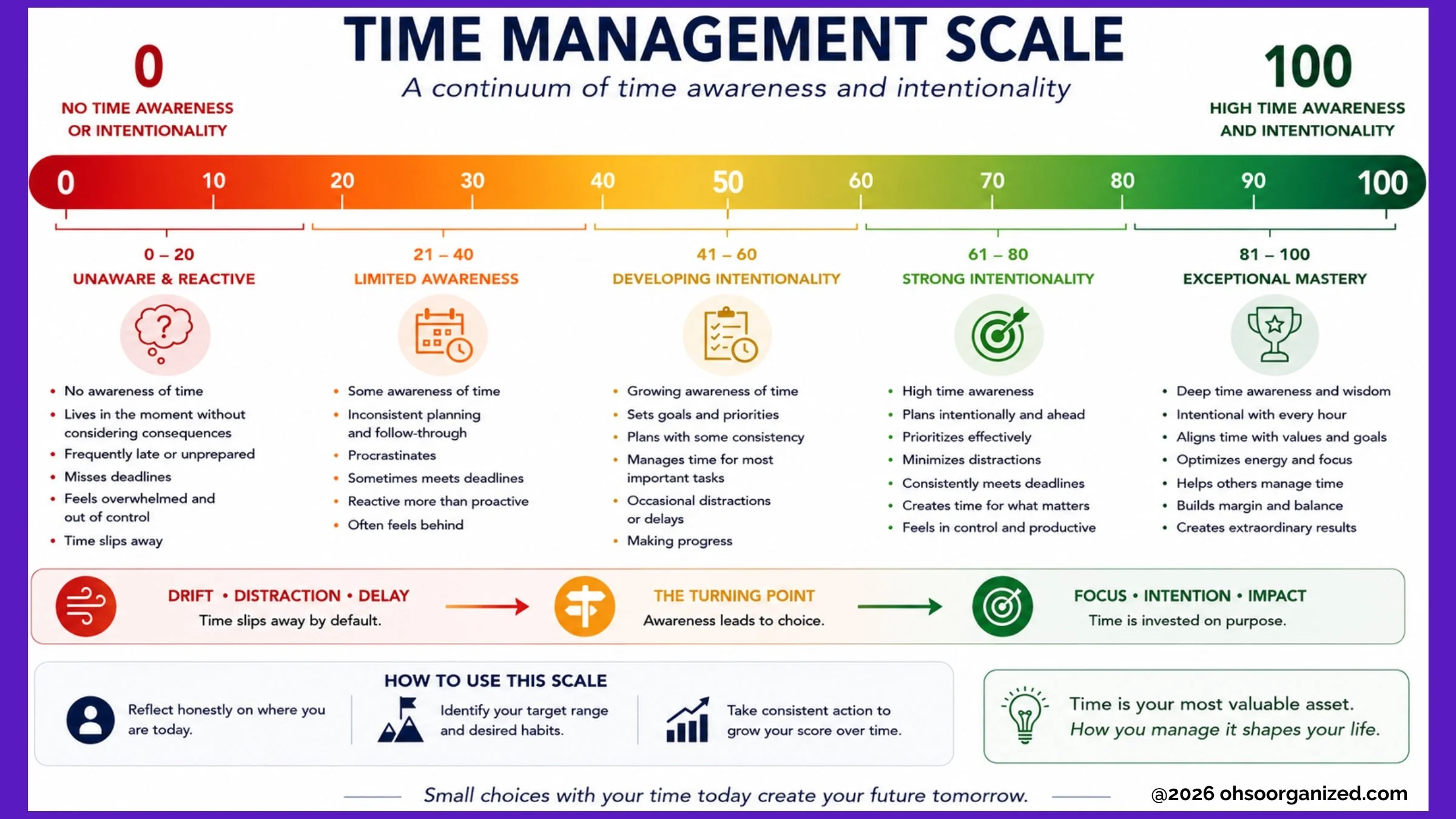
If you think of your relationship to time on a scale from zero to one hundred, with one end representing a total lack of time awareness and intentionality and the other representing high time awareness and intentionality, where would you place yourself? Whether your number is zero or one hundred, several concepts can improve your relationship with time and help you approach it more compassionately.


Time Management Scale

Before I share the strategies, review the Time Management Scale to get a sense of where you are right now. This isn’t an exact science, but the scale will help you identify your strengths and challenges. Understanding your relationship with time, combined with the concepts I’m about to share, can be a game-changer for you.

How to Use the Scale

  • Reflect honestly on where you are today

  • Identify your target range and desired habits

  • Take consistent action to improve your score over time

Remember that small choices about how you spend your time today shape your future.


3 Ideas to Encourage More Compassionate and Aligned Time Management

There are three ways to align your time in a more compassionate and powerful way. As I mentioned earlier, the time available each day is fixed. Your life and the time you have left are finite. None of us knows how many days remain. How you use this precious resource shapes your life.

1. Energy

Have you noticed how your energy ebbs and flows throughout the day? For example, I have more energy and mental clarity earlier in the day, and my energy lessens as the day goes on. Matching high-brain-demand tasks, such as planning or writing, with the time of day I’m ‘fully charged’ works better for me. Lower-brain-demand tasks, like resetting spaces or grocery shopping, can be done when my energy is less.

As you plan your available time and how you will spend it, factor in your energy. A while ago, Executive Coach Marcy Stoudt introduced me to the reframing of time management as energy management.

It’s helpful to consider how you’re planning and using your time. One thing I’ve learned is how much longer tasks take when my energy isn’t aligned. For example, when I’m tired and my energy is low, it takes me two to three times as long to do certain tasks as when I’m well-rested and in my high-energy, brain-power part of the day.

Aligning your energy management with how you use your time is a compassionate practice.

Small choices about how you spend your time today shape your future.
— Linda Samuels, CPO-CD®, CVOP™

2. Priorities

Have you noticed that some priorities, especially those tied to values, are fixed while others are flexible? For example, family might always be a top priority, so you’ll drop everything if someone in your family needs you. Or, when planning, family considerations drive your choices.

Flexible priorities are tasks, goals, and commitments that matter but don’t require immediate action or have a set deadline.

Flexible priorities could include:

  • Projects with open deadlines

  • Buy groceries sometime this week

  • Meet a friend for coffee in the next few months

  • Edit belongings to downsize

  • Plant flowers in the garden

  • Clean out the garage this season

  • Improve sleep habits

  • Try a meditation app

When considering your available time, aligning your priorities with your values and clarifying which tasks are fixed or flexible can lead to a more compassionate way forward.


3. Reality

Ah, yes! The old reality check. Here’s where time management can go sideways. Many people I know, including clients, struggle to align their available time with how long tasks take. This is where optimism needs to be balanced with a realistic understanding of time.

Has this happened to you? I see it most often on ambitious to-do lists. For example, you sit down to write your daily list. You have twenty or thirty items and expect to do them all today because they’re all “equally important.” Yet as the day goes on, you’ve only gotten to a few items. It’s clear you won’t finish everything. The day isn’t over, and you’re starting to feel stressed and defeated. Believe me, I get it. Reality and intention are two very different things.

  • Reality Check 1: Not everything is equally important.

  • Reality Check 2: Your list is too ambitious to complete in one day.

  • Reality Check 3: Optimism is great, but balance it with a realistic understanding of your available time and how long tasks take.

  • Reality Check 4: Reduce the size of your list. Curate a daily list of 1-5 items. Get those done, then review the time you have left before adding more to your day.

When you stop planning for an ideal day and start planning for the day you actually have, you gain a greater sense of control, accomplishment, and ease.


Are You Ready to Bring a More Compassionate Approach to Time Management?

The number is 24, as in the hours in a day. The number of days you have left is unknown. You have choices about how to spend your time. Use understanding and compassion as you plan and decide.

What will that look like for you? Which time management ideas resonate most with you? I’d love to hear your thoughts. I invite you to join the conversation.


How Can I Help?

Do you feel overwhelmed, disorganized, and time-stressed? Are you struggling to manage all your tasks, goals, and commitments? I’m here to help! You don’t have to do this alone. Virtual organizing is an extraordinary path forward – Local feel with a global reach.

Let’s connect! I’m easy to reach.

Managing your time, getting organized, and living with more ease are possible, especially with support.


5 Powerful Ways Learning at an Organizing Conference Encourages Possibilities

What happens when you have so many possibilities? Do you feel overwhelmed? Do you get stuck? Are you unable to make decisions or take action? It’s terrific to have options and know there are lots of possibilities. However, when the scope is too large, the choices can feel more like a burden than an inspiration.

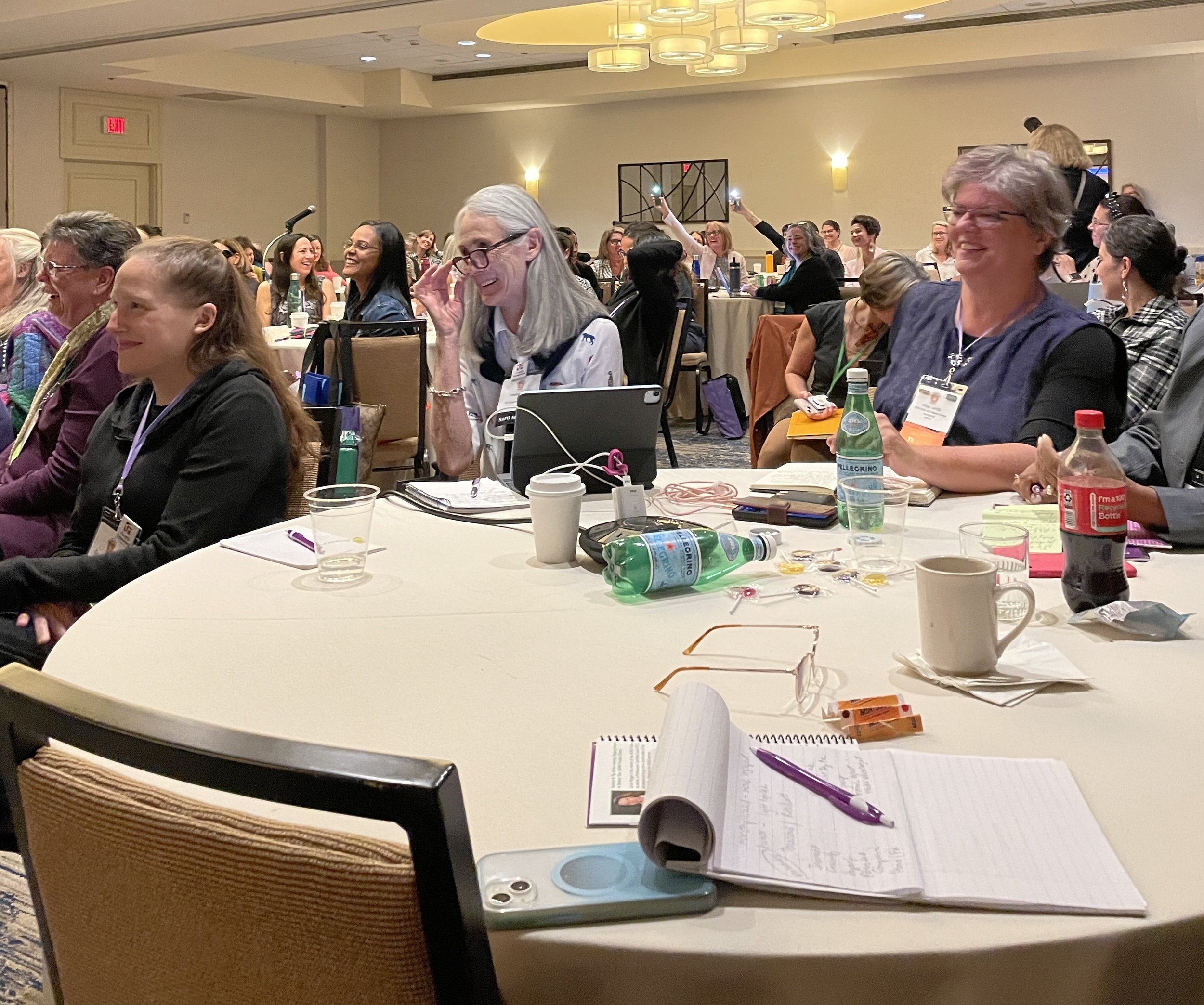
Last week, I attended the ICD conference near Boston with over 100 organizing colleagues from around the globe. It felt amazing to be together in person again, be with my colleagues, and meet new friends. We learned from incredible experts during seven 90-minute sessions. It was wonderful, intense, and emotional. There were sessions about dementia, hoarding, neurodiversity, ADHD, anxiety, time management, and mindset.

By the end, my brain felt drippy, like a sponge that couldn’t absorb more liquid. Of course, I want to share everything I learned with you. As I sat to write this, I got overwhelmed by the options and possibilities. So, guess what? I’m dialing it back from my 16 pages of notes to share information from five of the sessions. I hope the ideas open up something for you- a new perspective, reframe, or possibility.


5 Powerful Ways Learning Encourages Possibilities

1. DEMENTIA | “I am who I am. I’m just different.”

Beth Nolan, PhD, the Director of Research and Policy for Teepa Snow’s Positive Approach to Care™ (PAC), said there are 100+ causes and types of dementia. One way to help is to understand while dementia “robs” the person of many things, they still have skills and strengths. Identify and focus on those.

My mom was diagnosed with vascular dementia in 2013 and passed away in 2021. While many of her abilities were compromised over those eight years, I was always inspired by what remained, like her ability to make music, play the piano, sing, and express love. She was still my mom, just different.


2. HOARDING | “Hoarding isn’t just a house problem. It’s a mental health problem.”

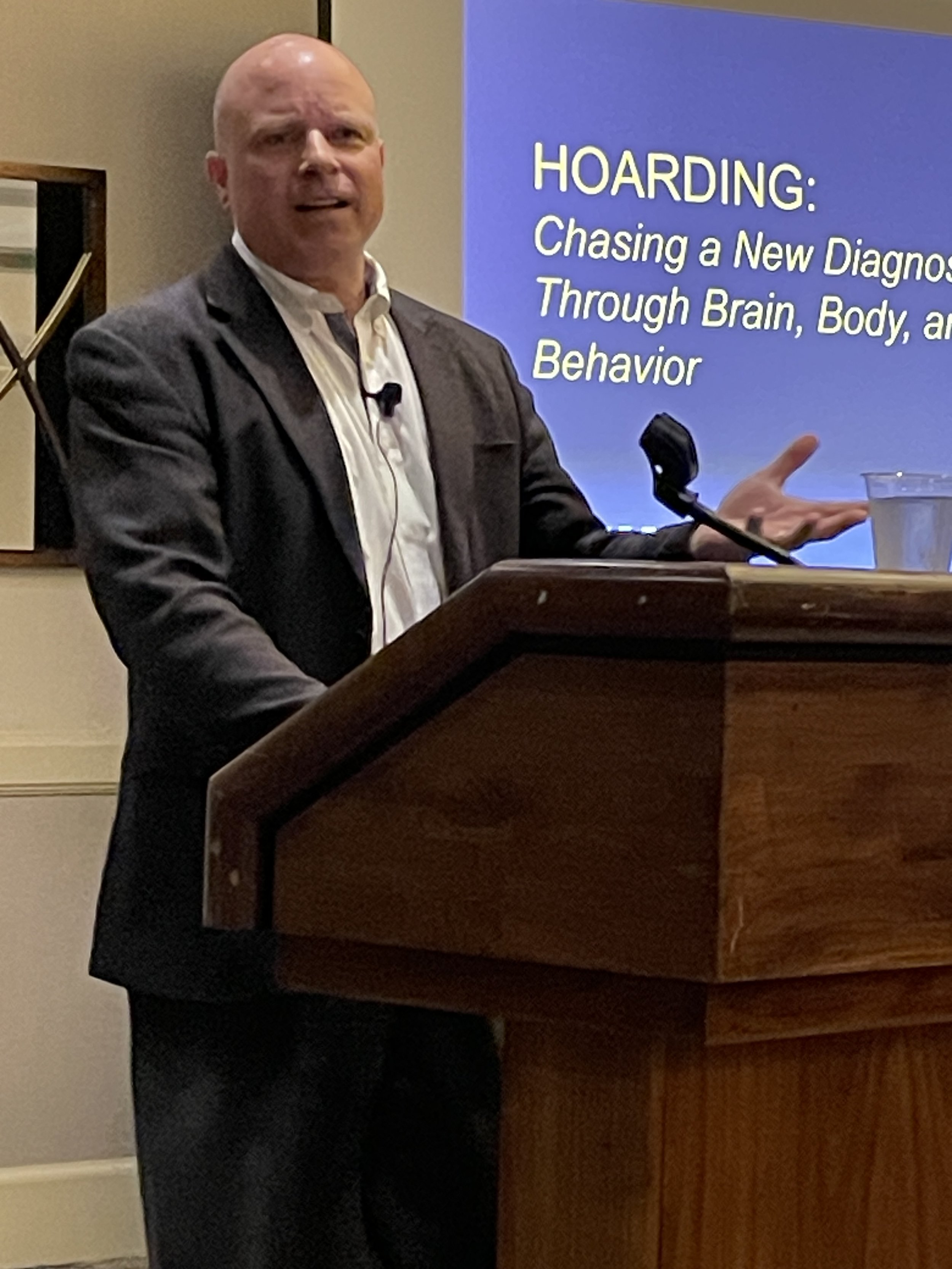
Dr. David Tolin, the Founder and Director of the Anxiety Disorders Center at the Institute for Living and Adjunct Professor of Psychiatry at Yale University School of Medicine, said Hoarding Disorder became a standalone diagnosis in the 2013 DSM-5. The hallmarks of the disorder are having difficulty discarding or parting with possessions and having a visible manifestation of clutter build up with the home no longer useable for its intended purpose.

For people with Hoarding Disorder, “Saving happens because tossing is distressing, not liberating or freeing.”

Dr. Tolin shared these statistics:

  • The drive to acquire and save affects 2-5% of the population worldwide.

  • Hoarding Disorder is twice as common as Obsessive Compulsive Disorder (OCD).

  • Hoarding Disorder begins at a young age (6-16) and worsens with age. It does not get better on its own.

While Cognitive Behavioral Therapy (CBT) is one of the most successful treatment methods for Hoarding Disorder, it is not 100% effective. Through continuing research, Dr. Tolin is committed to better understanding the psychology and biology of hoarding behavior and discovering ways to boost CBT’s efficacy.


Saving happens because tossing is distressing, not liberating or freeing.
— Dr. David Tolin


3. NEURODIVERSITY | “The value of life can’t and shouldn’t be based on productivity. It leaves a lot of people out.”

Devon Price, PhD, a social psychologist, professor, researcher, author, and proud Autistic person, was diagnosed with autism after finishing his PhD and experiencing “autistic burnout.”

Some of autism’s distinguishing characteristics include sensory input challenges, such as loud sounds and eye contact, which are painful. Processing is slower, but it’s a strength because they catch small details and are more detail-oriented. However, because the world moves fast, it doesn’t support how they process, so they feel more disabled.

Devon prefers identity-first language- “autistic person,” “autistic,” and “disabled person.” He said to avoid “differently abled” or “special needs.”


4. ADHD | “Successful ADHD women look successful on the outside and feel inadequate on the inside.”

Linda Roggli, PCC, creator of the ADHD Palooza series, a Professional Certified Coach, and author and founder of the A-D-Diva Network for ADHD women 40-and-better said she has an “ADHD brain.” 

The ADHD inattentive type is most prevalent in women. Some distinguishing factors include a busy brain, low energy, high worry, inability to concentrate, being distracted by one’s thoughts, daydreaming, difficulty following through and prioritizing, misplacing things, being talkative, impatient, having low self-esteem, not having great a working memory, making impulsive decisions, and feeling restless.

Roggli said understanding the impact of hormones on women with ADHD is essential. The brain works better with more estrogen. Estrogen affects dopamine. The ADHD brain lacks dopamine. Menopause decreases estrogen by 50% and keeps getting lower.

Most women with ADHD have comorbid conditions or “sidecars.” They include:

  • 30-40% - 1 Depressive episode

  • 50% - Learning differences

  • 10-20% Bipolar

  • 30% OCD

  • Up to 50% - Addictions


5. ANXIETY | “The more you care, the more you worry. Anxiety means I care. You can’t teach people not to care. You can only teach how to manage anxiety.”

Dr. Alicia Clark, a psychologist and author of Hack Your Anxiety, said 40% of people experience persistent stress, and only 36% get help. She also said:

  • Women suffer from anxiety 1.6 times more than men.

  • Post-pandemic, anxiety and depression increased by three times.

  • The visual distraction of clutter increases cognitive overload and decreases working memory.

Anxiety shows up in the “emotional landscape” of the organizing work we do with our clients. These can appear as fear of change, failure, facing emotional memory of things, letting go, and making mistakes.

Dr. Clark described four forms of anxiety – Whisper, Chatter, Nagging, and Yelling. She explained they are not all bad. Chatter anxiety is referred to as “good stress.” You can reframe anxiety and recognize that it drives motivation. She suggests using “anxiety to change what is in your control,” focusing on progress, reframing setbacks as part of the growth process, and getting adequate sleep.


Possibilities open up when we understand more about our psychological, emotional, and biological states. I was deeply moved by the presenters, the stories and insights they shared, and how they connected to many of my clients. It is a privilege to be part of their journey. I have the utmost respect and admiration for my clients’ determination and how they face their challenges.

What possibilities appeared for you? Did you discover any surprises? I’d love to hear your thoughts. I invite you to join the conversation.


7 Winning Ways the Reminders You Display Will Help You Each Day

We constantly receive internal and external messages. Do they help or hurt you? Have you heard of the 5:1 magic ratio? Research suggests that to counteract the sticky Velcro-like negativity bias, it takes approximately five positive encounters, thoughts, or experiences for every negative one.

Consider fortifying your Personal Positivity Bank by making regular deposits. Here are a few ways to build your reserves:

  • Create a “Feel Good” file with positive emails, notes, or letters you received from family, friends, clients, or colleagues:

  • Keep an ongoing gratitude list

  • Connect with nature

  • Prioritize self-care

  • Spend time with people who energize and uplift rather than drain you

  • Display positive reminders in your environment

Today, I am focusing on that last one, the visible messages you see every day. I’m sharing several of my favorites below. I’ve written before about the fidget bowl on my desk. This fun collection of miniature objects combines word reminders, trinkets from places visited, old toys, and visual and tactile delights. Playing with the tiny pieces while I’m in meetings helps me focus. Having uplifting messages front and center enhances my well-being. What encouraging messages will you surround yourself with?


7 Ways the Reminders You Display Will Help You Each Day

1. Bloom Where You’re Planted

Bloom where you’re planted encourages me to embrace the growth mindset anywhere, anytime. Every encounter, action, observation, experience, success, and failure are opportunities to learn, expand, and blossom.


2. Head & Heart

Navigating life’s hiccups and choices can be stressful. “Head & Heart” reminds me to use my cognitive and sensing gifts to support positive decisions and outcomes. While not included in this purple pin, my gut is another guiding element. When I listen, it leads me with a distinct “yes” or “no.”


3. Nourish

My Word of the Year is nourish. This essential encourages me to feed my heart, mind, and body so they feel nurtured, positive, and supported to thrive. My heart wants connection. My mind needs stimulation, and my body wants loving care.


4. You Are Here

While these words are often found to locate yourself on a map, to me, they embody presence. Especially when my mind is racing, and even when it’s not, this message prompts me to pause, notice, and ground myself with where I am, what I’m doing, what I’m feeling, and what I’m experiencing. When distracted, I use these words to gently bring me back, reset, and move on.


Fortify your Personal Positivity Bank by making regular deposits.
— Linda Samuels, CPO-CD®, CVOP™

5. Oy Vey!

Years ago, I gave my dad this blue “Oy Vey!” computer key. It became a favorite inside joke between us, and one of the many things that connected us was our shared sense of humor. This message reminds me that things in life have the potential to go sideways. However, my sense of humor can bring a brighter perspective and allow me to laugh at myself during difficult situations.


6. Radiate Positivity

According to the CliftonStrengths assessment, one of my top strengths is Positivity. Seeing the “Radiate Positivity” button helps me with several things:

  • It reminds me to continuously develop and live from my strengths.

  • My natural inclination towards positivity helps me be resilient and growth-oriented.

  • Positivity is ‘catching,’ so my mood can have an encouraging effect on others.


7. Exhale the Bullshit

This new pin has quickly become a favorite. We all experience life ‘stuff’ (aka difficult situations, conflicts, threats, bullshit). During those challenging encounters, you can experience emotional hijacking. Stress triggers are sent to the amygdala, the part of the brain responsible for emotional processing. Your automatic warning system goes on high alert, and your body wants to protect you. Your heart races, your palms sweat, your face flushes, and your breathing turns rapid or shallow.

“Exhale the Bullshit” reminds me to take a deep breath through my nose and a longer exhale through my mouth. Repeating that several times, I soothe my system, access the rational part of my brain, and am better equipped to respond calmly to the circumstance.

How does having positive visual reminders help and influence your day? What helpful messages are in your view? I’d love to hear your thoughts. I invite you to join the conversation.


How to Use Your Top Strengths and Flourish With These Simple Ideas

As humans, there is something so enticing about becoming our best self and flourishing. We can accomplish this when we live using our top strengths. Do you know what yours are? If not, take the VIA Survey of Character Strengths to discover them. A few weeks ago, I attended ICD’s virtual conference and wrote about Dr. Ryan Niemiec’s inspiring session where he talked about this topic.

Some of the things I enjoy about blogging are writing and sharing ideas. However, my favorite part is reading and responding to your comments. I find it fascinating which concepts resonate with you, the information you share, and the emerging ideas. In the ICD conference post, there was a comment by my friend and colleague, Stacey Agin Murray, that I loved. She said in response to the discussion about living your strengths, “No one should ask a fish to climb a tree.”

Her idea is so clear. A fish can be their fantastic self in the water, but not so much if they had to scale a tree. It begs the question. What activities make you feel like your best self? Can you engage in doing more of those? Can you stop doing those things that drain you?

No one should ask a fish to climb a tree.
— Stacey Agin Murray

In Mindful magazine, I came across a related idea in Misty Pratt’s article, “How We Flourish.” The word flourish caught my attention because it’s such an uplifting word and way of being. Misty wrote,

“We know that ‘flourishing’ (defined as a combination of physical, emotional, and mental health) is a state of mind where life feels good. Flourishing is not about perfection or being happy all the time, but a recognition that when we have purpose, meaning, and connection in our lives, getting out of bed every morning is easier.”

We know that ‘flourishing’ . . . is a state of mind where life feels good.
— Misty Pratt

These two concepts- using your strengths and flourishing are interconnected. They are full of hope and speak to what’s possible for you.

As we begin a new month and are about to finish the year, how can you adjust how you live, what you’re doing, and who you’re engaging with to create your best life? What are your thoughts about strengths and flourishing? I look forward to hearing your ideas. I invite you to join the conversation.