Posts tagged 24 hours
Did You Know That Taking Breaks Is Key to Better Time Management?

When you think about managing your time, how often is it about being more productive, reaching those big goals, or getting more items crossed off your to-do list today? You wonder how other people get so much done. You’re frustrated that you’re constantly working, yet your lists and goals feel hard to finish or even to start.

After all, there are only 24 hours in a day. For most of us, at least six to eight of those hours are devoted to sleep. Subtract time for eating, transitions, bio breaks, managing distractions, and handling the unexpected, and your available time to get things done is significantly reduced.

I remember my mom used to get annoyed about having to sleep. She would say, “We sleep a third of our lives away. Sleeping is a waste of time.” I never bought into the idea that sleep was a waste. Instead, I saw her words as reflecting her intense need to make the most of every moment.

I’m all for making the most of the time I have. Time is finite and a precious resource. However, one of the best ways to manage your time better is to take intentional breaks. Sleep is one aspect, but taking breaks while awake is just as essential.


What Types of Breaks Will Help You Be a Better Time Manager?

I know I’m stating the obvious, but you need energy and focus to get things done. Working longer or beyond capacity doesn’t help. You’ve probably reached the point of diminishing returns. You know those nights. You’re exhausted, pushing to finish that spreadsheet, dealing with a sink full of dishes, packing for a trip, or writing one more email response.

However, understanding the benefits of taking breaks and integrating them into your life will help.

It’s more than ‘will help.’ Taking breaks is essential not only for energy, focus, and getting things done but also for your overall well-being. Life isn’t only about doing more. It’s about stepping away for short, medium, or longer breaks.

What can these mid-size breaks look like? Let’s review some options to help you better manage your time. These pauses are about giving you time to recover so you can return to ‘the work’ refreshed, recharged, and energized.


1. Short Breaks

You might be thinking, “I’m so busy that I barely have time for a bio break, let alone any other break.” Believe me, I get it. You are not alone in feeling overwhelmed by the pace of life.

However, it is possible to integrate several short breaks into your day. If “short” feels too long, reframe it as a micro-break.
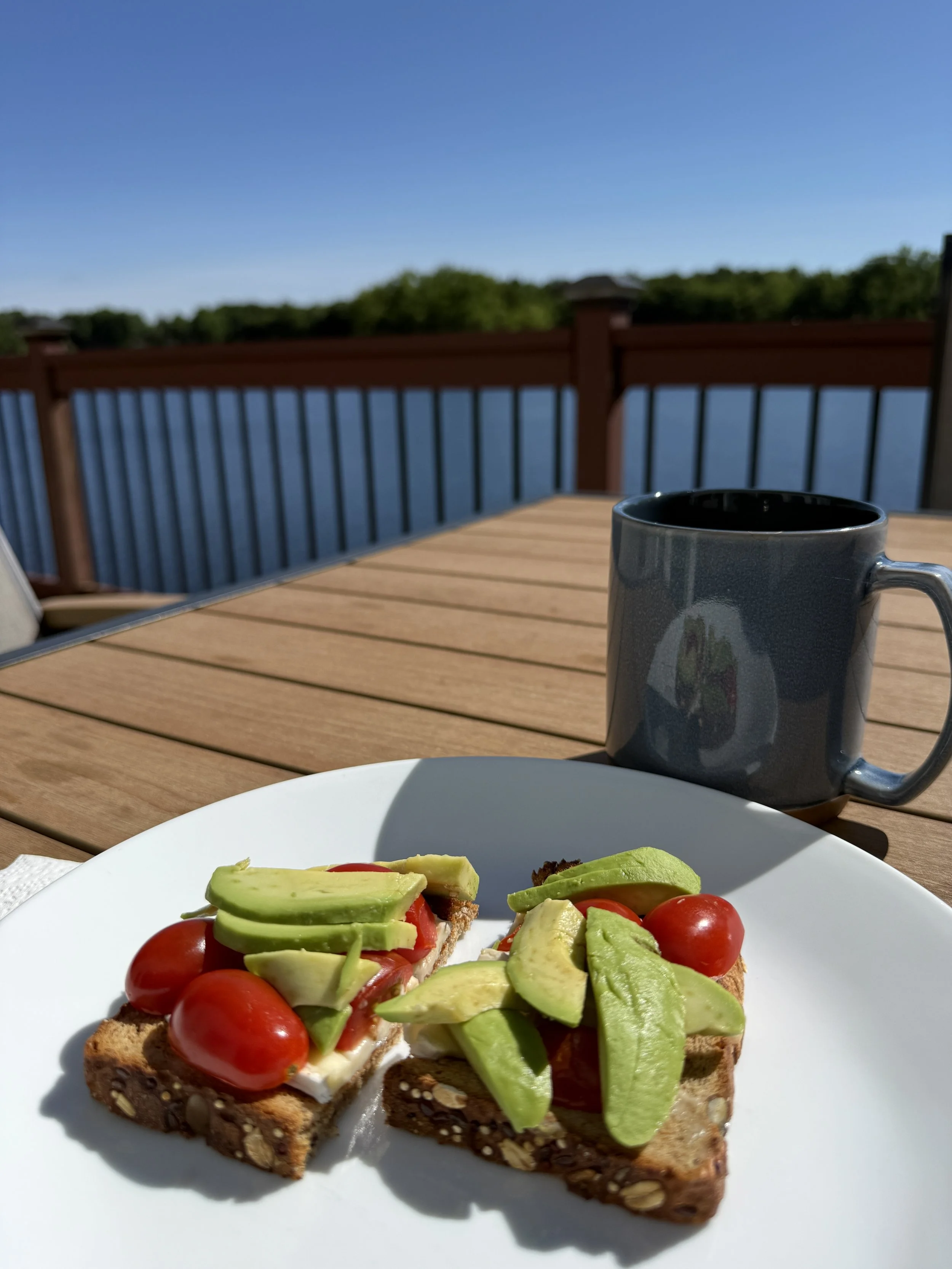
These tiny resets can be taken a few times a day and may include:

  • Close your eyes and take several slow breaths in and out.

  • Stand up and shake out your body.

  • Send a quick email or text to someone you love.

  • Enjoy a few leisurely sips of coffee or iced tea.

  • Eat a snack.

  • Doodle on a sheet of paper.

  • Go outside for fresh air.

  • Take a walk around the office or the block.

  • Roll your shoulders forward and backward.

  • Dance or sing loudly to a favorite song.

  • Take a few deep, loud sighs.

  • Splash cold water on your face.

  • Sit and do nothing for a few minutes.

  • Meditate for 1 to 5 minutes. Insight Timer offers many excellent options.

What else could work well for your micro-break?


Life isn’t only about doing more.
— Linda Samuels, CPO-CD®, CVOP™

2. Medium Breaks

Those mini breaks are wonderful, but at times you will benefit from something longer. If you can carve out more than 5 minutes, a medium break is beneficial. While micro-breaks can be impromptu, a medium break might require some advance planning.
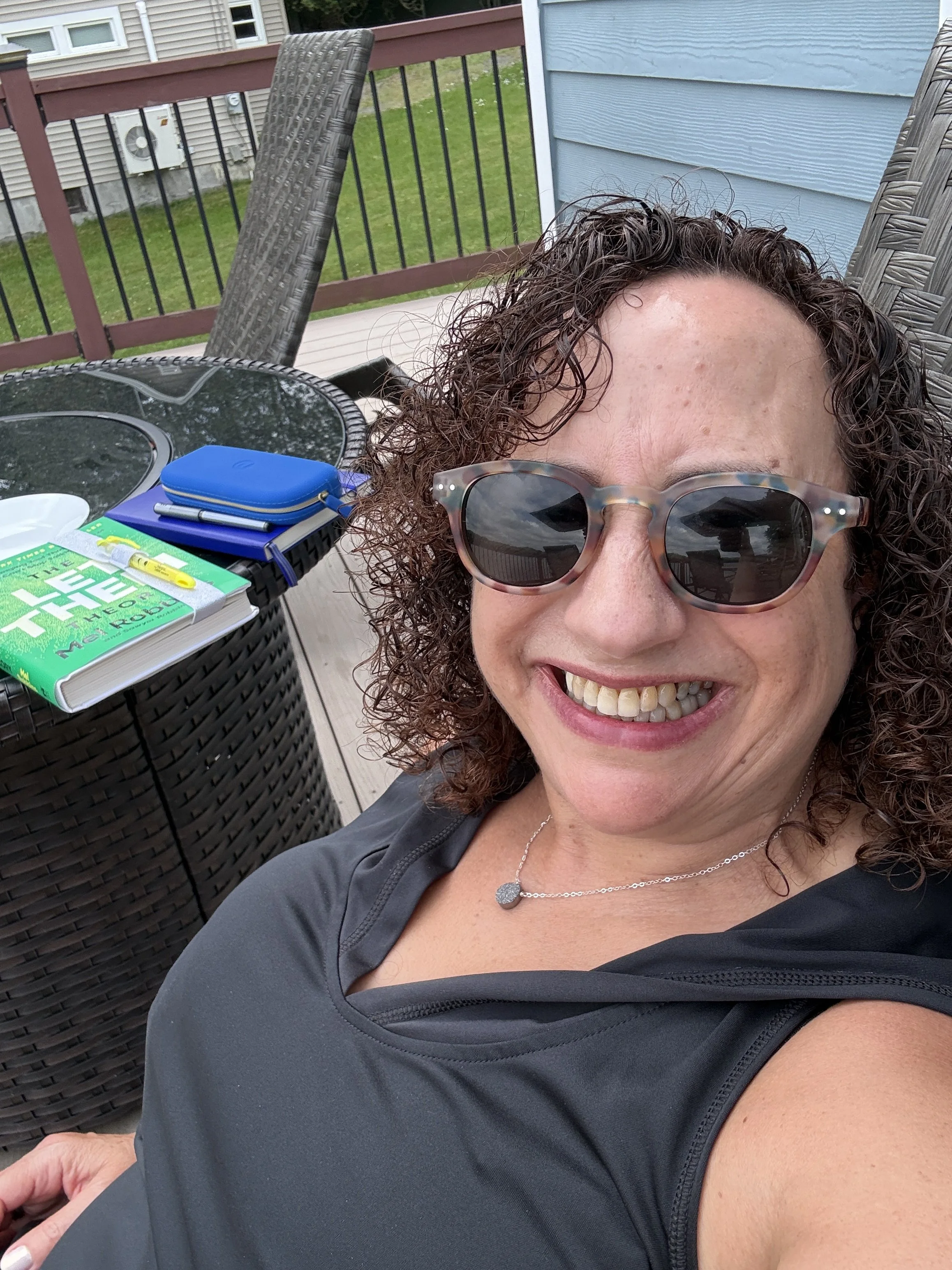
Here are some recharge ideas for breaks ranging from 20 minutes to several hours:

  • Take a 20-minute nap.

  • Go to the movies.

  • Take a walk in nature.

  • Meet a friend for lunch.

  • Explore a museum, garden, or town.

  • Get a massage.

  • Meditate for 30 minutes.

  • Write in your journal.

  • Call a loved one.

  • Go to the pool or the beach.

  • Read a book (or a portion of one).

  • Spend time in a hammock.

  • Go for a bike ride.

  • Make something with your hands.

  • Daydream.

  • Take a yoga class.

What other types of medium breaks could benefit you?


3. Long Breaks

Full disclosure here. Today I took a micro break (meditated) and a medium break (walked by the river). I also just returned from a long break, a family vacation in the Finger Lakes. I have to say, as much as I need my shorter breaks regularly, the extended ones are just as vital. They can be more challenging to take because of the expense or limited time.

Yet, going somewhere for several days (if possible) and stepping away from your regular routines and responsibilities is one of the best ways to recharge. You will return refreshed, more focused, and ready to re-engage with your projects and lists.

It also gives you time to float, think, catch up on sleep, connect with family and friends, or simply do nothing. But a long break doesn’t have to mean only getting away.

Here are some long-break ideas when you have more than 24 hours:

  • Take a staycation and stick to fun or relaxing activities.

  • Take a personal retreat focused on rest and reflection.

  • Unplug for several days.

  • Learn a new skill just for fun.

  • Create a home retreat with no obligations, errands, or projects.

  • Go away for the weekend, or extend it to a long weekend.

  • Vacation somewhere you have to fly to.

  • Travel to somewhere on your bucket list.

  • Check into a spa or wellness retreat.

  • Go camping or glamping.

  • Vacation somewhere reachable by car.

  • Take a biking, kayaking, or boating trip.

  • Spend an extended visit with loved ones.

What have you enjoyed most during your long breaks?


Are You Ready to Give Yourself the Breaks You Deserve?

Busy is how many of you describe your lives. There’s nothing inherently wrong with a full life. But make sure you also take a variety of intentional breaks. Breaks are the yin to your ‘busy’ yang.

Do you take regular breaks? What types do you take? Would you benefit from adding more pauses to your life? How would taking more breaks help you manage your time better? I’d love to hear your thoughts. I invite you to join the conversation.


How Can I Help?

Do you feel overwhelmed, disorganized, and have difficulty managing your time? I’m here to help! You don’t have to do this alone. Virtual organizing is an extraordinary path forward – Local feel with a global reach.

Let’s connect! I’m easy to reach.

Managing your time, getting organized, and living with more ease are possible, especially with support.


 
 
3 Useful Ways for Better and More Compassionate Time Management

You and I share at least two things in common. We both have 24 hours in a day, and our days are finite. Yet how we experience and use our time varies widely.

Perhaps you are time-aware. You know how much time you have and spend it intentionally. Or maybe you have difficulty keeping track of time, feel time-poor, are easily distracted, and never have enough hours to get things done.

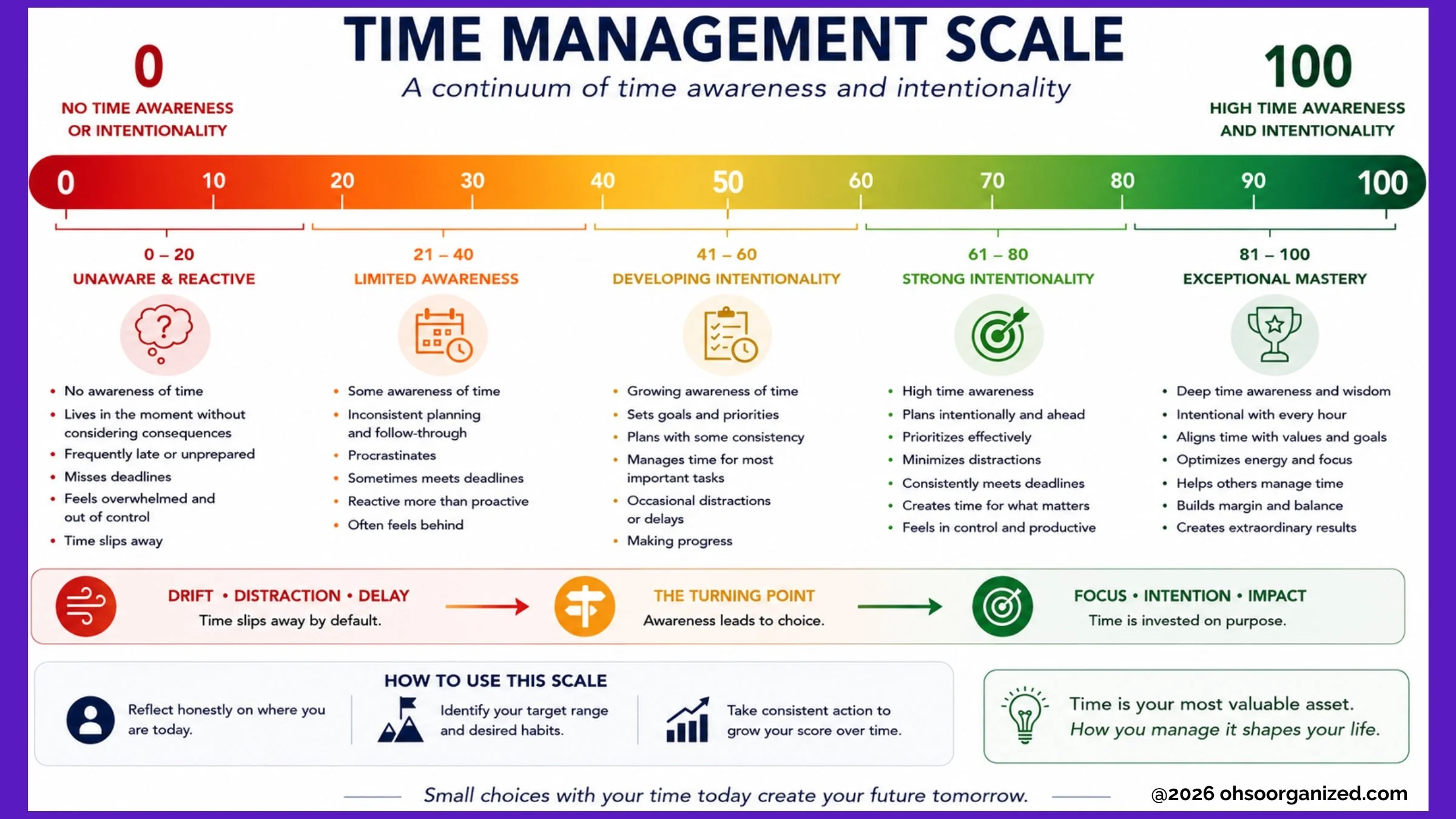
If you think of your relationship to time on a scale from zero to one hundred, with one end representing a total lack of time awareness and intentionality and the other representing high time awareness and intentionality, where would you place yourself? Whether your number is zero or one hundred, several concepts can improve your relationship with time and help you approach it more compassionately.


Time Management Scale

Before I share the strategies, review the Time Management Scale to get a sense of where you are right now. This isn’t an exact science, but the scale will help you identify your strengths and challenges. Understanding your relationship with time, combined with the concepts I’m about to share, can be a game-changer for you.

How to Use the Scale

  • Reflect honestly on where you are today

  • Identify your target range and desired habits

  • Take consistent action to improve your score over time

Remember that small choices about how you spend your time today shape your future.


3 Ideas to Encourage More Compassionate and Aligned Time Management

There are three ways to align your time in a more compassionate and powerful way. As I mentioned earlier, the time available each day is fixed. Your life and the time you have left are finite. None of us knows how many days remain. How you use this precious resource shapes your life.

1. Energy

Have you noticed how your energy ebbs and flows throughout the day? For example, I have more energy and mental clarity earlier in the day, and my energy lessens as the day goes on. Matching high-brain-demand tasks, such as planning or writing, with the time of day I’m ‘fully charged’ works better for me. Lower-brain-demand tasks, like resetting spaces or grocery shopping, can be done when my energy is less.

As you plan your available time and how you will spend it, factor in your energy. A while ago, Executive Coach Marcy Stoudt introduced me to the reframing of time management as energy management.

It’s helpful to consider how you’re planning and using your time. One thing I’ve learned is how much longer tasks take when my energy isn’t aligned. For example, when I’m tired and my energy is low, it takes me two to three times as long to do certain tasks as when I’m well-rested and in my high-energy, brain-power part of the day.

Aligning your energy management with how you use your time is a compassionate practice.

Small choices about how you spend your time today shape your future.
— Linda Samuels, CPO-CD®, CVOP™

2. Priorities

Have you noticed that some priorities, especially those tied to values, are fixed while others are flexible? For example, family might always be a top priority, so you’ll drop everything if someone in your family needs you. Or, when planning, family considerations drive your choices.

Flexible priorities are tasks, goals, and commitments that matter but don’t require immediate action or have a set deadline.

Flexible priorities could include:

  • Projects with open deadlines

  • Buy groceries sometime this week

  • Meet a friend for coffee in the next few months

  • Edit belongings to downsize

  • Plant flowers in the garden

  • Clean out the garage this season

  • Improve sleep habits

  • Try a meditation app

When considering your available time, aligning your priorities with your values and clarifying which tasks are fixed or flexible can lead to a more compassionate way forward.


3. Reality

Ah, yes! The old reality check. Here’s where time management can go sideways. Many people I know, including clients, struggle to align their available time with how long tasks take. This is where optimism needs to be balanced with a realistic understanding of time.

Has this happened to you? I see it most often on ambitious to-do lists. For example, you sit down to write your daily list. You have twenty or thirty items and expect to do them all today because they’re all “equally important.” Yet as the day goes on, you’ve only gotten to a few items. It’s clear you won’t finish everything. The day isn’t over, and you’re starting to feel stressed and defeated. Believe me, I get it. Reality and intention are two very different things.

  • Reality Check 1: Not everything is equally important.

  • Reality Check 2: Your list is too ambitious to complete in one day.

  • Reality Check 3: Optimism is great, but balance it with a realistic understanding of your available time and how long tasks take.

  • Reality Check 4: Reduce the size of your list. Curate a daily list of 1-5 items. Get those done, then review the time you have left before adding more to your day.

When you stop planning for an ideal day and start planning for the day you actually have, you gain a greater sense of control, accomplishment, and ease.


Are You Ready to Bring a More Compassionate Approach to Time Management?

The number is 24, as in the hours in a day. The number of days you have left is unknown. You have choices about how to spend your time. Use understanding and compassion as you plan and decide.

What will that look like for you? Which time management ideas resonate most with you? I’d love to hear your thoughts. I invite you to join the conversation.


How Can I Help?

Do you feel overwhelmed, disorganized, and time-stressed? Are you struggling to manage all your tasks, goals, and commitments? I’m here to help! You don’t have to do this alone. Virtual organizing is an extraordinary path forward – Local feel with a global reach.

Let’s connect! I’m easy to reach.

Managing your time, getting organized, and living with more ease are possible, especially with support.

 
 
How to Improve Motivation By One Perspective Shift From Time to Energy Management
How to Improve Motivation By One Perspective Shift from Time to Energy Management

During a recent Advisor meeting with Marcy Stoudt, Executive Coach and founder of Revel Coach, she discussed the great equalizer: the 24 hours each of us has every day. We often think of those hours in terms of time management or how to best manage our time. Marcy proposed something I had never heard before. Instead of thinking about time management, what if we reframed the concept to energy management? Considering this alternate perspective, you have an opportunity for less strain, better balance, and improved motivation.

Instead of focusing on the things that zap your energy, what makes you feel more energized? What are the motivating, energy-boosting activities you are already doing? What else can you incorporate into the day that feeds rather than depletes you? Most of us have at least a few activities that are demotivating and exhausting. What can you do to balance them and replenish your reserves?


Our days include:

  • Having scheduled appointments

  • Managing self-care basics

  • Working on long or short-term projects

  • Running errands

  • Connecting with people and so much more.

Each requires a block of time. Instead of organizing your day by how much time things take, also consider their energy quotient. Match your higher brainpower activities with your more energetic times of the day. For the morning people like me, work on the more demanding things first. Don’t save them for the evening when your energy is low. Pay attention to what depletes you. To balance that drain, create white space in your day, incorporate rejuvenating moments, and match your natural energy rhythms to appropriate activities.

Instead of thinking about time management, what if we reframed the concept to ‘energy’ management?
— Linda Samuels, CPO-CD®, CVPO™

Thinking about my energy management, these are some of the things I do that energize and nourish me:

  • I prioritize self-care through meditation, journaling, walking, practicing yoga, connecting with loved ones, eating healthily, staying hydrated, and getting enough sleep.

  • I am intentional with my time, avoid overscheduling, and include white space. That space enables me to make smoother, less stressful transitions between appointments and activities.

  • I spend time with people whose company I enjoy.

  • I work with virtual organizing clients who are motivated and committed to growth and change.

  • I check in with myself throughout the day, listen to what I need, and adjust accordingly.

  • I stop to smell the flowers, watch the grass blow in the breeze, feel the warm summer sun on my face, and hug my husband.

  • I can go fast, but choose not to rush.

  • I stop doing, so I can just be.

  • I am mindful and present

Have you considered energy management? How can it transform your relation to time, pacing, and motivation? What resonates with you? I’d love to hear your thoughts. I invite you to join the conversation.


Why It Absolutely Matters Where Your Time Gets Focused

There are numerous ways to describe our experience of time. We talk about wasting, spending, or investing time. We ponder the ways time moves slowly or quickly, depending on the situation. We think about not having enough time in the day or having too much time on our hands.  We consider the length of time projects take or procrastinate with the time we have. Yet, we know that every person has the same 24 hours each day to manage and live life.

With our time, we do all kinds of things like working, playing, sleeping, relaxing, stressing, organizing, traveling, relationship-building, meditating, gardening, walking, running, dancing, learning, loving, reflecting, worrying, creating, driving, eating, connecting, talking, writing, emailing, Zooming, and many other “ings.”

I came across a quote by Atomic Habits author, James Clear, who offers a direct perspective about time. He said, “Your life is purchased by where you spend your attention.”  How powerful is that? 

Your life is purchased by where you spend your attention.
— James Clear

When you look at where your time and attention go, it tells the story of your life. Where do you invest? If you did a time audit for the week and noted what you do each hour, what would you discover? For many of us, approximately one-third of our time is spent sleeping. What about the other two-thirds? There are a million discoveries to make by analyzing where your attention goes. You might be surprised.

Why does this matter? If you want more or less of something in your life, doing a time audit can help you figure out how to make a change. For example, if you feel overwhelmed by clutter, a time audit could help you understand why the clutter is stuck. Perhaps you have included worrying, but not actual decluttering into your days.

Every person has the same 24 hours each day to manage and live life.
— Linda Samuels, CPO-CD®, CVPO™

One of the things I admire so much about my virtual organizing clients is their dedication to change. Each week they intentionally invest time with their organizing goals through our sessions and the independent work they do on their own. They are shifting their attention from collecting and piling to letting go and organizing.

What will your time audit reveal? Even if your balance is the way you want, an audit can still be illuminating. It gives you the confidence to keep doing what you are doing. But if things are not as you desire, do some investigating. I’m excited about the discoveries you will make. I’d love to hear your thoughts. I invite you to join the conversation.