Posts tagged future
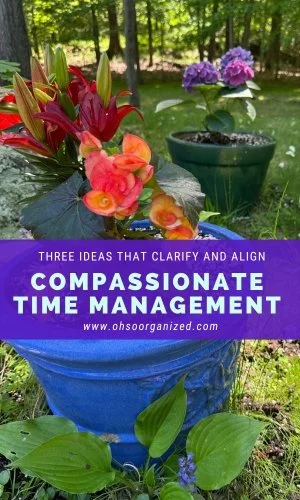
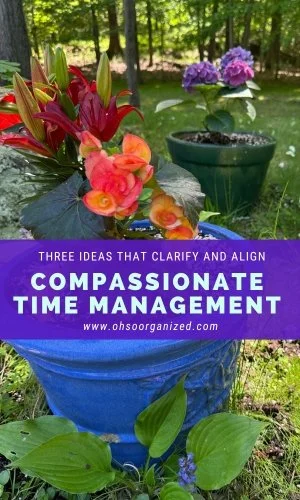
3 Useful Ways for Better and More Compassionate Time Management

You and I share at least two things in common. We both have 24 hours in a day, and our days are finite. Yet how we experience and use our time varies widely.

Perhaps you are time-aware. You know how much time you have and spend it intentionally. Or maybe you have difficulty keeping track of time, feel time-poor, are easily distracted, and never have enough hours to get things done.

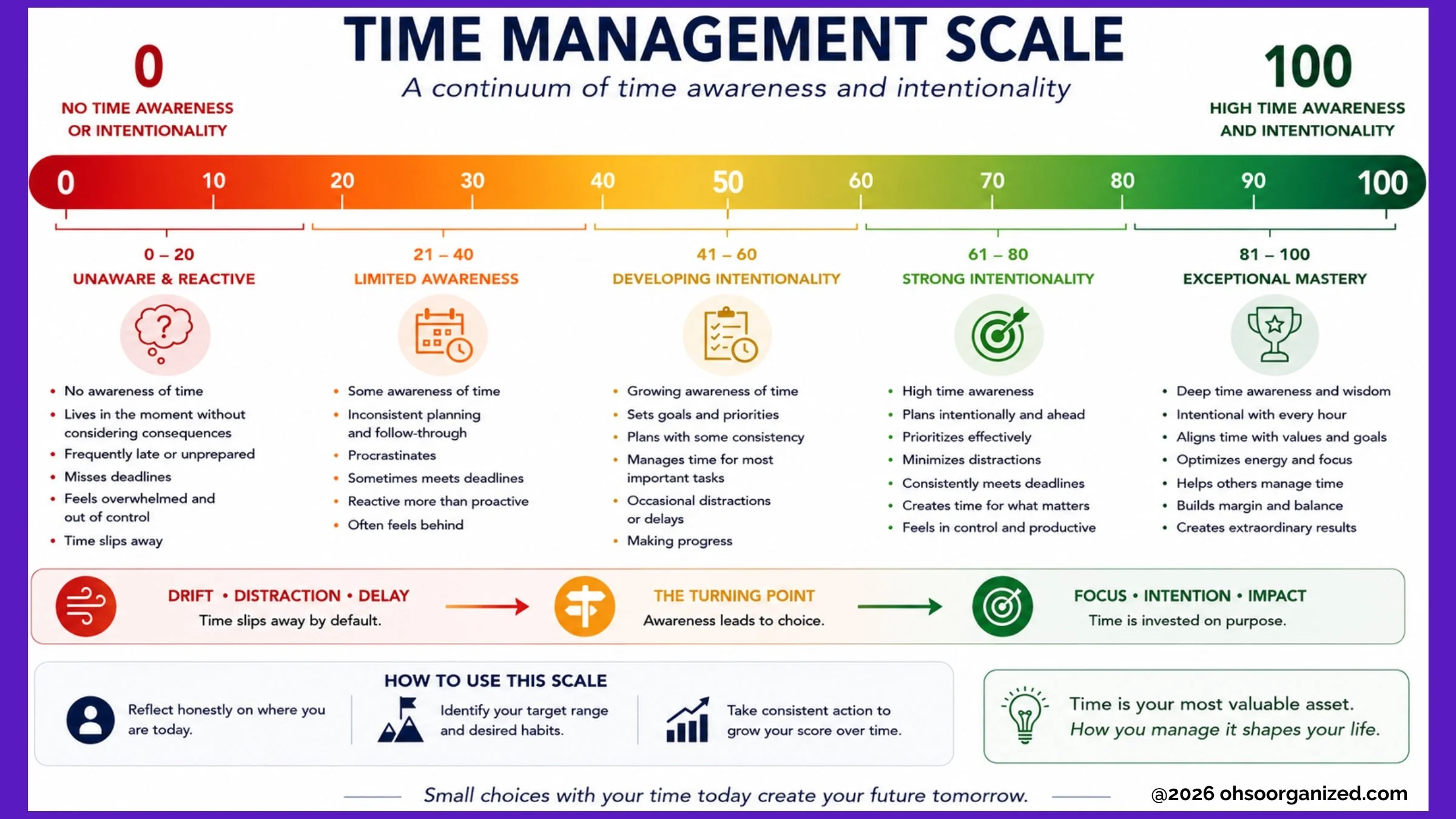
If you think of your relationship to time on a scale from zero to one hundred, with one end representing a total lack of time awareness and intentionality and the other representing high time awareness and intentionality, where would you place yourself? Whether your number is zero or one hundred, several concepts can improve your relationship with time and help you approach it more compassionately.


Time Management Scale

Before I share the strategies, review the Time Management Scale to get a sense of where you are right now. This isn’t an exact science, but the scale will help you identify your strengths and challenges. Understanding your relationship with time, combined with the concepts I’m about to share, can be a game-changer for you.

How to Use the Scale

  • Reflect honestly on where you are today

  • Identify your target range and desired habits

  • Take consistent action to improve your score over time

Remember that small choices about how you spend your time today shape your future.


3 Ideas to Encourage More Compassionate and Aligned Time Management

There are three ways to align your time in a more compassionate and powerful way. As I mentioned earlier, the time available each day is fixed. Your life and the time you have left are finite. None of us knows how many days remain. How you use this precious resource shapes your life.

1. Energy

Have you noticed how your energy ebbs and flows throughout the day? For example, I have more energy and mental clarity earlier in the day, and my energy lessens as the day goes on. Matching high-brain-demand tasks, such as planning or writing, with the time of day I’m ‘fully charged’ works better for me. Lower-brain-demand tasks, like resetting spaces or grocery shopping, can be done when my energy is less.

As you plan your available time and how you will spend it, factor in your energy. A while ago, Executive Coach Marcy Stoudt introduced me to the reframing of time management as energy management.

It’s helpful to consider how you’re planning and using your time. One thing I’ve learned is how much longer tasks take when my energy isn’t aligned. For example, when I’m tired and my energy is low, it takes me two to three times as long to do certain tasks as when I’m well-rested and in my high-energy, brain-power part of the day.

Aligning your energy management with how you use your time is a compassionate practice.

Small choices about how you spend your time today shape your future.
— Linda Samuels, CPO-CD®, CVOP™

2. Priorities

Have you noticed that some priorities, especially those tied to values, are fixed while others are flexible? For example, family might always be a top priority, so you’ll drop everything if someone in your family needs you. Or, when planning, family considerations drive your choices.

Flexible priorities are tasks, goals, and commitments that matter but don’t require immediate action or have a set deadline.

Flexible priorities could include:

  • Projects with open deadlines

  • Buy groceries sometime this week

  • Meet a friend for coffee in the next few months

  • Edit belongings to downsize

  • Plant flowers in the garden

  • Clean out the garage this season

  • Improve sleep habits

  • Try a meditation app

When considering your available time, aligning your priorities with your values and clarifying which tasks are fixed or flexible can lead to a more compassionate way forward.


3. Reality

Ah, yes! The old reality check. Here’s where time management can go sideways. Many people I know, including clients, struggle to align their available time with how long tasks take. This is where optimism needs to be balanced with a realistic understanding of time.

Has this happened to you? I see it most often on ambitious to-do lists. For example, you sit down to write your daily list. You have twenty or thirty items and expect to do them all today because they’re all “equally important.” Yet as the day goes on, you’ve only gotten to a few items. It’s clear you won’t finish everything. The day isn’t over, and you’re starting to feel stressed and defeated. Believe me, I get it. Reality and intention are two very different things.

  • Reality Check 1: Not everything is equally important.

  • Reality Check 2: Your list is too ambitious to complete in one day.

  • Reality Check 3: Optimism is great, but balance it with a realistic understanding of your available time and how long tasks take.

  • Reality Check 4: Reduce the size of your list. Curate a daily list of 1-5 items. Get those done, then review the time you have left before adding more to your day.

When you stop planning for an ideal day and start planning for the day you actually have, you gain a greater sense of control, accomplishment, and ease.


Are You Ready to Bring a More Compassionate Approach to Time Management?

The number is 24, as in the hours in a day. The number of days you have left is unknown. You have choices about how to spend your time. Use understanding and compassion as you plan and decide.

What will that look like for you? Which time management ideas resonate most with you? I’d love to hear your thoughts. I invite you to join the conversation.


How Can I Help?

Do you feel overwhelmed, disorganized, and time-stressed? Are you struggling to manage all your tasks, goals, and commitments? I’m here to help! You don’t have to do this alone. Virtual organizing is an extraordinary path forward – Local feel with a global reach.

Let’s connect! I’m easy to reach.

Managing your time, getting organized, and living with more ease are possible, especially with support.


 
 
Goldilocks Inspires Useful Clues for How to Really Let Go

Do you remember the story of Goldilocks and the Three Bears? One of the main themes is Goldilocks’ search for what felt “just right.” One chair was too big, and another too small. She rejected both. However, when she found the one that fit, she knew it was the one for her and used it. The chair was right-sized and “just right” for her.

At the core of the Goldilocks philosophy is finding the sweet spot, the optimal place where things feel balanced, comfortable, and supportive. Who knew Goldilocks could help with letting go?

Are you struggling to let go of things, ideas, habits, or commitments? If so, a Goldilocks approach could help. Her decision tree went like this:

“This bed is too hard.”

“This bed is too soft.”

“This bed is just right.”

What will “just right” look and feel like for you?


Why is Letting Go Overwhelming?

There can be a lot to sort through, which can make letting go feel overwhelming. Clutter can accumulate from:

  • years of acquiring

  • gifts and inherited items from others

  • postponed decisions

  • emotional attachments

  • unclear or nonexistent organizational systems

  • being overscheduled

  • unclear boundaries

  • not following through on closure loops

Time is part of the equation, too. You need time to make decisions and to align what you own with who you are and what you need now. This can be tricky if you feel stuck in the past or are holding onto things for an aspirational future or self.

However, when you start making decisions based on who you are now and your current needs, it brings greater clarity as you let go.


Are You Sacrificing the Present?

Many years ago, I attended an ICD class on consumerism, minimalism, and experimentalism, presented by my friend and colleague, Lynne Johnson. She shared a quote about letting go.

How much of your present are you willing to sacrifice in order to save remembrances of your past to ponder in your future?
— Anonymous

The question aligns with the Goldilocks philosophy of the three-point decision tree, but from a time-based perspective. Consider what you are holding onto in relation to the:

  • Past - Are you willing to hold on to things from your past that keep you stuck and no longer serve you? Can you release them and move on?

  • Present - Are you willing to let those things take up physical space and mental energy, distracting you from the present? Can you let go and be more aligned with the present?

  • Future - Are you holding onto things with a glimmer of hope that you will revisit, use, or need them someday? Can you say goodbye to them in service of an unencumbered future?


What DOES Letting GO Look Like?

When you release what you no longer need, you invite more ease, better life alignment, joy, and growth. Even releasing one thing makes room for what’s most important, essential, and valued by you.

Letting go can look like this:

  • Donate the never-used pots and pans to make the ones used regularly more accessible.

  • Release rarely-used purses to make room for the ones you do use.

  • Recycle the papers that ‘time took care of’ so you can focus on what’s current.

  • Skip the to-do list to enjoy a beautiful spring weekend day.

What does letting go look like for you?


The Goldilocks of Letting Go

What happens when you begin to align your life so it feels “just right?” Will you release what no longer belongs, brings you joy, or is useful? Will letting go bring you closer to living your best life now? When you release what's blocking your energy, space, and thoughts, you create room for calm, growth, and happiness.

Which ideas resonate with you most? I’d love to hear your thoughts. I invite you to join the conversation.


How Can I Help?

Do you feel overwhelmed or disorganized? Do you want to let go of the unnecessary but feel stuck or unsure where to start? I’m here to help! You don’t have to do this alone. Virtual organizing is an extraordinary path forward – Local feel with a global reach.

Let’s connect! I’m easy to reach.

Letting go and getting organized are possible, especially with support.

 
 
How to Nurture Joy, Reduce Anxiety, and Bring Balance to the Holidays

Jingle bells, jingle bells, jingle all the way! I can hear that tune, the sound of the bells, the smell of pine, and the sight of twinkling lights brightening the dark night. This is the season of festivities, gatherings, and joy. It’s also a time when it's all too easy to overdo, overindulge, and overcommit.

Here’s the good news. If you’re already feeling like it’s too much, I’ve come up with some antidotes. You can increase joy, reduce anxiety and stress, and restore more balance. Of course, you can use these strategies at any time, but they can be especially helpful during the holidays when stress can be high.

The underlying concept is based on what you might need more of or less of right now. Experimenting with even one of these could bring you more joy and happiness today. And what’s not to love about that?


4 Ways to Foster Joy, Reduce Anxiety, and Bring More Balance Right Now

What I love about these techniques is their simplicity and their ability to address a wide range of needs. Maybe you’re tired or anxious. Perhaps you want to have more fun. Or maybe you’re yearning for the familiar. There’s something for everyone. Pick and choose which strategy or combination of techniques will be most useful for you.


1. Invite in More Rest

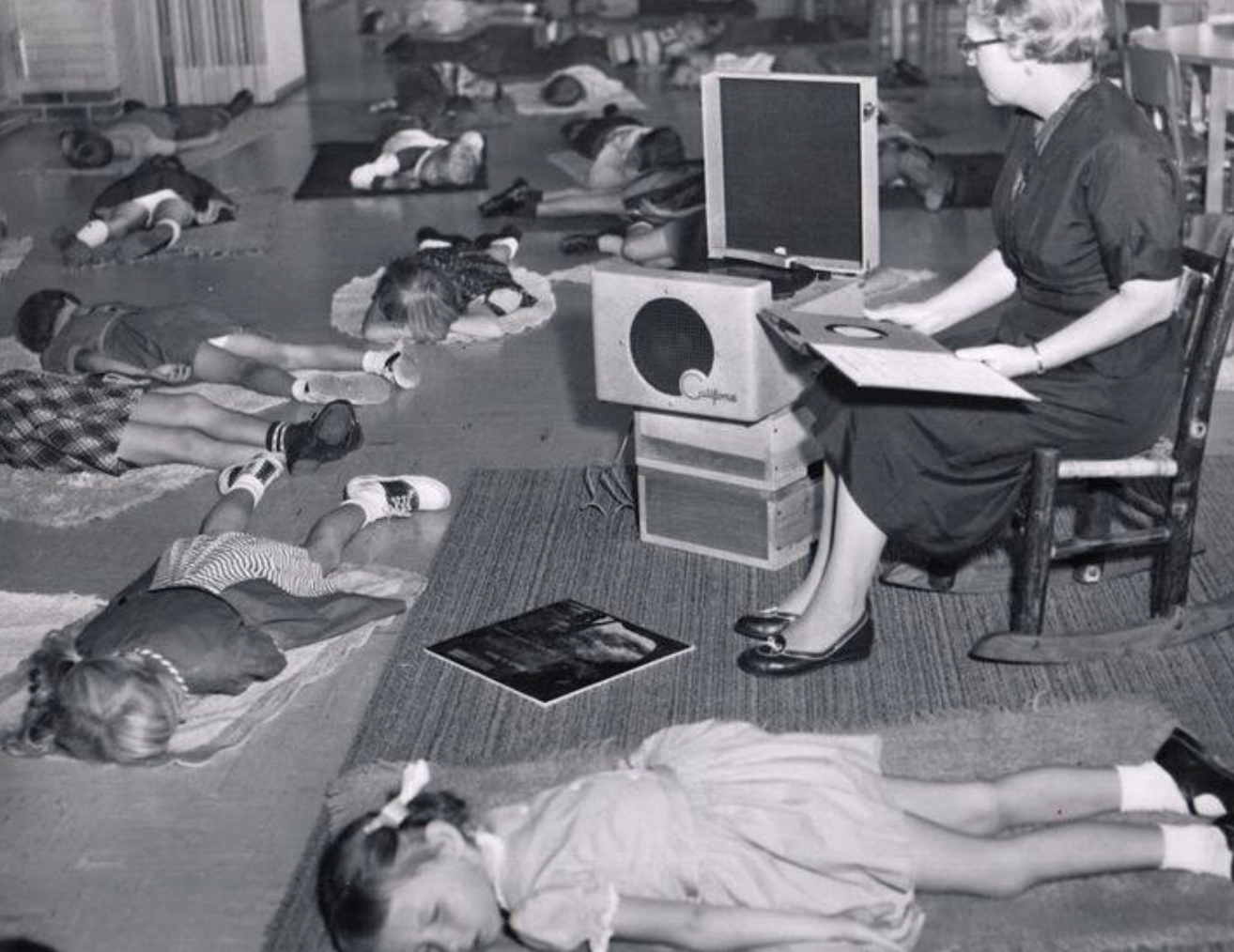
I remember kindergarten, when the teacher insisted on nap time. We would unroll uncomfortable, smelly mats onto the hard floor, be quiet and still (not easy for a five-year-old Linda), and be forced to nap for what felt like an eternity. Naptime felt like a punishment. I felt like I was missing out on life. Instead, I wanted to play, talk, learn, and interact with my friends.

However, as an adult, I’ve come to respect and understand the value of giving my mind and body a short time to rest. It’s a beautiful way to stop, refresh, and return with more energy, focus, and kindness.

If you go all in, you’ll come back feeling more relaxed and joy-filled. Here’s the recipe for a short, restorative rest:

  • Find a quiet spot.

  • Wrap yourself in the coziest blanket (my favorite part).

  • Dim the lights.

  • Set an alarm for 15-20 minutes.

  • Allow yourself to settle.

  • Nap away.

This is a wonderful antidote to the “overdoing it” that often comes with the holiday season. If you’re tired or cranky, invite in some rest. Wake up more joy-filled.


2. Engage in Spontaneous Fun

There are so many truly horrific things happening in the world. They weigh heavily on our hearts and minds, making the idea of having fun feel impossible or inappropriate.

However, to handle the hard things life brings, it’s important to bring some balance by replenishing your resilience reserves. One way to do this is to invite in fun, even if it’s unplanned. Say yes to silliness. That might look like going to a comedy show, having a snowball fight, playing charades, or listening to music while doing goofy dance moves.

The other day, my husband and I had a wonderful BBQ lunch at a local restaurant. It was delicious and filling. It was also right near a local mall. After lunch, we went to the mall, not to shop, but to walk off the beef brisket and hot sausage sandwiches we had just eaten.

As we walked, we discovered Dream Riders, a store that offers electric ride-on plush animals. While they are marketed for kids, adults can ride them, too. I saw the animals lined up and a few kids riding them around, and I thought, “Hey, this looks like fun. I want to try it!”

And since Steve is always up for anything (one of the many things I love about him), he was on board immediately. We spent 10 minutes riding, laughing, smiling, and having a blast. Aside from having fun, the sight of us enjoying ourselves made other people smile and laugh as we passed by, riding our Panda and Tiger.

Embracing impromptu or intentional fun during the holiday season is a wonderful way to nurture joy.


Say yes to silliness.
— Linda Samuels, CPO-CD®, CVOP™


3. Do a Quick Reset

A few weeks ago, I shared five simple practices to reduce stress. I have one more that helps with handling anxiety, which can surface during the holidays. As wonderful as it can be to visit with family, it can also be anxiety-producing to return home. Anxiety can surface from being around too many people, experiencing more noise than you’re used to, having your routines disrupted, or having unhealthy childhood habits, relationship patterns, or interactions surface.

One strategy that helps is using the 3-3-3 Rule. It’s a simple, effective reset that can be used anywhere, anytime. Here is the method:

  • Set: If possible, go to a private space, such as a bedroom or bathroom, where you won't be disturbed.

  • See: Name three things you see, like a blue glass sink, a green plant, or a white wall lamp.

  • Hear: Name three sounds you hear, like people talking in the other room, the boiler humming, or a truck rumbling outside.

  • Move: Move three parts of your body, such as opening and closing your hands, moving your head side to side, or stretching your arms above your head.

Exercising the 3-3-3 Rule will create distance from your anxious thoughts and ground you in the present moment by engaging with your environment and physical sensations.

This reset is an excellent strategy to reduce anxiety and restore balance during the holiday season and beyond.


4. Revisit a Tradition

I’m not sure if you’ve had this experience, but for me, some seasonal traditions remain, some are reimagined, and others disappear completely. These traditions can evoke a mix of feelings, from joy and happiness to grief, frustration, longing, excitement, and relief.

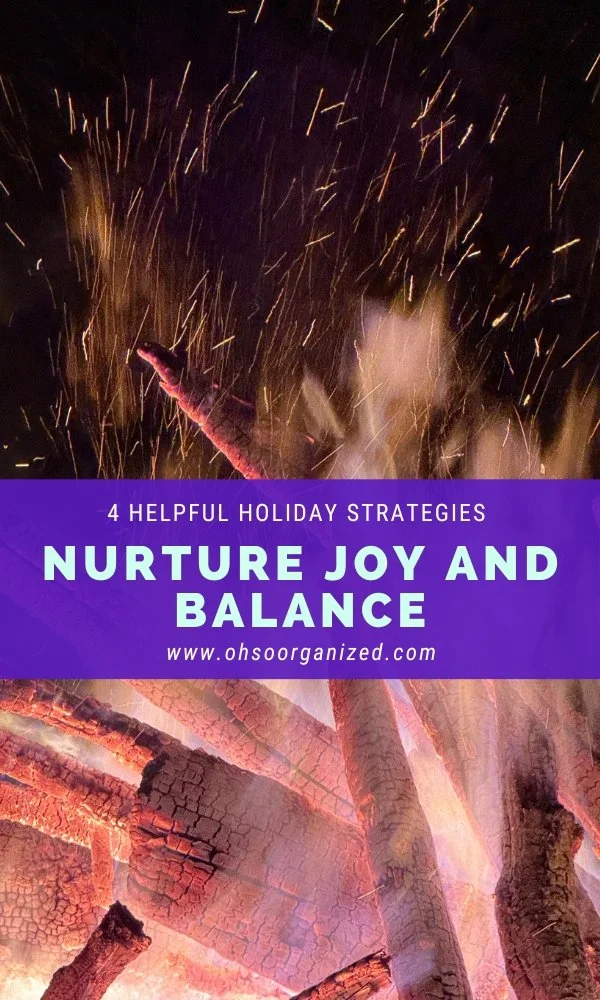
One annual tradition we look forward to is celebrating the winter solstice. Lighting the giant bonfire in the woods signals a transition to the new season. It also marks a change, with a gradual return to less darkness and longer, light-filled days.

For 32 years, our friends have invited family and friends to join this magical experience. At night, each person carries a lit candle up the hill into the woods, where a tepee-like structure of wooden sticks stands tall in the darkness. Before the bonfire is lit, we are encouraged to reflect on what was, release what we no longer want, and imagine how we wish the new year to be. The structure is lit and begins to burn slowly.

When ready, each person carefully approaches the fire and tosses their candle in. I watch, mesmerized and in awe, as the flames gain energy and bring warmth. Tinder sparks fly up and dance wildly against the night sky. Crackling sounds, shifting wood, and the voices of people enjoying each other’s company are the evening’s soundtrack.

Traditions can be comforting, especially those that renew and lift your soul. The winter solstice gathering is one of my favorites each year. It’s a joyful way to release the past, imagine the future, and reconnect with special friends in the present. I’m so grateful to John and Judy for keeping this tradition alive.


What Do You Want to Invite This Holiday Season?

Are your holidays infused with joy, anxiety, or both? How would you like them to be? Is the balance and focus off? Which strategies resonate most with you? What brings you joy and balance?

I’d love to hear your thoughts. I invite you to join the conversation.


How Can I Help?

Do you feel overwhelmed, disorganized, stressed, or out of balance? Would you like to make changes? I’m here to help! Virtual organizing is an extraordinary path forward – Local feel with a global reach.

Let’s connect! I’m easy to reach.

Getting organized is possible, especially with support.
 
 
12 Favorite Organizing Ideas of the Year That Are Unique and Hopeful

As this year comes to an end, I love reflecting on the past before planning for the future. In this part of my year-end review, I chose my favorite organizing concepts, one from each month of 2025, to share with you.

I hope you discover or rediscover a seed idea that inspires and brings balance to your New Year.

Where do you want more organization and balance? Which people and projects will receive your time, energy, and attention?

If you’re ready for a fresh start, to embrace change, take your next step, let go, declutter, enlist help, and more, this is for you.


12 Favorite Organizing Ideas of 2025

My reset buttons are just little things.
— Glennon Doyle
Encourage change through a lens of positive expectation.
— Linda Samuels, CPO-CD®, CVOP™
…quietly do the next most necessary thing.
— Carl Jung


The ability to simplify means to eliminate the unnecessary so that the necessary may speak.
— Hans Hoffman
Commitment is the powerhouse of the mind decluttering strategy.
— Linda Samuels, CPO-CD®, CVOP™
What will my future-self thank me for doing now?
— Stephanie Sarkis, PhD


The smallest effort can spark the motivation you’ve been missing.
— Linda Samuels, CPO-CD®, CVOP™
It’s a journey to discover what helps you feel, be, and stay organized.
— Linda Samuels, CPO-CD®, CVOP™
Bring curiosity to a dilemma.
— Cameron Gott, PCC


The only limits to the possibilities in your life tomorrow are the ‘buts’ you use today.
— Les Brown
I can transform temporary chaos into an opportunity to reimagine.
— Linda Samuels, CPO-CD®, CVOP™
When the mind is tense, so is the body. When the body is tense, so is the mind.
— Meg Josephson, LCSW


Grateful for You

Thank you for being an essential part of this vibrant community. I am deeply grateful to you. We’ve had an incredible year of conversations and sharing. You bring learning, growth, support, and inspiration to every exchange. Thank you for participating and sharing the best of who you are.

What inspired you this year? Which organizing concept resonates most with you? I’d love to hear your thoughts. I invite you to join the conversation.


How Can I Help?

Do you want help decluttering, organizing, planning, or creating more balance? I’d love to help! Virtual organizing is an extraordinary path forward – Local feel with a global reach.

Let’s connect! I’m easy to reach.

Getting organized, finding balance, and experiencing more calm are possible, especially with support.