Posts in Too Hard to Let Go
How to Let Go of What's in Your Way to Joyfully Embrace the Good Stuff

What are you holding onto that’s getting in your way? Are there physical things, like clothing that no longer fits, stacks of magazines you’ll never read, or expired food and medicine? Are there habits that don’t serve you, such as not getting enough sleep, doomscrolling on your devices, or acquiring things without ever editing them? Are there behaviors that create more stress, such as constantly berating yourself, ruminating on interactions, or not taking time for play or joy?

Are these things holding you back from living the life you want? Do you want more calm, joy, or ease?

What happens, though, when you begin to let go of clutter and the things that create blockages and stress? What happens when you approach them in a new way? It’s not that challenges won’t appear or that stress triggers will disappear. However, when you begin to work with them differently and let go, you will have more bandwidth to embrace the good stuff.


A Tiny Shifts Learning Journey

21 Days

For the past few months, I’ve been learning from clinical psychologist and author Dr. Elisha Goldstein. Although he’s been on my radar for years, I signed up for a 21-Day Tiny Shifts Experience in January.

The program featured short, daily practices designed to help you better manage stress by supporting your nervous system. By the end of the course, I was better able to regulate my emotions through simple, intentional breathing practices.


6 Weeks

The experience was so wonderful that I wanted to learn more. Next, I registered for Elisha’s 6-Week Tiny Shifts Emotional Longevity course. It included two live sessions each week: one led by Elisha and the other an Integration Lab led by mindfulness teacher Susan Beckman Reagan.

There were simple, doable practices to work on between sessions, along with a virtual platform for communication. We learned more about emotional loops, supporting the nervous system, and the 4Rs: Recognize, Release, Refocus, and Reinforce.


The Book
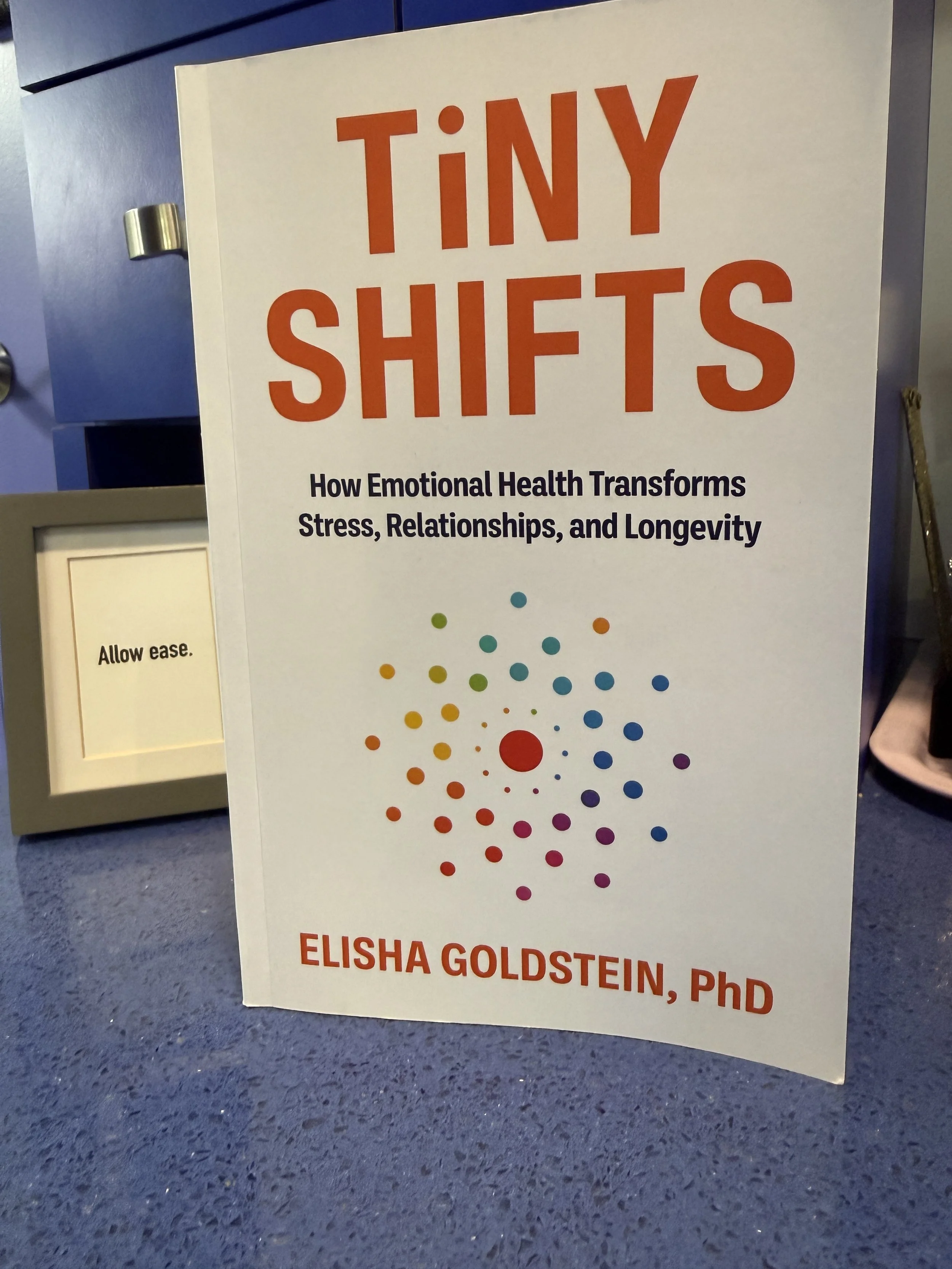
Simultaneously, Elisha released his new book, Tiny Shifts – How Emotional Health Transforms Stress, Relationships, and Longevity. While I was taking the courses, I read it, which helped me better assimilate what I was learning.

Elisha says, “Real change doesn’t come from doing more. Feel free to let go of that burden. It comes from shifting how we relate to what’s already here-one tiny emotional pivot at a time.”

If you haven’t read Tiny Shifts yet, I highly recommend it. Elisha presents his research-backed, doable strategies clearly and compassionately while sharing captivating stories.


The Retreat
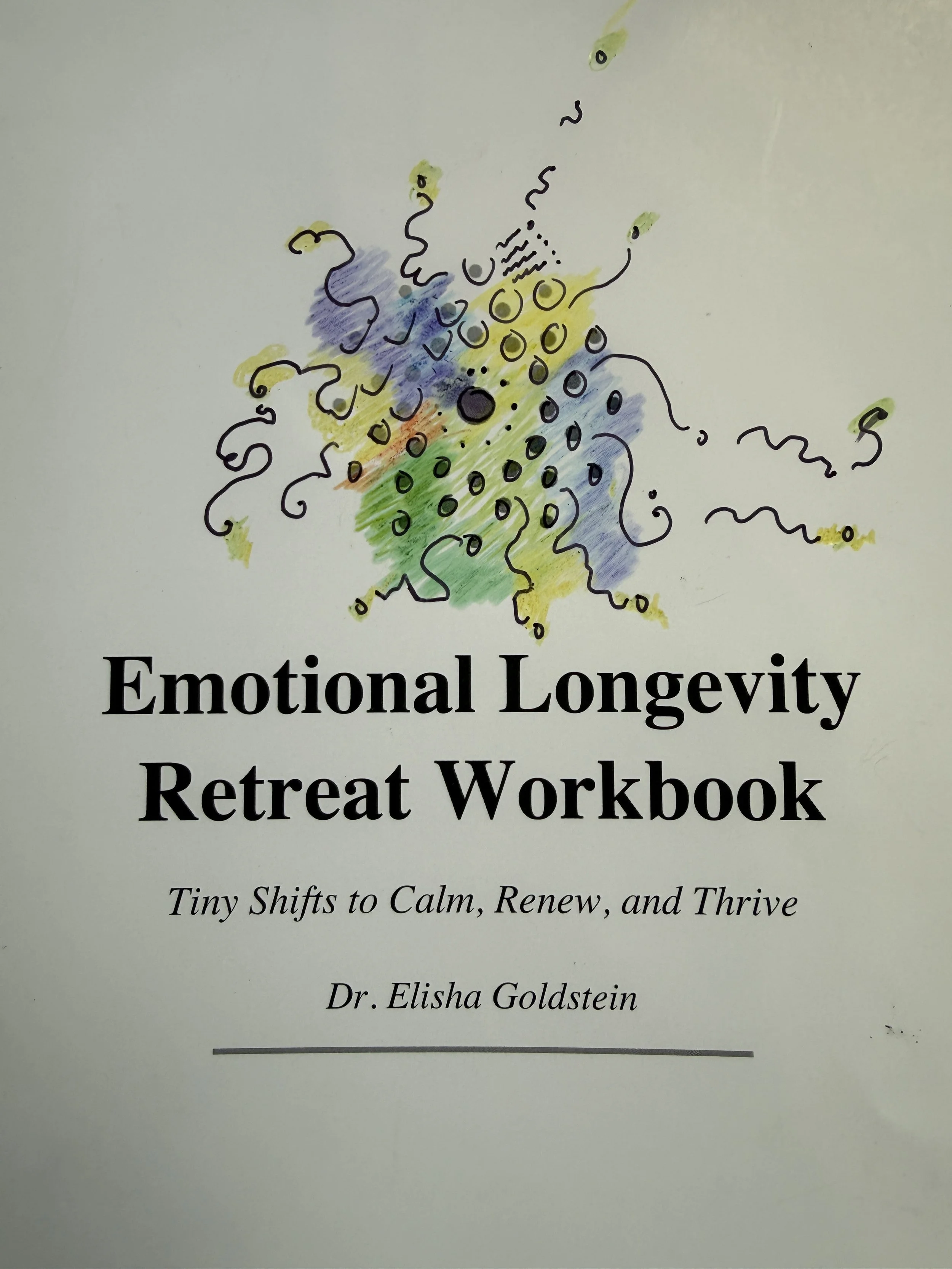
The next part of my learning journey took place last weekend. Elisha offered a three-day Emotional Longevity Retreat at Kripalu in the Berkshires. It was especially meaningful to attend in person, since the previous courses were online. My husband, Steve, went, too.

What I had learned before was clarified or reinforced during the retreat. It was an emotional weekend—lots of crying, smiling, laughing, meditating, and pausing. While the strategies are simple, applying them in the moment takes practice. I’m still working on it and remain hopeful. I can see my progress.


What would it feel like to let go and embrace more joy and ease in your life?
— Linda Samuels, CPO-CD®, CVOP™


Embracing the Good Stuff

In these chaotic, uncertain times, there is no shortage of things beyond our control or that make us anxious. We can dwell there or let go. Elisha’s practices help tremendously with letting go. When you do, you will have more capacity to

  • Embrace joy, play, fun, and quiet.

  • Be present and available for the people and relationships in your life.

  • Have more ease.

  • Regroup more quickly from stressful situations.

  • Engage in better self-care and compassion.

  • Release the things, thoughts, habits, and behaviors that no longer serve you.

  • Be available for all the good stuff in your life.

What does the “good stuff” look like to you? A few years ago, I created my own list, which you can find here: Are You Making Time for ‘The Good Stuff?’ What’s one thing on your list?


Letting Go to Live with More Joy and Ease

What are you holding on to that causes you stress? What is keeping you from moving forward? What would it feel like to let go and embrace more joy and ease in your life?

I’d love to hear your thoughts. I invite you to join the conversation.


How Can I Help?

Do you feel overwhelmed or disorganized? Do you want to let go of what’s holding you back but feel stuck or unsure where to start? I’m here to help! You don’t have to do this alone. Virtual organizing is an extraordinary path forward – Local feel with a global reach.

Let’s connect! I’m easy to reach.

Letting go, getting organized, and living with more ease are possible, especially with support.


Goldilocks Inspires Useful Clues for How to Really Let Go

Do you remember the story of Goldilocks and the Three Bears? One of the main themes is Goldilocks’ search for what felt “just right.” One chair was too big, and another too small. She rejected both. However, when she found the one that fit, she knew it was the one for her and used it. The chair was right-sized and “just right” for her.

At the core of the Goldilocks philosophy is finding the sweet spot, the optimal place where things feel balanced, comfortable, and supportive. Who knew Goldilocks could help with letting go?

Are you struggling to let go of things, ideas, habits, or commitments? If so, a Goldilocks approach could help. Her decision tree went like this:

“This bed is too hard.”

“This bed is too soft.”

“This bed is just right.”

What will “just right” look and feel like for you?


Why is Letting Go Overwhelming?

There can be a lot to sort through, which can make letting go feel overwhelming. Clutter can accumulate from:

  • years of acquiring

  • gifts and inherited items from others

  • postponed decisions

  • emotional attachments

  • unclear or nonexistent organizational systems

  • being overscheduled

  • unclear boundaries

  • not following through on closure loops

Time is part of the equation, too. You need time to make decisions and to align what you own with who you are and what you need now. This can be tricky if you feel stuck in the past or are holding onto things for an aspirational future or self.

However, when you start making decisions based on who you are now and your current needs, it brings greater clarity as you let go.


Are You Sacrificing the Present?

Many years ago, I attended an ICD class on consumerism, minimalism, and experimentalism, presented by my friend and colleague, Lynne Johnson. She shared a quote about letting go.

How much of your present are you willing to sacrifice in order to save remembrances of your past to ponder in your future?
— Anonymous

The question aligns with the Goldilocks philosophy of the three-point decision tree, but from a time-based perspective. Consider what you are holding onto in relation to the:

  • Past - Are you willing to hold on to things from your past that keep you stuck and no longer serve you? Can you release them and move on?

  • Present - Are you willing to let those things take up physical space and mental energy, distracting you from the present? Can you let go and be more aligned with the present?

  • Future - Are you holding onto things with a glimmer of hope that you will revisit, use, or need them someday? Can you say goodbye to them in service of an unencumbered future?


What DOES Letting GO Look Like?

When you release what you no longer need, you invite more ease, better life alignment, joy, and growth. Even releasing one thing makes room for what’s most important, essential, and valued by you.

Letting go can look like this:

  • Donate the never-used pots and pans to make the ones used regularly more accessible.

  • Release rarely-used purses to make room for the ones you do use.

  • Recycle the papers that ‘time took care of’ so you can focus on what’s current.

  • Skip the to-do list to enjoy a beautiful spring weekend day.

What does letting go look like for you?


The Goldilocks of Letting Go

What happens when you begin to align your life so it feels “just right?” Will you release what no longer belongs, brings you joy, or is useful? Will letting go bring you closer to living your best life now? When you release what's blocking your energy, space, and thoughts, you create room for calm, growth, and happiness.

Which ideas resonate with you most? I’d love to hear your thoughts. I invite you to join the conversation.


How Can I Help?

Do you feel overwhelmed or disorganized? Do you want to let go of the unnecessary but feel stuck or unsure where to start? I’m here to help! You don’t have to do this alone. Virtual organizing is an extraordinary path forward – Local feel with a global reach.

Let’s connect! I’m easy to reach.

Letting go and getting organized are possible, especially with support.

 
 
One Powerful Question: A Shortcut to Help You Release and Let Go

What’s not to love about shortcuts? They aren’t always equally effective. However, when you find one that helps you reach your desired goal more quickly and is less taxing on your brain, that’s a good thing.

Recently, I read an article in Real Simple about interior designer Young Huh and how to create spaces that feel calm. Huh just published a new book, A Mood, A Thought, A Feeling. When starting work on a room, Huh asks a simple question,

“What can I take out?”

Her philosophy encourages you to remove what doesn’t belong and surround yourself with what feels calming and peaceful.

Huh’s question caught my attention. I thought about how helpful it could be during the editing, letting go, and organizing process. There are many ways to approach getting organized. One method is to identify what doesn’t belong, or what you no longer need or want. Or, as Huh says, “What can I take out?”

Spring’s arrival prompts me to clear the landscape and make room for the blooms. What can you let go of to create space for calm and growth?


Letting Go Starts with Removing Things

Less Clutter, Less Noise

Often, I hear clients describe their environment as:

  • “My house is filled with too much clutter.”

  • “There is so much clutter, I can’t even think.”

  • “I can’t find anything because the things I want and don’t want are jumbled together.”

  • “The clutter paralyzes me.”

  • “I feel chaotic because of the clutter and disorganization in my home.”

Do any of these statements resonate with you? If so, consider asking yourself Huh’s powerful question: "What can I take out?”

This question is a good starting point.

What can I take out?
— Young Huh

More Great Letting Go Questions

Not all questions work for everyone. If Huh’s “take out” question doesn’t resonate with you, consider some alternatives, which you can find in my article: 21 Questions to Exercise Your Letting Go Muscles.

A few of my favorites are:

  • Has it overstayed its welcome?

  • Is it worth the real estate, energy, and maintenance?

  • Does it support your current needs?

  • What will become possible for you when you let go?

Releasing the Stuff

Are you ready to start letting go? If so, here’s a method to try.

  • Choose a room to work in.

  • Gather boxes and trash bags. These will help you easily sort what’s being removed from that space.

  • Label and set up those containers for > Belongs Elsewhere > Donate > Trash > Recycle.

  • With the question in mind, “What can I take out?" start in one corner or area of the room.

  • Focus on releasing items you no longer want or that belong elsewhere. Place items into their designated sorting containers.

  • After you finish one area or surface, move on to the next.

  • Repeat until the room has been decluttered.

  • Route the items you let go of to their ‘homes.’

  • Return to the room and notice how it feels. Does your space feel different? What are you noticing?


What Does Less Feel Like?

When you let go of things that no longer serve a purpose or belong elsewhere, the energy in the space begins to shift. This, in turn, influences how you feel when you're in that environment. Our possessions affect our space, time, and mental clarity. Releasing excess items helps you feel calmer, more focused, and less distracted.

Which ideas resonate with you the most? I’d love to hear your thoughts. I invite you to join the conversation.


How Can I Help?

Do you feel overwhelmed or disorganized? Do you want to let go of the unnecessary but feel stuck or unsure where to start? I’m here to help! You don’t have to do this alone. Virtual organizing is an extraordinary path forward – Local feel with a global reach.

Let’s connect! I’m easy to reach.

Letting go and getting organized are possible, especially with support.
 
 
One Fun and Informative Letting Go Exploration with Organizing Colleagues

Letting go is a main focus of my work with clients. They feel overwhelmed and burdened by the stuff in their lives and want my help to let go, organize, and live with more ease. The “stuff” appears as rooms overflowing with physical belongings, calendars scheduled with no breathing space, or minds filled with a barrage of ideas and thoughts.

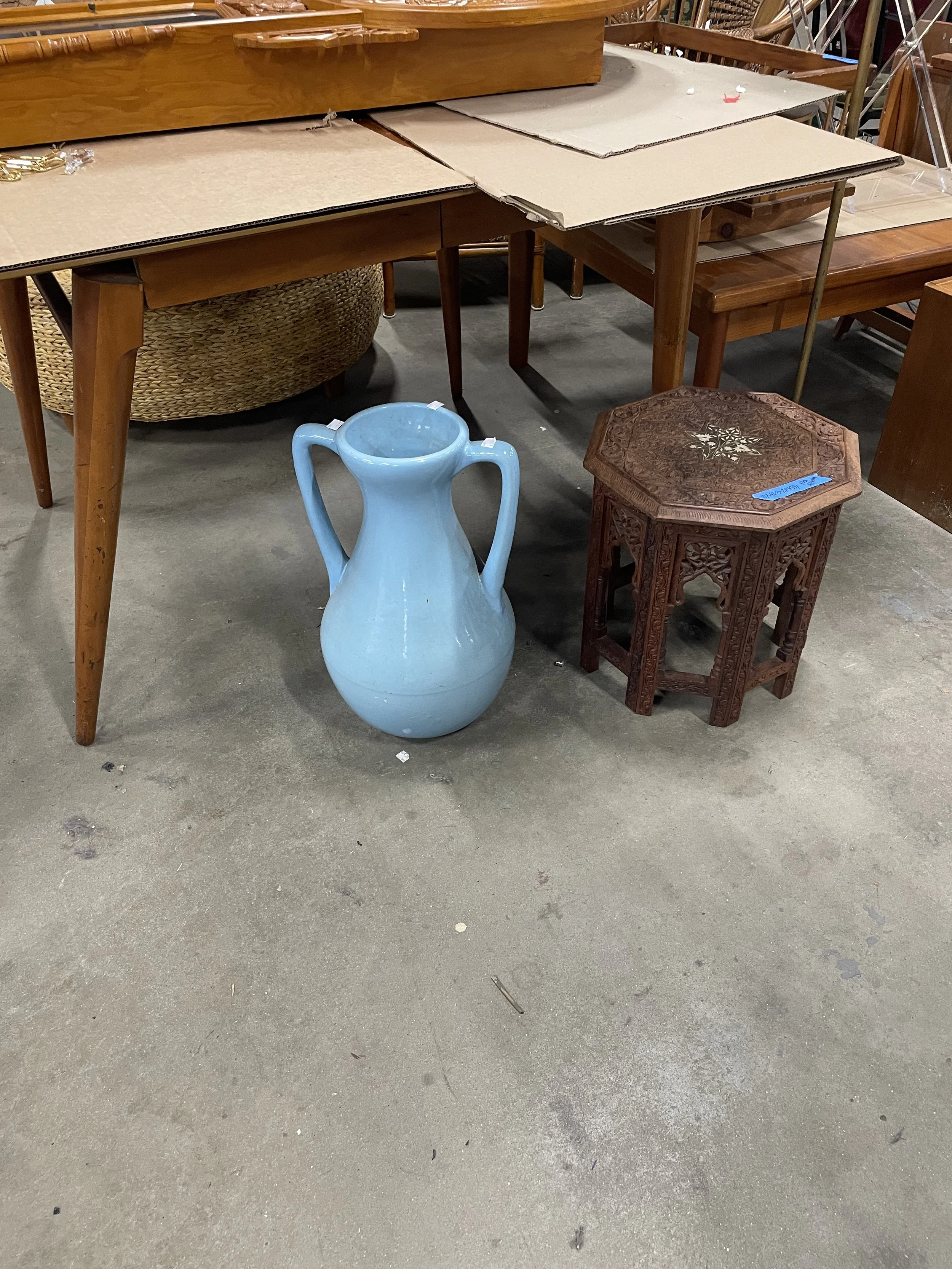
Recently, I viewed letting go from another perspective. I had the great joy of meeting with my Westchester NAPO Neighborhood Group organizing colleagues for a field trip and tour of a local auction house, The Benefit Shop in Mt Kisco, NY. This is where the things that have been let go of land on their way to their new home.

Our group was graciously welcomed by Pam Stone, Founder and President of The Benefit Shop Foundation Inc. After working on Wall Street for over two decades, Pam changed careers to pursue her passion project. She set up The Benefit Shop, a charitable 501(c)3 non-profit. Proceeds from sales (100% of the profit) go to over 40 charities, which directly help local community organizations. As Pam said, “I really wanted the beneficiary to be my community, for the people who live and work here.”


How Letting Go is Facilitated

The Benefit Shop is what Pam refers to as “one-stop shopping.” They accept items for:

You can bring your things to their 16,000-square-foot gallery and office space. Or, depending on your location, they will bring a truck and a team to you, pack up what you’re letting go of, and transport it to their facility to prepare for auction and sale. With estate buyouts, they will take 90% of a house’s contents.

Pam suggests tagging your items using a colored sticker system.

  • Red = Keep

  • Green = Go

  • Yellow = Think on it.

If you’re not ready to let go of everything at once, they recommend that clients “think on it," which allows them to release things in stages.

They also encourage clients to contribute to the catalogue entries by sharing stories and histories about their objects. Capturing the object’s story enhances its saleability and helps the client feel better about letting go.

Let go, organize, and live with more ease.
— Linda Samuels, CPO-CD®, CVOP™

How Do the Auctions Work?

The Benefit Shop hosts weekly online auctions. They sell around 3,000 items each month to a global audience.

  • All bids, with a few exceptions, start at $1.

  • Items sold at auction are reconciled within 45 days.

  • Clients receive 65%, and The Benefit Shop keeps 35%.

  • Consignors receive a tax-deductible receipt along with their settlement checks.

  • Unsold items can be donated or retrieved by the consignor.

  • The Benefit Shop doesn’t provide shipping for purchased auction items. You can either pick them up at their office or arrange for shipping. They offer resources for several vetted and recommended shipping vendors.


Letting Go Considerations

Are you curious which items are the easiest or most difficult to sell at auction?

Pam said that jewelry (fine and costume) and handbags consistently sell well.

Large china cabinets and dark wood furniture are not good sellers. While mid-century furniture is popular, only high-end, name-recognizable brands such as Eames, Knoll, or Saarinen sell well at auction. The Danish teak mid-century modern style of furniture doesn’t do well.


More Fun Facts About The Benefit Shop

Organization

I was impressed by the organization at The Benefit Shop.

  • Items for sale are logged in, tagged, and grouped by category.

  • They get coded and routed for the auctions in which they will be included.

  • Each category has separate sections at the facility, such as housewares, textiles, clothing, purses, jewelry, art, and furniture.

  • There is a photography area for taking quality photos of every piece.


The Shop Mascot

When you enter the space, a giant taxidermy elk is one of the first things you see. When I asked about it, Pam said it wasn’t for sale because it has become their gallery mascot.

Pop-Ups and Cash & Carry

  • Aside from the online auctions, they also hold occasional onsite pop-up events at their place.

  • In the gallery, there is also a $1 only group of items to purchase as ‘cash and carry’. The items are sold and replenished regularly.


Why Let Go?

It was fun visiting a place representing so many decisions to let go of stuff. The objects received were treated with care and respect. It felt good knowing these things would go to a good home, stay out of the landfill, and the proceeds would help those in need.

The Benefit Shop Foundation

The Westchester NAPO Neighborhood Group visits Pam Stone, Founder and President of The Benefit Shop Foundation in Mt. Kisco, NY


Where Do Your Things Go?

When you let go of things, where do they go? Do you have favorite charities? Have you used auction houses? What helps you release things that have overstayed their welcome?  I’d love to hear your thoughts. I invite you to join the conversation.


How Can I Help?

Do you want support organizing, editing, or letting go? I’d love to help! Virtual organizing is an extraordinary path forward – Local feel with a global reach.

Please schedule a Discovery Call, email me at linda@ohsorganized.com, or call 914-271-5673. Letting go is possible, especially with support.