
Posts tagged ruminating
How to Let Go of What's in Your Way to Joyfully Embrace the Good Stuff

What are you holding onto that’s getting in your way? Are there physical things, like clothing that no longer fits, stacks of magazines you’ll never read, or expired food and medicine? Are there habits that don’t serve you, such as not getting enough sleep, doomscrolling on your devices, or acquiring things without ever editing them? Are there behaviors that create more stress, such as constantly berating yourself, ruminating on interactions, or not taking time for play or joy?

Are these things holding you back from living the life you want? Do you want more calm, joy, or ease?

What happens, though, when you begin to let go of clutter and the things that create blockages and stress? What happens when you approach them in a new way? It’s not that challenges won’t appear or that stress triggers will disappear. However, when you begin to work with them differently and let go, you will have more bandwidth to embrace the good stuff.


A Tiny Shifts Learning Journey

21 Days

For the past few months, I’ve been learning from clinical psychologist and author Dr. Elisha Goldstein. Although he’s been on my radar for years, I signed up for a 21-Day Tiny Shifts Experience in January.

The program featured short, daily practices designed to help you better manage stress by supporting your nervous system. By the end of the course, I was better able to regulate my emotions through simple, intentional breathing practices.


6 Weeks

The experience was so wonderful that I wanted to learn more. Next, I registered for Elisha’s 6-Week Tiny Shifts Emotional Longevity course. It included two live sessions each week: one led by Elisha and the other an Integration Lab led by mindfulness teacher Susan Beckman Reagan.

There were simple, doable practices to work on between sessions, along with a virtual platform for communication. We learned more about emotional loops, supporting the nervous system, and the 4Rs: Recognize, Release, Refocus, and Reinforce.


The Book
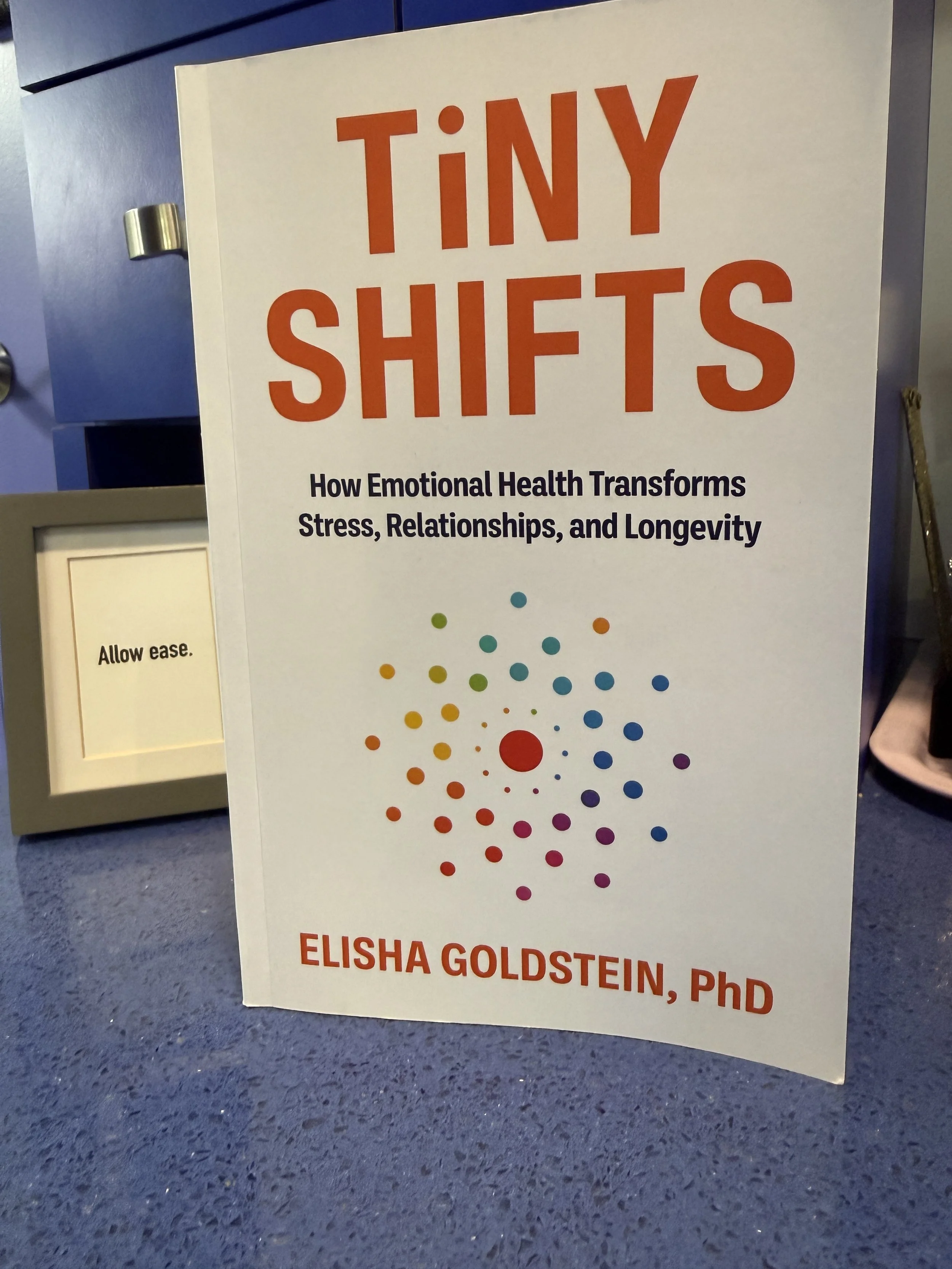
Simultaneously, Elisha released his new book, Tiny Shifts – How Emotional Health Transforms Stress, Relationships, and Longevity. While I was taking the courses, I read it, which helped me better assimilate what I was learning.

Elisha says, “Real change doesn’t come from doing more. Feel free to let go of that burden. It comes from shifting how we relate to what’s already here-one tiny emotional pivot at a time.”

If you haven’t read Tiny Shifts yet, I highly recommend it. Elisha presents his research-backed, doable strategies clearly and compassionately while sharing captivating stories.


The Retreat
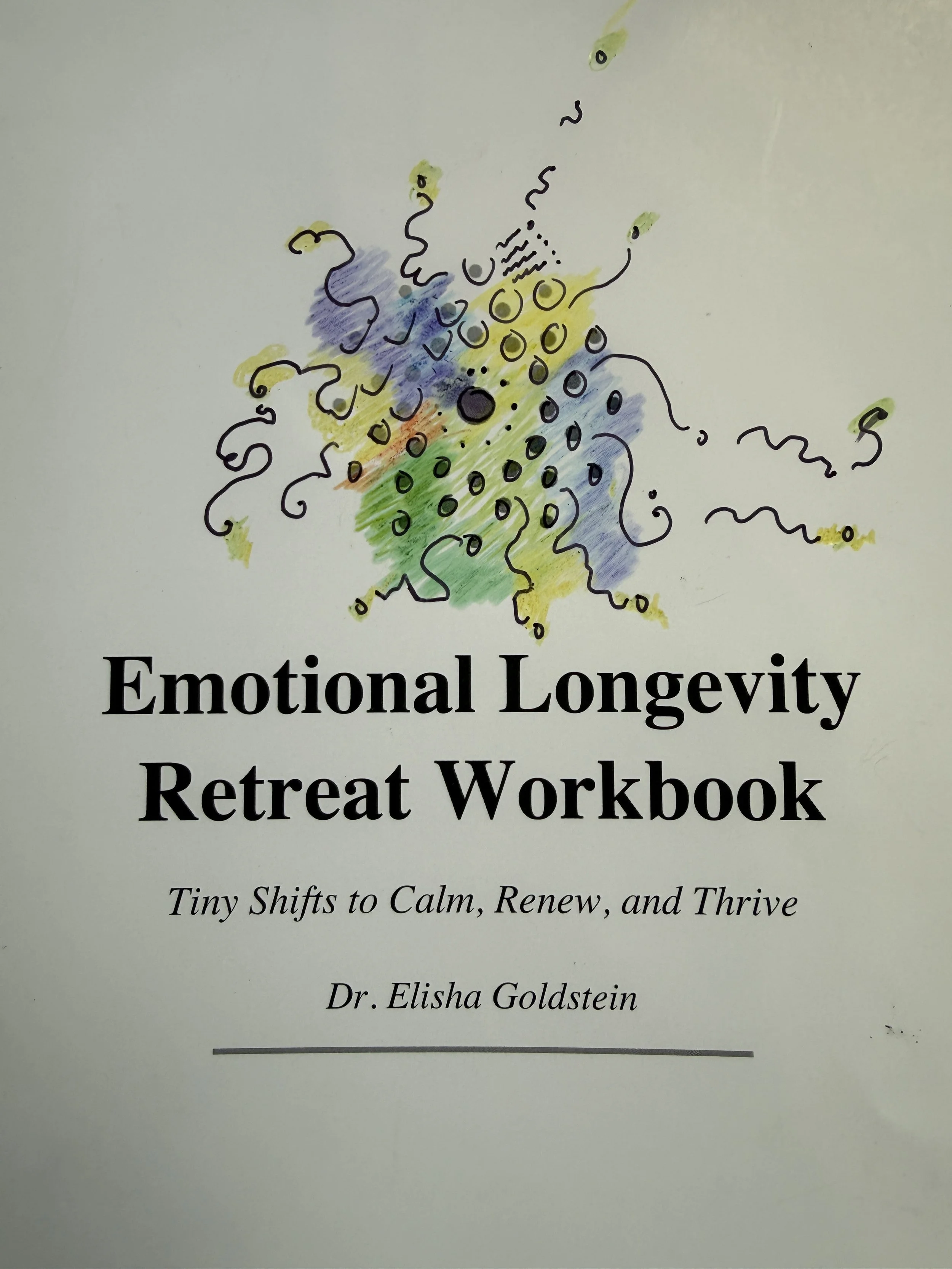
The next part of my learning journey took place last weekend. Elisha offered a three-day Emotional Longevity Retreat at Kripalu in the Berkshires. It was especially meaningful to attend in person, since the previous courses were online. My husband, Steve, went, too.

What I had learned before was clarified or reinforced during the retreat. It was an emotional weekend—lots of crying, smiling, laughing, meditating, and pausing. While the strategies are simple, applying them in the moment takes practice. I’m still working on it and remain hopeful. I can see my progress.


What would it feel like to let go and embrace more joy and ease in your life?
— Linda Samuels, CPO-CD®, CVOP™


Embracing the Good Stuff

In these chaotic, uncertain times, there is no shortage of things beyond our control or that make us anxious. We can dwell there or let go. Elisha’s practices help tremendously with letting go. When you do, you will have more capacity to

  • Embrace joy, play, fun, and quiet.

  • Be present and available for the people and relationships in your life.

  • Have more ease.

  • Regroup more quickly from stressful situations.

  • Engage in better self-care and compassion.

  • Release the things, thoughts, habits, and behaviors that no longer serve you.

  • Be available for all the good stuff in your life.

What does the “good stuff” look like to you? A few years ago, I created my own list, which you can find here: Are You Making Time for ‘The Good Stuff?’ What’s one thing on your list?


Letting Go to Live with More Joy and Ease

What are you holding on to that causes you stress? What is keeping you from moving forward? What would it feel like to let go and embrace more joy and ease in your life?

I’d love to hear your thoughts. I invite you to join the conversation.


How Can I Help?

Do you feel overwhelmed or disorganized? Do you want to let go of what’s holding you back but feel stuck or unsure where to start? I’m here to help! You don’t have to do this alone. Virtual organizing is an extraordinary path forward – Local feel with a global reach.

Let’s connect! I’m easy to reach.

Letting go, getting organized, and living with more ease are possible, especially with support.


5 Positive Benefits of Creating More Balance for Happy Holidays

We’re in the thick of the holiday season. Holiday music permeates the background as you stroll through stores, restaurants, and grocery stores. Is it just me, or do you catch yourself singing along? I can’t help it. The music is contagious. Your balance might be excellent right now. You feel unencumbered, giddy, and joyful with the glitter and whimsy of the holiday season. Or, you might feel overwhelmed by your physical or mind clutter. The overwhelm makes it challenging to focus on twinkling lights, time with loved ones, and feeling at ease.

Finding balance is a constantly moving pursuit. When your balance wanders too far in one direction, it’s time to adjust. It’s an excellent season to make some changes. It will set you up for a happier, more peaceful holiday time. No one wants to be preoccupied with clutter at the expense of enjoying celebrations, cozy time around the fire with family and friends, and quiet moments of relaxation or reflection.

My clients have been especially motivated and focused on recalibrating their balance in the past several weeks. Their physical and mental clutter reached a tipping point, encouraging them to edit, let go, and organize. It’s been exciting to help them make the changes they desire. Enlisting my help enabled them to clarify and recommit to their goals, get unstuck, reduce overwhelm, and feel energized with hope. Making small steps, taking action, and experiencing progress are the secret ingredients to finding your desired balance.

While there are many potential areas to balance, I’ll share five common ones that can inspire positive changes for you.  


5 Positive Benefits of Creating More Balance for Happy Holidays

1. Balance Clothing Clutter

Are you familiar with the One-in, One-Out Rule, a commonly used organizing principle? This encourages you to release one equivalent-type item you no longer want, like a pair of pants or a sweater, when you bring in something new. This concept helps you maintain your current space and organization.

A more substantial edit is helpful if your clothing closets are already tight or overflowing. Especially at this time of year when we are gifted things, including clothing, it’s beneficial to do some closet and dresser editing now. I encourage you to release those items that no longer fit, you don’t like, are worn or stained beyond repair, and are never selected to wear. Let those go. Create visual and physical space for your clothing. You’ll be able to get dressed more easily and know that you love wearing what remains.


2. Balance Mind Clutter

What thoughts are swirling around in your brain? Are your tasks, projects, and decisions to make preoccupying your thoughts? You may have one particularly significant project that is shouting the loudest and making it challenging to focus on other commitments. It’s time to rebalance with the Brain Dump.

An excellent first step is releasing your thoughts from your head and capturing them on paper, a digital document, or a voice recording. Let them out! What happens when we keep them in? The mind clutter continues to swirl around. It keeps us stuck and preventing us from taking action. You can get easily fooled when thinking overtakes doing. It might seem like you’re accomplishing something because that ‘thing’ is all you think about. But you aren’t doing, you’re ruminating.

Action, which brings about progress, is the key to reducing your mind clutter. Select one tiny task from your list. It can be the next step in moving forward on that big project or a single one-and-done-type task. Continue to select something from your list and turn your tasks into small, doable actions.


3. Balance Desk Clutter

Often, my clients tell me they can't think or work when their desks are out of balance and cluttered. Paying bills, writing, scheduling, making calls, or responding to emails can be challenging when your desk surfaces contain visual and physical clutter. The items that collect over time onto your surfaces are waiting for decisions. The objective is to remove things you don’t need visible or belong elsewhere, like

  • Old or fileable papers

  • Extra office supplies

  • Random items that ‘landed’ there or

  • Other people’s stuff

When your desk balance is off, invest time to recalibrate. This doesn’t mean it needs to be completely empty. Find a balance between what you need to be immediately visible and accessible and those things that can be stored or moved elsewhere.

Edit, let go, reroute, and breathe. Can you feel a sense of relief?


When your balance wanders too far in one direction, it’s time to adjust.
— Linda Samuels, CPO-CD®, CVOP™


4. Balance Pile Clutter

Are you a piler? You might see stacks of books, magazines, gifts, toiletries, craft supplies, and more. Guess what happens when a pile gets too big? It becomes off balance with the potential to tip. The tipping can cause a tripping hazard. Who needs that during the holiday or any season?

Here’s the good news about these piles containing larger physical objects. Each item takes up a significant volume of space. That means your editing and decision-making power creates visible results more quickly. Here are some examples:

  • A one-foot pile of sweaters to edit = about 5 decisions

  • A one-foot pile of books to edit = about 18 decisions

  • A one-foot pile of magazines to edit = about 36 decisions

Compare these to:

  • A one-foot pile of papers to edit = about 240 decisions

If you want quicker progress on your piles, focus on editing the objects that take up more space and require fewer decisions. You’ll be less likely to experience decision fatigue.


5. Balance Paper Clutter

Why does paper collect? There are several reasons, such as

  • It needs to be filed

  • It is out as a visual cue

  • Belongs to someone else

  • Requires a decision

  • Is pending

  • Is part of an active project

  • It needs to be routed elsewhere

  • It needs to be shredded, tossed, recycled, or digitized

While the reasons are valid, the paper clutter often seems to multiply when we’re sleeping. Getting papers into a manageable balance hinges on your paper management system. This will include an area to

  • Store frequently referenced files

  • Organize current action items

  • Archive less frequently accessed files

  • Recycling container

  • Garbage container

  • Shredder or container to collect shredding

Investing in your paper management system will create flow, reduce paper clutter, and increase productivity. What a beautiful gift to give yourself in preparation for the holidays. And if you can’t focus on this before the season, why not set it as a goal for the New Year?

As you navigate the fullness of the holiday season, what will help you recalibrate your balance? Let me know how I can help with editing, decluttering, and organizing. I’m here for you. Schedule your virtual organizing session today. Reach me, Linda, at 914-271-5637, linda@ohsoorganized.com, or through my contact form.

I wish you a happy, joyful, and organized holiday season!


How to Stop Ruminations Using Self-Help Strategies and Virtual Organizing Help

Rumination is a common cognitive pattern that feeds on negative thoughts and worries. Noom, a behavior change wellness company, says, "Rumination is thinking repetitively about causes, processes, and consequences of something that’s happening or happened...It's focusing on the problem over and over again instead of looking for solutions."

To improve your mental well-being and ability to move forward, shift from ruminating to focusing on solutions. Help is here.


6 Self-Help Strategies to Stop Ruminations

1. Mindfulness and Self-Awareness: Practice mindfulness to help develop awareness when you're ruminating. Pay attention to your thought patterns and notice when you're stuck in negative loops. Self-awareness is the first step in breaking this cycle.

2. Problem-Solving Techniques: Once you notice you're ruminating, shift your thinking towards problem-solving. Instead of dwelling on the causes or consequences of a problem, focus on finding solutions.

3. Positive Visualization: Visualize the desired outcome rather than getting stuck in the negative aspects. Imagine what a successful resolution looks like and how it would feel. This positive visualization can stop the negative thought loop and motivate you to take action.

4. Time-Limited Reflection: Give yourself a specific amount of time to reflect on the causes and consequences, but set a timer. Once the time is up, switch your focus to solutions. This technique helps prevent excessive rumination.

5. Action-Oriented Approach: Take small, actionable steps toward solving the problem. No matter how tiny, each action will build momentum and confidence.

6. Growth Mindset: Consider what you can learn from the situation. Challenges and setbacks provide helpful insights that can be used in the future.


To improve your mental well-being and ability to move forward, shift from ruminating to focusing on solutions.
— Linda Samuels, CPO-CD®, CVOP™

5 Ways Virtual Professional Organizers Can Help

What if you want additional assistance to break your rumination cycle? Virtual professional organizers can provide valuable help, especially when you're overwhelmed or stuck in those negative loops. Here are five ways organizers can help:

1. Objective Perspective: A professional organizer can offer an unbiased viewpoint and help you view things differently. 

2. Expertise: Professional organizers are skilled in organizational strategies, problem-solving, and collaborating. With additional support, you will move forward with less stress and more ease.

3. Accountability: Having an accountability buddy is an effective strategy for making progress. A virtual professional organizer can help you set goals, track progress, and encourage positive actions.

4. Customized Solutions: Organizers provide personalized strategies to address your specific challenges and to help create a more organized and positive environment.

5. Flexibility: With virtual professional organizers, you can access their services from anywhere, making it convenient and flexible to fit into your schedule and location.

I encourage you to find a virtual professional organizer who can help with your goals and needs and who you feel comfortable working with. They can be a valuable partner in your journey for less ruminating and more solving.

How can I help? Contact me, Linda, at 914-271-5673, linda@ohsoorganized.com, or click here.