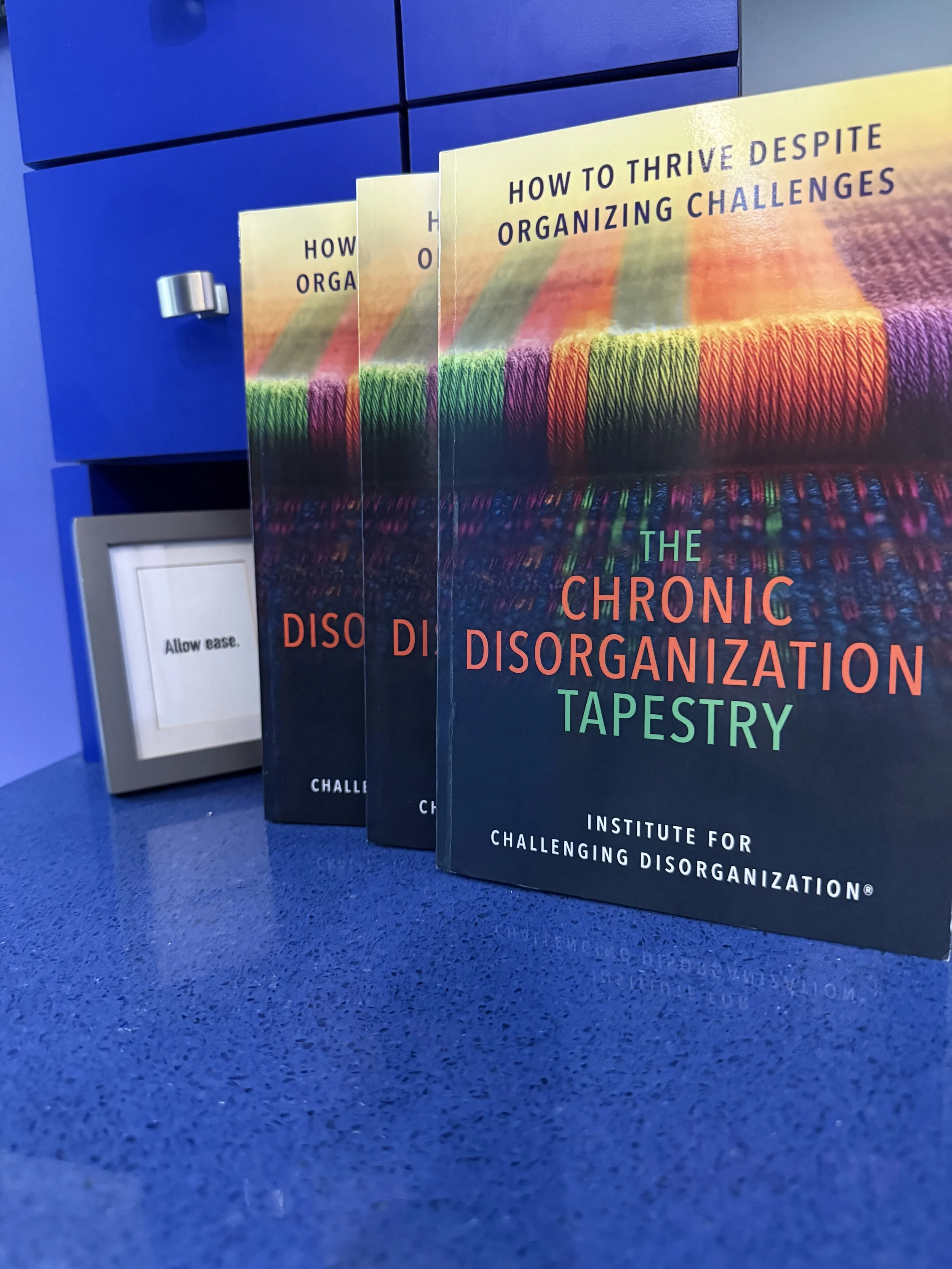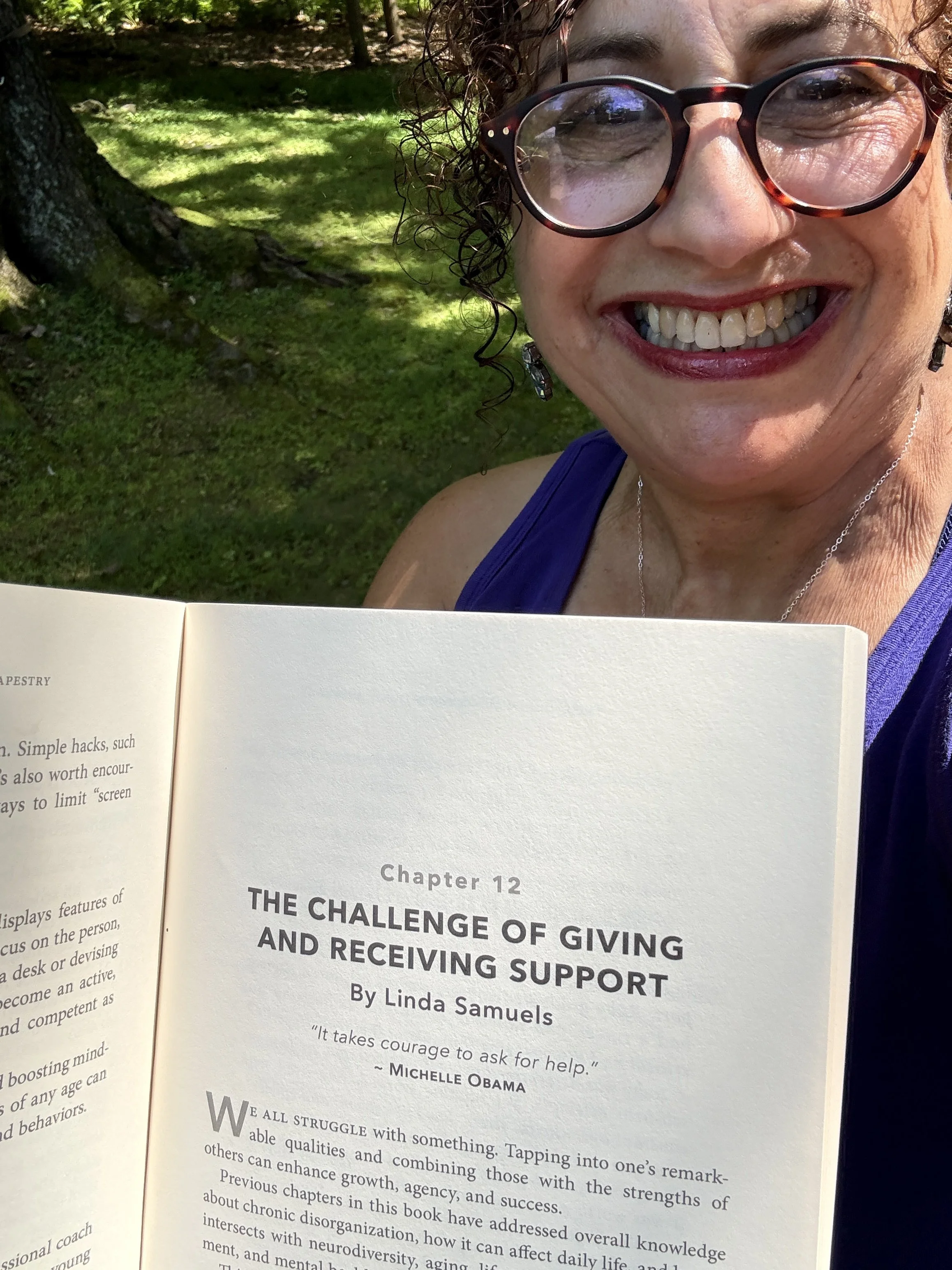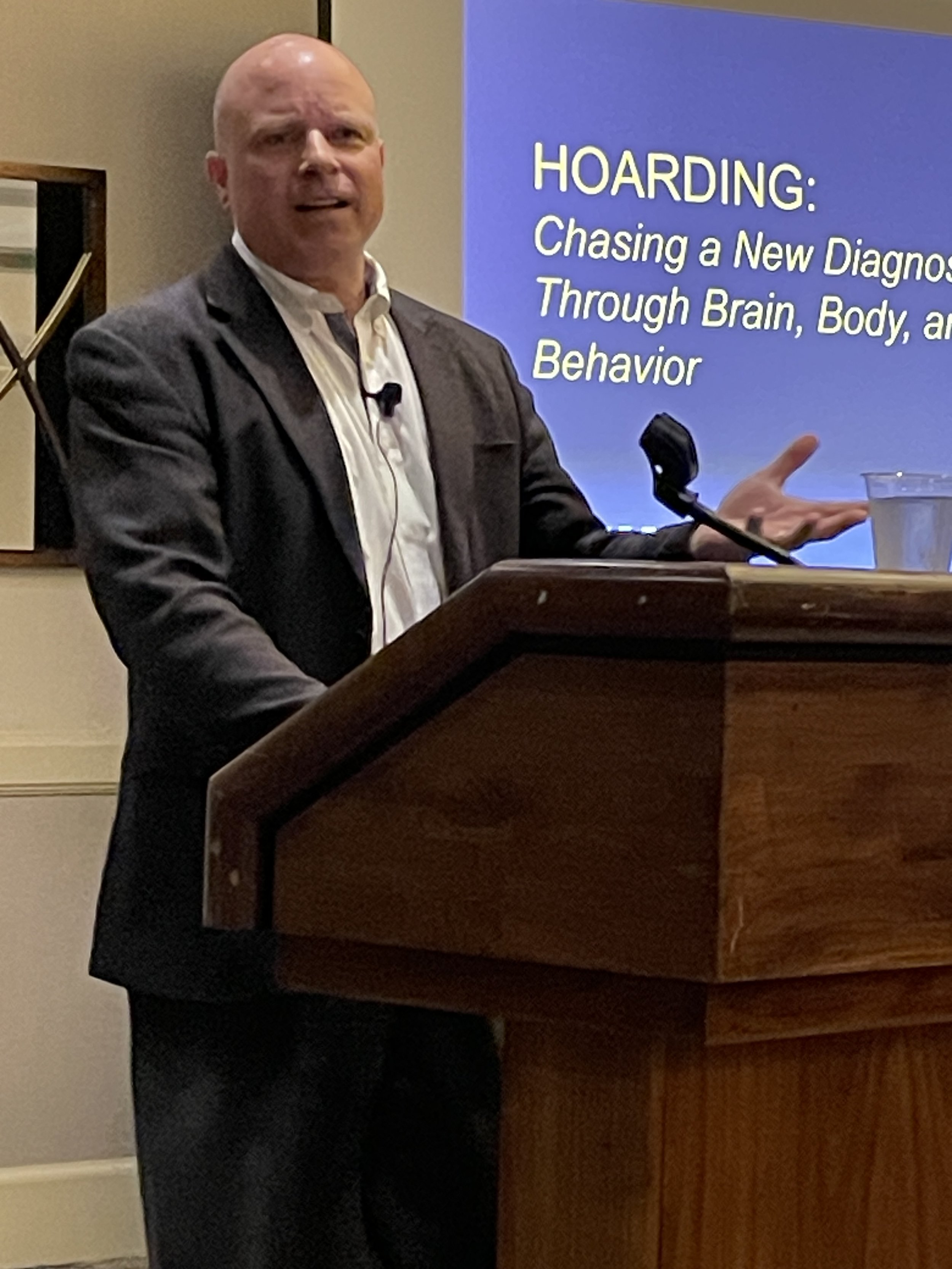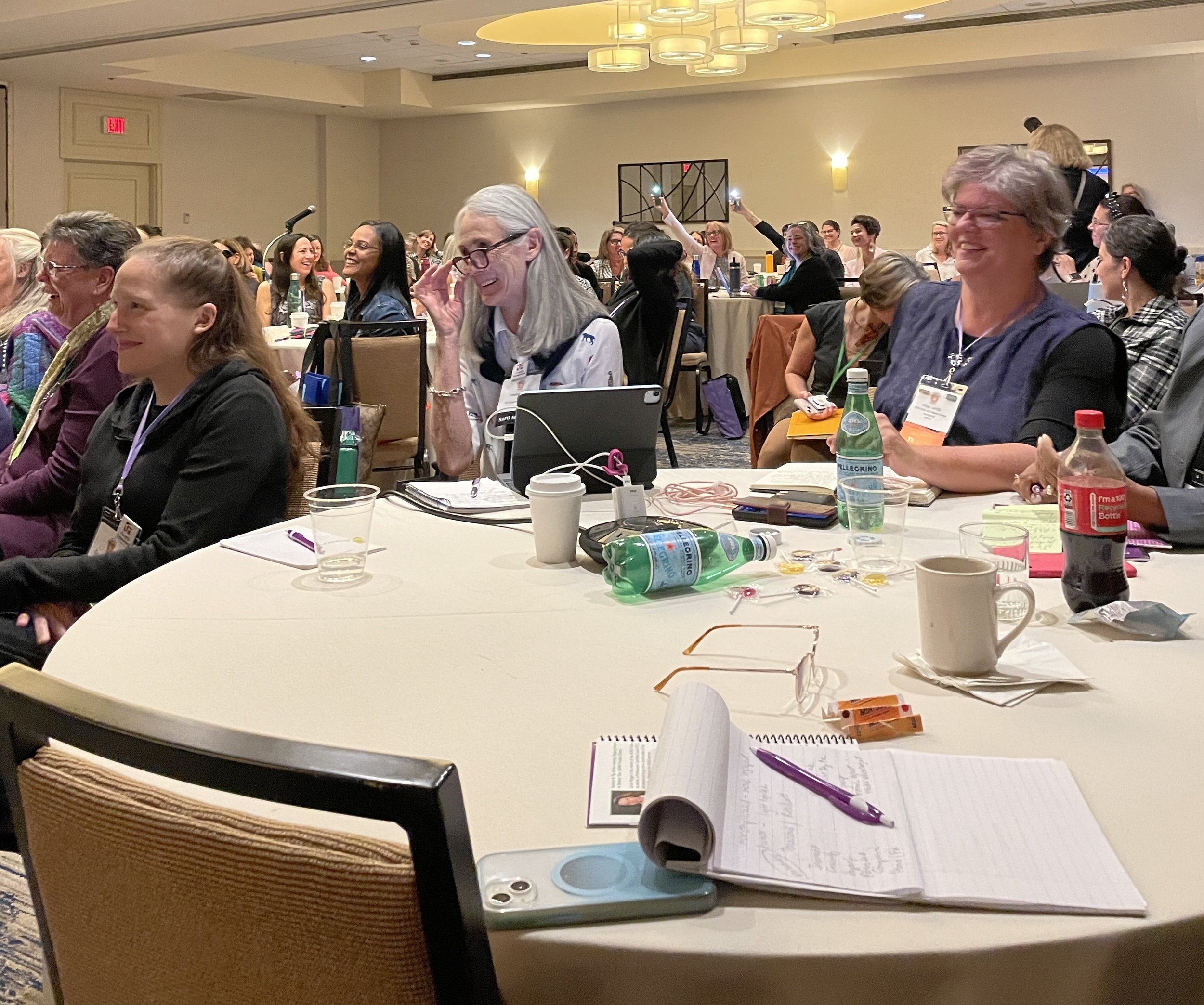

Recently, I returned from the Institute for Challenging Disorganization’s (ICD) conference, held in Canada this year. Colleagues from around the globe gathered to learn, connect, and explore the latest ideas and research related to neurodivergence and people affected by chronic disorganization.
The conference covered a fascinating range of topics, including ADHD, decision-making, navigating life transitions, clutter, emotional labor, hoarding disorder, motivational interviewing, and communication.
I was thrilled to be part of the panel, “Cultivating Connection: Best Practices for Communication with Neurodivergent Clients,” alongside my wonderful colleagues. Sara Skillen moderated, and Leslie Josel and Elizabeth Brink were the other panelists.
Whenever I’m learning, I have one goal: to learn at least one new thing, discover one new resource, or deepen my connection with something I already know. Honestly, with that simple goal, I consistently come away with far more than one thing.
The ICD conference was no exception.
I’m excited to share some of my takeaways and how they expanded my thinking, reinforced what I already know, and will influence the virtual organizing work I do with clients.
What Expanded My Thinking About Virtual Organizing
Emotional Labor
In “The Art of the Invisible: Helping Neurodiverse Families Navigate the Emotional Labor Lifecycle,” presenters Regina Lark, PhD, CPO®, CPO-CD® and Leslie Josel, PCC, discussed how emotional labor, which is mostly invisible and disproportionately handled by moms, is “the exhausting work” and the “cognitive management of household systems.”
Navigating emotional labor, work that never ends, requires executive function (EF) skills that rely heavily on the prefrontal cortex. These include:
Planning
Focusing
Remembering instructions
Juggling multiple tasks
Managing emotions
Working memory
Organizing
However, as many of my clients have experienced, EF skills can be especially challenging if you are highly stressed, have prefrontal cortex damage, or have conditions such as ADHD, autism, dyslexia, dyspraxia, or Tourette’s syndrome.
One of the biggest takeaways was distributing the emotional load through “radical delegation. Take perfection off the table. Delegate to someone else, even if they aren’t good at it. Go for “good enough.”
This made me think differently about virtual organizing. When we work together, we’re not only organizing possessions or creating systems. We’re also considering the mental load behind those systems. What decisions are constantly being made? What is someone trying to remember? What are they managing for themselves or others? And what might be possible to let go of, share, or accept as “good enough”?
Life Transitions
We experience many life transitions. Professor and researcher Dr. Michelle Pannor Silver focused on four in her presentation, “Unpacking Identity: Navigating Later Life Transitions for Those with Organizational Challenges.” She discussed retirement, menopause, clutter, and prioritizing physical resilience.
Much of my work involves helping clients navigate transitions such as moving, starting a new job, divorce, birth, losing a loved one, and other life changes like those Dr. Silver discussed.
One takeaway came from the retirement section. Since our identities are often tied to our work, figuring out what comes next takes thought. Silver stressed the importance of creating “time and mental space to imagine retirement.” It’s not just about getting your finances in order. Take time to envision how you want your post-work life to feel and what you want it to be like. Include “sparking joy” activities.
Another idea that resonated was “recalibrating after loss.” In later years, loss can arrive in many forms, including changes in work status, moving from a familiar environment, changes in physical or cognitive abilities, and the loss of loved ones.
I am thinking differently about virtual organizing in the context of reimagining and recalibrating life. We go through periods when the organizational systems or patterns that used to work suddenly become ineffective. They no longer support who we are now. Virtual organizing sessions can be a wonderful way to work through these shifts and create systems and schedules that support who you are now.
“Decision-making is at the center of everything. It is a core part of being human.”
What Reinforced What I Already Know About Virtual Organizing
ADHD
Ari Tuckman, PsyD, MBA, presented “ADHD Can Make Organizing Psychologically Messy.” He emphasized that the ADHD challenge is “not the knowing, but the doing.” Challenges with activation, attention regulation, perfectionism, and time management can make it harder to start. You might know what to do, but these obstacles can make it challenging to get things done.
One question Tuckman suggested was, “What’s a realistic, sustainable goal that you’ll allow yourself to feel good about?” Emphasizing “realistic” and “sustainable” is central to my work with clients.
Tuckman shared many strategies that reinforced the tools and concepts I use with clients. They included:
Time – Use analog clocks, alarms, and schedules to build time awareness and make time more visible.
Fun – Make tasks less boring and more enjoyable through gamification or a playful spin.
Clarify – Ask, “How important is ‘this’ relative to everything else?”
Momentum – Do a “bit of something,” and always “hope for momentum.”
Experiment – “Be willing to flounder, and be confused.”
Decision-Making– If you are having difficulty choosing, flip a coin. It can clarify what you really want.
Perfectionism – Focus on “good enough.”
These strategies reflect what I see every day in virtual organizing: knowing what to do and being able to do it aren’t always the same. Virtual organizing sessions can help clients identify what gets in the way, experiment with different approaches, and find strategies that are realistic and sustainable for them.
Decision-Making
Elizabeth Brink, PCC, PCNC®, SEP®, a neurodivergent-centered coach, educator, and trainer, presented “Decision-Making: Neurodivergence, Trauma, and Chronic Disorganization.” Brink stated, “Decision-making is at the center of everything. It is a core part of being human.”
Brink went on to say that “Decision-making is a special kind of hard for neurodivergent humans.” She also said that for neurodivergent people, “Overwhelm is a reasonable response to decision-making.”
When Brink said, “It’s a big deal how to help people make decisions,” I recognized how central nurturing decision-making skills and building agency are to my virtual organizing work. People reach out to me when they feel overwhelmed, and much of that overwhelm comes from difficulty making decisions.
Decision-making skills can be learned. Brink featured several skill-building strategies that align with how I support my clients in making decisions. They include:
Empathy – Understand and appreciate what they may be feeling or experiencing, without judgment.
Demystify – Learn how they make decisions, what’s worked well for them in the past, the process they’ve used, and how we can tweak or apply that process to current choices.
Capacity – Be mindful of their capacity at that moment, normalize pauses, take breaks to avoid decision fatigue, and encourage a slower pace when needed.
Always Be Learning
Every conference leaves me with something to think about, but this one reminded me why I value learning so much. Sometimes a new idea changes how I approach my work. Other times, it gives me language for what I already know and see in my work with clients. Both are valuable.
I’m excited to bring these insights into my virtual organizing sessions and stay curious, experiment, and learn alongside my clients.
How Can I Help?
Do you feel overwhelmed, stuck, or disorganized? You don’t have to face it alone. I’m here to help! Get unstuck and make progress. Virtual organizing is an extraordinary path forward—with a local feel and a global reach.
Let’s talk! I’m easy to reach.
Schedule a Discovery Call
Fill out the Contact Form
Email me at linda@ohsoorganized.com or
Call 914-271-5673
Getting organized, making progress, and reaching your goals are doable, especially with support.