
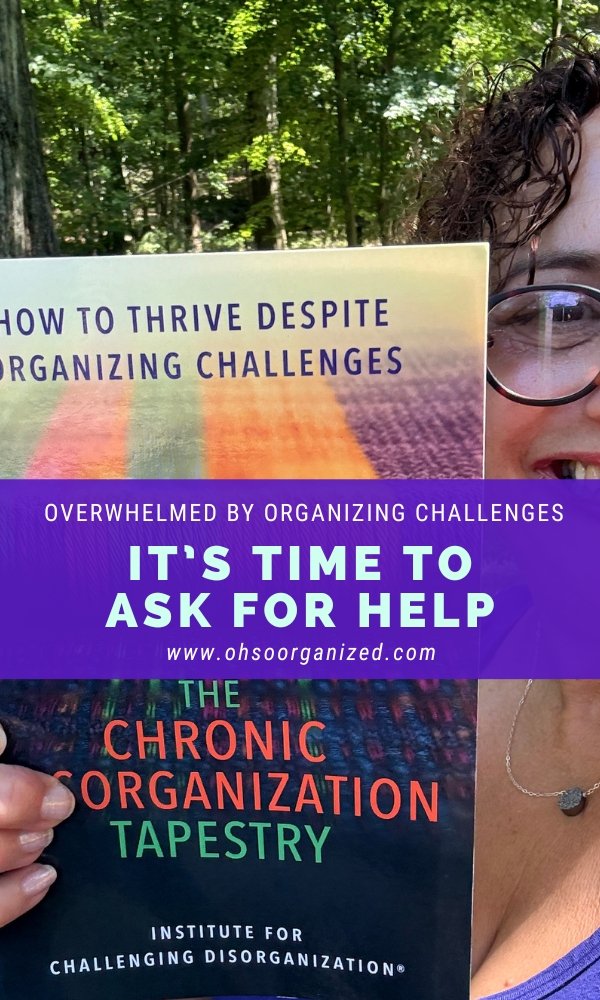
Over the 30+ years I’ve been helping overwhelmed individuals create organization and calm in their lives, most of my clients have been affected by chronic disorganization (CD).
When I first started Oh, So Organized! in 1993, I didn’t know what chronic disorganization was. What I did recognize was that the organizational challenges many of my clients faced were complex, persistent, and deep.
It wasn’t until 1995, when I met Judith Kolberg, a pioneer and thought leader in the organizing industry, and heard her speak at my first NAPO (National Association of Productivity and Organizing Professionals) conference, that I learned about the term chronic disorganization, which she coined. I began to understand the complexities of CD and the similarities between my clients and those Judith described.
As a CPO-CD® and contributing author to The Chronic Disorganization Tapestry, I’ve spent more than three decades helping people affected by chronic disorganization navigate their organizing challenges with compassion and practical support.
What is Chronic Disorganization?
As defined by the Institute for Challenging Disorganization (ICD), chronic disorganization:
“Persists over a long period of time
Frequently undermines the quality of life, and
Recurs despite repeated self-help attempts.”
The ICD website further clarifies that “chronic disorganization may be present with brain-based challenges such as ADHD, anxiety, depression, Hoarding Disorder, PTSD, TBI, and more.”
Little did I know that Judith’s panel session at NAPO would have such a profound impact on my work. Since then, I have consistently invested in education, professional development, and certifications to deepen my understanding of chronic disorganization and provide the best possible help and support to my clients. I became actively involved with ICD, received much of my training from ICD, and served as its past president.
The Chronic Disorganization Tapestry
Almost two years ago, I was invited, along with eleven of my colleagues, to be a contributing author to an ICD book they planned to publish. This was an easy “yes” because I’m a big advocate for ICD, the premier educational resource on chronic disorganization.
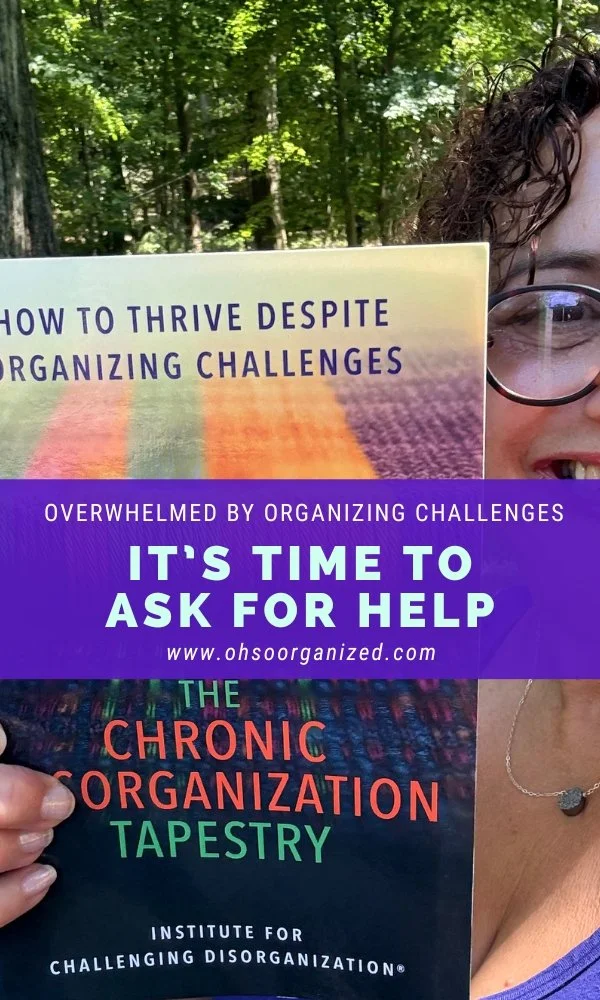
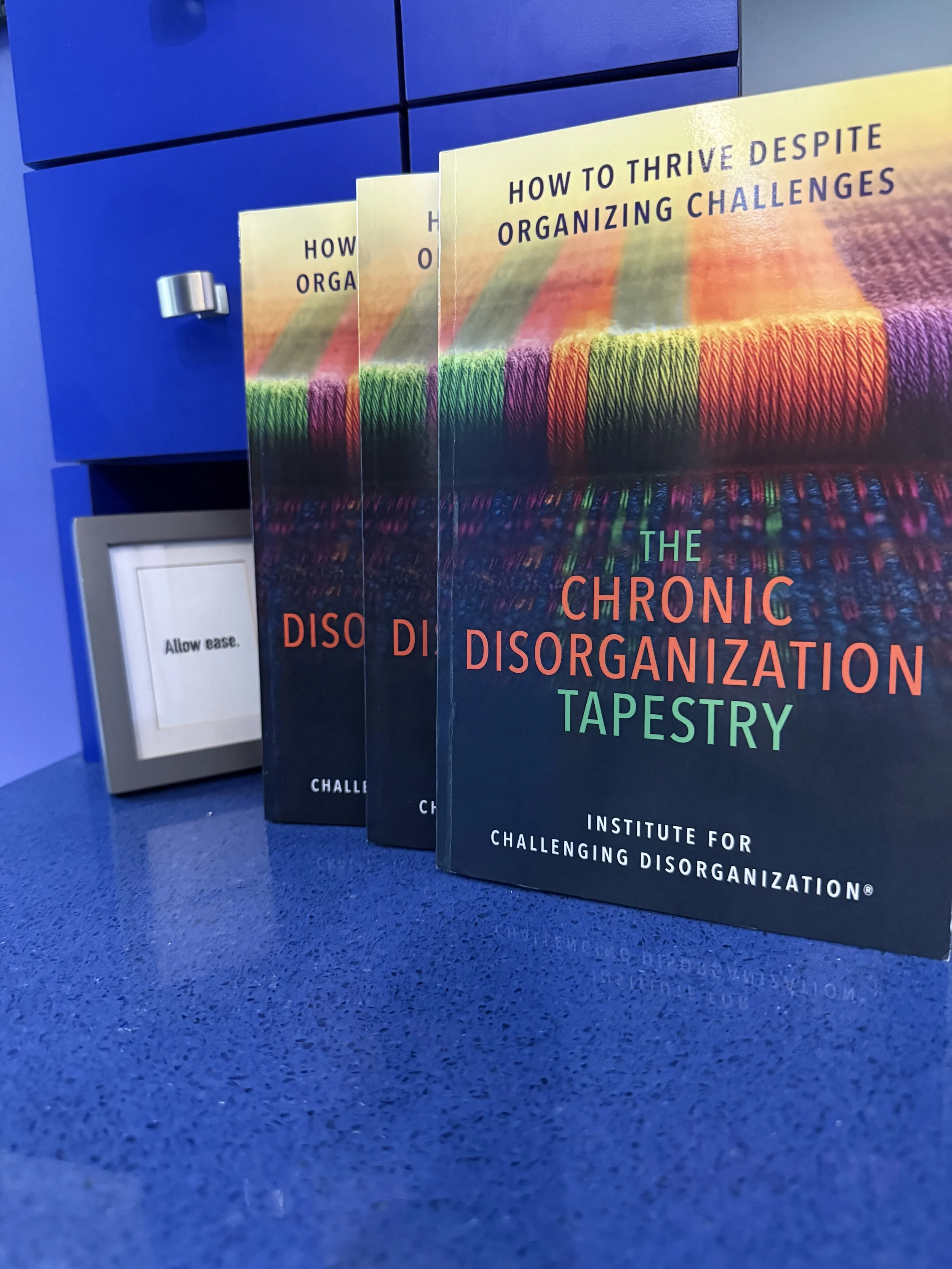
Fast-forward to now, and The Chronic Disorganization Tapestry – How to Thrive Despite Organizing Challenges is finally available! This book is a guide that covers:
the unique challenges of chronic disorganization
simple, evidence-based strategies
case studies
insights from industry experts
This publication wouldn’t have been possible without the fierce dedication of the Chronic Disorganization Tapestry Task Force members: Carolyn Caldwell, Laurene Livesey Park, Ingrid Tielemans, and Nacho Eguiarte, and the authors’ contributions. My deepest gratitude and congratulations to all!
A Quick Content Guide
I am honored to be included in ICD’s wonderful new publication, written for people affected by chronic disorganization, professional organizers, and other professionals who support them.
Here is a quick guide to the chapter topics and their authors:
Chapter 1: The Challenge of Chronic Disorganization by Alison Lush
Chapter 2: When Too Much is Too Much: The Challenge of Hoarding by Hilde Verdijk
Chapter 3: The Challenge of Organizing While Aging by Diane N. Quintana
Chapter 4: A Multifaceted Dilemma: The Challenge of ADHD by Sara S. Skillen
Chapter 5: Organizing Through Change: The Challenge of Transitions by Phyllis Flood Knerr
Chapter 6: The Challenge of Time by Colette Robicheau
Chapter 7: The Challenge of Productivity by Cindy Sullivan
Chapter 8: Not Only Words: The Challenge of Communication by Alice Price
Chapter 9: When the Body is Challenged by Amanda Scudder
Chapter 10: When the Mind is Challenged by Susan Fay West
Chapter 11: The Challenge for Students by Juliet Landau-Pope
Chapter 12: The Challenge of Giving and Receiving Support by Linda Samuels
The book is available from retailers including Amazon, Barnes & Noble, Alibris, and Bookshop.
“We aren’t meant to go through this life alone. Everyone needs help at times.”
My Chapter: The Challenge of Giving and Receiving Support
From a young age, I always loved helping others. Over three decades ago, when I considered starting my own company, I knew that helping people had to be a key element of my business. After brainstorming ideas for what type of business would ‘fit’ that requirement, I eventually founded Oh, So Organized!
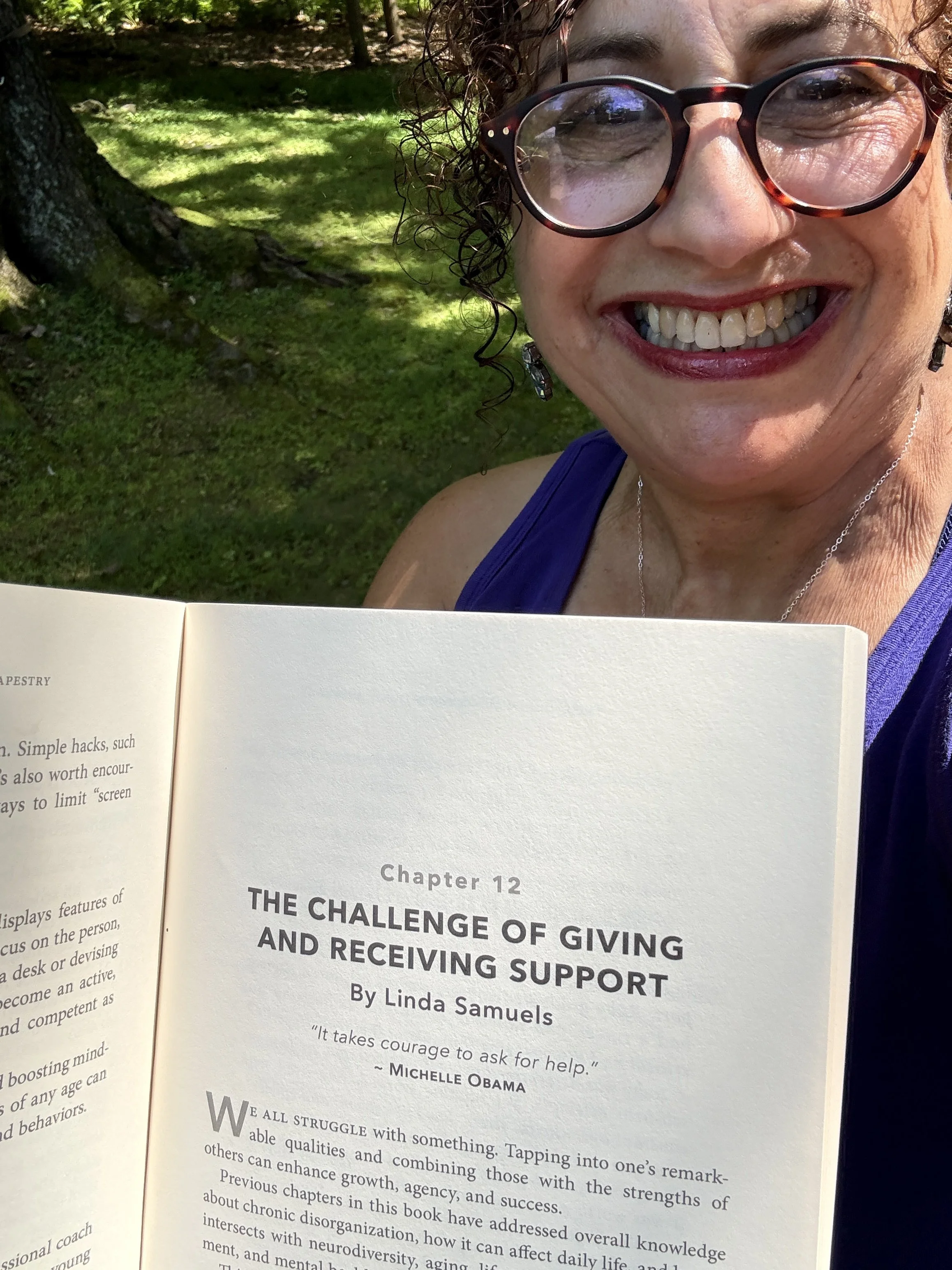
It felt especially meaningful to be asked to contribute a chapter on giving and receiving support to The Chronic Disorganization Tapestry.
In Chapter 12, “The Challenge of Giving and Receiving Support,” I explore chronic disorganization in that context and ways in which giving and receiving help can foster progress and growth. Perspectives are considered from:
individuals affected by CD
related professionals who support people affected by CD
professional organizers who work with individuals affected by CD
We aren’t meant to go through this life alone. Everyone needs help at times, whether it’s practical, technical, or emotional, or simply the presence of another person alongside us. For people affected by chronic disorganization, and for those who support them, fostering compassion, curiosity, and agency is essential to progress and growth.
How Can I Help?
Do you feel overwhelmed, disorganized, or stuck? You don’t have to do this alone. I’m here to help! Virtual organizing is an extraordinary path forward – Local feel with a global reach.
Let’s talk! I’m easy to reach.
Schedule a Discovery Call
Fill out the Contact Form
Email me at linda@ohsoorganized.com or
Call 914-271-5673
Getting organized, building confidence, and reaching your goals are possible, especially with support.