Posts tagged Ari Tuckman
How a Fantastic Conference Taught Me More About Virtual Organizing

Recently, I returned from the Institute for Challenging Disorganization’s (ICD) conference, held in Canada this year. Colleagues from around the globe gathered to learn, connect, and explore the latest ideas and research related to neurodivergence and people affected by chronic disorganization.

The conference covered a fascinating range of topics, including ADHD, decision-making, navigating life transitions, clutter, emotional labor, hoarding disorder, motivational interviewing, and communication.

I was thrilled to be part of the panel, “Cultivating Connection: Best Practices for Communication with Neurodivergent Clients,” alongside my wonderful colleagues. Sara Skillen moderated, and Leslie Josel and Elizabeth Brink were the other panelists.

Whenever I’m learning, I have one goal: to learn at least one new thing, discover one new resource, or deepen my connection with something I already know. Honestly, with that simple goal, I consistently come away with far more than one thing.

The ICD conference was no exception.

I’m excited to share some of my takeaways and how they expanded my thinking, reinforced what I already know, and will influence the virtual organizing work I do with clients.


What Expanded My Thinking About Virtual Organizing

Emotional Labor

In “The Art of the Invisible: Helping Neurodiverse Families Navigate the Emotional Labor Lifecycle,” presenters Regina Lark, PhD, CPO®, CPO-CD® and Leslie Josel, PCC, discussed how emotional labor, which is mostly invisible and disproportionately handled by moms, is “the exhausting work” and the “cognitive management of household systems.”

Navigating emotional labor, work that never ends, requires executive function (EF) skills that rely heavily on the prefrontal cortex. These include:

  • Planning

  • Focusing

  • Remembering instructions

  • Juggling multiple tasks

  • Managing emotions

  • Working memory

  • Organizing

However, as many of my clients have experienced, EF skills can be especially challenging if you are highly stressed, have prefrontal cortex damage, or have conditions such as ADHD, autism, dyslexia, dyspraxia, or Tourette’s syndrome.

One of the biggest takeaways was distributing the emotional load through “radical delegation. Take perfection off the table. Delegate to someone else, even if they aren’t good at it.  Go for “good enough.”

This made me think differently about virtual organizing. When we work together, we’re not only organizing possessions or creating systems. We’re also considering the mental load behind those systems. What decisions are constantly being made? What is someone trying to remember? What are they managing for themselves or others? And what might be possible to let go of, share, or accept as “good enough”?

Life Transitions

We experience many life transitions. Professor and researcher Dr. Michelle Pannor Silver focused on four in her presentation, “Unpacking Identity: Navigating Later Life Transitions for Those with Organizational Challenges.” She discussed retirement, menopause, clutter, and prioritizing physical resilience.

Much of my work involves helping clients navigate transitions such as moving, starting a new job, divorce, birth, losing a loved one, and other life changes like those Dr. Silver discussed.

One takeaway came from the retirement section. Since our identities are often tied to our work, figuring out what comes next takes thought. Silver stressed the importance of creating “time and mental space to imagine retirement.” It’s not just about getting your finances in order. Take time to envision how you want your post-work life to feel and what you want it to be like. Include “sparking joy” activities.

Another idea that resonated was “recalibrating after loss.” In later years, loss can arrive in many forms, including changes in work status, moving from a familiar environment, changes in physical or cognitive abilities, and the loss of loved ones.

I am thinking differently about virtual organizing in the context of reimagining and recalibrating life. We go through periods when the organizational systems or patterns that used to work suddenly become ineffective. They no longer support who we are now. Virtual organizing sessions can be a wonderful way to work through these shifts and create systems and schedules that support who you are now.

“Decision-making is at the center of everything. It is a core part of being human.”
— Elizabeth Brink, PCC, PCNC®, SEP®

What Reinforced What I Already Know About Virtual Organizing

ADHD

Ari Tuckman, PsyD, MBA, presented “ADHD Can Make Organizing Psychologically Messy.” He emphasized that the ADHD challenge is “not the knowing, but the doing.” Challenges with activation, attention regulation, perfectionism, and time management can make it harder to start. You might know what to do, but these obstacles can make it challenging to get things done.

One question Tuckman suggested was, “What’s a realistic, sustainable goal that you’ll allow yourself to feel good about?” Emphasizing “realistic” and “sustainable” is central to my work with clients.

Tuckman shared many strategies that reinforced the tools and concepts I use with clients. They included:

  • Time – Use analog clocks, alarms, and schedules to build time awareness and make time more visible.

  • Fun – Make tasks less boring and more enjoyable through gamification or a playful spin.

  • Clarify – Ask, “How important is ‘this’ relative to everything else?”

  • Momentum – Do a “bit of something,” and always “hope for momentum.”

  • Experiment – “Be willing to flounder, and be confused.”

  • Decision-Making– If you are having difficulty choosing, flip a coin. It can clarify what you really want.

  • Perfectionism – Focus on “good enough.”

These strategies reflect what I see every day in virtual organizing: knowing what to do and being able to do it aren’t always the same. Virtual organizing sessions can help clients identify what gets in the way, experiment with different approaches, and find strategies that are realistic and sustainable for them.

Decision-Making

Elizabeth Brink, PCC, PCNC®, SEP®, a neurodivergent-centered coach, educator, and trainer, presented “Decision-Making: Neurodivergence, Trauma, and Chronic Disorganization.” Brink stated, “Decision-making is at the center of everything. It is a core part of being human.”

Brink went on to say that “Decision-making is a special kind of hard for neurodivergent humans.” She also said that for neurodivergent people, “Overwhelm is a reasonable response to decision-making.”

When Brink said, “It’s a big deal how to help people make decisions,” I recognized how central nurturing decision-making skills and building agency are to my virtual organizing work. People reach out to me when they feel overwhelmed, and much of that overwhelm comes from difficulty making decisions.

Decision-making skills can be learned. Brink featured several skill-building strategies that align with how I support my clients in making decisions. They include:

  • Empathy – Understand and appreciate what they may be feeling or experiencing, without judgment.

  • Demystify – Learn how they make decisions, what’s worked well for them in the past, the process they’ve used, and how we can tweak or apply that process to current choices.

  • Capacity – Be mindful of their capacity at that moment, normalize pauses, take breaks to avoid decision fatigue, and encourage a slower pace when needed.

Always Be Learning

Every conference leaves me with something to think about, but this one reminded me why I value learning so much. Sometimes a new idea changes how I approach my work. Other times, it gives me language for what I already know and see in my work with clients. Both are valuable.

I’m excited to bring these insights into my virtual organizing sessions and stay curious, experiment, and learn alongside my clients.

How Can I Help?

Do you feel overwhelmed, stuck, or disorganized? You don’t have to face it alone. I’m here to help! Get unstuck and make progress. Virtual organizing is an extraordinary path forward—with a local feel and a global reach.

Let’s talk! I’m easy to reach.

Getting organized, making progress, and reaching your goals are doable, especially with support.


3 Inspiring Time Questions That Will Help You Make Thoughtful Choices

The decisions you make relate to different points in time: the past, present, and future. Although you may not always view your choices this way, considering these time parameters can help reduce decision fatigue and create clarity surrounding decision-making.

Making thoughtful decisions can be challenging. Some common decision-making obstacles include:

  • Having too many choices

  • Lacking clarity

  • Feeling rushed

  • Asking unhelpful questions

  • Deciding when you’re exhausted

  • Being afraid to make the wrong choice

Any of these challenges can cause overwhelm, procrastination, or paralysis. However, when you ask questions based on time, it can cut through the noise, clarify your options, and motivate action.


1. Question to Let Go of the Past

“What’s weighing down your backpack that needs to be released?”
— James Clear

In a recent edition of James Clear’s 3-2-1 newsletter, he explained how “unfinished tasks” carried in your “invisible backpack” weigh you down. Many of these tasks are ones you will think you “should do,” but will probably never get around to.

Clear suggests two strategies. To “lighten the load: finish the task or let it go.” Applying a past timeframe to your decision about completing or releasing a task can help.

Consider these questions:

  • How long have you been worrying about and carrying these tasks with you?

  • Are past goals or commitments holding you back?

  • Which ones are no longer relevant, important, or necessary?


2. Question to Improve the Present

“What small change could you make to your surroundings that would steer you toward good habits and away from distractions?”
— James Clear

In another 3-2-1 newsletter, Clear encourages making tiny tweaks to your environment to support building better habits and reducing distractions. Only you know which habits you want to strengthen and which distractions are getting in your way.

Using the present timeframe idea to make proactive choices can be effective here. To do this, think about a current habit you want to build or improve. For example, let’s say you often run late to appointments. This is a source of stress for you and the people in your life. You want to be more punctual, yet find it challenging to get out of the house on time. Let’s say chronic lateness is caused by disorganization at home or your tendency to hyperfocus, which interrupts your sense of time.

Making a slight change in your environment to mitigate distractions and support a better habit could include things like:

  • Gather everything you need the night before

  • Wake up earlier to prepare

  • Use labeled timers to help with transitions and activation


3. Question to Imagine the Future

“What will my future-self thank me for doing now?”
— Stephanie Sarkis, PhD

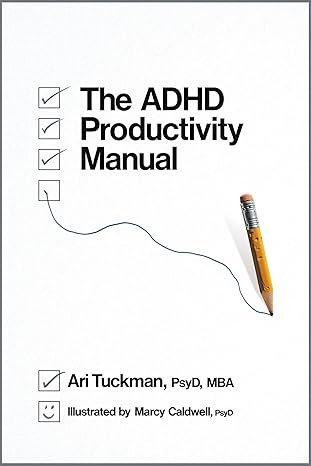
In Ari Tuckman’s book The ADHD Productivity Manual, he shares one of his favorite questions posed by Stephanie Sarkis, PhD. She asks, “What will my future-self thank me for doing now?”

Let’s apply the future timeframe lens to this inquiry. While the question asks you to do something in the present, it’s in service of your future self.

Think about a goal you want to achieve. Maybe it’s organizing your legal and end-of-life papers, downsizing, or eating healthier. None of these will be realized in the future without taking action now.

Embrace the future construct. Visualize what ‘done’ will look and feel like. This will motivate you now to take action and accomplish the future results you desire.


How to Make More Thoughtful Choices?

Making wise decisions begins with asking good questions. Including a time perspective can clarify your choices. Do you consider the past, present, and future when making decisions? How does using a time construct affect you?

I’d love to hear your thoughts. I invite you to join the conversation.


How Can I Help?

Do you need support with organizing, letting go, or managing your time? I’d love to help! Virtual organizing is an extraordinary path forward – Local feel with a global reach.

Let’s talk. You can:

Organizing your time and space is possible, especially with support.


Here Are 5 Most Interesting and Best Time Management Discoveries - v50

Enjoy the latest release (v50) of the “What’s Interesting?” series, which features my most recent finds that inform, inspire, and relate to organizing and life balance. These unique time management discoveries reflect this month’s blog theme.

You are an engaged, vibrant, and generous group. I am deeply grateful for your ongoing presence, positive energy, and contributions to this community. I look forward to your participation and additional contributions to the collection I’ve sourced.

What do you find interesting?


What’s Interesting? – 5 Best Time Management Discoveries

1. Interesting Read – Productivity Time

Do you or someone you know have ADHD and struggle with productivity, consistency, and punctuality? If so, you’ll love the latest book by psychologist, author, presenter, and thought-leader, Ari Tuckman, PsyD, MBA.

He draws on his 40,000 hours of client work to share strategies and insights on how people with ADHD can get things done.

In The ADHD Productivity Manual, Ari explores thirty-six areas that affect productivity for individuals with ADHD. Topics include:

  • How ADHD makes it harder to see time

  • Essentials for making the most of your brain

  • Clarifying your goals

  • Minimizing distractions

  • Letting go of perfection

  • Navigating feelings of overwhelm

Ari says, “The obvious goal of this book is to help you get more done. The less obvious, but more important goal is that I want you to feel good about yourself.” He goes on to say that “ADHD is a disorder of converting intentions into actions. This book is all about action.”


2. Interesting Article – Timeboxing

Have you ever tried timeboxing? In Rebecca Muller’s Thrive Global article, “Try This Now: ‘Timebox’ Your Tasks at Work,” she makes the case for using this visualization exercise to help you prioritize and focus on which tasks to tackle first and which can wait. This approach can be especially beneficial when you feel overwhelmed and stressed by a lengthy to-do list.

Here is one method to timebox:

  • Grab a sheet of paper

  • Draw a column of boxes

  • Put each task in a box based on its priority level

You will quickly visualize which items require immediate attention and which are non-urgent. Muller quotes Marc Zao-Sanders in a Harvard Business Review piece. Zao-Sanders says about timeboxing, “It’s visual, intuitive, and obvious.”

In what ways could timeboxing be an effective strategy for you?


3. Interesting Product – Grounding Time

Busy schedules, excessive stress, and uncertainty can leave you feeling emotionally depleted and anxious. Does your day involve pushing yourself to the point of exhaustion? If so, it’s vital to restore your well-being by taking time to ground and calm yourself.

There are various ways to accomplish this, such as meditating, taking nature walks, journaling, talking with a loved one, slowly sipping a beverage, or gazing out the window.

Another idea is to use a time reminder for grounding. I found this adorable stress reliever made by Mindsight. The six-inch-tall Breathing Buddha helps you practice mindful breathing in short sprints. It features a simple visual soft light for guidance, pre-set breathing cycles, is rechargeable, and is portable.

What helps you feel relaxed and grounded?


“It’s vital to restore your well-being by taking time to ground and calm yourself.”
— Linda Samuels, CPO-CD®, CVOP™


4. Interesting Resource – Laugh Break Time

While life isn’t all puppies and rainbows, there’s something life-affirming about taking time for silly, joy-inducing moments. One way to do that is through laughter.

When was the last time you had a good laugh? I’m talking about full-body, uncontrollable, contagious laughter. Maybe you saw a comedian, heard a great joke, or watched a funny movie. Something tickled your giggle motor, and the laughter began.

By the way, if you haven’t seen the movie “Bad Shabbos,” I highly recommend it. I laughed so hard that my face hurt.

On a recent trip with my wonderful husband, Steve, we stopped at the Whispering Oaks Vineyard in Sunbury, PA. I gazed at the lush green landscape and sipped a delicious frozen wine slushy, which has become my new favorite drink. Then we shared this playful moment.

Steve started laughing, and I couldn’t help but join in. It makes me laugh every time I watch the video, and it reminds me of how essential laughter breaks are in life. While I recognize how personal humor can be, I hope this short clip brings a little lightness to your day.

What makes you laugh?


5. Interesting Thought – Progress Time

It’s easy to get discouraged when you are making changes or striving for a larger goal. The secret to moving forward and boosting motivation hinges on redefining progress.

Break large projects into smaller, manageable, and accomplishable parts. Celebrate the progress you are making with each action, even if that means simply acknowledging it. Keep going until you achieve the results you want.

A puzzle consists of many pieces. Each piece serves a role in creating the complete picture. Completion occurs by finding and placing one puzzle piece at a time. Likewise, achieving your goals happens through small actions that support progress.

What will you make progress on today?


Making the Most of Your Time

Each person receives the gift of 24 hours a day. It’s up to you to decide how you want to use your days, what you will prioritize, and what you will put on hold or release.

How can you manage your time better? What is one thing you could change that would make a significant and positive difference? Which of these discoveries resonates most with you? I’d love to hear your thoughts and invite you to join the conversation.


How Can I Help?

Do you want support to get unstuck, become organized, and utilize your time more effectively? I’m here to help. Virtual organizing is an extraordinary path forward – local feel with global reach.

Please email me at linda@ohsoorganized.com, call 914-271-5673, or schedule a Discovery Call. Change is possible, especially with support.


How 3 Useful Changes Can Make Positive Differences in Your Life

Proactive change is a fascinating thing. It’s the type of change you seek when you desire a shift in your life. You might have identified an area you want to improve, a behavior you want to stop, or a wish you want to manifest. You are ready for a transformation but may feel overwhelmed with where to begin or what to focus on. Change is possible through desire, small steps, and support.

This week, I attended the educationally stimulating ICD Virtual Conference, “Shining a Spotlight on ADHD.” There were three terrific speakers- Melanie Sobocinski, PhD, PCC, Sharon Saline, Psy.D, and Ari Tuckman, PsyD, MBA. They shared a wealth of information. I’m focusing on three ideas I learned about change that I thought would be especially helpful.


3 Useful Changes

1. Task Activation

Have you ever wondered why a task isn’t happening? In Melanie Sobocinski’s presentation, Mastering the ADHD Trifecta to Manage Task Salience, she said the key to activation hinges on using strategies in three areas:

  • High Interest – May need to be boosted or toned down

  • Urgency – Can be overused, but can be beneficial when used in small doses

  • Other People – Can provide support, including focus and problem-solving, or can be an obstacle if it erodes the client’s autonomy

Task activation can be improved by understanding which elements are interfering. While Melanie shared excellent strategies for each area, there was one for High Interest that caught my attention.

To boost “Interest,” you can introduce novelty with a micro-change. Melanie shared a worksheet by Casey Dixon, PCC, who defines micro-change as “the smallest possible change you can make to have a task or solution feel new again.” These tiny changes will “catch your brain’s attention and help a task feel fresher and more rewarding, without creating utter chaos.”

Use Micro-Change to Introduce Novelty

  • Try a new tool or resource, such as a new app.

  • Change your location or placement of objects, like working at a coffee shop.

  • Select a new color for writing with or on.

  • Use a new sound for alarms.

  • Adjust your position or lighting by walking during a call or switching the lighting intensity.


2. Confidence Formation

Have you ever felt nervous, anxious, or lacked confidence in social situations? Are you curious about one strategy that can change your experience? In Sharon Saline’s presentation, Strategies and Solutions for Social Anxiety in Neurodivergent Adults, she described social anxiety disorder as a “debilitating fear or judgment, humiliation, or rejection.” There can be a “disconnect between how a person actually appears to others and their own exaggerated perception of themselves.”

Sharon delved into Rejection Sensitive Dysphoria (RSD), Perfectionism, and Imposter Syndrome. One of the strategies she offered when discussing Imposter Syndrome was to develop and name your “inner ally.” Negative self-talk can run rampant. Call upon your inner ally to provide support, compassion, and belief when you’re feeling nervous, doubtful, or ruminating with unhelpful thoughts. Sharon calls her ally “Tina Trailblazer.” What name will you give yours? What words of support will they offer?

While I haven’t named my ally or identified her as such, I have relied this year on my 2024 motto to lift me when I run into a challenge. Her voice says, “You got this.” Those words help me get over myself and move forward with confidence. After learning about the inner ally concept, I feel inspired to give my ally a name.

“Yes starts the process of change; Yet keeps it going.”
— Sharon Saline, Psy.D.

3. Sleep Foundation

Do you get enough sleep? Is that an area of your life you want to change and improve? Ari Tucker’s presentation was ADHD Makes Sleep Worse – And We Probably All Need More Sleep. He said, “No one is bringing their A-game after a bad night of sleep.”  

Lack of sleep negatively impacts mood, efficiency, effectiveness, focus, and attention. Consider how you feel after good or bad sleep days. There are many solutions for sleep deprivation, which include establishing a consistent bedtime, limiting caffeine, minimizing kid and pet disruptions, or stopping naps. For more strategies, read Ari’s ADDitude article, 9 Sleep Deprivation Solutions for Adults with ADHD.

While there are numerous ways to address good sleep hygiene, Ari suggests focusing first on quantity. If you establish the ‘right’ number of sleep hours you need, the quality of your sleep will probably be fine. If the quantity of sleep is good and you’re still having sleep challenges, then it’s worth investigating your sleep quality. Talking with a doctor who can advise about any medical challenges affecting your sleep could be beneficial.

Small changes in your sleep habits can significantly improve your daily experience.  

“Partial progress is still progress.”
— Ari Tuckman, Psy.D.

Which ideas resonated with you? Are there areas of change you want to focus on? I’d love to hear your thoughts.

If you want guidance with the changes you desire, I’m here to help. Please email me at linda@ohsoorganized.com, call 914-271-5673, or click here to schedule a Discovery Call. Change is doable, especially with support.