Posts tagged prioritizing
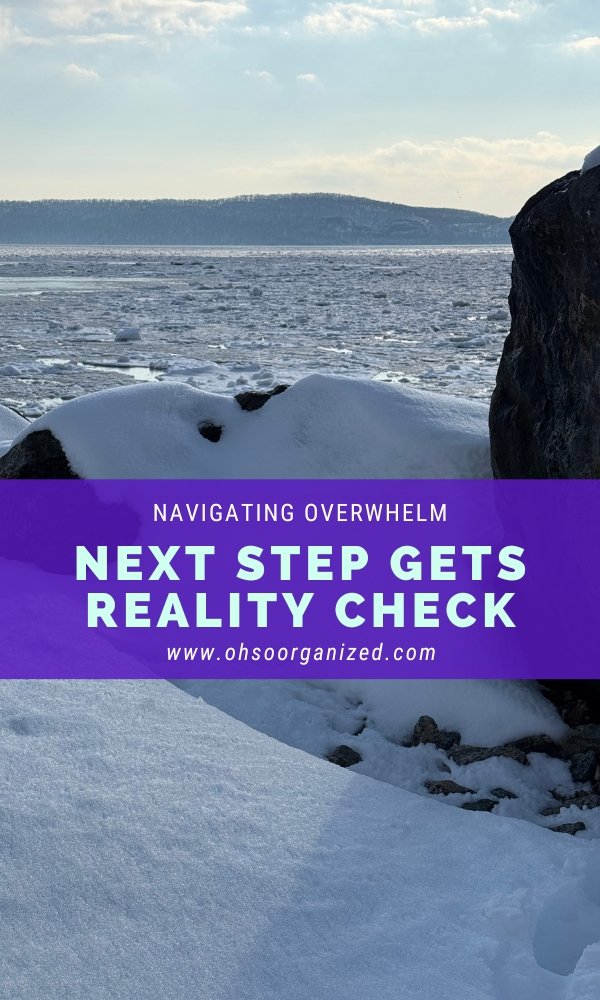
When Does Your Next Step Need a Helpful Reality Check?

Have you experienced that feeling of overwhelm when trying to figure out your next step? If so, you’re not alone. Choosing what to do next can be a challenge. Why is that? There can be many reasons, including:

  • Finding decision-making difficult

  • Being unclear about the next step in a process

  • Having difficulty prioritizing

  • Feeling fearful of choosing the ‘wrong’ option

  • Making the next step too big

  • Finding it difficult to estimate how much time something will take

  • Having too many options

  • Thinking aspirationally rather than realistically

Since you might be feeling overwhelmed right now, I’m going to focus on a single idea. A while back, I saw a graphic by Liz Fosslien. She has a talent for making the complex immediately understandable. When I saw this image (see below), I thought about how it applied to next steps, especially regarding scope and what’s actually doable.
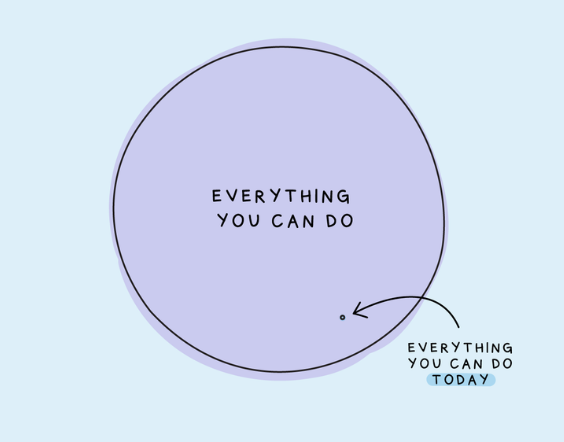
Often, when you’re thinking about what to do next, you consider everything you need to do instead of what you can realistically accomplish today. Aspirational thinking can derail your next step because your focus is too broad. You believe you can do it all right now. However, it’s only possible to accomplish a few things in a day.


How to Give Your Next Step a Reality Check

One of the best places to start when you’re trying to figure out what to do next is to acknowledge that only a small portion of what you want or need to do can happen today. That’s being realistic.

Next, select a few things you want to make progress on today. Review those options and choose one small, doable task to start with. Once that task is complete enough, move on to the next item on your list.

There’s nothing wrong with listing everything you want to do this week, month, year, or in life. However, when you want to get unstuck and take immediate action, it’s helpful to be more specific and realistic. Progress comes from narrowing your focus and managing your available time.


Only a small portion of what you want or need to do can happen today.
— Linda Samuels, CPO-CD®, CVOP™


What’s Next for You?

Figuring out your next step can feel elusive at times. However, by narrowing the scope and being realistic about your available time, you can move forward with more ease. What helps you figure out what’s next? Which ideas resonate with you?

I’d love to hear your thoughts. I invite you to join the conversation.


How Can I Help?

Do you feel overwhelmed or disorganized? Do you want to take your next step but feel stuck? I’m here to help! Virtual organizing is an extraordinary path forward – Local feel with a global reach.

Let’s connect! I’m easy to reach.

Moving forward and getting organized are possible, especially with support.


What’s Possible When You Focus Energy on One Useful Next Step?

Life requires energy. How much effort do you spend on aspects of your life you have little or no control over? Are distractions and worry preventing you from moving forward?

Focusing your energy and choosing productive actions within your control will guide you toward more fruitful next steps. You may wonder how you can do that.

One option is to do an informal personal energy audit. This evaluation will help you understand where your time and energy go. Once completed, prioritizing next will become more evident.


What is a Personal Energy Audit?

In James Clear’s recent 3-2-1 Thursday newsletter, his idea influenced my thoughts about creating a personal energy audit. To do this, notice where you spend your time and mental energy on a typical day.

Once you have made a quick assessment, you’ll be able to:

Clear says,

“Take all the energy you spend on…

  • worrying about the past

  • worrying about the future

  • worrying about what others think

  • worrying about if you might fail

…and channel that energy into one useful action within your control.”

What a fantastic and powerful call to action!


Notice where you spend your time and mental energy on a typical day.
— Linda Samuels, CPO-CD®, CVOP™


What Will Be Your Essential Next Step?

Clear encourages harnessing those energy gains into just “one useful action.” Select one next small, doable step “within your control” that will result in a positive outcome. Doing that will help reduce overwhelm and increase laser focus.

What will your “useful action” be?


Is Your Energy Aligned with Useful Action?

You will expend energy each day. It is vital to notice where that energy is going. Do you focus on those things that aren’t in your control? Or are you aligning your energy with positive action?

I’d love to hear your thoughts. I invite you to join the conversation.


How Can I Help?

Do you want support organizing, editing, planning, or focusing energy on useful next steps? I’d love to help! Virtual organizing is an extraordinary path forward – local feel with a global reach.

Please schedule a Discovery Call, email me at linda@ohsorganized.com, or call 914-271-5673. Focusing on what’s next is possible, especially with support.


10 Fantastic Pros Share the Best Reasons to Ask for Help

Do you resist asking for help? Maybe you’re unsure who to ask, prefer to do things yourself, or feel too overwhelmed to figure out what guidance you need. However, there are so many reasons to enlist support.

As a professional organizer, I am in the helping industry and love assisting my clients. I help overwhelmed individuals challenged by disorganization get unstuck and organized. Services can include assisting with long and short-term projects, providing accountability, editing, decluttering, designing customized organizing solutions, brainstorming, and planning.

While I like to do many things independently, I ask for help, too. Support has been incredibly beneficial for:


Having a need and needing help is not a sign that you’re weak. It’s a sign that you’re human.
— Kate Northrup

Does this sound familiar? If so, you’re going to love what follows. You’re about to discover uplifting stories about the power and relief of enlisting help.

I invited a marvelous group of colleagues to share their personal experiences. They describe their time to ask-for-help indicators and the value of listening to those cues. These generous friends include Diane Quintana, Ellen Delap, Janet Barclay, Janet Schiesl, Jonda Beattie, Julie Bestry, Kara Cutruzulla, Sara Skillen, Seana Turner, and Yota Schneider.

My deepest gratitude goes to this inspiring group for sharing their time, hearts, and wisdom with us. I asked them to respond to and elaborate on this prompt . . .

Describe one indicator that it’s time to ask for help.


10 Best Reasons to Ask for Help

Help Indicator #1: Annoyances

“The best indicator that you should seek help is when others call attention to how often (or for how long) you've mentioned a problem. Whether it’s a tech kerfuffle or health concern, a household area in disarray, or a financial hiccup, we may not notice how much we tolerate repeated annoyances. We get used to jerry-rigged computer solutions or an aching back, sagging closet shelves, or mystery fees. But when friends or colleagues reflect back to us that we’ve repeatedly referenced a frustration that we haven't made the effort to solve, it's a clue that it's time to seek professional guidance or outside support.”

Julie Bestry, CPO® – Certified Professional Organizer, Productivity Specialist, Author &  Blogger


Help Indicator #2: Prioritization

“A solid indicator of needing help is when I’m feeling what I call ‘locked up.’ It’s challenging for me to prioritize. I start making weird little mistakes, and I’m exhausted. Physically, it feels like I’m surrounded by invisible walls. I try to get ahead of it and affirm that it’s not only acceptable to reach out for support but imperative. As someone who’s been a solopreneur for years (wearing all the hats!), now transitioning into a role with lovely people happy to help me, it’s fun - if a bit strange - to recognize I don’t have to do everything alone.”

Sara Skillen, PCC, COLC, CPO® – Director of Education, Coach, Author & Blogger


Help Indicator #3: Task Completion

“One indicator of when to ask for help is when you struggle to complete a task that you used to do easily.

In my case, I used to trim all the bushes along the front of our house. I own a power trimmer, and while trimming isn't glamorous, I was quite able to get the job done. Over the years, in spite of my trimming, the various bushes have grown, requiring me to reach higher and higher to trim the tops of the bushes. Last year, I realized that I could no longer reach high enough. I considered climbing a stool to trim the bushes, but the weight of the trimmer was hard to balance. I finally acknowledged that the job had gotten beyond my ability and brought in a third party. Yes, it cost me a bit of money, but in the end, it was the wisest, safest, and most efficient solution. 

Seana Turner – Professional Organizer and Productivity Coach


Help Indicator #4: Technology

“I know it's time to ask for help when a task takes longer than I can reasonably bill for, especially if it’s due to technical issues beyond my expertise. Recently, I added an event calendar to a client’s website, but the registration buttons weren’t working. Instead of agonizing over it, I contacted my tech support team, and the problem was fixed in under 15 minutes. Having access to experts who can help in various areas—both business and personal—saves time and reduces stress.” 

Janet Barclay – Certified Care Plans Specialist, Website Caregiver & Designer


Help Indicator #5: Emergencies

“When my clients first reach out to me for help, I often hear the expression, ‘so overwhelmed.’ I recently experienced that feeling myself. My husband had a medical emergency that landed him – and me by his side – in the ICU with no idea of how many days we would be there. For me to give him my full attention, I knew it was time to ask for help from my tribe. What burdens they lifted from me!”

 Jonda Beattie – Professional Organizer


Help Indicator #6: No Progress

It’s time to ask for help when I remain stuck, even after reviewing the problem and creating a plan for moving forward. If I’ve done all that work and still can’t progress, I am confident I need support and will get help.

My current problem is creating and implementing a marketing plan. I am a professional organizer and a former primary school teacher, but I do not have a business background, even though I manage and run my business. It has taken many failed attempts at marketing the different aspects of my business to get me to accept that I need hands-on help. 

Diane N. Quintana, CPO-CD®, CPO® – Certified Professional Organizer, ADHD Organizing Specialist, Author & Blogger


It’s time to ask for help when I remain stuck.
— Diane N. Quintana


Help Indicator #7: Collaboration

“I am a born collaborator! Any task has better results and is more fun when I collaborate. Also, I know it is time to enlist help when I have reached my final level of skill and know the project needs a tweak.

An example of this is opening my Etsy shop with new content. I reached a point where I knew that the e-book needed sparkle for effective marketing and professional appeal. Fortunately, I had identified an amazing collaborator with great design skills and knowledge of opening a shop. Enlisting help not only improved the end product but also made the process run smoothly. Having this positive experience also helps me know that this is the right decision to ask for help in the future.”

Ellen Delap, CPO® – Certified Professional Organizer


Help Indicator #8: Heavy Lifting

"Asking for help and getting the help we need the way we need it can be complicated. I was wired and conditioned to be self-reliant and independent, and I like to know how things work and how to fix them. Also, specific projects provide the creative outlet I need. Still, depending on the nature, goal, and cost of a project, certain things are better addressed by those who know what they are doing. As an example, this comes to mind.

When the pandemic hit, we invited our daughter to move back home with us. Her office in New York City, where she lived, had closed, and it made no sense to stay there. Until then, we used to do the heavy lifting whenever our daughters needed to move. This time, we hired a friend and professional mover to help. The experience was not only less stressful but almost enjoyable. Could we have done it ourselves? Sure, but it would have taken much more time and placed undue stress and burden on our bodies."

 Yota Schneider, Certified Seasons of Change® Master Coach –Retreats Facilitator & Blogger


Help Indicator #9: Overwhelm

“I know it's time to ask for help when I feel overwhelmed, and sometimes it sneaks up on me. Recently, my mom's health deteriorated, which has caused many changes - big life events. As the organized sibling, I usually take the lead when things happen with Mom, but recently, I've been overwhelmed as things get added to the list of to-dos. I start worrying that I'm dropping the ball on something important.

Asking for help from my siblings and my husband has helped. We each take on tasks that fit into our schedules and lines of expertise. Keeping the lines of communication open through a text thread and phone calls is key to our efforts. We all want what's best for Mom, so my indicator of when it's time to ask for help is when I feel overwhelmed.

Janet Schiesl, CPO® – Professional Organizer, Owner of Basic Organization


Help Indicator #10: Perspective Shift

“I’ve been noticing a specific sensation: when I feel like I’m staring down a long, dark hallway without doors, it’s a sign my work or creative project is trapped in tunnel vision. I’m stuck asking, ‘How do I do this?’ when I should ask, ‘Who can help me do this?’ This reframing nudges me to clearly define my needs and the people who can help. Quickly, a new ‘who’ can illuminate the path, offer guidance, or simply encourage you to keep going – and suddenly, doors can appear.”

Kara Cutruzulla – Author, Lyricist & Project Coach


When did you recently ask for help? What benefits did you experience? I’d love to hear your thoughts. I invite you to join the conversation.

If you feel stuck or overwhelmed and want to get organized, I’m here to help. I love supporting my clients in making progress. Contact me, Linda, at linda@ohsoorganized.com, call 914-271-5643, or schedule a Discovery Call. Your goals are attainable, especially with support.


5 Powerful Ways Learning at an Organizing Conference Encourages Possibilities

What happens when you have so many possibilities? Do you feel overwhelmed? Do you get stuck? Are you unable to make decisions or take action? It’s terrific to have options and know there are lots of possibilities. However, when the scope is too large, the choices can feel more like a burden than an inspiration.

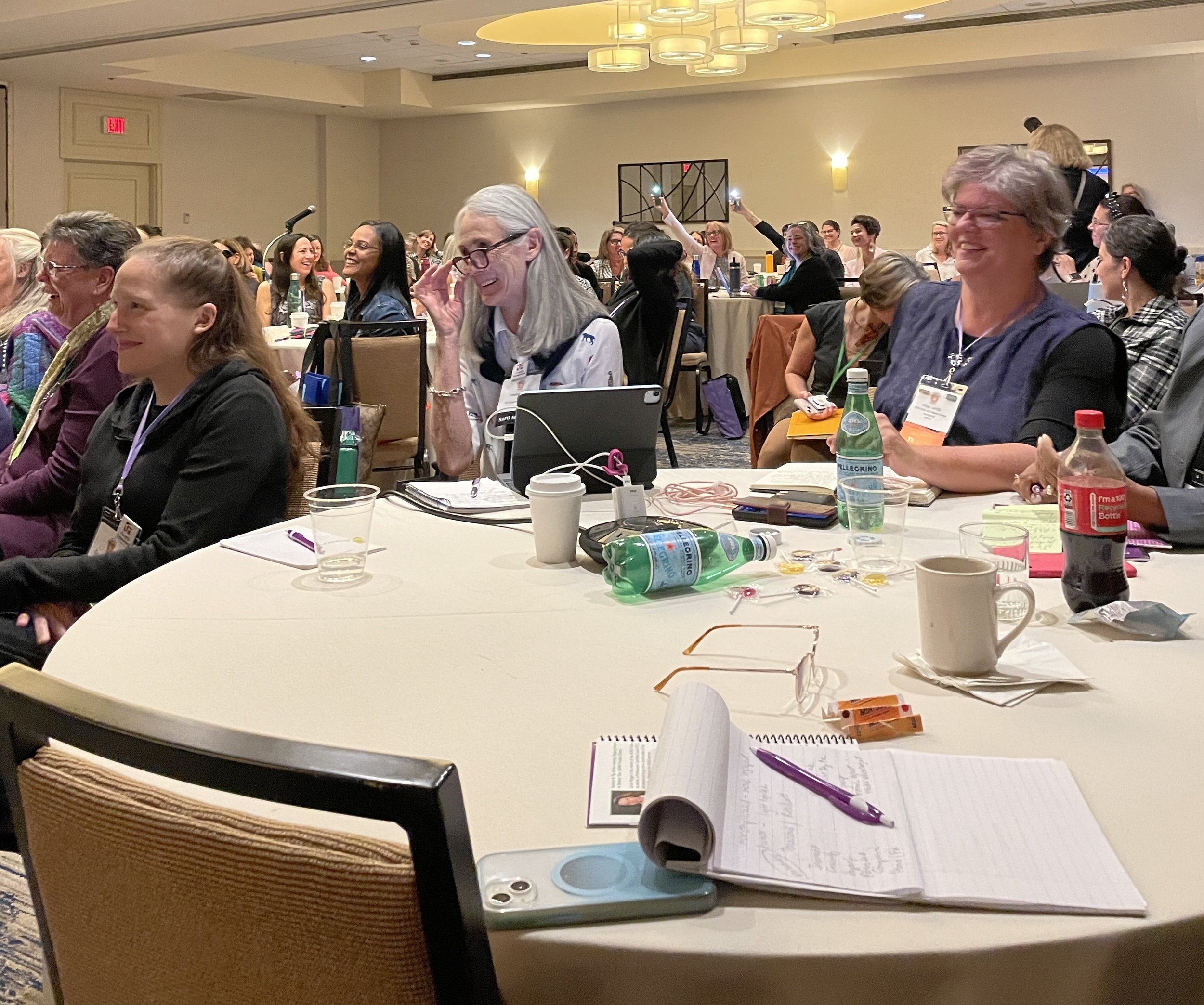
Last week, I attended the ICD conference near Boston with over 100 organizing colleagues from around the globe. It felt amazing to be together in person again, be with my colleagues, and meet new friends. We learned from incredible experts during seven 90-minute sessions. It was wonderful, intense, and emotional. There were sessions about dementia, hoarding, neurodiversity, ADHD, anxiety, time management, and mindset.

By the end, my brain felt drippy, like a sponge that couldn’t absorb more liquid. Of course, I want to share everything I learned with you. As I sat to write this, I got overwhelmed by the options and possibilities. So, guess what? I’m dialing it back from my 16 pages of notes to share information from five of the sessions. I hope the ideas open up something for you- a new perspective, reframe, or possibility.


5 Powerful Ways Learning Encourages Possibilities

1. DEMENTIA | “I am who I am. I’m just different.”

Beth Nolan, PhD, the Director of Research and Policy for Teepa Snow’s Positive Approach to Care™ (PAC), said there are 100+ causes and types of dementia. One way to help is to understand while dementia “robs” the person of many things, they still have skills and strengths. Identify and focus on those.

My mom was diagnosed with vascular dementia in 2013 and passed away in 2021. While many of her abilities were compromised over those eight years, I was always inspired by what remained, like her ability to make music, play the piano, sing, and express love. She was still my mom, just different.


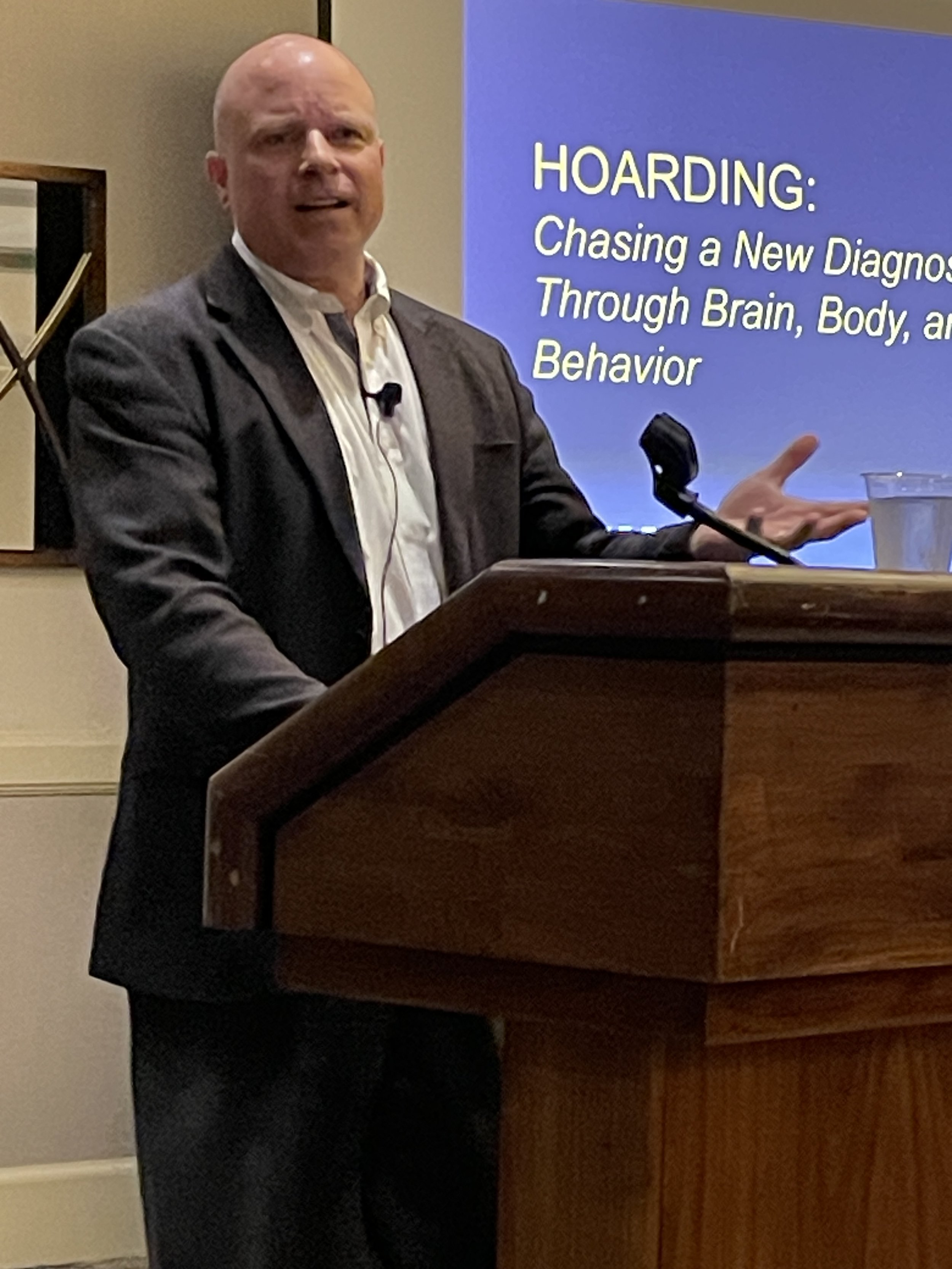
2. HOARDING | “Hoarding isn’t just a house problem. It’s a mental health problem.”

Dr. David Tolin, the Founder and Director of the Anxiety Disorders Center at the Institute for Living and Adjunct Professor of Psychiatry at Yale University School of Medicine, said Hoarding Disorder became a standalone diagnosis in the 2013 DSM-5. The hallmarks of the disorder are having difficulty discarding or parting with possessions and having a visible manifestation of clutter build up with the home no longer useable for its intended purpose.

For people with Hoarding Disorder, “Saving happens because tossing is distressing, not liberating or freeing.”

Dr. Tolin shared these statistics:

  • The drive to acquire and save affects 2-5% of the population worldwide.

  • Hoarding Disorder is twice as common as Obsessive Compulsive Disorder (OCD).

  • Hoarding Disorder begins at a young age (6-16) and worsens with age. It does not get better on its own.

While Cognitive Behavioral Therapy (CBT) is one of the most successful treatment methods for Hoarding Disorder, it is not 100% effective. Through continuing research, Dr. Tolin is committed to better understanding the psychology and biology of hoarding behavior and discovering ways to boost CBT’s efficacy.


Saving happens because tossing is distressing, not liberating or freeing.
— Dr. David Tolin


3. NEURODIVERSITY | “The value of life can’t and shouldn’t be based on productivity. It leaves a lot of people out.”

Devon Price, PhD, a social psychologist, professor, researcher, author, and proud Autistic person, was diagnosed with autism after finishing his PhD and experiencing “autistic burnout.”

Some of autism’s distinguishing characteristics include sensory input challenges, such as loud sounds and eye contact, which are painful. Processing is slower, but it’s a strength because they catch small details and are more detail-oriented. However, because the world moves fast, it doesn’t support how they process, so they feel more disabled.

Devon prefers identity-first language- “autistic person,” “autistic,” and “disabled person.” He said to avoid “differently abled” or “special needs.”


4. ADHD | “Successful ADHD women look successful on the outside and feel inadequate on the inside.”

Linda Roggli, PCC, creator of the ADHD Palooza series, a Professional Certified Coach, and author and founder of the A-D-Diva Network for ADHD women 40-and-better said she has an “ADHD brain.” 

The ADHD inattentive type is most prevalent in women. Some distinguishing factors include a busy brain, low energy, high worry, inability to concentrate, being distracted by one’s thoughts, daydreaming, difficulty following through and prioritizing, misplacing things, being talkative, impatient, having low self-esteem, not having great a working memory, making impulsive decisions, and feeling restless.

Roggli said understanding the impact of hormones on women with ADHD is essential. The brain works better with more estrogen. Estrogen affects dopamine. The ADHD brain lacks dopamine. Menopause decreases estrogen by 50% and keeps getting lower.

Most women with ADHD have comorbid conditions or “sidecars.” They include:

  • 30-40% - 1 Depressive episode

  • 50% - Learning differences

  • 10-20% Bipolar

  • 30% OCD

  • Up to 50% - Addictions


5. ANXIETY | “The more you care, the more you worry. Anxiety means I care. You can’t teach people not to care. You can only teach how to manage anxiety.”

Dr. Alicia Clark, a psychologist and author of Hack Your Anxiety, said 40% of people experience persistent stress, and only 36% get help. She also said:

  • Women suffer from anxiety 1.6 times more than men.

  • Post-pandemic, anxiety and depression increased by three times.

  • The visual distraction of clutter increases cognitive overload and decreases working memory.

Anxiety shows up in the “emotional landscape” of the organizing work we do with our clients. These can appear as fear of change, failure, facing emotional memory of things, letting go, and making mistakes.

Dr. Clark described four forms of anxiety – Whisper, Chatter, Nagging, and Yelling. She explained they are not all bad. Chatter anxiety is referred to as “good stress.” You can reframe anxiety and recognize that it drives motivation. She suggests using “anxiety to change what is in your control,” focusing on progress, reframing setbacks as part of the growth process, and getting adequate sleep.


Possibilities open up when we understand more about our psychological, emotional, and biological states. I was deeply moved by the presenters, the stories and insights they shared, and how they connected to many of my clients. It is a privilege to be part of their journey. I have the utmost respect and admiration for my clients’ determination and how they face their challenges.

What possibilities appeared for you? Did you discover any surprises? I’d love to hear your thoughts. I invite you to join the conversation.