Posts tagged thought partner
How One Small Change Can Help Reduce Overwhelm and Boost Task Activation

There are two challenges related to change that many of my clients face. The most common reason is overwhelm, often because the changes they seek are significant. Overwhelm can happen when you:

  • Have difficulty deciding where to start

  • Want to make multiple changes

  • Are unsure whether what you want to accomplish is possible

  • Engage in negative self-talk or unhelpful loops and scripts

  • Are uncertain how you’ll have time to make the changes you seek

The second most common challenge is task activation. My clients often know what to do, yet struggle to take action. They may experience low mood, boredom with the task, self-doubt, exhaustion, or difficulty managing their time.

The good news is that even when you’re feeling overwhelmed and having difficulty activating, things can shift quickly in a positive direction. I’ve seen this happen consistently with my clients, and it’s inspiring to be part of.

Are you curious about how to shift from overwhelm to hope and from stuckness to action? If so, keep reading to learn a few helpful strategies.


Change Strategies That Work When You’re Feeling Overwhelmed and Stuck

Strategy 1: Go Small

You know the phrase, “Think big?” For the first strategy, do the exact opposite. Instead of focusing on all the changes you want to make, go small, really small. This shift creates a boundary.

Let’s say you want to edit and organize all the rooms in your home. The goal is doable, but the enormity of those tasks feels overwhelming. For now, set aside thinking about the big picture and focus on a single, small piece.

For example, you want to edit and organize your clothes, which are stored in many rooms, dressers, and closets. Select one small area to begin, such as a drawer, a shelf, a closet rod, or a bag stuffed in the basement. Anywhere is OK as long as the area is small.

You’ll notice almost immediately that your mood begins to regulate because you’ve contained the organizing task to something more manageable. Overwhelm and anxiety subside when you set boundaries around your area of focus.


Strategy 2: Engage in What’s Doable

Combine the first strategy, going small, with this next one. As you can imagine, it’s not enough to create a tinier boundary and shift your mindset. It must be paired with an action or task. By reducing stress and cortisol surges, activation becomes possible. You can calmly face your task.

Here’s the magic. Making progress on that one small thing has a wonderfully positive effect. Your thoughts transform from “I can’t do this” to “I’m getting it done!” Your mood shifts from blocked and negative to lighter, more energetic, and more excited about taking on more.


Overwhelm and anxiety subside when you set boundaries around your area of focus.
— Linda Samuels. CPO-CD®, CVOP™


Strategy 3: Enlist Help

The first two strategies are effective. However, if you’re ready for change and still feel unable to move forward, it’s time for the third option: Ask for help. This can come from a nonjudgmental friend, family member, or professional organizer like me. You don’t have to do this alone.

My clients recognize that having a partner on their organizing journey is the secret sauce. They appreciate ongoing support, discussions of solutions and challenges, help with decision-making, a thought partner, and encouragement.

Some recent client organizing tasks included:

  • Decluttering the dining room table

  • Refining a project management system

  • Editing several bags of shirts

  • Sorting and releasing old business files from a shelf

  • Editing and letting go of a box of electronic material

For all of these projects, my clients’ starting point was feeling overwhelmed and unable to act. However, by narrowing the scope, focusing on one small part at a time, and enlisting external support, they improved their mood, accomplished a specific task, boosted their confidence, and were motivated to do more.


Why Does a Tiny Change Matter?

Small shifts are doable and sustainable. When you think about change, it can feel overwhelming, especially when the changes are big. However, by adjusting your mindset, narrowing the scope, and enlisting help, you can make progress. What helps you when you feel overwhelmed? How do you work with task activation? What resonates with you?

I’d love to hear your thoughts. I invite you to join the conversation.


How Can I Help?

Do you feel overwhelmed, disorganized, or paralyzed? Do you seek change, yet feel stuck? I’m here to help! Virtual organizing is an extraordinary path forward – Local feel with a global reach.

Let’s connect! I’m easy to reach.

Embracing change and getting organized are possible, especially with support.


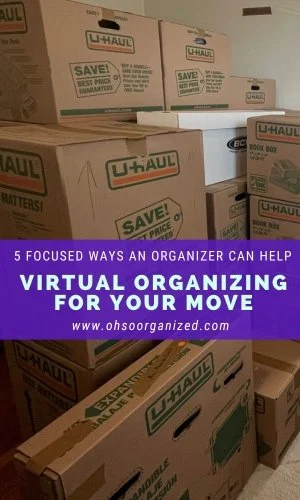
5 Focused Ways a Virtual Professional Organizer Can Help During a Move


In the northeast, the leaves are changing, and it’s a season of transition. Is fall the unofficial moving season? It seems so, especially since many of my clients and kiddos are in the process of moving, downsizing, right-sizing, or transitioning.

Moving involves many decisions and plans, which can be overwhelming. The good news is you don’t have to do it alone. Reduce your stress and enjoy the benefits of getting help from a virtual professional organizer like me.

Depending on your stage in the moving process, motivation can vary significantly. For example, if you're moving within a month because your lease is ending or your house was just sold, the limited time creates pressure that boosts motivation. However, if you're planning to move years from now or moved several years ago but haven't fully unpacked or settled, your motivation might feel important but less urgent.

No matter what stage of moving you’re in—pre-move, during, or post-move—having the right support makes an enormous difference. Whether you hire a professional organizer or ask family and friends for help, creating your team will help things go more smoothly and reduce stress.

Because you know what they say—moving is one of the top ten most stressful things we do in life.

  • In a 2020 survey by OnePoll for North American Van Lines, 64% of respondents said that their recent move was one of the most stressful experiences they ever had.

  • In a 2022 Move.org survey, 38% of respondents said moving was more stressful than parting with a significant other.

  • In a 2025 survey by HireAHelper, 29% of participants said they’d rather get a divorce than move again. 55% of participants rated moving as highly stressful.


5 Ways a Virtual Professional Organizer Helps You Navigate a Move

1. Clarify Your Why

Your reasons for moving might seem obvious. However, an organizer can help you clarify these reasons and keep them relevant as you make decisions. There are many choices to consider, and decision fatigue can set in. Keeping your ‘why’ visible helps you stay focused, encourages the right actions, and boosts your motivation. 

Maybe your why is to:

  • Simplify life—own less, manage less, and reduce your financial obligations.

  • Consider the future—downsize and organize your belongings now so your family won’t have the burden of doing it after you’re gone.

  • Get more space—Your current living situation is too cramped, and you need extra room for your growing family.

  • Relocate temporarily—A family or work situation requires you to move, even if it’s not an ideal scenario.

  • Reimagine life—You’ve experienced a major life change, like losing a loved one, starting a new job, becoming an empty nester, or retiring. Now you want a fresh start in a new place.


2. Establish Timeline and Pace

As an organizer, I enter someone’s life at a particular moment in time. Sometimes, I’m contacted well in advance of a move, giving enough time to plan and edit. Other times, I engaged right before or after a move. Every scenario requires a different timeline to help someone go from where they are to where they want to be.

Working together, we can create a schedule, even a loose one, to put a reality check on what’s possible to accomplish within a certain timeframe. Many considerations will affect your timing, including:

  • Budget

  • Urgency

  • Time available to focus on the project

  • Life demands more than just moving

  • Support team you have or need to assemble

Pacing is just as essential as understanding the overall timeline. If you're years away from moving, you can proceed at a slower, steady pace. However, if you're moving this month, the pace needs to be much faster. You might need extra help to finish your move.


3. Edit and Organize Your Stuff

Even if you don’t see yourself as a ‘collector,’ you probably have plenty of things to edit before and even after your move. You know how it goes, right? As humans, we accumulate a lot of stuff. And if you’ve been in your home for a long time, you likely have even more stuff.

Enlisting help from a virtual professional organizer during the editing phase is invaluable. I can support that process in various ways, including:

  • Asking good questions

  • Weighing your options

  • Providing focus as you sort through your things

  • Establishing decision-making parameters

  • Sharing letting go strategies

  • Helping determine which category something belongs to: Keep, Toss, Donate, Sell, Route to storage, or Give to a specific person

While it’s best to edit your belongings before moving, that’s not always possible. Letting go often continues after the move, even if you edited beforehand. If you’ve already moved, I can help you with ongoing editing, decluttering, refining, space planning, organizing, and deciding about the last 10% of items that haven’t been unpacked.


Even if you don’t see yourself as a ‘collector,’ you probably have plenty of things to edit before and even after your move.
— Linda Samuels, CPO-CD®, CVOP™


4. Have Access to Trusted Resources

Throughout every stage of a move, you’ll need various resources for donating, selling, recycling, or disposing of items. You might also need referrals for vendors like movers, junk haulers, or suggestions for organizing products.

With over 30 years in the organizing industry, I’ve gathered hundreds of resources to share with my clients. I also have a network of industry colleagues who generously share their resources whenever I need a referral for something or someone I don’t already have.


5. Collaborate with a Thought Partner

Moving can feel like a huge jumble of puzzle pieces. Although the pieces will eventually fit together to create a new, beautiful picture, it currently feels chaotic and overwhelming. Moves and related tasks can be emotionally draining.

However, working with a thought partner helps you make sense of those pieces more quickly and feel supported throughout the process.

A thought partner can help you:

  • Get unstuck

  • Reduce overwhelm

  • Identify your next step

  • Brainstorm solutions to obstacles

  • Develop checklists

  • Encourage action

  • Discuss your choices and options

  • Provide accountability

  • Boost motivation


Can You Benefit from Virtual Organizing Help?

While physical tasks like packing and unpacking are not things I assist with as a virtual professional organizer, there are many other areas, as discussed, that I can help with.

Location isn’t a barrier. Virtual organizing lets me work globally. Even though I’m based in New York, I can help whether you’re in California, Canada, or somewhere else.

Virtual organizing sessions are focused and short, lasting 60 to 90 minutes each. We’ll work together on your goals, then you’ll have time afterward to work independently, with ongoing support to repeat that process.

Are you moving right now? If so, how can you benefit from enlisting help from a virtual professional organizer? 

I’d love to hear your thoughts. I invite you to join the conversation.


How Can I Help?

Do you feel overwhelmed, stuck, or disorganized? I’m here to help! Virtual organizing is an extraordinary path forward – Local feel with a global reach.

Let’s talk. I’m easy to reach.

Getting organized is possible, especially with support.