Here Are 5 Most Interesting and Best Finding Help Discoveries – v51

Enjoy the latest release (v51) of the “What’s Interesting?” series, which features my most recent finds that inform, inspire, and relate to organizing and life balance. These unique enlisting help discoveries reflect this month’s blog theme.

You are an engaged, vibrant, and generous group. I am deeply grateful for your ongoing presence, positive energy, and contributions to this community. I look forward to your participation and additional contributions to the collection I’ve sourced.

What do you find interesting?


What’s Interesting? – 5 Best Finding Help Discoveries

1. Interesting Read – To Do Help
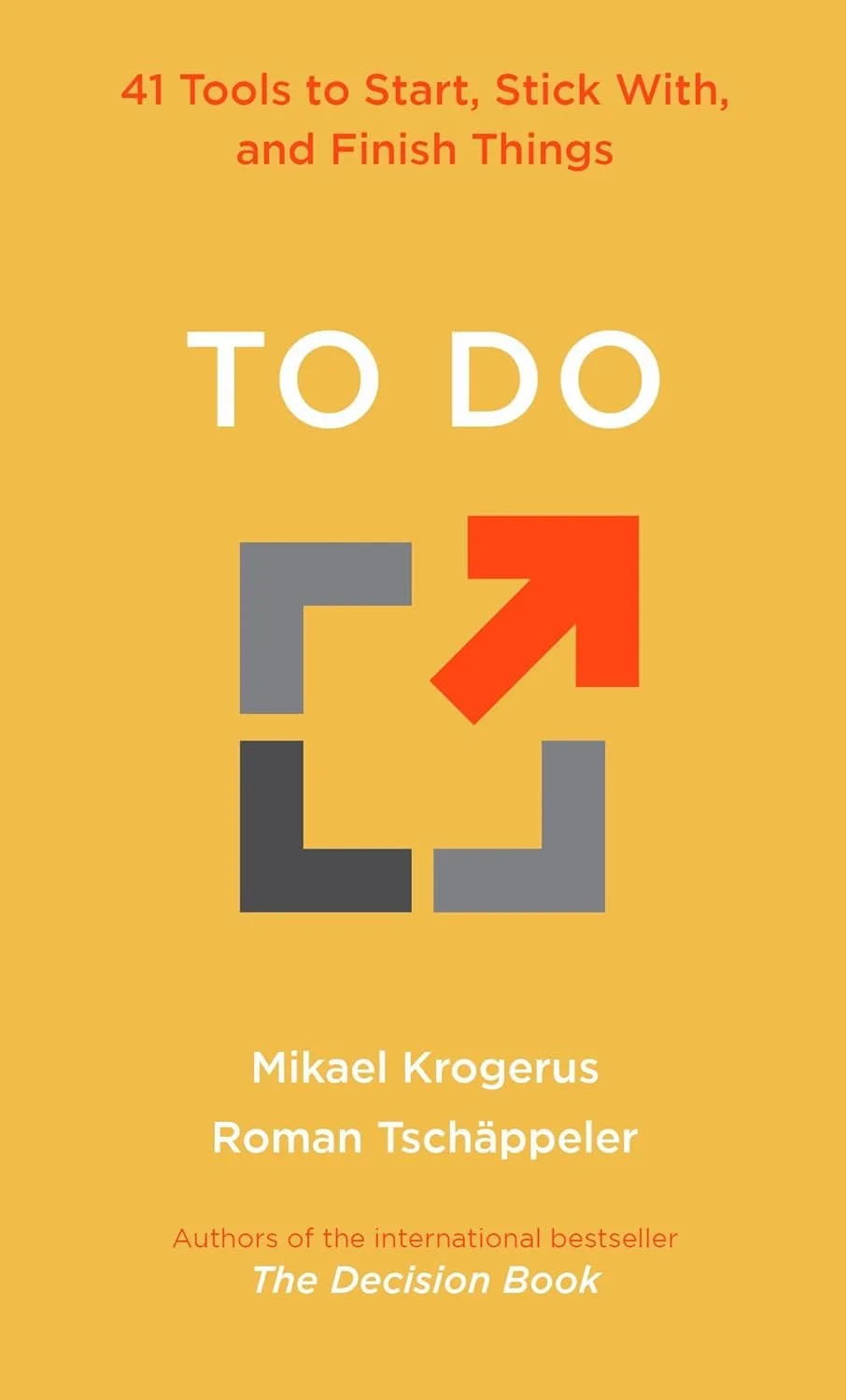
Do you have a project you’re procrastinating on or a to-do list that’s a mile long? Life requires you to get sh*t done. That’s all fine when you’re in the flow, checking off the ‘done’ tasks, and making progress. But what happens when you feel paralyzed before getting started or completing your goal?

In To Do – 41 Tools to Start, Stick With, and Finish Things, authors Mikael Krogerus and Roman Tschäppeler share many techniques to help you be more productive and fulfilled. They encourage you to choose the strategy that best fits your unique situation. Some will help enhance your work when you’re highly motivated, while other tools will give you the push you need to get started when you’re procrastinating.

They say, “…we don’t ‘get things done’ the same way every time. Sometimes we’re bursting with energy…at other times we falter, unsure if we’re on the right path, even questioning the whole project.”

Some of the techniques covered include:

  • The Pomodoro Technique – Use focused, time-limited ‘work’ sessions, which help you “avoid distractions and get started on something.”

  • Rapid Prototyping – Apply the approach for building models or prototypes to your tasks. Focus on “good enough,” release perfection, solicit input as needed, and make adjustments as needed.

  • Kanban – Use this tool when you experience “to-do overload.” It’s a visual method to clarify “what you’re planning to do, what you’re doing right now, and what you’ve already done.”

  • The 5-Second Rule – Use it when you need help with “activation energy.” Do a simple “countdown: 5, 4, 3, 2, 1 … and do the right thing.”

  • The 5/25 Rule – This tool helps you identify the five most important goals you want to achieve in life and let go of the other twenty you won't have time for.

  • The Law of Reversed Effort – Apply this approach when your goal feels like an obstacle. Instead of chasing that goal now, let it go and focus your attention on something else. After at least six months, revisit your goal to decide if you still want to pursue it, or if there’s another way to accomplish it.

Which task or project are you currently stuck on?


2. Interesting Resource – Repair Help

Living in a “throwaway culture” means that repairing broken items happens less frequently. People often prefer the convenience of buying something new, rather than fixing what’s broken. Also, since getting broken things fixed isn’t as easy as it once was, discarding and buying something new can seem like the only option.

However, if you are committed to keeping things out of landfills and getting more use out of your stuff, I have some good news. A client of mine recently shared this resource with me, and I couldn’t wait to tell you about it.

Repair Cafe community events happen locally and internationally. Bring your broken item, and a volunteer repair coach will help you fix it. Not only will your belongings get repaired, but you’ll also gain hands-on experience.

Repair coaches can help fix a variety of items, including lamps, clocks, chairs, small appliances, digital devices, clothing, textiles, toys, jewelry, and more.

The next time something breaks, consider seeking help and engaging in the repair revolution.

Which of your things could be repaired?

Asking for help is valuable and shows strength, not weakness.
— Linda Samuels, CPO-CD®, CVOP™


3. Interesting Study – Activation Help

Several years ago, Real Simple published an article about clever ways to increase your energy. One of the suggestions was to “shake up your routine.” They referenced a brain study in Nature Communications. The experiment found that when the nucleus accumbens, the part of the brain linked to motivation and pleasure, isn’t stimulated in a particular way, a signal is sent that causes drowsiness.

Alice Boyes, PhD, author of The Healthy Mind Toolkit, said, Changing your routine in the tiniest ways can have an effect on sluggishness.” The routine shift can also “spark creativity.” Small changes can include “Rearrange the furniture. Sit somewhere different. Pour the milk into the bowl before your cereal.”

Are you feeling tired and struggling to activate? If so, what small change can you make to your routine?


Life requires you to get sh*t done.
— Linda Samuels, CPO-CD®, CVOP™


4. Interesting Product – Storage Help

One of my favorite organizing tools is the mesh zipper bag. They are:

  • Versatile

  • Lightweight

  • Durable

  • Colorful

  • Affordable

The bags featured here have handles, making them even easier to carry. You can use them to store books, puzzle pieces, small toys, board games, craft projects, office supplies, papers, and more. Use these pouches at school, home, office, or while traveling.

What could you store in your mesh bags?


5. Interesting Thought – Getting Help

Do you ask for help when you’re stuck, or do you tend to remain stuck and frustrated on your own?

It’s remarkable how much progress and growth can occur when you find the right support. Asking for help is valuable and shows strength, not weakness.

Everyone needs assistance at times, especially if you’re:

What kind of help do you need right now?


Finding the Right Help

Sure, you can go it alone. However, there are times when reaching out for help can make an enormous difference to your sanity and progress. It’s worth creating a go-to list of people, strategies, and product resources to support you in pursuing your goals and tackling tasks. That way, you won’t have to struggle by yourself.

Who or what is your favorite source of support? Which of these discoveries resonates most with you? I’d love to hear your thoughts and invite you to join the conversation.


How Can I Help?

Do you feel overwhelmed, stuck, or disorganized? I’m here to help. Virtual organizing is an extraordinary path forward – Local feel with a global reach.

Let’s talk. I’m easy to reach.

Getting organized is possible, especially with support.


How a Professional Organizer Gets Organized: Creative Life Tips That Really Help

Based on my personal experience and over thirty years of helping clients get organized, I’ve learned a few things about what it means to be organized enough. That definition varies from person to person. What feels like being organized enough to me might be different for you. Guess what? That’s okay.

It's a journey to discover what helps you feel, be, and stay organized. I use the word ‘journey’ because getting organized isn’t a one-and-done event. As you go through life stages and changes, your organizing systems will likely need adjustments. Being organized helps make your life flow more smoothly. Being flexible and willing to tweak your systems as needed is part of the process.

Many strategies and products can work for your unique organizational needs. I’ve written hundreds of articles about this on the blog. However, today, I thought it would be fun to give you a behind-the-scenes look at some strategies and systems I use to stay organized with my things, thoughts, time, and space.


What Helps Me, a Professional Organizer, Stay Organized Enough?

Organized Things

Strategy: Create designated ‘homes’ for everything. This gives each possession a specific place to ‘live’ when it’s not in use and a spot to return after use.

Here are some ways I do that:

  • Hooks next to the desk for my purse and bags

  • Purse with compartments or mesh zipper bags inside larger totes

  • Pen cup on the desk that holds only working pens

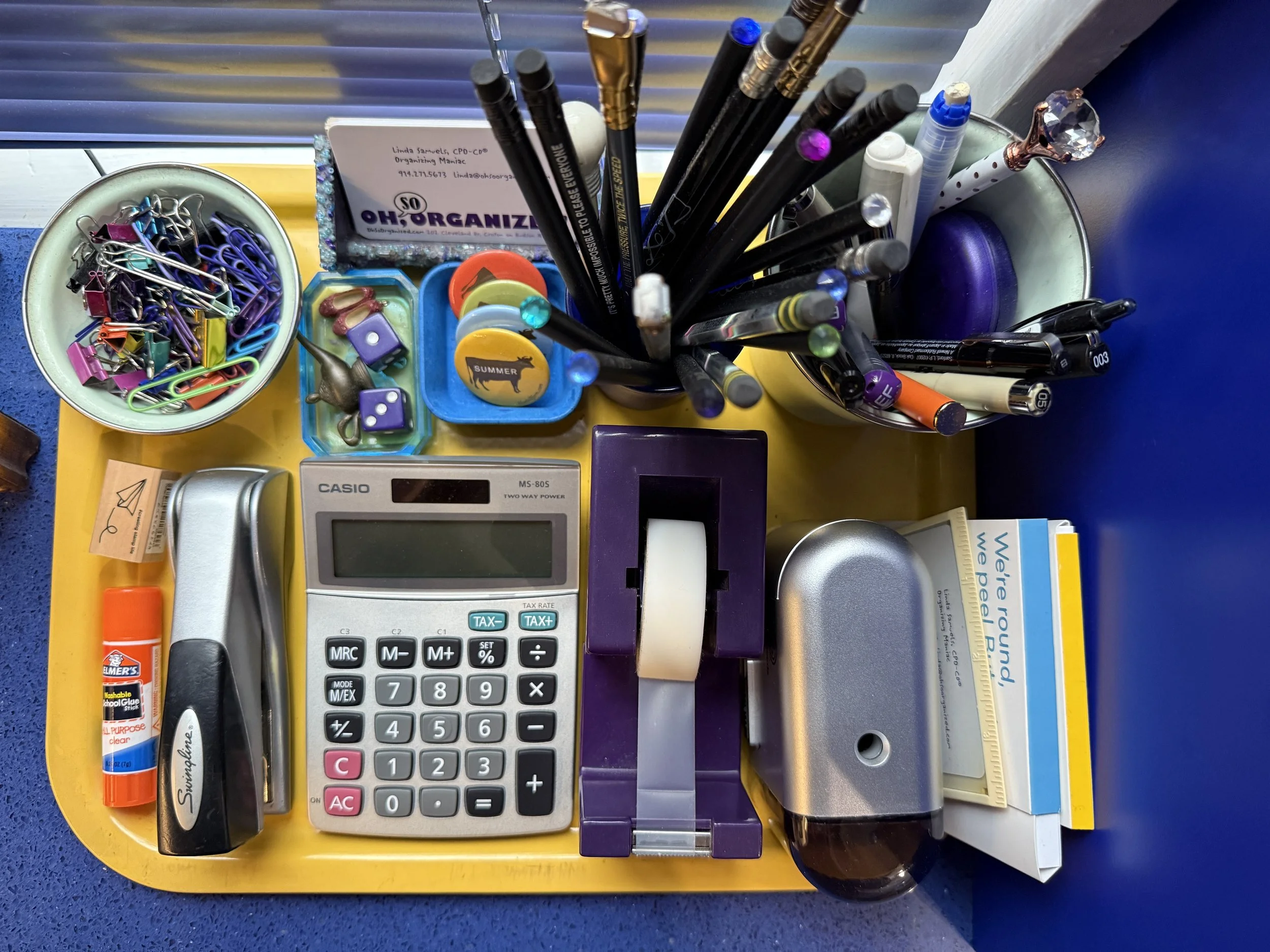
  • Tray on the desk that holds frequently used office supplies like a stapler, tape dispenser, calculator, and paper clips

  • Office supply cabinet with labeled drawers that organize similar items together

  • Charging station and stands for my iPhone and iPad

  • Drawer organizers, open bins, closed containers, and shelf dividers to house specific categories in the bathroom, kitchen, dining room, living room, and bedrooms

  • Hook inside the door of a lower kitchen cabinet next to the stove to hang potholders


Organized Thoughts

Strategy: Use specific methods and tools to help clarify, record, and process thoughts. Some thoughts are personal, while others relate to my professional life. As a verbal processor, I find that writing and talking are effective ways to organize my thoughts.

Here are ways I do that:

  • Write in my personal and meditation journals

  • Log tasks and projects in my 2Do app, which can be scheduled for specific dates

  • Place sticky notes and pens next to phones, beds, desk, kitchen and bathroom to jot quick notes, which get transferred or filed

  • Keep an AquaNotes® waterproof paper pad and pencil in the shower to capture ideas

  • Use a Word or Google Doc to organize ideas and projects

  • File ideas into my blogging binder by category that I want to potentially write about

  • Enlist help from a family member, friend, or professional to discuss and sort out my thoughts aloud.


It’s a journey to discover what helps you feel, be, and stay organized.
— Linda Samuels, CPO-CD®, CVOP™


Organized Time

Strategy: Build systems you can fully trust. Use effective strategies and products that encourage intentionality and help you gain better control of your time. When possible, use one calendar along with a separate task app to manage your personal and professional life.

Here are ways I do this:

  • 2Do app for scheduling appointments, tasks, birthday reminders, and lists such as ‘Books to Read’ or ‘Books Read’’

  • Notes app on iPhone with shopping lists for specific stores, mileage log, and health notes

  • Digital calendar with vertical weekly dated layout

  • Color-coded calendar to see at a glance where my time is scheduled, the mix of categories, and the white space signifying unscheduled time

  • Calendly app to schedule client and personal meetings

  • Analog clocks in my office and kitchen to better visualize time

  • Use timers to allow me to hyperfocus, remind me when to switch gears, get up and move, or wrap up what I’m doing

  • I use different timers depending on the need:

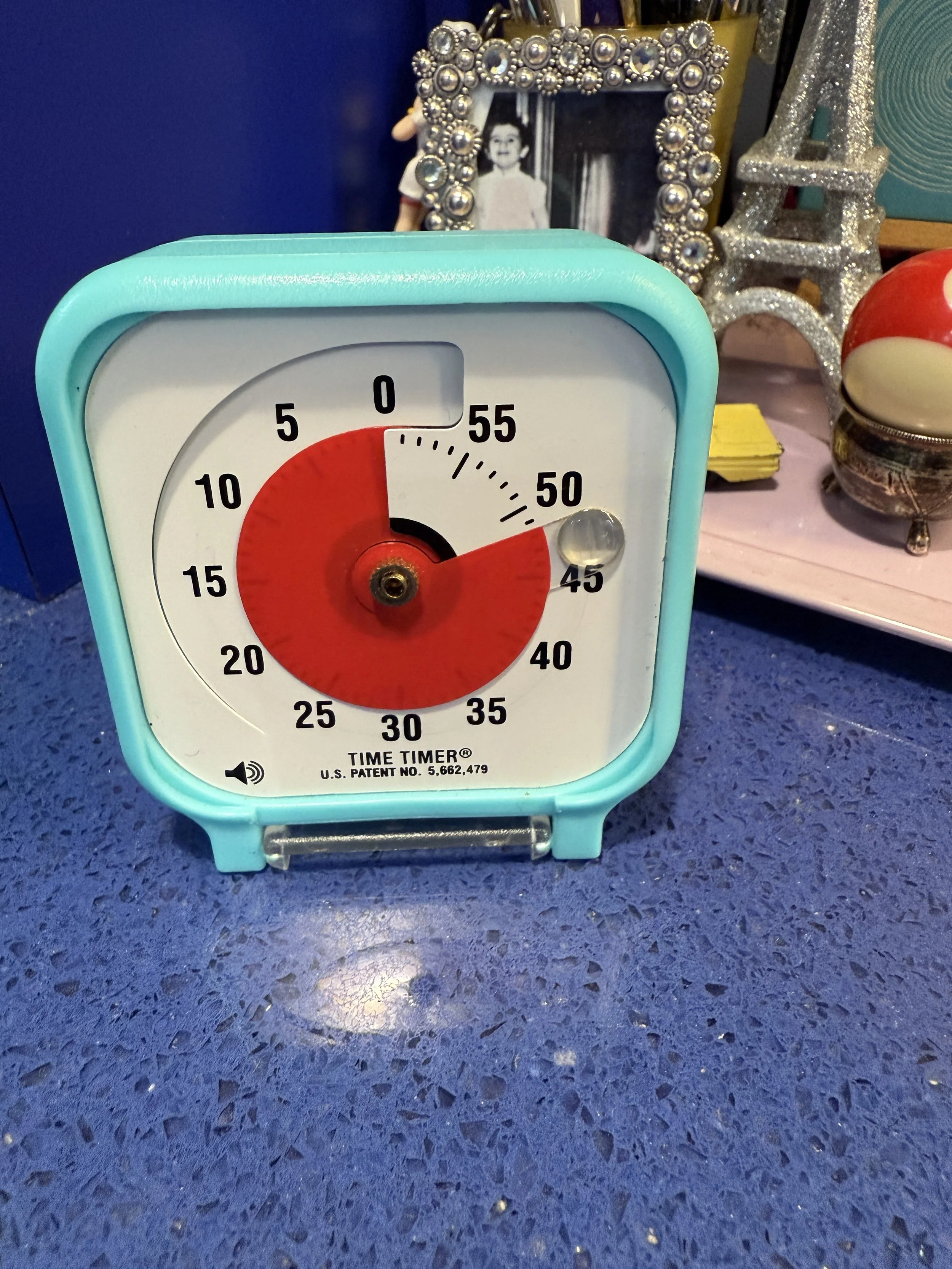
    • Time Timer® , a visual timer for meetings, virtual organizing sessions, and workshops

    • Clock app alarm with auditory alert on my iPhone for switching gears, cooking, and notifying of upcoming meetings

    • Kitchen timer on the stove with auditory alert for cooking or cleaning something with timed instructions

  • Only commit to something new after reviewing my current time commitments

  • Respect my time and know when to say “yes” or “no”

  • Have clear work and personal boundaries


Organized Space

Strategy: Define the purpose and designate zones for each room and area. Organize spaces to support their intended use, maximize the available area, and minimize clutter.

Here are some ways I do that:

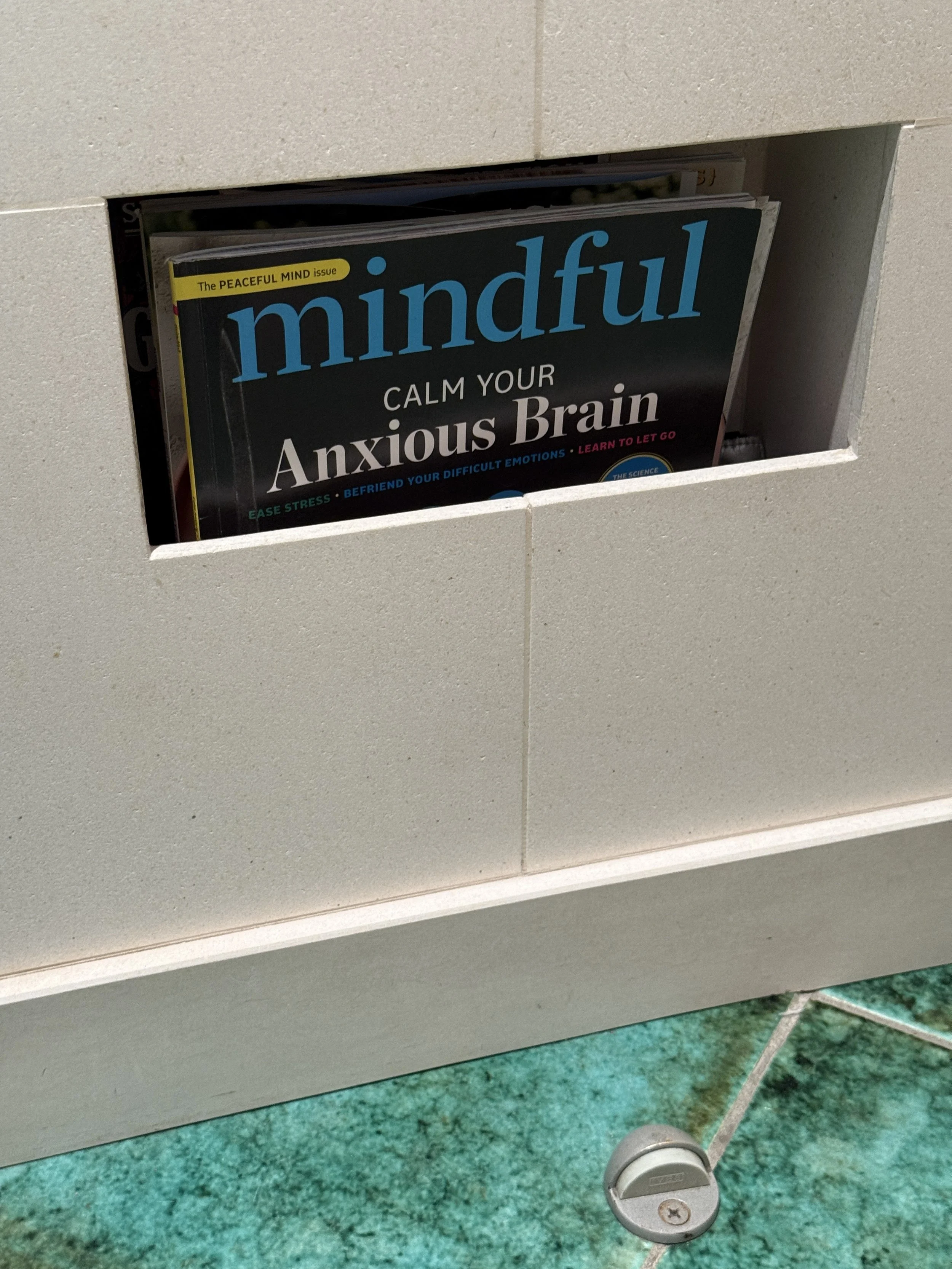
  • Guest bathroom with a in-wall magazine holder

  • Kitchen with a hot beverage station

  • Pantry with labeled Elfa drawers for storing gift wrapping supplies

  • Laundry room with closets for storing extra cleaning products and paper goods

  • Entryway with cushioned bench and open cubbies below to sit while taking shoes on and off and for storing most frequently worn shoes

  • Office with a wall slot to fold up and discreetly store my folding screen when not in use


What Helps You Organize Your Things, Thoughts, Time, and Space?

Getting organized enough can help create more ease in your life. If you’re feeling overwhelmed by everything, focus on one category at a time to improve. Which area needs the most attention? Which category do you want to work on first? What helps you feel organized enough for your things, thoughts, time, and space?

I’d love to hear your thoughts. I invite you to join the conversation.


How Can I Help?

Would you like support with getting organized? I’d love to help! Virtual organizing is an extraordinary path forward – Local feel with a global reach.

Let’s talk. I’m easy to reach.

Getting organized is possible, especially with support.
 
 
Feeling Stuck? Start Here: Small Organizing Steps That Empower Motivation

Feeling stuck is a common experience. Do you wait to feel motivated before starting a project or task? You might think you need to be in a good mood, have the right energy, or be completely clear about your plan before beginning. However, like with organizing and in life, waiting can keep you stuck. The reality is that motivation doesn’t always come first. More frequently, it follows the act of starting.

When you take that first tiny step, whether it’s decluttering one surface, recycling some papers, or making a short to-do list, you build momentum. Beginning helps you to":

  • Break through mental clutter.

  • Build confidence.

  • Turn what’s overwhelming into something manageable.

Just starting reinforces that progress doesn’t begin with having everything figured out. Getting unstuck starts with taking one small step.

If you’ve been waiting for the perfect time, I encourage you to let go of perfection and take action today. The smallest effort can spark the motivation you’ve been missing.

As James Clear said, “Whenever you are stuck searching for the optimal plan, remember: Getting started changes everything.”

With these ideas in mind, what can help you change everything?


27 Ways to Get Started: A Motivation-Boosting Organizing Checklist

Nike’s iconic motto is “Just Do It.” Similarly, but with a twist, the suggestions in this checklist encourage you to just start with small actions that will help build significant momentum.

Use this checklist when you’re feeling stuck. Completing even one small task can boost the motivation needed to keep going.


THE MOTIVATION-BOOSTING ORGANIZING CHECKLIST

Home Clutter

  • Make your bed.

  • Declutter one corner of your desk.

  • Organize just one category, like shoes, coffee mugs, or bathing suits.

  • Empty and edit the contents of a tote bag or bin.

  • Declutter five items from any drawer.

  • Take out the recycling.

  • Place a donation bag somewhere visible.

  • Put five items into the donation bag.

  • Declutter one shelf or surface.

  • Recycle ten old magazines, papers, or receipts.


Digital Clutter

  • Delete or archive ten emails from your inbox.

  • Clear your desktop of old files.

  • Remove five phone apps you don’t use.

  • Unsubscribe from three newsletters you never read.

  • Turn off dings, pop-ups, and alerts.


Time-Induced Starts

  • Set a 10-minute timer to declutter anything.

  • Schedule 15 minutes this week to start your next project.

  • Take five minutes to decide on the “maybe” items.

  • Spend five minutes reviewing your to-do list and pick the top three tasks you want to accomplish today.


Quick Wins

  • Toss all the non-working pens in your pencil cup.

  • Clear the kitchen sink.

  • Put dirty laundry in the hamper.

  • Follow up on one item from your ‘pending’ pile.

  • Label one shelf, bin, or folder.

  • File or shred a small group of papers.

  • Clean out your purse.

  • Remove the trash from your car.


What Small Actions Help You Get Started?

Don’t underestimate the positive impact taking small steps has on motivation. Relief and progress are within your reach. How does starting influence what happens next? Which items from the getting started checklist resonate most with you? What additional items would you like to add to your checklist?

I’d love to hear your thoughts. I invite you to join the conversation.


The smallest effort can spark the motivation you’ve been missing.
— Linda Samuels, CPO-CD®, CVOP™


How Can I Help?

Would you like some support with motivation, activation, or organization? I’d love to help! Virtual organizing is an extraordinary path forward – Local feel with a global reach.

Let’s talk. You can:

Organizing and sustaining motivation is possible, especially with support.
 
 
3 Simple Ways to Improve Your Motivation and Get Unstuck

Motivation isn’t always there before you start what you want to do. It might be, but more often it shows up after you begin taking action. The mind can play tricks on itself and psych you out. It dwells on reasons why you can’t start or reach your goal

When that happens, motivation disappears, progress is elusive, and you feel stuck. You’re at an impasse. You can remain in this limbo, negative state, or you can turn things around.

If you’re ready to change the dynamics, I have some ideas to help. There are many ways to get unstuck, boost your motivation, and act on what matters most. I compiled three approaches related to focus, fear, and perspective.


3 Simple Ways to Improve Your Motivation and Get Unstuck

1. Motivation and Focus

Focus on the seeds, not the trees. What seeds are you planting today?
— James Clear

A common reason for a lack of motivation is feeling overwhelmed. It’s important to understand your overall goal or objective. However, focusing too far in the future on what it will take to reach that goal can be demotivating.

Instead, narrow your focus and stay present. This will help boost motivation. Invest in small actions that support your larger goal. Keep your attention on the now and your next step, while remembering your ‘why’.

Eventually, the seeds you plant will grow into the trees you desire.

REMEMBER: “Focus on the seeds, not the trees. What seeds are you planting today?”James Clear


2. Motivation and Fear

Any next action.
— Linda Samuels, CPO-CD®, CVOP™

A few months ago, Kara Cutruzzula, a writer, playwright, lyricist, and friend, wrote a piece on Substack called “Hop to the other side of fear.” She shared how being unprepared and scared can get in the way of progress, yet these are fixable challenges.

In response, I commented that fear, indecision, and uncertainty can be paralyzing and demotivating. However, taking any next action can help break that cycle.

  • What fears are holding you back?

  • What decision are you struggling to make?

  • How can you get ready to take the next small step?

  • How is uncertainty preventing you from moving ahead?

Taking action holds undeniable power. It encourages further progress, boosts motivation, quiets fears, and helps you move forward.

REMEMBER: “Any next action.” Linda Samuels, CPO-CD®, CVOP™


3. Motivation and Perspective

Make your what-if questions positive, not negative.
— Todd Henry

Someone once suggested to me that it’s unhelpful to ask ‘what-if’ questions. Honestly, that has never prevented me from pondering them. How you phrase the ‘what-ifs’ is essential.

Especially when you’re feeling stuck and lacking motivation, it’s more helpful to reframe your ‘what if’ questions from an optimistic perspective.

Instead of dwelling on:

  • What if I never get my home organized?

  • What if I don’t complete this decluttering project?

  • What if I can’t change my unhelpful habits?

Instead try:

  • What if I make my home organized enough so that our family feels calmer and less stressed?

  • What if I finish this decluttering project so I can downsize to my new home?

  • What if I change my bad habits to feel healthier and more energetic?

‘What if’ questions can motivate and encourage action when they are framed to highlight positive outcomes.

REMEMBER: “Make your what-if questions positive, not negative.”Todd Henry


What Motivation Strategies Are Most Effective?

If “action precedes motivation,” as Julie Bestry, my friend and colleague, says, what helps you take that next step? Do you have motivational challenges? Which of these strategies resonates most with you?

I’d love to hear your thoughts. I invite you to join the conversation.


How Can I Help?

Do you need support with motivation, activation, or organization? I’d love to help! Virtual organizing is an extraordinary path forward – Local feel with a global reach.

Let’s talk. You can:

Organizing and sustaining motivation is possible, especially with support.