How to Take One Next Step Now When You're Feeling Unusually Overwhelmed

There are times when you’re in a state of flow. You work almost effortlessly on your projects and goals. You lose track of time and are in that creative, exciting phase. At other times, you’re not just stuck but overwhelmed. It feels impossible to move forward and determine your next step. The deluge is heavy, like a huge weight pressing down on you. The list of what needs accomplishing seems so large that it interferes with your focus and motivation. Instead of moving forward, you procrastinate, engage in distractions, or do nothing. Do any of these scenarios sound familiar?

Being overwhelmed is the number one reason my clients contact me for help. Organizing their space, time, or stuff can seem insurmountable. We work together with the big picture in mind, approaching it one small step at a time. And you know what? When we do that, we break through the overwhelm barrier and make progress.

My clients aren’t the only ones who get inundated. It happens to me too. I recognized that something had felt off for me this winter. It hasn’t been a typical season in the Hudson Valley. We barely had any snow, which disturbed my sense of balance and seasonal cycles.


Recently, I came across an image and phrase that resonated with me. An author described the feeling of a winter’s snow and wrote, “the quiet is even quieter.” When I read that, I recognized it was what I’d been missing. It’s not that it’s loud where I live. However, a significant snowfall covering the woods with a thick white blanket creates calm, silence, and that long pause. Things stop.

That unique winter quiet settles my mind as a deep, luxurious exhale. The silence helps me reset. Guess what happened? Last week, we finally got substantial snow. I was so excited when I woke up with the backwoods covered in white. I felt lighter, with a positive shift in my energy and mood. The frosted, peaceful landscape reduced my overwhelm and opened my mind enough to figure out what to do next.

A Simple Path Forward

After enjoying my breakfast and sipping my hot mug of coffee, I had an idea for encouraging forward movement. Using a low-tech solution, I grabbed a piece of paper and some pens to make a chart. It took about 10 minutes to create. I listed my upcoming projects for the next several months. It included project names, due dates, brief notes, and the next step for each project. It felt good to get them on paper and out of my head. I experienced an immediate sense of relief seeing this high-level view on a single sheet of paper. But the most significant benefit was the next step column. Rather than listing the bazillion tasks for each project, I listed only one tiny thing to focus on.

This simple exercise propelled me forward. Within a few days, I completed one of the projects. Now I have my roadmap with clear instructions of what to do next for the others.

“Consider the big picture, yet approach it one small step at a time.”
— Linda Samuels, CPO-CD®, CVOP™

I recognize how the snowfall helped me overcome my overwhelm and inspired the chart. However, snowstorm or not, you can use this helpful tool anytime you feel overwhelmed. There are moments when it’s beneficial to do an entire brain dump of all tasks, steps, projects, and thoughts. However, that doesn’t always work when you’re upset. Doing a total brain download can intensify those feelings. When that’s the situation, consider my ‘next-step’ approach instead.

What helps you figure out next when you’re overwhelmed? I’d love to hear your thoughts. I invite you to join the conversation.


How to Make the Courageous Connection Between Risk and Change Really Helpful

Let’s face it. Making a change involves taking risks. No matter the size of the risk, you’ll need the courage to dive into unknown waters. Your risk tolerance level will influence how easy or challenging it will be to pursue change. If you are comfortable taking risks, you will more likely welcome change and take necessary actions without too much deliberation. If you are risk-averse, change is still possible, but the journey will be more difficult.


Risk Tolerance Scale

Your response will vary depending on the scenario and type of risk. Consider your risk tolerance level concerning change using a scale from 1 to 10.

1   =   Risk-Averse:  Reluctant to take risks

10 =   Risk-Taker:  Eager to take risks

Imagine the change you want is to have less clutter in your home. Part of that process will include editing and releasing things. Using the Risk Tolerance Scale, you recognize how easily you can let go of junk mail and old newspapers. You give yourself a 10 because you can recycle them without much thought. However, when it comes to mementos, you struggle to make decisions because of your emotional attachments. You feel a sense of loss when letting go of things from the past, and give yourself a 2.


Preparing for Change

There are a few ways to facilitate change. Using the example above, refer to the Risk Tolerance Scale to identify the areas that feel less risky to work on, like junk mail and newspapers. As you build confidence and progress in those areas, you’re preparing to tackle the more challenging things next.

Another idea, which is especially helpful in risk-averse scenarios, is to ask the question,

What risk are you happy you took?

Revisiting risks you handled in the past that had successful outcomes will help build confidence in taking new risks and making changes. Invest time in remembering.


“Making a change involves taking risks.”
— Linda Samuels, CPO-CD®, CVOP™

Taking Risks in Pursuit of Change

There’s no question that when we pursue change, letting go occurs. This can include physical stuff, places, people, or ideas. During a recent virtual organizing session, my client shared something while gently releasing a category of papers from the past. It spoke to one of the benefits of embracing risk in pursuit of change and was so moving. She said,

“I’m letting go of part of my life that is no longer part of my life.”

What an insightful recognition that in moving forward and embracing change, you can let go of those things that no longer have a place in your present.


How does your risk tolerance level influence the changes you seek? In what ways have you noticed a connection? I’d love to hear your thoughts. I invite you to join the conversation.


Here Are Today's Interesting and Best Change-Related Discoveries - v39

The newest release (v39) of the “What’s Interesting?” feature has my latest finds, which inform, educate, and relate to organizing and life balance. These unique, inspiring, embracing change discoveries reflect this month’s blog theme.

You are a generous, communicative, and engaged group. I am deeply grateful for your ongoing presence, positive energy, and contributions to this community. I look forward to your participation and additions to the collection I’ve sourced.

What do you find interesting?


What’s Interesting? – 5 Best Embracing Change Discoveries

1. Interesting Read – Life Change

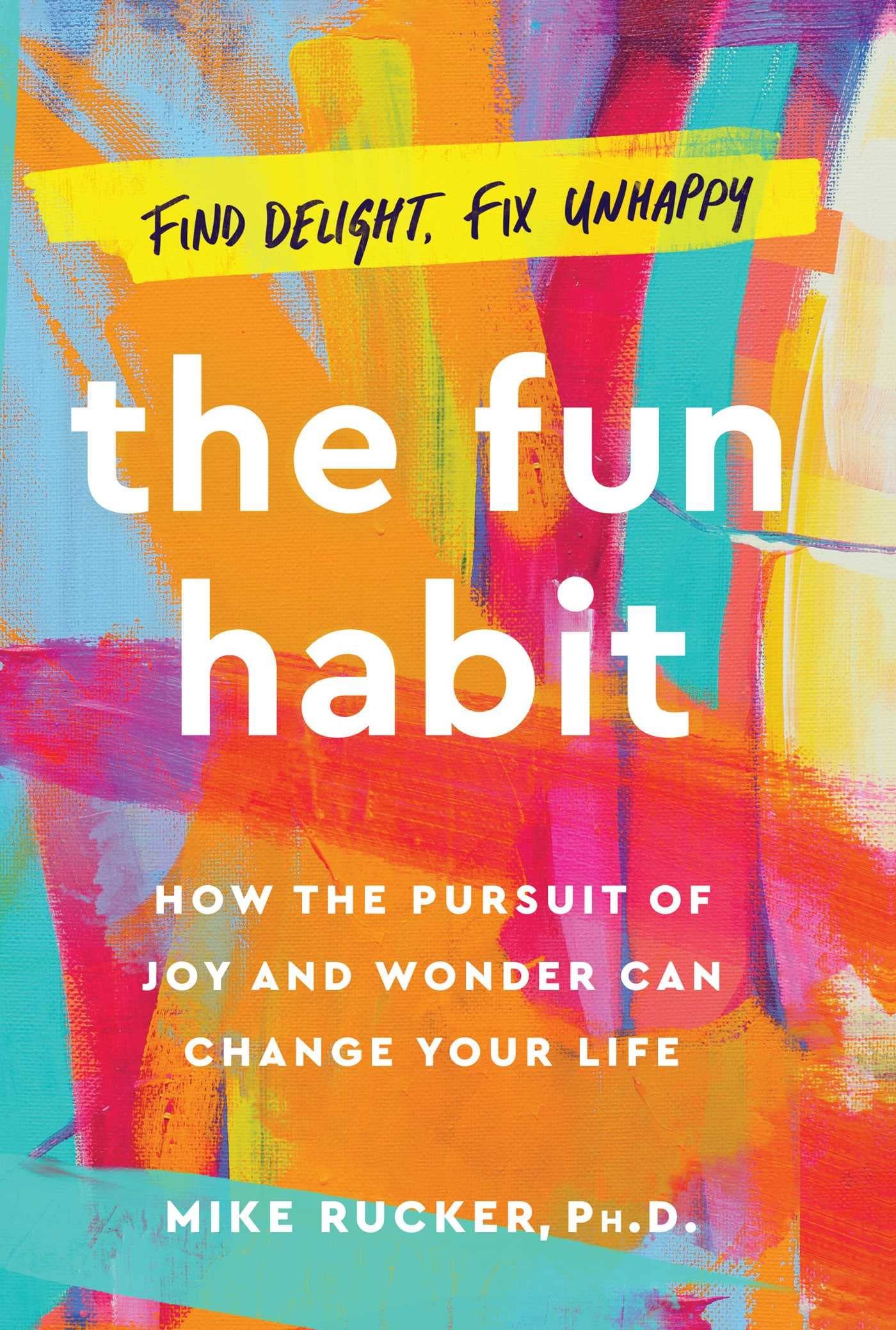
Do you want more happiness in your life? In The Fun Habit – How the Pursuit of Joy and Wonder Can Change Your Life, behavioral scientist, organizational psychologist, and author Mike Rucker, Ph.D., shares how happiness is a state of mind which can feel elusive and dependent upon your circumstance. Yet fun is action-oriented and something within your control. He says, “In contrast to happiness, I’ve come to learn fun is less think and more do. You’re either having fun or you’re not.”

Backed by research and personal experiences, Mike shares ways to be intentional about fun. While he is not opposed to striving, he says, “instead of auditing your calendar for productivity, audit it for fun.” Use the PLAY model to identify and sort activities based on their level of challenge and degree of fun. Create your “fun file” to document and prioritize your fun habit. This book is for you if you’re ready to change and add more delight to your life. Mike says, “We don’t get through life without enduring periods of disappointment, pain, and loss. Fun is the magical balm that makes the slings and arrows bearable.”


2. Interesting Perspective - Slow Change

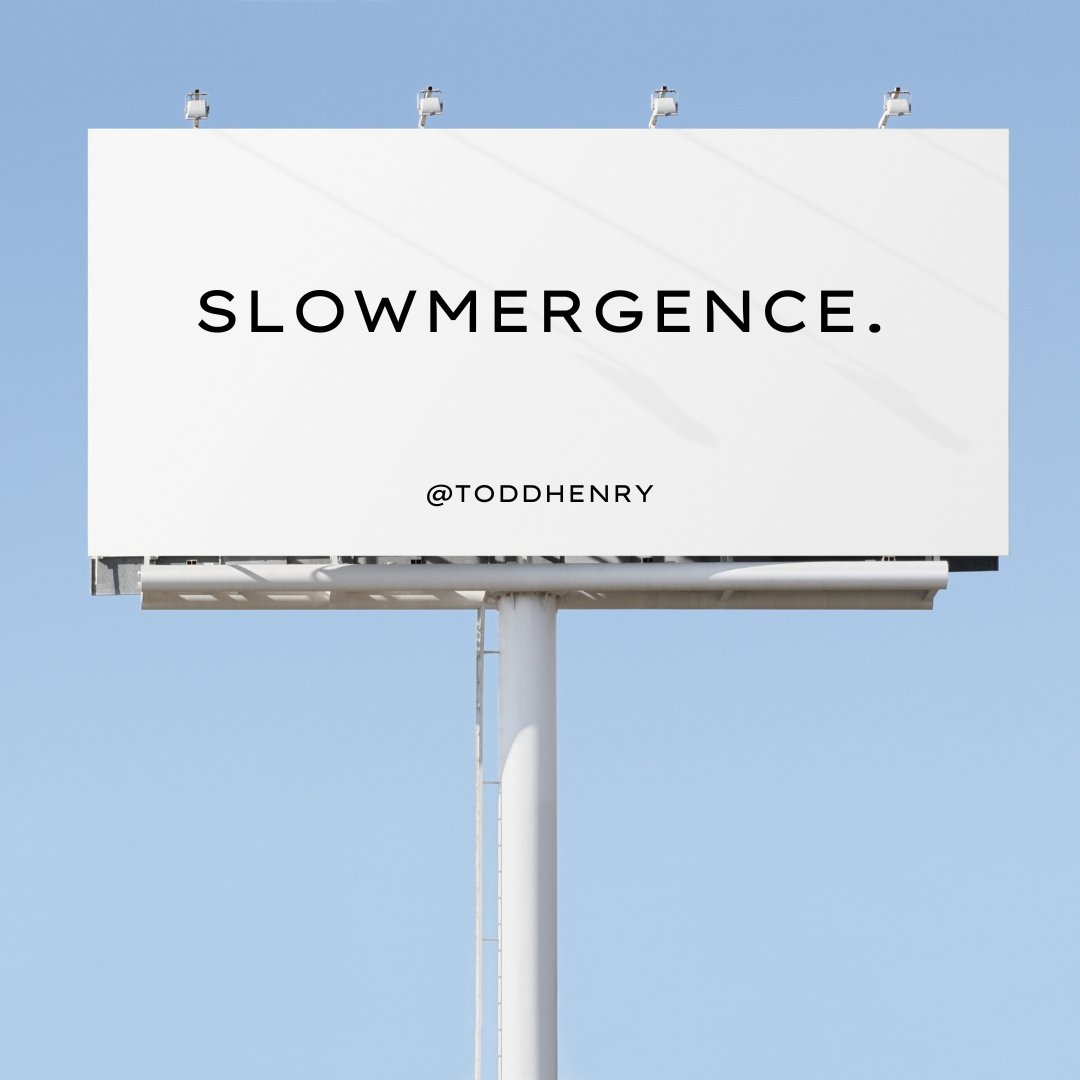
Change can happen quickly, but more often, it occurs slowly after percolation and transition. During a recent talk, Todd Henry, author, speaker, and creative thinker, described “how ideas tend to come in seasons, not moments.” He started to say, “there is a slow emergence.” Instead, he accidentally combined the words and said, “there is a slowmergence.” A new phrase was born.

Todd further described slowmergence and said, “We tend to think that ideas are sudden clicks, or a-ha’s, but they more often emerge as networks and patterns over time until one inciting incident illuminates what’s been developing for days or weeks.”

I often see this with my clients when they are seeking change. While it might appear as if a change is happening suddenly, it usually has been simmering for a long time. There can be an “inciting incident,” as Todd mentions, that brings clarity and action.


“Fun is the magical balm that makes the slings and arrows bearable.”
— Mike Rucker, Ph.D.


3. Interesting Film – Navigate Change

Recently, I had the joy of privately screening Kate Schermerhorn’s incredible award-winning documentary film, Do I Need This? The film is about “American excess and the stuff from which happiness is truly made.” While the stats are compelling, with American homes containing an average of 300,000 objects, or 93% of Americans using their garages for storage, this film explores so much more.

Kate shares about the environmental impact of our stuff while weaving in her family’s story and personal experiences of acquiring and letting go. These themes are supported by interviews including the leading expert in Hoarding Disorder, Dr. Randy Frost, Plentitude author and economist Juliet Schor, and artists and environmental activists Judith Selby Lang and Richard Lang.

Change is another theme in the film. We witness shifts in relationships with people and their stuff. Dr. Frost recognizes how “possessions often have an essence for us.”  That “essence” can make it challenging to release. Kate said, “I just want to hold onto the past while simultaneously letting go.” This film is an honest, beautiful journey about openings for change and the impact of stuff on our lives and the planet.


4. Interesting Product – Easy Change

There are times while going through a change when you wish it were “easy” or “done already.” There’s nothing like adding some humor to a stressful situation. Knock Knock has a great way of infusing playfulness into their organizing products.

The I Just Want It All pad brings whimsy and order to task and change management. You can select the options quoted above along with the third choice, “dipped in chocolate,” and then list your things to do below. The bottom of the pad asks, “Is that so wrong?” I think not. Change can be challenging, but with this list, you’ll be able to focus with a smile.


5. Interesting Thought – Accept Change

Change can be messy and challenging. It involves doing new things, altering habits, reframing perspectives, and stepping outside your comfort zone. You will make mistakes, experience adversity, feel vulnerable, practice new skills, and test your patience. It’s normal to have some “oops” moments along the way. In fact, it’s a great sign which is a change indicator. Embrace the mistakes. They will bring growth, learning, and the changes you seek.


Do you have an interesting change discovery? Which of these resonates with you? I’d love to hear your thoughts. I invite you to join the conversation.


Are You Willing to Trust the Wait As You Make Your Fierce Change Journey?

Over 13 years ago, the first blog post I wrote was Waiting for Something. I acknowledged how waiting is part of our daily lives and how we often meet these times with impatience or annoyance. I offered a perspective change. Instead of considering waiting as an inconvenience, what if we treated it as a gift?

While waiting, we have an opportunity for something wonderful to transpire.

  • If we consider the waiting or transition time a gift, does that alter your experience?

  • What happens when we remain open and available to change?

  • Would you extend more love to yourself?

  • Would you be more willing to navigate the frustrations and challenges pursuing changes can bring?

Recently, I read a quote that brings another dimension to waiting and change. Trust is an essential aspect of your journey. This encourages a deep belief in trusting yourself, the process of change, and all that’s available on the other side. I offer author Mandy Hale’s perspective to you- “Trust the wait. Embrace the uncertainty. Enjoy the beauty of becoming.”

When I work with my virtual organizing clients, we begin with their big why in mind. We clarify what is driving the changes they desire. And why now? Understanding the why is integral to the change process. It provides the anchor and motivation when the process of change becomes challenging.

Clients might find it easy to let go and move forward during one virtual organizing session. They experience the state of flow, where their actions align with their goals, and they feel and acknowledge the progress. At other times, they feel stuck, frustrated, and impatient. This is normal. We lean into trusting the big goal and adjusting the organizing process if needed.

“Trust the wait. Embrace the uncertainty. Enjoy the beauty of becoming.”
— Mandy Hale

Change is exciting, but it can also be difficult getting there. With some new tools available, you can trust yourself and the process, embrace the learning along the way, and bask in the joy that comes through your effort.

How do you navigate waiting? What enables you to embrace change? I’d love to hear your thoughts. I invite you to join the conversation.