

Posts tagged discomfort
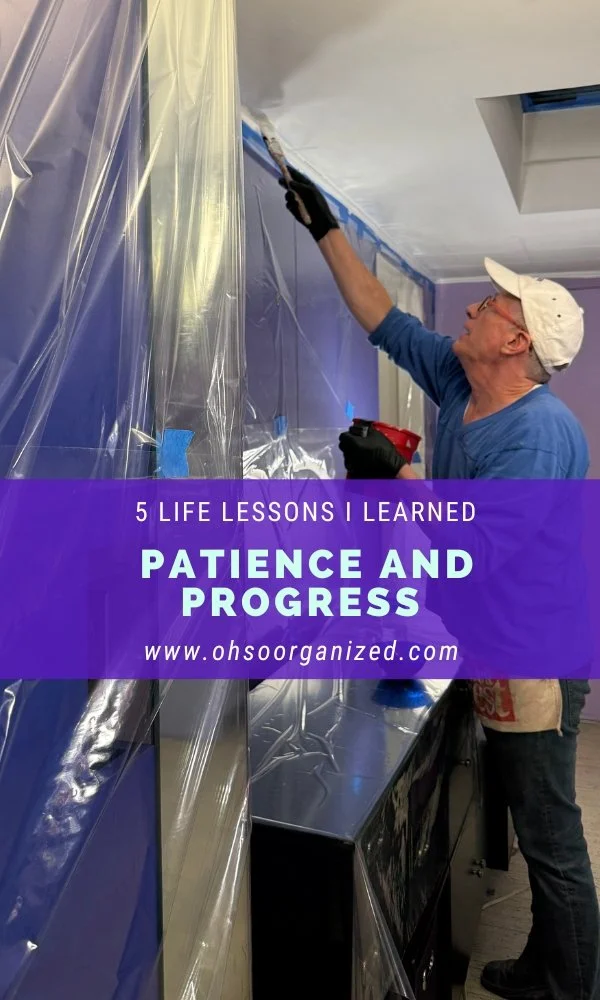
5 Life Lessons I Learned About Patience and Promising Progress

Recently, I reread the first blog post I wrote on waiting. As humans, waiting is something we do, yet we’re not always happy about it. We want things to happen quickly, effortlessly, and painlessly. However, things don’t often go that way. Our patience gets tested as waiting can be a challenging experience.

Maybe you’re working toward a big goal that might take months, years, or even decades. Perhaps your energy is low, and progress looks different from what it did earlier in your life. You might also lack clarity about your goal or what your next step will be.

Developing your internal resources, including patience, resilience, and agency, can be beneficial. You can also enlist help from external resources, such as haulers, handymen, trade specialists, a coach, a therapist, or a professional organizer like myself.

Progress is possible. Reaching your goals is doable. Gathering the resources to get there is essential.

Over the past few months, my husband and I have been working on some home projects. They have taken different amounts of time to complete, and some are still ongoing. The biggest obstacles were setting priorities and managing time constraints. To finish these projects, we had to decide that they were still important enough to pursue. Once we agreed on that, we scheduled the time to complete them. The scheduling was pivotal. Without planning and scheduling, nothing would have happened.

During the process, I reaffirmed and learned a few things. Hopefully, some of these will resonate with you and be useful as you pursue your goals and projects.


5 Life Lessons I Learned About Patience and Promising Progress

Life Lesson #1:  I can tolerate discomfort.

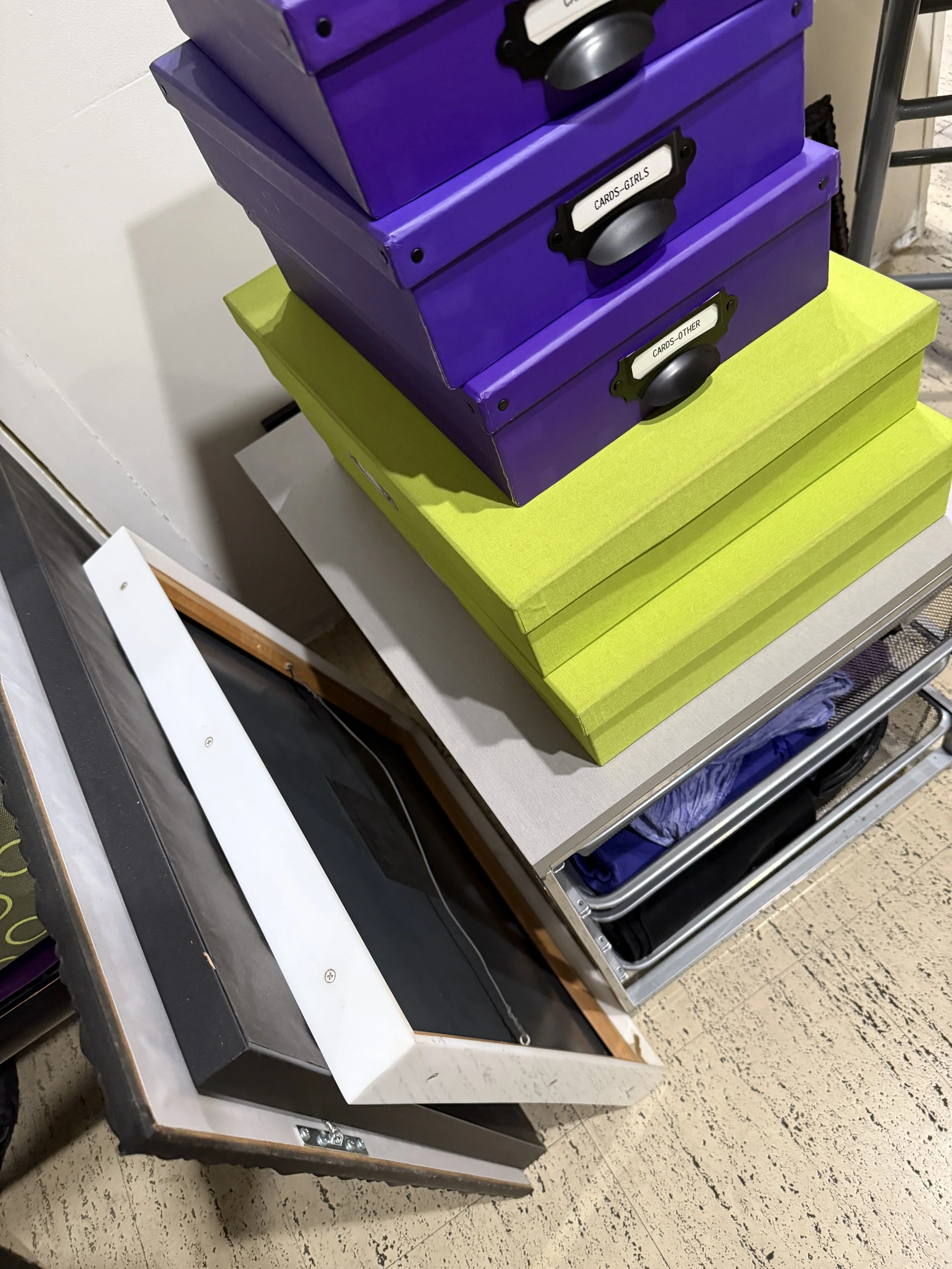
I love the final result when we improve our home. It’s hard for me to tolerate the temporary chaos that happens. Stuff gets pulled out of place, messes spread to multiple areas, and order and organization are disrupted.

I often tell my clients that things usually get worse before they get better. When you’re organizing a closet, for example, and things are pulled out, it doesn’t look great. But as you start editing, rerouting, discarding, and donating, clarity begins to emerge. Once you organize the “keepers,” everything looks and feels better. However, there's a tipping point in the middle of the project where discomfort can surface.

Even though I’m happy when we’re fixing things, I tend to feel more anxious and stressed when we’re in reno mode. That discomfort motivates me to finish what we started as soon as possible. Interestingly, I can easily handle disorder in spaces I don’t live in. But in my own home, I prefer a certain level of order, calmness, and predictability.

Although I prefer not to be uncomfortable, I am capable of tolerating discomfort. This is especially true when it’s temporary or for a good reason. Acknowledging this made me feel less stressed and more accepting of the chaos.


Life Lesson #2: I can transform temporary chaos into an opportunity to reimagine.

One of the benefits of taking things apart is having time to edit, question, and reimagine. We recently disrupted our entryway to spackle, paint, and do some electrical work. Doing that allowed me to let go of some things and reimagine the placement of certain items, like my Pez collection and one of the rugs.

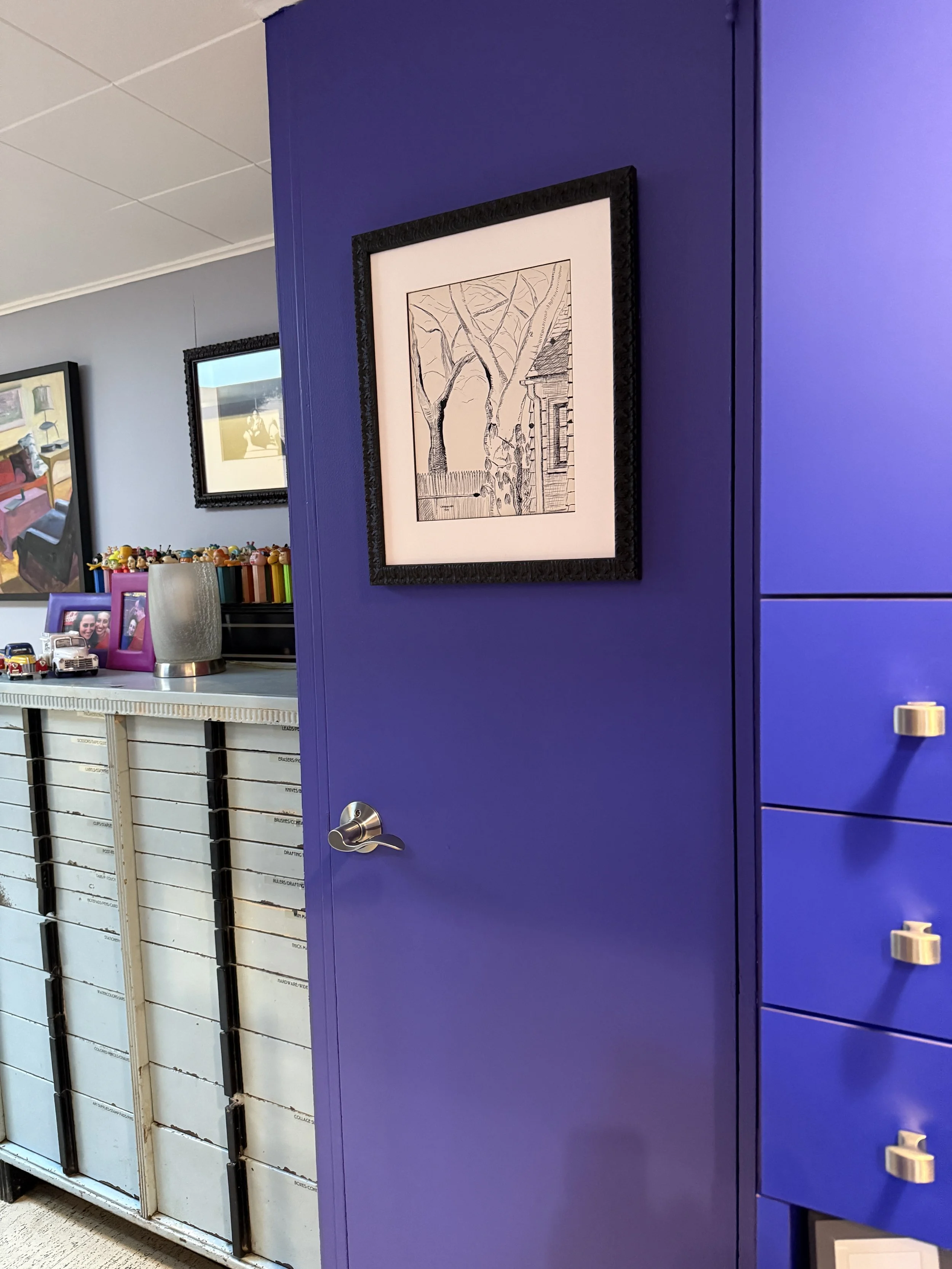
I also felt inspired to repaint three of the cabinets. One is a big project, which I’ll wait to do in warmer weather. The other two cabinets will be done soon. Without being open to chaos and committing to the entryway project, these other projects might not move forward.

Chaos doesn’t have to be negative. It can be an opportunity to bring positive changes. The temporary chaos stirred my creativity and desire to make more improvements.


Life Lesson #3: I can finish what I start when I prioritize and plan.

This might seem obvious, but when you want to accomplish something, whether it’s organizing, home improvement, or changing a habit, dedicating time and energy to it is essential.

Deciding that something is a priority is the first step. This may involve temporarily setting other things aside while you focus your resources on the main goal. After all, you can accomplish a lot, but not all at once. Something has to give.

Once you've identified your priority, the next step is to schedule and plan dedicated time to work on it. For us, that meant working several evenings and weekends. Again, without blocking out specific calendar dates, it would not have been completed.

I can wish all I want, but without making it a priority and including it in a scheduled plan, it’s unlikely to happen. There is great potential and power in recognizing what I’m capable of when I prioritize and plan.

I can tolerate discomfort.
— Linda Samuels, CPO-CD®, CVOP™

Life Lesson #4: I can feel the joy and satisfaction that come with progress.

Done is great, but so is progress. No goal happens with one step. Progress happens one step, one action, and one commitment at a time. When working on the renovation projects, Steve and I took a moment to appreciate the progress along the way.

Momentum is a powerful force. Taking action motivates you to do more. Experiencing progress encourages further movement. Progress is satisfying and joy-inducing.

Steve and I made sure to see, feel, talk about, and celebrate the progress we've made. It was no small feat to get some of these projects started. We embraced the positive feelings that came with making progress.

Do you know the expression, “Stop and smell the roses?” For this one, let’s pause and celebrate the progress. You took action and worked hard. Now, enjoy it!


Life Lesson #5: I can be awed by my bad-ass husband.

After 42 years of marriage, I am still amazed by my husband. He is a talented man who, among his many skills, knows how to cook, play the drums, coordinate large-scale architectural woodworking projects, and handle almost any type of home improvement or repair project. He’s also a devoted volunteer, a great listener, a wonderful father, and an incredible husband and life partner.

Whether he was finishing the glass tiles in the bathroom, doing electrical work, plumbing, cutting through walls, spackling the ceiling, or painting surfaces, he not only knew what to do but also had the right tools to do it. He also taught me how to do some things, so we could work together on projects. I love that!

I am constantly inspired by Steve’s work ethic, humanity, skills, design sense, dedication, and talent. He was willing to let go of perfection to do his best and finish projects. I’m grateful for and in awe of the incredible human he is. Thank you, Honey!


How Do Patience and Progress Manifest for You?

Patience, or the lack of it, is part of being human. In fact, impatience can sometimes drive progress. When you feel stuck, progress may seem out of reach. However, leaning into that urge to move forward and pushing your patience to its limit can be one way to make progress. Prioritizing and planning are also helpful. What helps you move ahead?

Which ideas resonate most with you? I’d love to hear your thoughts. I invite you to join the conversation.


How Can I Help?

Are you ready to make progress? Do you feel overwhelmed, stuck, or disorganized? I’m here to help! Virtual organizing is an extraordinary path forward – Local feel with a global reach.

Let’s talk. I’m easy to reach.

Getting organized and making progress is possible, especially with support.


What Becomes Immediately Achievable When You Get Out of Your Own Way?

The things you say or think can act as possibility-blockers, preventing you from moving forward. They can be subtle or obvious. You might not notice how these phrases get in your way.

The blockers may sound like:

  • “I can’t do this.”

  • “It’s too hard.”

  • “I can’t tolerate the discomfort.”

  • “I’m just not good at this.”

  • “I’m unable to figure this out.”

  • “I don’t know where to start.”

  • “I don’t have any skills.”

  • “Nothing ever seems to work out.”

  • “I’m really frustrated, and I don’t know what to do.”

  • “I never finish anything.”

  • “It has always been like this, and I can’t change it.

  • “I’m feeling totally overwhelmed.”

  • “Nobody ever taught me how to do this.”

  • “I can barely get through today, let alone think about tomorrow.”

  • “I’m stuck where I am.”

  • “I’m too busy and don’t have time to find a solution.”

  • “I can’t imagine what’s possible because my mind and space are so cluttered.”

That’s a lot to take in. Have you noticed yourself repeating any of these phrases? Maybe you have different go-to messages that aren’t helping you. Take a moment to identify which thoughts are shutting you down.

What did you find out?

Focusing on negative messages reinforces your lack of agency. You are paying attention to defeat. While you might not be able to eliminate negativity completely, there is hope. In fact, here is a three-step approach that can help. It consists of awareness, reframing, and action.


A Three-Step Approach: Transform the Impossible into Possible

Step 1: Develop Awareness

The only limits to the possibilities in your life tomorrow are the ‘buts’ you use today.
— Les Brown

Notice the messages that aren’t serving you. Each time you repeat them, those neural pathways in your brain become stronger. The applies to positive messages, too. Becoming aware of your thoughts is the first step in changing them.

  • Observe and record.

  • Write down your negative thoughts and messages without judgment.

  • Make a note of how frequently they ‘visit’ you.


Step 2: Experiment with Reframing

Take your mind off the problems for a moment, and focus on the positive possibilities. Consider how very much you are able to do.
— Ralph Marston

Once you recognize which negative messages appear and how often they do, you’re ready for this next step.

When you notice yourself repeating the undesired words, use that as a cue to reframe them. Make a mental or written note. Intentionally craft a statement that reduces the power of negative thoughts and promotes healthier, more proactive messages.

Reframing examples:

  •  “I can’t do this,” can become “I’m learning to do this.”

  • “I don’t know where to start,” can become “Just start anywhere.”

  • “Nobody ever taught me how to do this,” can become “I can learn and will ask for help.”

  • “Nothing ever seems to work out,” can become “The past doesn’t have a hold over my future.”


Step 3: Do Something

The possibilities are numerous once we decide to act and not react.
— George Bernard Shaw

Negative messages can cause doubt and inaction. One way to overcome them is by taking action. After trying out the reframes, you’re ready to move on to this last step.

Ask yourself, “What tiny action can I take to move this project or situation forward?”

Make the action as small and simple as possible. That’s where the real change begins. By doing something, you shift from “I can’t” to “I can.”

Taking action changes your thinking and behavior. It helps you move from feeling stuck to being proactive.

Action also helps you to:

  • Be more creative when facing challenges,

  • Build momentum,

  • Foster a sense of agency,

  • Achieve your goals, and

  • Nourish hope.


What Is Possible When You Change Your Message?

You’re human. You’ll have internal and external messages that are negative and unhelpful. However, by learning to acknowledge, reframe, and take action, you can change the course of today and the future. Words and thoughts matter. Are yours supporting or hindering your growth? Change the messages so you can thrive.

Which ideas resonate most with you? I’d love to hear your thoughts. I invite you to join the conversation.


How Can I Help?

Do you feel overwhelmed, stuck, or disorganized? I’m here to help! Virtual organizing is an extraordinary path forward – Local feel with a global reach.

Let’s talk. I’m easy to reach.


Getting organized and making progress is possible, especially with support.


How Content Are You Really Feeling These Days About Your Time?

When we think about how we spend our time, we often associate feelings with describing them further. For instance, we might think about being with the family at the beach as a happy time or a time when a loved one died as heart-wrenching. However, time is not only a container that includes appointments, events, and milestones, but it also is flavored by the emotions that arise. Lately, I am more aware of the connection between what happens at a given period and the feelings that accompany them.

Why does this matter? By making the connection, we can better understand why we are motivated to engage in certain activities yet procrastinate with others. This can help us to get unstuck or extend some grace when we need it most. Our emotions are clues to our inner experience. We might not always have the words to describe what we’re feeling. Instead, we can notice sensations in the body like tightness in the shoulders, a clenched jaw, or butterflies in the belly. These sensations indicate how you are feeling at that moment in time. 


4 Lessons I Learned About Time and Feelings

Feeling Late

You’re right. Late isn’t an emotion. But that uncomfortable feeling I experience with being late is. Due to a series of events and happenings, my blog post is going live today, a Wednesday, instead of the typical Sunday. I could have skipped this week, but I won’t be able to post next week. So, I decided to break from my pattern and just go for it, even though it’s late. But you know what? I’m doing it, but it feels strange. I prefer being punctual and consistent.

My lesson learned:  Stretch outside of my comfort zone. While I regularly post on the same day each week, it’s OK to make an occasional exception to my own rule. That’s being flexible.


Feeling Anxious

Life is opening up again after a year of lockdowns, restrictions, and closings. This is a positive development on all fronts. However, the speed at which things are reopening has created some discomfort. Some of us are ready to do everything at full throttle, while others (like me) feel more cautious. I’m experiencing so many firsts all at once. They include having the annual doctor visits I missed last year, staying in a hotel, eating in a restaurant, being mask-less in public, and entertaining people IRL (in real life!) These were accompanied by trepidation and anxiety.

My lesson learned: Doing something for the first time or the first time in a long time can feel scary and anxiety-producing. However, I survived, and the next time will be so much easier.


Time is not only a container that includes appointments, events, and milestones, but it also is flavored by the emotions that arise.
— Linda Samuels, CPO-CD®, CVPO™


Feeling Relaxed

My husband gifted me a kayaking date as my Mother’s Day present. I love kayaking, and he knows it! What a wonderful feeling to be on the Croton River with the bright sun, warm air, and soothing water. While there is paddling involved, I also spent time in the kayak just floating. It was during the non-paddling time that I felt especially relaxed. I wasn’t trying to get anywhere or exert physical energy. I simply glided gently along the water.

My lesson learned: Even during exertion, you can find relaxation. It’s there in the stillness and the pause.


Feeling Excited

Other than taking a walk around the house or block, many of us stayed put last year- no traveling, overnights, or day trips. We kept close to home with a few exceptions. While I’m not ready to get on an airplane or use public transportation, I am looking forward to some car trips. This summer, we scheduled some vacation time. It’s with excited anticipation that I’ll have time with family and friends at beaches, rivers, mountains, and cities.

I’m looking forward to exploring new and familiar places, face-to-face conversations, and all of the hugs.

My lesson learned: There is gratitude in waiting. Missing provides an opening to be thankful for the people and places I so sorely missed.


Have you noticed a connection between your time and emotions? Do any of these resonate with you, or have you discovered other patterns? I’d love to hear your thoughts. I invite you to join the conversation.


3 Strong Connections Between 'Spring Forward' and Next That Will Help You
3 Strong Connections Between ‘Spring Forward’ and Next That Will Help You

This past weekend we time maneuvered and set our clocks ahead. It was the annual ‘spring forward’ in preparation for next. I know there are reasons to change our clocks ahead in the spring and back in the fall. While I’ve been diligently implementing this switch for decades, I still experience some confusion and discomfort. For example, some of our clocks, such as our digital devices, automatically change time. While other ones like our alarm and analog wall clocks have to be manually altered. My husband is great about changing our many clocks. Thank you, Steve! I’m responsible for only a few, such as my watch and car.

Our ‘spring forward’ time-changing ritual made me reflect on the connections it has with next


3 Strong Connections Between ‘Spring Forward’ and Next That Will Help You

1. Mindfulness

When the clocks changed, a shift in the daylight did too. With the sun rising earlier and setting later, there was an extended period of light during the waking hours. The increase in sunlight positively affected my mood. With the brighter sun and warmer day, it beckoned me to go outside to walk, notice, feel, and sense. Time and light change also signaled a definite shift. Next had arrived. Something was altered. I felt a nudge to open my attention to the arrival of the new season. What are you noticing?


2. Flexibility

In the same way, that time appears fluid with the bi-annual adjustments we make, I recognized the value of flexibility during a recent emergency. My mom, who has vascular dementia, ended up in the ER last week. Without getting into great detail, I will share that the moment-to-moment situation kept changing. Even as I write this post, there is uncertainty. Having a plan, but being flexible, has been helpful for me emotionally. I know that so much is out of my control, but there are some aspects I can act on. I think of this the same as time. I have no control over what time it is, but I can move the crown on my watch to set the time. In this same way, I move to next with patience, compassion, love, and flexibility as I navigate the mom situation.


3. Gratitude

Time is constant. The sun rises and sets each day as the hands of the clock touch the hours. In these days of chaos and uncertainty, there is comfort in knowing the pattern of time. From this base of consistency and knowing, gratitude flows forward. There is so much to be grateful for. There is the comfort of connecting with friends, family, and community, the smell of spring arriving, the feeling of the warm sun on my skin, noticing the snowdrop flowers emerge from the dirt and hearing the words, “I love you,” softly said by my mom. Time moves on with the tick of the clock. Don’t rush the moments of beauty. Savor and hold them close.


What has ‘spring forward’ sparked for you? Do you see a connection with the time changing and next? I’d love to hear your thoughts. I invite you to leave a comment and join our conversation.