
How to Stop Ruminations Using Self-Help Strategies and Virtual Organizing Help

Rumination is a common cognitive pattern that feeds on negative thoughts and worries. Noom, a behavior change wellness company, says, "Rumination is thinking repetitively about causes, processes, and consequences of something that’s happening or happened...It's focusing on the problem over and over again instead of looking for solutions."

To improve your mental well-being and ability to move forward, shift from ruminating to focusing on solutions. Help is here.


6 Self-Help Strategies to Stop Ruminations

1. Mindfulness and Self-Awareness: Practice mindfulness to help develop awareness when you're ruminating. Pay attention to your thought patterns and notice when you're stuck in negative loops. Self-awareness is the first step in breaking this cycle.

2. Problem-Solving Techniques: Once you notice you're ruminating, shift your thinking towards problem-solving. Instead of dwelling on the causes or consequences of a problem, focus on finding solutions.

3. Positive Visualization: Visualize the desired outcome rather than getting stuck in the negative aspects. Imagine what a successful resolution looks like and how it would feel. This positive visualization can stop the negative thought loop and motivate you to take action.

4. Time-Limited Reflection: Give yourself a specific amount of time to reflect on the causes and consequences, but set a timer. Once the time is up, switch your focus to solutions. This technique helps prevent excessive rumination.

5. Action-Oriented Approach: Take small, actionable steps toward solving the problem. No matter how tiny, each action will build momentum and confidence.

6. Growth Mindset: Consider what you can learn from the situation. Challenges and setbacks provide helpful insights that can be used in the future.


To improve your mental well-being and ability to move forward, shift from ruminating to focusing on solutions.
— Linda Samuels, CPO-CD®, CVOP™

5 Ways Virtual Professional Organizers Can Help

What if you want additional assistance to break your rumination cycle? Virtual professional organizers can provide valuable help, especially when you're overwhelmed or stuck in those negative loops. Here are five ways organizers can help:

1. Objective Perspective: A professional organizer can offer an unbiased viewpoint and help you view things differently. 

2. Expertise: Professional organizers are skilled in organizational strategies, problem-solving, and collaborating. With additional support, you will move forward with less stress and more ease.

3. Accountability: Having an accountability buddy is an effective strategy for making progress. A virtual professional organizer can help you set goals, track progress, and encourage positive actions.

4. Customized Solutions: Organizers provide personalized strategies to address your specific challenges and to help create a more organized and positive environment.

5. Flexibility: With virtual professional organizers, you can access their services from anywhere, making it convenient and flexible to fit into your schedule and location.

I encourage you to find a virtual professional organizer who can help with your goals and needs and who you feel comfortable working with. They can be a valuable partner in your journey for less ruminating and more solving.

How can I help? Contact me, Linda, at 914-271-5673, linda@ohsoorganized.com, or click here.


How can I help?
 
7 Ways to Joyfully Enlist Help Making Decisions When You're Really Stuck

One of the most common reasons my clients get stuck is being unsure about making decisions. A lack of confidence in decision-making might only affect specific areas. For example, they have no issue deciding which groceries to purchase or which social activities to attend. However, the decision-making challenge can surface when choosing how many black pants to let go of or where to begin organizing their home. It can feel like overwhelm, paralysis, or stress. This is an excellent time to reach out for help. There is no reason to remain in Stuckland.

There is another aspect to making decisions. Often, we’re on the fence about what to do. We have a few ideas but aren’t 100% sure which way to go. This is another terrific reason to enlist help. Use a decision-making buddy to help discuss options, weigh the pros and cons, or boost your confidence in making a choice.


7 Ways to Enlist Help Making Decisions

10 10 10 Rule

Before you make a decision, ask three questions:

  • 10 minutes from now, how will I feel about this decision?

  • 10 months from now, how will I feel about this decision?

  • 10 years from now, how will I feel about this decision?


40/70 Rule

Former Secretary of State Colin Powell used this approach when making a quick decision. He would aim not to decide with less than 40% of the information needed, then act when he had close to 70% of the data.


80/20 Rule

Known as the Pareto Principle, this rule says that 80% of the outcomes (or outputs) result from 20% of all causes (or inputs) for any event. We often use this in the organizing world. For example, we only wear 20% of our clothes or refer to 20% of the papers we file. With that recognition, opting to let go will be easier.


3 Elements of Decision-Making

  • ClarifyIdentify the decision to make or problem to solve.

  • Consider – Think about the options and the positive and negative consequences of each choice.

  • Choose – Choose the best choice.


When all else fails, flip a coin.
— Linda Samuels, CPO-CD®, CVOP™

Golden Rules of Decision-Making

Make decisions when you’re . . .

  • not in pain and when your body feels strong

  • feeling loved and supported

  • feeling you are enough


Coin Flip

When all else fails, flip a coin. Heads you let ‘it’ go, tails you keep ‘it.” Then pay attention to how you react. Let your intuition guide you. Do the opposite of the coin toss result if the option doesn’t sit right in your gut.


Virtual Organizing

Decision-making is integral to all virtual organizing sessions with my clients. I provide support by:

  • Discussing the options

  • Holding space to think through a choice without feeling pressured

  • Setting boundaries around the decision

  • Reviewing pros and cons

  • Encouraging curiosity and experimentation

  • Empowering agency to make decisions

  • Focusing on progress, not perfection


These are just a few ways to boost your decision-making skills. What helps you get unstuck so you can make a decision? I’d love to hear your thoughts. I invite you to join the conversation.

Contact me, Linda, if you are stuck and need help and guidance to make decisions. Call at 914-271-5673, email linda@ohsoorganized.com, or click here. I’m here for you.
 
 
How can I help?
 
How to Revitalize Your Motivation Now Using Helpful Progress Principle Insights

In Essentialism, author and business strategist Greg McKeown says, “Research has shown that of all forms of human motivation the most effective one is progress.” How powerful is that? McKeown continues with, “Why? Because a small, concrete win creates momentum and affirms our faith in our future success.”

Have you experienced overwhelm or lack of clarity about a project or next step? Instead of being motivated, overwhelm creates inaction and paralysis. While keeping the big picture in mind can be helpful, it can also feel impossible to achieve. Think about the house you want to clear out to downsize and sell or the boxes of mementos and photos you have accumulated over decades that you need to edit and organize. You feel stuck and de-motivated because of the sheer volume of tasks and perceived time required to reach your goal.

Let’s return to the idea that progress is one of the most effective motivators. Teresa Amabile and Steven Kramer developed the Progress Principle, resulting from a year-long study with hundreds of employees and over 12,000 analyzed diary entries. It highlights the essential role of progress in motivating people and improving their inner work lives. Here are some significant discoveries from the Progress Principle and its positive effect on motivation:

  • Progress contributes to a positive inner work life (psychological state), which leads to more progress and increases creativity, engagement, productivity, and performance.

  • Progress is the most significant indicator of employee happiness and performance, regardless of size. Even incremental progress has a positive effect on motivation.

  • The Progress Principle draws on our innate human need for achievement and growth. When people feel they are making progress, they experience fulfillment and satisfaction, which motivates them to continue striving.

  • The Progress Principle isn’t limited to the workplace. It can also be used for personal development and self-improvement. You can stay motivated and continue progressing toward your goals by recognizing and celebrating small wins.

... of all forms of human motivation the most effective one is progress.
— Greg McKeown

Are you struggling with motivation and activation? Are you stuck and finding it difficult to move forward? Advance one tiny action at a time. Notice how that boosts your motivation, builds confidence, and encourages a cycle of more movement. Trust the process. The act of doing creates momentum, motivation, and progress.

If you want help to figure out and take your next steps, contact me, Linda. Call at 914-271-5673, email linda@ohsoorganized.com, or visit ohsoorganized.com/contact. I’m here for you.


How can I help?
 
Here Are Today's Most Interesting and Best Motivation Discoveries - v41

This is the newest release (v41) of the “What’s Interesting?” feature has my latest finds that inform, educate, and relate to organizing and life balance. These unique, inspiring, motivation-related discoveries reflect this month’s blog theme.

You are a passionate, generous, and engaged group. I am deeply grateful for your ongoing presence, positive energy, and contributions to this community. I look forward to your participation and additions to the collection I’ve sourced.

What do you find interesting?


What’s Interesting? – 5 Best MOTIVATION Discoveries

1. Interesting Read – Motivation and Words

The Words We Choose – Your Guide to How and Why Words Matter, author, speaker, and coach Terre Short encourages you to use words authentic to your values and intentions. Through stories, reflections, and activities, Short supports healthy communication, influence, and engagement with words that connect us to ourselves, loved ones, people at work, our written word, and more.

Short says, “You can transform your communication through the power of your words.” Explaining how we speak an average of 16,000 words every day, which “represents a lot of daily word choices...Our daily experiences are shaped by words spoken to and by us. What impact did your words have today?”

If you are motivated to strengthen your relationships, become more emotionally intelligent, improve how you talk to yourself, and align your words, values, and intentions, this book is for you.


2. Interesting Product – Motivation and Labeling

A common organizing principle is to label your stuff. Why? It helps you know at a glance what a box, drawer, or file contains without extensive searching. Having things labeled increases motivation to establish “homes” for your belongings. This makes them easier to retrieve and return.

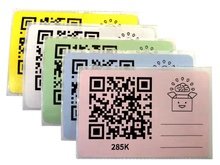
BoxBrain brings new meaning to labeling. They created “smart labels for smart living.” Their water-resistant labels help you organize your life, especially when packing, unpacking, and storing your things. The labels are color-coded with a QR code connected to their app.

I love BoxBrain’s simple 3-step process:

1. Grab Some Labels – There are 3 sizes and 5 colors.

2. Slap ‘Em On Your Stuff – Label your boxes with the color-coded labels. For example, use blue labels for kitchen items, yellow labels for toys, or green for the home office.

3. Know Where Your Stuff Is – Using your smartphone, scan the label, then enter keywords and photos. Use the keyword search to locate an item quickly.

Motivation increases when you take action, even if it’s tiny.
— Linda Samuels, CPO-CD®, CVOP™

3. Interesting Article – Motivation and Organizing Mistakes

Have you ever worked on an organizing project and made a mistake that crushed your motivation? Maybe you underestimated the needed storage space, took on too many simultaneous projects, or purchased organizing containers before decluttering. Guess what? You’re not alone.

In the recent Redfin article, “Organizing Mistakes: 27 Slip-Ups to Avoid During Your Next Project,” Jamie Forbes features professional organizers, including me (#5). We share our best advice for making your next organizing project a success.

My suggestion is to keep like with like. By corralling similar items together, you can make more informed decisions, stop overbuying, know what you own, and quickly access your belongings.


4. Interesting Resource – Motivation and Downsizing

Are you or someone you know thinking about downsizing to a smaller home but aren’t 100% sure? If so, you’ll love the 10 Signs It’s Time to Downsize and Sell Your Home infographic from HomeLight. The real estate company explains how important timing can be in making that decision. Waiting can cost you more to run a larger home. Also, downsizing as you age can be more challenging due to health or mobility issues.

Motivations to downsize include feeling overwhelmed with home maintenance, your career or family no longer tying you to your location, you want a lifestyle change, or your home no longer fits your needs.

Downsizing is a compelling motivator to make a life change.


5. Interesting Thought – Motivation and Progress


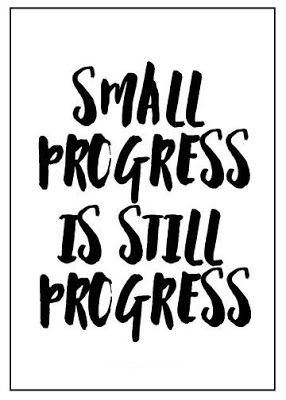
A fascinating aspect of motivation is how it increases when you take action, even if it’s tiny. Progress, no matter how small, is still forward movement. So, when you are feeling discouraged or overwhelmed, instead of giving up, do one little thing. You’ll be amazed how an action will change your perspective from being stuck to feeling hopeful, energized, and motivated.


Do you have an interesting motivation-related discovery? Which of these resonates with you? I’d love to hear your thoughts. I invite you to join the conversation.


How can I help?