Posts in Virtual Organizing
What's Your Little Next Step After the Exciting Seeds You Planted Flourish?

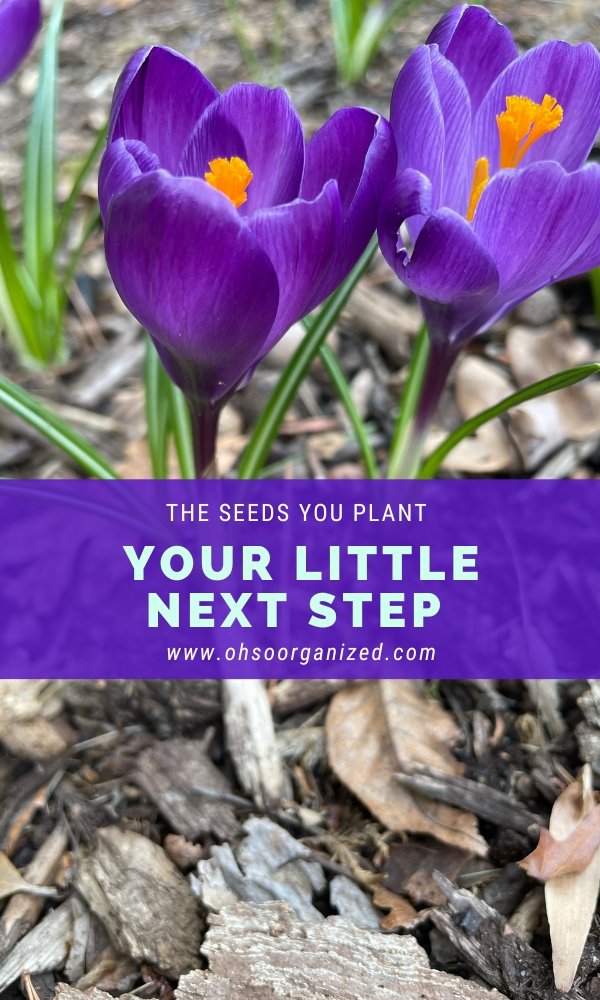
It’s not officially spring yet, even though we turned our clocks forward an hour, and spring’s cues began emerging weeks ago. Our beautiful purple crocuses have come and gone. I notice new growth daily- a patch of green here, some yellow blooms there. Seeds planted are beginning to flourish.

I appreciate the present and am simultaneously in awe of what will come next. What a hopeful time of year this is!

While the seeds I mentioned were literal ones yielding plants and blooms, there are other seedlings. You . . .

  • Plant new ideas

  • Create positive habits

  • Change behaviors

  • Alter mindset

  • Chase goals

  • Experiment

  • Nurture relationships.

These require patience, compassion, consistency, awareness, trust, and receptivity. When we tend our garden in this way, those seeds will thrive.


Coach and artist Jane Pollak, CPCC, said, “Before you know it, the seeds you plant will leaf.” What a powerful idea! While you’re in the planting or becoming phase, it seems like nothing is happening. It’s hard to see any progress or change. The seeds sit quietly in the dirt. Movement and growth are imperceptible. You wait while occasionally adding water and fertilizer to stimulate growth.

While next might be nothing because you over or underwatered, more often, growth will be visible in time. I see this with my virtual organizing clients. The seeds planted begin with a goal and a desire for something else. Less clutter, more time, more space, or less stress. We use that seed idea and work to get there. I love helping with these internal and external transformations.

  • Challenges with letting go bloom into ease of releasing.

  • Stress caused by clutter morphs into calm from clearer spaces.

  • Being overwhelmed by full schedules develops into relief by creating boundaries.

Before you know it, the seeds you plant will leaf.
— Jane Pollak, CPCC

You are now on the other side. You’ve patiently done the work. You’ve tended your garden even when you were unsure. You trusted the process so you could succeed. Your seeds have leafed.

What will be your next step? Do you want to reassess? Do you want to bask in the gorgeous blooms? Are you ready to plant new seeds to nurture? Progress and growth are yours. How will you build from here? What tiny step are you able to take? How can I help? I’d love to hear your thoughts. I invite you to join the conversation.


How to Make the Courageous Connection Between Risk and Change Really Helpful

Let’s face it. Making a change involves taking risks. No matter the size of the risk, you’ll need the courage to dive into unknown waters. Your risk tolerance level will influence how easy or challenging it will be to pursue change. If you are comfortable taking risks, you will more likely welcome change and take necessary actions without too much deliberation. If you are risk-averse, change is still possible, but the journey will be more difficult.


Risk Tolerance Scale

Your response will vary depending on the scenario and type of risk. Consider your risk tolerance level concerning change using a scale from 1 to 10.

1   =   Risk-Averse:  Reluctant to take risks

10 =   Risk-Taker:  Eager to take risks

Imagine the change you want is to have less clutter in your home. Part of that process will include editing and releasing things. Using the Risk Tolerance Scale, you recognize how easily you can let go of junk mail and old newspapers. You give yourself a 10 because you can recycle them without much thought. However, when it comes to mementos, you struggle to make decisions because of your emotional attachments. You feel a sense of loss when letting go of things from the past, and give yourself a 2.


Preparing for Change

There are a few ways to facilitate change. Using the example above, refer to the Risk Tolerance Scale to identify the areas that feel less risky to work on, like junk mail and newspapers. As you build confidence and progress in those areas, you’re preparing to tackle the more challenging things next.

Another idea, which is especially helpful in risk-averse scenarios, is to ask the question,

What risk are you happy you took?

Revisiting risks you handled in the past that had successful outcomes will help build confidence in taking new risks and making changes. Invest time in remembering.


Making a change involves taking risks.
— Linda Samuels, CPO-CD®, CVOP™

Taking Risks in Pursuit of Change

There’s no question that when we pursue change, letting go occurs. This can include physical stuff, places, people, or ideas. During a recent virtual organizing session, my client shared something while gently releasing a category of papers from the past. It spoke to one of the benefits of embracing risk in pursuit of change and was so moving. She said,

“I’m letting go of part of my life that is no longer part of my life.”

What an insightful recognition that in moving forward and embracing change, you can let go of those things that no longer have a place in your present.


How does your risk tolerance level influence the changes you seek? In what ways have you noticed a connection? I’d love to hear your thoughts. I invite you to join the conversation.


Are You Willing to Trust the Wait As You Make Your Fierce Change Journey?

Over 13 years ago, the first blog post I wrote was Waiting for Something. I acknowledged how waiting is part of our daily lives and how we often meet these times with impatience or annoyance. I offered a perspective change. Instead of considering waiting as an inconvenience, what if we treated it as a gift?

While waiting, we have an opportunity for something wonderful to transpire.

  • If we consider the waiting or transition time a gift, does that alter your experience?

  • What happens when we remain open and available to change?

  • Would you extend more love to yourself?

  • Would you be more willing to navigate the frustrations and challenges pursuing changes can bring?

Recently, I read a quote that brings another dimension to waiting and change. Trust is an essential aspect of your journey. This encourages a deep belief in trusting yourself, the process of change, and all that’s available on the other side. I offer author Mandy Hale’s perspective to you- “Trust the wait. Embrace the uncertainty. Enjoy the beauty of becoming.”

When I work with my virtual organizing clients, we begin with their big why in mind. We clarify what is driving the changes they desire. And why now? Understanding the why is integral to the change process. It provides the anchor and motivation when the process of change becomes challenging.

Clients might find it easy to let go and move forward during one virtual organizing session. They experience the state of flow, where their actions align with their goals, and they feel and acknowledge the progress. At other times, they feel stuck, frustrated, and impatient. This is normal. We lean into trusting the big goal and adjusting the organizing process if needed.

Trust the wait. Embrace the uncertainty. Enjoy the beauty of becoming.
— Mandy Hale

Change is exciting, but it can also be difficult getting there. With some new tools available, you can trust yourself and the process, embrace the learning along the way, and bask in the joy that comes through your effort.

How do you navigate waiting? What enables you to embrace change? I’d love to hear your thoughts. I invite you to join the conversation.


What's the Value of Enlisting Help As You Make a Positive Change?

Have you ever tried to build a new habit, make a change in your life, or learn something new? Think of one of those times. Did you go it alone? Or did you have help and support? For most of us, when we’re doing something outside our skill set or comfort zone, reaching out for help is the secret sauce for success.

You might remember that I set a big goal to create a healthier lifestyle almost a year ago. My main objectives were to change my eating habits, exercise more, and lose weight. Could I have done this without help? Definitely not! My husband, family, friends, and Noom coaches and lessons provide support. I’m still working on my goals, and I’ve made significant progress. I’m 25 pounds lighter, feel better physically, and am more flexible and energetic.

The ‘Noom lessons’ help me tremendously. The app sends me daily articles that deep dive into the psychology of weight loss, provide encouragement, include practical advice, and describe ways to maintain a healthy lifestyle. One piece of Noom’s wisdom that resonated with me was “Practice makes progress.”

Notice it doesn’t say ‘practice makes perfect,’ a familiar phrase. Because what or who is perfect?

I love how the practice-makes-progress concept encourages experimentation and ongoing action. Practice infers something you are working on and supports a growth mindset. It allows space for success, failure, and learning. Progress inspires incremental change.

Practice makes progress.
— Noom

I recognize how instrumental enlisting help is for achieving my goals. My organizing clients also experience these benefits. I love being on their support team.

Some ways I help my virtual organizing clients are to:

  • Define realistic goals

  • Experiment with new habits

  • Declutter and organize their things, thoughts, time, and space

  • Create maintainable organizing systems

  • Integrate accountability

  • Reflect on the changes they are making

  • Navigate overwhelm, backsliding, frustration, and discovery

  • Celebrate their progress and success

We focus on small, consistent, gradual change. My clients practice new habits, experiment with organizing systems, shift their perspective, and make progress. It’s genuinely inspiring to see their positive changes.

What changes are you actively working on? Do you have help? Do you need help? I’d love to hear your thoughts. I invite you to join the conversation.