

Posts in Possibility Thinking
What Becomes Immediately Achievable When You Get Out of Your Own Way?

The things you say or think can act as possibility-blockers, preventing you from moving forward. They can be subtle or obvious. You might not notice how these phrases get in your way.

The blockers may sound like:

  • “I can’t do this.”

  • “It’s too hard.”

  • “I can’t tolerate the discomfort.”

  • “I’m just not good at this.”

  • “I’m unable to figure this out.”

  • “I don’t know where to start.”

  • “I don’t have any skills.”

  • “Nothing ever seems to work out.”

  • “I’m really frustrated, and I don’t know what to do.”

  • “I never finish anything.”

  • “It has always been like this, and I can’t change it.

  • “I’m feeling totally overwhelmed.”

  • “Nobody ever taught me how to do this.”

  • “I can barely get through today, let alone think about tomorrow.”

  • “I’m stuck where I am.”

  • “I’m too busy and don’t have time to find a solution.”

  • “I can’t imagine what’s possible because my mind and space are so cluttered.”

That’s a lot to take in. Have you noticed yourself repeating any of these phrases? Maybe you have different go-to messages that aren’t helping you. Take a moment to identify which thoughts are shutting you down.

What did you find out?

Focusing on negative messages reinforces your lack of agency. You are paying attention to defeat. While you might not be able to eliminate negativity completely, there is hope. In fact, here is a three-step approach that can help. It consists of awareness, reframing, and action.


A Three-Step Approach: Transform the Impossible into Possible

Step 1: Develop Awareness

“The only limits to the possibilities in your life tomorrow are the ‘buts’ you use today.”
— Les Brown

Notice the messages that aren’t serving you. Each time you repeat them, those neural pathways in your brain become stronger. The applies to positive messages, too. Becoming aware of your thoughts is the first step in changing them.

  • Observe and record.

  • Write down your negative thoughts and messages without judgment.

  • Make a note of how frequently they ‘visit’ you.


Step 2: Experiment with Reframing

“Take your mind off the problems for a moment, and focus on the positive possibilities. Consider how very much you are able to do.”
— Ralph Marston

Once you recognize which negative messages appear and how often they do, you’re ready for this next step.

When you notice yourself repeating the undesired words, use that as a cue to reframe them. Make a mental or written note. Intentionally craft a statement that reduces the power of negative thoughts and promotes healthier, more proactive messages.

Reframing examples:

  •  “I can’t do this,” can become “I’m learning to do this.”

  • “I don’t know where to start,” can become “Just start anywhere.”

  • “Nobody ever taught me how to do this,” can become “I can learn and will ask for help.”

  • “Nothing ever seems to work out,” can become “The past doesn’t have a hold over my future.”


Step 3: Do Something

“The possibilities are numerous once we decide to act and not react.”
— George Bernard Shaw

Negative messages can cause doubt and inaction. One way to overcome them is by taking action. After trying out the reframes, you’re ready to move on to this last step.

Ask yourself, “What tiny action can I take to move this project or situation forward?”

Make the action as small and simple as possible. That’s where the real change begins. By doing something, you shift from “I can’t” to “I can.”

Taking action changes your thinking and behavior. It helps you move from feeling stuck to being proactive.

Action also helps you to:

  • Be more creative when facing challenges,

  • Build momentum,

  • Foster a sense of agency,

  • Achieve your goals, and

  • Nourish hope.


What Is Possible When You Change Your Message?

You’re human. You’ll have internal and external messages that are negative and unhelpful. However, by learning to acknowledge, reframe, and take action, you can change the course of today and the future. Words and thoughts matter. Are yours supporting or hindering your growth? Change the messages so you can thrive.

Which ideas resonate most with you? I’d love to hear your thoughts. I invite you to join the conversation.


How Can I Help?

Do you feel overwhelmed, stuck, or disorganized? I’m here to help! Virtual organizing is an extraordinary path forward – Local feel with a global reach.

Let’s talk. I’m easy to reach.


Getting organized and making progress is possible, especially with support.


How to Focus Endless Possibilities to Help Get Unstuck and Make Progress

Fall brings changing colors, cooler weather, and hope for what can be. The new season offers many possibilities. There are countless options for activities to try, goals to pursue, information to gather, relationships to develop, stuff to declutter, and paths to explore. So many possibilities may seem endless, intimidating, or overwhelming.

What happens when you have too many choices? Does it prevent you from moving forward? Do you get stuck and struggle to make meaningful progress?

Judith Kolberg, an organizing industry thought leader, author, and friend, said, “We live in the Era of Endless, confronted by infinite information, incessant interruptions, constant distractions, unending work, and boundless stuff. All this endlessness butts up against the one thing that remains intractably finite: time.”

Possibilities are limitless, but our time is not. Knowing this, how can you move forward anyway? There are several strategies, such as narrowing the focus, facing the fear, and redefining the problem, that can help.


Narrow the Focus

I don’t know about you, but when I face too many choices, my brain begins to shut down. Sorting through multiple options and weighing their pros and cons can be overwhelming.

Narrowing your options can help you get unstuck. The ideal number might be evaluating three choices at a time. However, if that feels like too many, try two.

Let’s say you’re decluttering your closet. You have twenty pairs of pants, but you want to have only ten. First, organize them by color or category. Gather each group, such as black, navy, casual, or dress pants. Hold up two at a time from a group. Once that group is complete, move on to the next group.

Ask questions like:

  • Do I like this pair more than the other one?

  • Which pair fits or feels best?

  • Is it worn out, repairable, or worth repairing?

  • Are the pants the same?

  • Do I need both?

These types of questions will help you:

  • Narrow your options

  • Get unstuck

  • Reduce or eliminate overwhelm

  • Help you reach your objective of having fewer pants

Modify and use this strategy when your focus is too broad. Break choices into several categories to place boundaries around possibilities and decision-making options.


Face the Fear

Endless possibilities can also bring up fear. When fear is present, it can be paralyzing, causing you to do nothing.

Reflect on these questions to see if fear is holding you back:

  • When exploring new possibilities, is fear an obstacle?

  • Is it about fear of choosing the wrong option?

  • Is it about fear of making a mistake?

  • Is it about fear of what others might think about your decision?

There are no guarantees in life. When you’re unsure, it’s natural to feel apprehensive. But don’t let that stop you. Instead of focusing on fear, reframe the ‘adventure’ as an experiment. This mindset will encourage you to try things with less pressure. Experimenting is about curiosity, learning, and growth, not punishment or black-and-white thinking.

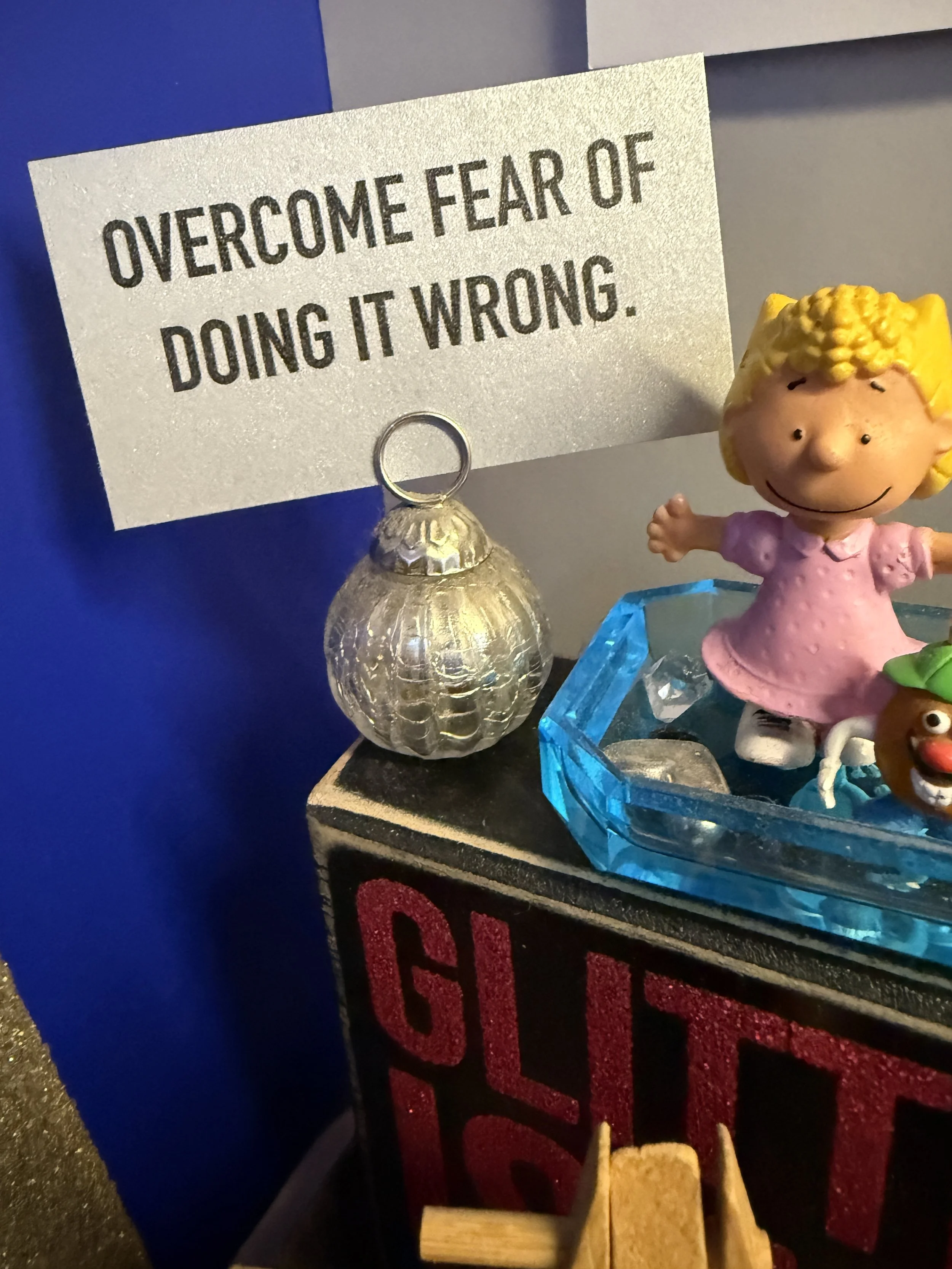
As a reminder, I keep a sign on my desk. It says, “Overcome the fear of doing it wrong.”

“Possibilities are limitless, but our time is not.”
— Linda Samuels, CPO-CD®, CVOP™

Redefine the Problem

When possibilities appear endless, it can cause confusion about goals and progress.

In the book Daily Creative, by author, creative, and podcast host Todd Henry, he said, “At times, the feeling of ‘stuck-ness’ is really nothing more than a lack of clarity about what meaningful progress truly is. Simply redefining the problem can provide a quick jolt of forward momentum.”

He continued and said, “Consider a project you’re struggling to make progress on. What are you really trying to do?” That’s such a powerful question! Clarifying can help you cut through the noise from competing factors, options, and possibilities. The strategy encourages you to revisit the challenge and then define what you need and want to do at that moment.


Working with Endless Possibilities

In an age of information and choice overload, it’s no wonder you get stuck. It’s no surprise that you’re struggling to make progress. However, now you have three strategies that can help with focus, fear, and problems. What helps you navigate limitless possibilities? Which idea resonates most with you? 

I’d love to hear your thoughts. I invite you to join the conversation.


How Can I Help?

Do you feel overwhelmed, stuck, or disorganized? I’m here to help! Virtual organizing is an extraordinary path forward – Local feel with a global reach.

Let’s talk. I’m easy to reach.

Getting organized and making progress is possible, especially with support.


3 Positive Ways Getting Organized Will Reduce Suffering and Improve Your Well-Being

What becomes possible when you get organized enough? Will you suffer less? Will your mental health and well-being improve due to better organization and flow?

For over 30 years, I have been a professional organizer, helping overwhelmed individuals challenged by disorganization get unstuck and organized.

I’ve observed a direct correlation between disorganization and distress. Creating order in the areas within your control significantly improves your external and internal state of being.

Recently, I had the joy of speaking with John Burton, a singer, songwriter, author, and host of the Home From Here podcast. John is fascinated by the intersection of organization and mental health, and he invited me to talk about that and much more on his show.

I invite you to listen to the podcast, episode 193, to hear the entire conversation. You might even discover a few surprising personal details, such as how I start my day, what my household was like growing up, and my favorite color. Although, I bet you can guess that last one even without listening to the podcast. You all know me so well.

Read about these three ideas I featured from our conversation about organization and well-being, and enjoy the podcast, too.

Home From Here - Episode 193 - John Burton with guest Linda Samuels


3 Ways Getting Organized Reduces Suffering and Improves Your Well-Being

1. “Organization made me feel better.”

John Burton, Home From Here podcast host with Linda Samuels - Episode 193

John noticed that organizing specific areas of his life made him feel better. You can learn more about his mental health journey from our conversation. One of the things he mentioned was how life-changing it was to organize his time and habits, especially his morning routine. As John experienced, better organization enhanced his day’s flow and well-being. He “felt better.”

Many of my clients have mental health challenges, including depression, anxiety, bipolar disorder, and OCD. The organizing piece has been elusive. Often, the external chaos reflects what’s happening internally. Through our work, I see a positive shift as we remove the disorganization blockages, create manageable systems, and focus on being “organized enough.” It’s not about perfection but about organizing in a way that helps you live with more ease.

What will be possible as you feel better?


2. “If I could only get it all done, life would be perfect.”

John asked me about the “trick” to time management. There are many different philosophies about managing yourself and your time, and there isn’t one definitive trick. However, I’ll share two significant principles of time management.

The first thing to understand about time management is acknowledging that you’ll never get it all done. And just so you know, I say those words as someone who is highly optimistic. People often think life would be perfect if you could “only get it all done.”

Whether your to-do list is in your head, on paper, or on an electronic list, as soon as you cross off a completed task, a new item appears. That’s the human condition. If you’re alive, you will have things to get done.

Even when your list is overflowing, I encourage you to embrace opportunities for joy and delight and let go of perfection. As John said, “If you can accept imperfection, stress goes way down.”

The second time management concept is about clarifying your priorities. Focus on aligning your priorities with what you spend time on. In addition, not all tasks will be related to things you’re passionate about. There are life management responsibilities like doing laundry, getting groceries, showering, or paying bills. Those might not excite you, but they are a necessary part of living.

Does all or most of your time go to life maintenance? Is little to no time reserved for your passions or priorities? If so, looking at where your time is going and making some adjustments is helpful.

What becomes possible when your priorities are clarified?

“If you can accept imperfection, stress goes way down.”
— John Burton

3. “I can see a path forward.”

John and I discussed virtual organizing and how I typically have 60-minute Zoom sessions with my clients. My goal is to help them get unstuck enough to take action, make progress, and feel better.

At the beginning of a session, clients might feel overwhelmed, discouraged, or hopeless. By the end of the hour, they’ve experienced progress (a physical change, perspective shift, or new system) and can see possibilities.

We take baby steps that boost confidence and agency. Progress happens during and between the organizing sessions. Clients learn organizational skills and how to integrate them into their busy lives.

 What will be possible as you clear your path?


What is Possible?

Toward the end of our conversation, John said he was “struck” by “the amount of reducing suffering” I’m doing.

Life has hiccups and stress. I am passionate about helping my clients get unstuck, make progress, live with more ease, and feel better. Getting organized enough, letting go of perfection, shifting perspectives, and focusing on priorities can make a significant difference. What is possible for you? I’d love to hear your thoughts. I invite you to join the conversation.

Are you ready to get unstuck, organize, and improve your well-being? If so, I’m here to help. Please schedule a Discovery Call, email me at linda@ohsoorganized.com, or call 914-271-5673. Turning possibilities into reality is achievable, especially with support.


How to Embrace Possibilities and Create More Ease and Joy in Your Life

Inspiration abounds. The fall season in the northeast profoundly influences my thoughts about possibilities. Seeing the bold color shift to saturated yellows, oranges, and reds encourages me to seek change.

Last week, I wrote about my guest bedroom makeover. I considered what was possible, turned those ideas into reality, and was motivated to make more changes.

I made additional unplanned tweaks and changes that were outgrowths influenced by the bedroom project. When you disrupt an area, physical space, and objects are moved. This spatial churning also affects thoughts. Undoing what was in one room opened my mind to seeing and experimenting in other areas.

Sometimes, you feel set and don’t have the need or desire to change anything. Those times can last for brief periods, months, or years. At a point, though, something will interrupt that state. You are ready to try something different, reorganize systems, or make significant life shifts.

Possibilities infiltrate your thoughts. When possibilities are paired with action, change occurs.


3 Unexpected Outcomes from Possibility Thinking

1. Discover Giddy, Joyful Ease

I’ll admit this openly: I love decorative pillows. They’re textural and colorful and instantly change the look of a room. Typically, I have no less than five pillows adorning the sofa or beds.

As you might imagine, keeping the pillows fluffed and arranged can be a pain. Plus, you need extra time to undo and make the beds—pillows off, pillows on. However, I was happy to do the pillow maintenance dance because I loved how they looked and felt. I was willing until recently.

When I transformed the guest bedroom, I rethought the decorative pillow arrangement on that bed. That encouraged me to reconsider the pillow situation in our bedroom. I’m almost embarrassed to say, but we had ten pillows, only two of which we used for sleep. As I write this, I’m laughing out loud. I never counted them up before. Ten pillows are ridiculous.

My supportive husband has always accepted my pillow obsession but recently started questioning their necessity. Between his input and my desire to reimagine other areas of our home, I felt emboldened to change things.

Our bed now has only four sleep pillows and one decorative pillow. I feel giddy, even joyful, when I undo the bed at night or make it in the morning. It’s so easy that it almost feels wrong. I love it!

It took a change in one room to open my mind to possibilities in other areas. The wheels continue to turn.


“When you release what is unnecessary, you clear the path for possibilities.”
— Linda Samuels, CPO-CD®, CVOP™

2. Create Organization and Accessibility

One of the most fabulous products I discovered during the bedroom renovation was the Elfa® drawer dividers. We redid the guest bedroom closet with an Elfa® system from The Container Store. The designer suggested using the drawer dividers. I loved them so much that I purchased more for other areas where I have Elfa® drawers.

I showcased them in the tea bag overflow drawer a few weeks ago. Since then, I decided to reorganize the gift wrap supply drawers using the dividers. Instead of the gift bags, tags, ribbons, and other supplies moving around each time I opened a drawer, the dividers keep items better organized and securely in place.

Since the drawer organization upgrade, I’ve wrapped a few gifts. It was so easy and fun! The supplies are more visible, accessible, and visually pleasing.

Enjoy this fun video, which demonstrates how easy the drawer dividers are to install.


3. Right-Size Your Stuff

I often discuss how letting go of things that have overstayed their welcome makes space for more of what you want in your life. Clutter or extra stuff you never use takes up physical and emotional space. When you release what is unnecessary, you clear the path for possibilities.

When we emptied the guest bedroom, it gave me pause to assess the removed items and make decisions about their future. I did ‘the edit’ and engaged in various questions to help me evaluate what to keep or let go. I asked letting go questions, including:

  • Does this fit or belong in the newly reimagined space?

  • Will I use it?

  • Do I still like it?

  • Could it go somewhere else?

  • Is it time to let it go?

  • Has it served its purpose and is no longer necessary?

I made decisions. Cardboard storage boxes were recycled and replaced with new containers. Some furniture, art, home goods, boxes, and decorative pillows (yes, those!) will be sold or donated.

Currently, I still have a pile of items waiting to be gone. Getting them out requires my time and attention. Using Facebook Marketplace, GreenDrop, or the Buy Nothing Group, things will exit. I am confident in my decisions and ready to release things.

This process began with thinking about possibilities in one space and resulted in letting go of things that are no longer needed. It feels good and will feel even better when the pile is gone.


What Possibilities Are Ahead?

What no longer works for you? What becomes possible with a slight tweak? What possibility will inspire more organization and ease into your life? How can letting go create a path for new opportunities? I’d love to hear your thoughts. I invite you to join the conversation.

Are you ready to move forward, get organized, and live with more ease? If so, I’m here to help. Please email me at linda@ohsoorganized.com or call 914-271-5673. Turning possibilities into reality is achievable, especially with support.