


Posts in Possibility Thinking
Here Are 5 Most Interesting and Best Possibility Discoveries - v57

Enjoy the latest edition (v57) of the “What’s Interesting?” series, featuring my recent finds that inspire, spark curiosity, and connect to organizing and life balance. These unique possibility discoveries reflect this month’s blog theme.

You are an engaged, vibrant, and generous group. I’m deeply grateful for your ongoing presence, positive energy, and contributions to this community. I look forward to hearing your thoughts and seeing what else you can add to this curated collection.

What do you find interesting?


What’s Interesting? – 5 Best Possibility Discoveries

1. Interesting Read – Possibility Mindset
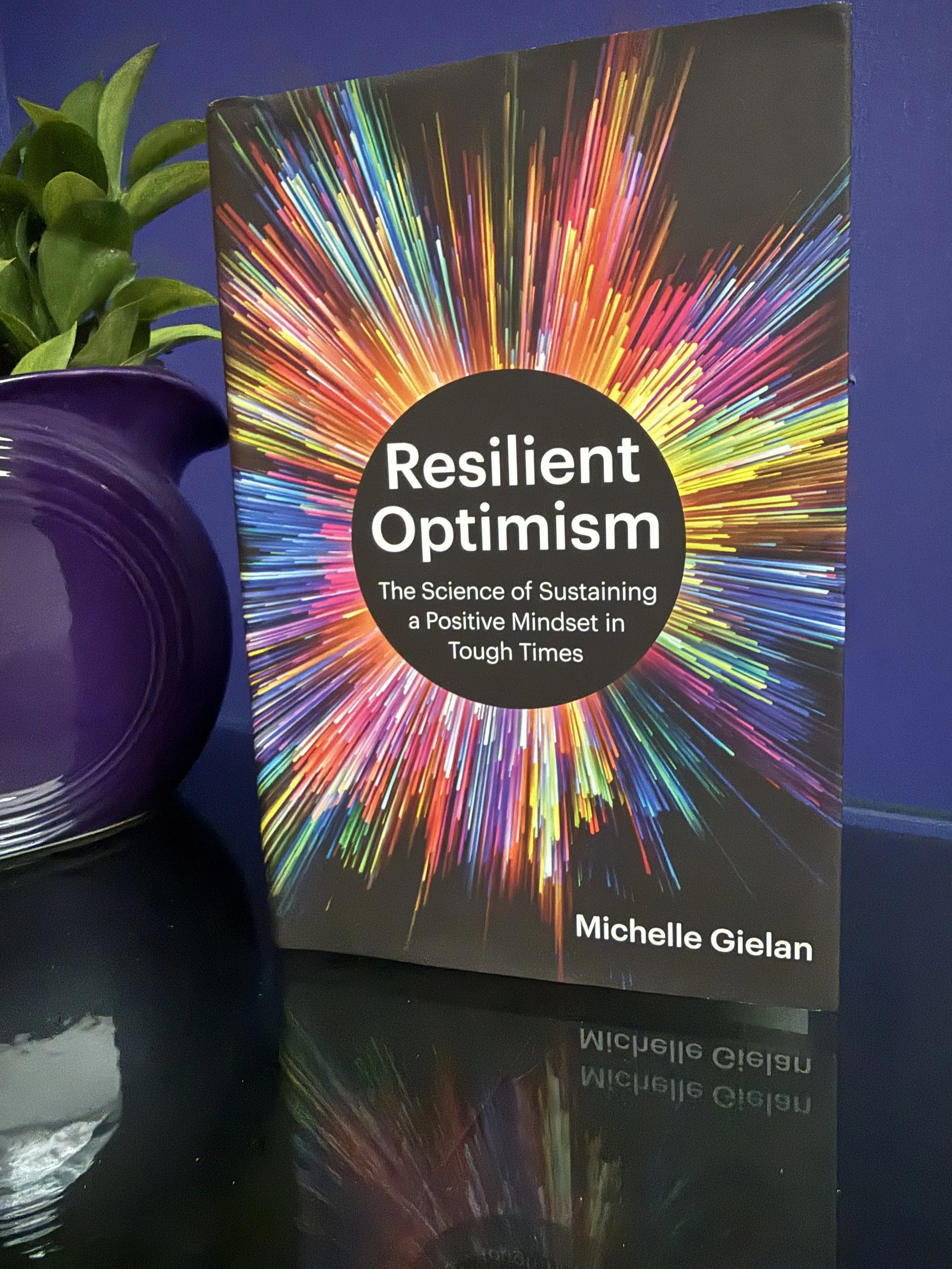
Do you struggle to stay positive and imagine what’s possible, especially during dark times? If so, I highly recommend Resilient Optimism – The Science of Sustaining a Positive Mindset in Tough Times by positive psychology researcher and bestselling author Michelle Gielan.

Drawing on neuroscience research and her work with thousands of leaders, Gielan says, “Resilient optimism is not a one-time mindset. It’s a practice. A daily redirection. A moment-by-moment invitation to pivot toward what’s constructive, energizing, and meaningful.”

When your brain focuses on what’s broken, it limits the brain’s potential. Gielan explains, “The brain runs best when fueled by optimism. The brain is naturally good at detecting threats – we call it negativity bias. When we solely focus on what’s broken, the brain’s threat center (the amygdala) lights up, pulling resources away from the problem-solving prefrontal cortex. But when we also engage with what’s working, the brain responds with creativity, energy, and greater resilience.”

The good news is that resilient optimism is a behavioral shift you can learn. Whether you consider yourself an optimist or a pessimist, Gielan shares doable ways to build your reserves through “deliberate, repeatable actions.”      

Her strategies include ways to:

  • Recalibrate your mindset

  • Change your stress response

  • Triage your commitments

  • Recharge smarter

  • Take small actions

  • Be a “positive deviant”

What will become possible as your mindset shifts?


2. Interesting Product – Possibility Openers
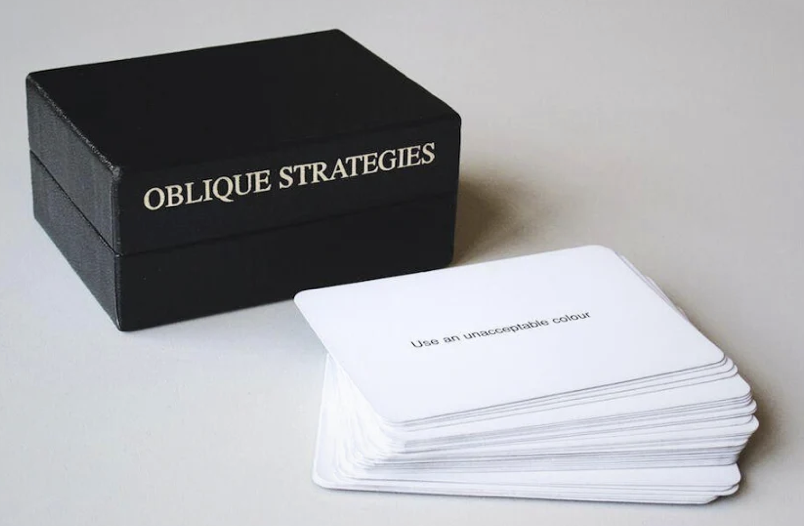
What happens when you feel stuck and are in a mental rut? Do you shut down, feel low on energy, get anxious, or find it difficult to imagine a way forward? If so, you’re not alone. There are many ways to get unstuck.

Decades ago, creatives Brian Eno and Peter Schmidt created Oblique Strategies, a deck of cards designed to help artists, musicians, writers, and other creatives “break through mental roadblocks” and “approach their work from fresh, unexpected angles.” The prompts can help anyone.

Each card offers a single, direct suggestion, such as “Use an old idea” or “Listen to the quiet voice.” Not every prompt will resonate with you, but some might offer the fresh perspective you need. “The goal is to challenge habitual thinking patterns and invite new possibilities into the creative process.”

Are you ready to explore new possibilities? If so, this deck could help.

“Resilient optimism is not a one-time mindset. It’s a practice.”
— Michelle Gielan

3. Interesting Article – Possibility Walk  

In the Time article “Why You Should Take a 10-Minute ‘Thinking-Walk,’” writer Angela Haupt highlights the many benefits of walking, including:

  • Processing thoughts

  • Sparking creativity

  • Solving problems

  • Taking an intentional break from technology

  • Resetting after intense focus

  • Improving mood

  • Reducing stress

  • Protecting long-term mobility

  • Easing anxiety and depression

Imagine what a “thinking walk” could do for you. When your mind is full, you’re stuck on a problem, or you’re struggling to imagine what’s possible, take a walk. Research highlights the value of walking without your electronic devices. Disconnect and let your mind wander. You can do this. It’s only ten minutes.

Although you can walk indoors, walking outdoors can further boost your well-being.


4. Interesting Resource – Possibility Shifts

Are you or someone you know overwhelmed by shopping too much? During a presentation on overshopping, I learned that 33.5 million people are addicted shoppers. We live in a society that constantly bombards us with marketing messages to buy more, newer, and better things. Sales entice us to buy things we don’t really need. Messages like “shop till you drop” make light of a serious addiction: overshopping.

Does breaking the shopping cycle feel impossible? If so, help is available. Carrie Rattle is a financial therapist, shopping-addiction expert, and founder of Behavioral Cents. Dr. April Lane Benson, Carrie’s colleague, friend, and a pioneer in the field of overshopping, mentored Carrie. In 2020, April sold her business to Carrie.

Carrie offers a variety of services, including individual coaching, group coaching, an online community, workshops, and her book, To Buy or Not To Buy – Tools to break the cycle and take control of your life.

What would be possible if you could, as Carrie says, shift from “compulsion to control”?


5. Interesting Thought – Possibility Scenario
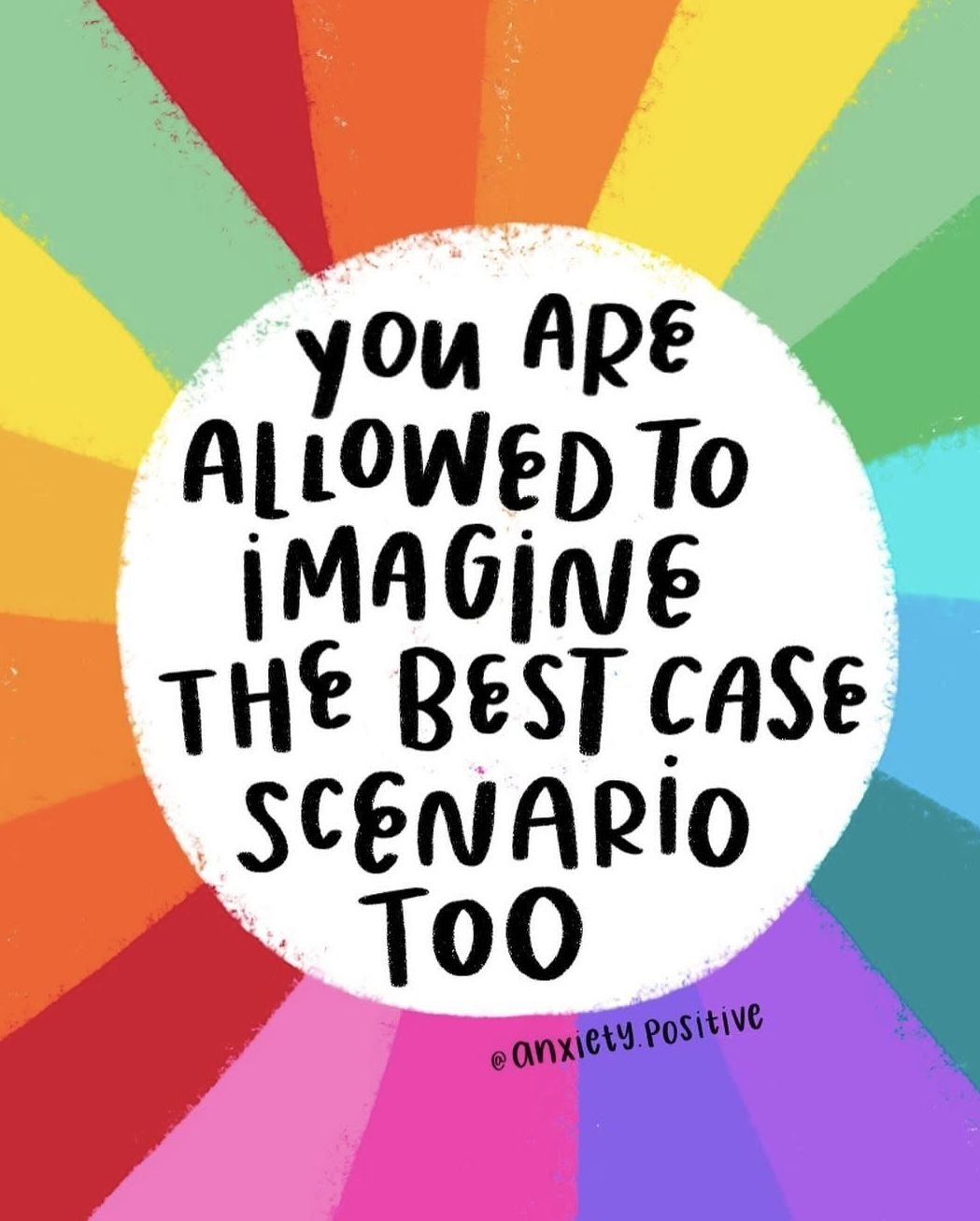
“You are allowed to imagine the best case scenario.” Mindset matters. Instead of dwelling on “I can’t,” “It will never happen,” or “It’s going to be awful,” consider what might be possible. Focus on learning, growing, and exploring new possibilities.

Shifting your thoughts can help you change your path. Think about a project or situation you’re finding challenging right now. What does the best-case scenario look like? What’s one small action you can take now to move in that direction?


What Is Possible Now?

When it’s hard to imagine what’s possible, what helps? As I’ve shared, there are many ways to shift your thoughts and actions and move forward with a more possibility-focused perspective.

Which of these discoveries resonates most with you? Do you have resources or ideas about possibility thinking to share? I’d love to hear your thoughts and invite you to join the conversation.


How Can I Help?

Do you feel overwhelmed, stuck, or disorganized? Are your thoughts keeping you from living the life you want? I’m here to help. Virtual organizing is an extraordinary path forward—Local feel with a global reach.

Let’s talk. I’m easy to reach.

Decluttering, getting organized, and seeing what’s possible can happen, especially with support.


3 Powerful Questions to Cut Through the Noise and See What's Possible

Figuring out what’s possible can feel elusive for many reasons. Your mind can be busy, distracted, clouded, or overloaded. This “noise” can make it hard to see your options. Other factors can make possibility thinking harder, including:

  • Unsupportive physical environment

  • Overwhelming schedule

  • Difficulty making decisions

What if you had a toolbox of questions that could reduce the chatter, bring clarity, and spark action?

Powerful questions can help you get unstuck while also offering benefits such as:

  • Lowering stress

  • Ruminating less

  • Taking more action

  • Boosting energy

  • Improving well-being

James Clear writes a weekly 3-2-1 newsletter that I love receiving. The format is simple: he shares three ideas, two quotes, and one question. This post draws inspiration from his newsletter.


3 Powerful Questions to Cut Through the Noise and See What’s Possible

1. Remove Your Distraction

Oh, those distractions! They can be everywhere. There can be so many that trying to eliminate them all feels overwhelming. If physical interruptions or annoyances in your environment are getting in the way, removing one distraction is an excellent place to start.

To do this, Clear suggests that you “Pick one room where you spend a lot of time…Keep what serves you or inspires you. Remove what distracts you.”

Powerful Question 1:

“What is one item in this room that you no longer use or do not benefit from?”
— James Clear

2. Narrow Your Objective

There’s nothing wrong with thinking big or having a lot you want to accomplish. However, if too many goals or ideas make it hard to know what to focus on, consider narrowing the scope. This can help you get unstuck and make progress.

Clear says, “Clarity isn’t about knowing what you want to do with your life, it’s about knowing what you want to do this week. You don’t need to have it all figured out. You just need to know your next step.”

Powerful Question 2:

“What is the next step you can take right now to support what you want to do this week?”
— Linda Samuels, CPO-CD®, CVOP™


3. Reframe Your Focus

Each day, do you tend to focus more on fixing problems or on enhancing what’s working? Neuroscience research suggests that our brains are wired for a negativity bias. In our evolutionary past, paying attention to potential threats helped keep us safe by detecting danger and responding quickly through fight, flight, or freeze. However, this bias can create obstacles today.

By recognizing this bias, you can ask different questions that shift your focus from fixing what’s wrong to building on what’s right. Clear shared an idea from executive coach Joe Hudson. Instead of asking a question that reinforces the negativity bias, “What’s wrong and how do I fix it?” try experimenting with this reframe instead:

Powerful Question 3:

“What’s right and how do I grow it?”
— Joe Hudson

What’s Possible for You?

When you clear the noise, clarify where to focus, and change how you approach what’s in front of you, meaningful progress follows. With three simple questions, you can not only imagine what’s possible but also take the action needed to make it happen.

Which questions resonate with you? How have you used these or similar questions? I’d love to hear your thoughts, and I invite you to join the conversation.


How Can I Help?

Do you feel overwhelmed, stuck, or disorganized? You don't have to face this alone. I’m here to help! Get unstuck and make progress. Virtual organizing is an extraordinary path forward—with a local feel and a global reach.

Let’s talk! I’m easy to reach.

Getting organized, making progress, and focusing on what’s possible are all doable, especially with support.


5 Ways to Easily See What's Possible by Finding Solutions to Your Challenges

Are there many things you want to experience, explore, or accomplish in life? If so, that’s wonderful. However, when you encounter daily challenges, it becomes harder to think about the future and imagine possibilities.

You have the capacity to handle a lot. You can boost your capacity by identifying and addressing a specific challenge you’re facing. Often, just one small tweak is enough to create momentum and open the path for new ideas you couldn’t see before.

Why is that? It’s easy to get stuck in cycles of distress, overwhelm, and frustration. These patterns can cause paralysis and inaction. When you’re in that negative mode, your mind can spiral or shut down. Thinking and dreaming about new possibilities feels out of reach.

There are many ways to open up the ‘what’s possible’ path. Depending on your preferences and situation, choose the strategy that will be most effective for you.


5 Ways to Easily See What’s Possible by Finding Solutions to Your Challenges

1. Identify the Hiccups

One of my favorite methods to prepare for possibilities is by making a list of the hiccups you encounter during your day.

Pay close attention as you go through your day. As situations occur, write down anything that causes you stress, distress, or inconvenience. These might include things like:

  • Misplaced or lost keys, glasses, or your phone.

  • Had trouble getting dressed because of clutter in the closet.

  • Created an overly complicated organizational system that’s too difficult to maintain.

  • Had supplies tumble out of the bathroom cabinet every time it was opened.

  • Was late for an appointment again.

  • Ran out of milk, toilet paper, apples, or other household staples.

  • Was annoyed during kitchen meal prep because things weren’t organized in a useful way.

  • Woke up cranky because of sleep disruptions or lack of sleep.

  • Began the day feeling anxious and unsure what to focus on.

Notice the hiccup. Write it down. Choose one of the challenges and fix the problem.


2. Quiet Your Mind

When the noise upstairs gets too loud and clouds your thoughts, it can prevent you from seeing possibilities. How can you quiet the mind so you can move forward with clarity and purpose?

There are many ways to do this, including:

  • Journaling

  • Meditating

  • Sipping coffee or tea from your favorite mug

  • Resting

  • Reading

  • Breathing slowly with focus and intention


3. Declutter the Desk

Numerous studies show how clutter can negatively affect our mental health and well-being. Not everyone is affected by clutter to the same degree. However, if clutter bothers you, you may actually feel its effects viscerally. You might feel anxious, stressed, agitated, or have difficulty concentrating or relaxing.

One of the easiest ways to change how you’re feeling is by decluttering a small area. It doesn’t matter what you choose. Pick something with distinct boundaries like a desk surface, a comfy chair, or a coffee table.

Remove items that don’t belong. Route the outtakes to the trash, recycling bin, donation box, or rehome them elsewhere. For the remaining items, decide whether you want them to stay, let them go, or relocate to another spot.

Clearing space and surfaces is calming. With this simple reset, you’ll be more open to possibilities. 

“The physical act of movement can encourage progress and possibilities in other areas of your life. ”
— Linda Samuels, CPO-CD®, CVOP™

4. Move Your Body

Sitting is passive. Not only does it make your body stiff and less active, but it can also affect your energy level and mood. Since transitioning from in-person to virtual work, I sit much more than I used to.

Movement has become even more important. I make sure to take breaks between virtual organizing sessions to walk around, stretch, take bio breaks, or get some fresh air. When I’m on the phone, I often walk around the house while talking. I incorporate other movements by doing yoga, exercising, walking by the river or in the woods, running errands, gardening, sweeping, or cleaning.

Some movement is spontaneous, while some is more intentional. It helps when I schedule time to meet a friend for a walk or go to yoga class. That adds accountability and keeps me committed to moving more.

Physical movement creates its own momentum. The physical act of movement can encourage progress and possibilities in other areas of your life.


5. Ask for Help

Have you ever faced a challenge that overwhelmed you? When that happens, do you try to solve it on your own or ask for help? I usually try to figure things out myself first. However, there are times when hiring someone or seeking advice is beneficial.

Recently, I experienced some frustrating tech problems with Mailchimp and Square while setting up the backend for my December workshop. While customer support offered a few insights, they didn’t resolve the issue, so I hired someone to help me. It was incredible how much less stressed I felt knowing someone would help me find a solution and fix the problem. I didn’t have to do this alone. It was wonderful having the personalized support to troubleshoot the issue, discuss options I hadn’t considered, and resolve the problem. Thank you, Lana Kitcher!

As a professional organizer, I help my clients get unstuck and move forward. I love helping and serving others. It’s inspiring to see what becomes possible when obstacles are removed.

Sometimes the answer to a problem is asking for help. When you receive the support you need, your stress and overwhelm decrease. You become more available to take the next steps and imagine what is possible.


Will Finding Solutions Make You More Receptive to New Possibilities?

Everyone gets stuck sometimes. What happens next is what matters most. There are many options, which include identifying the challenge, decluttering a small area, or reaching out for help. What hiccups during your day are keeping you frustrated and stuck? What helps you feel receptive to new possibilities?

Which ideas resonate most with you? I’d love to hear your thoughts. I invite you to join the conversation.


How Can I Help?

Do you feel overwhelmed, stuck, or disorganized? I’m here to help! Virtual organizing is an extraordinary path forward – Local feel with a global reach.

Let’s talk. I’m easy to reach.

Getting organized and making progress is possible, especially with support.


What Becomes Immediately Achievable When You Get Out of Your Own Way?

The things you say or think can act as possibility-blockers, preventing you from moving forward. They can be subtle or obvious. You might not notice how these phrases get in your way.

The blockers may sound like:

  • “I can’t do this.”

  • “It’s too hard.”

  • “I can’t tolerate the discomfort.”

  • “I’m just not good at this.”

  • “I’m unable to figure this out.”

  • “I don’t know where to start.”

  • “I don’t have any skills.”

  • “Nothing ever seems to work out.”

  • “I’m really frustrated, and I don’t know what to do.”

  • “I never finish anything.”

  • “It has always been like this, and I can’t change it.

  • “I’m feeling totally overwhelmed.”

  • “Nobody ever taught me how to do this.”

  • “I can barely get through today, let alone think about tomorrow.”

  • “I’m stuck where I am.”

  • “I’m too busy and don’t have time to find a solution.”

  • “I can’t imagine what’s possible because my mind and space are so cluttered.”

That’s a lot to take in. Have you noticed yourself repeating any of these phrases? Maybe you have different go-to messages that aren’t helping you. Take a moment to identify which thoughts are shutting you down.

What did you find out?

Focusing on negative messages reinforces your lack of agency. You are paying attention to defeat. While you might not be able to eliminate negativity completely, there is hope. In fact, here is a three-step approach that can help. It consists of awareness, reframing, and action.


A Three-Step Approach: Transform the Impossible into Possible

Step 1: Develop Awareness

“The only limits to the possibilities in your life tomorrow are the ‘buts’ you use today.”
— Les Brown

Notice the messages that aren’t serving you. Each time you repeat them, those neural pathways in your brain become stronger. The applies to positive messages, too. Becoming aware of your thoughts is the first step in changing them.

  • Observe and record.

  • Write down your negative thoughts and messages without judgment.

  • Make a note of how frequently they ‘visit’ you.


Step 2: Experiment with Reframing

“Take your mind off the problems for a moment, and focus on the positive possibilities. Consider how very much you are able to do.”
— Ralph Marston

Once you recognize which negative messages appear and how often they do, you’re ready for this next step.

When you notice yourself repeating the undesired words, use that as a cue to reframe them. Make a mental or written note. Intentionally craft a statement that reduces the power of negative thoughts and promotes healthier, more proactive messages.

Reframing examples:

  •  “I can’t do this,” can become “I’m learning to do this.”

  • “I don’t know where to start,” can become “Just start anywhere.”

  • “Nobody ever taught me how to do this,” can become “I can learn and will ask for help.”

  • “Nothing ever seems to work out,” can become “The past doesn’t have a hold over my future.”


Step 3: Do Something

“The possibilities are numerous once we decide to act and not react.”
— George Bernard Shaw

Negative messages can cause doubt and inaction. One way to overcome them is by taking action. After trying out the reframes, you’re ready to move on to this last step.

Ask yourself, “What tiny action can I take to move this project or situation forward?”

Make the action as small and simple as possible. That’s where the real change begins. By doing something, you shift from “I can’t” to “I can.”

Taking action changes your thinking and behavior. It helps you move from feeling stuck to being proactive.

Action also helps you to:

  • Be more creative when facing challenges,

  • Build momentum,

  • Foster a sense of agency,

  • Achieve your goals, and

  • Nourish hope.


What Is Possible When You Change Your Message?

You’re human. You’ll have internal and external messages that are negative and unhelpful. However, by learning to acknowledge, reframe, and take action, you can change the course of today and the future. Words and thoughts matter. Are yours supporting or hindering your growth? Change the messages so you can thrive.

Which ideas resonate most with you? I’d love to hear your thoughts. I invite you to join the conversation.


How Can I Help?

Do you feel overwhelmed, stuck, or disorganized? I’m here to help! Virtual organizing is an extraordinary path forward – Local feel with a global reach.

Let’s talk. I’m easy to reach.


Getting organized and making progress is possible, especially with support.