
Posts in Too Much Clutter
3 Brilliant Little Lessons 'Magic Lettuce' Taught Me About Clutter

This spring was the first time I grew lettuce in my tiny garden. Since we eat a lot of lettuce, I thought it would be an excellent vegetable to grow. However, until recently, I didn’t know I planted not just lettuce but magic lettuce. It turns out that magic lettuce has a lot to teach us about clutter.

You’re probably wondering what makes my lettuce special? For experienced gardeners, it might seem like plain old lettuce. However, as a newbie gardener, I am amazed and delighted at how quickly it replenishes. I can pick leaves to make a big salad one night, and two days later, the lettuce is back to its pre-picked size. 

I love nurturing and watering the plants, which help them thrive. While I have an abundance of lettuce, it’s the right amount to feed us. I pick it frequently enough, so it doesn’t get too cluttered or overgrown. 


3 Little Lessons ‘Magic Lettuce’ Taught Me About Clutter

1. It’s All in the Edit

The lettuce will grow out of control and become a waste if it goes unchecked and unpicked. This is also true of our physical clutter. If we collect things without trimming or editing, our possessions will overtake our space. 


2. The Abundance Perspective

Abundance can be positive or negative depending upon your perspective. I experience constant joy in harvesting fresh greens for our salads. I embrace the abundance but also manage to keep the plants balanced.

With physical clutter, you might enjoy having a lot of some things like shoes or a particular collectible. I’m a Pez dispenser collector. However, you might feel overwhelmed by too many papers, books, or kitchen gadgets. Our attitude about abundance is influenced by what “too much” means. Know and manage your limits.


Clutter will increase if you don’t create intentionality and boundaries for your stuff.
— Linda Samuels, CPO-CD®, CVPO

3. My ‘Magic Clutter’ Theory

I explained my theory about magic lettuce and how quickly it grows. Have you encountered magic clutter?  My clients often describe their clutter as “growing overnight” or “it keeps coming back.”  In the case of lettuce, magic is a positive thing. However, the magic aspect is negative with clutter because most of my clients want less of it. They definitely don’t want it to return.

Lettuce needs to be intentionally nurtured to grow. The opposite is true with clutter, which will increase if you don’t create intentionality and boundaries for your stuff.


When it comes to lettuce, I love that it grows continually. I don’t feel that way about clutter. Activating the edit, understanding your perspective, and creating intentionality will help you become clutter-free. What enables you to keep clutter in check? Which ideas resonate with you? I’d love to hear your thoughts, and I invite you to join the conversation.

If you are overwhelmed by clutter and want to create a peaceful balance with your stuff, I’m here to help. Let’s talk. Contact me at linda@ohsoorganized.com, 914-271-5643, or click here.

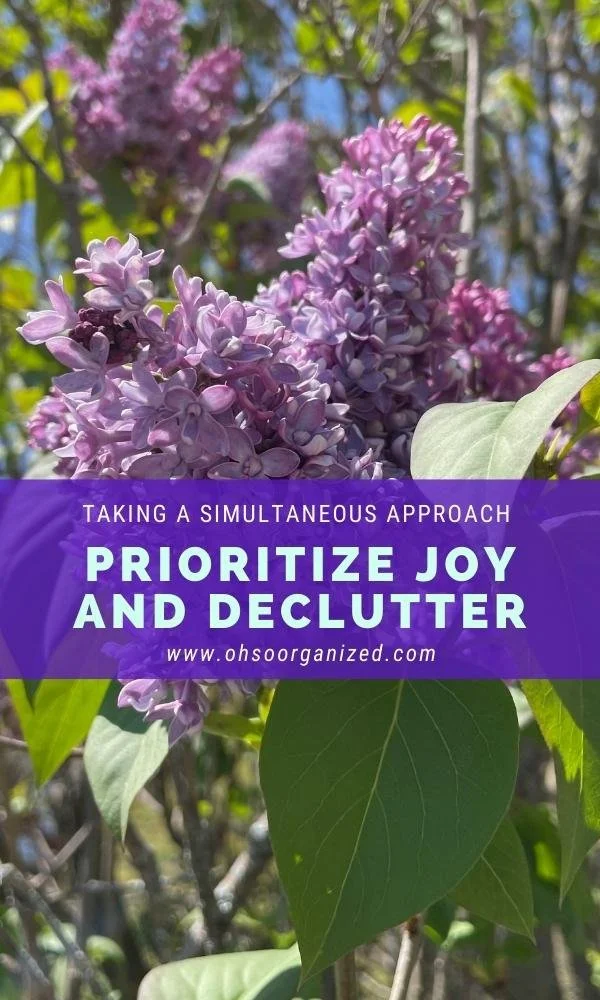


Is It Now Recommended to Simultaneously Prioritize Joy and Declutter?

Many of my virtual organizing clients are overwhelmed by clutter, so they reach out for help. One of the common threads is the sense they need to postpone all fun and joy until they completely declutter. In truth, it’s challenging to work intensely without taking a break or replenishing your reserves. Having joy-infused counterbalances to organizing can bring renewed energy and focus.

Earlier this week, I attended an Executive Mom Nest meeting, where we discussed ways to prioritize joy. Transformational Coach Advisor Leesa Askew gave us a writing exercise to list 20 things that bring us joy. They didn’t have to be big things. Our lists mainly focused on simple stuff. Some of mine included:

  • Taking that first sip of coffee in the morning 

  • Walking in nature

  • Walking with a friend

  • Writing in my journal

  • Being at the beach

  • Sitting in the sun

  • Taking photos

  • Talking with our kids

  • Smelling the lilacs

At the end of the meeting, we were encouraged to select one item from our joy list and commit to doing it that day. I knew right away which one to choose- smelling the lilacs! As their blooming season is short, I didn’t want to miss the opportunity to take in their intoxicating scent.

While running errands, I had driven past this gorgeous blooming bush of lilacs several times. I thought, “Linda, stop the car, get out, and smell them.”  However, in the interest of getting things done, I kept driving. Or, I chose to postpone this simple moment of joy to do other things. Does that sound familiar? Have you ever decided not to have fun or lean into a special moment because you were preoccupied with something else?

After the prioritizing joy conversation, I made an intentional trip to the lilacs. When I arrived, I parked my car and walked down the block. I leaned over, placed my nose close to the lavender flowers, took a deep breath, and let the fragrance flood my senses. It was a happy moment.

Prioritizing joy and decluttering aren’t mutually exclusive.
— Linda Samuels, CPO-CD®, CVPO

For you, joy might come in other forms. Instead of nature, lilacs, and sun, you might prefer a coffee date with a friend, curling up with a good book, or eating by candlelight. The possibilities abound. You can simultaneously prioritize decluttering, organizing, or any large project and engage in joyous moments. Prioritizing joy and decluttering aren’t mutually exclusive. In fact, prioritizing regular encounters with delight will help you approach the challenging parts of your day with clarity and perspective.

Do you postpone fun and joy when you’re feeling overwhelmed by clutter? What brings you joy? What overwhelms you? I’d love to hear your thoughts. I invite you to join the conversation.


What Reasons Motivate Every Client to Easily Let Go of Clutter?

Clutter can be a non-issue. However, for many of my clients, clutter that has established residency in their homes is a big challenge. Here is the thing. With some exceptions, the clutter didn’t appear overnight. It may not have felt problematic until the day you or a family member noticed it. Clutter is tricky in how it collects slowly, one postponed decision or action at a time. Have you noticed how clutter attracts more clutter? When surfaces and spaces are clear of excess, it’s easier to see when papers pile up or clothing draped on chairs are out of place. When there is too much stuff, it can become overwhelming and difficult to find a way forward. So what can you do?

Decluttering is a verb, which involves action. Taking action requires motivation. Identifying your why is essential to motivation, especially when you feel stuck. If your reasons aren’t compelling, then any significant movement will be less likely. The more clarity you have about why you want to change, the greater your chance for success.


When I work with my virtual organizing clients, having them articulate their why is a critical part of the work. Even before we begin working together during our initial contact, I listen carefully for their ‘why.’ I ask questions including:


What is driving your desire for change?

What prompted your call?

Why now?


The ‘why’ becomes a critical ingredient in my clients’ progress. If their reason is non-existent or weak, it could indicate they aren’t ready to move forward. It might also mean they need a different type of help, like a therapist. Or perhaps they don’t have the time and energy right now to devote to making a change.

Decluttering is a verb, which involves action.
— Linda Samuels, CPO-CD®, CVPO™

The ‘why’ is different from a strategy. For example, many of my clients find that scheduling regular virtual organizing sessions provides accountability, which helps them accomplish more in between sessions. Using an accountability partner is a strategy. And sure, they experience a motivation boost knowing that we’re going to meet. However, our scheduled sessions aren’t the why behind the work. The ‘why’ is more personal, impactful, and comes from deep within. Do any of these resonate with you?


‘Whys’ That Motivate My Clients to Let Go of Clutter

  • I don’t want to feel overwhelmed by my stuff.

  • I don’t want to feel clutter-related stress and anxiety.

  • I don’t want my things to be a burden for my loved ones to handle after I’m gone.

  • I want to feel more in control of my life.

  • I want to have company over without feeling embarrassed by the clutter.

  • I want to feel safe at home so that I don’t trip or fall.

  • I want my priorities to be in alignment with my physical environment.

  • I want to stop wasting time and be able to easily find what I’m looking for.

  • I want to stop overbuying because I have so much clutter I don’t know what I already own.

  • I want to downsize, prepare our house for sale, and then move.

  • I want to make our home ready for the birth of our baby.

  • I want to create calm, uncluttered office space so I can work remotely without distractions.

  • I want my relationship with my spouse to improve. My clutter is a cause of contention.

  • I want to stop paying for storage.

  • I want my home to feel peaceful and calm. The clutter is distracting, and I can’t focus.

  • I want to let go of things taking up space, mental energy and serving no purpose.

  • I want less stuff. It’s too hard for me to maintain and manage.

  • I want to simplify and declutter so I can enjoy the next season of my life.


This is a small sampling of motivating reasons my clients let go of clutter and embrace change. What motivates you, your clients, family, or friends to declutter? What influence does the ‘why’ have? I’d love to hear your thoughts. I invite you to join the conversation.


What Are Today's Interesting Clutter-Related Discoveries? - v31
What Are Today’s Interesting Clutter-Related Finds? - v31

The latest installment (v31) of the “What’s Interesting?” feature is here with my newest discoveries informing, educating, and relating to organizing and life balance. I’ve included unique and inspiring, clutter-related finds, which reflect this month’s blog theme.

You are a wonderfully generous, warm, and engaged group. I am deeply appreciative and grateful for your presence, positive energy, and contributions to this community.

I look forward to your participation and additions to the collection I’ve sourced. What do you find interesting?


What’s Interesting? - 5 Clutter-Related Finds

1. Interesting Read – Extreme Clutter

Filled Up and Overflowing by Diane Quintana and Jonda Beattie

Are you curious about hoarding behavior, chronic disorganization, and how to help yourself or a loved one be safe in a cluttered space? In Filled Up and Overflowing – What to do when life events, chronic disorganization, or hoarding go overboard, Diane Quintana, CPO-CD® and Jonda Beattie, M.Ed, professional organizing colleagues and authors, share their and their clients’ experiences and insights through poignant stories. They describe how to distinguish hoarding behavior from other types of disorganization and clutter, describe effective strategies, and include valuable resources. Diane and Jonda write about the importance of being respectful when helping. They suggest, “Ask permission before touching anything, opening any drawer, cupboard, or closet…before moving anything – even a small piece of paper or a box that is in the way.” They explain that the movement can cause distress. “Even though it looks like random stacks of stuff to you, they know where their possessions are and will become panicked if they cannot find them.” If you are a professional, a family member, or friend of someone challenged by hoarding behavior and want to help, this is an essential go-to guide.


2. Interesting Trend – Aesthetic Clutter

Photo by #thecluttercore (Instagram)

Photo by #thecluttercore (Instagram)

Have you heard of cluttercore? It is a relatively new design aesthetic trend from pop culture that first gained attention on TikTok. Cluttercore is now visible on other social media platforms, too, like Instagram and Twitter. Search #cluttercore to see a variety of visuals. You’ve heard of the minimalist aesthetic and movement. On the opposite end of the spectrum, Marianne Eloise describes cluttercore as maximalist, a “messy, actually lived-in lifestyle.”

It’s a rejection of minimalism. Eloise says, “It’s a stuff-centric aesthetic however, it has little in common with careless hoarding.” Cluttercore rooms look cozy, lived in, and filled with lots of “artfully arranged,” carefully chosen things. As the enthusiast Micah describes, “Cluttercore is in no way a promotion of unhealthy hoarding of material objects and garbage, but rather an appreciation of things we can call our own.”


Spring is a great season to declutter the extraneous.
— Linda Samuels, CPO-CD®, CVPO™


3. Interesting Podcast  – Thing Clutter

In this podcast episode “Things,” WNYC’s Radiolab hosts Jad Abumrad and Robert Krulwich (since retired) discuss “things you can hold and things that can take hold of you.”  During this personal conversation, they talk about objects, their relationship to them, and the thought process for keeping or letting them go. The dialogue is reminiscent of the decision-making conversations I’ve had with clients as they talk and decide about the clutter in their lives.


4. Interesting Season – Declutter Clutter

With temperatures warming, thinner layers of clothing, and flowers blooming, this is an inspirational moment to let go, de-stress, and get organized. Spring is a great season to set your organizing goals, declutter the extraneous, and create the calm at home that you deserve. Change is possible, especially with support. If you are struggling, enlist help from a compassionate and non-judgmental friend, family member, or professional organizer like me. I’m ready to help. Discover how virtual organizing can work for you and why my clients love it so much. Let’s talk. Call 914-271-5673 or email me at linda@ohsoorganized.com.


5. Interesting Thought – Mind Clutter

Clutter isn’t just reserved for the physical stuff we own. We can also experience mind clutter, which makes it hard to think clearly and focus. Some of my favorite mind decluttering strategies include:

  • Doing a brain download with a pen and paper

  • Taking a walk in nature

  • Practicing mindfulness meditation

  • Organizing a small space or area. The reduction of physical clutter can result in less mental clutter.

What are your interesting finds? Which of these resonate with you? I’d love to hear your thoughts. I invite you to join the conversation.