

Here Are Today's Most Interesting and Best Clutter Discoveries - v40

The newest release (v40) of the “What’s Interesting?” feature has my latest finds, which inform, educate, and relate to organizing and life balance. These unique, inspiring, clutter-related discoveries reflect this month’s blog theme.

You are a passionate, communicative, and engaged group. I am deeply grateful for your ongoing presence, positive energy, and contributions to this community. I look forward to your participation and additions to the collection I’ve sourced.

What do you find interesting?


What’s Interesting? – 5 Best Clutter Discoveries

1. Interesting Workshop – The Motivation to Declutter

Are you struggling with staying motivated? You’re not alone. Studies show that anywhere from 40-90% of the population experience low motivation, which can negatively affect their personal and professional lives, education, relationships, and ability to achieve goals (such as reducing life’s clutter). But there’s good news - help is here.

Join me for a lively one-hour online workshop – How to Boost Motivation – 7 Familiar Challenges & Simple Solutions, on May 18th @7:00-8:00pm EDT. During this workshop, you’ll learn what motivation is, its most common problems, and practical strategies to overcome them. Get ready to become unstuck, increase your motivation, and start taking action toward your goals. Don’t wait - register now!


2. Interesting Podcast – The Stress of Clutter

Do you get overwhelmed and stressed by the clutter in your life? Some professionals, like myself, specialize in helping people sort, unclutter, and organize their belongings. The American Psychological Association’s podcast episode 227 features Deacon Joseph Ferrari, Ph.D., psychology professor and expert on the study of chronic disorganization and clutter.

Ferrari discusses the reasons we accumulate so much stuff, the challenges of dealing with clutter, the research about the impact of clutter on stress and anxiety, and how to declutter your life. Ferrari says, “…it [our possessions] could be a trigger to something in the past. And that’s one of the reasons it’s harder to declutter because it brings back either positive or negative emotions.”

“Clearing clutter will give you the space and energy to focus on what is most important to you. ”
— Linda Samuels, CPO-CD®, CVOP™

3. Interesting Read – The Elimination of Clutter
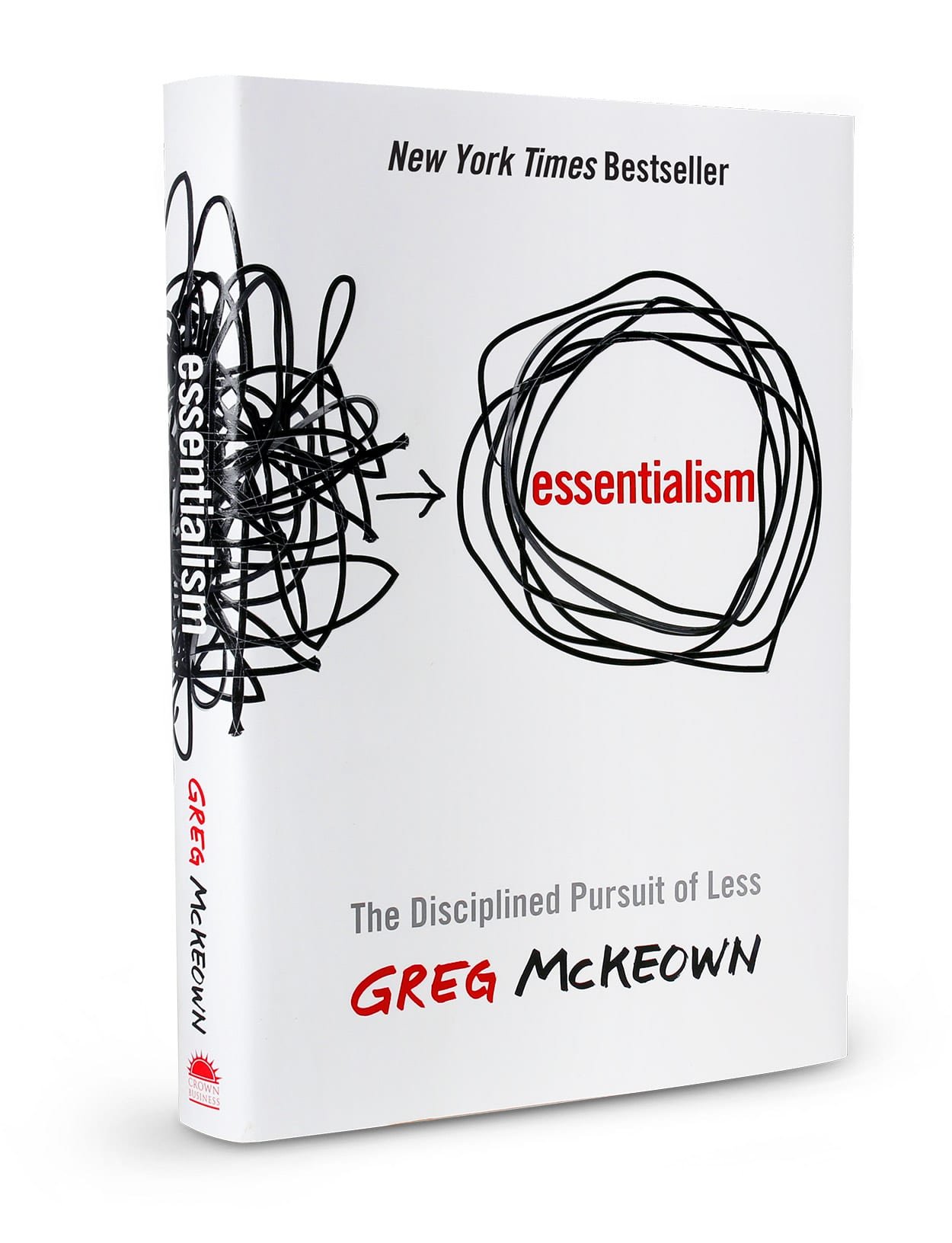
In Essentialism – The Disciplined Pursuit of Less, author, speaker, and podcast host Greg McKeown helps you eliminate the non-essential and focus on the things that matter most. McKeown says Essentialism is not about saying “no” more often but asking, “Am I investing in the right activities?” It’s not about “how to get more things done; it’s about how to get the right things done.”

This happens by being intentional and by actively making decisions about your life. McKeown says, “If you don’t prioritize your life, someone else will.” What is cluttering your life and taking you away from what’s most important? Choice is at the core of being an Essentialist. He says, “We often think of choice as a thing. But a choice is not a thing. Our options may be things, but a choice-a choice is an action. It is not just something we have but something we do.”

If you are ready to be inspired and reduce the non-essential clutter in your life, I highly recommend reading Essentialism.


4. Interesting Resource – The Donation of Clutter

Would you like to declutter your overflowing closets and dressers while helping the environment? Using For Days “Take Back Bag,” you can easily ship unwanted goods, including clothes, socks, undies, shoes, linens, and even ripped, torn, or stained textiles. For Days will give “your oldies…a new life.” With their recycling partners, they keep goods out of landfills. The $20 cost of the Take Back Bag covers shipping. You receive an equivalent credit to your account, which can be used as cash for future clothing and home goods purchases.

In addition to the Take Back Bag program, their swap system lets you recycle at any point or exchange for credits For Days’ purchases of clothing and home goods. For Days embraces “circularity and zero waste.”


5. Interesting Thought – The Editing of Clutter


We accumulate stuff, filling our homes and minds with many things. Some are useful for a time and then can be released. What happens when we keep adding and never edit? Your spaces and thoughts become full, which can cause you to feel overwhelmed and unfocused. Choose to edit. Be ruthless. What has overstayed its welcome? What can be released? What deserves your time and attention? Clearing clutter will give you the space and energy to focus on what is most important to you.


Do you have an interesting clutter-related discovery? Which of these resonates with you? I’d love to hear your thoughts. I invite you to join the conversation.



What's the Secret to More Happiness? Let Go of Negative Self-Talk

While it’s impossible always to be happy, you can boost your happiness by letting go of negative self-talk. This means refraining from criticizing yourself and being overly harsh. Do you often blame yourself for not being intelligent, creative, or compassionate enough? Chances are, you remember some recent instances where your self-talk was unhelpful and unkind. But changing how you speak to yourself can significantly improve your well-being.

When you continuously reinforce negative thinking, it adversely affects various aspects of your life, such as productivity, relationships, work, and play. It infiltrates deep within and creates feelings of inadequacy, sadness, and doubt. It’s not a pleasant place to be in.

However, you can change your day-to-day experience and mood by reframing your thoughts with a different dialogue. Have you considered asking yourself a question that could help you let go of negative thinking?


I recently came across the book Essentialism by Greg McKeown, and I strongly recommend reading it. It’s packed with valuable insights, but today, I’ll focus on one concept he shared in the chapter about progress. A powerful question he proposed for starting a meeting is,

“What has gone right since we last met?”

The question focuses your mind on the positive. It encourages thoughts of gratitude, progress, success, joy, anticipation, and pride. It has the added benefit of removing negative thoughts because it asks for the ‘good stuff’ to surface instead.

Does it mean that nothing negative happened? Of course not. But it helps you describe the internal conversation with a positivity bias.

As McKeown suggests, asking, “What has gone right since we last met?” is an excellent way to start a meeting. However, I’m sharing a modified version of this question to help you reduce negative self-talk. Instead, try asking,

What went right today? 


The possibilities are endless. Maybe you . . .

  • Donated a bag of clothes

  • Shredded old bank statements

  • Edited your pile of incoming mail

  • Gave a new presentation

  • Helped virtual organizing clients with their organizing goals

  • Had a soulful conversation with a dear friend

  • Decluttered your bedroom

  • Accomplished your top priority

  • Received registrations for upcoming motivation workshop

  • Got a great night’s sleep

  • Picked and ate lettuce from the tiny garden

  • Registered for a conference on challenging disorganization

  • Made time to smell and appreciate the beautiful spring blooms

“Happiness starts with having a positive mindset and letting go of negativity. ”
— Linda Samuels, CPO-CD®, CVOP™

Happiness comes in many forms, but it starts with having a positive mindset and letting go of negativity. How do you overcome negative self-talk and cultivate happiness in your life? What went right today? I would love to hear your thoughts and invite you to join the conversation.


How to Gracefully Let Go When the Universe Sends You a Clear Message

Do you ever feel like the universe sends you a message you need to hear? It happened to me this week. Interestingly, what I received related to the letting go theme I’m writing about this month.

You might have read about last week’s letting go mishap when I accidentally deleted my entire email inbox. I recovered, only to be challenged by another ‘adventure’ this week. It’s a doozy! Clearly, the universe thinks I need more letting go practice.

Midweek, I woke up with 500+ other neighbors to the surprise of no Internet or phone due to “cut fibers.” Our service provider assured me it would be fixed within 24 hours, which seemed reasonable. However, I was on a deadline. I was putting the finishing touches on a Zoom workshop being presented the following day. While I had no choice in the technology glitch (it happened and was being worked on,) I did have a choice in how I responded.

There was some initial panic, where I engaged in numerous “what if?” scenarios.

  • What if it’s not fixed in time and I can’t present my workshop?

  • What if I can’t access the information I need to compile my notes?

  • What if the calm day I planned is turned upside down?

  • What if…?

After the panic, technology assessment, and the realization that I could do nothing at that moment, I started letting go. I talked calmly to myself so I could switch gears and put my energy toward completing my workshop notes. I couldn’t afford to have my attitude sabotage the day. Instead, I focused on what I could work on. I let go of what I had no control over, did some creative problem-solving, and stopped the worry-stress-negative self-talk-loop.

I went to Starbucks in the afternoon for Internet access and a much-needed coffee break. I checked a few resources for my notes and caught up on email. I sat by the river and walked down the block to smell the fragrant lilacs. These actions kept me calm and focused.

“Let go of what you have no control over.”
— Linda Samuels, CPO-CD®, CVOP™

By the evening, I finished my workshop notes and made alternate plans for presenting if I had no Internet the next day. I also realized how much more I accomplished without interruptions or distractions from the Internet, social media, and the phone.

Are you curious about what happened? When I woke the next day, the Internet and phones were restored. I gave my workshop, which went well, with good attendance and participation. Can you hear my giant exhale?

Life is full of surprises and curve balls. You can’t anticipate when they’ll arrive or what they’ll be. But as always, you do have a choice in how to respond. You can get stuck and paralyzed by the emergency or let go to allow focus, resilience, creativity, and growth to thrive.

How does letting go show up in your life? I’d love to hear your stories and thoughts. I invite you to join the conversation.


What Letting Go Can Do for You: Unexpected Benefits Found

Letting go is usually intentional. At least, it seems purposeful most of the time for my clients and me. Holding on can create stress, conflict, overwhelm, disappointment, confusion, or anxiety. The same can be said for the process of letting go. Thinking about saying ‘good-bye’ to things or situations can be its own type of challenge. However, when we finally let go, it allows for open space, growth, and relief.

I often consider letting go like a muscle that needs exercise and practice. The more you use the letting go muscle, the easier the process becomes. Decision-making goes more smoothly, too, as you set boundaries or rules around what stays or goes.

What happens when you accidentally let go? You might wonder how someone can unintentionally let go like one giant, whoops. I experienced this last week.

You are probably familiar with the term “inbox zero.” Some set a goal to have no (as in nothing, none, nil, zilch) emails in their inbox. Instead of keeping all emails visible, you route incoming emails to specific, organized locations to achieve a clear inbox. They can move to the trash, action, or archive folders along with a cue to follow through on a trusted task list.

Let’s return to my saga. With full disclosure, I can’t tell you exactly how it happened, but I remember that multitasking was involved. I couldn’t repeat the mistake if I tried. But the result was that I accidentally deleted all the emails in my inbox and couldn’t get them back. There were about 100, and I had responded to most but not all of them.

My first reaction was panic. Then I tried to undo the error. In my frenzy, I think I made things worse. So, I stopped. I took several deep breaths and asked myself, “Linda, now what?” There were several options, including getting on the phone with tech support to see if they could help retrieve the deletions. I lacked time, confidence, and patience for that option. I was also in the middle of several deadlines and needed to focus on those instead of my big mistake. I knew how quickly my day could have deteriorated with negative self-talk, paralysis, and frustration. Those weren’t good options.

“Letting go allows for open space, growth, and relief.”
— Linda Samuels, CPO-CD®, CVOP™

I felt calmer when I recognized that some emails could be retrieved through the “sent” email box if needed. In addition, if I missed something important, the sender would hopefully resend it to me. If you sent me an email and I never responded, please resend it. Thank you.

Letting Go: Unexpected Benefits

It’s been over a week without those deleted emails, and it’s been OK as of today. I let go of a lot and discovered some things along the way.

  • There is no perfect.

  • I’m human and make mistakes.

  • Life goes on even without a full inbox.

  • The most important things were handled.

  • I recognized growth in how I kept my initial panic to a minimum.

  • Resilience was visible as I quickly recovered from ‘the incident.’

  • Multitasking can be dangerous.

  • Appreciate the improved focus with fewer emails visible.

  • Be grateful for the empty inbox, even if unintentional.

  • Acknowledge the available time doing fun things like planting my small vegetable garden instead of stressing over retrieving emails.

  • Find the humor in the situation.

  • Remember the big picture.

In the end, letting go, while unexpected, was valuable. I’ve recovered from the mishap, appreciate a less full inbox, and feel lighter and less encumbered.

Have you ever let go accidentally? If so, what happened? What did you discover? I’d love to hear your thoughts. I invite you to join the conversation.