
10 Most Common Motivation Challenges & Easy Solutions

Motivation is a hot topic. We think a lot about what motivates us to take action and move toward our goals. We also spend a lot of time struggling with the things that de-motivate and prevent us from going forward. What gets in the way of your motivation?

We can identify and remove those obstacles by looking from the “challenges” perspective. As you read, note the challenges that resonate with you. Are there additional motivation challenges that you’ve experienced? What helps?

I’d love to learn about you. Please add to the conversation.


10 Common Motivation Challenges & Easy Solutions

1. Abundant Choices

When the options are too plentiful, they can overwhelm us with inaction. The thought of moving ahead becomes exhausting.

Tip: Narrow your choices to just two or three options. Pretend you have blinders on and ignore the external input. If you’re still stuck, ask a friend to be a sounding board.


2. Fear of Failure

Perfectionism, or fear of incorrectly doing something, can stop us from moving forward.

Tip: Being perfect isn’t possible. Striving to be our best is. Failing is an essential part of the journey. We learn by trial and error. As Thomas Edison said, “I have not failed. I’ve just found 10,000 ways that won’t work.” Test out this alternate perspective.


3. Fear of Success

Low self-esteem can compromise your view of success. You might doubt that success is possible and lack the motivation to attain it.

Tip: Look to the past. Acknowledge your small and large successes. Look at the present. Be aware of your current accomplishments. Practice noticing and appreciating your wins. Build from the past and present to reduce your fear and boost your confidence.


4. Lack of Clarity

When we don’t know which step is next or why we’re doing what we’re doing, we can quickly become de-motivated.

Tip: Take a step back. Set aside time to revisit your projects, goals, and values. Perhaps there has been a parameter shift, and it’s time to adjust.

When we don’t know which step is next or why we’re doing what we’re doing, we can quickly become de-motivated.
— Linda Samuels, CPO-CD®

5. Exhaustion

Sleep is essential for the optimal mind and body functioning. When we’re exhausted, it’s difficult to remain motivated.

Tip: Review your current sleep patterns and needs. If lack of sleep contributes to your lack of motivation, make the necessary adjustments. Experiment with how much sleep you need to feel rested, alert, and ready for the day. Most adults need between 7-9 hours of sleep per night.


6. Comparison

Focusing on how we do or don’t measure up compared to our colleagues, family, friends, neighbors, or whoever only promotes unproductive thinking. This is a sure-fire formula for de-motivating ourselves. As Theodore Roosevelt said, “Comparison is the thief of joy.” It also can be the thief of motivation.

Tip: Forget about the “grass is greener” concept. It never is. Instead, practice gratitude. Focus on your gifts, successes, dreams, and desires. Build and encourage a life that is uniquely yours.


7. Excuses

We all make them. They are the negative messages we repeatedly tell ourselves, which prevent us from doing. We say things like, “I’d like to do ‘x,’ but I’m too tired or too busy or not smart enough or….”

Tip: Set the internal alert. Become aware of the excuses that are not useful, real, or true. Begin challenging them when they appear. Reframe the dialogue to the positive.


8. Drudgery

Routines can be helpful, but they can become so tedious that we lack the motivation to maintain them. 

Tip: If you are feeling bored, add the fun factor to the equation. Playing upbeat music, introducing pleasing colors, or bringing mood-boosting scents into your environment could make a difference to your patterns. How about a change in the pace or sequence of the routine? Experiment with altering one element and see how that influences your motivation.


9. Patience

We expect so much of ourselves and want instant results. When things aren’t happening as fast as we think they should be, it can de-motivate us to continue.

Tip: Striving to achieve, become, and do takes time. Extend yourself the gift of patience


10. Distractions

When your attention is pulled in too many directions, you can lose focus and motivation to work on what’s most important.

Tip: Pay attention to the “distraction-makers.” Are you being interrupted by people, sounds, emails, and phone calls? How can you minimize distractions during certain times of your day? Recently, I turned off all the dings and alerts on my electronic devices. The positive effects on my focus, productivity, and motivation have been noticeable.

We’re human. We experience times when our motivation wanes. That’s normal. Understanding which is your motivation challenge and implementing some of the suggested strategies will help get you back on track. I’d love to hear your thoughts. Come join the conversation. What de-motivates you? What gets you unstuck? 


What Are Today's Interesting Finds? - v19
What Are Today’s Interesting Finds? - v19

The newest installment (v19) of the “What’s Interesting?” feature is here with my recent discoveries that inform, educate, and relate to organizing and life balance. I’ve included unique and inspiring time-related finds, which reflect this month’s blog theme.

You are such a wonderfully engaged group and I am so grateful for you. I look forward to your participation and additions to the collection I’ve sourced. What do you find interesting?

What’s Interesting? . . .

1. Interesting Read – Time to Be Present 

Fully Present by Susan L. Smalley, Ph.D. and Diana Winston

If you want to enhance your health and well-being and be more aware in the moment, this book is for you. In Fully Present – The Science, Art, and Practice of Mindfulness, scientist Susan Smalley, Ph.D. and mindfulness teacher and practitioner, Diana Winston explore the scientific explanation for how mindfulness affects the brain and body in a positive, powerful, and compelling way.  The authors also share tips and exercises for developing and maintaining a meditation practice. They say, “You can learn to take an ordinary experience, give it your present-moment attention, and experience it as extra-ordinary.” Modern culture tends to cultivate mindless-ness. “The dominant American culture validates virtually mindless productivity, busyness, speed, and efficiency. The last thing we want to do is just bepresent.”  Smalley and Winston present an opening for us to think about how we spend our time“Mindfulness is a means to rebalance doing and being.”  

2. Interesting Season  – Time to Organize

OK. The truth is that every season is a great season to get organized. With summer just starting, we’re poised for a new beginning. We can reset our organizing goals, take stock of our busy schedules and time, do some decluttering, and bring order and balance back into our lives. If you want to get organized, but are feeling overwhelmed and stuck, find an organizing buddy. Your buddy can be a compassionate and non-judgmental friend, family member or professional organizer like me. You’ll be amazed with how much you will accomplish in a short amount of time when your work side-by-side with someone else. I’m ready to help and am just a phone call (914-271-5673) or email (linda@ohsoorganized.com) away.

3. Interesting Product – Time to Roll

This Week Sticky Roll Notes by Knock Knock

How do you roll with managing your to dos? Check out this new product, This Week Sticky Roll Notes from Knock Knock. With 26 feet of note-taking tape, you can place this list anywhere to remind you about what’s next. Just pull, tear, and then stick the strip to any surface like your mirror, desk, refrigerator, or door.  It’s a fun and flexible product that will help you better manage your time.


4. Interesting App – Time to Connect

If you like the idea of writing personalized cards, but can never find the time to do so, you’ll love Pixinote. This app combines old school with the digital age.  In just a few minutes using your cell phone, you can easily combine three lines of personalized text with one of your photos. A printed card in an envelope will show up in your loved one's mailbox several days later. Keeping in touch was never so easy. Your friends and family will appreciate receiving “good” mail and knowing that you took the time to connect with them.


5. Interesting Thought – Time to Steer

The bad news is times flies. The good news is you’re the pilot. - Michael Altshuler

If you’re anything like me, time appears to be moving more and more swiftly with the passing of each year. Now more than ever, being intentional with how time is being spent seems essential. After all, we have a finite amount of time. While none of us know how long we’ll be here, we are in charge of the time we do have.

What are your interesting finds? Which of these resonate with you? I’d love to hear your thoughts. Come join the conversation!


What is the Best Time Management Question When You Are Overscheduled?

For all of the overextended, cup-runneth-over, and time-poor people out there this post is for you! If your life consists of a steady flow of appointments, events, projects and responsibilities with little or no time to catch your breath, then keep reading. Even if life isn’t always hectic you’ll want to keep this one question at the ready for the periods of time that are.

Before I share the question, I’d like to give you some background. A while ago my coaching friend and colleague, Cameron Gott, shared a series of wonderful questions with me. I jotted them down and rediscovered them recently. While these questions can be used for many situations, one of his questions works beautifully as the best  time management question to ask when you are overscheduled. It is . . .

What’s most important now?
— Cameron Gott, PCC

I love how simple and direct it is. The question helps us to work through overwhelm and competing time demands and then focus on the present. The question is action-oriented. It helps us prioritize. We can then mindfully use our time to focus on what is most important.

In recent weeks, I found this question extremely useful as I navigated various time-intensive activities. By continually coming back to, “What’s most important now?” I was able be more mindful and engaged with the present. Simultaneously, I let go of thoughts relating to everything else that needed to be done. The question was liberating.

11 things that needed my time, focus, and presence

Time for Fixing –The washing machine broke. My computer crashed. My car needed to be replaced.

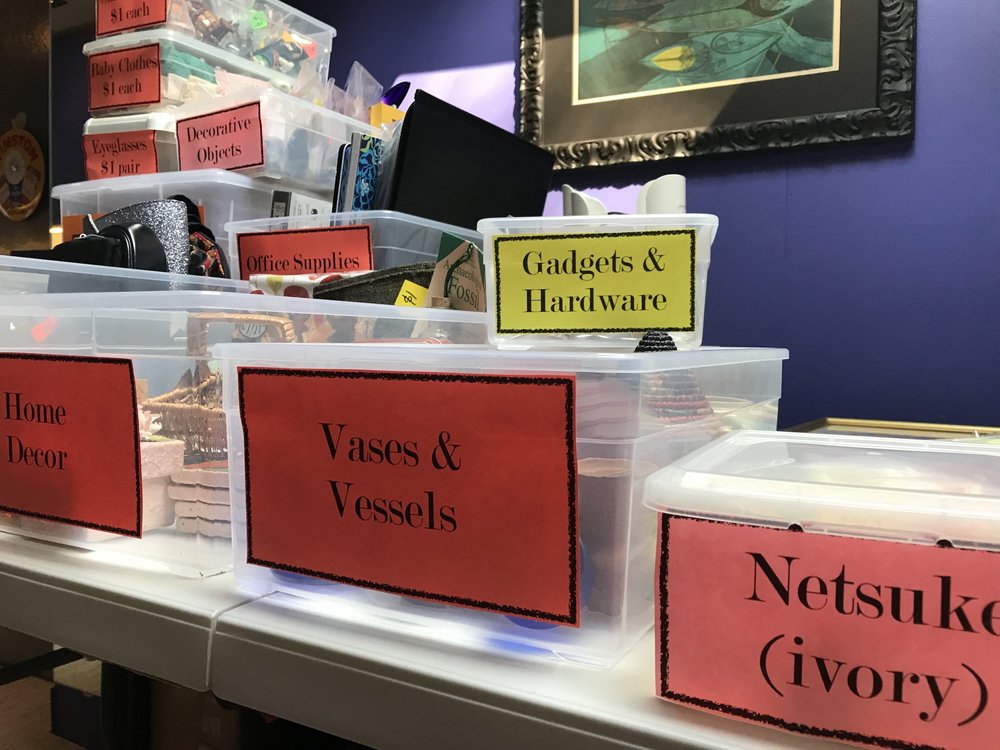
Time for Emptying –Tag sale season arrived. I prepared, edited, and let go of stuff to be ready for our June 9th and 10th tag sale.

Time for Self-Caring – Aside from tag sale season, it was also doctor appointment season. I scheduled and had my annual medical appointments. After all, if we don’t take care of ourselves, how can we take care of others?

Time for Being – This most often meant getting outside and being in nature. I spent time walking in the woods, sitting by the river, bathing in the sun, taking photos of spring blooms and bubbling brooks. 

Time for Updating –We were overdue for updating our wills and other legal documents. It was time. 

Time for Working – Organizing is one of my passions. I spent time writing, presenting, being interviewed and organizing with clients.

Time for Family – I’m acutely aware that good relationships need a time investment. I invested fully in time with our daughters, visits with my mom, and conversations with my siblings and other relatives.

Time for Nothing – As important as it was to get things done, at times I also needed to not do. I took time to just be without an agenda or pressure to accomplish something. Especially when I felt the “to do list” stress, taking a time out became even more important.

Time for Entertaining – With Memorial Day being the unofficial start of summer, we hosted a (last minute) BBQ for our friends.

Time for Meditating – I practiced. My daily mindfulness meditation helps me focus on being in the present moment.

Time for Loving – For a pre-anniversary (35 years) getaway, my husband and I went to Saratoga Springs for a long weekend. Focusing on fun, connection, and relaxation is an essential. Our time can easily be filled with everything but so it’s important to make love a priority.

So going back to where we began. What’s most important now?  What helps you manage your time when you’re feeling overwhelmed and overscheduled? I’d love to hear your thoughts. Come join the conversation!

 
LSamuels Signature.jpg
 
How to Edit Clutter the Simple Way

I’m sure you’ve heard the question and response:

Q: How do you eat an elephant?

A: One bite at a time.”

Not that we’re eating or want to eat elephants here, but there is a connection to be made.

Managing or handling our accumulation of clutter can be daunting and downright overwhelming (like eating an enormous elephant.) However, similar to other large projects, breaking them down into tiny steps can help us quickly reduce overwhelm and make progress.

So let me rephrase the question and response.

Q:  How do you edit clutter the simple way?

A:  One drawer and one decision at a time.

In the twenty-five years I’ve been helping my clients to get organized, I’ve seen this prove true time and again. We often start from that “overwhelmed” state. From there, we work together one drawer, one surface, or one closet at a time to declutter, to let go, and to get organized. 

It’s always amazing to see how much gets edited out. Clutter has a way of collecting and being stored in deep, dark corners of rooms, containers, and drawers, so that we no longer realize it’s there. However, when you begin to dig out drawer by drawer and corner by corner, it’s incredible to see what is uncovered. Even more fascinating is to see the volume of what we choose to release. 

Clutter has a way of accumulating over time. Things get stored and forgotten. Stuff remains beyond its usefulness. And since things have been hidden away, duplicate items have often been unknowingly purchased. So when we go through the editing process and realize we have 10 spatulas or 25 pairs of black pants or 40 coffee mugs, it makes decision-making and letting go much easier. Let’s be honest. Most of us just don’t need or really want 10 spatulas or 25 pairs of black pants.

To bring this back to the original question…How do you edit clutter the simple way?

Here’s one formula:

  • Work in one small area at a time, like a drawer, a countertop, or a closet rack.

  • Group like with like as you edit. It makes decision-making easier when you can see your duplicate items together.

  • Make one decision at a time. If you get stuck on one item, set it aside and move on to something else. Come back at the end of that section and decide before moving to the next area.

  • Be ruthless. Remember that the less you have, the easier it will be to stay organized and find what you need. With less, you will feel lighter and less encumbered.

Does this resonate with you? Have you or someone you know experienced clutter editing? I’d love to hear your thoughts. I invite you to join the conversation!

 
LSamuels Signature.jpg