How to Edit Clutter the Simple Way

I’m sure you’ve heard the question and response:

Q: How do you eat an elephant?

A: One bite at a time.”

Not that we’re eating or want to eat elephants here, but there is a connection to be made.

Managing or handling our accumulation of clutter can be daunting and downright overwhelming (like eating an enormous elephant.) However, similar to other large projects, breaking them down into tiny steps can help us quickly reduce overwhelm and make progress.

So let me rephrase the question and response.

Q:  How do you edit clutter the simple way?

A:  One drawer and one decision at a time.

In the twenty-five years I’ve been helping my clients to get organized, I’ve seen this prove true time and again. We often start from that “overwhelmed” state. From there, we work together one drawer, one surface, or one closet at a time to declutter, to let go, and to get organized. 

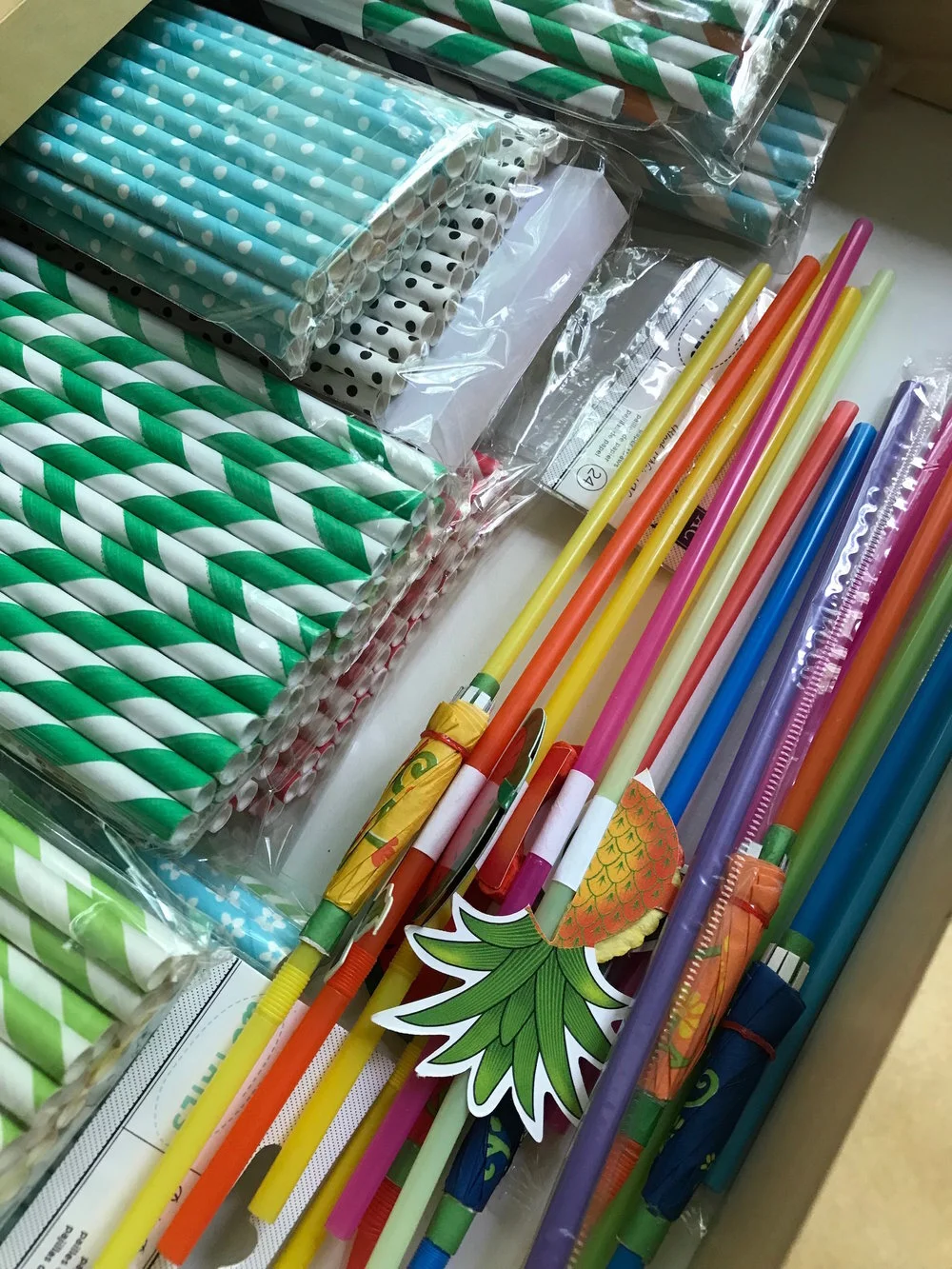
It’s always amazing to see how much gets edited out. Clutter has a way of collecting and being stored in deep, dark corners of rooms, containers, and drawers, so that we no longer realize it’s there. However, when you begin to dig out drawer by drawer and corner by corner, it’s incredible to see what is uncovered. Even more fascinating is to see the volume of what we choose to release. 

Clutter has a way of accumulating over time. Things get stored and forgotten. Stuff remains beyond its usefulness. And since things have been hidden away, duplicate items have often been unknowingly purchased. So when we go through the editing process and realize we have 10 spatulas or 25 pairs of black pants or 40 coffee mugs, it makes decision-making and letting go much easier. Let’s be honest. Most of us just don’t need or really want 10 spatulas or 25 pairs of black pants.

To bring this back to the original question…How do you edit clutter the simple way?

Here’s one formula:

  • Work in one small area at a time, like a drawer, a countertop, or a closet rack.

  • Group like with like as you edit. It makes decision-making easier when you can see your duplicate items together.

  • Make one decision at a time. If you get stuck on one item, set it aside and move on to something else. Come back at the end of that section and decide before moving to the next area.

  • Be ruthless. Remember that the less you have, the easier it will be to stay organized and find what you need. With less, you will feel lighter and less encumbered.

Does this resonate with you? Have you or someone you know experienced clutter editing? I’d love to hear your thoughts. I invite you to join the conversation!

 
LSamuels Signature.jpg
 
5 Strong Motivating Reasons to Get Rid of Your Clutter

As you might imagine, as a professional organizer, one of the things my clients hire me for is to help them edit the things they have collected and then organize what remains. They often refer to their stuff as clutterBy the time they contact me, they are highly motivated to release the excess (as in they want it gone yesterday.) I’ve noticed that certain motivators make the editing process easier and faster. In recent months, the five motivators described below are the ones I’ve encountered most frequently.

There are a few common threads, which make these motivators especially effective. Each motivator possesses a clear “why.” This clarity makes decision-making easier to determine which things they want or no longer want in their life. Secondly, these five motivators have deadlines, which add a time pressure or incentive to be more decisive and speedy in the decluttering process. Lastly, they all involve a significant change. While there might be some fear involved in change, there can also be excitement and opportunity, which serves as a great driver.

5 Strong Motivators For Releasing Your Clutter

1. Moving– When you’re preparing to move, letting go of the unessential, enables you to start with a clean slate in your next place. Whether you’re downsizing, upsizing, or right sizing, the moving incentive works beautifully for getting you to evaluate your belongings and excess clutter. For example, if you’re moving to a home with 50% less space, you can use that editing formula as a guide and reduce your current possessions by half. Moving, even if to a larger space, still provides a great opportunity to evaluate, edit and decide which things have meaning and which do not.

2. Cycling– For those of you that have children leaving for college, in college, or post college, you’re in the midst of this revolving door time. I think of this phenomenon as revolving door empty nesters, where our kids cycle frequently between living home and away. These transitions can be huge motivators for letting go, editing, and decluttering. These periods of time are excellent for encouraging our children to decide what should remain or go from their childhood days. They are transitioning to adulthood and to becoming more independent. It’s also a great time for parents to imagine this new stage. While some parents like to keep their kids’ rooms in tact, others like to renovate or completely change the room’s use. Kids’ rooms might be converted to guest rooms or home offices. 

3. Surprising– We’ve seen this more frequently in the last several years; Mother Nature has dealt us some not-so-great weather surprises. We’ve had floods, hurricanes, heavy snows, and high winds. Many of our homes have survived without experiencing loss of power or damage. However, due to the extreme weather, many more have experienced damage to our homes and possessions. As a result, major decluttering was necessary in order to make repairs or because our possessions were not salvageable. Having to face these damages also provided an opening to re-evaluate, which things were most meaningful and which things were not. The weather surprises forced us to declutter.

4. Ending– Different than moving, clearing out a home after a loved one has died is another strong motivator to let go of clutter. In fact, it may be a time to let go of more than just clutter. It might involve releasing an entire lifetime of collected things. The pressure to clear out a home increases when you’re trying to sell it quickly. A home no one lives in can easily become a financial drain. So while clearing out a deceased loved ones home is a highly emotional process, decisions about letting go can become clearer in this situation. Giving your loved ones things safe passage is especially important. Safe passage means that you find new homes for those things you let go of that will benefit or be appreciated by the receiver of them.

5. Stabilizing– We can experience unanticipated medical or mental health issues that quickly requires the need for a calmer, uncluttered space. Clutter can take on a draining, negative energy, especially if a person has a low clutter tolerance. For example, if an individual has compromised mobility due to a medical condition, combined with excess household clutter, this can potentially cause harm. The motivation to declutter increases rapidly when you consider it in the context of certain medical concerns. Stabilizing a space to create a safe, peaceful environment is a huge motivator.

Have you struggled with letting go of clutter? What motivates you to release those things that are no longer wanted? I’d love to hear your thoughts. Come join the conversation!

 
 
How to Say Goodbye and Let Go With Love

It’s hard to say goodbye and let go. At least, it is for me. As a matter of fact, for some, it’s so painful that they avoid it at all costs. After all, who likes pain? There are times, however, when we can no longer hold on. We learn to lean in towards the sadness and accept that it’s part of life. When it’s time to let go, we often feel loss. We’re aware that things are changing. We might pine for the past.

There are ways to let go lovingly, compassionately, and gently.  What works will be unique for each of us. This week, as I prepared myself to say my final goodbyes to our family home of 57 years, I identified some strategies that helped me along the way. I hope some of these ideas will help you when it’s time to let go.

10 Gentle Ways That I Learned to Let Go

1. Writing For Others– During the house organizing, clearing, and sale process, which began about seven months ago, I started sharing some of the discoveries with you through my blog. How to Improve Life Balance When Organizing Your Stuff is one of the posts from that series. Writing about my experiences in this way and having a dialogue with those experiencing similar things helped me process what was happening, connect with others in a more significant way, and let go, little by little, one blog post at a time.

2. Talking With Loved Ones – I don’t know what I would have done without the love, support, and wonderful listening ears of my husband, daughters, siblings, and other family members and friends. Collectively, they listened as I navigated the good days and challenging ones. They commiserated and offered their help and support. It was their supportive listening that was most appreciated. They supported me as I went through the challenges of transitioning out of the family home and letting go of it and all of its contents. 


3. Practicing Mindfulness– For the last year and a half, I’ve been practicing mindfulness meditation and living more mindfully. While there were a few months that I took a break from meditating daily, I’ve been pretty consistent. The practice has helped me to focus on the present, make peace with the past, and not get too anxious about the future. This practice of being present and mindful of the moment has also helped me beyond measure with letting go of the family home, and all that was within it. We have now, not then. We have now, not the future. We can hold our memories close, but if we focus too much on the past, we’ll miss what’s right in front of us…the present. Mindfulness practice has taught me that letting go is a path to being present.


Oy+vey.jpg

4. Laughing Out Loud – On the day of the final house clear-out, Junkluggers had just emptied the remaining furniture from my dad’s office. Things looked stark and sad. Something on the floor caught my eye that had been hidden under the credenza. I bent down to pick it up and discovered the “OY VEY!” computer key I’d given to my dad years ago. My entire mood lightened. I burst out laughing. In that moment, I felt the love, support, and shared sense of humor my dad and I always had together. The laughter helped me let go a bit more that day and know that things were going to be just fine. During those challenging times of letting go, don’t underestimate the power of a good laugh.


5. Documenting the Process – As many of you know, I love taking photos. Thank you, iPhone! During this period, I took tons of photos as I sorted, edited, sent off, and let go of stuff. As I worked, I often shared images of my latest discoveries with my siblings, husband or kids. Together, we enjoyed the memories they invoked. Documenting and sharing things in this way helped me to more easily let go of the physical items. 


red-journal.jpg

6. Writing in My Journal– Different from writing the blog posts, which were for public view, I also wrote in my private journal during this time. I’ve been journaling for 46 years. While I’m pretty open on the blog, my personal journal provided me with another venue for processing feelings and thoughts about what was happening. Writing in this personal way helped me to let go.

Below is a passage from one of my journal entries:

What I understand is that letting go doesn’t mean we have to forget. It just means that we release ourselves from holding on. We release ourselves from an obligation or responsibility or expectation. We make a bit more space in our hearts and mind for new energy to flow. We lift the anchor. We sail on.
— Linda Samuels

7. Saying Goodbye With My Daughter – The week we closed on the house, my oldest daughter, Allison, came with me to see the house for her last time. I knew I’d see the house again that week. But having her there to say her goodbyes, to take photos (yes, we took selfies) and to reminisce together, meant so much to me. Being there together side-by-side gave me great comfort. I let go a little more that day.

8. Documenting the Memories – On the day before the closing, I went to the house to say my final goodbyes. As I pulled into the driveway and walked up the path, a cute brown bunny hopped up the path and led me to the door. It was so funny and unusual to have this bunny escort. I went through every inch of the house taking short 20-60 second clips of each room. As I filmed, I talked out loud about what I was seeing and remembering. I walked around the first floor, then the basement, then to the top floor, and finally outside. I took my time and soaked in what I was seeing, feeling, hearing, and smelling. The past and the present were melding into one big picture, a picture that I would now have to hold in my mind and heart. I walked. I talked. I filmed. I cried. I said my goodbyes and let go.


152+File.jpg

9. Providing Safe Passage– In the organizing industry we have a term, “safe passage.” It has to do with letting go. If you’re able to find a good home for the things that you’re letting go of, you’ll feel better and more at peace with saying goodbye and letting go of those things. During the family home clear-out and sale, this was definitely true for me. It was easier to let go of the physical contents when I knew it was going to someone who would benefit from or appreciate it.  Having the home itself be bought by a family that would love and care for it as much as we did was also important to us. For the new family and to prepare the home itself for safe passage, I compiled an accordion file of house info essentials, including keys, manuals, and vendors. I also wrote them a note and left a gift basket. Doing these things made me feel that the house and its contents received safe passage, which provided some closure and allowed me to more easily let go.


10. Letting Go With Love– The last gesture that helped me let go and say my final goodbye was to make something. For me, creating is something that I enjoy, but also something that helps me process my thoughts and emotions. While there are many outlets that I use, like writing or photography, for this particular goodbye, I chose to make a video that blended music, words, and images of the house and family in the past and present. I shared it with my family and friends and am now sharing it with you. Different from the other videos that I create, this one is long (close to 9 minutes.) So don’t feel obligated to watch it. It’s not a marketing piece, which I intentionally keep short. It’s a piece about love, family, and letting go of my childhood home of 57 years.


Click below to watch "Goodbye, home." video . . .

Big exhale, folks. I’m feeling lighter and happier knowing that our home is in good hands, that all the stuff has found good homes, and that life will continue on in its beautiful, wondrous ways. What resonated with you? I’d love to hear your thoughts about letting go. Join the conversation!


What Are Today's Interesting Finds? - v18

The newest installment (v18) of the “What’s Interesting?” feature is here with my latest discoveries that inform, educate, and relate to organizing and life balance.

I’ve included unique and inspiring letting-go-related finds, which reflect this month’s blog theme. You are such an incredibly engaged group, and I am so grateful for you.

I look forward to your participation and additions to the collection I’ve sourced. What do you find interesting?


What’s Interesting? . . .

1. Interesting Read – Letting Go Habits

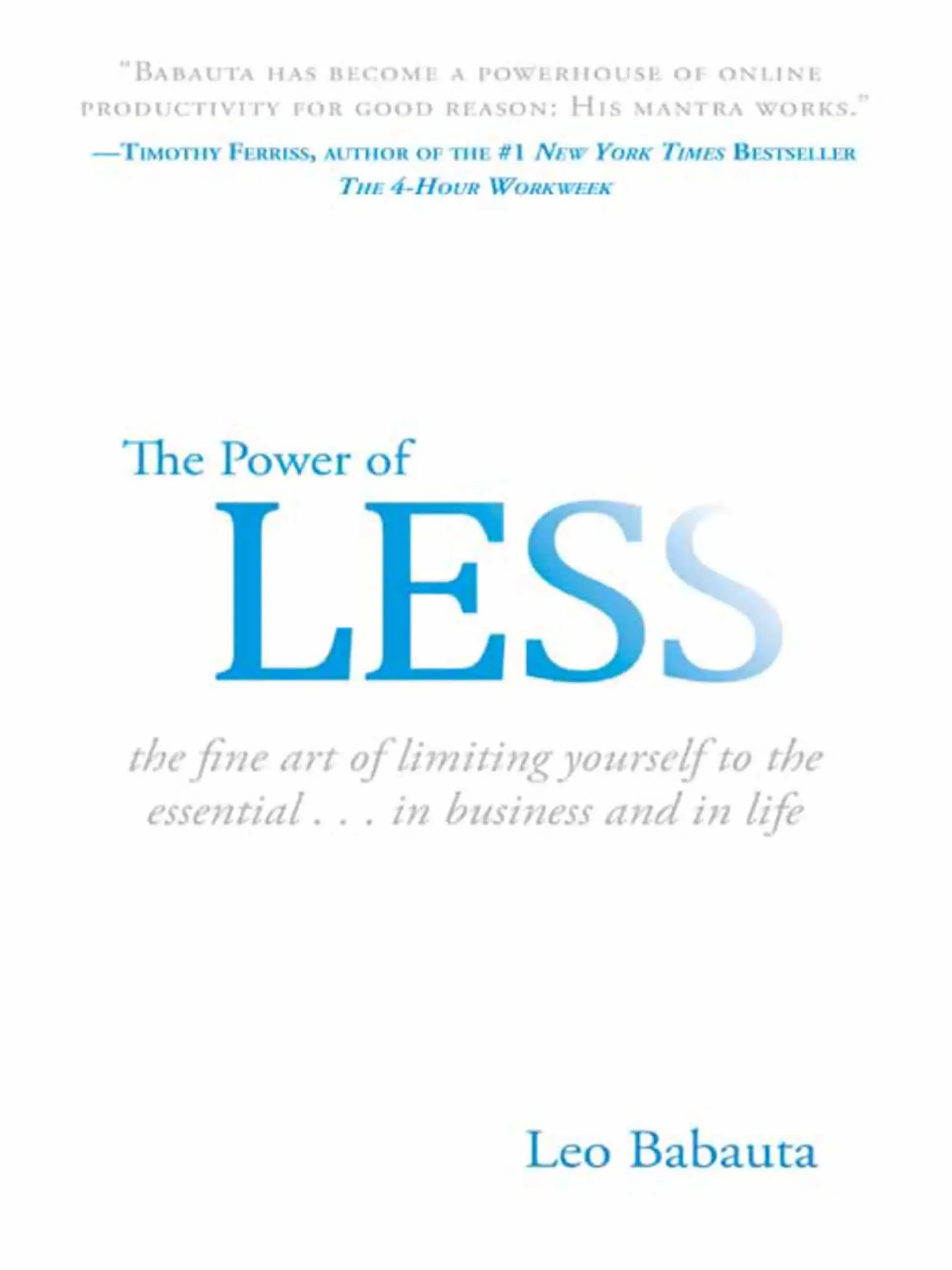
We live packed, fast-paced lives with full schedules, lots of possessions, and many distractions. In The Power of Less – The Fine Art of Limiting Yourself to the Essential . . . in Business and in LifeLeo Babauta, writer and blogger at Zen Habits, encourages readers to simplify all aspects of their lives.  

Babauta says, Simplicity boils down to two steps: 1. Identify the essential. 2. Eliminate the rest.”

He shares principles such as setting limits, changing habits, and adjusting focus to let go of the mindset of needing more.

Practical strategies for applying these principles to goal setting, time management, decluttering, and other areas are also discussed. There are some gems throughout, but I especially appreciate the overall focus on moving towards less. Babauta says, “Focus on the essential and allow everything else to drop away. It’ll make you much happier, less stressed, and perhaps surprisingly, more productive.”


2. Interesting Research  –Letting Go Psychology

Some of the reasons why letting go becomes challenging are that we get attached to or have an exaggerated sense of responsibility towards our belongings. In this short TED-Ed video by Christian Jarrett“Why are we so attached to our things?” he explains some of the research and psychology behind our attachments. For example, Jean Piaget, a Swiss psychologist who pioneered work in child development, identified the “endowment effect.”

Early in life, a sense of ownership emerges where we value something more highly as soon as we own it. This can make letting go more difficult. Understanding more about our attachments can be the key to starting the process of letting go.


3. Interesting Trend – Letting Go Motivation

Margareta Magnusson

Recently, I came across a phrase that piqued my curiosity. It was “Swedish death cleaning.” Have you heard of it? Margareta Magnusson, a Swedish artist and author of The Gentle Art of Swedish Death Cleaning – How to Free Yourself and Your Family from a Lifetime of Clutter, uses the inevitability of death as the motivation to let go of your unnecessary possessions.

The idea behind death cleaning is to minimize the amount of belongings that you leave behind for others to manage. I have helped many clients downsize, de-possess, and let go of their deceased loved ones’ belongings. I understand the value in taking personal responsibility for your own possessions so that others won’t have to.

Reframing the idea of letting go, as a gift to our loved ones, could be just the motivation needed to get you through.  


4. Interesting Product – Letting Go Flash Cards

One of the most innovative thinkers and authors in the organizing industry is my friend and colleague, Judith Kolberg.

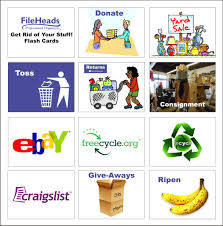
True to her creative process, she developed the “Get Rid of Your Stuff” flash cards. If you’re feeling stuck with what to do with your excess things, you’ll want these cards.

There are a dozen different options for letting things go, like donating or selling them, along with tips for each category. Supercharge your decision-making and letting-go skills with this well-thought-out product.

5. Interesting Thought – Letting Go Breath

Let+it+go.jpg

Have you ever noticed that when you hold on too tightly, your body tenses up? Your breathing becomes shallow, or you might even hold your breath. Holding on requires energy.

When we hold on to things, people, and places that no longer support us, we’re expending energy and effort that could be released or used in other ways. Let go and release your grip. Take a deep breath in. Let a big exhale out. Repeat as needed. Let go of what’s holding you back.

What are your interesting finds? Which of these resonates with you? I’d love to hear your thoughts. Come join the conversation!