What Are Today's Interesting Finds? - v1

Next steps are the focus for March. This month winter will transition to spring. On Sunday we move our clocks forward. We’ll trade piles of snow for new blooms. With all these thoughts of transitions, change, and next, I’m excited to introduce today the new blog feature, “What’s Interesting?”

I'm sharing my latest discoveries that inform, educate, and relate to organizing and life balance. I look forward to your feedback, participation, and additions. Enjoy round one of fun, inspiring, and interesting finds.

What's Interesting? . . . 

1. Interesting Read - Habits

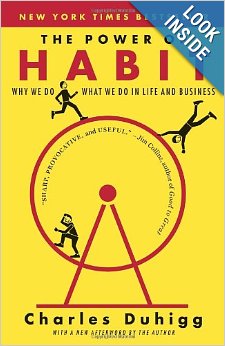
If you haven’t already read The Power of Habit – Why we do what we do and how to change by Charles Duhigg, I highly recommend it. Duhigg writes about the three-step habit process (cue, routine, reward,) and also how to alter unproductive and unhealthy habits. Identifying and changing “keystone” habits can have a positive domino effect, which automatically change other habits.  

2. Interesting Resource – Photo Organizing

One of my colleagues, Dr. April Lane Benson, recently told me about MyPublisher, a website where you can easily create high quality photo albums from your digital photos. I tried it, and was blown away by the quality, ease of use, customization options, and excellent customer service.

3. Interesting New Book – Chronic Disorganization

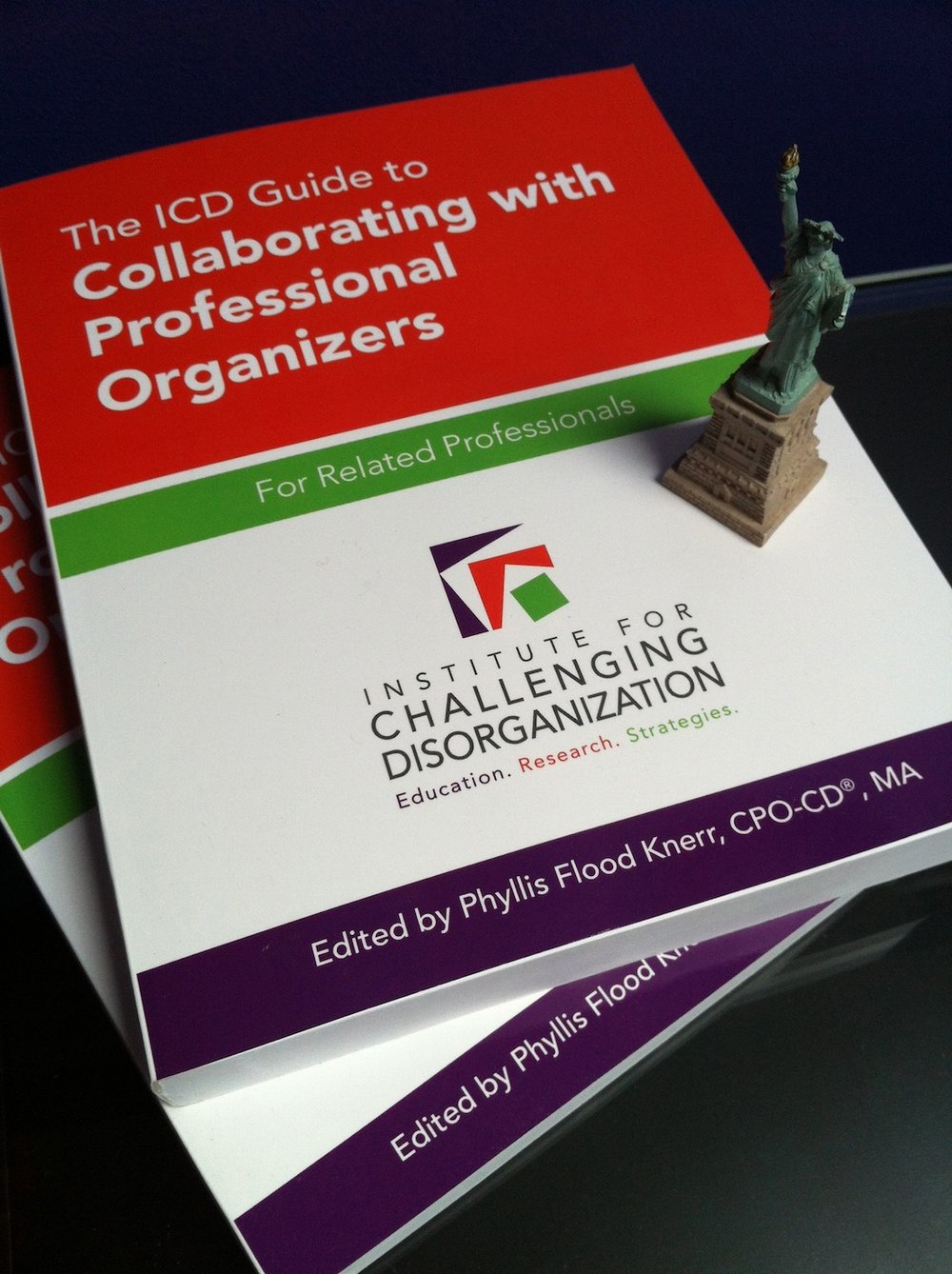
Just released this month, The ICD Guide to Collaborating with Professional Organizers, edited by Phyllis Floor Knerr, CPO-CD®, is an important addition to the organizing industry. It includes articles by 57 industry experts (including me) about chronic disorganization, what trained professional organizers do, building successful collaborations, and collaboration case studies. The only book like it in our industry, this is a must read for all professionals working with the chronically disorganized population.

4. Interesting Product – Planner

There are many ways to organize our time and plans. Especially for those that need a home-based system, prefer paper, are visually and tactilely oriented, thePost-it® Notes Weekly Planner could be a great addition. Color can be used to code events, people or activities. Sticky notes allow for easy movement and alterations. It’s a flexible planning system. 


5. Interesting Tech - Scent

oPhone.jpg

We experience our world through our senses of sight, sound, touch, taste, and scent. Our productivity can be enhanced or not by understanding how they can work with us. For example, using color can instantly help us recognize categories or brewing a pot of coffee can be the indicator that it’s time to start working. A new gadget being developed is the oPhone, which allows users to send and receive fragrances such as flowers, coffee, and fruit tarts along with their text messages. I’m curious how the oPhone will influence how we work and relax.

6. Interesting Thought - Next

We can make excuses or we can move ahead anyway. Just take one small step towards next, even if you’re not sure. Experiment. Discover. Stay curious.

I’d love to hear your thoughts. Do you like this new feature? Would you like to see it continued? What was most interesting to you? Do you have anything you’d like to add? Come join the conversation. All feedback is welcome.

 
LSamuels Signature.jpg
 
Ask the Expert: Dr. Debbie Grove

The “Ask the Expert” interview series continues to connect you with dynamic industry thought leaders. Last month, author and minimalist, Joshua Becker, talked with us about fresh starts. This month I’m thrilled to have with us psychologist, Dr. Debbie Grove to share her unique perspective and thoughts about change.

Have I mentioned lately how much I love Twitter? Through social media, one of my great joys has been connecting with amazing people like Debbie. Our paths have crossed in the virtual world where we’ve had the opportunity to get to know one another. Debbie is passionate about change, which the main focus of her therapy practice. She said, “Working on change is a rewarding experience.” My gratitude and thanks goes to Debbie for taking the time to join us. You’re going to love her ideas and practical strategies about change. Before we begin, here’s more about her.

Dr. Debbie Grove has been engaged in facilitating change for individuals, couples, and organizations for over 15 years in capacities such as manager, executive director, board of director member, and psychologist. Her career arenas have included not-for-profit organizations, municipal government, colleges and universities, employee assistance programs, and private practice. She is currently focusing on providing psychological services for depression, anxiety, relationships, marriage counseling, career transition, life coaching, health and well-being, midlife issues, self-esteem, communication, loss, and family of origin issues. Dr. Grove completed a Ph.D. in Counseling Psychology at the University of Calgary where she researched midlife depression, adult learning, and counseling processes. You can connect with Debbie on Twitter, LinkedIn or website.


Linda Samuels:  As a psychologist, one of your specialties is helping people navigate change. What enables us to successfully embrace change?

Dr. Debbie Grove:  The following represent my key tips for navigating change successfully:

  • Be clear about what you want to change and why.
  • Realize that change takes time, commitment, and effort.
  • Learn to be patient and kind with yourself.
  • Accept setbacks as a natural part of the change process; they are bound to happen and are not a sign of failure, rather an important part of the learning.
  • Establish specific action steps.  Achieving each step helps build momentum, confidence and a positive attitude about the change process.


Linda:  What are some common challenges we encounter when seeking the changes we desire?

Debbie:  I find that people tend to take on too much change all at once. In turn, this elevates stress and anxiety as the changes become unmanageable, difficult to prioritize and overwhelming. This sometimes indicates that sufficient time to reflect, brainstorm, and plan for change has not taken place. Given that change undoubtedly has to be incorporated into every day living, one goal at a time is best. Moreover, this facilitates the capacity to focus and to stay focused on the targeted area of change.


Linda:  Do you have any strategies for managing doubt, fear, and uncertainty that often accompany transitions and change?

Debbie:  Change often involves letting go of one aspect of life in order to gain another, making sacrifices, compromising, and incorporating life adjustments. At first, the mere idea of these adjustments can generate discomfort; after all, veering away from one’s comfort zone can be a distressing proposition.  In my work as a psychologist, here are some of my primary strategies for managing the psychological components of change:

  • Ongoing self-care (e.g., sleep, nutrition, exercise, social support), especially since life transitions and change tend to generate stress and deplete the immune system.
  • Maintain a positive outlook about change and effectively managing unhealthy thinking patterns (e.g., all-or-nothing thinking).
  • Remind yourself about the good outcomes that will result from the change process – balancing this future-orientation with staying grounded in the here-and-now. Sometimes I suggest visual cues such as a vision board that profiles images of outcomes and goals that one hopes to achieve as the result of change. Celebrate the small milestones along the way.
  • Seek out supports, resources and outlets to release stress, fear, and anxiety (e.g., going to the gym, venting with a friend, and journaling).


Linda:  What is your most surprising discovery about change?

Debbie:  One of the biggest myths about change relates to motivation. Avoiding the beginning stages of change waiting for motivation to kick in can prevent people from getting started. Understandably, change might be put off as a result of fear and uncertainty. Taking a first step, or behaving one’s way toward change, is a much more effective approach. The motivation will come a bit later once a person has begun to experience some forward movement toward their goal. Once the ball gets rolling, self-efficacy starts to set in – change is then perceived as more possible and achievable.


Linda:  What has been your biggest personal challenge around change?

Debbie:  When I decided to complete graduate school during my midlife years, it meant significant life changes, sacrifices, and re-establishing priorities. That period was very challenging. Being clear about my goals, facing and acting upon the needed changes, and developing realistic strategies to make the necessary life adjustments was all part of making a career dream a reality. Staying focused on the positive outcomes associated with change was very helpful for me!


Debbie, your no-nonsense approach to change is refreshing. Your emphasis on self-care, patience, singular focus, acknowledgement of “setbacks,” good support system, and positive outlook, especially resonated with me. Thank you for sharing your practical approach for embracing positive, successful change.

Please join Debbie and me as we continue the conversation. We’d love to hear your thoughts about navigating change. What resonates with you?

Four Seasons of Change

If you live in the northeast, maybe like me you’re ready for winter to give way to spring. Just when you thought there couldn’t be any more snow, new flurries descend on the already large piles. Don’t get me wrong. I’m grateful too. I love the pristine, white landscape in our backyard, the soft, snuggly blankets, and soothing cups of hot tea. I’m also quite ready for a change to warmer days, lighter clothes, and greener landscapes.

The seasons provide a continuous change cycle. I understand the value and influence the change of seasons has. When mindfulness is present, each season helps us focus on and appreciate the visual beauty, change cues, and ways we engage.

Change brings hope. Each season offers us the opportunity to shift, reflect, and make adjustments.


Winter

Winter marks the end of one year and the beginning of another. As the white snow covers the ground, its quiet infuses me with a sense of peace and calm. The stillness allows me to hear myself think. Despite the chill in the air, I feel hopeful for the opportunity to reflect, change, and begin again. I know that the deep freeze provides the essential nourishment for new growth.


Spring

Spring is a time for renewal. As the air becomes warmer, a new sense of hope and joy surround me. I notice the moist smell of the earth, the magical sight of greenery reappearing, and the abundance of flower buds opening. Color returns. My core feels lighter as I appreciate and feel inspired by the transformation before me. There’s an urgency within to embrace change now.


Summer

Summer is more relaxed. I notice the blue sky and dull low hum of a plane above. The thump of a hammer is audible in a nearby yard. There is an ever-so-slight breeze and occasional whooshing sound of an air conditioner. The air smells good, clean, and fresh. It’s not too hot, but warm enough so that no goosebumps appear on my body as the breeze blows. I’m grateful that summer has arrived. The slower pace encourages me to suspend dramatic changes and just be.


Fall

Fall is such an obvious change season with bold shifts in colors, temperatures, and light. The leaves, which fall, crunch, and swirl around me seem to sing change. I sense internal shifts too, which make me feel unsettled. Perhaps this is because change is so apparent. What I see makes me feel like I too need to change and make way for something different. There’s a rumbling and sense of being uncomfortable. This is not a bad thing. Change is nudging me to move forward.


How is change present as you experience the shifting seasons? I’d love to hear your thoughts. Come join the conversation.


How Change Inspires Change

As organizers and coaches, the work we do with our clients is change-focused. We’re present as our clients experience the joys and challenges of pursuing their goals and dreams. I was curious about the residual effect facilitating change for others had on us.  To learn more, I reached out to a wonderful group of organizing and coaching colleagues (Seana Turner, Sue West, Andrea Sharb, Sheila Delson, Ellen Delap, Denise Lee, Yota Schneider, Cameron Gott, and Leslie Josel.)

I asked them, “How has one of the changes your client made personally influenced or inspired you to make a change?”

Their responses are thoughtful and motivating. My deepest gratitude goes to each of them for sharing their stories of inspiration and change. Keep reading to discover how change influences more change.

How has one of the changes your client made personally influenced or inspired you to make a change?

Change Inspires Courage

“To me, change is all about courage. I once worked with a client who was having a difficult time letting go of some belongings she had carried throughout her life. The intensity of her internal conflict was palpable, and she literally took a deep breath to summon the nerve to give a few pieces away. Her courage inspired me to make a financial change in my own life that I had been avoiding – one that was uncomfortable and required resolve. The first step was the hardest, but recalling this client’s ‘deep breath’ kept me moving forward.”

Seana Turner – Professional Organizer, Blogger, Speaker & Life Coach

Change Inspires Self-Advocacy

“When my clients first come to me, whether for coaching, organizing, or my hybrid approach, many wrestle with low self-compassion and self-esteem. One consequence is they don’t know how to stand up for what they need or want in some aspects of life. I found that I’d ask myself: Am I standing up for myself? Am I asking for what I need or want? Am I being clear and specific with myself? Where’s my line? As a friend, partner or family member and a coach, it’s imperative I ask these questions often to get clear on where I land.”

Sue West, COC®, CPO-CD®– ADHD & Life Management Coach, Organizer, Author, & Educator

Change Inspires Improved System

“My clients influence me personally every day and I am continually inspired by the changes they make and what they accomplish.  Currently I am especially inspired by the changes one client is making with respect to management of tasks. It's been awesome supporting him in creating change over the past year and I found his change so inspiring that I found myself examining and upgrading my own task management system along the way. Our systems look nothing alike, but they are built upon the same foundation of curiosity and a desire to create a system tailored to an individual style.”

Andrea Sharb– Certified Professional Organizer & Productivity ADHD Coach

Change Inspires New Perspective

“The change that happened for me was monumental and it has affected my life personally and professionally with regard to tolerance and patience. It occurred early in my career while working with several challenging clients who often seemed resistive when progress was slow. I learned that change is something that occurs at different levels, over different amounts of time, depending on each individual and circumstance. I’ve since substituted the word change to ‘transition,’ which creates an image more easily embraced because it doesn’t imply a scary immediate expectancy, but rather something that can occur gently and at a pace that can be controlled depending on the situation and the people involved.”

Sheila Delson, CPO-CD® – Professional Organizer, Author, & ICD Program Mentor

Change Inspires Better Lists

“I’ve always been a big list maker. It comes as a natural tendency to me. Recently when working with a diligent long term client who has struggled with making lists, I realized I could make better use of my natural tendency by making a thorough list each night for the next day, going beyond the basics. Seeing his relief as he made the list helped me realize I still had thoughts, tasks and more in my head that I could record. Such a simple next step, but what a big change this is for less stress and more productivity.”

Ellen Delap, CPO®– Certified Professional Organizer, Certified Family Manager, Productivity Consultant & Blogger

Change Inspires More Balance

“A couple years ago, a client spoke of crafting the way a starving man speaks of a good meal. We charted out a strategy for her to craft and declutter. At subsequent appointments she delighted in showing me the progress of her decluttering and her crafts. During our discussion on how well this strategy was working, she realized that she had erroneously assumed that decluttering was too consuming to accommodate joyful activities. This hit me: what things had I pushed aside? I began to seek out time to play music every week and as a result I feel more balanced.”

Denise Lee, CPO®– Professional Organizer & Coach

Change Inspires New Space

“More than a year ago, a client was at a turning point with his chiropractic practice. His office lease was expiring and he needed to make a decision. While reviewing his current state of affairs and his vision for the future, it became apparent that letting go of the space would allow him to reduce his overhead and free his creative thinking and ability to take risks. Soon after our meeting, he found an ideal space and moved. Within a few months he knew he had made the right decision. Working with him inspired me to reconsider ‘my space.’ The time was right for me to hang a permanent shingle instead of depending on the phone and various locations to work with clients. One thing led to another and I now have a brand new space that I love and inspires me to think much bigger than ever.”

Yota Schneider– Seasons of Change Certified Master Coach, Workshop Facilitator, Blogger, & Mindfulness Mediation Practitioner

Change Inspires Bigger Thinking

“I find inspiration from all of my clients and the changes they commit to. When I think of one example that has inspired me to make a change I think about one of my clients and his unwavering vision to better the lives of underserved youth. He has recently fulfilled his dream of starting his own company that will revolutionize the field of social impact. He has overcome obstacles and built a top-notch team by staying true to his vision. He has inspired me to think bigger and think bolder. It's a good change.”

Cameron Gott, PCC, BCC– ADHD Coach for Entrepreneurs and Professionals

Change Inspires Less Guilt

“I work with many clients that are overcome with guilt. They are not organized enough, or have too much stuff, or don’t study enough or even parent enough. So watching some of my clients throw away the guilt has been a huge lesson for me. I’m practicing what I am preaching! Watching my clients embrace “enough” – good enough, organized enough, etc., has lead me to as well! It’s a slow process, as we all well know, but one that I am consciously working on every day. It’s quite freeing to give up the guilt!”

Leslie Josel– ADHD Coach, Author, & Speaker

In reading these stories, it occurred to me how powerful change is, not just for the change seekers, but also for change observers and facilitators. Psychologist Daniel Goleman said, “Emotions are contagious.” Perhaps watching others change is “contagious” too. It certainly is inspiring. We think, “If she can do it, so can I!”  What or who has inspired change for you? I invite you to share your thoughts and stories. Come join the conversation!