Flexibility & Change

This month’s topic on the blog is embracing change. Change has various meanings at different times. It might be a small step towards something larger. Perhaps it’s jumping in feet first to a new venture or adventure. Or, change (welcome or unwelcome) might occur without proactively seeking it. Change means that things are different. Change means there’ll be transitions and adjustments, which can be challenging or not.

When I think about the changes that are happening internally and externally, the one word that keeps popping up is flexibility. While I often have to work at being flexible, when I’m able to, it helps me to navigate change’s turbulence.

The winter snowstorms we’ve been experiencing this season (and more’s on the way, folks) continue to cause plans to change. Schools get closed. Clients need to reschedule. Flights get cancelled. The things we thought we’d be doing get altered. Remaining flexible actually can helps us figure out next steps, embrace the change, and the serendipity of the “found” time. Flexibility yields wonderful surprises.

What connection have you noticed between flexibility and change? I’d love to hear your thoughts. Come join the conversation.


Ask the Expert: Joshua Becker

It’s thrilling to begin our third "Ask the Expert" interview series! In the past few years we’ve created a monthly venue to connect you with industry thought leaders. We’ve enjoyed inspiring conversations with best-selling author Gretchen Rubin, productivity guru David Allen, organizer and future thinker Judith Kolberg, theory of Multiple Intelligences creator Dr. Howard Gardner, and many more. The 2014 interviews continue with another dynamic group of experts. I’m excited to start the year with author, blogger and minimalist trailblazer, Joshua Becker to share his wisdom about simple living and fresh starts.

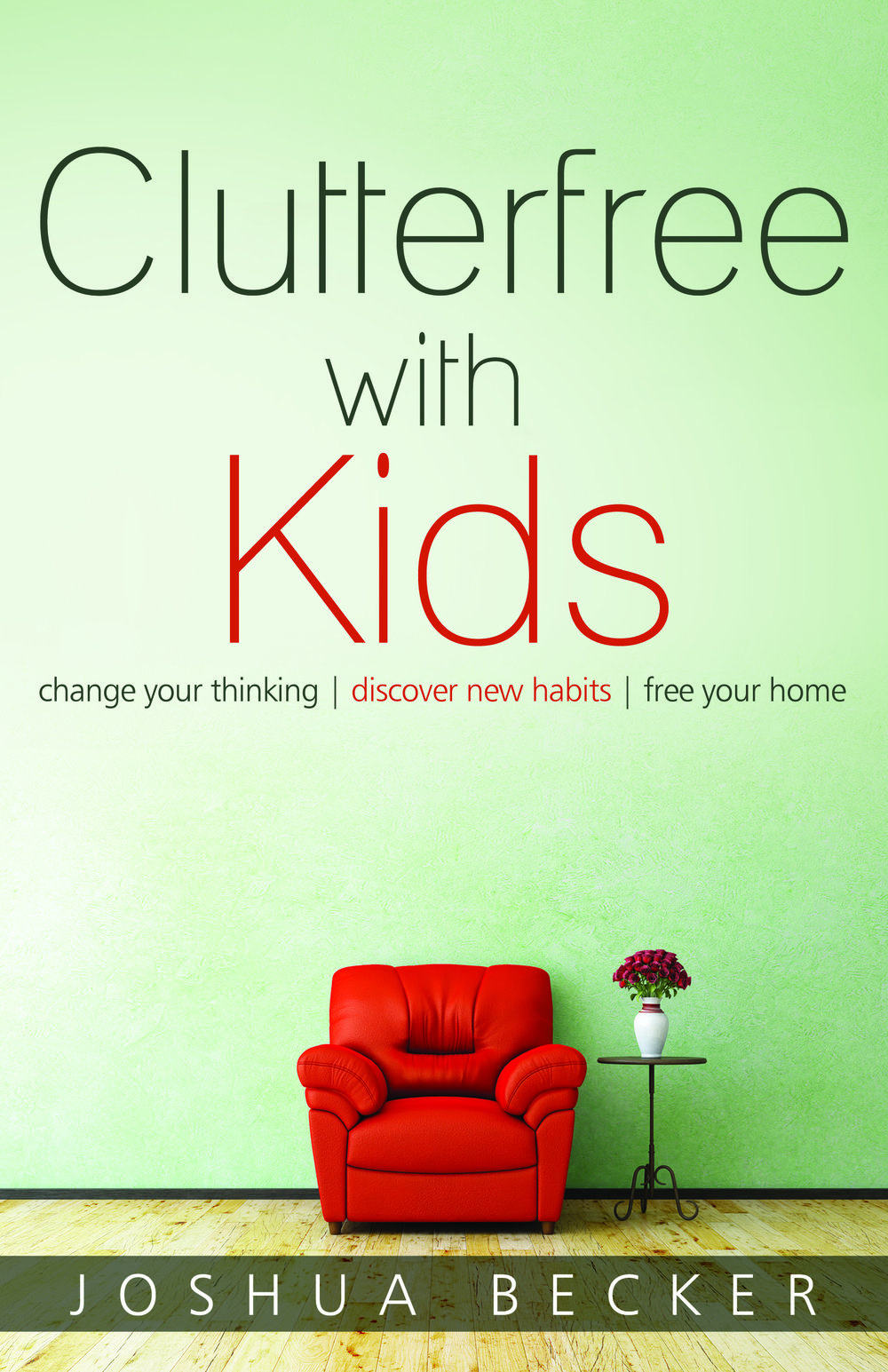
While I’ve been a loyal @Joshua _Becker Twitter follower for a while now, we recently “met” while appearing in a Selfication blog post together about simplifying and organizing your life. Shortly thereafter, I invited Joshua to contribute to one of my posts about life balance. I asked him, “What do you want more of and less of to create your desired balance?” Being true to his minimalist philosophy, he provided an insightful and concise response, “More focus on the important things. Less distraction on the little.”  A few weeks later he contacted me to see if I’d be interested (and I was) in reading an advance copy of his soon to be released book, Clutterfree with Kids. The book is filled with practical strategies and deep wisdom. It’s a must read! His ideas provide a great catalyst for reconsidering our lives. My deepest gratitude and thanks goes to Joshua for taking the time to join us. Before we begin, here’s more about him.

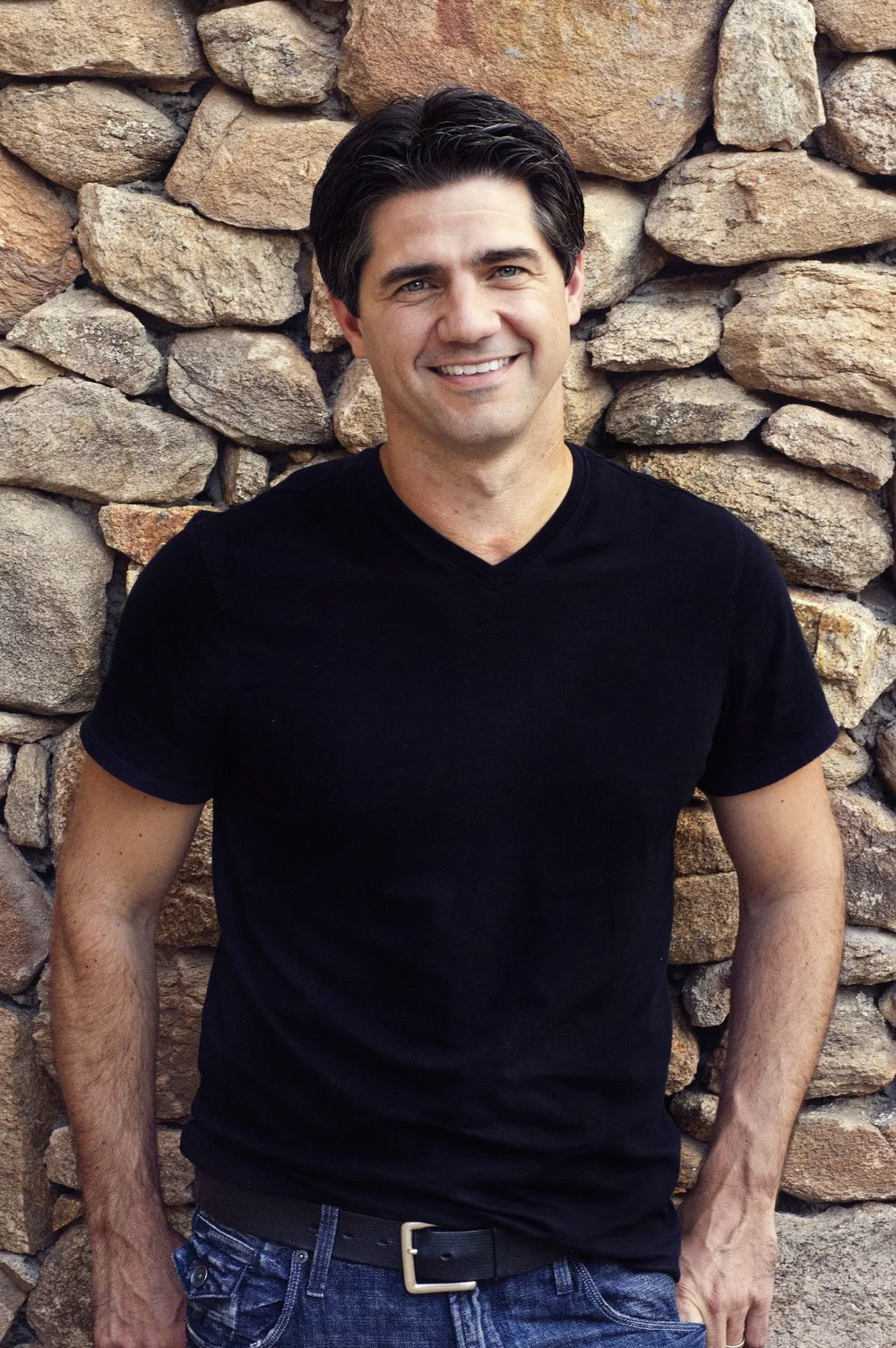
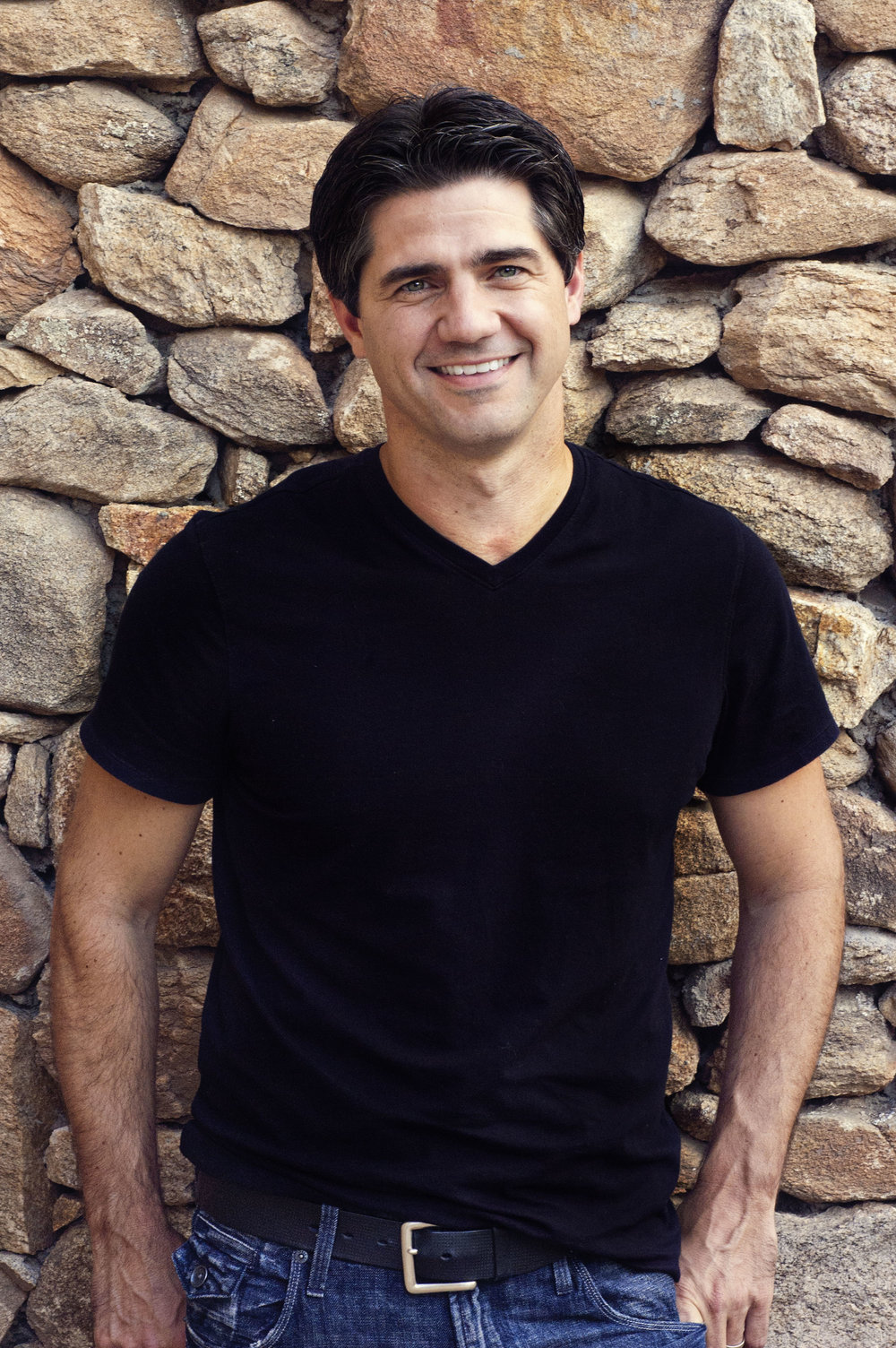
Joshua Becker is the founder and editor of Becoming Minimalist, a website that inspires others to find more life by owning less. His rational approach to minimalist living has made him one of today’s most-influential simple living advocates. He is also the best-selling author of Simplify: 7 Guiding Principles to Help Anyone Declutter Their Home and Life and the newly released, Clutterfree with Kids. He lives with his wife and two children in Peoria, AZ. You can connect with Joshua on Facebook, Twitter, or website.

Linda Samuels:  As an author, speaker, blogger and dad, you inspire others to consider the minimalist approach to life. How do you describe minimalism?

Joshua Becker:  I describe minimalism as the ‘intentional promotion of everything I most value and the removal of anything that distracts me from it.’  When many people hear the word ‘minimalism,’ they often imagine barren walls, tiny houses, or living out of backpacks. But that is not how we view it. We’ve just come to understand that material possessions do not add lasting joy to our lives—even worse, they often distract us from the very things that do. We have two small kids. We live in the suburbs. We enjoy having people over to our house. Our lives are unique. Minimalism is always going to look different for us. But it’s going to be about removing the excess possessions that keep us from the things we love the most.

Linda:  You’ve said, “There is more joy to be found in owning less than can ever be found in organizing more.” What are some benefits of “de-owning?”

Joshua:  The benefit of owning less is an important concept—one that most people can easily relate to. It’s just that in this world where we are constantly told to buy more and more, we never take a step back and ask ourselves, “How would my life be better if I owned less stuff?” For starters, we’d have less cleaning, less stress, less debt. We’d experience more freedom, more time, and more intentionality—more opportunity to pursue our greatest passions. And eventually, when the desire for physical possessions is removed, our hearts are open to contentment, gratitude, and generosity. It’s really quite wonderful in every respect.

Linda:  In your just released book, Clutterfree with Kids you share many ways to shift perspectives about how families live with and think about their possessions. What are some first steps for clutter-free living?

Joshua:  The absolute first step is to rethink the all too common “more is better” mentality. One of the easiest ways to understand clutter is to recognize it as too much stuff in too little space. And our homes are full of stuff: our kitchen cabinets, our closets, our garages, and our toy rooms. The first step to living clutterfree is to remove the things in our homes that are not used or needed. Grab three boxes (donate, recycle, discard), pick one room, and fill them up. The key is not to find more storage solutions for your stuff—the key is minimizing the number of things we own.

Linda:  Along with having kids, comes owning toys. You said, “I’m not anti-toy. I’m pro-child.” You make a powerful case that having fewer toys translates into kids with longer attention spans, better social skills, and being more resourceful. What else can you tell us about the “less toys” benefits?

Joshua:  And this is proven by scientific studies. Kids who own fewer toys learn to be more creative, more generous, more resourceful and more perseverant with longer attention spans. There are too many parents nowadays who have a hard time saying ‘no’ to their children. But it is good for kids to learn boundaries and to learn that there are other ways to express love than buying toys and giving gifts.

Linda:  What has been your biggest personal challenge around becoming a minimalist?

Joshua:  I think the biggest challenge for me is often the biggest challenge for others as well. The journey to becoming a minimalist (and I’ll be the first to admit it is a journey, not a destination) is one of the most difficult and fulfilling inward journeys anyone can embark upon. My first mini-van load of things to Goodwill was easy, so was the second. But by the third or fourth vanload of items to drop off, you can’t help but start asking yourself some pretty difficult questions—starting with, “If I didn’t really need this stuff, why did I buy it all in the first place?” And when those questions of life purpose, life focus, and wasted opportunity start beginning to surface, it can be very difficult to realize the level of discontent most of us live our lives in. It is a challenge. And it’s helpful to have someone close to help process the feelings that emerge. It is both highly difficult and beautifully delightful all at the same time.

Linda:  Is there anything you’d like to share that I haven’t asked?

Joshua:  I think I’ve overstepped my word-limit, so I’ll just leave it at that. Thank you for the opportunity Linda.

You’re most welcome, Joshua. I’m grateful for each of your carefully chosen words. Thank you for all the insights you shared about simple living, minimalism, and the significance of less. Your message is positive and filled with hope. I love how you describe your journey as both “difficult and beautifully delightful.” What a powerful underlying concept you explore about possessing less so you can shift your focus away from stuff management and towards what’s truly important and meaningful.

I invite all of you to join Joshua and me as the conversation continues. We’d love to hear your thoughts about minimalism, fresh starts, or anything else you’d like to share. What resonates with you?

Is It Too Small To Save?

I’m laughing because of the irony of what I’m about to write. For many months, I’ve been saving a big piece of paper from one of my clients with one tiny sentence printed on it. I knew that the sentence would provide inspiration for a blog post at some point. And guess what? Today’s the day!

My client told me this story and gave me permission to share it with others. He said that one of his family members for years saved in her closet a box that was carefully labeled . . .


“Pieces of string that are too small to save.”


Since releasing and letting go is an integral part of the organizing work we do together, my client knew I’d appreciate the humor in this. And I did. We enjoyed a good laugh.

The other aspect is that sometimes, no matter how much we realize that we just don’t need it, we have a challenging time letting go. Have you ever experienced that? In other instances, we don’t take the time to ask the questions, or the extraneous becomes invisible. But in the case of this box of string, the thought process was there and a conclusion was made that it wasn’t useful. However, the string was still kept. Interesting, isn’t it?

As we are at the beginning of the new year, which is a time of opportunity, newness, and fresh starts, I encourage you to take a look at your “pieces of string that are too small to save.” It's time to make the invisible, visible and ask some questions.


  • What are you holding onto that no longer serves a purpose?


Come join the conversation. I invite you to share your thoughts.

"Wandering" Ideas

Isn’t it funny how a few simple words can spark our thinking? This past weekend I was in St. Louis for an ICD meeting. In my room at the Springhill Suites, there was a message pad with a thought-provoking sentence printed on the top of each page. It said,

“Catch wandering ideas.”

I couldn’t believe how timely this was given that the New Year is when many of us do our idea gathering. I love this concept to “catch” or capture our thoughts by writing them down, thinking about them, or talking with others.

The fresh start that January brings, encourages us to experiment, consider alternate perspectives, and explore new ideas. As you mull over what "next" might be, perhaps you’ll find some of these strategies helpful.

Taking Risks

Unlike my daughter Allison, who is confident about cutting her own hair, I’ve always been afraid to mess with my curls. I delegate haircuts to the curly hair professionals. However, in one moment, that changed. Because I was overdue for a haircut, some unruly curls kept getting in my eye. I took what I perceived as a big risk. I picked up a scissor and cut the stragglers off.

My heart started racing, my eyes widened, and I burst out laughing. It felt thrilling to do something I’d never considered and that was completely outside of my comfort zone. I didn’t let fear prevent me from taking action. Yes, I admit this is almost a ridiculous story. It’s just hair.  But remember that often it’s just ________, which prevents us from doing that thing we fear. So when you’re afraid to face a new challenge, remember the “scissor incident.” Feel free to use it as your call to action.

Changing Perspective

The temperatures seem to have leveled out for now. However, last week much of the country experienced erratic winter weather. In New York we had a super cold 5° day. This was followed by a 30° day that felt downright balmy. Normally 30° would feel ridiculously cold, but in relation to 5°, it seemed like spring. So I questioned, “What is cold?” How is it possible to think that 30° is both cold and warm? It’s all a matter of perspective. Our ideas and beliefs are in relation to other factors that constantly change. Being open to these shifts in perspective will help us to reframe and consider ideas in a different way. What shift in thinking might help your “wandering ideas?”

Brainstorming

As I mentioned earlier, I was in St. Louis for an ICD Board meeting. This also included our annual Strategic Planning session, which I led (a first for me.) While there were many parts to the session, one section was devoted to brainstorming. We collected new ideas to integrate into our current plan. We shared them while leaving all judgments, explanations, or potential problems aside. Evaluating and prioritizing came later. And guess what? By allowing the space to brainstorm without judgment, many wonderful ideas emerged. As you move forward in these coming weeks, give yourself that gift of non-judgmental idea generating. Record your thoughts first. After that, you can be purposeful about how you organize, prioritize, or abandon them.

So, how will you “catch wandering ideas?” Will taking risks, shifting perspectives, and brainstorming be useful strategies for you? I’d love to hear your thoughts. Come join the conversation!