
Posts in Possibility Thinking
How to Weigh Possibilities Between Good Enough and Broken

We’ve all heard the saying, “If it ain’t broke, don't fix it.”  That goes along the same line of thinking as something being good enough. If it is good enough, is it worth disrupting to make it better?

However, what if something is broken? Is it worth fixing? Broken can include things that no longer work like that DVD player, missing pieces to a game, or favorite a sweater that is well (really well) worn. It can even include negative relationships that only bring angst.

There is also the proactive approach like Gerald Nadler’s. His philosophy describing breakthrough thinkers is,

“Fix it before it breaks.”

Of course, that isn’t always possible.

Our decisions and their effectiveness are based on the quality of the questions we ask. This is true while we’re going through the organizing process, when we’re making big life decisions, or when we’re navigating relationships. So what are the possibilities between good enough and broken? How do we weigh them? How do we know which path to take?

Just to be clear, I’m not advocating that we live our lives without striving. It’s a matter of selecting where our effort gets invested. There are times when good enough is enough and when broken things don’t need to be fixed. Being able to identify those situations can be freeing because it gives us the space to focus on what we feel is most important and meaningful.

I’ve put together a list of questions to get you started. There are no value judgments here. This is simply a guide to help you with decision-making. It can be applied to many different situations. I’m sure that you will think of other questions to add to the list. I welcome your ideas and additions. Please include them in the comment section at the end of the post.

How do we weigh the possibilities between good enough and broken? 


Questions to Ask When Things Are Good Enough . . .

  • What will I gain from changing what’s good enough?
  • Do I want to make those changes because I’m not satisfied with good enough?
  • Do I have the time to invest in making things better than they already are?
  • Do I have the motivation to make improvements?
  • Instead of fixing what’s good enough, are there other things/situations/people that could benefit more from my attention?
  • Where does my desire to improve things originate?
  • Is perfectionism involved?
  • What are my thoughts about good enough?
  • Does the phrase continual improvement resonate with me?
  • How does continual improvement relate to good enough?


Questions to Ask When Things Are Broken . . .

  • Is it worth fixing?
  • If so, why?
  • How long has it been broken?
  • What would happen if I let it go?
  • Is there a value in repairing it?
  • Is it worth the time, energy, and resources (financial and/or emotional) to fix it?
  • What if I don’t know how to fix it or where to start?
  • Would it be more cost effective, time efficient, or less stressful to start with something new, rather then to repair what’s broken?
  • What old habits and behaviors might be preventing me from letting go?
  • Do I want to invest my time in fixing what’s broken?
  • Do I want invest my energy elsewhere?


As we enter this new season, revisit the things in your life that are just right, need fixing, require letting go, or beg for more attention and focus. You’ll find the answers in the questions you ask. Possibilities are waiting. What are you noticing? I’d love to hear your thoughts along with any questions you’d like to add to the lists. Come join the conversation!




What Are The Possibilities When You Clear Your "Space?"

Possibilities open up when your space is clear. I use the word “space” to encompass not just the physical spaces we live and work in, but also the mental and emotional space that we carry within. These past few months, I’ve been deeply involved in clearing out our family home of 56+ years. It has taken most of my time and energy. As you might imagine, it’s been an intense and emotional process. The home was filled with thousands of papers, photos, furniture, dishes, collectibles, artwork, books, music, family history and memories to process and decide about.

As a family we had to choose, what was being kept, donated, sold or let go of. Tons of decisions were made to clear the spaces and prepare the home for next. Even as things exited, the memories and positive feelings about our family home remained. Those memories go deep and are ingrained within, way beyond the “stuff.”

The clearing of the spaces prepares for memories, possibilities, and experiences that a new family will have in our beloved home. This extreme letting go of the things from within the family home and ultimately the family home itself has been preparing me for a new phase of life...one that is no longer anchored in this home that I grew up in.

So as the layers of stuff have been peeled away, as the floors are sanded and the walls are painted, possibilities open up not just for me, but for others too. What will be is yet to be understood or known; yet I’m feeling hopeful about how things will evolve and shift. And while it's been a highly emotional journey, it's also the natural course of things. We aren't meant to keep our things forever. They, like the people we love, are with us just for a time. 

What have you noticed when your space is clear? What has transpired within and without from your cleared spaces? I’d love to hear your thoughts. Come join the conversation.


5 Organizing Challenges and Proven Ways for How to Overcome Them

Several organizing challenges commonly occur with my clients. A few months ago, I had the pleasure of talking with my friend, John Hunt, from Smead, about the top five organizing challenges and strategies for overcoming them. I’m thrilled to share these two podcasts with you.

If you’re stuck or overwhelmed or know someone who is, keep reading. You’ll learn how to shift your perspective, explore new strategies and possibilities, and confidently take the next steps forward.

Top 5 Organizing Challenges . . .

1. Transitions

Life transitions such as a move, a new job, the birth of a child, or the loss of a loved one can create “situational” or temporary disorganization. Transitions can be overwhelming because they can involve something unfamiliar. Current organizing systems may no longer work and require adjustments. Watch the video (Part 1) to learn transition strategies like making a list of areas that need editing and organizing or recalling other past transitions that were successfully navigated.

2. Papers

While we live in a digital age, papers are still a big organizational challenge. Overstuffed and outdated files, unopened mail, and managing paper can easily cause us to feel overwhelmed. Watch the video (Part 1) to learn paper management strategies, including the creation of a simple system to process incoming paper.

Organizing Challenges: Transitions and Paper, and How to Overcome Them (Part 1)

Linda Samuels' Smead interview with John Hunt - Part 1


3. Emotions

Organizing can be more challenging, especially when we have a strong emotional attachment to our possessions. This can happen when we’re experiencing grief or loss. Decision-making can be more difficult, making it harder to let go. Watch the video (Part 2) to hear about possible strategies, which include engaging the help of a supportive, non-judgmental friend, family member, or professional organizer and allowing your belongings to have “safe passage.”


“Organizing can be more challenging, especially when we have a strong emotional attachment to our possessions.”
— Linda Samuels, CPO-CD®, CVPO

4. Maintenance

Organizing involves not just establishing workable systems, but also maintaining them. Maintenance is an often overlooked, yet integral part of the organizing process. Watch the video (Part 2) to learn some maintenance tips, including building in regular daily, weekly, monthly, or quarterly stopgaps.


5. Mindfulness

Distractions interrupt our focus and frequently disrupt the organizing process. When organizing, we can focus on the future or past instead of the present. Watch the video (Part 2) to learn some mindfulness strategies, including using “Full Circle Thinking”, where you purposefully pay attention and are mindful of what you’re doing while you’re doing it. Focus on one “circle” at a time until it’s complete, such as “I’m opening the drawer and closing it.” Or, “I’m unlocking the door and placing my keys back in their home.”


Organizing Challenges: Emotions, Maintenance, Mindfulness, and How to Overcome Them (Part 2)

Linda Samuels' Smead interview with John Hunt - Part 2

What is your top organizing challenge? Are there strategies that work for you? What are the possibilities? I’d love to hear your thoughts. Come join the conversation!
 
 
What Are Today's Interesting Finds? - v12

The latest installment (v12) of the “What’s Interesting?” feature has my newest discoveries that inform, educate, and relate to organizing and life balance. I’ve included unique and inspiring possibility-thinking-related finds reflecting this month’s blog theme.

You’re a wonderfully engaged group. I look forward to your participation and additions to the collection I’ve sourced for you. What do you find interesting?

What’s Interesting? . . .

1. Interesting Read – Productivity Possibilities

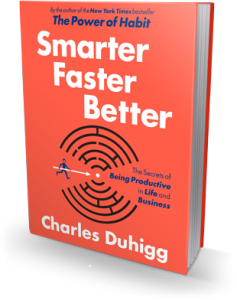
How does productivity work? Why are some people and companies more productive than others? Why do some imagine and actualize possibilities while others struggle? Charles Duhigg, a Pulitzer Prize-winning author, explores these questions in his latest book, Smarter Faster Better – The Secrets of Being Productive in Life and Business.

The book is “about how to recognize the choices that fuel true productivity” and “…how to succeed with less effort.” He explores eight concepts, including motivation, goal setting, and decision making, that emerged from studying experiences of highly productive people and the latest research in neuroscience, psychology, and behavioral economics.

Dughigg says, “…productivity is about making certain choices in certain ways. The way we choose to see ourselves and frame daily decisions; the stories we tell ourselves, and the easy goals we ignore; the sense of community we build among teammates; the creative cultures we establish as leaders: These are the things that separate the merely busy from the genuinely productive.”

2. Interesting Perspective - Organized Possibilities

While many believe there is a “right” way or just “one” way to be organized, let’s dispel that myth. It’s just not true. We are different.  We have diverse needs and preferences.

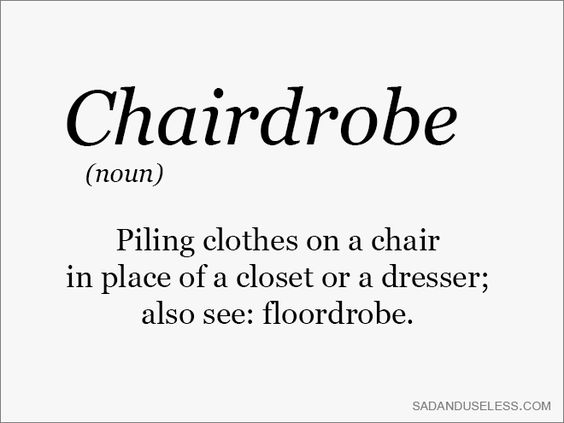
For organizing strategies to be effective and useful, they have to reflect our uniqueness. So, while I might prefer to have my clothes hanging in my closet, facing the same direction on matching hangers, by clothing type and in color order, you might prefer piling your clothes on the big, comfy chair in the corner of your bedroom. And you know what? If “chairdrobe” works for you, go for it! Being organized looks and feels different to each of us. What possibilities can you imagine when you take ‘should’ out of the organizing equation?

3. Interesting Research - Feel Good Possibilities

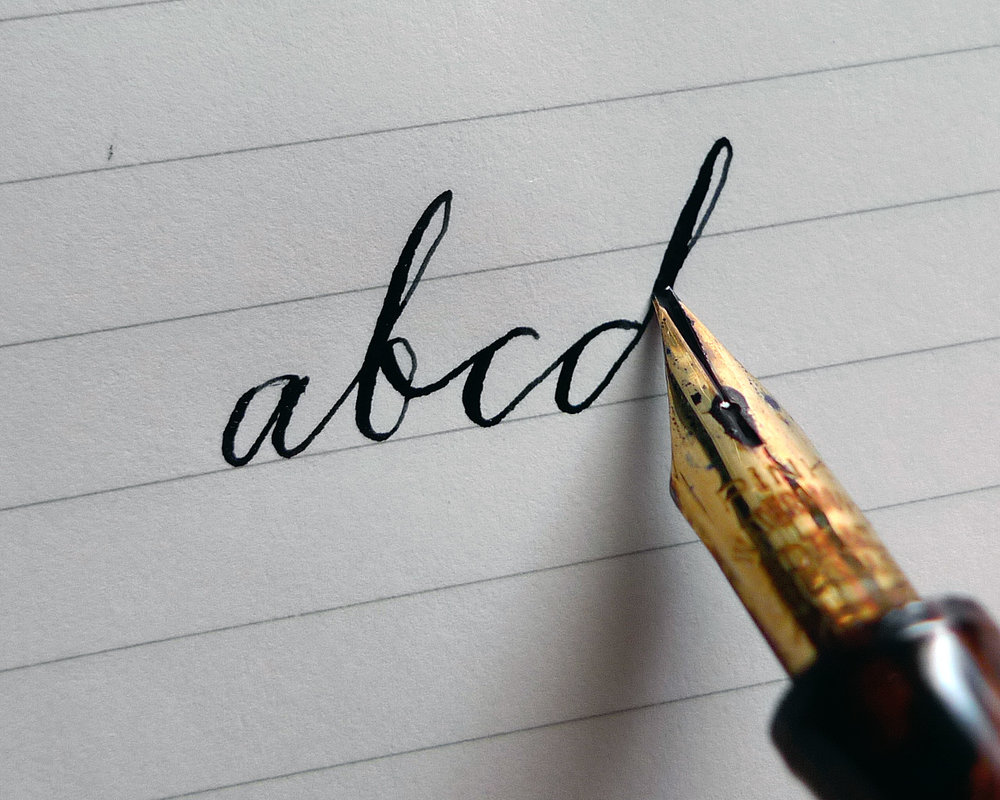
Have you noticed that in the digital age, we tend to use our fingers or voices to type, text, and communicate? We write by hand, much less. While there’s speed and efficiency when using our digital devices, we might miss out on a few things.

Research suggests that writing by hand helps the brain remember more and can make you feel good, too. Neuroscientist and author Kelly Lambert, Ph.D., says, “The brain’s reward center is connected to one of the movement centers…so one way to activate pleasure is through physical effort.” Next time you need a boost, pick up a pen and activate the possibilities.


4. Interesting Product – Time Possibilities

Time+Timer+Dry+Erase.jpg

A favorite product I’ve featured many times is the Time Timer®, a simple time management tool designed to display time elapsing with the movement of a red disk on the timer’s face.

The company just developed a new accessory, a dry-erase board that integrates beautifully with the timer to highlight time-sensitive messages and appointments. This wonderful combo enhances the possibilities for managing our time more effectively.


5. Interesting Thought - Unleashing Possibilities

What's Stopping You.jpg

Are you having challenges moving forward, pursuing a new idea, or accomplishing a goal? Have you considered the power of your thoughts? What messages are you telling yourself? Are your thoughts enhancing or hindering your possibilities?

As the graphic here asks, “What’s stopping you?” Focus on positive thoughts and unleash amazing possibilities.

I’d love to hear your thoughts. What are your interesting finds? Which possibilities resonate with you?  You matter. I invite you to join the conversation!