
Ask the Expert: David Allen

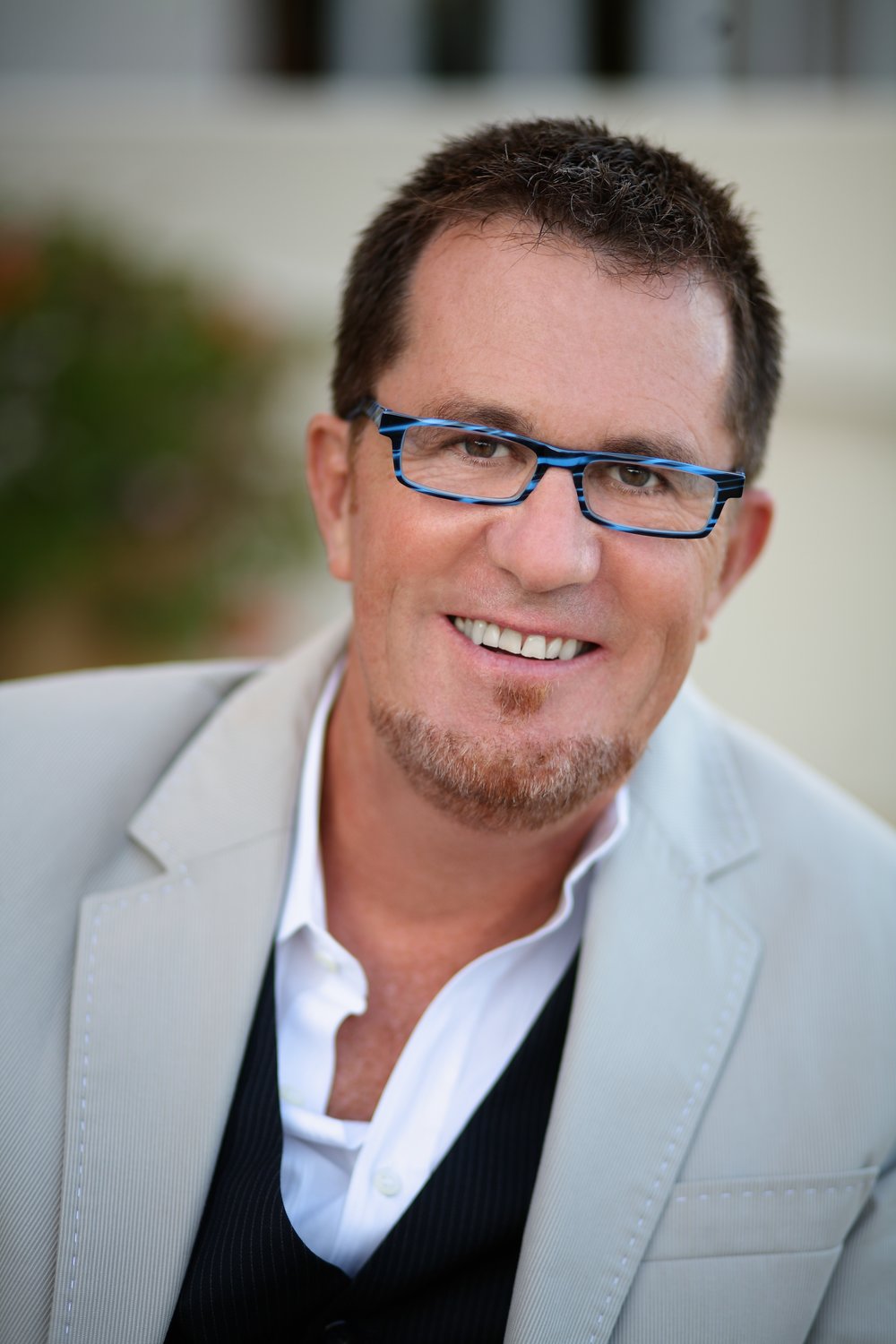
David Allen "Ask the Expert" interview about ProductivityBased on your outpouring of positive feedback, once again I'm happy to bring you the “Ask the Expert” interview series, which connects you with industry thought leaders. We’ve spoken with Peter Walsh about clutter, Sheila Delson about letting go, Laura Berman Fortgang about next steps, Judith Kolberg about change, and Sue West about fresh starts. This month I’m excited to have with us the world’s leading personal productivity guru, David Allen, to share his insights and wisdom about time management.

David’s book, Getting Things Done – The Art of Stress-Free Productivity, is a favorite in my collection, and is well worn and highlighted. Some of his concepts that I find most valuable are the ideas of gathering all your “to dos” in one place and then moving each one along by focusing on its “next” action. It’s an understatement to say that David has many fans. He’s an international best-selling author of three books, has over one million Twitter followers and over one-hundred thousand members in his LinkedIn GTD® Enthusiasts group. My sincere thanks goes to David for taking the time to join us. A special thanks to Kathryn for making it happen. Before we begin, here’s more about David.

David Allen is widely recognized as the world’s leading expert on personal and organizational productivity. His thirty-year pioneering research and coaching to corporate managers and CEOs of some of America’s most prestigious corporations has earned him Forbes’ recognition as one of the top five executive coaches in the U.S. Time Magazine called his flagship book, Getting Things Done, “the definitive self-help book of the decade.” Fast Company called David “one of the most influential thinkers” in the arena of personal productivity. He is the engineer of GTD®, the popular Getting Things Done® methodology that has shown millions how to transform a fast-paced, overwhelming, overcommitted life into one that is balanced, integrated, relaxed, and has more successful outcomes. David is the Founder and Chairman of the David Allen Company. You can connect with David on Twitter, LinkedIn, Facebook, blog or website.


Linda Samuels:  You are internationally known as the “personal productivity guru.” While there is no quick fix for being more productive, where is a good place to begin?

David Allen:  Stress-free productivity means being in a personal state of relaxed, focused control and engaging in meaningful activity. A prime requirement for that condition is having a total inventory of your commitments with yourself – one that is current and objectified and well defined, at all the levels they exist (from “get cat food” to “get a new job” to ”get enlightenment”.) So job one is to capture and clarify that roster. Start by collecting all the particles around your environment that don’t belong there permanently and put them in your into your IN-tray (or a note to represent them, if they won’t fit). Then use pen and paper to empty your head of any- and everything else that has your attention. From there you’ll need to move on to determining the outcomes desired and next actions required for each of them. That whole process can take 10 to 20 hours, but anything you can start doing along those lines will move you in the right direction.


Linda:  Life requires that we get things done. Anna Quindlen said, “I wish I had treasured the doing a little more and the getting it done a little less.” What is your perspective?

David:  Big Secret: Getting Things Done is not about getting things done. It’s about achieving appropriate engagement with all of your involvements. In order to feel comfortable with whatever you’re doing, you need to feel OK with what you’re not doing. So, not getting things done, for the most part, is a hallmark of optimal productivity! Of course, if your purpose on the planet is actually to complete, accomplish, and express, you’ll need to be getting those things done, in order to be at peace with yourself. Once you really catch what this game is about, and the optimal rules of engagement, playing the game, itself, is the reward. Indeed.


Linda:  What is your most surprising discovery about focusing on the “next” action step?

David:  That the decision about the most mundane aspects of our life (what visible, physical activity do I need to do, to move the needle on this?) is core to the sense of fulfilling our agreements with ourselves. If you think you should be doing something about a situation with your parents or your kid, but haven’t yet decided what the very next thing to do about it is, you’ll be in stress and not fully present in your life.


Linda:  What has been your toughest personal time challenge?

David:  Realizing how much of a clear context, in terms of time and environment, is required to do sustained, creative thinking. I can’t write the next chapter of anything without a good four-hour block of free space and warmed up fingers with a great laptop.


Linda:  If you had an unexpected extra hour on a particular day, how would you spend that time?

David:  Beats me. When it shows up, I’ll let you know. I trust my spontaneous, intuitive hunches.


Linda:  Is there anything you’d like to share that I haven’t asked?

David:  The experience of stress-free productivity is one of a very natural flow. But it doesn’t consistently happen by itself. It requires specific practices that often seem unnatural and unnecessary at first. (“Write everything down? You’ve got to be kidding!”) Once they become habitual, however, you’d never think of doing anything else.


Thank you, David for sharing your thoughts about stress-free productivity and time management. Something you said which jumped out at me is the idea of “appropriate engagement.” Be comfortable with what you choose to do and not do. That in fact, not getting things done is the “hallmark of optimal productivity.” I love this perspective.

I invite all of you to join David and me as we continue the conversation. We’d love to hear your ideas about productivity, GTD®, and time management. Which concepts resonate with you? What are your recent productivity challenges or successes? 
Time Took Care Of

Time Took Care ofOne of my favorite concepts to share is letting go of a something (most frequently paper) because time took care of it. When working with clients, this call to action often becomes the go to phrase for deciding a thing's relevance.

Particularly with old piles of paper, many pieces can quickly be released using this concept. Because time has passed, the item on the paper expired, the event happened, the opportunity to take action isn't available, or it's no longer of interest. When organizing, those papers are easily identified, and usually with great delight and a sense of humor, my clients allow them to exit as they say, “Time took care of.”

It occurred to me that while time took care of  is one of my paper management strategies, the idea is also useful in other situations. For instance, normally I write my blog posts over the weekend or on Mondays so that they're ready to share on Tuesday mornings. However, this particular week, I didn't stick to my plan. I got mad at myself for deviating, and then realized how pointless that was. Time took care of that particular deadline. There was no going back, only forward. So here I am with you, posting later than I’d planned. I've let go of being annoyed with myself over what I didn’t do on time. That no longer matters. I’ve moved ahead to be here now.

Another scenario is with clothing. Perhaps you purchased something, decided to return it, never got to that errand, and now it's too late to return or exchange. Or maybe you bought something for your kid, they never wore it, and they've outgrown that size. What do you say? “Time took care of!” Instead of holding onto something that you don't want or doesn't fit (along with the guilt,) let them go. Donate. Give to a friend. Release yourself from thoughts about what you didn't do.

I know that there are many things you did do. Stop to acknowledge those. Don't waste your time with guilt over what time took care of. Let go. Move on. Focus on now.

What are you ready to let go of? What has time taken care of? I’d love to hear your thoughts. Come join the conversation.

5 Events To Motivate Decluttering

A few weeks ago, I wrote about preparing for our tag sale. Having a specific deadline motivated my family and me to declutter and get rid of a lot of things. The event was a success, and we felt great! While scheduling the tag sale was a terrific motivator, there are other types of events that can make us evaluate our “stuff,” declutter, and let go. What has your experience been like with event-inspired decluttering?

5 Events To Motivate Decluttering

1. Entertaining—Throwing a party of any size (from an intimate dinner to a large BBQ) can motivate us to declutter and organize. Spending time with the people we love rather than accumulating more “stuff” brings positive energy into our lives. Use happiness-producing events to keep clutter in check.

2. Life Event—Marriage, birth, job change, medical emergency, empty nest, divorce, or death are times of transition. These life events make us rethink our possessions and spaces to accommodate major changes. Things that were once relevant aren’t anymore. In our search for clarity and the new normal, letting go and decluttering become crucial.

3. Moving—Whether we are increasing or decreasing our living space in a move, there will be things that won’t be needed. Moving motivates us to evaluate the “stuff” and release the extraneous. The more decluttering you do before a move, the easier it will be to set up your new home. In a recent post, one of our readers (Rosemary) shared that as she was preparing for her move, she posted a sign in her triage area that helped her evaluate what to keep. It read, “All you need is less.”

4. Renovating—A renovation is stressful. However, it’s also a fabulous opportunity to ask lots of questions, release clutter, and create room for the things you treasure most. Rooms are emptied to prepare for construction and then reorganized when the building is done. This is a natural opportunity to be ruthless and only restore what you really want.

5. Tag Sale—Bringing us full circle to the beginning of this post, having a tag sale gives you a specific deadline to work towards, increases your motivation for letting go, is an enjoyable social event, and lets you make a few bucks. It’s also fun to meet the buyers of your “stuff” and know that your possessions will be useful and enjoyed by others.

What events have motivated you to declutter? I’d love to hear your thoughts. Come join the conversation. 


Ask the Expert: Peter Walsh

Peter Walsh "Ask the Expert" interview about ClutterThe “Ask the Expert” interview series connects you with industry thought leaders. So far this year, we’ve spoken with Sheila Delson about letting go, Laura Berman Fortgang about next steps, Judith Kolberg about change, and Sue West about fresh starts. This month, I’m excited to share with you someone who is a household name in the professional organizing industry, Peter Walsh, and to have him share his insights and wisdom about clutter.

Peter and I met several years ago at a National Association of Professional Organizers (NAPO) conference when he had a special session with our veteran organizers group. After the session, I went to the Expo where I stood on a very long line of Peter’s fans to say “hi” and ask him to autograph his book, It’s All Too Much. I was taken with how incredibly charming, generous, and patient he was in handling a loud, enthusiastic group of organizers and fans. A few years ago, I featured Peter and his book, Lighten Up, for a Giveaway on my blog. My deepest thanks go to Peter for taking the time to join us. Before we begin, here’s more about him.

Peter Walsh is an expert in organizational design, a television and radio personality, and the author of numerous New York Times bestsellers. Peter’s aim is to help people live richer, happier lives with a little more organization. Born and raised in Australia, he moved to Los Angeles in 1994 with the idea of launching a company to help organizations improve employees’ job satisfaction and effectiveness. He has helped thousands of homeowners and corporations organize their living and work spaces for optimal efficiency. Peter was a regular guest on the Oprah Winfrey Show, the star of Clean Sweep, and the star of his own series, Extreme Clutter, on the Oprah Winfrey Network (OWN). He’s appeared on hundreds of national television programs, including The Nate Berkus Show, The Talk, and Good Morning America. You can connect with Peter on Twitter, Facebook, YouTube, or his website.

Linda Samuels:  You’re an expert on helping people better understand their emotional and physical clutter. How do you begin this process?

Peter Walsh: I am one of seven kids.  Growing up, we didn’t have a ton of stuff, and what we had, we learned early on that we had to take care of. I think from this, I’ve always had respect for looking after what I own and taking care of the things that are mine. Being organized, however, is a skill just like any other and can definitely be learned. It takes a little practice, but the dividends are definitely worth it!

I had worked a lot here in the US in the area of organizational change in businesses, and friends started asking for some help in getting their homes – and sometimes their lives – in order. I realized early on that the problems people had with clutter and disorganization were usually about their fear of letting things go, or lack of skills in scheduling things, or sometimes even some trauma they’d experienced in their lives.  Once these underlying issues were dealt with, usually dealing with ‘the stuff’ became so much easier. My work in this area came to the attention of a television network here and they asked me to work on an organization show. A few years ago, I started working with the Oprah Winfrey Show as their decluttering and organization expert, and from there hosted Enough Already! with Peter Walsh and Extreme Clutter on The Oprah Winfrey Network.  More recently, I’m the ‘get your life organized’ guy on The Rachael Ray Show.

Linda:  Why is letting go of clutter so challenging for some of us?

Peter: Generally, people accumulate clutter of two types - and you may recognize yourself here. The first is what I call 'memory clutter' - this is the stuff that reminds you of an important person, or event or achievement in the past - things like those old university papers from 20 years ago, or your adult children's baby clothes or that soccer trophy you won in kindergarten. The other kind of clutter is 'I might need it one day clutter' - this is the stuff you hold onto in preparation for all those possible futures that could eventuate. Neither of these is a bad thing. The problem only arises when the stuff you own interferes with the life you could be living.

I work differently to many organizers in that I have come to see that if you focus on 'the stuff' when trying to declutter and get organized, you will never succeed. Ever! The first and most important step in decluttering is to ask yourself, "What is my vision for the life I'd like to live?” "What does that life look like?", "What does my home look like in that life?" When you can clearly answer these questions you are in a position to start decluttering by looking at your stuff and asking, "Does this item move me closer to the life I want to be living?" If it does, keep it. If not, what's it doing in your home? It’s as simple and as complex as that. Start with the life you want, not the stuff you have!

Linda:  You’ve helped many people transform their lives. What are some of the positive outcomes they’ve experienced from releasing their clutter?

Peter:  Your home is a reflection of your life. It’s impossible to make your best choices for your most authentic life in a cluttered, messy, disorganized space – it just doesn’t happen! When we talk about clutter we talk about how it makes us feel ‘suffocated’ or ‘unable to breath’ in a space. Clutter robs us of life – physically, psychologically, socially, emotionally and usually financially. When a home is overrun with clutter it robs us emotionally, making us feel stressed out; it robs us financially, the stuff costs a lot of money to acquire; it robs us socially, we are too embarrassed to have people over to our homes; it robs us of peace and calm, we can’t relax in our own homes. Decluttering opens your space, allows you to focus and feel motivated. By surrounding yourself only with those things that are beautiful and useful, you are able to truly create a space that reflects your best life.

Linda:  Do you have a clutter philosophy?

Peter: The single biggest problem with organization is that people think it’s all about ‘the stuff’ when, in fact, it’s almost never about ‘the stuff.” If you focus on the stuff you will never get organized – weird but true! The very first step in getting organized is to ask yourself, “What is the life I want to be living?” And from this question there are others, “What does that life look like?” “What do I want from my home – what mood, what experience?” It’s only after you have answered these questions that you can start looking at your stuff and get organized by asking (of each item), “Does this thing move me closer or farther away from the life I want?” That’s the criteria for what stays and what goes.

Other factors are that people simply buy too much.  Recreational shopping is a killer!

Linda:  What has been your biggest personal challenge around clutter?

Peter:  While I am known as the ‘organization’ guy, I’m not crazy when it comes to organization! For me, organization is not so much about coloured photo boxes or orderly files as it is about living your life in a way that is stress-free and fulfilling. If your life is more about the quantity of stuff you can acquire than it is about the quality of relationships that you have, then there’s a problem. My own home and what I own reflects the kind of life I want – open, relaxed, welcoming, calm, stress-free and inviting.  It’s all about creating a home that reflects the life you want. I think I’ve been pretty successful in achieving that.

Thank you, Peter, for sharing your thoughts about clutter. Your message that clutter is not about the “stuff,” but instead about creating the life you want, is the thread that clearly weaves through all of your responses. In the twenty-plus years I’ve been helping others get organized, I also recognize this to be true. We get called about the “stuff,” but we know that is simply the beginning of the conversation.

I invite all of you to join Peter and me as we continue talking. We’d love to hear your ideas about clutter. What clutter challenges or successes have you experienced recently? What are your thoughts about “the stuff?”