 Have you ever felt alone with the clutter challenges in your life? You aren’t. Managing clutter, which takes many forms including thoughts, time, and space, is a human condition. I was curious about what clutter looked like not just in the United States, but also in other parts of the world. I invited my wonderful organizing colleagues (Hilde Verdijk, Laurene Livesey Park, Carol Martyn, Nacho Eguiarte, Tracey Foulkes, Sue West, and Juliet Landau-Pope) to share their perspectives with us about clutter in their cultures. It’s an honor to be here with this amazing group. My gratitude goes to each of them for being here with us. Join us around the table, as we sit together, sip iced tea and share our ideas.
I asked my colleagues . . .
- How do you define clutter?
- What are the most common causes of clutter in your country?
- What is one of your favorite clutter management strategies?
How do you define clutter?
Hilde Verdijk, CPO-CD®, MRPO® – Professional Organizer & Speaker – The Netherlands:
To me clutter is the stuff in one’s house or head that is not being used regularly or properly, has no beauty, is not loved and is there for an excuse, like: "I might need it sometime" or “it was expensive (or cheap!)”
Laurene Livesey Park, CPO-CD® – Professional Organizer, Author, & Speaker – Canada:
I define clutter as an overabundance of stuff. I like the idea of “over” abundance because it is flexible – one person’s comfortable, Zen-like minimalism is another person’s might find three extra items on the kitchen counter too much clutter, while another person who is comfortable with lots of things in their space may have a very different idea.
Carol Martyn – Professional Organiser & President AAPO – Australia:
Clutter can be defined as anything that’s regularly not used, loved or makes our heart sing. We’ve only to cast our minds back to gifts received last Christmas to get an indication of whether items have the potential to fall into the clutter category today. If you’ve children, you’ll know what I mean.
Nacho Eguiarte – Professional Organizer, Architect & Blogger – Mexico:
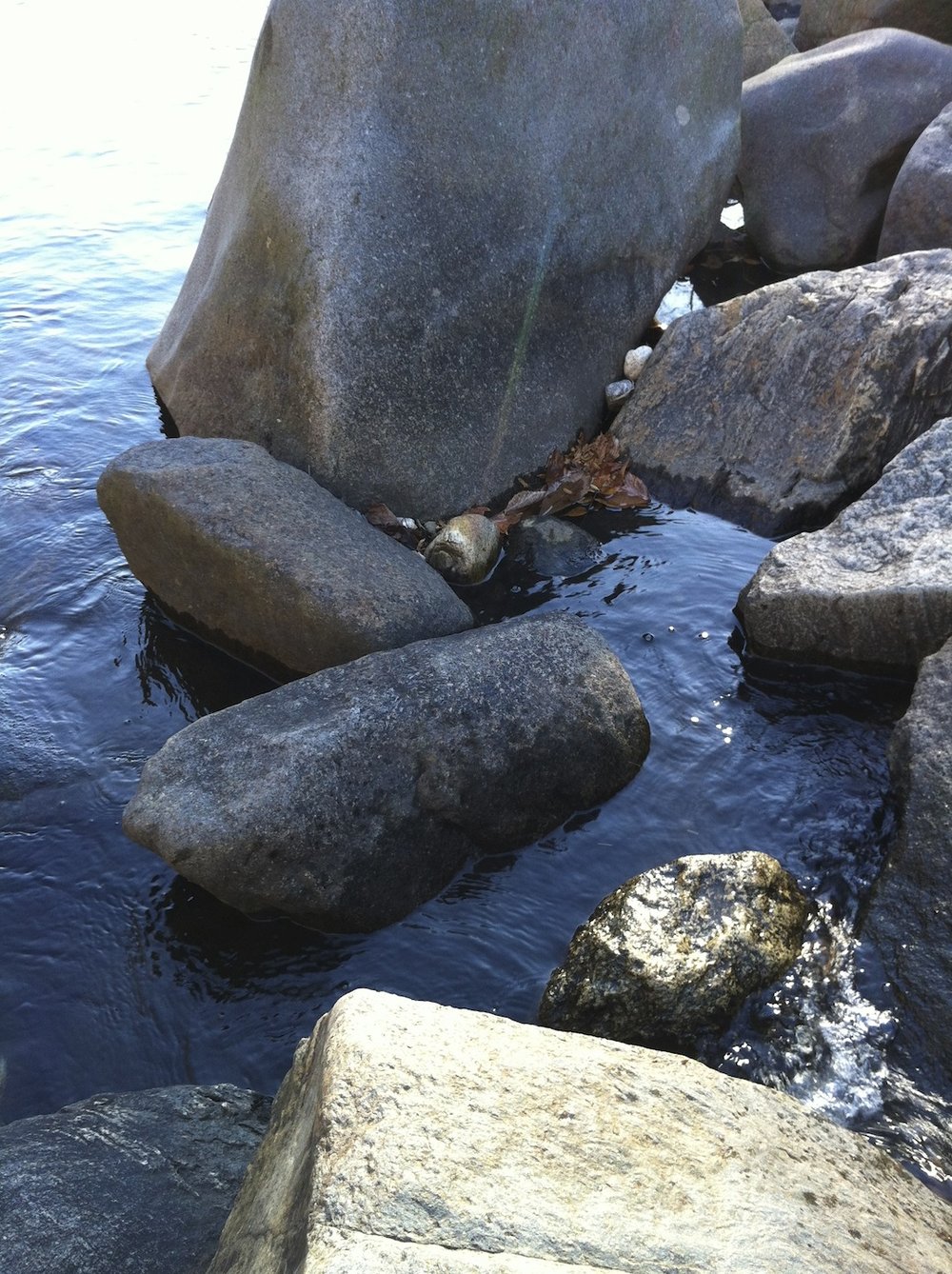
Like having rocks on a river stream, water will flow but you can't sail your boat way down safely or easily. Address the clutter and the journey will be pleasant.
Tracey Foulkes – Speaker, Trainer, Productivity & Organisation Expert – South Africa & Ireland:
Broadly speaking clutter is anything you don’t need, use or love. It is anything that gets in the way of your success. It’s the excuses that hold you back from taking action, the brain spaghetti that leaves you feeling overwhelmed, decisions left unmade, tasks left unfinished, crowded environments all causing no to slow progress.
Sue West, COC®, CPO-CD® – Certified Organizing Coach, Certified Professional Organizer in Chronic Disorganization & AD/HD Coach – United States:
Clutter, per my clients: Energy drain. “Stuckness.” Judgmental. Needy. Depressing. Makes me feel out of control and scattered. Keeps me from what I really want to do. Guilt. Shame. “You should!” Reminder of what I didn’t do.
Juliet Landau-Pope, MA, CPCC – Coach & Professional Organiser – United Kingdom:
I define clutter as whatever’s getting in your way. It can be a surplus of household belongings that prevent you leading the life you want; clutter can also can be the accumulation of negative ideas in your mind that drain your energy and sap your creativity.
What are the most common causes of clutter in your country?
Hilde: I think people in this country have such busy schedules nowadays, they don’t know how to slow down or deal with their stuff. Instead they go shopping, making things worse. They spend their money on things, but forget to let go as well and then things start to pile up.
Laurene: As in most developed countries, we have easy access to many, many fairly inexpensive goods. It is easy to replace something that is worn, old, out of fashion, and people do that, without getting rid of the item that they have replaced. Not enough people pass things on!
Carol: While there’s no one common cause of clutter in Australia, clients I work with sometimes haven’t thought how the new items will fit in their homes – or how they can limit the amount of space available.
Nacho: In Mexico, because we've had so many economic crises, people developed scarcity fears. Reusing, mending, fixing and saving everything that could be useful in the future, soothe the fear but create clutter.
Tracey: People are too busy, rushing from meeting to inbox to meeting. Departments are smaller, deadlines tighter, immediate gratification rife. Despite knowing there is an escalating problem, employees are holding back from ‘rocking the boat’. It’s not working, but they aren't prepared to take the time to step back, propose a solution and make a change.
Sue: Common causes: Commitments I should not have made but did anyway. Too many thoughts swimming around in my head and no place to land. Too many things in my home, office or even in my computer devices with no place to call “home.” Memories I can’t deal with yet. Choices I never made.
Juliet: In the UK, people hold on to things for myriad reasons but material clutter is often a response to living in a fast-paced, ever-changing consumer society. There’s an emphasis on shopping for what you want rather than what you need, and more emphasis on acquiring stuff than on letting go of it. We also accumulate things from other people such as gifts, souvenirs, and inherited items. Ultimately, I think clutter is a habit that accumulates over time; many of my clients regret that they never learned how to manage their time or space effectively.
What is one of your favorite clutter management strategies?
Hilde: I often ask my clients: “If you accidentally lost this item, would you really invest time, money and space to replace it?” It makes them realize that they keep lots of stuff for the wrong reasons.
Laurene: I love the rule, “One thing in, one thing out.”
Carol: Most clients decide on what to keep first and then try to make everything fit. One of the most effective strategies is to flip this around; the storage space available helps guide the decision making process.
Nacho: For letting go stuff, you should hold a thing, shutting your eyes and paying attention to mind and body; having feelings like sorrow, sadness, anxiety are signs to get rid of it. On the contrary having happy thoughts, feeling joy or energetic are indicatives of keeping the object and finding it a place in your home.
Tracey: Ditch email and shift team and client communication to collaboration platforms instead.
Sue: Favorite strategy: “What do you know about what you DO want?” What will your calendar look like? What is your next chapter? How will your home or home office feel? Motivation lies here.
Juliet: My top tip for managing clutter is to focus on clarifying positive goals. I never talk about getting rid of things but prefer to focus on creating space, order and clarity – it’s far more motivating!
Clutter challenges are found all over the world. While the definitions of clutter vary, a common theme prevails. Too much “stuff” prevents us from full, focused engagement in our lives. Causes of clutter vary too from over-acquiring to letting go challenges to scarcity fears. We read about clutter management strategies that were both practical and soul searching. What a wealth of ideas and approaches! There is so much hope in these insights. We are not alone. We have the ability to reflect, ask questions, create boundaries, and focus on positive results. What is clutter about for you? How do you manage clutter? Pull up a chair and join our conversation!


 Life is complicated. There are many dynamics, decisions, phases and stages. There is constant change that we navigate to the best of our ability. Clutter is complex too. We become emotionally attached to our things. Our stuff seems to collect as we sleep. Where did those piles come from? How did my closet get so crammed that it’s stressful getting dressed every morning? I have to keep my stuff because if I let go, I’ll lose a part of me.