3 Awesome Next Steps for Successful Spring Organizing
Spring organizing.jpg

Yes, I know. It’s not spring yet. However, even though in the northeast we had more snow in the past few days and we're still sporting our coats and gloves, spring and what it represents is on our minds. I have nothing against snow or cold or being cozy inside on a winter’s day. Yet the thought of spring brings a smile to my face and a sense of hope that’s particular to this season of rebirth and renewal. Some of you might be wondering why I’m jumping ahead to spring thoughts when it’s still winter. For someone like me that engages in mindfulness practice, this seems anti-mindful.

I was prompted to future-think when I was invited back last week to be a guest on WNYC’s All Of It show hosted by the fabulous, Alison Stewart. The topic was “Spring Cleaning,” as in ways to prepare for spring organizing, choose next steps, lighten-up, and let go.

Alison and I talked about many ideas including rituals for spring organizing and how those are different from other seasons, and which are the most popular areas to organize during the spring. I also answered listeners’ questions such as the best method for organizing “hard” purses, how to let go of the clothes we’re emotionally attached to, and how to be a role model for our kids.

You can listen to the podcast here:

One of the clear themes that arose in the discussions and questions was what to do next? And while that answer varies greatly depending on what your unique situation is I thought it would be useful to share a few organizing strategies to help you navigate next as you gear-up for spring organizing.

3 Next Steps for Successful Spring Organizing . . .

1. How do I choose my next step when I’m feeling overwhelmed by the number of organizing projects I want to tackle this spring?

Next Step: When there are a lot of choices, it’s normal to feel overwhelmed. In some cases, this overwhelm can cause inaction. One of the best ways to get unstuck is to figure out the tiniest possible next step you can take. So instead of focusing on all of the projects you want to do, select just one for now. There is no wrong choice. Pick one that will yield the most significant positive result for you or the project that will be easiest to accomplish. Then think small. What one tiny step can you take to move it forward? Build on your success one increment at a time.

2. How do I figure out my next step when I know what I want to organize this spring, but I have no idea of how to get it done?

Next Step: It’s terrific when you know what your organizing goals are. It’s also normal to be unsure about how to accomplish them. An excellent next step is to reach out for help.  The help can be from a family member, friend, or professional organizer like me. It’s possible that merely talking about your goals with another person will be enough to get clarity and move you forward. Other times, it’s helpful to have someone working side-by-side with you to help with the actual next steps. The point here is that you don’t have to go it alone. Enlist help from an organizing buddy.

3. What next step ideas do you have for letting go of the things that I’m emotionally attached to?

Next Step: Letting go can be challenging, but it can also be freeing. It’s important to ask yourself why you want to let go. Are you feeling overwhelmed or burdened by your things? Are they taking up emotional or physical space in your life? It’s worth deciding which items are adding value and which ones are not. Once you do that and you’ve determined the belongings you’d like to release, but feel emotionally attached to, find the right resources. Giving, donating or selling them to others that will appreciate your things as you have will make it easier to let them go. It will provide them with safe passage. It can also be helpful to have the support of a non-judgmental, compassionate person to be with you during the decision-making and letting go process.

Behind the Scenes at WNYC

To listen to the March 1st podcast of my guest appearance on WNYC's "All Of It" including listener questions and organizing challenges, my responses, and more, click here. For an inside look at WNYC, watch the video below.

With spring around the corner, what organizing projects are you thinking about? What are your most pressing next step questions? I’d love to hear your thoughts. Join the conversation!

 
How to Quickly Change Your Bad Habit to a Healthy One
Change+Habits.jpg

Change can manifest in many ways. Sometimes it’s about embracing new challenges, pursuing major life choices, or altering perspectives. Not always, but often, breaking unhealthy habits and developing positive ones are integral to our path to change. Our bad habits can revolve around addictive behaviors like smoking and stress eating. Habits can extend to other forms, such as continually checking our digital devices, being chronically late, or perpetuating our disorganization. 

In the short TED Talk video “A Simple Way to Break a Bad Habit,” psychiatrist Judson Brewer discusses the relationship between mindfulness and addiction. He explains how habits develop and shares a profound discovery, which will help you alter your actions. Brewer’s strategy employs a combination of mindfulness and curiosity to cultivate better mind-body awareness, ultimately leading to healthier habits.

Watch this video . . .

A Simple Way to Break a Bad Habit – Judson Brewer, MD, PhD

What is your experience with habit change? Is this an area where you struggle? What has worked for you? I’d love to hear your thoughts. Join the conversation!

 
What Are Today's Interesting Finds? - v22

The newest installment (v22) of the “What’s Interesting?” feature is here with my recent discoveries that inform, educate, and relate to organizing and life balance. I’ve included unique and inspiring change-related finds, which reflect this month’s blog theme. You are such a beautiful, engaged group. I am grateful for your presence and wisdom.

I look forward to your participation and additions to the collection I’ve sourced. What do you  find interesting?

What’s Interesting? . . .

1. Interesting Read – Navigating Change

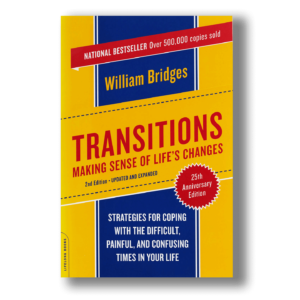
Change can be challenging, even for the most adventurous of us. If you are in the midst of transition or know someone who is Transitions – Making Sense of Life’s Changesauthor and transition management consultant, William Bridges who died in 2013, provides an excellent guidebook on coping with change. Bridges explores strategies for embracing and the universal stages of transitions- Endings, The Neutral Zone, and The New Beginnings.He writes about, “…the difficult process of letting go of an old situation, of suffering the confusing nowhere of in-betweenness, and of launching forth again in a new situation.” He offers two powerful questions to ask whenever you are in transition– “What is it time to let go of in my own life right now?” and “What is standing backstage, in the wings of my life, waiting to make its entrance?” Bridges message is practical and hope-filled.

2. Interesting Product – Cultivating Change

Mindfulness+Cards.jpg

One of the essentials for cultivating change is to develop better awareness about our present experience. In this delightful and well-organized box of Mindfulness Cards created by author and founder of Mindfulness Everywhere, Rohan Gunatillake encourages users to create “small meaningful moments of mindfulness throughout the day, making it easy and fun to bring you back to the here and now.”  The cards are grouped into four categories- Rest & Balance, Curiosity & Joy, Insight & Awareness, and Kindness. Practicing mindfulness can bring about the remarkable, unexpected changes.

3. Interesting Tech  – Focusing Change

Brain+fm.png

Change the way you focus, relax, meditate, recharge, and sleep with AI composed music to enhance your experiences. The Brain.fm app, available on iOS and Android platforms, plays music designed for your brain to influence cognitive states in positive ways. Specifically composed pieces include the promise to help you focus better to get more work done with fewer distractions, calm your mind from your ongoing chatter, or have a more peaceful night’s sleep. The developers have continuing collaborations with auditory neuroscientists to research the efficacy of their findings. How exciting that positive change can be delivered through your headphones!

4. Interesting List – Organizing Change

Make+Shit+Happen.jpg

Sometimes a bit of humor can go a long way in motivating us to change. I hope that no one takes offense to Knock Knock’s irreverent twist on the traditional to-do list with the Make Shit Happen pad. Setting goals, especially big ones, can be a challenge. With this spaciously sized list, you are encouraged to think big and then go small with next steps. If you’re looking to improve your organizational skills and change the way you manage your time, this list could help.

5. Interesting Thought – Directing Change

Waves+of+Change.jpg

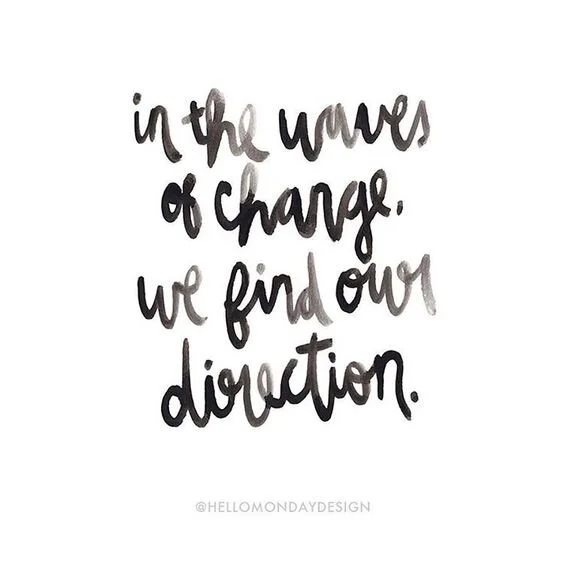
Change is almost always unsettling. We’re traveling from a known to an unknown destination. We might be riding way outside of our comfort zone as we stretch ourselves to grow and experiment. The path is rocky and unclear. Yet is because of our struggle, those times of challenge, and uncertainty that we find our way forward.

What are your exciting finds? Which of these resonate with you? I’d love to hear your thoughts. Join the conversation!

 
What Wonderful Change Is Emerging Beneath Your Surface?
Wonderful+Change.jpg

Change is all around us, as was evident on a recent walk. As I moved along a familiar Hudson River path, I noticed something unusual. Instead of flowing freely, the river’s surface was mostly frozen.

Sitting on a boulder along the river’s shore, I was mesmerized by the sounds and movement of the ice cracking and shifting. The frozen pieces were continually adjusting, pushing, sliding, and floating away. The tempo and noises changed as sections of ice piled-up and then released back to the river. While expansive portions of the river’s surface were frozen, there was a gentle motion beneath the ice. The rumblings below were covered with a mixture of stillness and agitation above.

How often is that true for us? Internally we begin to change even though it might be barely visible to others. We think about what we might want to do next? We ponder varying options and scenarios. We have conversations with ourselves that are either uplifting or discouraging. We might even get to the point of being overwhelmed just from thinking about change. We might appear frozen on the surface, yet inside we are full of activity and movement.

Then the ice cracks. A positive idea or word of encouragement breaks through. We see the light of possibility and change. The ice begins to thaw. Movement slowly occurs as we turn our thoughts into actions. The ice melts into our sea of change.

Change

What changes or shifts are you noticing? Did any ideas resonate with you? I’d love to hear your thoughts. I invite you to join the conversation!