
How to Find Some Calm For Your Cluttered Mind

I just returned from the NAPO 2016 organizing conference in Atlanta. About 550 professional organizers from around the world gathered to learn about building organizing businesses, learn new skills, think about current and future trends, and discover the latest products and services to help our clients.

There was a lot of note-taking, conversing, laughing, photographing, tweeting, listening, and observing. I loved seeing old friends and making new ones.

Some conference highlights included:

  • Attending the IFPOA (International Federation of Professional Organizing Associations) meeting with the leaders from Japan, Canada, The Netherlands, The United Kingdom and the United States

IFPOA+2016.jpg

Photo by NAPO President, Ellen Faye taken at IFPOA Meeting

  • Going to the President's Black & White Reception with dancing and karaoke

  • Talking with current and potential ICD subscribers at the ICD Booth during the NAPO Expo

  • Discussing the influence of future trends on the organizing industry, including aging, downsizing, coaching, and technology

  • Learning about Judith Kolberg's unique "to-do" list, digital estate planning, and her dance break during her session

  • Seeing hundreds of old friends and making new ones

The days were packed from morning until late night. Everywhere I turned, there were new people to meet and old friends to greet. I loved that part. In between conversations, I attended sessions to learn about new trends, ideas, and concepts. During the sessions, I took notes and tweeted some highlights. Mealtimes gave us further opportunities to talk, connect and share ideas. Are you getting the picture? It was wonderful. At the same time, there was a lot to take in and process. And guess what? My heart was filled with connecting with all the amazing people, but so was my head. By Sunday morning, my mind felt full and cluttered.
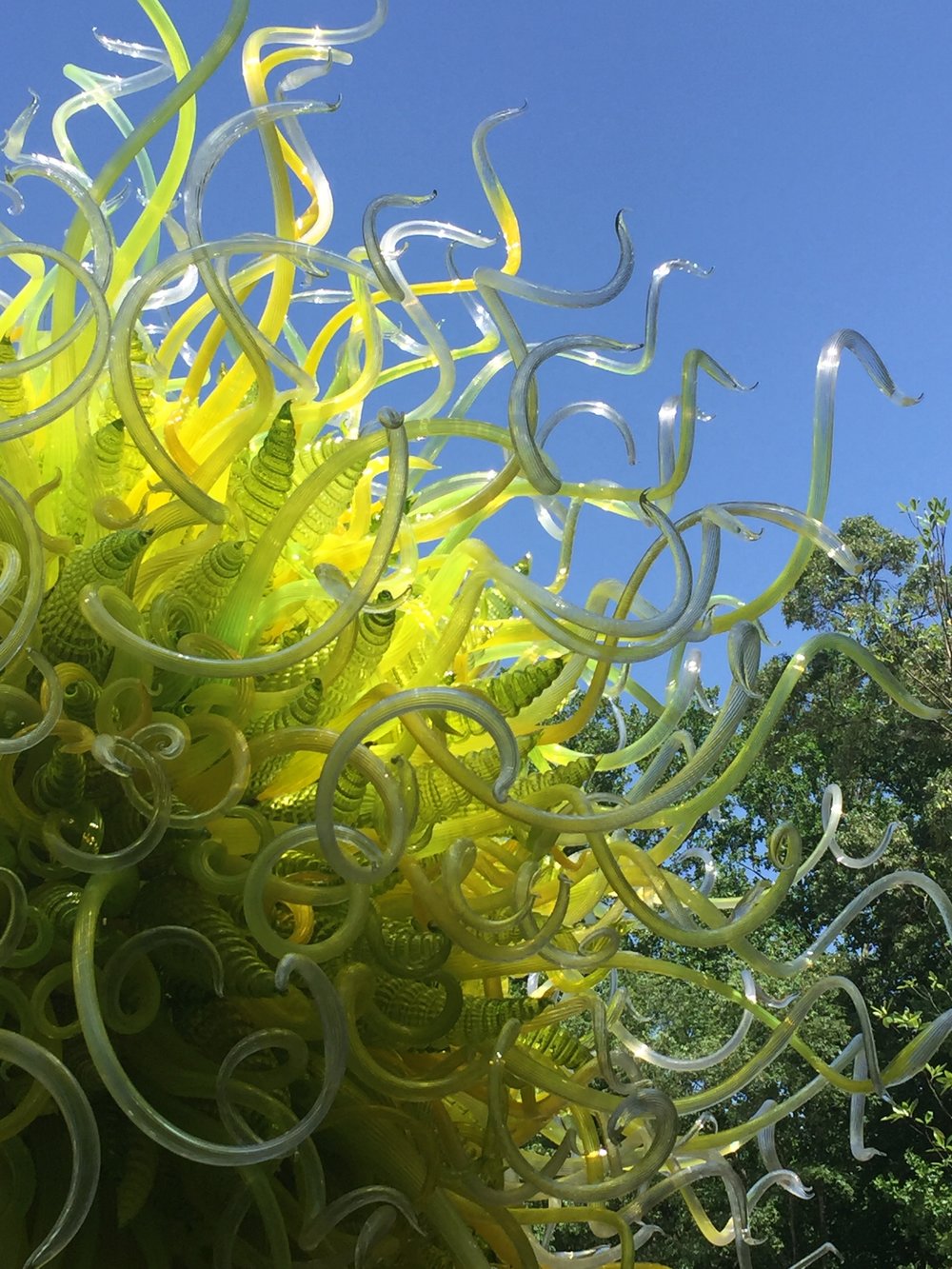
Fortunately, I scheduled a later flight on Sunday. This gave me time to visit the Atlanta Botanical Garden to see the beautiful gardens and Chihuly exhibit. If you live in Atlanta or ever have the opportunity to see Dale Chihuly’s art, definitely go!

Dale Chihuly - Atlanta Botanical GardenIt turns out that one of the best cures for my cluttered mind was to spend several hours being outside in the sun, exploring nature, the gardens, seeing and photographing Chihuly’s vibrantly colored and organically shaped glass sculptures, taking in the wonderfully fragrant scents, hearing the sounds of water and birds, feeling the breeze, and walking along the winding paths.

Returning home, I gave myself time to sit by the river to collect my thoughts and review my notes. There are still many people to follow-up with and ideas to simmer and implement. However, by giving myself the time with nature and art, my cluttered mind has settled.

I’m excited about the possibilities, and calm about the pacing. My heart is full and happy. My mind is calm.

What helps you when your mind gets cluttered? I’d love to hear your thoughts. Come join the conversation!

Why Do We Hold On to Treasures, Clutter, and Stuff?
Why Do We Hold On to Treasures, Clutter, and Stuff? by Linda Samuels

It’s the month of books, lots of new books! Most of my latest acquisitions are about clutter. I don’t know about you, but I love books, as does the family I come from. I grew up in a house of books. There were books in every room. Family excursions would often include hours spent “browsing” at bookstores like Rizzoli in New York City. Every time my mom returned from a trip, she’d bring back more books filled with places she traveled or art she’d seen. Sundays were often spent sitting around reading The New York Times, listening to music and reading books.

I’ll admit that when I was younger, I wasn’t as avid a reader. I preferred drawing, painting and dancing. But over the years, I have turned into my mother. What can I say? I have a lot of reading to catch up on.

While the books in our home are neatly stacked and stored on shelves, we have a lot of them. To visitors they might seem like clutter or too much stuff. To us, they are treasures. There are periods when I’ll scour the rooms with a bag in hand, hunting for books that can be released and donated. As I look, I rediscover some great “old friends,” which I can’t part with. However, there are some that I’m ready to let go of and put into the “donate” bag. Each book released represents a small success.

Junk by Alison Stewart

The newly published book, Junk – Digging Through America’s Love Affair With Stuff  by journalist and author Alison Stewart, is one of the books that recently joined my collection. About a year and a half ago, I had the pleasure of meeting and talking with Alison. The inspiration for her book came from her experience emptying her parents’ home after they passed away. She became fascinated with why we hold on to things. This led her to a three-year journey investigating all about our culture’s obsession with stuff: collecting it, releasing it, and upcycling it.

Alison cites resources like the Institute for Challenging Disorganization and interviewed many people including junk removers, some of my colleagues and me. She used part of my interview in her book and quoted me saying,

“I don’t think it is so odd that we define ourselves by certain objects. If you think about your space, you have things around, colors you like. What you see is the variation in the volume. And whether the stuff is enhancing your daily experience or it is causing stress. That’s the dividing line. Is it preventing you from living the life you want, doing what you want, causing problems with your family? That’s the slippery slope.”

The need to hold on and collect is a common phenomenon. As Alison asks, “Why do smart, successful people hold on to old Christmas bows, chipped knickknacks, VHS tapes, and books they would likely never reread?”

Why do smart, successful people hold on to old Christmas bows, chipped knickknacks, VHS tapes, and books they would likely never reread?
— Alison Stewart

Junk has many great stories, facts and connections with our shared experiences. It’s well worth adding this book to your collection or borrowing it from a friend.

Is your home filled with things that are too good to let go of, yet they no longer are serving a purpose? Have they become clutter? Do they represent postponed decisions? How do you decide if something is a treasure or clutter? I’d love to hear your thoughts.  Come join the conversation.


How to Recognize Clutter That's Keeping You Stuck

Do you ever feel like the clutter in your life is holding you back from living? Clutter appears in many forms along with how it keeps us stuck. It can be physical clutter like piles of papers or non-physical clutter like the negative thoughts we focus on.

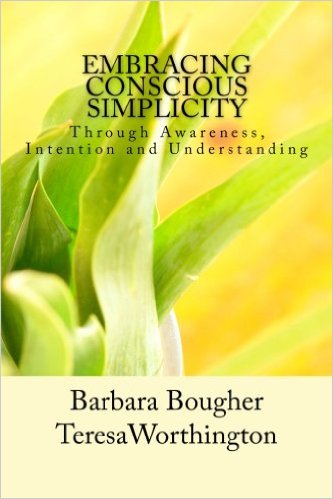
In the newly released book, Embrace Conscious Simplicity written by my friend, Barbara Bougher, an organizer and coach and her colleague, Teresa Worthington, a social worker and life coach, they write about recognizing the outer and inner clutter “that distracts us from living our best life, and…about empowering our self to make conscious choices about what we want to keep and what we want to let go.”

Being in the organizing industry for over 23 years and from personal experiments, I’ve seen and experienced the transformations that happen when we give ourselves permission to let go of the clutter that’s weighing us down. I’m sure you have your own stories to share too, which I’d love to hear.

There are many hope-filled and inspiring stories shared in Barbara and Teresa’s book. They also included an extensive list of types of physical and non-physical clutter, which are useful in developing awareness about clutter that might be holding you back. As the authors express,

“Becoming aware of both the physical and non-physical clutter that we allow to take up our valuable time, energy, and space is how we begin to empower our self to transform our life.”


 Take a look at the lists. Which ones resonate with you?

 Physical Clutter Include Things…

  • that we don’t love or use
  • that are broken
  • that are unfinished
  • that are left out
  • that we keep “just in case”
  • that need a decision
  • that are too abundant for a too small space
  • that are other people’s stuff
  • that are inherited

Non-Physical Clutter Includes…

  • Emotional and mental clutter
  • Communication clutter
  • Word clutter
  • Information clutter
  • Gossip clutter
  • Drama clutter
  • E-clutter
  • Noise clutter
  • Time clutter
  • Body clutter
  • Financial clutter
  • Spiritual clutter

I’d love to hear your thoughts. In what ways is clutter holding you back? What have you experienced when you’ve let go? Come join the conversation!


How to Benefit from Letting Go Practice Runs

When we let go, what happens? We remove resistance. We free ourselves from angst and stress. We allow our minds and days to flow more smoothly. We give ourselves a break from holding on so tightly. We exhale.

I don’t know about you, but lately for me, I’ve had a multitude of opportunities to practice my letting go skills, or as I like to say, “letting go muscles.”

My letting go practice has tested me with tech, cooking, entertaining, family, business, attitude, and stuff. Each situation presented differently and with varying challenges. Yet they all had one thing in common. They provided me with a choice. I could either dig in and resist, or let go enough to move forward.

What’s interesting is that when we can’t let go, we definitely stay stuck. That “stuck” can manifest itself in physical and emotional ways.

In some cases, letting go meant shifting my attitude. By doing so, I could see that a belief I thought was true wasn’t. Letting go allowed me to open my mind to a different way of thinking and appreciating.

In other instances, I had to ask questions about why I was keeping something that was just taking up real estate and wasn’t being used. Just like many of my organizing clients, I struggled with letting go of some belongings such as books, clothes, and DVDs. I coached myself through the process, and ultimately was able to let go of some “stuff.” And you know what? I don’t miss any of the things that exited. In fact, I feel a little bit lighter.

In the process of my practice runs, I came across a short YouTube video by Knowable about letting go. The timely message resonated with me and I hope it does for you too. Here’s the link:  A psychologist walked around a room . . .

Have you had practice runs with letting go? What has your experience been? I’d love to hear your thoughts. Come join the conversation!

 
LSamuels Signature.jpg