

Ask the Expert: Whitney Johnson

The “Ask the Expert” interview series connects you with dynamic thought leaders. This year we’ve spoken with Cameron Gott about enlisting help, Dr. Thomas Armstrong about motivation, Harold Taylor about time management, Erin Rooney Doland about clutter, Francine Jay about letting go, Todd Henry about next steps, Dr. Debbie Grove about change, and Joshua Becker about fresh starts. For September, I’m thrilled to have with us innovation expert, Whitney Johnson to share her insights about success.

One of the perks of being active on social media is there’s the opportunity to meet interesting people that you might not have met otherwise. One of my Twitter buddies introduced me to Whitney through her book, Dare, Dream, Do. I read it, loved it, and couldn’t wait to interview her for this series. Before we begin the interview, here is more about her.
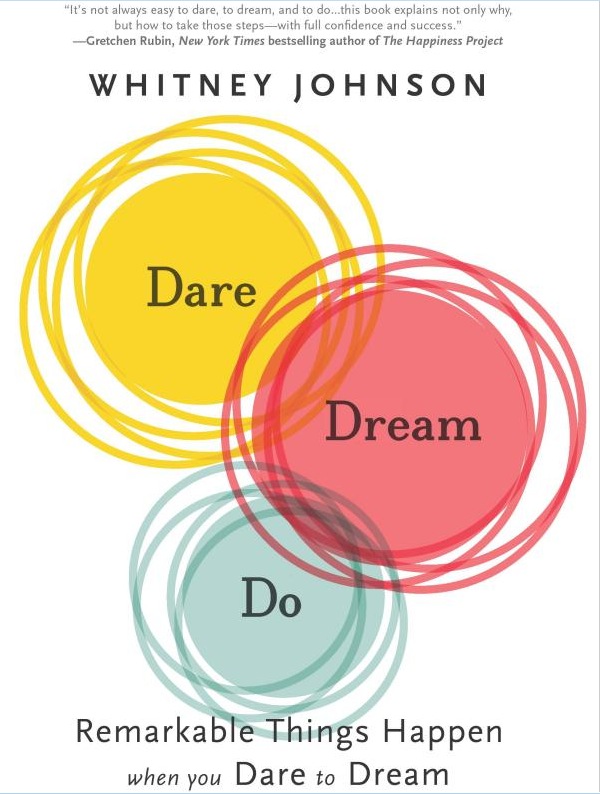
Whitney Johnson is a leading thinker on driving innovation via personal disruption, co-founder of Clay Christensen’s investment firm, and was an award winning Wall Street equity analyst and stock picker. She is a regular contributor for Harvard Business Review and the author of Dare, Dream, Do: Remarkable Things Happen When you Dare to Dream. You can connect with Whitney on Twitter, Facebook, LinkedIn, Pinterest, Google+, blog or website. 


Linda Samuels:  On your website you wrote, “I see the world as a series of opportunities to invest– in stocks, in ideas, and in people. I believe my true mission is to help people ‘disrupt themselves’ and build a remarkable and surprising future.” What are some essential success ingredients?

Whitney Johnson:  Ah, success.  My definition of success has changed over the years.  When I was younger, it was all about the outcomes.  Would I make the tennis team?  Get into the right college?  Get a prestigious job?  Which I think is normal.  From a developmental perspective, we need concrete goals.  But, I’m discovering that a lifetime of success involves showing up.   Not in a “here I am, therefore I deserve” kind of way.  But in deciding that I want or care about something enough to do the work.   And to then NOT sabotage myself.  So that if it doesn’t happen, I have no excuses. Whether it’s the dream of giving a great speech, launching a successful investment fund, or being a good parent.  The surprising truth here is that even when I fail, there is a thrill and deep satisfaction in knowing I have given it my all.


Linda:  What are some obstacles we might experience when pursuing success? 

Whitney:  Entitlement -- The opposite of showing up.  The thing about entitlement is it comes in lots of clever guises.  Many of us reflexively think “Kids. Now they are entitled.”  But all of us struggle with entitlement.  Think about when a colleague gets a well-deserved opportunity. You are genuinely happy for them.  But there is a piece of you that snivels, “Why didn’t I get that opportunity?  Why do I even bother trying?”  I know I’ve felt this way – just last week, if you’re wondering.  Failure to acknowledge and see abundance in another person’s success is a form of entitlement.


Linda:  In your book, Dare, Dream, Do, you emphasize the importance of dreaming. What is the connection between dreaming and success?  

Whitney:  When we dream, we are hungering for a better life.  And when we dream, we become problem solvers, letting nothing stand in our way.  Dreaming is at the heart of disruption.


Linda:  What are traits successful people have in common?

Whitney:  There are (3) traits I think are especially important.  Showing up, as I’ve mentioned.  Also, the ability to persuade, meaning you can help people see your vision for a remarkable future.  And a growth mindset, the belief that our abilities are not innate and fixed, but that with practice and perseverance we can improve.


Linda:  What has been your biggest personal success challenge? 

Whitney:  Being a mother.  Our children are 18 and 14 respectively.  Being a mother requires me to ‘show up’ – no performance or posturing.  It is messy, and scary, and I frequently feel downright inept.  But with each passing year, I am ‘showing up’ more, and my relationship with my children and husband improves – so according to my metrics, I would say I am successful.


Linda:  What is your most surprising discovery about success?

Whitney:  It is elusive (the brass ring doesn’t really exist) and potentially ever present; every day I get to decide if I will be fully in my life, to show up. 


Thank you, Whitney for being here with us. I love the way you talk about success with such clarity and humanity. Your idea of “showing up” resonated with me, especially in the context of when I was preparing a few weeks ago to attend my first conference as ICD President. I realized that while I could stress and prepare about getting everything “right,” what was most important was that I “show up,” be present, and give my full attention to people individually and as a group.

Join Whitney and me as we continue the conversation. What are your success discoveries? What resonates with you?


What Are Today's Interesting Finds? - v3

It’s time for another installment (v3) of the “What’s Interesting?” feature where I share my latest discoveries that inform, educate, and relate to organizing and life balance. Included are fun, inspiring, and interesting success-related finds, which reflect this month’s blog theme. You’re a wonderfully engaged group. I look forward to your participation and additions to the collection I’ve sourced for you. What do you find interesting?


What’s Interesting? . . .

1. Interesting Read – Home Organization

smead+ebook.jpg

Hot off the press is the new e-book, Room by Room Organization For the Home, from my friends at Smead. It’s a collaboration of organizing tips from Professional Organizers from around the country (including yours truly.) It’s a wonderful collection of quick tips to help you experience organizing success. Click here to download your free copy.

2. Interesting Product – Gadget Organizer

Cocoon’s organizing products are an inventive line of bags and cases that are designed to store, carry, and protect your gadgets and accessories. One of my favorites is the laptop backpack with built in GRID-IT® organizer. Replace cord and gadget clutter with organized tech success!

3. Interesting Assessment – Strengths

Working from your strengths is a success strategy. What if you aren’t sure what your strengths are? One strengths assessment is Clifton StrengthsFinder® 2.0. Donald O. Clifton, Ph.D., who is the father of strengths-based psychology, created it. To learn about your top five strengths, invest in an assessment and your success. Are you curious about my top five strengths? Just ask me below in the comments section and I’ll gladly share them with you.


4. Interesting Fact – Social Media

fast+company.png

In a recent Fast Company article, “Man and His Machines,”Om Malik wrote, “The world of information has surpassed human cognitive powers. More than 100,000 tweets and nearly 250,000 Instagram photos are shared per second.” No wonder we’re challenged with processing information and using social media. How can you focus the most useful and relevant information when there’s such great volume being generated each second? What tools do you use that help you successfully navigate social media?

5. Interesting Thought - Success

Success is a way of being and not a singular event. Experiencing failure, experimentation, and frustration are integral to your success journey.

I’d love to hear your thoughts. What are your interesting finds? Do any of these resonate with you?  Come join the conversation!

LSamuels Signature.jpg
 
What Does Success Mean to You?

Success is the topic we’re exploring this month on the blog. Apparently, we’re in good company. In this month’s Real Simple magazine they shared the results of “The Success Poll.

Real Simple and Timeasked 1,000 women and 300 men to weigh in on success issues including questions about work, life, ambition, finances, and time.

Nearly two-thirds of women said that success was “a never-ending pursuit rather than a defined goal.”

One particular question caught my attention, which I’d like to share with you. Women were asked to define success. Their top three responses were:

1. “Accomplishing your goals and dreams.”

2. “Being at peace.”

3. “Having financial stability.”

About a year ago, my good friend and colleague, Geralin Thomas interviewed me for her Managing Modern Life® Organizing Blog as part of the “Professional Organizing Business Models” series. She asked, “Do you consider yourself successful and why or why not?” Click here to read my response.

What does success mean to you? What are your top three responses or definition of success? I’d love to hear your thoughts. Come join the conversation.

LSamuels Signature.jpg
 
Linda's Top 3 Success Strategies

Whether you’re trying to get organized, embarking on a new journey, making a major life transition, or simply trying to have a productive day, there are some success strategies that can help. Activating any one of these can make the difference between soaring and feeling stuck. Which success tips work for you?


A good dose of play renews your focus.

1. Playing – When you’re in the process of starting something new, you’re bound to feel a combination of excitement and stress. Clearing your mind can help focus your energy in a positive direction, so that you can tackle the challenges before you. Sometimes this involves suspending work to focus on play.

Right now I’m working on many professional and personal projects. Each one needs attention and focus. While I can work for hours on end, successful results are only possible if I pace myself. Instead of working to the point of exhaustion, I take play breaks.

One of my breaks was kayaking on the river with my husband. It was pure joy as I experienced the pull of the paddle sloshing through the water, the beautiful sights and sounds of the wild life, and the fresh air that surrounded me. After a good dose of play, I was able to return to my work with renewed focus.


Investing in a plan is time well spent.

2. Planning – Never underestimate the value of planning. Do you know Nike’s “Just do it.” slogan?  While that might be effective in certain scenarios, for long-term success, planning is an integral part of any good strategy. If you don’t have a handle on the big picture, how will you know what parts need your attention and energy?  Once the planning is done, it makes the doing so much easier.

Recently, I spent a good part of my day, just planning one of my projects. By taking the time to plan, I was able to look at the whole, determine what the various elements were, and figure out what needed to be handled or worked on for each of the areas. And in case you’re wondering . . . Yes. There were lists and charts involved!


Learn to identify where you’re stuck.

3. Identifying – When you take on something new, you might experience stumbling blocks. This is especially true if there are pieces that extend beyond your experience or knowledge base. It’s important to first identify what the sticking points are. Once you’ve done that, access your resources to find your answers. Identifying where you’re stuck and what information you need to get unstuck is essential for successful outcomes.

One of my recent projects is preparing for the ICD Conference in Nashville. It’s just a few weeks away. There are many moving parts including presenting speeches, coordinating meetings, and communicating details with fellow Board colleagues. After I did my planning (see #2 above,) I identified where missing information could be found so that I can successfully complete my projects. I reached out to several people, reviewed some notes, and did some Internet searching. Can you hear my big sigh of relief?


There are many success strategies. What are your tried and true favorites? I’d love to hear from you. Come join the conversation and share with us!