7 Expert Tips That Will Help You Organize Back to School
7 expert tips that will help you organize back to school.

The late part of the summer is an intriguing time of year. Some of us, like me, are savoring the last days of the season. I’m looking forward to one final vacation before the cooler fall days arrive. For some, you have purchased your supplies, launched the kids off to college, and started your school year. In the northeast, we have about three weeks left before the kids go back. There are numerous ways you can help your kids switch from vacation to school mode. This can be done even if you’ve already begun the year. The tips I’m sharing will help make your transition and year go more smoothly and be more organized


The terrific design team at Stroller Envy was kind enough to create this fun infographic featuring my best organizing tips for back to school.

The terrific design team at Stroller Envy was kind enough to create this fun infographic featuring my best organizing tips for back to school.

For a more in-depth look at the tips, check out my post, Organizing Help for Back to School. The seven tips coordinate with the infographic and include:

1. Cycle

2. Capture

3. Land

4. Center

5. Assess

6. Resources

7. Perspective

Have your kids returned or are about to go back to school? What is your go-to back to school organizing tip? I’d love to hear your thoughts. I invite you to join the conversation.

LSamuels Signature.jpg
 
3 Valuable Ways a Professional Organizer Can Help You
3 valuable ways a professional organizer can help you.

Mindfulness meditation is one of my daily practices. Some of the benefits I’ve noticed is that exercise helps me to be more fully present with my attention, gratitude, and experiences. Mindfulness practice emphasizes the present, encourages us to let go of the past, and not stress about the future. These are useful pursuits. However, when it comes to helping my clients with their organizing challenges, there are other considerations. While we are working in the present, we might be grappling with the past or preparing for the future.  It’s helpful to be aware of how a particular focus, as the past, present, or future, will influence the ways your organizer helps you.

The Past

When we hold on to the past, it becomes especially difficult to let go. That can influence the volume of physical belongings that we’re hanging on to, or old ideas that no longer serve us. When we’re living in the past, our minds and spaces have little room for the present. An organizer can help you face the “stuff” of the past to decide what is valuable and relevant today.

A client recently told me how she held onto things from the past because she felt that it was a happier time than the present. While organizing together, she identified that it was no longer true for her. The now was, in fact, really good. With that ah-ha moment, she was able to release many physical belongings she had been reluctant to let go of before. This perspective shift and the action that resulted helped her feel less burdened and more open to new possibilities.

The Present

When we are present-focused, we can more easily determine what is relevant and useful now.  Stuff enters our homes through free promotional items, gifts received, or shopping trips made. We often spend more time collecting than intentionally choosing what we actually want. Yet when we’re clear about what is meaningful and useful, it enhances the editing and organizing process.  It’s not uncommon to become overwhelmed by the number of shirts, toiletries, or desk supplies you own. Your organizer can help you set parameters, make decisions, and create organizing systems that honor your present focus.

The Future

There are times when organizing work has a future focus. While we are working in the present, we could be preparing for the future, such as a move, job change, or the arrival of a new baby. Focusing on the future will influence your decisions. When you are amid life transitions like these, not all of your current belongings will be helpful. They might not be useful, relevant, or functional. They could have served their purpose and are strong candidates for releasing. Using a mindful, future-lens, your organizer can help pose questions to facilitate beneficial decision-making.

Whether your organizing work is past, present, or future-focused, with the help of your organizer, you can approach the process more mindfully. It’s useful to understand how your organizing goals connect with these periods, as they will influence the choices you make. 

Have you enlisted help from a professional organizer? How has the past, present, or future focus influenced your work together? I’d love to hear your thoughts. I invite you to join the conversation.

 
Practical Help That Will Change Your Worst Habits For the Better
Practical help that will change your worst habits for better.

When it comes to habits, we have some keepers, our good practices, and those less desirable or bad ones we’d like to see gone. Maintaining good ones and altering bad ones can be challenging. However, with some help and understanding about the science of habit formation and habit loops, it’s possible to make the changes you want.  When I think about my positive habits, they include meditating daily, walking in nature, and staying organized. Some of my less desirable habits are not getting enough exercise, eating too many sweets, and not planning meals. Can you relate to any of these?

There are two authors I’ve featured on the blog who wrote insightful and inspiring books about habit change. To learn more, click on the links below:


If you need help letting go of your bad habits, begin here. The folks at Quill just released an easy-to-understand infographic How to Reframe Bad Habits to Boost Your Productivity (see below) based on Charles Duhigg’s book The Power of HabitThe graphic concisely explains habit formation, habit change, and the three habit loop components- cue, routine, and reward. It also highlights the most common habits that can negatively affect your productivity and what to do about them. 

How to Reframe Bad Habits to Boost Your Productivity | Quill.com

As Charles Duhigg says,

“Transforming a habit isn’t necessarily easy or quick. It isn’t always simple. But it is possible. And now we understand how.”

Have you had success or challenges with habit change? Have you ever enlisted help to change a habit? I’d love to hear your thoughts. I invite you to join the conversation.
 
How to Experience Motivation Calm That Will Move You Forward
How to experience motivation calm that will move you forward.

The word motivation is synonymous with purpose, drive, momentum, and determination. I also attribute fast-paced energy and movement to motivation. I don’t normally associate the word, calmas a motivation descriptor. Do you? Interestingly though, I had a recent experience that shifted my perspective on motivation. I thought my story might resonate with you and be useful the next time you encounter motivation tumult.

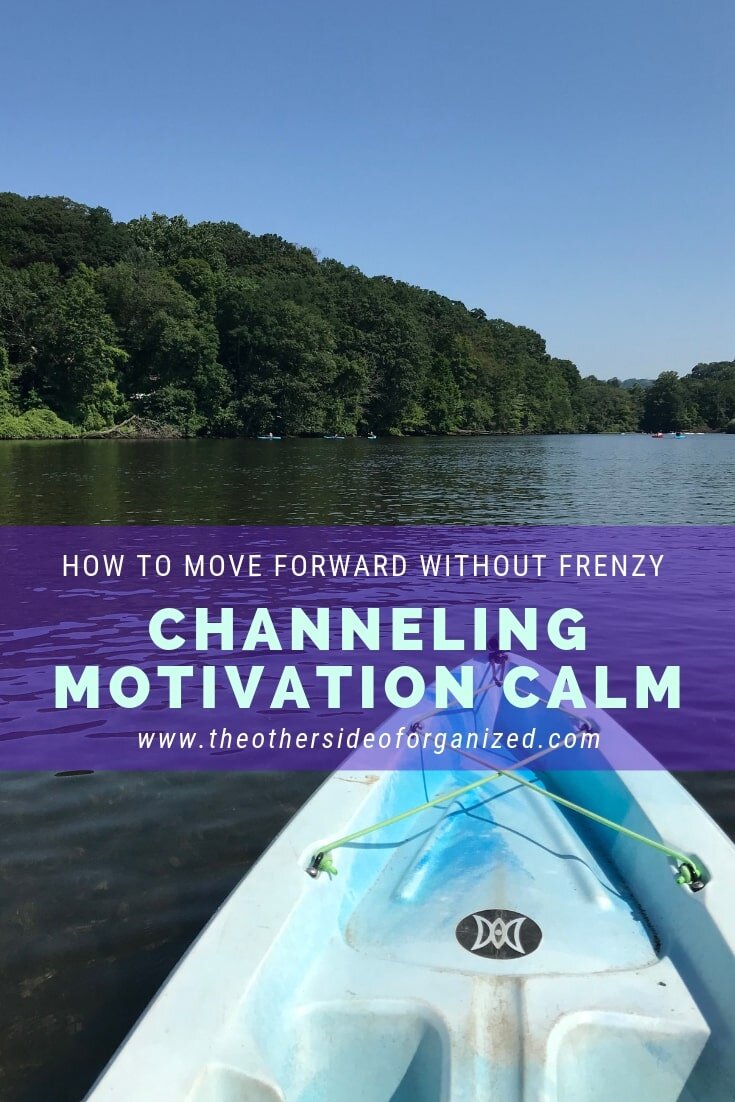
Summer is one of my favorite seasons to be outside and enjoy nature. That includes walking along or kayaking on the river, weeding in the garden, stopping to smell and take photos of the flowers, or jumping the ocean waves. I love the intensity of scents, sounds, sights, and sensations. On one of these perfect weather days, my husband and I went kayaking. I loved the sound of my oar sloshing in the water as it moved through the river and pulled me forward. As much as I enjoyed rowing, I also appreciated just being still and letting the current propel my boat and me along.

We rented the kayaks for two hours, which meant that we had an hour to paddle up the river before heading back to shore. We had a destination, a purpose, and a place to get to. We were motivated to get there. But here’s the thing. We didn’t rush. We meandered. We had no concern about arriving and simply enjoyed the journey. We didn’t go quickly. We paddled some, stopped, floated while snacking on cherries, and paddled some more. We felt motivated, yet so very calm and peaceful.

It was also liberating. The idea of having a destination in mind, a will to get there, yet doing it in a calm, relaxed way, was a wonderful feeling. How often do we get caught up in the frenzy that motivation can bring? We can become so focused on getting there, wherever there is, that we miss the joy of the journey. Or, we overlook the fact that our passage can actually be tranquil. 

At one point we hit some rapid water. It was too challenging to paddle forward. Since the river was shallow at that spot, we jumped out of our kayaks and walked them to calmer waters. On our return, we passed through the fast waters again. But this time since we were going with the current, we remained in our boats and rode them downriver. What an incredible sensation to be carried swiftly downstream by the river and then return once again to a leisurely pace. 

Have you ever experienced motivation calm? What were the circumstances? I’d love to hear your thoughts. I invite you to our conversation!

LSamuels Signature.jpg