
Posts in Possibility Thinking
How "Small" Trends Create Excellent Possibilities For You

New trends and concepts promote possibilities. They occur in response to challenges we’ve had. In our world of 24/7 access to information, connectivity, and consumption, I’ve noticed several ideas that have converged around the trend to “go small.”  Micro-trends, minimalism and mindfulness have gained traction as a reaction to feeling overwhelmed by too many choices and excessive acquisition. By focusing on small we have the opportunity to reduce overwhelm and allow possibilities to thrive.

Overstimulation is everywhere. That adds to overwhelm. Think about the constant barrage of entertainment in public areas. TV monitors are no longer just in bars, but in restaurants too. You can’t even wait in line at the bank without being entertained by multi-screen videos demanding your attention. Cars, buses, and waiting areas in airports are plastered with monitors. It’s a challenge to find public or private spaces that are without the intrusion of constant visuals and sound. And even when we’re not paying attention to the public monitors, most of us are engaged instead with our personal devices like our cell phones or tablets.

The trends that have emerged are in reaction to all of this.


Micro-Trends

The trend of micro, spans multiple disciplines and industries (think micro-entrepreneurs, micro-volunteering, micro-breweries, and micro-lending.). It’s a trend focused on something specific, smaller and more personal. They’ve emerged as a reaction to the many demands on our time and the overwhelming amounts of choices? The micro-trends offer micro-focus.


Minimalism

The rise of Minimalism has become more prominent, as a reaction to excess acquisition. The overfilling of spaces with stuff has created overwhelm and stress for many people. The Minimalist movement emphasizes lightening up, letting go, and filling our lives with people and experiences instead of things. There are many blogs and books on the subject including Joshua Becker, Francine Jay, and The Minimalists (Joshua Fields Millburn and Ryan Nicodemus.)


Mindfulness

This isn’t a new trend, although I’ve noticed that it's gained more popularity and attention in the last few years. It’s a frequent topic seen in blogs, magazines, classes, and social media. There are tons of apps like for practicing mindfulness such as Headspace, Mindfulness Daily, and iMindfulness. The idea of being present, taking that small moment to focus instead of being distracted and multi-focused is very appealing.


How does narrowing the focus help you? Does thinking in micro, small, and minimalist ways help you visualize other possibilities more clearly? Does “going small” reduce your overwhelm? Does it help you focus and eliminate the abundance choices? What have you noticed? I’d love to hear your thoughts. Come join the conversation.



Practical Possibilities for Deciding When to Think Big or Small

As we shift solidly into the fall season, leaving summer memories behind, we open our minds to many choices and possibilities for next. In thinking about the future, we might be focused on something big or small.

How do we decide how to match our energy and situation with our focus? Have you noticed that there are times of inspired dreaming and other times of total overwhelm? Let’s explore how our our situations influence our choices.

Deciding When to Think Big

If you’re in a thinking-big-mode, you have large blocks of uninterrupted time. You have time to breathe and to take care of your basic needs like sleep, exercise, and nutrition. Your brain is in high gear and you aren’t feeling preoccupied by a million and one other things that need your attention. You either have the time or have carved out the time to focus on the bigger picture. Thinking big requires enough quiet to sift through and capture ideas. Thinking big demands enough mental energy and space to allow the seed ideas to surface.

Of course there are times when we’re super busy and stressed, and big ideas will surface. This is a normal occurrence. But to truly act on those ideas, we need that quiet space to sort, process, and marinate them.

When are good times for thinking big? Scheduling personal retreats, vacations, or days off are great ways to carve out some thinking big time. If you want to focus on BIG, make sure you create the environment to allow big to flourish.

Deciding When to Think Small

If you’re in a thinking-small-mode, you’re feeling overwhelmed and stressed. Your time doesn’t feel like your own. Your schedule doesn’t have much empty space. The number of to-dos and responsibilities you’ve committed might be keeping you up at night. You’re managing life, but feeling like you’re on that continually moving hamster wheel with no stopping in sight. Does this sound familiar? If so, thinking small will help.

It doesn’t mean that you won’t future think or allow a big idea to be captured. It does mean that in order to move on at this moment in time, using a different approach will help. Taking small, next steps will encourage forward movement while reducing overwhelm. It will help you move on so that you can eventually focus on thinking big when and if you’re ready. But it’s hard to get to that point when you’re in the high stress, high overwhelm mode.

These are fluid phases. Having an awareness of where you are, locating yourself on the energy and overwhelm scale will help you to better navigate. What have you noticed for yourself or others? I’d love to hear your thoughts. Come join the conversation!


How Authentic Decisions Lead to Growth and Possibilities

We need self-trust in order to make decisions. When we make choices using our best, authentic self we have the opportunity to grow and seek exciting possibilities. Having just returned from the Professional Organizers in Canada (POC) conference in Toronto, I noticed a theme of decisions, growth and possibilities during my journey.


Colleagues

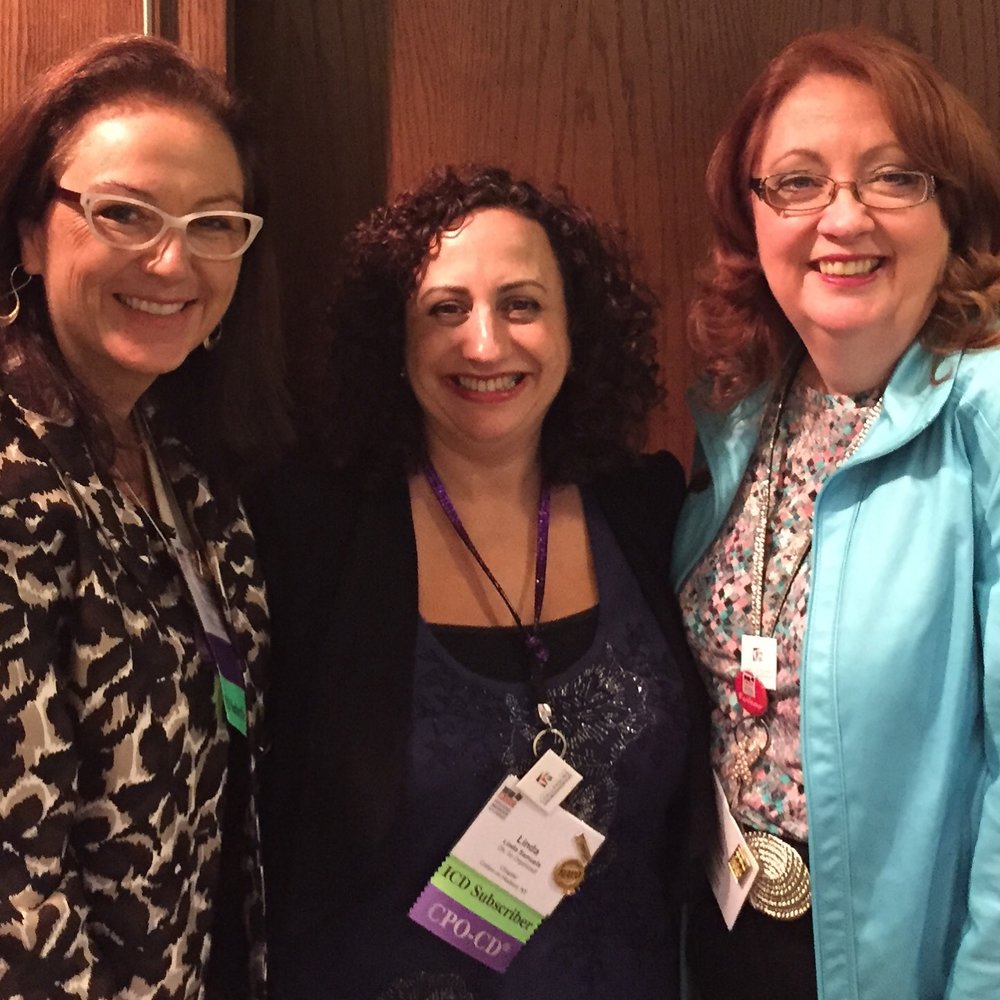
Colette Robicheau, Linda Samuels and Karen SencichOver 22 years ago, I decided to become a professional organizer. Because of that decision, I’ve had the opportunity to develop wonderful relationships with my organizing colleagues. When I was in Toronto, I conversed, laughed, and learned with some of my long-standing and new colleagues from Canada and the United States. While classroom settings are fine, there’s something special about the impromptu learning that happens when engaged in direct conversations. In addition to the colleagues I featured in the following paragraphs, I also treasured the lively conversations I had this week with Colette Robicheau, Karen Sencich, Marie Potter, Leslie Josel, Regina Lark, Georgina Forrest, Jennie Vlietstra, and Christine Janes.


Leaders

Linda Samuels, Stephanie Deakin and Ellen FayeOne of my greatest joys in Toronto was spending time with POC, NAPO, and ICD leadership. Making the decision to accept a leadership role as ICD President has given me a seat at the table with some of the most brilliant, compassionate leaders in our industry. There’s nothing more growth and possibility provoking than talking with inspiring leaders like Stephanie Deakin, POC President and Ellen Faye, NAPO President. It's been so rewarding to connect with them at our industry conferences. Congratulations, Stephanie on your successful conference! What a fun, engaged group.


Social

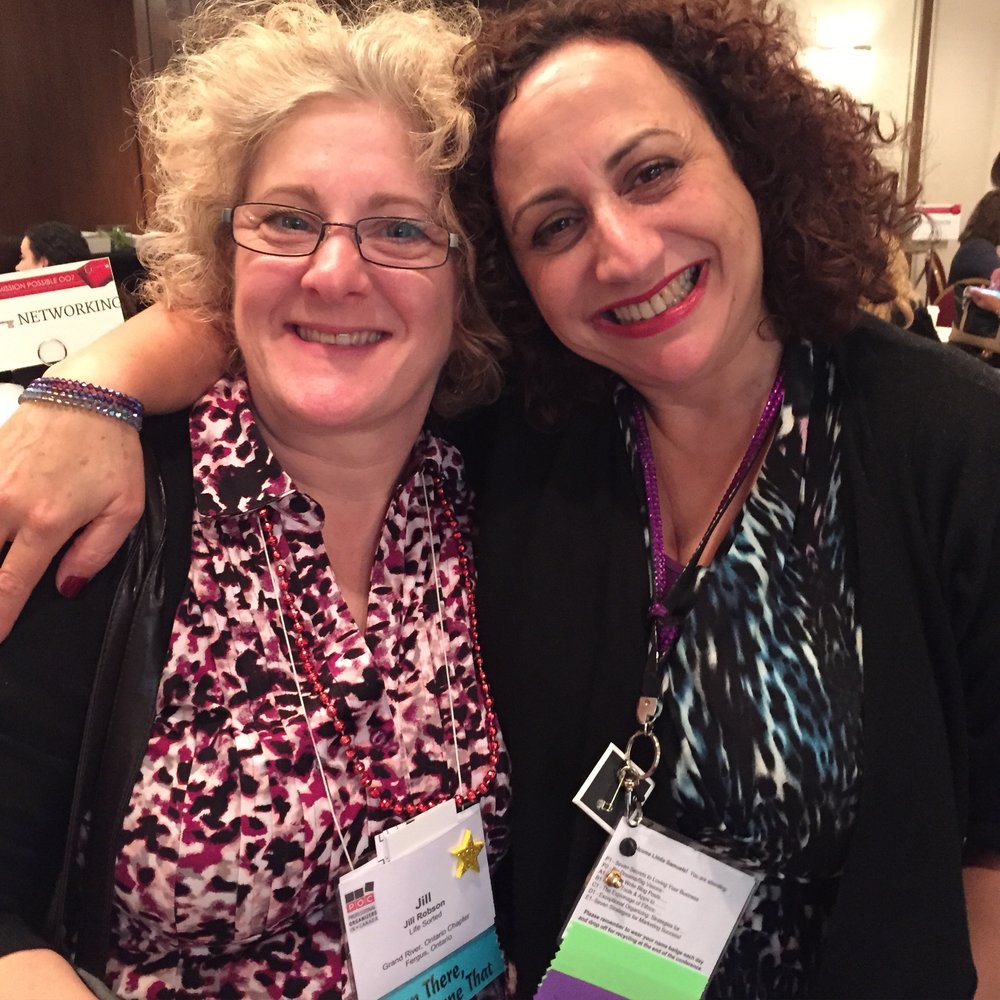
Jill Robson and Linda SamuelsNo matter how we connect with people, there’s always a social aspect. In the case of one particular group, our connections began through social media and blogging. My decision to join this community about five years ago brought me in contact with wonderful people from all over the world. At the POC conference, I had the opportunity to mesh the virtual with actual by having a chance to see some of my Canadian friends in person like Jill Robson (first time ever!), Heather Burke, and Janet Barclay. There’s nothing quite so special as being face to face. What amazing conversations we had (this time in person) about family, organizing, blogging, mindfulness and more.


Possibilities

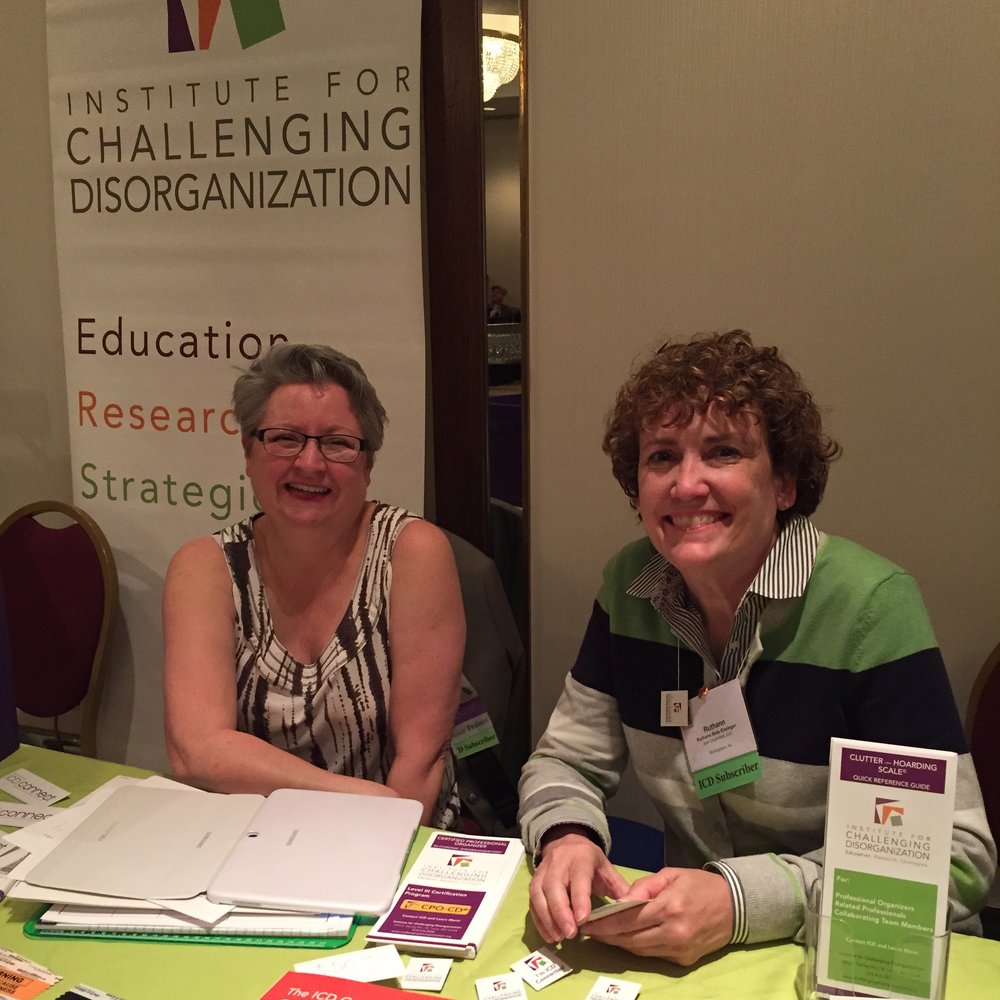
Laurene Livesey-Park and Ruth Betz-EssingerAside from my choices that resulted in growth opportunities and enhanced my possibility thinking, I wasn’t the only one making positive decisions this week. When it was announced at the annual meeting that there weren’t enough POC Board members as per the Bylaws, three POC members stood up to self-nominate. This ignited the energy in the room. The volunteers that stepped up made choices that will bring positive results and possibilities for POC and for them individually.


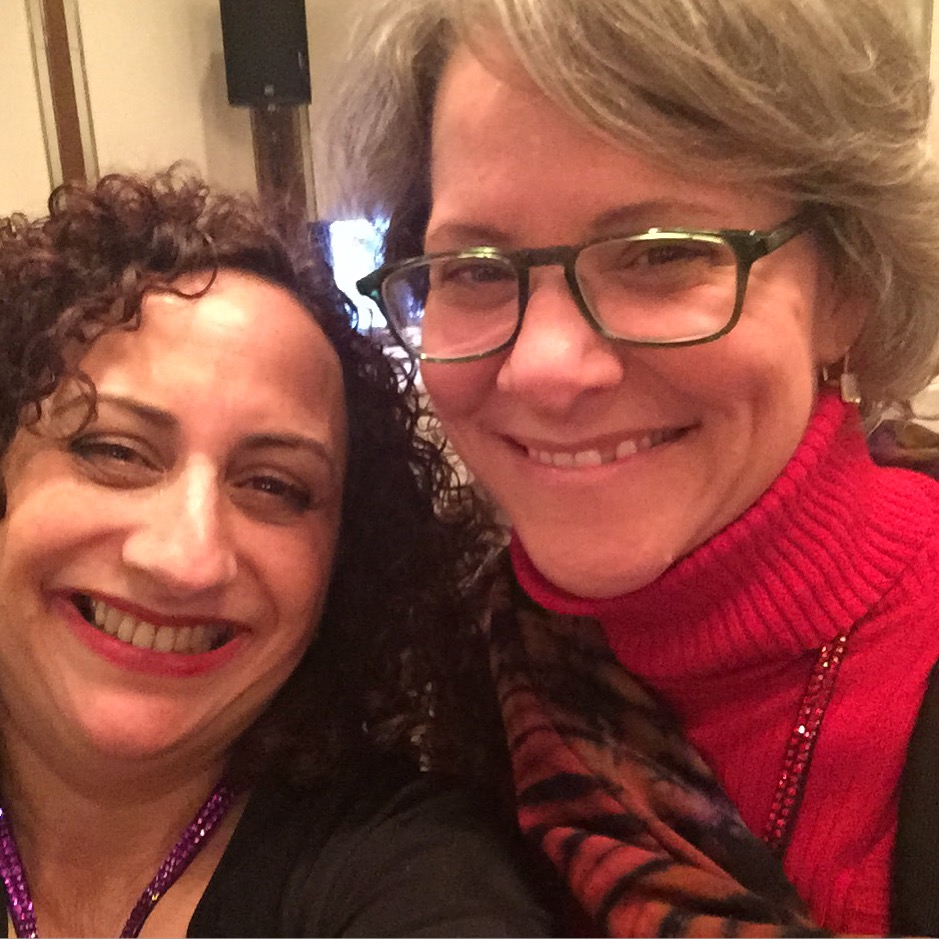
Linda Samuels and Alison LushIn addition, there were many POC attendees that wanted to learn more about ICD’s education about chronic disorganization. At the Expo, the ICD booth had lots of enthusiastic visitors. For ICD’s Basic CD class, the room was packed. As a result, many POC members decided to join ICD, take teleclasses, research info on the ICD website, and purchase publications. They’ve made education a priority so they can better help and understand their chronically disorganized clients. Special thanks to Ruthann Betz-Essinger, Laurene Livesey-Park, and Alison Lush for talking with potential ICDers, organizing the ICD booth, and helping with the class. It was a bonus to have time to hang out with you!


Making authentic decisions based on what we value leads to growth, opportunity, and possibilities. What have you noticed about decision-making and possibilities? I’d love to hear your thoughts. Come join our conversation.


Importance of Unplugging for Possibility Perspective

I’m heading to Toronto this week to attend the Professional Organizers in Canada (POC) conference. I’m looking forward to traveling, learning, seeing colleagues and meeting new ones. Mostly, though, I’m excited about the possibilities and new ideas that traveling inspires.

For this week’s post, I offer you a single idea to enjoy and ponder. A quote I collected a while ago was relevant to this month’s possibility thinking theme. For you . . .

“Almost everything will work again if you unplug it for a few minutes, including you.”
— Anne Lamott

What becomes possible when you unplug? I’d love to hear your thoughts. Come join the conversation.