9 Digital Overwhelm Challenges and Helpful Human Solutions
digital overwhelm challenges.jpg
“In our fast-paced, always on world, it’s not difficult to access information. It comes at you at breakneck speed. Articles, blog posts, status updates, tweets- there’s never a shortage of ideas to consider.”
— Lori Eschene, Tiny Buddha founder

We're humans living in a digital world. Having 24/7 access to our technology can make us feel overwhelmed, stressed, challenged to prioritize what’s most important, and unmotivated to move forward.

By identifying some of the sources and challenges of our digital overwhelm, and by learning how to better manage them, we can increase our sense of well-being, motivation, and focus. Some of the overwhelming sources include our digital devices, such as our smartphones, laptops, and desktops. The addictive nature of those devices lures us with their unlimited access to email, texts, and the Internet, as well as social media communities like Facebook, LinkedIn, Pinterest, Instagram, and TikTok. There’s no shortage of digital accessibility vying for our time and attention.

Common digital overwhelm challenges include:

  • Interruptions - We can be working productively and suddenly get interrupted by our phone vibrating, an email alert dinging, or a new text message buzzing. We find it difficult to ignore these distractions. We check, we respond, we lose our focus, and it takes time to get back to what we were doing.

  • Difficulty Prioritizing & Focusing – In the article “Is Modern Technology Creating a Culture of Distraction?” Mathew Ingram asks, “Are modern devices and digital conveniences making us more distracted and less able to concentrate?” The constant barrage of continual digital input and easy accessibility makes it increasingly difficult for us to prioritize and focus on what’s most important.

  • Endless – Judith Kolberg, organizer, author, and industry futurist, writes about the concept of “endless” in her book, Getting Organized in the Era of Endless. She says that there’s an endless quantity of information, endless availability, and endless accessibility. This is juxtaposed with a finite amount of time. Choice becomes essential. Judith suggests placing parameters around endless so that we can prioritize and make better decisions.

  • Addiction & Reward – Researchers from the University of Chicago study found that "tweeting or checking email may be harder to resist than alcohol,” and that “social media was ‘more addictive’ than cigarettes.” According to a post by Buttoned Up, we are rewarded with feelings of “belonging and significance” when we respond to our digital devices. Responding makes us feel good, which adds to the addictive nature.

Are these challenges familiar? If so, experiment with strategies that will reduce your overwhelm and re-focus your energy.

Solutions for managing digital overwhelm include:

  • Establish Boundaries – Information and demands to engage are coming in faster and in greater volume than ever before. Be clear and selective about what you will and won’t do. Align your "yeses" with your values and priorities. Have your “no” statements prepared. For example, you might say- “No, I’m not going to text while I’m having dinner with my family.” “No, I’m not going to engage in social media until I finish my report.” “No, I’m not going to check my email every 5 minutes.” “No, I’m not going to . . ."

  • “Ding Management” – Reduce the sounds, alerts, and pop-ups that we’re wired to respond to and find extremely hard to resist. When you need to focus, turn off your alerts. I’ve opted to turn them off permanently. There are also apps and programs like Freedom, Focus, and Self Control that will temporarily lock yourself out of "rewarding" programs like email and social media sites. Here's a review of Self Control to give you an idea of how these types of programs work.

  • Digital Blackouts – Getting "unplugged" has become a cottage industry with detox retreats, digital diets, and unplugging-themed conferences. I've noticed that more people are taking personal digital blackouts at certain hours or on certain days. People get a mental break to unplug and focus 100% of their energy on their friends, family, or non-tech activities. If the thought of unplugging makes you anxious, try it for a short duration and build from there. In the New York Times article, “The Risks of Parenting While Plugged In,” one mom blogger who decided to establish a personal daily email and Internet ban between 4-8pm said, “If I’m at all connected, it’s too tempting. I need to make a distinct choice.” Her kids were thrilled.

  • Green Breaks - Ever-present technology is designed to constantly draw our attention, leading to mental exhaustion, overwhelm, and burnout. Scientists, like cognitive psychologist David Strayer, Ph.D., agree that nature restores mental fatigue and increases creativity. Take a walk in the woods, sit under a tree, or dip your feet in the river. Unplug from your devices, go outside, and feel the positive effects on your well-being.

  • Slow Down – Don’t buy into the 24/7 busyness and access. Decide to slow down and enjoy human, face-to-face people interaction, outdoor activities, or leisurely meals with your family or friends. Take time to renew, recharge, and shift your pace. One of my favorite posts, "The Elegance of Slow" by DeeAnne White, is a wonderful reflection about the benefits of indulging in non-tech, leisurely time.

I’d love to hear about your digital overwhelm challenges and solutions. What have you noticed? If you're curious, ask me about my "ding management" experiment. Come join the conversation.


 
What Are Today's Interesting Finds? - v12

The latest installment (v12) of the “What’s Interesting?” feature has my newest discoveries that inform, educate, and relate to organizing and life balance. I’ve included unique and inspiring possibility-thinking-related finds reflecting this month’s blog theme.

You’re a wonderfully engaged group. I look forward to your participation and additions to the collection I’ve sourced for you. What do you find interesting?

What’s Interesting? . . .

1. Interesting Read – Productivity Possibilities

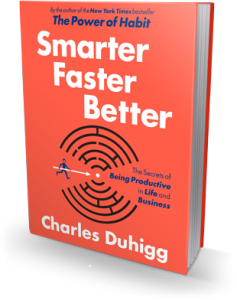
How does productivity work? Why are some people and companies more productive than others? Why do some imagine and actualize possibilities while others struggle? Charles Duhigg, a Pulitzer Prize-winning author, explores these questions in his latest book, Smarter Faster Better – The Secrets of Being Productive in Life and Business.

The book is “about how to recognize the choices that fuel true productivity” and “…how to succeed with less effort.” He explores eight concepts, including motivation, goal setting, and decision making, that emerged from studying experiences of highly productive people and the latest research in neuroscience, psychology, and behavioral economics.

Dughigg says, “…productivity is about making certain choices in certain ways. The way we choose to see ourselves and frame daily decisions; the stories we tell ourselves, and the easy goals we ignore; the sense of community we build among teammates; the creative cultures we establish as leaders: These are the things that separate the merely busy from the genuinely productive.”

2. Interesting Perspective - Organized Possibilities

While many believe there is a “right” way or just “one” way to be organized, let’s dispel that myth. It’s just not true. We are different.  We have diverse needs and preferences.

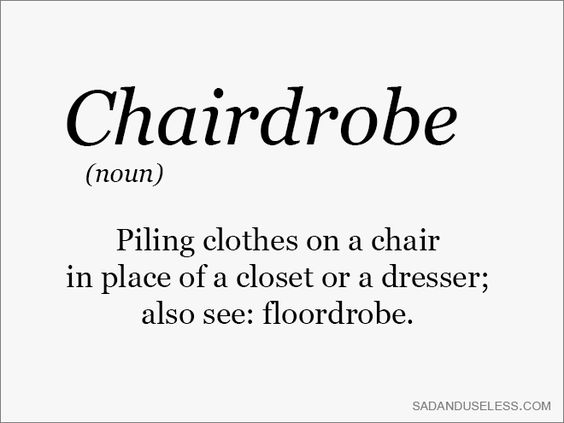
For organizing strategies to be effective and useful, they have to reflect our uniqueness. So, while I might prefer to have my clothes hanging in my closet, facing the same direction on matching hangers, by clothing type and in color order, you might prefer piling your clothes on the big, comfy chair in the corner of your bedroom. And you know what? If “chairdrobe” works for you, go for it! Being organized looks and feels different to each of us. What possibilities can you imagine when you take ‘should’ out of the organizing equation?

3. Interesting Research - Feel Good Possibilities

Have you noticed that in the digital age, we tend to use our fingers or voices to type, text, and communicate? We write by hand, much less. While there’s speed and efficiency when using our digital devices, we might miss out on a few things.

Research suggests that writing by hand helps the brain remember more and can make you feel good, too. Neuroscientist and author Kelly Lambert, Ph.D., says, “The brain’s reward center is connected to one of the movement centers…so one way to activate pleasure is through physical effort.” Next time you need a boost, pick up a pen and activate the possibilities.


4. Interesting Product – Time Possibilities

Time+Timer+Dry+Erase.jpg

A favorite product I’ve featured many times is the Time Timer®, a simple time management tool designed to display time elapsing with the movement of a red disk on the timer’s face.

The company just developed a new accessory, a dry-erase board that integrates beautifully with the timer to highlight time-sensitive messages and appointments. This wonderful combo enhances the possibilities for managing our time more effectively.


5. Interesting Thought - Unleashing Possibilities

What's Stopping You.jpg

Are you having challenges moving forward, pursuing a new idea, or accomplishing a goal? Have you considered the power of your thoughts? What messages are you telling yourself? Are your thoughts enhancing or hindering your possibilities?

As the graphic here asks, “What’s stopping you?” Focus on positive thoughts and unleash amazing possibilities.

I’d love to hear your thoughts. What are your interesting finds? Which possibilities resonate with you?  You matter. I invite you to join the conversation!

 
5 Guaranteed Strategies to Help You Make Decisions

I don't know about you, but while I love having choices and possibilities, too many can leave me feeling overwhelmed, stressed, anxious, or distracted. There's a reason most marketing strategies center on offering only three options, and why consumers opt for three bids on home improvement projects. We want choices. We want enough information, but we don’t want to be overwhelmed by an overabundance of possibilities.

Think about the grocery store's cereal aisle. Consider the options. Not only are there hundreds of cereal types and flavors, but each type is also available in many sizes. Unless you know what you want, just selecting a cereal box can be intimidating.

What about when you're trying to organize, downsize, or let go of the thousands of things you're emotionally attached to? Progress involves the many decisions we will make. It’s not just about what to keep or let go of, but also why and where to keep our things, or how and where to let go of them.

When possibilities abound and include variables we have little to no control over, it becomes especially challenging to make decisions. So what can you do?

5 strategies that are particularly helpful when you’re struggling with decision-making

1. Find a Sounding Board Buddy

It helps to have a good listener to talk through your options. Talking out loud can help you clarify your options. An added benefit is that your buddy might notice something you hadn't considered or ask a question that unblocks your thinking.

2. Exercise Flexibility

I mentioned earlier that we don’t have control over all of the circumstances surrounding the possibilities. The ability to have a plan or two while remaining flexible can help. When you are moving towards uncharted territory, you can't know with certainty the effect your decisions will have on the outcome. Remaining flexible lets you choose more freely.

3. Identify Elements in Your Control

There are variables with all decisions. Some of those factors are within your control, and most are not. Focus on identifying the parts you have complete control over. Work to resolve them. Move forward from there.

4. Sleep On It

There's nothing like a good night's sleep to help the brain relax. Sleep is a natural reboot for the mind and body. Waking up rested and ready will help you approach the new day with clarity of thought.

5.  Decide, Then Let Go.

Choosing a path or making a decision is the work. It's the stressful part. Once you make your choice, breathe deeply, then let go of the outcome. Experience and live with the outcome for a while. If it isn't working, you can re-evaluate based on the new circumstances and make the next decision.

I'd love to hear your thoughts. What helps you navigate the multitude of possibilities? Come join the conversation.

 
 
How "Small" Trends Create Excellent Possibilities For You

New trends and concepts promote possibilities. They occur in response to challenges we’ve had. In our world of 24/7 access to information, connectivity, and consumption, I’ve noticed several ideas that have converged around the trend to “go small.”  Micro-trends, minimalism and mindfulness have gained traction as a reaction to feeling overwhelmed by too many choices and excessive acquisition. By focusing on small we have the opportunity to reduce overwhelm and allow possibilities to thrive.

Overstimulation is everywhere. That adds to overwhelm. Think about the constant barrage of entertainment in public areas. TV monitors are no longer just in bars, but in restaurants too. You can’t even wait in line at the bank without being entertained by multi-screen videos demanding your attention. Cars, buses, and waiting areas in airports are plastered with monitors. It’s a challenge to find public or private spaces that are without the intrusion of constant visuals and sound. And even when we’re not paying attention to the public monitors, most of us are engaged instead with our personal devices like our cell phones or tablets.

The trends that have emerged are in reaction to all of this.


Micro-Trends

The trend of micro, spans multiple disciplines and industries (think micro-entrepreneurs, micro-volunteering, micro-breweries, and micro-lending.). It’s a trend focused on something specific, smaller and more personal. They’ve emerged as a reaction to the many demands on our time and the overwhelming amounts of choices? The micro-trends offer micro-focus.


Minimalism

The rise of Minimalism has become more prominent, as a reaction to excess acquisition. The overfilling of spaces with stuff has created overwhelm and stress for many people. The Minimalist movement emphasizes lightening up, letting go, and filling our lives with people and experiences instead of things. There are many blogs and books on the subject including Joshua Becker, Francine Jay, and The Minimalists (Joshua Fields Millburn and Ryan Nicodemus.)


Mindfulness

This isn’t a new trend, although I’ve noticed that it's gained more popularity and attention in the last few years. It’s a frequent topic seen in blogs, magazines, classes, and social media. There are tons of apps like for practicing mindfulness such as Headspace, Mindfulness Daily, and iMindfulness. The idea of being present, taking that small moment to focus instead of being distracted and multi-focused is very appealing.


How does narrowing the focus help you? Does thinking in micro, small, and minimalist ways help you visualize other possibilities more clearly? Does “going small” reduce your overwhelm? Does it help you focus and eliminate the abundance choices? What have you noticed? I’d love to hear your thoughts. Come join the conversation.