
Posts in Too Much Clutter
Is Clutter Global?

Have you ever felt alone with the clutter challenges in your life? You aren’t. Managing clutter, which takes many forms including thoughts, time, and space, is a human condition. I was curious about what clutter looked like not just in the United States, but also in other parts of the world. I invited my wonderful organizing colleagues (Hilde Verdijk, Laurene Livesey Park, Carol Martyn, Nacho Eguiarte, Tracey Foulkes, Sue West, and Juliet Landau-Pope) to share their perspectives with us about clutter in their cultures. It’s an honor to be here with this amazing group. My gratitude goes to each of them for being here with us. Join us around the table, as we sit together, sip iced tea and share our ideas.

I asked my colleagues . . .

  • How do you define clutter?
  • What are the most common causes of clutter in your country?
  • What is one of your favorite clutter management strategies?


How do you define clutter?

Hilde Verdijk, CPO-CD®, MRPO® Professional Organizer & Speaker – The Netherlands:

To me clutter is the stuff in one’s house or head that is not being used regularly or properly, has no beauty, is not loved and is there for an excuse, like: "I might need it sometime" or “it was expensive (or cheap!)”


Laurene Livesey Park, CPO-CD® Professional Organizer, Author, & Speaker – Canada:

I define clutter as an overabundance of stuff.  I like the idea of “over” abundance because it is flexible – one person’s comfortable, Zen-like minimalism is another person’s might find three extra items on the kitchen counter too much clutter, while another person who is comfortable with lots of things in their space may have a very different idea.


Carol Martyn Professional Organiser & President AAPO – Australia:

Clutter can be defined as anything that’s regularly not used, loved or makes our heart sing. We’ve only to cast our minds back to gifts received last Christmas to get an indication of whether items have the potential to fall into the clutter category today. If you’ve children, you’ll know what I mean. 


Nacho Eguiarte Professional Organizer, Architect & Blogger – Mexico: 

Like having rocks on a river stream, water will flow but you can't sail your boat way down safely or easily. Address the clutter and the journey will be pleasant.


Tracey Foulkes Speaker, Trainer, Productivity & Organisation Expert – South Africa & Ireland:

Broadly speaking clutter is anything you don’t need, use or love. It is anything that gets in the way of your success. It’s the excuses that hold you back from taking action, the brain spaghetti that leaves you feeling overwhelmed, decisions left unmade, tasks left unfinished, crowded environments all causing no to slow progress.


Sue West, COC®, CPO-CD® Certified Organizing Coach, Certified Professional Organizer in Chronic Disorganization & AD/HD Coach – United States:

Clutter, per my clients: Energy drain. “Stuckness.” Judgmental. Needy. Depressing. Makes me feel out of control and scattered. Keeps me from what I really want to do. Guilt. Shame. “You should!”  Reminder of what I didn’t do.


Juliet Landau-Pope, MA, CPCC Coach & Professional Organiser – United Kingdom:

I define clutter as whatever’s getting in your way. It can be a surplus of household belongings that prevent you leading the life you want; clutter can also can be the accumulation of negative ideas in your mind that drain your energy and sap your creativity.


What are the most common causes of clutter in your country?

Hilde: I think people in this country have such busy schedules nowadays, they don’t know how to slow down or deal with their stuff. Instead they go shopping, making things worse. They spend their money on things, but forget to let go as well and then things start to pile up. 

Laurene: As in most developed countries, we have easy access to many, many fairly inexpensive goods. It is easy to replace something that is worn, old, out of fashion, and people do that, without getting rid of the item that they have replaced. Not enough people pass things on!

Carol: While there’s no one common cause of clutter in Australia, clients I work with sometimes haven’t thought how the new items will fit in their homes – or how they can limit the amount of space available. 

Nacho: In Mexico, because we've had so many economic crises, people developed scarcity fears. Reusing, mending, fixing and saving everything that could be useful in the future, soothe the fear but create clutter.

Tracey: People are too busy, rushing from meeting to inbox to meeting. Departments are smaller, deadlines tighter, immediate gratification rife. Despite knowing there is an escalating problem, employees are holding back from ‘rocking the boat’. It’s not working, but they aren't prepared to take the time to step back, propose a solution and make a change.

Sue: Common causes: Commitments I should not have made but did anyway. Too many thoughts swimming around in my head and no place to land. Too many things in my home, office or even in my computer devices with no place to call “home.” Memories I can’t deal with yet. Choices I never made.

Juliet: In the UK, people hold on to things for myriad reasons but material clutter is often a response to living in a fast-paced, ever-changing consumer society. There’s an emphasis on shopping for what you want rather than what you need, and more emphasis on acquiring stuff than on letting go of it.  We also accumulate things from other people such as gifts, souvenirs, and inherited items.  Ultimately, I think clutter is a habit that accumulates over time; many of my clients regret that they never learned how to manage their time or space effectively.


What is one of your favorite clutter management strategies?

Hilde: I often ask my clients: “If you accidentally lost this item, would you really invest time, money and space to replace it?” It makes them realize that they keep lots of stuff for the wrong reasons.

Laurene: I love the rule, “One thing in, one thing out.”

Carol: Most clients decide on what to keep first and then try to make everything fit.  One of the most effective strategies is to flip this around; the storage space available helps guide the decision making process.

Nacho: For letting go stuff, you should hold a thing, shutting your eyes and paying attention to mind and body; having feelings like sorrow, sadness, anxiety are signs to get rid of it. On the contrary having happy thoughts, feeling joy or energetic are indicatives of keeping the object and finding it a place in your home.

Tracey: Ditch email and shift team and client communication to collaboration platforms instead.

Sue: Favorite strategy: “What do you know about what you DO want?” What will your calendar look like? What is your next chapter? How will your home or home office feel? Motivation lies here.

Juliet: My top tip for managing clutter is to focus on clarifying positive goals. I never talk about getting rid of things but prefer to focus on creating space, order and clarity – it’s far more motivating!


Clutter challenges are found all over the world. While the definitions of clutter vary, a common theme prevails. Too much “stuff” prevents us from full, focused engagement in our lives. Causes of clutter vary too from over-acquiring to letting go challenges to scarcity fears. We read about clutter management strategies that were both practical and soul searching. What a wealth of ideas and approaches! There is so much hope in these insights. We are not alone. We have the ability to reflect, ask questions, create boundaries, and focus on positive results. What is clutter about for you? How do you manage clutter? Pull up a chair and join our conversation!

5 Events To Motivate Decluttering

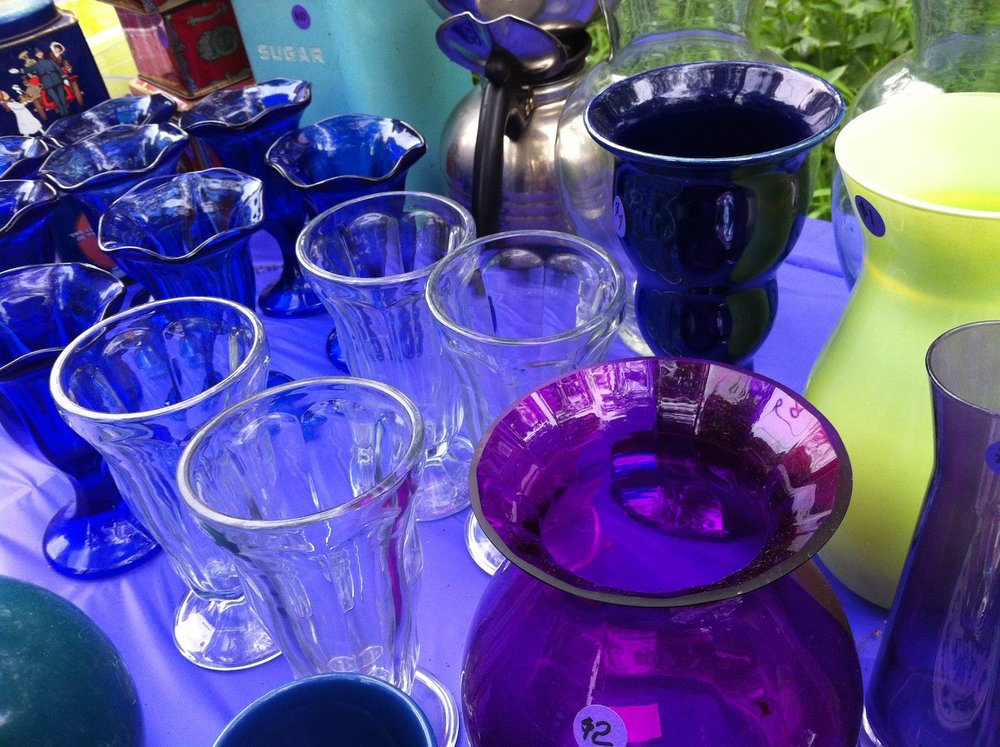
A few weeks ago, I wrote about preparing for our tag sale. Having a specific deadline motivated my family and me to declutter and get rid of a lot of things. The event was a success, and we felt great! While scheduling the tag sale was a terrific motivator, there are other types of events that can make us evaluate our “stuff,” declutter, and let go. What has your experience been like with event-inspired decluttering?

5 Events To Motivate Decluttering

1. Entertaining—Throwing a party of any size (from an intimate dinner to a large BBQ) can motivate us to declutter and organize. Spending time with the people we love rather than accumulating more “stuff” brings positive energy into our lives. Use happiness-producing events to keep clutter in check.

2. Life Event—Marriage, birth, job change, medical emergency, empty nest, divorce, or death are times of transition. These life events make us rethink our possessions and spaces to accommodate major changes. Things that were once relevant aren’t anymore. In our search for clarity and the new normal, letting go and decluttering become crucial.

3. Moving—Whether we are increasing or decreasing our living space in a move, there will be things that won’t be needed. Moving motivates us to evaluate the “stuff” and release the extraneous. The more decluttering you do before a move, the easier it will be to set up your new home. In a recent post, one of our readers (Rosemary) shared that as she was preparing for her move, she posted a sign in her triage area that helped her evaluate what to keep. It read, “All you need is less.”

4. Renovating—A renovation is stressful. However, it’s also a fabulous opportunity to ask lots of questions, release clutter, and create room for the things you treasure most. Rooms are emptied to prepare for construction and then reorganized when the building is done. This is a natural opportunity to be ruthless and only restore what you really want.

5. Tag Sale—Bringing us full circle to the beginning of this post, having a tag sale gives you a specific deadline to work towards, increases your motivation for letting go, is an enjoyable social event, and lets you make a few bucks. It’s also fun to meet the buyers of your “stuff” and know that your possessions will be useful and enjoyed by others.

What events have motivated you to declutter? I’d love to hear your thoughts. Come join the conversation. 


Decisions, Clutter, and Tag Sales
Decisions, Clutter & Tag Sales

Homes are being combed through. Drawers, closets, bookshelves, garages, basements, and attics are being emptied. The “stuff” of life that was once treasured or collected is getting ready to exit. Have you noticed? We’re in the season of decluttering and tag sales. The spring blooms have arrived along with the volume of tag sale announcements.

My family has been preparing for such an event, which will happen this weekend. It’s been a fascinating experience to go through my “stuff” having a specific deadline and goal. What’s most interesting is that I’ve got good, fun, and useful things. Here’s the bottom line: I don’t need or want all of it.

As I evaluated each item with a more critical eye than usual, I was faced with a yes/no decision. Does it stay or go? There were the obvious keepers, the obvious giveaways, and the not-so-obvious items. Making the decision for the first two categories was simple. The third category was trickier, and required more questions like:

  • Is the space it occupies worth the real estate and emotional energy?

  • Is it still relevant in my current life?

  • When was the last time I needed, used, or wanted it?

  • Is not using “x” for the last 5 years, 10 years, 15 years an indicator that it’s time to let go?

Something else which provided me with some comic relief and helped in the letting go and clutter releasing process were various sounds and action calls I said like:

“OUT!”

“It’s time!”

“Going...NOW!”

“Linda, come on. You know you don’t need that anymore.”

We’ve got temporary clutter, as the “going” items are being piled and prepared.  This purposeful clutter doesn’t bother me because I know it will exit soon. When it does, the space will open up, I’ll feel lighter, and a new, clearer chapter will begin. I can visualize how this will look and feel with less.

I’d love to hear your thoughts. What helps you make decisions? What becomes possible when you let go of clutter? Come join the conversation.


9 Clutter Management Tips

9 Clutter Management TipsWhat is your favorite clutter management strategy? I asked several of my wonderful colleagues (Ellen Delap, Janice Simon, Jackie Hollywood Brown, Aby Garvey, Peggy Pardo, Ramona Creel, Janine Sarna-Jones, Sue West, Helena Alkhas ), many of which I recently had the pleasure of hanging out with at the NAPO conference in New Orleans, to share their best ideas with us. Their responses are creative, practical, and doable. My gratitude goes to each of them for taking the time to reflect, and give us their proven clutter management strategies. If you’re feeling overwhelmed by clutter, I encourage you to keep reading and try one of their fabulous ideas.


What is your favorite clutter management strategy? . . .

1. Shift Perspective

“My favorite clutter management strategy is to view decluttering work as a treasure hunt. Rather than sifting through, I help my clients prioritize and find what is most valuable first in their clutter. This focus helps them move forward and look toward what will be most useful, functional and beautiful to them as they create their vision of organization. ”

Ellen Delap, CPO® – Certified Professional Organizer & Family Manager Coach


2. Decide Now

“Make a decision. Whether it's paper, emails or anything else, it's important to make a decision about what you want to keep in your office and life and what you need to let go. When you put off making a decision, things pile up, and it takes more of your time to clear the decks to move forward.”

Janice Marie Simon, MA, CPO® – Professional Organizer


3. Evaluate Costs

“Although moving from one city to another isn't my favourite clutter management strategy, it is certainly effective. When the price to pack/load/move/unload/unpack an item costs somewhere between $3-$8 per pound, it is a little easier to make decisions about what to keep and what to toss! Anything that costs less to re-purchase than it does to move, doesn't get moved. Often when you get to your new home, you find out you really didn't need all the stuff you left behind after all.”

Jackie Hollywood Brown, M.Sc.  – Organizing & Productivity Consultant


4. Organize Thoughts

“We often associate clutter with the visible and tangible, however the most paralyzing form of clutter is the mental one. When we feel stuck and overwhelmed mentally, we allow clutter to accumulate in our spaces. To find relief, I practice both for myself and with my clients, what I call ‘mental dump’ time. I use a notepad to write down everything that's on my mind. After writing everything from the multiple ‘mental to-do lists,’ I categorize them into personal, professional, and family. My clients and I love clearing the ‘floor’ with this process. We feel great and are able to re-focus on getting organized.”

Helena Alkhas – Professional Organizer & Virtual Assistant


5. Be Proactive

“To help manage clutter, I like to attack it before it gets out of hand. For example, stacks of incoming mail could easily take over our house. When I bring the mail in, I sort through it right away. That which isn't shredded or recycled goes into the appropriate family member’s ‘in-box’. Taking a few minutes each day to handle small tasks like this helps keep the clutter under control.”

Peggy Pardo  – Interior Decorator, Professional Organizer, Author, & Blogger


6. Clarify Purpose

“What do you stand for? What gives you daily purpose? If we can tie motivation, reasons for managing clutter, and practical strategies to who the person IS, there’s greater chance for continued success. It’s the minister who elects to donate his things because this IS ministering; the mother who values making her mark and so passes along traditions, photos and heirlooms to family; and the business leader who listens to TED talks to improve his skills, while he manages paper and emails.“

Sue West, COC®, CPO-CD® – Organizing Coach & ADHD Specialist


7. Delegate Responsibilities

“A strategy that has worked great in my home has been to assign each family member a container called a clutter bin, which is stored in a centrally located area of the home, such as the laundry room, mudroom or family room. When you find small toys or other clutter strewn about, it gets tossed it into the appropriate person’s container. Then, once a week each family member is responsible for emptying their clutter bin by putting items away where they belong.”

Aby Garvey – Professional Organizer, Author, & Online Class Instructor 


8. Activate Plan

“When a client feels like they are drowning in clutter, I encourage them to think of using ‘buckets’ to bale themselves out—essentially, containing items in macro categories to clear some space and avoid getting bogged down in minutiae. When a client is frustrated by clutter, but not overwhelmed, I encourage them to create a set of criteria to manage clutter, e.g. recycle all reading materials ‘x’number of months old.  But my all time favorite clutter management strategy is helping clients identify the dynamics in their relationship with clutter.”

Janine Sarna-Jones, CPO ® – Certified Professional Organizer, Blogger, & Change Agent


9. Increase Attention

“Clutter creeps up on you and takes over your space when you aren't paying attention to your stuff – so the trick to taming clutter is to pay better (and more frequent) attention! Every time you walk through a room and see something out of place, take a second to put it where it belongs. And if that item no longer seems to serve a purpose in your life, drop it in the ‘to donate,’ ‘to sell,’ ‘to give away’ (or otherwise ‘to get rid of’) bin – rather than sticking it back into storage.”

Ramona Creel – Professional Organizer, Simplicity Coach, Author, & Blogger


Do you have a favorite clutter management strategy? I love the variety in these fabulous responses, which include shifting perspectives, not delaying decisions, evaluating costs, and organizing mind clutter. I’d love to hear from you. Come join the conversation and share your thoughts about your favorite clutter strategies, success stories, or challenges. What are your thoughts?
