
Posts in Too Much Clutter
What's Your Relationship to Clutter?

Are you and clutter on a break? Your space is clear and you’re feeling stress-free. Perhaps everyone around you is clutter obsessed, but it’s not on your radar. Piles that have accumulated on floors, surfaces, corners and closets don’t bother you. Or, does the clutter in your physical space, and also in your schedule and thoughts overwhelm you? What is your relationship to clutter? Are you on a clutter hiatus, oblivious to clutter or overwhelmed by it?

Thinking about this relationship will help locate where you are with your clutter and give you ideas for possible next steps. I recognize that it’s not this black and white. Our relationship to clutter can shift regularly. This is just one concept. Find what makes sense to you.


Clutter Break

  • You know you’re on a clutter break if you can easily move around your space, find what you need when you need it, and are not experiencing daily stress that is often associated with too much clutter.

  • Next Step: Your relationship to clutter is positive. You have no clutter worries and can shift your energy to other areas of your life. Choose what interests you like focusing on better self-care, having more time with friends and family, or learning something new. What’s possible for you?


Clutter Oblivion

  • You don’t quite get what all the fuss is about. You have some piles here and there. What’s the big deal? You sometimes hunt for things, but for the most part you can find what you need. You prefer your things out and visible, but it’s the people you live that don’t like it. They give you a hard time because their clutter tolerance and yours are not the same.

  • Next Step: Conflicts arise when needs are contrary. It’s not that your way or their way is right or wrong, it’s just different. Living with people involves compromise if you desire a more harmonious environment. So what might work? One suggestion is to create zones for communal and private areas? Establish boundary rules for these areas. The private areas can be kept any way the “owner” wants. The communal areas can include respect rules agreed on through compromise. What else might work?

Living with people involves compromise if you desire a more harmonious environment.
— Linda Samuels, CPO-CD®, CVPO

Clutter Overwhelm

  • The spaces, the thoughts, and the schedules are overflowing. There is not enough room to do what you need, have mental energy to feel calm, or time to make any changes. Or, at least it feels that way. The days aren’t flowing well. You spend time hunting for glasses, keys, the library book that’s due. You have so much going on in your head that you feel like it’s going to explode. Your calendar is over-scheduled and you feel like there is not time to relax.

  • Next Step: You always have choices. Especially now because you are so overwhelmed, it’s critical that you take a step back. No prizes are given for those that burn themselves out. Find a quiet space, make a cup of tea, and start to brainstorm about what can be released. For the physical clutter, can a closet, a drawer or a surface be de-cluttered? One small action can make an enormous difference. For the mind clutter, can you take 10-15 minutes to do a brain download? Get those floating thoughts out onto paper, computer or voice message. With the full calendar, think through your commitments. Can you convert any of the “yeses” into “not nows?” Self-care might seem like an impossibility right now. It’s more critical than ever. Break it down. Think small. What single tiny step can you take now?

What is your relationship to clutter right now? What comes next? Come join the conversation and share your thoughts with us.


 
LSamuels Signature.jpg
 
Good Clutter

Clutter is part of our lives. Have you ever thought about nourishing vs. unproductive clutter? One standard definition of clutter is “to fill or cover with scattered or disordered things that impede movement or reduce effectiveness.” Unproductive clutter drains us. What if instead, we reframed the concept of clutter and only pursued clutter that yielded a positive outcome? What if we only sought out good clutter?

Nourishing clutter has a rejuvenating effect. It fills our lives with family, friends, meaningful work, experiences and downtime. Instead of our homes becoming overrun, we trade the excess stuff that drains our energy for experiences and people that replenish us. By shifting the focus of our collections away from things, we can alter our relationship to our possessions and become more vibrant.

What would be possible if you filled your life with nourishing clutter?

Release Mind Clutter
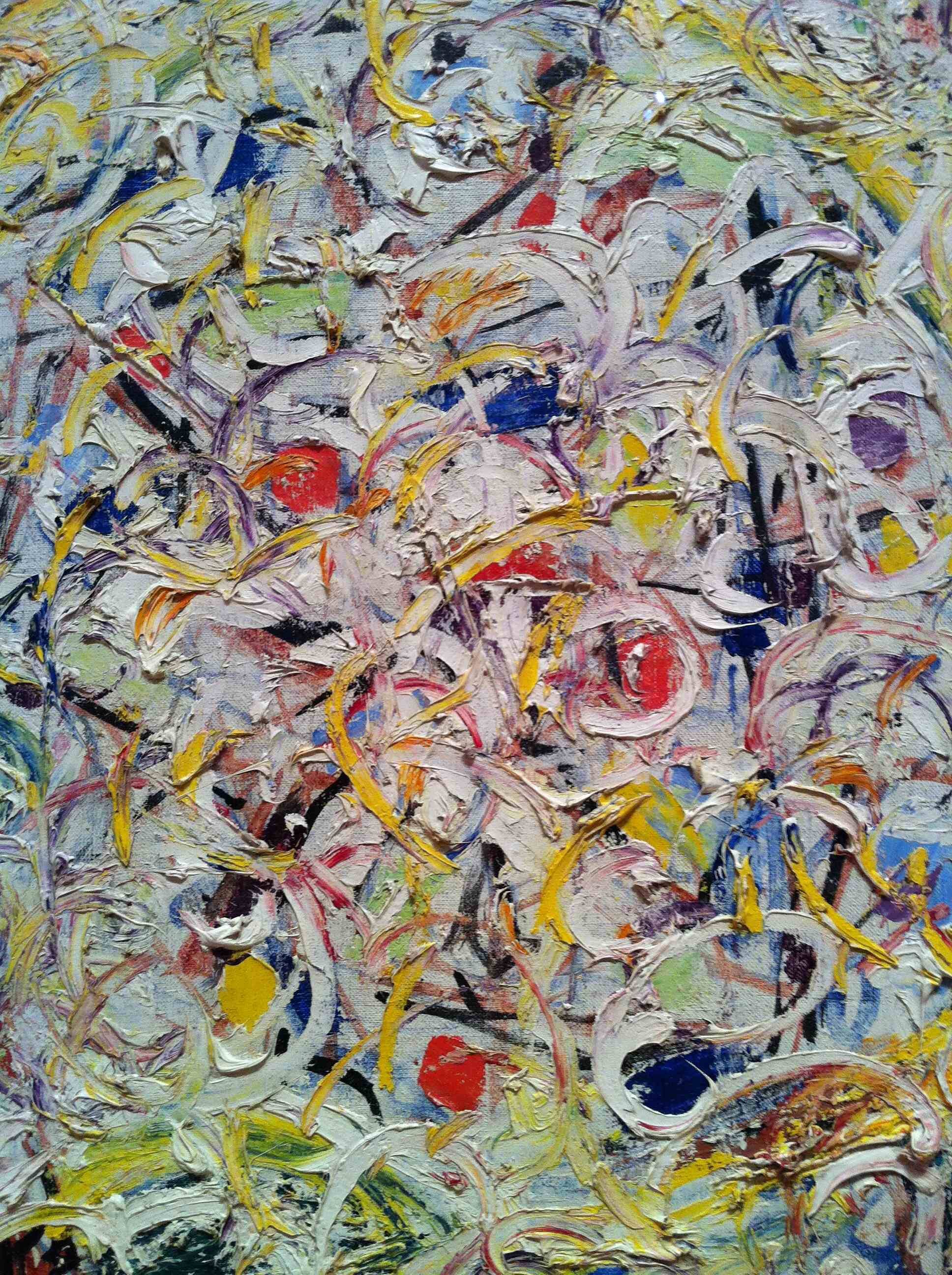
Jackson Pollock, painter

Jackson Pollock, painter

Do you ever have so many thoughts twirling around your brain that it feels as cluttered as a room full of stuff? It seems like our thoughts have nowhere to go and that our heads could burst. We jump from one idea to the next. We lose focus. We feel frazzled. We have no clarity. Details and minutia cloud the big picture. This is mind clutter.

I’ve experienced it and I know many of you have too. Unlike physical clutter, we can’t donate our mind clutter. We can’t toss it in the trash. However, we can do some things. Recently, when my mind felt too full, I tried a few techniques that worked.  Perhaps a combination of these ideas mixed with some of your solutions will help you the next time your mind is feeling cluttered.

8 Ways to Release Mind Clutter

  • Grab a Pen – Whether you prefer traditional writing or typing on a keyboard, recording your thoughts to another medium helps to release and make sense of them. Whether you create a list, use short bullet points, or write long paragraphs, the act of transferring your thoughts will reduce mental clutter.

  • Invite a Distraction – Let your mind wander by shifting the focus away from internal to an external distraction, such as watching a movie or reading a book. Focusing on a different “story” can help alleviate frazzled feelings.

  • Unleash Creativity – Pull out the colored pencils, paints, or instruments. Bake a cake or knit a sweater. Find a creative outlet to help loosen your thoughts and unclutter your brain.

  • Be Kind to Self – It’s stressful when our thoughts are cluttered. Feeling this way is temporary. Be gentle with yourself during these times. Take good care by getting enough sleep, staying hydrated, and maintaining a balanced diet.

  • Initiate a Conversation – Another effective way to clear your mind is to share your thoughts with a friend or family member. Talking and being listened to, even if there is no resolution, can be a great way to gain perspective and organize your thoughts.

  • Change the Scenery – Getting away from your customary environment to a different location can help reduce mind clutter. It could be something simple, like going for a walk, or more elaborate, like exploring a new town or destination.

  • Play Some Tunes – Listening to music can significantly improve your mood and help clear your mind of extraneous thoughts. Singing or dancing along is an added benefit. I’ve recently started hula hooping to loud, upbeat music. Aside from being fun, it’s great exercise and helps me refocus.

  • Eat Some Chocolate – I admit that eating chocolate goes against my healthy eating and exercising suggestions. It’s just that as a chocolate lover, I have to fess up that indulging in a bit of it helps me when my mind gets too cluttered. There are some other benefits to eating chocolate. The operative word here is moderation. I’m not suggesting a chocolate-fest, but a piece or two.

I’d love to hear your thoughts about releasing internal clutter. What works for you when your mind is cluttered?

Ebb & Flow of Clutter
Vibrant+Peonies.jpg

When you walk into a space, what do you see? Are the floors and surfaces filled with things? Is the space completely empty? Is it somewhere in between? How does it make you feel? Upon entering, do you feel anxious or relaxed? Is the space welcoming or does it make you want to turn away and leave?

Spaces affect our moods. It has everything to do with what is and isn’t in them. Lately, I’ve been thinking about filling and emptying rooms and how the mood of the space changes with the movement of objects.

Back in the fall, we moved our youngest daughter into her college dorm. Since she was the first to arrive, the suite was empty. No possessions occupied the space. As she unpacked, the space transformed as her belongings took their places. The space continued to fill as each suitemate arrived. Clear areas quickly became cluttered.

Nine months later, spring came as Cassie’s freshman year ended. We went to pick her up. She was the last roommate to leave and was all packed when we arrived. The space, which had been filled by six people, was once again empty. The stuff and clutter was gone.

So, what does this have to do with you? You are probably not moving in and out of dorm rooms. You do, however, have the opportunity to start with a clean slate and consider your spaces. You can think about how you’d like them to look and feel. Are they more cluttered than you want? If so, this can be your time to clear and release. Are you ready for a change?  If so, this can be your time to transform your spaces into welcoming, beautiful places.

What can you imagine? Where will you begin?