

Posts tagged calendar
How to Easily Decide It's Time to Release Something Irritating

Do you hold too much in your time or space containers? It’s interesting how often you keep things that are annoying, unsatisfying, or in your way. These could be things that take up physical space, creating cluttered rooms and areas. The volume of stuff has become a tripping hazard. Or, having so many things makes it difficult to know what you own or to find what you’re looking for. Your space containers are beyond full, and it may be time to let go of some things.

There are also time containers that can overflow. Instead of physical items, a time challenge can look like-

  • Crammed schedules

  • Saying “yes” to too many requests

  • Underestimating how long a task will take

  • Always running late because you have just one more thing to do

  • Having unhealthy boundaries

  • Spending more time than needed to get something “just right”

  • Being constantly interrupted or distracted

  • Multitasking and trying to do too many things at once

Letting go creates space for what’s most important and valued. That might mean more time to enjoy doing what you truly love, like kayaking, spending time with family and friends, or learning something new.


Asking One Simple Question

A while ago, I read something in James Clear’s 3-2-1 newsletter that resonated with me. He asked a direct question that gets to the heart of what I just shared with you – how to manage your space or time containers when they’re overflowing.

Clear’s question is,

What can you eliminate this week?
— James Clear

Setting a deadline (this week) creates urgency and encourages you to act sooner rather than later. Pick an area of focus, such as your full calendar or the distractions you're facing.

Then ask, “What can you eliminate this week?” This might include-

  • Removing or rescheduling an appointment to make your day flow better

  • Pausing to evaluate before saying “yes” to anything else

  • Delegating some tasks or errands

  • Setting a time limit on social media scrolling

Is there anything specific that came up when you thought about removing something this week?


Decide to Let Go

Your space and time can quickly overflow. The good news is that you can change the dynamic through the process of elimination. One question, one focus area, one decision, and one action at a time.

What is making your space or time feel too full? What would it be like to practice letting go? Which area would you like to focus on first? I’d love to hear your thoughts. I invite you to join the conversation.


How Can I Help?

Do you feel overwhelmed and disorganized? Are your space and time containers overflowing? I’m here to help! You don’t have to do this alone. Virtual organizing is an extraordinary path forward – Local feel with a global reach.

Let’s connect! I’m easy to reach.

Managing your time, getting organized, and living with more ease are possible, especially with support.


 
 
Vibrant New Year Brings Fresh Starts, Young Blooms, and Welcome Perspectives

The start of a new year can feel hopeful. It’s a chance to try new things, set your goals, adopt healthier habits, and lean into the fresh-start energy the new year brings.

Unlike the end of the year, when you might have been working furiously to complete those last few projects or tasks, January feels different. It’s like a blank journal. There are no entries yet, only possibilities. The story has time to unfold and be written.

Here are some questions to consider as you write your story:

  • What will your pages include?

  • Do you foresee challenges?

  • Are you picturing successes?

  • What are you looking forward to?

  • What do you want to invite in?  

  • What do you want to let go of?

  • What projects, plans, travel, or gatherings will be included?

  • Will your year bring growth, stability, change, or something else?


Fresh Starts

I’m still working through my year-long planning process, which has evolved over time. Some years it has been more involved than others. Last year, my plan was almost non-existent. I was under a tight deadline from the end of December into January. The project completion overlapped with the time I typically use to review and plan. By the time I came up for air, I opted to forgo the ‘planning gymnastics’ I usually do and simply let go. Instead of intensive reviewing and future-thinking, I let the days flow.

This year, however, I returned to reviewing and planning because I missed doing it. I’m taking note of the more casual process from last year and layering it over this one. I don’t want to make the planning process burdensome or too elaborate, as it has felt in the past.

I’m gifting myself time to review and prepare at a non-pressured pace. The process involves several tasks, which include:

  • Review Last Year’s Calendar – This section is complete. I noted workshops given, major projects, day trips and vacations, gatherings hosted, conferences and meetings, learning experiences, volunteer activities, and time with family, friends, and clients.

    What I observed: There was a good balance between work, play, and volunteering, alone and people time, and home and away time.


  • Revisit Previous Planning Tools – Already completed. I reviewed my goals and planning materials from past years. It was fun to see what information I captured, whether it was helpful, what goals I set, and which goals were relevant to bring forward. One thing I definitely want for this year is to simplify my process.

    What I observed: There is value in reviewing and capturing those observations in a visual format. It’s also useful to change things up so the process doesn’t feel stale.


  • Look at iPhone Photos – With a few projects I worked on at the end of last year, I already did a quick pass through the photo library. However, I want to take a longer look so I can “feel” and understand the year visually.

    What I observed: I love taking photos, as evidenced by the volume of images and videos I have taken. These images capture the sights and sounds of nature, people, places, and events. They also feature saturated color, light, shadow, and many close-up details.


  • Read Journal – Reread last year’s entries to identify patterns, significant events, lessons learned, challenges, successes, and the general mood or feeling for the year.


  • Three Things Reflection – Fill out the questions adapted from The Compass Journal. This is one of the tools I’ve used for years and didn’t do last year. I missed it, so I’m working through it again this year. I’m partly done, but I want to read my journal first to help me complete this exercise.

  • Select Word or Motto of the Year – This is another exercise I let go of last year. I opted not to choose a word and settled on a motto only. I liked the 2024 motto, “You got this,” so much that I repeated it for 2025. However, for 2026, I want something new. I compiled a list of potential words and motto options. Nothing is quite right yet, so I’ll let those simmer a while longer before I commit. I’m still uncertain whether I’ll choose a word and a motto, or just one.

Lean into the fresh-start energy the new year brings.
— Linda Samuels, CPO-CD®, CVOP™

Young Blooms

Recently, I received a lovely gift—a jar with a hyacinth bulb in water. My friend told me it would thrive indoors as long as I gave it sun and kept it watered. Weeks passed, and finally the milky-white blooms began to open.

It felt quite magical. One day, they were invisible, and the next, they were in full view. Since then, I’ve been enjoying their perfumey fragrance and the unfolding of more blooms.

What a beautiful analogy for this new year. Tend to your garden. Water it. Give it the nourishment it needs. Your blooms will arrive, bringing wonder, joy, and growth.


Welcome Perspectives

One value of embracing a clean slate is the openness it brings. Instead of superimposing your familiar thought patterns, habits, or conventions on the clutter, you have an opportunity to see things in a new way. The vastness gives us space for a different perspective.

Especially if you’ve been feeling stuck or overwhelmed, having space to see things in a new way is helpful. You can sort things out on your own or ask a trusted source for help.

Several weeks ago, Todd Henry posed this question, which I thought could be helpful for you. He asked,

“What problem are you wrestling with solo that would benefit from outside input or perspective this week?”

Design the year you envision. And if you’re stuck, reach out for help. You don’t have to go this alone.


What Will Your New Year Be Like?

There are many ways to make the most of the new year. I shared a few ways to craft your year. Do any of these resonate with you? What is your process for designing your year? Are you doing anything differently this year?

I’d love to hear your thoughts. I invite you to join the conversation.


How Can I Help?

Do you feel overwhelmed, disorganized, or stressed? Would you like to make changes this year? I’m here to help! Virtual organizing is an extraordinary path forward – Local feel with a global reach.

Let’s connect! I’m easy to reach.

Getting organized and making changes are possible, especially with support.

 
 
5 Life Lessons I Learned About Patience and Promising Progress

Recently, I reread the first blog post I wrote on waiting. As humans, waiting is something we do, yet we’re not always happy about it. We want things to happen quickly, effortlessly, and painlessly. However, things don’t often go that way. Our patience gets tested as waiting can be a challenging experience.

Maybe you’re working toward a big goal that might take months, years, or even decades. Perhaps your energy is low, and progress looks different from what it did earlier in your life. You might also lack clarity about your goal or what your next step will be.

Developing your internal resources, including patience, resilience, and agency, can be beneficial. You can also enlist help from external resources, such as haulers, handymen, trade specialists, a coach, a therapist, or a professional organizer like myself.

Progress is possible. Reaching your goals is doable. Gathering the resources to get there is essential.

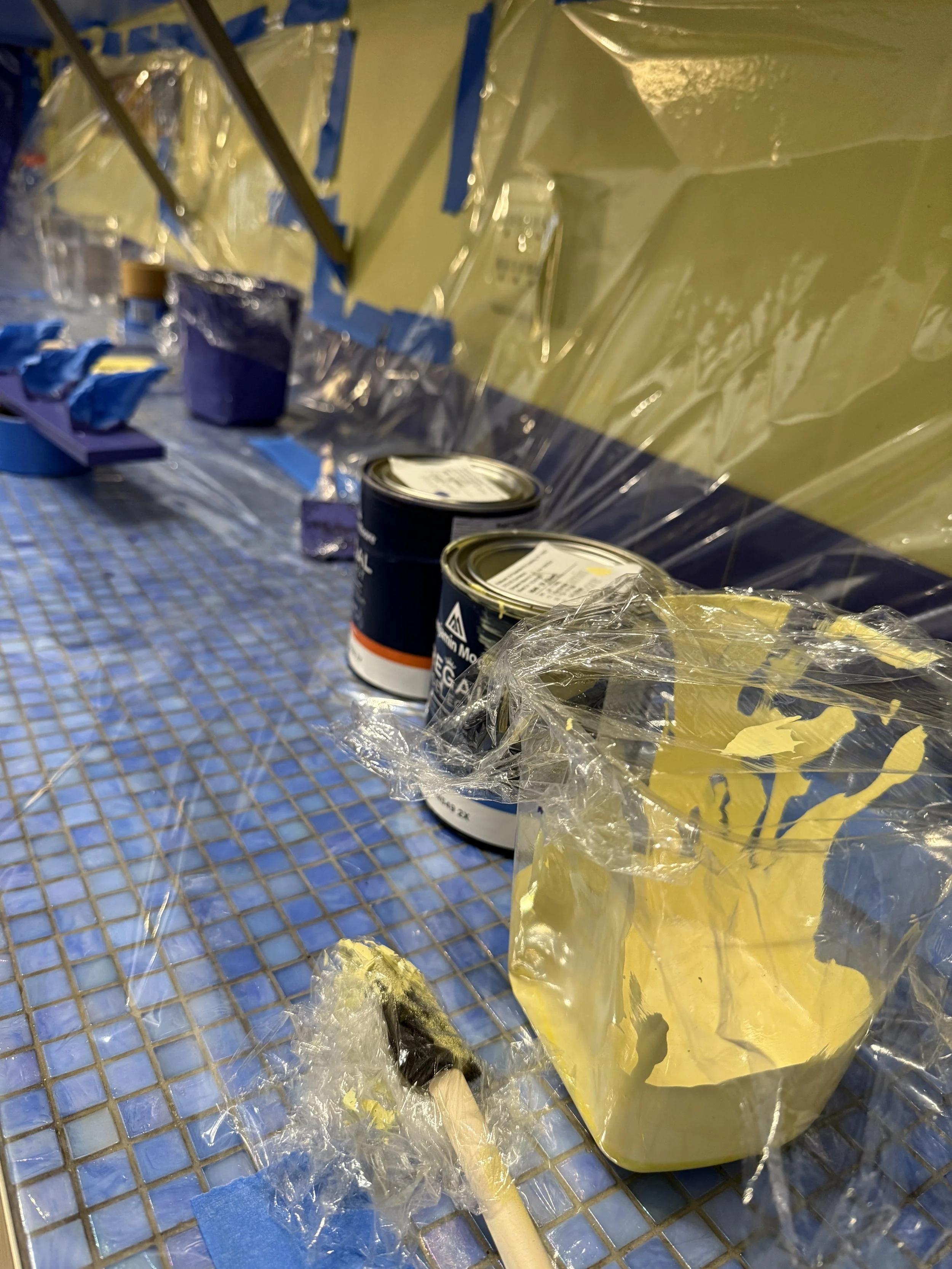
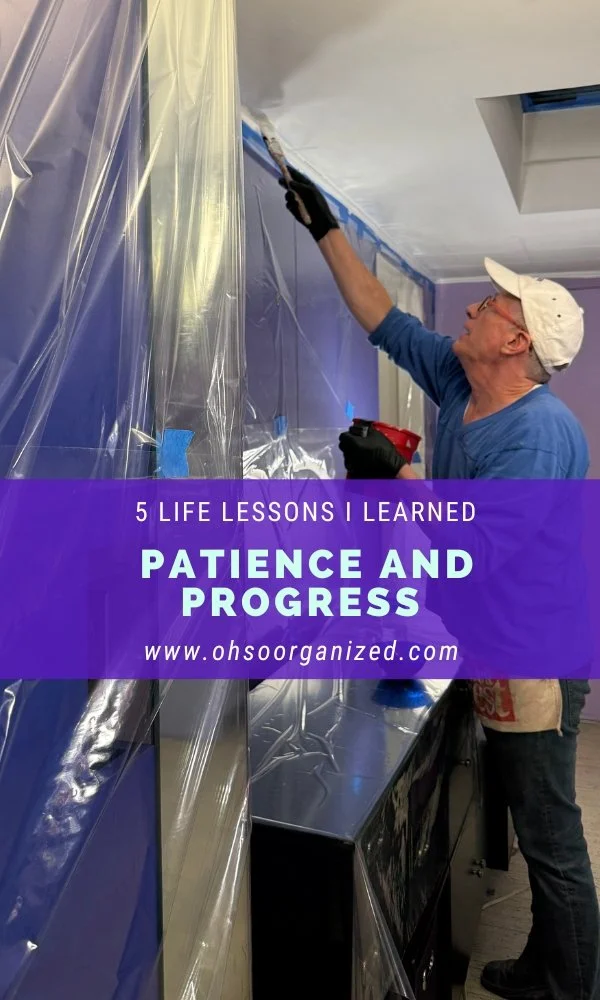
Over the past few months, my husband and I have been working on some home projects. They have taken different amounts of time to complete, and some are still ongoing. The biggest obstacles were setting priorities and managing time constraints. To finish these projects, we had to decide that they were still important enough to pursue. Once we agreed on that, we scheduled the time to complete them. The scheduling was pivotal. Without planning and scheduling, nothing would have happened.

During the process, I reaffirmed and learned a few things. Hopefully, some of these will resonate with you and be useful as you pursue your goals and projects.


5 Life Lessons I Learned About Patience and Promising Progress

Life Lesson #1:  I can tolerate discomfort.

I love the final result when we improve our home. It’s hard for me to tolerate the temporary chaos that happens. Stuff gets pulled out of place, messes spread to multiple areas, and order and organization are disrupted.

I often tell my clients that things usually get worse before they get better. When you’re organizing a closet, for example, and things are pulled out, it doesn’t look great. But as you start editing, rerouting, discarding, and donating, clarity begins to emerge. Once you organize the “keepers,” everything looks and feels better. However, there's a tipping point in the middle of the project where discomfort can surface.

Even though I’m happy when we’re fixing things, I tend to feel more anxious and stressed when we’re in reno mode. That discomfort motivates me to finish what we started as soon as possible. Interestingly, I can easily handle disorder in spaces I don’t live in. But in my own home, I prefer a certain level of order, calmness, and predictability.

Although I prefer not to be uncomfortable, I am capable of tolerating discomfort. This is especially true when it’s temporary or for a good reason. Acknowledging this made me feel less stressed and more accepting of the chaos.


Life Lesson #2: I can transform temporary chaos into an opportunity to reimagine.

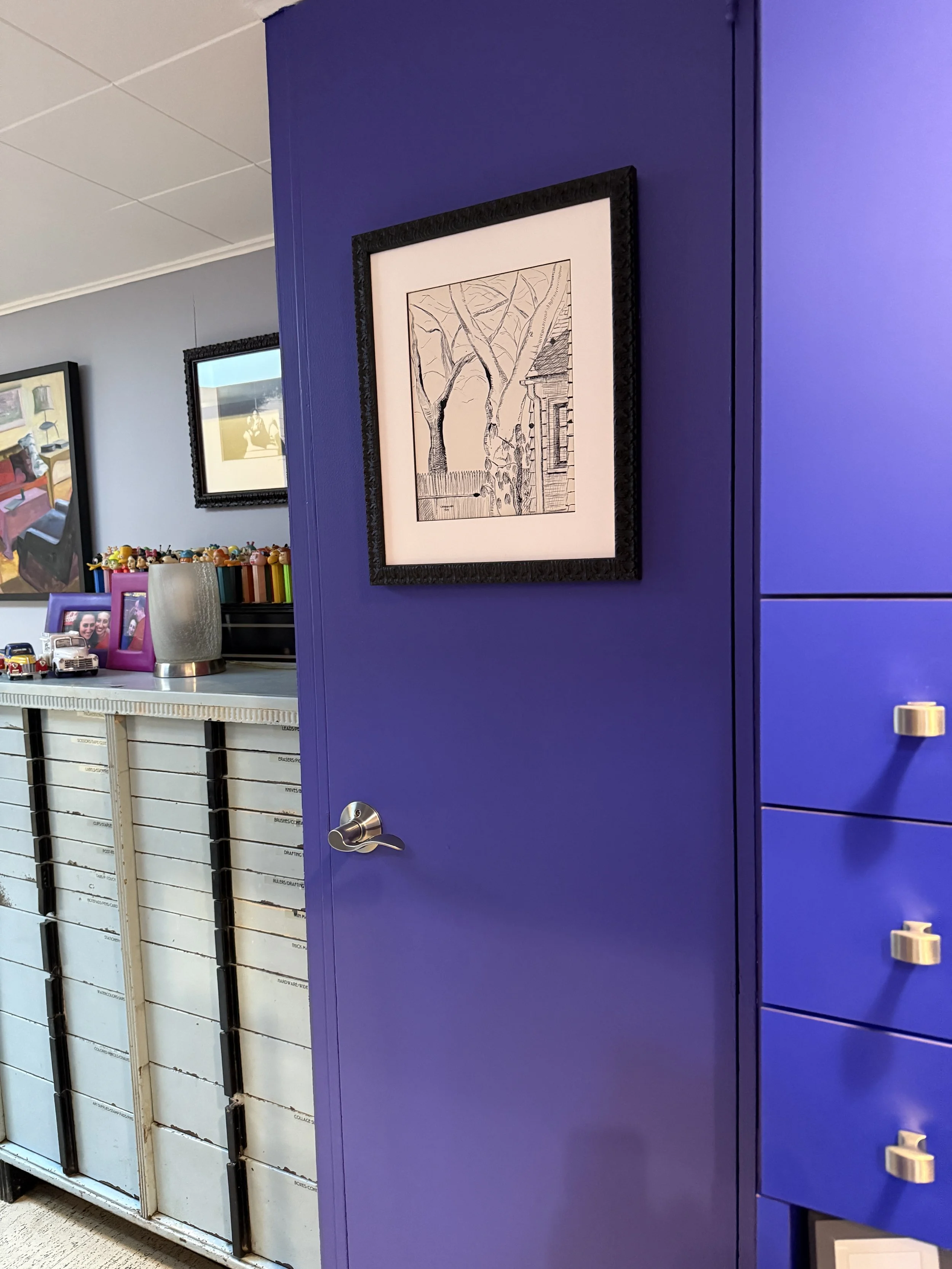
One of the benefits of taking things apart is having time to edit, question, and reimagine. We recently disrupted our entryway to spackle, paint, and do some electrical work. Doing that allowed me to let go of some things and reimagine the placement of certain items, like my Pez collection and one of the rugs.

I also felt inspired to repaint three of the cabinets. One is a big project, which I’ll wait to do in warmer weather. The other two cabinets will be done soon. Without being open to chaos and committing to the entryway project, these other projects might not move forward.

Chaos doesn’t have to be negative. It can be an opportunity to bring positive changes. The temporary chaos stirred my creativity and desire to make more improvements.


Life Lesson #3: I can finish what I start when I prioritize and plan.

This might seem obvious, but when you want to accomplish something, whether it’s organizing, home improvement, or changing a habit, dedicating time and energy to it is essential.

Deciding that something is a priority is the first step. This may involve temporarily setting other things aside while you focus your resources on the main goal. After all, you can accomplish a lot, but not all at once. Something has to give.

Once you've identified your priority, the next step is to schedule and plan dedicated time to work on it. For us, that meant working several evenings and weekends. Again, without blocking out specific calendar dates, it would not have been completed.

I can wish all I want, but without making it a priority and including it in a scheduled plan, it’s unlikely to happen. There is great potential and power in recognizing what I’m capable of when I prioritize and plan.

I can tolerate discomfort.
— Linda Samuels, CPO-CD®, CVOP™

Life Lesson #4: I can feel the joy and satisfaction that come with progress.

Done is great, but so is progress. No goal happens with one step. Progress happens one step, one action, and one commitment at a time. When working on the renovation projects, Steve and I took a moment to appreciate the progress along the way.

Momentum is a powerful force. Taking action motivates you to do more. Experiencing progress encourages further movement. Progress is satisfying and joy-inducing.

Steve and I made sure to see, feel, talk about, and celebrate the progress we've made. It was no small feat to get some of these projects started. We embraced the positive feelings that came with making progress.

Do you know the expression, “Stop and smell the roses?” For this one, let’s pause and celebrate the progress. You took action and worked hard. Now, enjoy it!


Life Lesson #5: I can be awed by my bad-ass husband.

After 42 years of marriage, I am still amazed by my husband. He is a talented man who, among his many skills, knows how to cook, play the drums, coordinate large-scale architectural woodworking projects, and handle almost any type of home improvement or repair project. He’s also a devoted volunteer, a great listener, a wonderful father, and an incredible husband and life partner.

Whether he was finishing the glass tiles in the bathroom, doing electrical work, plumbing, cutting through walls, spackling the ceiling, or painting surfaces, he not only knew what to do but also had the right tools to do it. He also taught me how to do some things, so we could work together on projects. I love that!

I am constantly inspired by Steve’s work ethic, humanity, skills, design sense, dedication, and talent. He was willing to let go of perfection to do his best and finish projects. I’m grateful for and in awe of the incredible human he is. Thank you, Honey!


How Do Patience and Progress Manifest for You?

Patience, or the lack of it, is part of being human. In fact, impatience can sometimes drive progress. When you feel stuck, progress may seem out of reach. However, leaning into that urge to move forward and pushing your patience to its limit can be one way to make progress. Prioritizing and planning are also helpful. What helps you move ahead?

Which ideas resonate most with you? I’d love to hear your thoughts. I invite you to join the conversation.


How Can I Help?

Are you ready to make progress? Do you feel overwhelmed, stuck, or disorganized? I’m here to help! Virtual organizing is an extraordinary path forward – Local feel with a global reach.

Let’s talk. I’m easy to reach.

Getting organized and making progress is possible, especially with support.
 
 
How a Professional Organizer Gets Organized: Creative Life Tips That Really Help

Based on my personal experience and over thirty years of helping clients get organized, I’ve learned a few things about what it means to be organized enough. That definition varies from person to person. What feels like being organized enough to me might be different for you. Guess what? That’s okay.

It's a journey to discover what helps you feel, be, and stay organized. I use the word ‘journey’ because getting organized isn’t a one-and-done event. As you go through life stages and changes, your organizing systems will likely need adjustments. Being organized helps make your life flow more smoothly. Being flexible and willing to tweak your systems as needed is part of the process.

Many strategies and products can work for your unique organizational needs. I’ve written hundreds of articles about this on the blog. However, today, I thought it would be fun to give you a behind-the-scenes look at some strategies and systems I use to stay organized with my things, thoughts, time, and space.


What Helps Me, a Professional Organizer, Stay Organized Enough?

Organized Things

Strategy: Create designated ‘homes’ for everything. This gives each possession a specific place to ‘live’ when it’s not in use and a spot to return after use.

Here are some ways I do that:

  • Hooks next to the desk for my purse and bags

  • Purse with compartments or mesh zipper bags inside larger totes

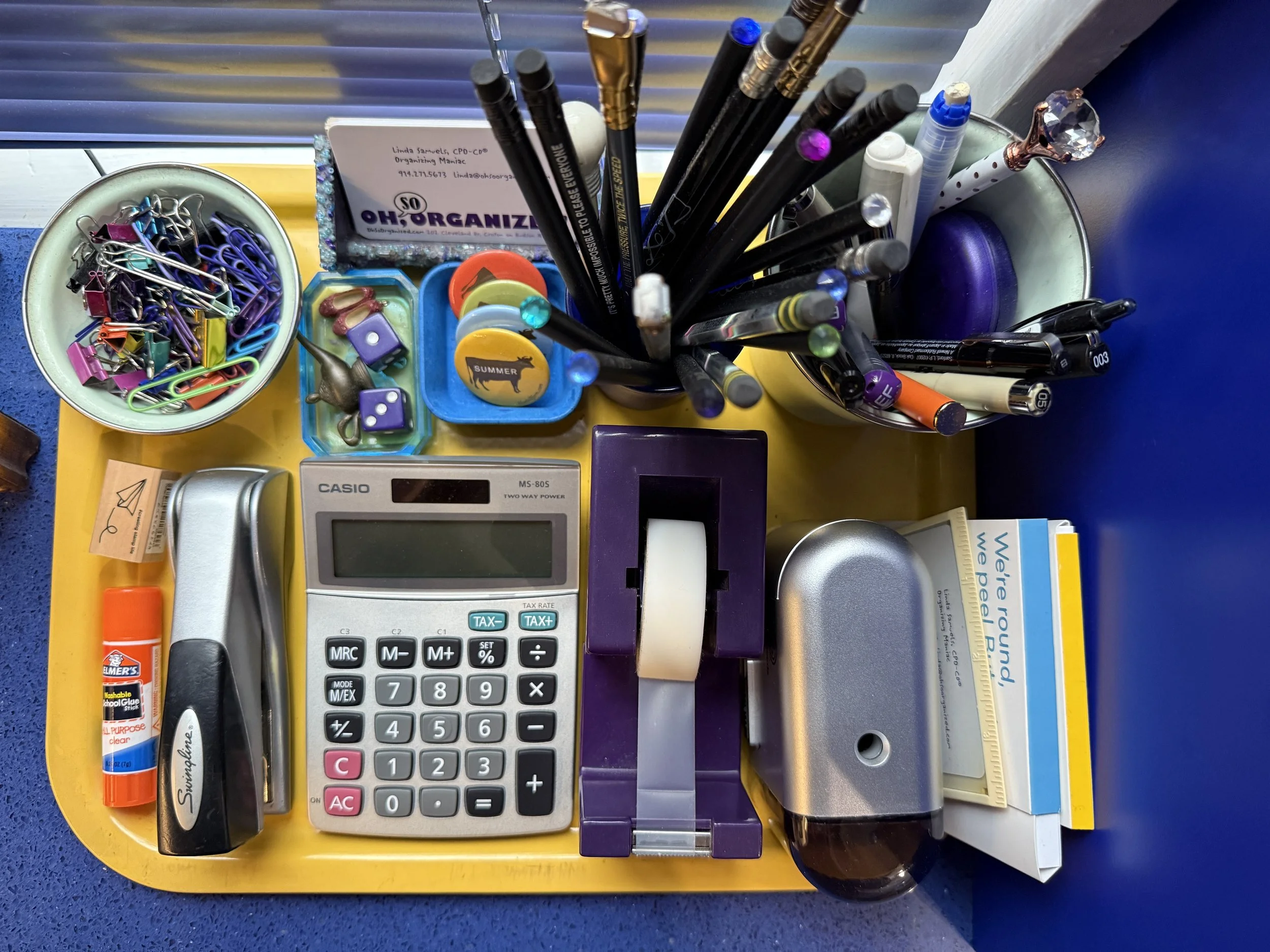
  • Pen cup on the desk that holds only working pens

  • Tray on the desk that holds frequently used office supplies like a stapler, tape dispenser, calculator, and paper clips

  • Office supply cabinet with labeled drawers that organize similar items together

  • Charging station and stands for my iPhone and iPad

  • Drawer organizers, open bins, closed containers, and shelf dividers to house specific categories in the bathroom, kitchen, dining room, living room, and bedrooms

  • Hook inside the door of a lower kitchen cabinet next to the stove to hang potholders


Organized Thoughts

Strategy: Use specific methods and tools to help clarify, record, and process thoughts. Some thoughts are personal, while others relate to my professional life. As a verbal processor, I find that writing and talking are effective ways to organize my thoughts.

Here are ways I do that:

  • Write in my personal and meditation journals

  • Log tasks and projects in my 2Do app, which can be scheduled for specific dates

  • Place sticky notes and pens next to phones, beds, desk, kitchen and bathroom to jot quick notes, which get transferred or filed

  • Keep an AquaNotes® waterproof paper pad and pencil in the shower to capture ideas

  • Use a Word or Google Doc to organize ideas and projects

  • File ideas into my blogging binder by category that I want to potentially write about

  • Enlist help from a family member, friend, or professional to discuss and sort out my thoughts aloud.


It’s a journey to discover what helps you feel, be, and stay organized.
— Linda Samuels, CPO-CD®, CVOP™


Organized Time

Strategy: Build systems you can fully trust. Use effective strategies and products that encourage intentionality and help you gain better control of your time. When possible, use one calendar along with a separate task app to manage your personal and professional life.

Here are ways I do this:

  • 2Do app for scheduling appointments, tasks, birthday reminders, and lists such as ‘Books to Read’ or ‘Books Read’’

  • Notes app on iPhone with shopping lists for specific stores, mileage log, and health notes

  • Digital calendar with vertical weekly dated layout

  • Color-coded calendar to see at a glance where my time is scheduled, the mix of categories, and the white space signifying unscheduled time

  • Calendly app to schedule client and personal meetings

  • Analog clocks in my office and kitchen to better visualize time

  • Use timers to allow me to hyperfocus, remind me when to switch gears, get up and move, or wrap up what I’m doing

  • I use different timers depending on the need:

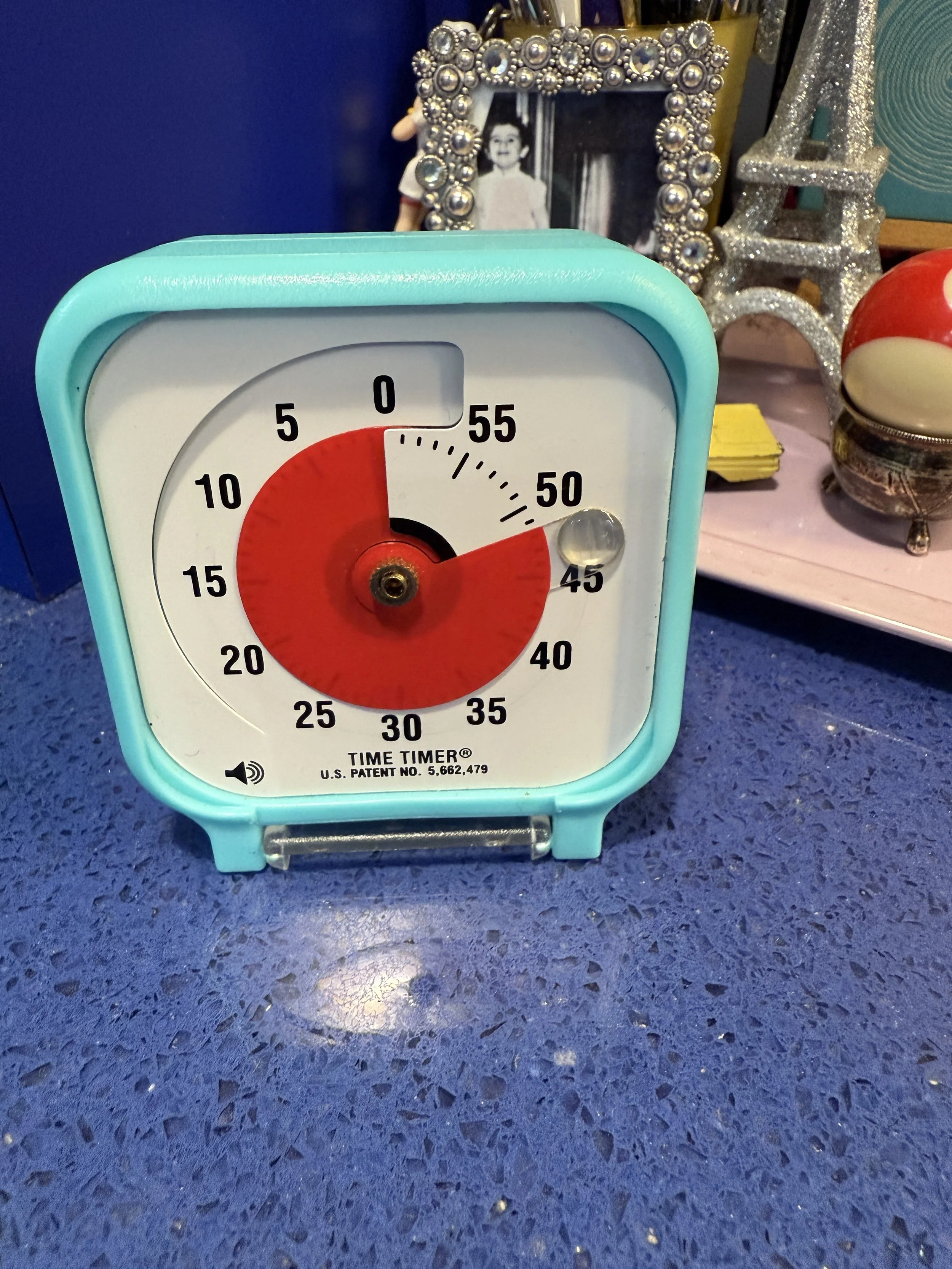
    • Time Timer® , a visual timer for meetings, virtual organizing sessions, and workshops

    • Clock app alarm with auditory alert on my iPhone for switching gears, cooking, and notifying of upcoming meetings

    • Kitchen timer on the stove with auditory alert for cooking or cleaning something with timed instructions

  • Only commit to something new after reviewing my current time commitments

  • Respect my time and know when to say “yes” or “no”

  • Have clear work and personal boundaries


Organized Space

Strategy: Define the purpose and designate zones for each room and area. Organize spaces to support their intended use, maximize the available area, and minimize clutter.

Here are some ways I do that:

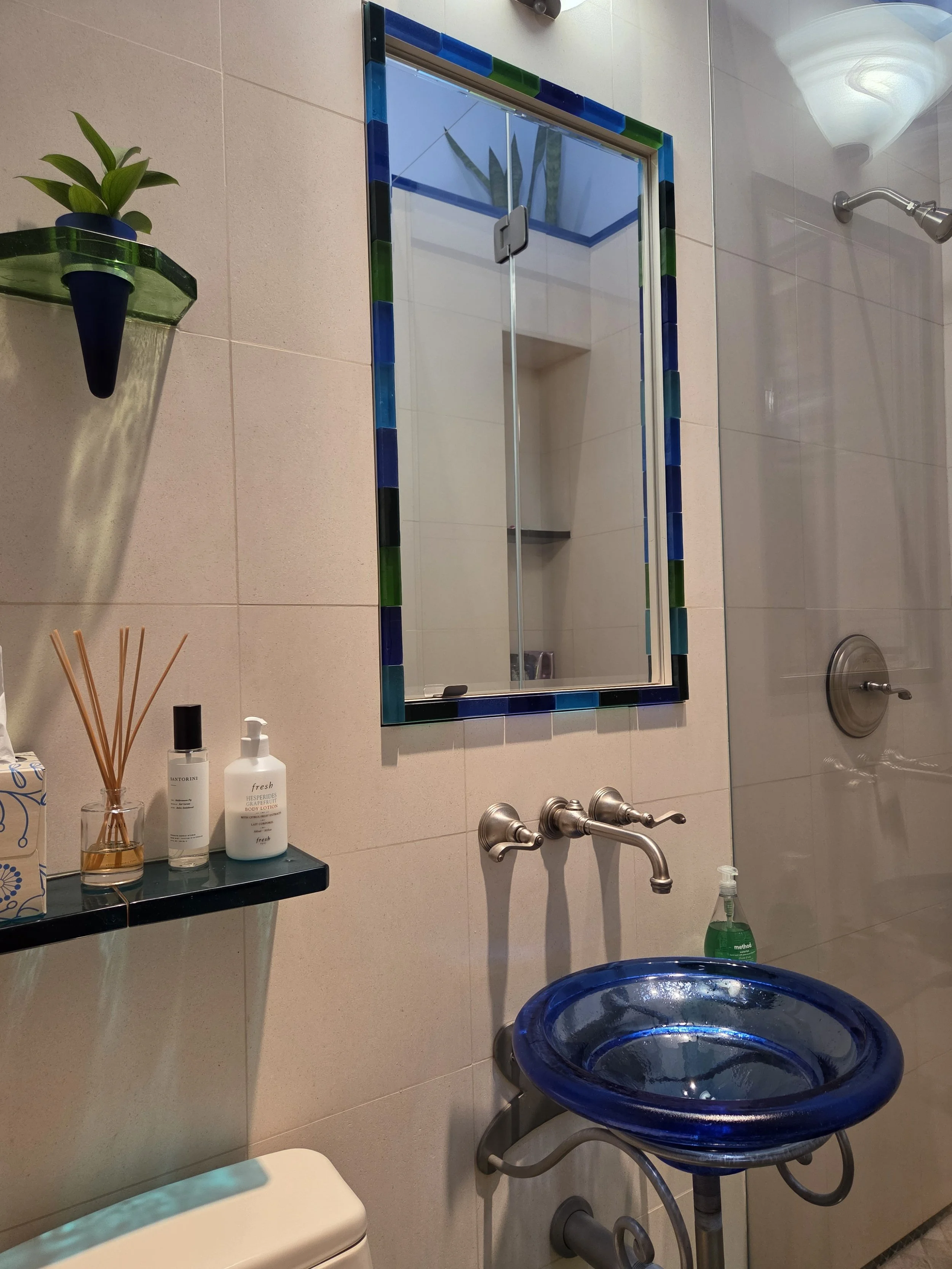
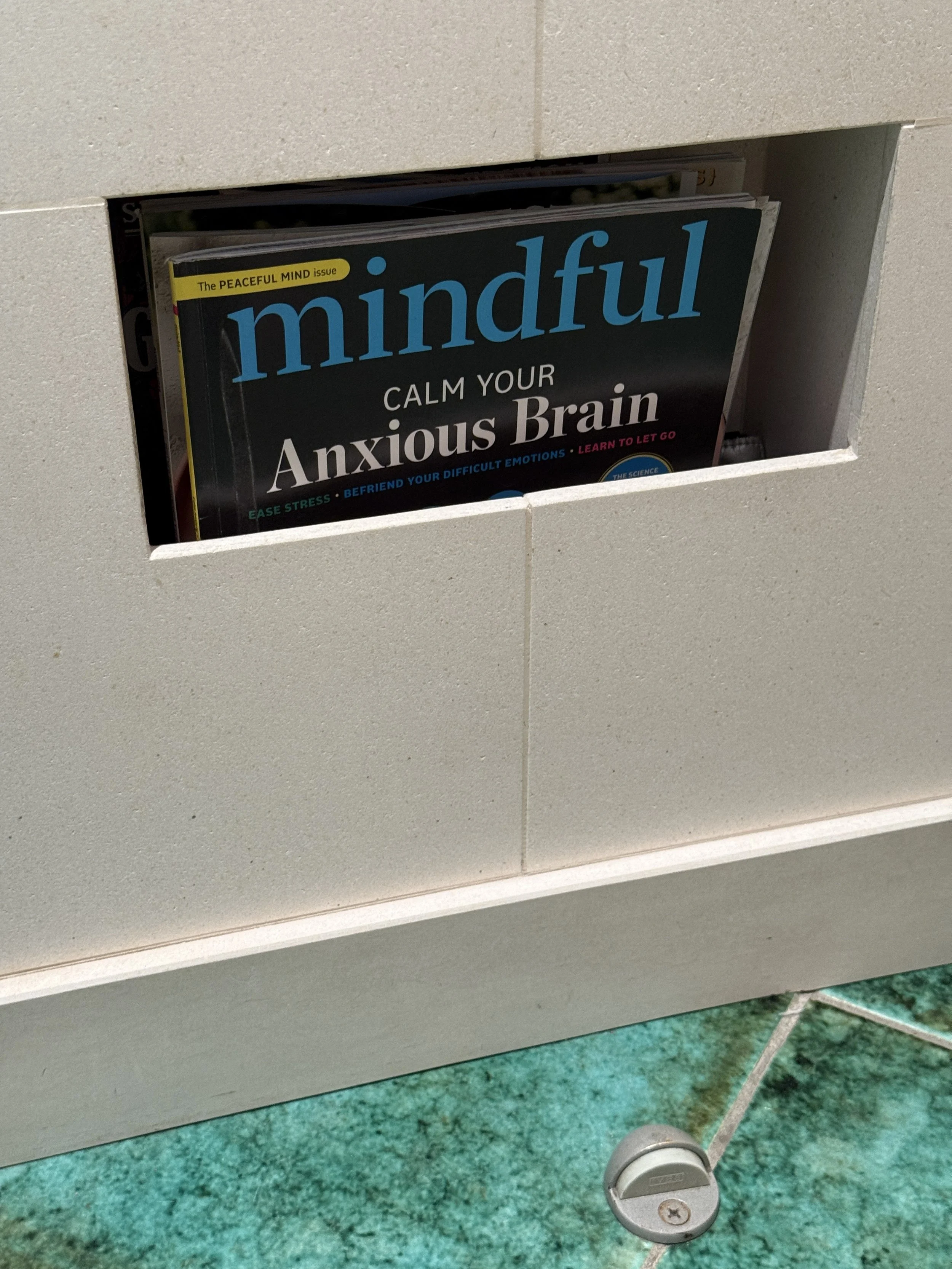
  • Guest bathroom with a in-wall magazine holder

  • Kitchen with a hot beverage station

  • Pantry with labeled Elfa drawers for storing gift wrapping supplies

  • Laundry room with closets for storing extra cleaning products and paper goods

  • Entryway with cushioned bench and open cubbies below to sit while taking shoes on and off and for storing most frequently worn shoes

  • Office with a wall slot to fold up and discreetly store my folding screen when not in use


What Helps You Organize Your Things, Thoughts, Time, and Space?

Getting organized enough can help create more ease in your life. If you’re feeling overwhelmed by everything, focus on one category at a time to improve. Which area needs the most attention? Which category do you want to work on first? What helps you feel organized enough for your things, thoughts, time, and space?

I’d love to hear your thoughts. I invite you to join the conversation.


How Can I Help?

Would you like support with getting organized? I’d love to help! Virtual organizing is an extraordinary path forward – Local feel with a global reach.

Let’s talk. I’m easy to reach.

Getting organized is possible, especially with support.