How a Fantastic Conference Taught Me More About Virtual Organizing

Recently, I returned from the Institute for Challenging Disorganization’s (ICD) conference, held in Canada this year. Colleagues from around the globe gathered to learn, connect, and explore the latest ideas and research related to neurodivergence and people affected by chronic disorganization.

The conference covered a fascinating range of topics, including ADHD, decision-making, navigating life transitions, clutter, emotional labor, hoarding disorder, motivational interviewing, and communication.

I was thrilled to be part of the panel, “Cultivating Connection: Best Practices for Communication with Neurodivergent Clients,” alongside my wonderful colleagues. Sara Skillen moderated, and Leslie Josel and Elizabeth Brink were the other panelists.

Whenever I’m learning, I have one goal: to learn at least one new thing, discover one new resource, or deepen my connection with something I already know. Honestly, with that simple goal, I consistently come away with far more than one thing.

The ICD conference was no exception.

I’m excited to share some of my takeaways and how they expanded my thinking, reinforced what I already know, and will influence the virtual organizing work I do with clients.


What Expanded My Thinking About Virtual Organizing

Emotional Labor

In “The Art of the Invisible: Helping Neurodiverse Families Navigate the Emotional Labor Lifecycle,” presenters Regina Lark, PhD, CPO®, CPO-CD® and Leslie Josel, PCC, discussed how emotional labor, which is mostly invisible and disproportionately handled by moms, is “the exhausting work” and the “cognitive management of household systems.”

Navigating emotional labor, work that never ends, requires executive function (EF) skills that rely heavily on the prefrontal cortex. These include:

  • Planning

  • Focusing

  • Remembering instructions

  • Juggling multiple tasks

  • Managing emotions

  • Working memory

  • Organizing

However, as many of my clients have experienced, EF skills can be especially challenging if you are highly stressed, have prefrontal cortex damage, or have conditions such as ADHD, autism, dyslexia, dyspraxia, or Tourette’s syndrome.

One of the biggest takeaways was distributing the emotional load through “radical delegation. Take perfection off the table. Delegate to someone else, even if they aren’t good at it.  Go for “good enough.”

This made me think differently about virtual organizing. When we work together, we’re not only organizing possessions or creating systems. We’re also considering the mental load behind those systems. What decisions are constantly being made? What is someone trying to remember? What are they managing for themselves or others? And what might be possible to let go of, share, or accept as “good enough”?

Life Transitions

We experience many life transitions. Professor and researcher Dr. Michelle Pannor Silver focused on four in her presentation, “Unpacking Identity: Navigating Later Life Transitions for Those with Organizational Challenges.” She discussed retirement, menopause, clutter, and prioritizing physical resilience.

Much of my work involves helping clients navigate transitions such as moving, starting a new job, divorce, birth, losing a loved one, and other life changes like those Dr. Silver discussed.

One takeaway came from the retirement section. Since our identities are often tied to our work, figuring out what comes next takes thought. Silver stressed the importance of creating “time and mental space to imagine retirement.” It’s not just about getting your finances in order. Take time to envision how you want your post-work life to feel and what you want it to be like. Include “sparking joy” activities.

Another idea that resonated was “recalibrating after loss.” In later years, loss can arrive in many forms, including changes in work status, moving from a familiar environment, changes in physical or cognitive abilities, and the loss of loved ones.

I am thinking differently about virtual organizing in the context of reimagining and recalibrating life. We go through periods when the organizational systems or patterns that used to work suddenly become ineffective. They no longer support who we are now. Virtual organizing sessions can be a wonderful way to work through these shifts and create systems and schedules that support who you are now.

“Decision-making is at the center of everything. It is a core part of being human.”
— Elizabeth Brink, PCC, PCNC®, SEP®

What Reinforced What I Already Know About Virtual Organizing

ADHD

Ari Tuckman, PsyD, MBA, presented “ADHD Can Make Organizing Psychologically Messy.” He emphasized that the ADHD challenge is “not the knowing, but the doing.” Challenges with activation, attention regulation, perfectionism, and time management can make it harder to start. You might know what to do, but these obstacles can make it challenging to get things done.

One question Tuckman suggested was, “What’s a realistic, sustainable goal that you’ll allow yourself to feel good about?” Emphasizing “realistic” and “sustainable” is central to my work with clients.

Tuckman shared many strategies that reinforced the tools and concepts I use with clients. They included:

  • Time – Use analog clocks, alarms, and schedules to build time awareness and make time more visible.

  • Fun – Make tasks less boring and more enjoyable through gamification or a playful spin.

  • Clarify – Ask, “How important is ‘this’ relative to everything else?”

  • Momentum – Do a “bit of something,” and always “hope for momentum.”

  • Experiment – “Be willing to flounder, and be confused.”

  • Decision-Making– If you are having difficulty choosing, flip a coin. It can clarify what you really want.

  • Perfectionism – Focus on “good enough.”

These strategies reflect what I see every day in virtual organizing: knowing what to do and being able to do it aren’t always the same. Virtual organizing sessions can help clients identify what gets in the way, experiment with different approaches, and find strategies that are realistic and sustainable for them.

Decision-Making

Elizabeth Brink, PCC, PCNC®, SEP®, a neurodivergent-centered coach, educator, and trainer, presented “Decision-Making: Neurodivergence, Trauma, and Chronic Disorganization.” Brink stated, “Decision-making is at the center of everything. It is a core part of being human.”

Brink went on to say that “Decision-making is a special kind of hard for neurodivergent humans.” She also said that for neurodivergent people, “Overwhelm is a reasonable response to decision-making.”

When Brink said, “It’s a big deal how to help people make decisions,” I recognized how central nurturing decision-making skills and building agency are to my virtual organizing work. People reach out to me when they feel overwhelmed, and much of that overwhelm comes from difficulty making decisions.

Decision-making skills can be learned. Brink featured several skill-building strategies that align with how I support my clients in making decisions. They include:

  • Empathy – Understand and appreciate what they may be feeling or experiencing, without judgment.

  • Demystify – Learn how they make decisions, what’s worked well for them in the past, the process they’ve used, and how we can tweak or apply that process to current choices.

  • Capacity – Be mindful of their capacity at that moment, normalize pauses, take breaks to avoid decision fatigue, and encourage a slower pace when needed.

Always Be Learning

Every conference leaves me with something to think about, but this one reminded me why I value learning so much. Sometimes a new idea changes how I approach my work. Other times, it gives me language for what I already know and see in my work with clients. Both are valuable.

I’m excited to bring these insights into my virtual organizing sessions and stay curious, experiment, and learn alongside my clients.

How Can I Help?

Do you feel overwhelmed, stuck, or disorganized? You don’t have to face it alone. I’m here to help! Get unstuck and make progress. Virtual organizing is an extraordinary path forward—with a local feel and a global reach.

Let’s talk! I’m easy to reach.

Getting organized, making progress, and reaching your goals are doable, especially with support.


Can Someone Really Help You Organize Through a Computer Screen?

When I became a professional organizer over thirty years ago, I quickly learned that there were two questions I was asked again and again. These questions usually came up when I met someone new at a social setting, like a party, a networking event, or a neighborhood gathering. They would inevitably ask me, “What do you do?” I’d respond, “I’m a professional organizer.” Their next question was, “What’s a professional organizer?”

In 1993, there weren’t many organizers, books or articles about organizing, organizing associations, and little media coverage. Fast-forward 33 years, and all of that has changed. There are now thousands of organizers around the world, regular media coverage, TV shows, books, conferences, and educational resources. I rarely get asked, “What’s a professional organizer?”

However, having pivoted to working virtually over six years ago, I am often asked as a virtual professional organizer, “How do you help someone get organized through a computer?” I love this question!

When I first learned about virtual organizing (VO) from my friend and organizing colleague, Sheila Delson, who coined the term, I wondered the same thing. After all, for most of my career I worked with people in person, so the idea of working virtually was hard to imagine.

Through necessity (hello, pandemic 2020) and experience, I learned that virtual organizing is not only feasible but also a wonderful path forward for many clients. In fact, some of the things that make virtual organizing so effective might surprise you.


Can Someone Really Help You Organize Through a Computer Screen?

1. What matters isn’t where you are, but how you show up.

When we work together virtually, I’m not physically in your space—but I’m fully present with you. I’m listening, observing, asking questions, and noticing what’s working and what’s getting in the way. That kind of presence doesn’t require me to stand next to you.


2. You don’t need to be in the same room to make progress.

Technology lets me see what clients see—whether it’s a room, a pile of papers, a clothing closet, a kitchen counter, doom bags, or a calendar. We can work together in real time.

By focusing on one area for a set time (virtual organizing sessions typically last 60 to 90 minutes), we make visible progress. Between VO sessions, progress continues as clients work independently.


3. The real work is often decision-making, not doing the organizing for someone.

Virtual organizing sessions often involve clients making many decisions. I help them clarify their “why” and think through what to keep, let go of, prioritize, or do next. Because clients are in control and do the hands-on work, the changes become more meaningful and sustainable. They are the decision-makers and doers. I am there (on the other side of the screen) to support them.


“When we work together virtually, I’m not physically in your space—but I’m fully present with you. ”
— Linda Samuels, CPO-CD®, CVOP™


4. A virtual session can help someone move from stuck to action.

There’s a difference between knowing what to do and actually getting started. We turn intention into a first or next step through presence, accountability, and a gentle, collaborative approach.

Together, we identify what they’re trying to do, what’s keeping them stuck, and the smallest possible action they can take without feeling overwhelmed.


5. Virtual organizing keeps the client in the driver’s seat.

Some people may feel vulnerable when someone physically sees their clutter. Virtual organizing offers clients privacy, comfort, and control while still providing personalized support.

Rather than having someone come into their space and take over, clients decide what to show, what to work on, and how they want to approach the process. They remain active participants every step of the way.


It’s About Connection

So, can someone really help you organize through a computer screen? Absolutely.

The computer screen may be what connects us, but it isn’t what makes virtual organizing work. It’s the relationships we build, the conversations we have, the decisions we make together, and the progress clients make one step at a time.

After more than six years of working virtually, I no longer wonder whether I can help someone organize over a computer screen. I know I can. I’ve seen the amazing progress clients make through virtual organizing.

Maybe the question isn’t whether someone can help you organize virtually. Maybe it’s what becomes possible when you have the right person beside you—even when they’re on the other side of the screen.


How Can I Help?

Do you feel overwhelmed, stuck, or disorganized? You don’t have to face it alone. I’m here to help! Virtual organizing is an extraordinary path forward—with a local feel and a global reach.

Let’s talk! I’m easy to reach.

Getting organized, making progress, and reaching your goals are doable, especially with support.
 
 
Linda Samuels Comments
When Organizing Challenges Feel Overwhelming, It's Time to Ask for Help

Over the 30+ years I’ve been helping overwhelmed individuals create organization and calm in their lives, most of my clients have been affected by chronic disorganization (CD).

When I first started Oh, So Organized! in 1993, I didn’t know what chronic disorganization was. What I did recognize was that the organizational challenges many of my clients faced were complex, persistent, and deep.

It wasn’t until 1995, when I met Judith Kolberg, a pioneer and thought leader in the organizing industry, and heard her speak at my first NAPO (National Association of Productivity and Organizing Professionals) conference, that I learned about the term chronic disorganization, which she coined. I began to understand the complexities of CD and the similarities between my clients and those Judith described.

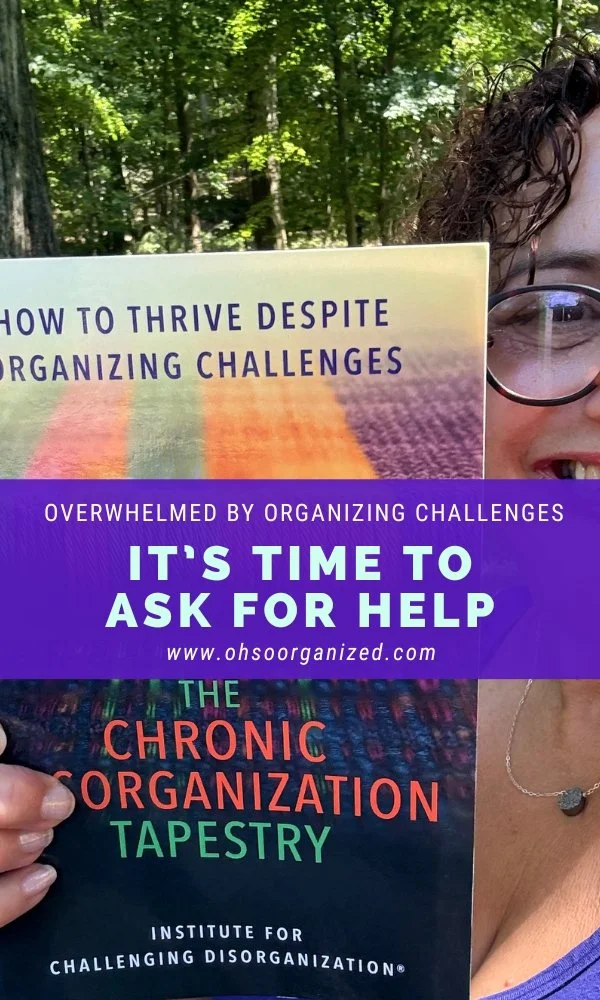
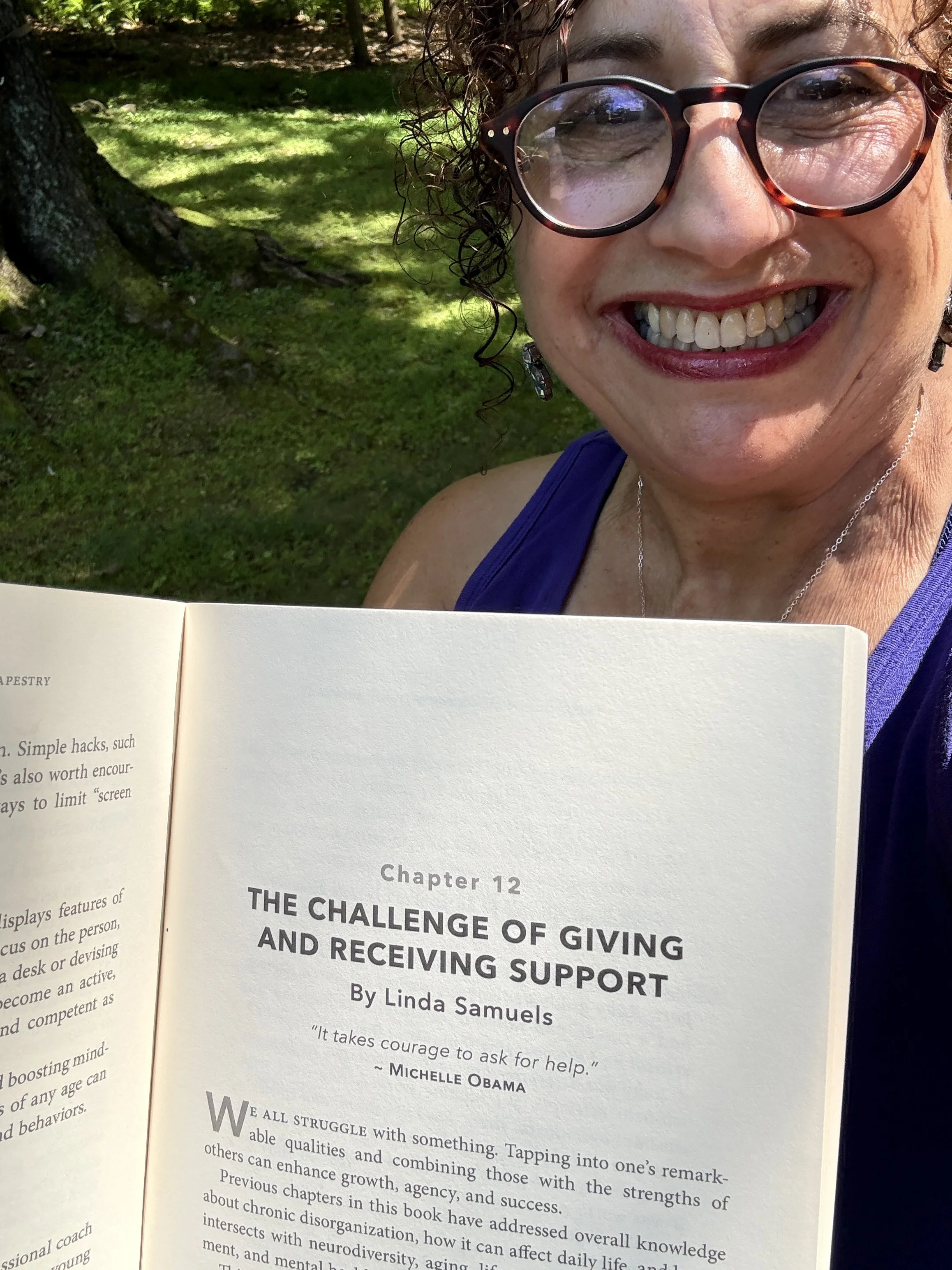
As a CPO-CD® and contributing author to The Chronic Disorganization Tapestry, I’ve spent more than three decades helping people affected by chronic disorganization navigate their organizing challenges with compassion and practical support.

What is Chronic Disorganization?

As defined by the Institute for Challenging Disorganization (ICD), chronic disorganization:

  • “Persists over a long period of time

  • Frequently undermines the quality of life, and

  • Recurs despite repeated self-help attempts.”

The ICD website further clarifies that “chronic disorganization may be present with brain-based challenges such as ADHD, anxiety, depression, Hoarding Disorder, PTSD, TBI, and more.”

Little did I know that Judith’s panel session at NAPO would have such a profound impact on my work. Since then, I have consistently invested in education, professional development, and certifications to deepen my understanding of chronic disorganization and provide the best possible help and support to my clients. I became actively involved with ICD, received much of my training from ICD, and served as its past president.


The Chronic Disorganization Tapestry

Almost two years ago, I was invited, along with eleven of my colleagues, to be a contributing author to an ICD book they planned to publish. This was an easy “yes” because I’m a big advocate for ICD, the premier educational resource on chronic disorganization.

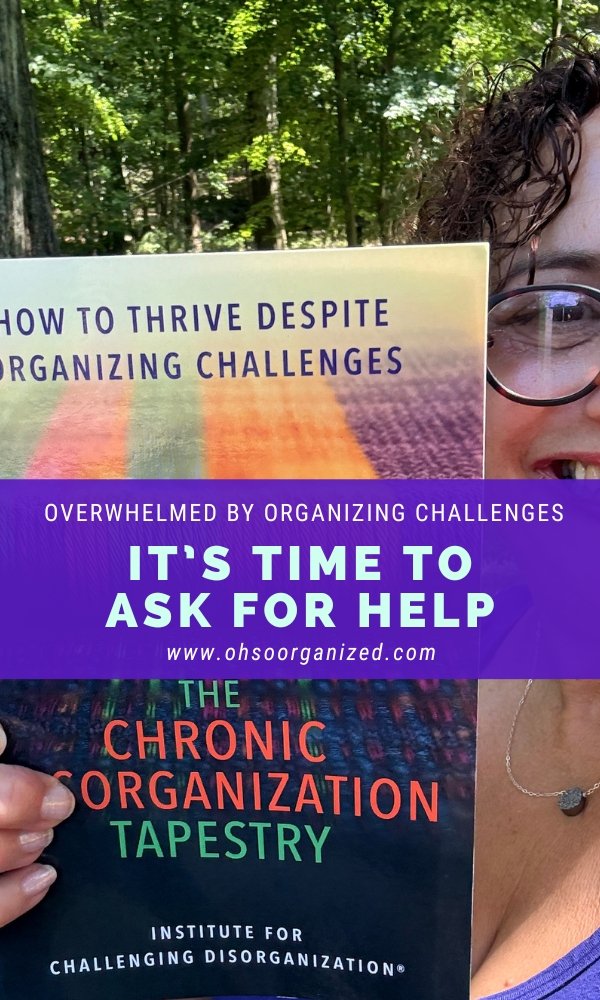
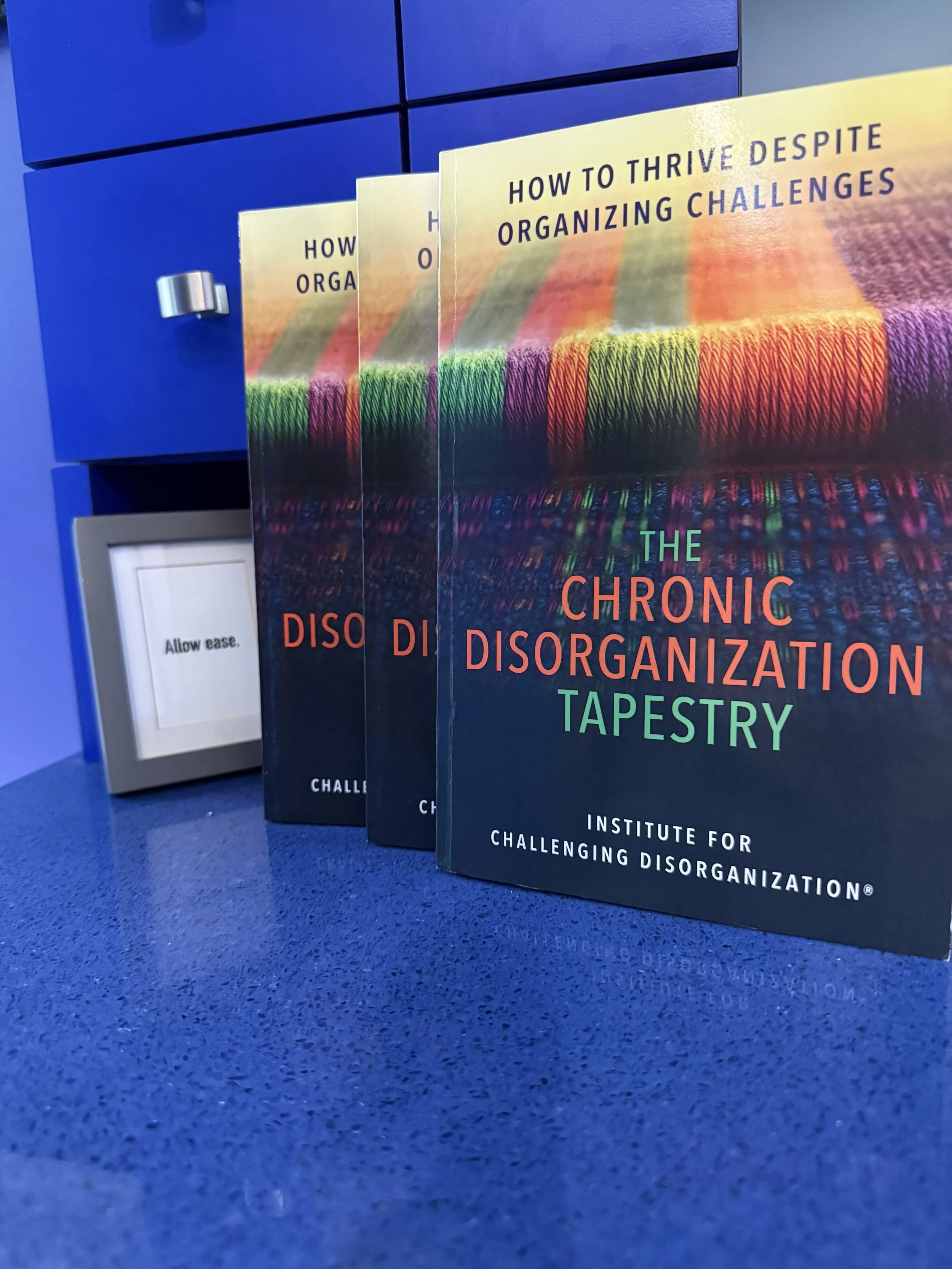
Fast-forward to now, and The Chronic Disorganization Tapestry – How to Thrive Despite Organizing Challenges is finally available! This book is a guide that covers:

  • the unique challenges of chronic disorganization

  • simple, evidence-based strategies

  • case studies

  • insights from industry experts

This publication wouldn’t have been possible without the fierce dedication of the Chronic Disorganization Tapestry Task Force members: Carolyn Caldwell, Laurene Livesey Park, Ingrid Tielemans, and Nacho Eguiarte, and the authors’ contributions. My deepest gratitude and congratulations to all!


A Quick Content Guide

I am honored to be included in ICD’s wonderful new publication, written for people affected by chronic disorganization, professional organizers, and other professionals who support them.

Here is a quick guide to the chapter topics and their authors:

The book is available from retailers including Amazon, Barnes & Noble, Alibris, and Bookshop.

“We aren’t meant to go through this life alone. Everyone needs help at times.”
— Linda Samuels, CPO-CD®, CVOP™

My Chapter: The Challenge of Giving and Receiving Support

From a young age, I always loved helping others. Over three decades ago, when I considered starting my own company, I knew that helping people had to be a key element of my business. After brainstorming ideas for what type of business would ‘fit’ that requirement, I eventually founded Oh, So Organized!

It felt especially meaningful to be asked to contribute a chapter on giving and receiving support to The Chronic Disorganization Tapestry.

In Chapter 12, “The Challenge of Giving and Receiving Support,” I explore chronic disorganization in that context and ways in which giving and receiving help can foster progress and growth. Perspectives are considered from:

  • individuals affected by CD

  • related professionals who support people affected by CD

  • professional organizers who work with individuals affected by CD

We aren’t meant to go through this life alone. Everyone needs help at times, whether it’s practical, technical, or emotional, or simply the presence of another person alongside us. For people affected by chronic disorganization, and for those who support them, fostering compassion, curiosity, and agency is essential to progress and growth.


How Can I Help?

Do you feel overwhelmed, disorganized, or stuck? You don’t have to do this alone. I’m here to help! Virtual organizing is an extraordinary path forward – Local feel with a global reach.

Let’s talk! I’m easy to reach.

Getting organized, building confidence, and reaching your goals are possible, especially with support.


12 Benefits of Hiring a Professional Organizer That Go Way Beyond Organizing

Many people hire a professional organizer to declutter, create order, or make their spaces more functional. The good news is that professional organizers can help achieve those goals. However, the benefits of working with a professional organizer can go much deeper than the visible changes in a space.

The right support can help you build confidence, make decisions more easily, develop sustainable habits, and create a home that reflects who you are now. These are just a few of the benefits beyond simply “more organized.”

For over 30 years, I’ve had the joy of helping people navigate organizing challenges. I’ve seen clients transform, becoming more confident, capable, and self-trusting. Beyond becoming more organized, they’ve made profound changes in their mindset, habits, and self-efficacy.


12 Benefits of Hiring a Professional Organizer That Go Way Beyond Organizing

While some clients have seen results in as few as three virtual organizing sessions, most continue working with me longer to create more positive changes. These are the top 12 benefits, beyond getting more organized, that my clients consistently experience during our work together.


1. Make steady progress.

“I am making significant progress. I couldn’t do that a while ago.”

  • Get past feeling stuck and take consistent action.

  • Complete projects that have been on hold for months or years.

  • Build momentum that carries over between virtual organizing sessions.


2. Reduce overwhelm.

“I am way less overwhelmed.”

  • Break large, overwhelming projects into small, manageable steps.

  • Replace confusion with a clear, personalized plan.

  • Feel less anxious about organizing tasks.


3. Create lasting organizing habits.

“This is so empowering.”

  • Develop realistic, sustainable routines.

  • Practice maintaining spaces rather than starting over repeatedly.

  • Learn systems that fit individual lifestyles and preferences.


4. Strengthen decision-making skills.

“I do not need those.”

  • Become more confident about what to keep, donate, recycle, sell, or discard.

  • Spend less time second-guessing decisions.

  • Learn practical decision-making strategies that work in all areas.


5. Develop accountability and consistency.

“I’m building on my wins.”

  • Stay focused on goals through regular check-ins.

  • Follow through on action steps between sessions.

  • Celebrate progress while maintaining motivation.


“This is so empowering.”
— Oh, So Organized! Client


6. Improve daily functioning.

“It feels great in here. I have hope and am not as overwhelmed.”

  • Create spaces that are easier to use and maintain.

  • Reduce time spent searching for items.

  • Increase efficiency in everyday routines.


7. Receive personalized guidance.

“I just want to be my true me.”

  • Benefit from solutions tailored to individual challenges, goals, and strengths.

  • Learn organizing strategies that work with, not against, personal thinking styles.

  • Adjust strategies as life circumstances change.


8. Experience compassionate, nonjudgmental support.

“Not impossible or unconquerable anymore.”

  • Feel understood, not criticized.

  • Work at a comfortable pace, without pressure.

  • Build trust within a supportive, collaborative partnership.


9. Improve emotional well-being.

“Things feel mentally more manageable.”

  • Feel calmer, less distracted, and more in control.

  • Reduce guilt and frustration associated with clutter.

  • Strengthen self-awareness and emotional resilience by addressing personal patterns such as perfectionism, burnout, decision fatigue, negative self-talk, and unrealistic expectations.


10. Create more functional spaces.

“I now have a blueprint for how to declutter.”

  • Reclaim rooms for their intended use.

  • Improve access to frequently used items.

  • Make spaces safer and easier to navigate.


11. Build long-term independence.

“I feel very motivated.”

  • Learn skills rather than relying on someone else to organize.

  • Apply organizing principles to new areas.

  • Continue making progress after formal organizing sessions end.


12. Increase confidence and self-trust.

“I can do this!”

  • Experience success through small, achievable wins.

  • Trust your ability to stay flexible and determine your best next action.

  • Feel more capable of managing your time, energy, space, and things independently.


How Can Hiring a Professional Organizer Help?

The reality is that we all need help at times. There is no shame in reaching out for the support you need. I’ve experienced this many times, hiring someone to help with something I was stuck on, to manage a large project, or to fill a skills gap when I couldn’t accomplish what I needed on my own.

Have you worked with a professional organizer? What benefits did you experience? If you are an organizer, what benefits have your clients experienced working with you?

I’d love to hear your thoughts. I invite you to join the conversation.


How Can I Help?

Do you feel overwhelmed, disorganized, or stuck? You don’t have to do this alone. I’m here to help! Virtual organizing is an extraordinary path forward – Local feel with a global reach.

Let’s talk! I’m easy to reach.

Getting organized, building confidence, and reaching your goals are possible, especially with support.